小琉球-社區旅客共融中心
一、問題背景
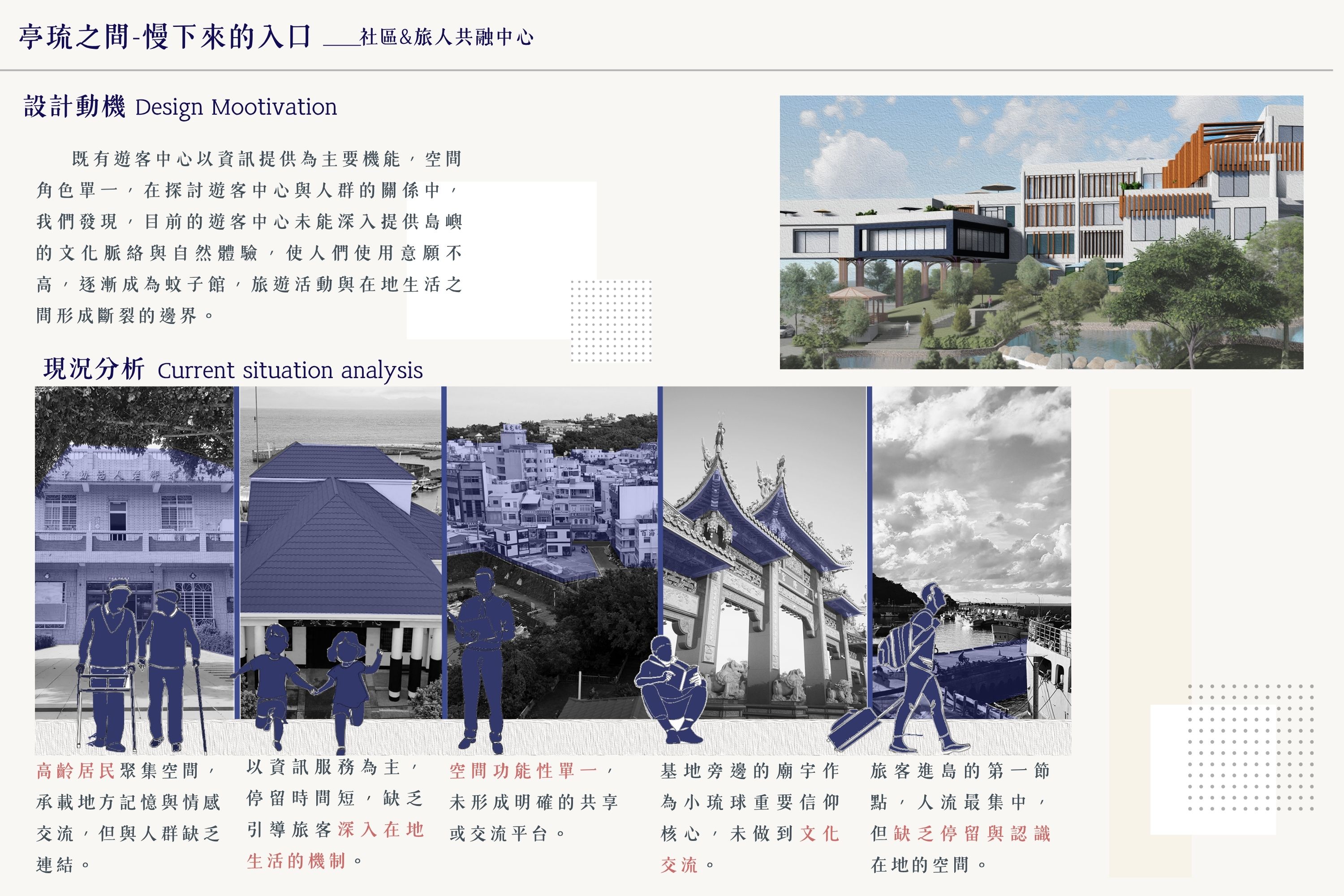
• 既有遊客中心機能單一,以資訊提供為主
• 缺乏文化與自然體驗,使用率低
• 遊客活動與在地生活產生斷裂
二、核心目標
• 重建「人 × 文化 × 自然」的連結
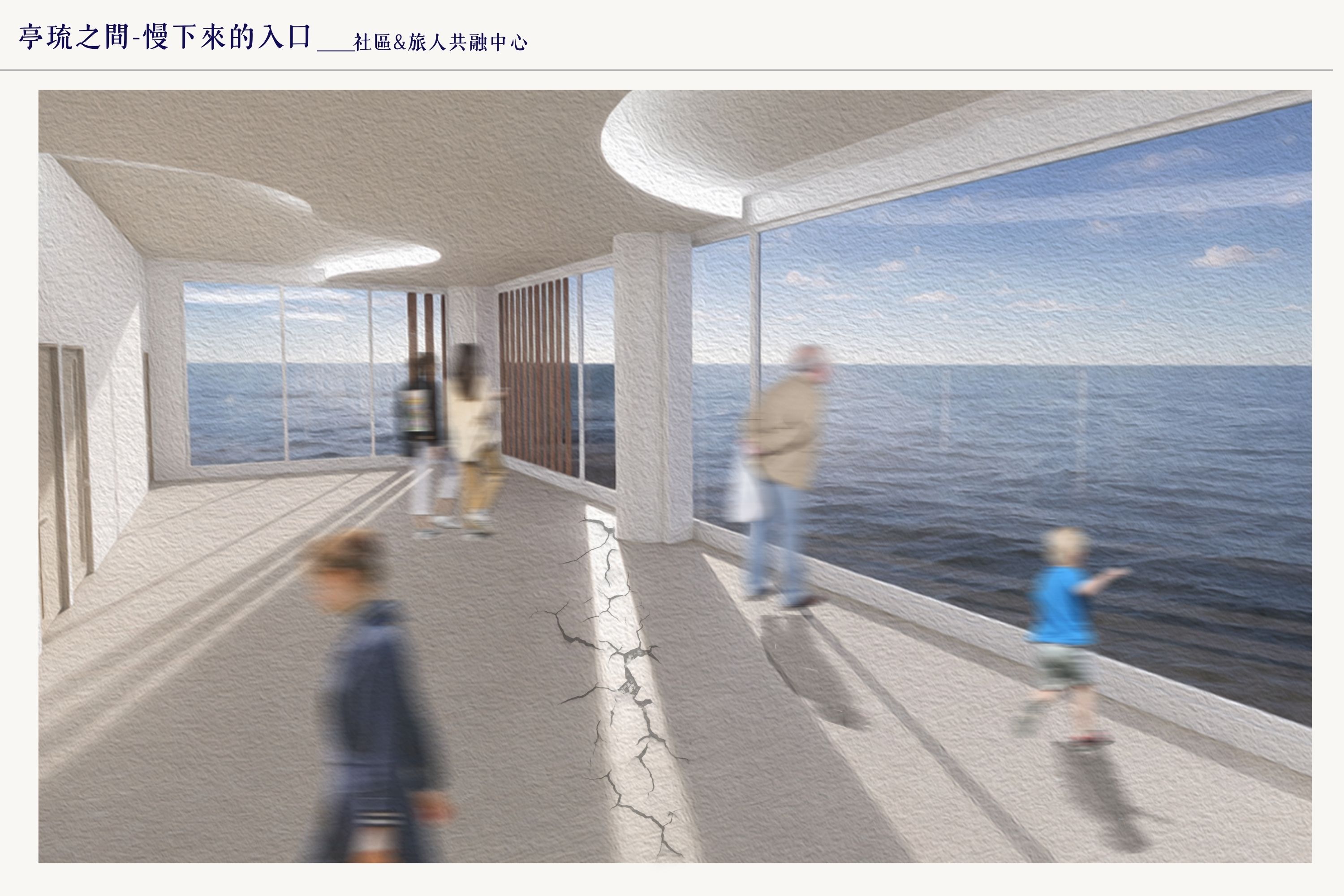
• 轉化為可交流、可停留、可體驗的場域
三、設計策略
1. 導入在地生活場域
• 納入在地長者與居民活動空間
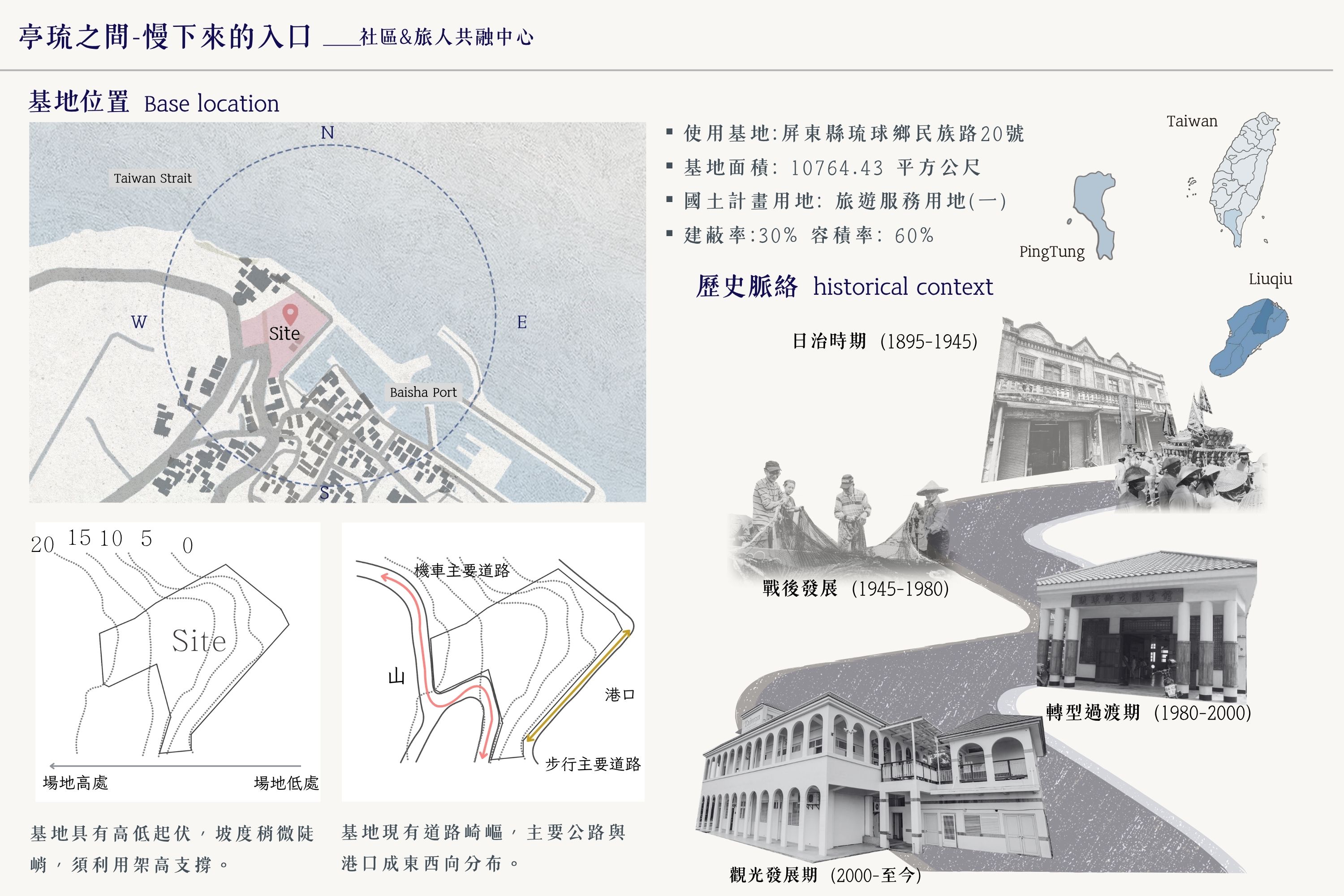
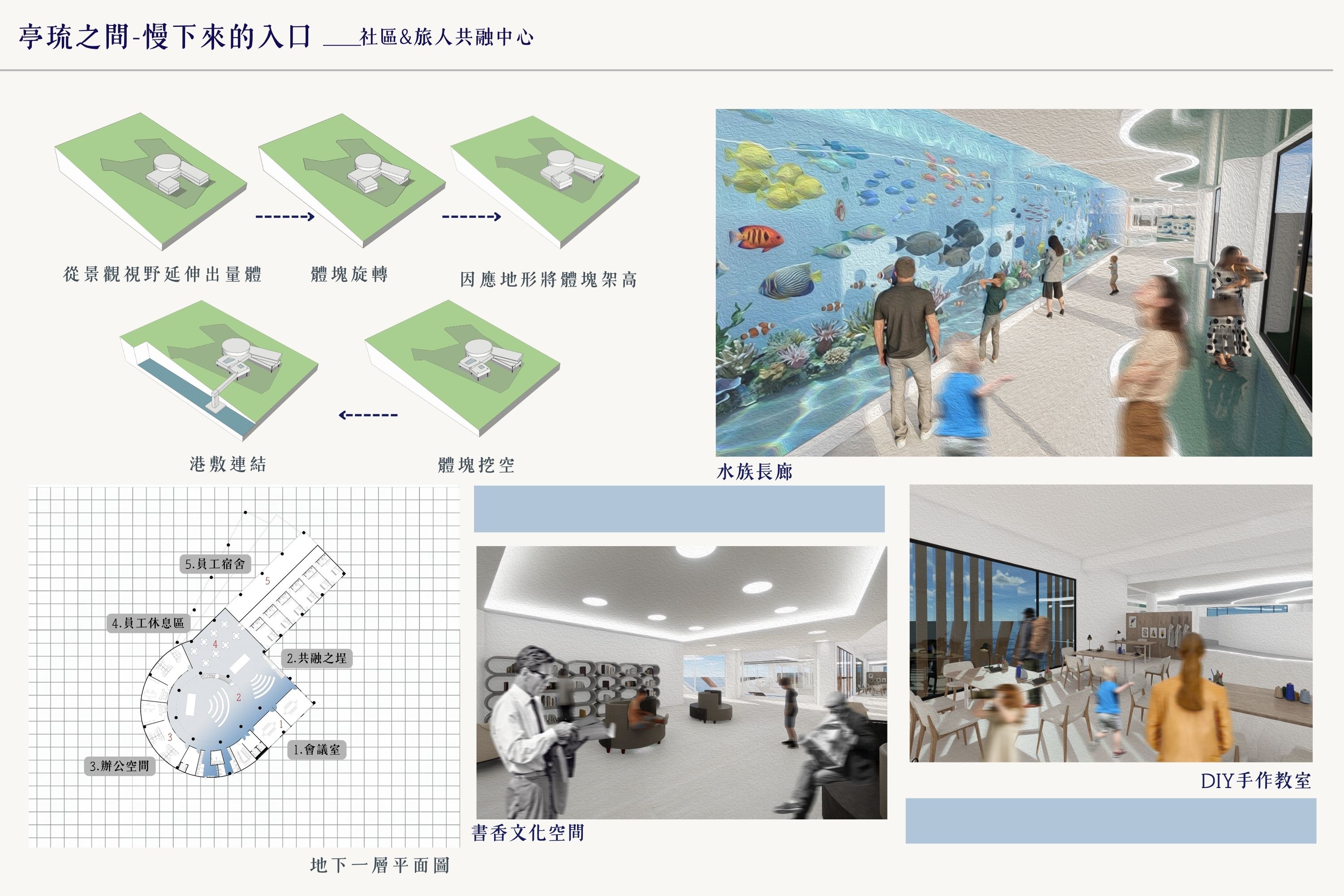
2. 銜接港口的到達入口設計
• 銜接港口,形成連續的到達動線
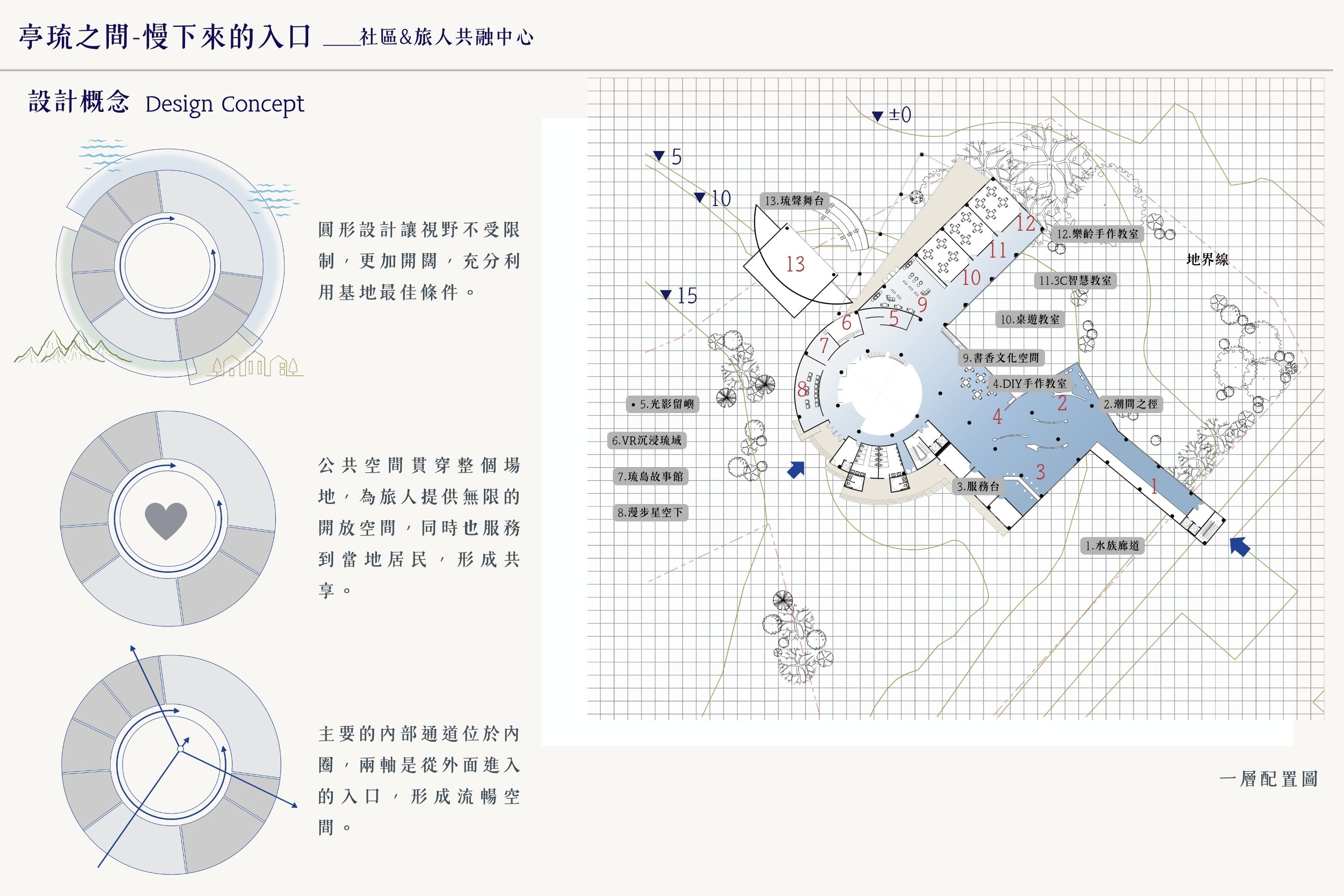
• 以水族廊道作為進入建築的起始體驗
3. 複合機能整合
• 配置公部門辦公空間與員工宿舍
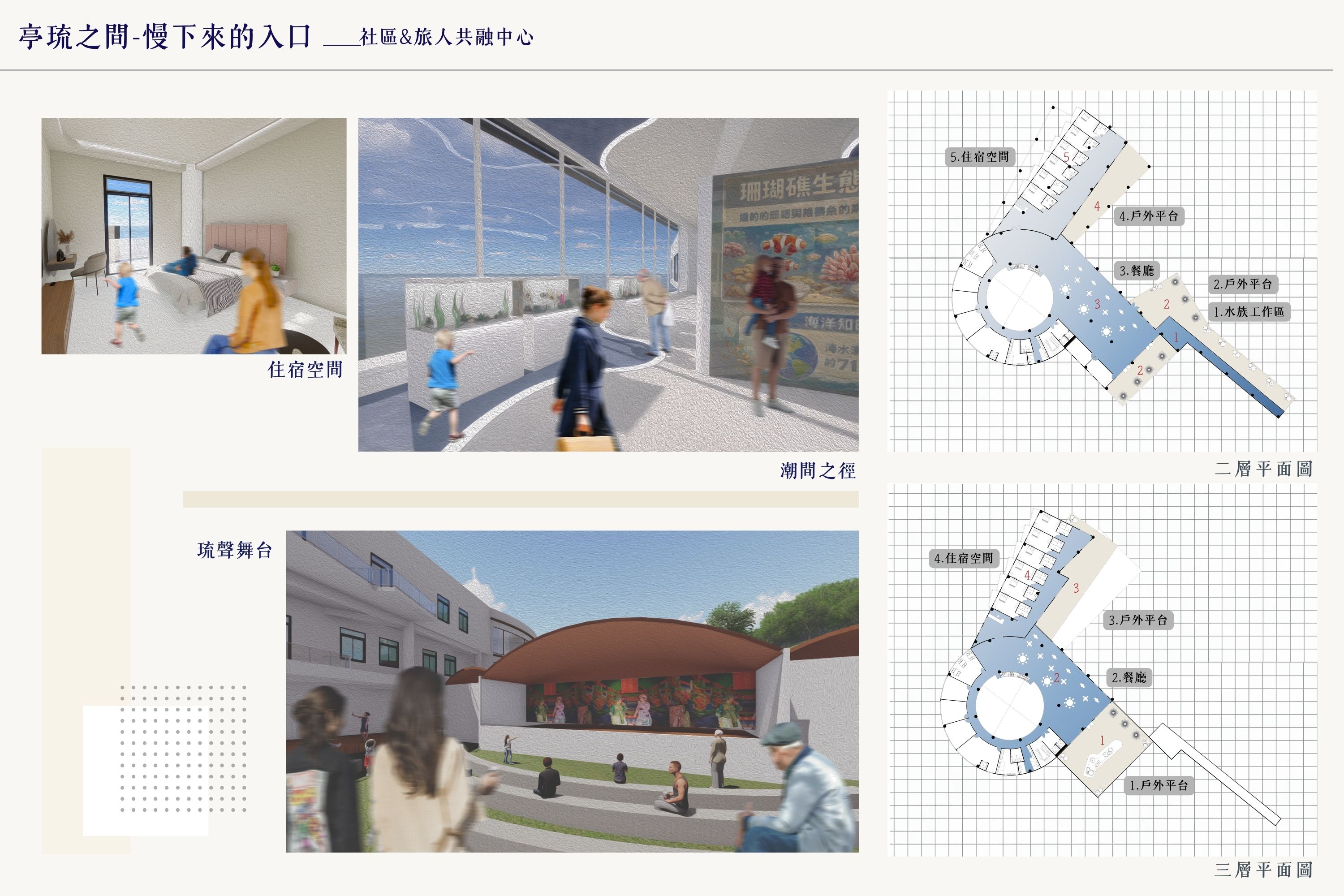
• 設置旅宿空間,延長停留時間
4. 文化場域串聯
• 融入生態展示與廟宇文化
• 串聯鄰近廟宇,設置戶外戲台
設計目標
• 從單一的資訊中心轉為有意願停留的共融空間
• 促進在地參與及傳遞文化的意識
• 建立連續且有層次的島嶼體驗
liuqiu Community Visitor Inclusive Center
I. Problem Background
•The existing visitor center has a single function, mainly providing information.
• It lacks cultural and natural experiences, resulting in low utilization.
• There is a disconnect between visitor activities and local life.
II. Core Objectives
• Rebuild the connection between "people × culture × nature"
• Transform it into a space for interaction, relaxation, and experience.
III. Design Strategies
1. Incorporating Local Living Spaces
• Incorporating activity spaces for local elders and residents.
2. Connecting to the Port's Arrival Entrance Design
• Connecting to the port, forming a continuous arrival route.
• Using an aquarium corridor as the starting experience upon entering the building.
3. Multifunctional Integration
• Provide public sector office space and employee accommodation
• Provide lodging facilities to extend stay
4. Connecting Cultural Spaces
• Connecting nearby temples to set up an outdoor stage