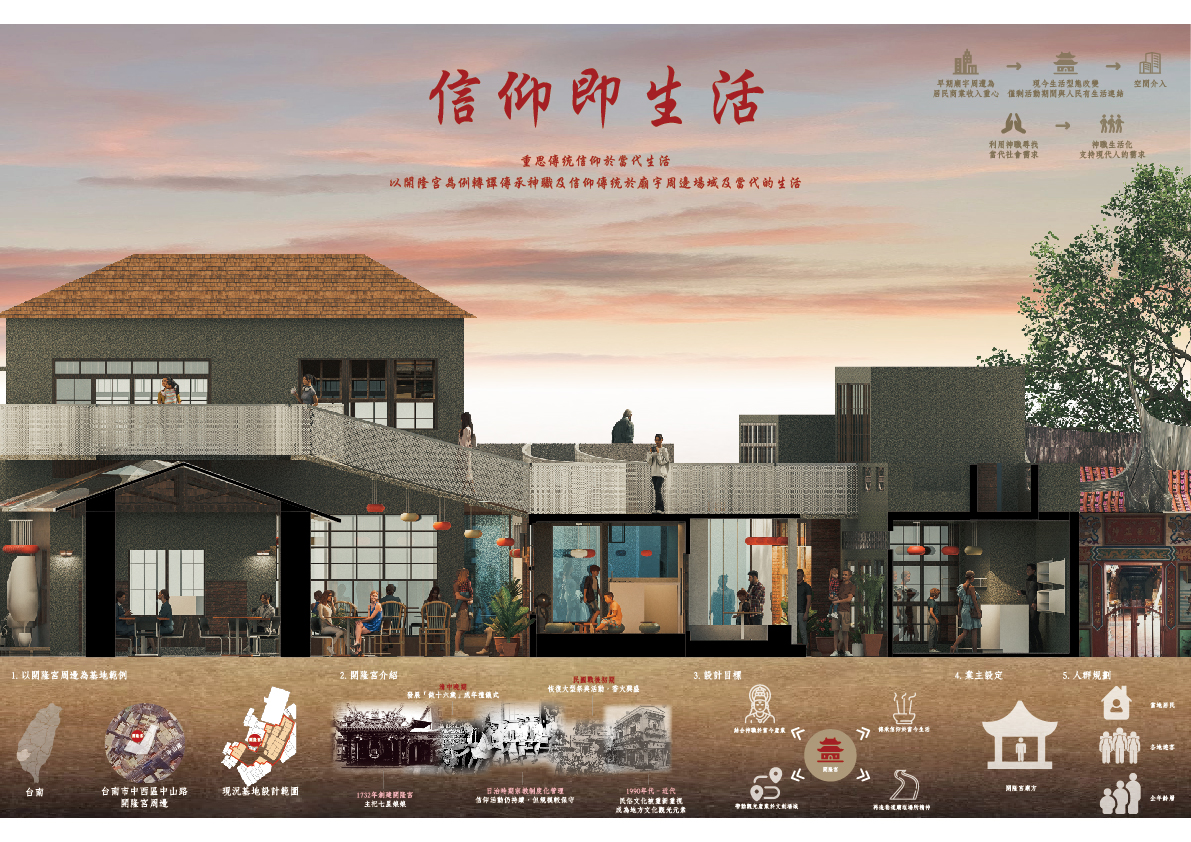
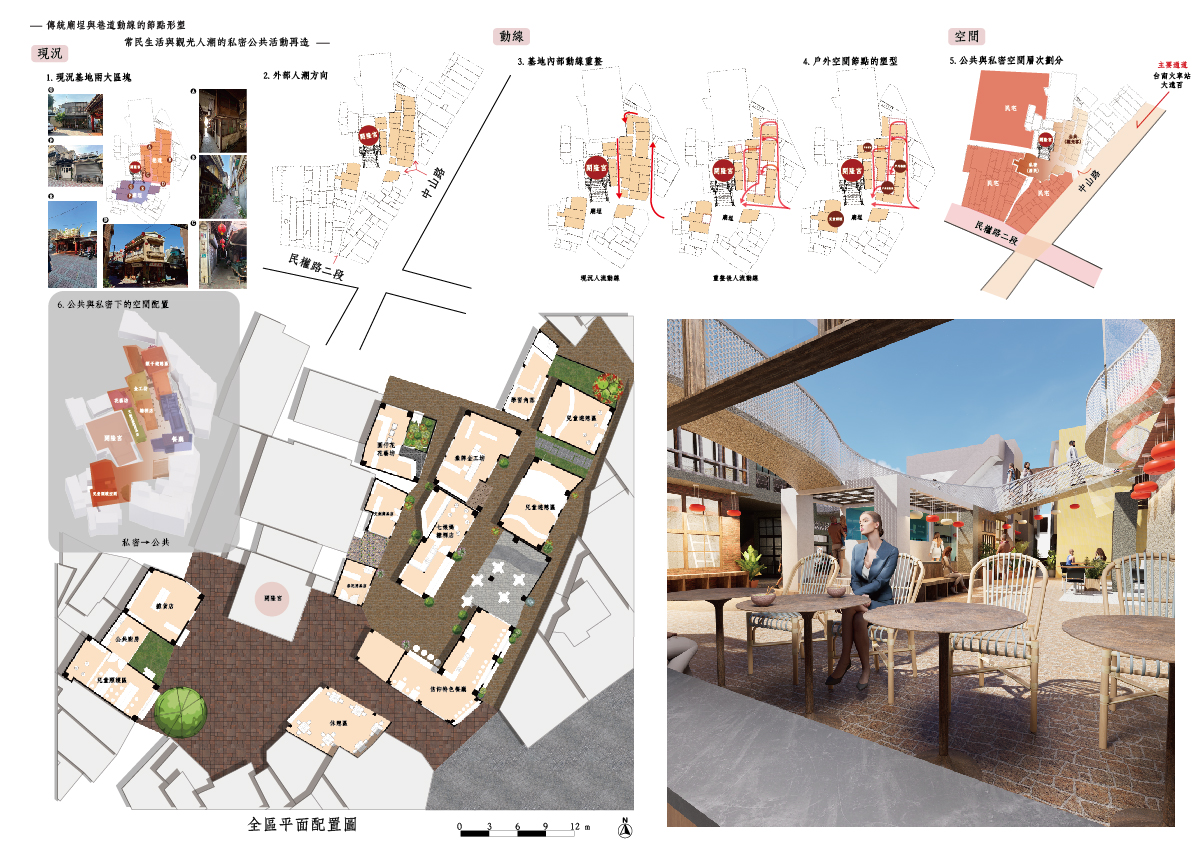
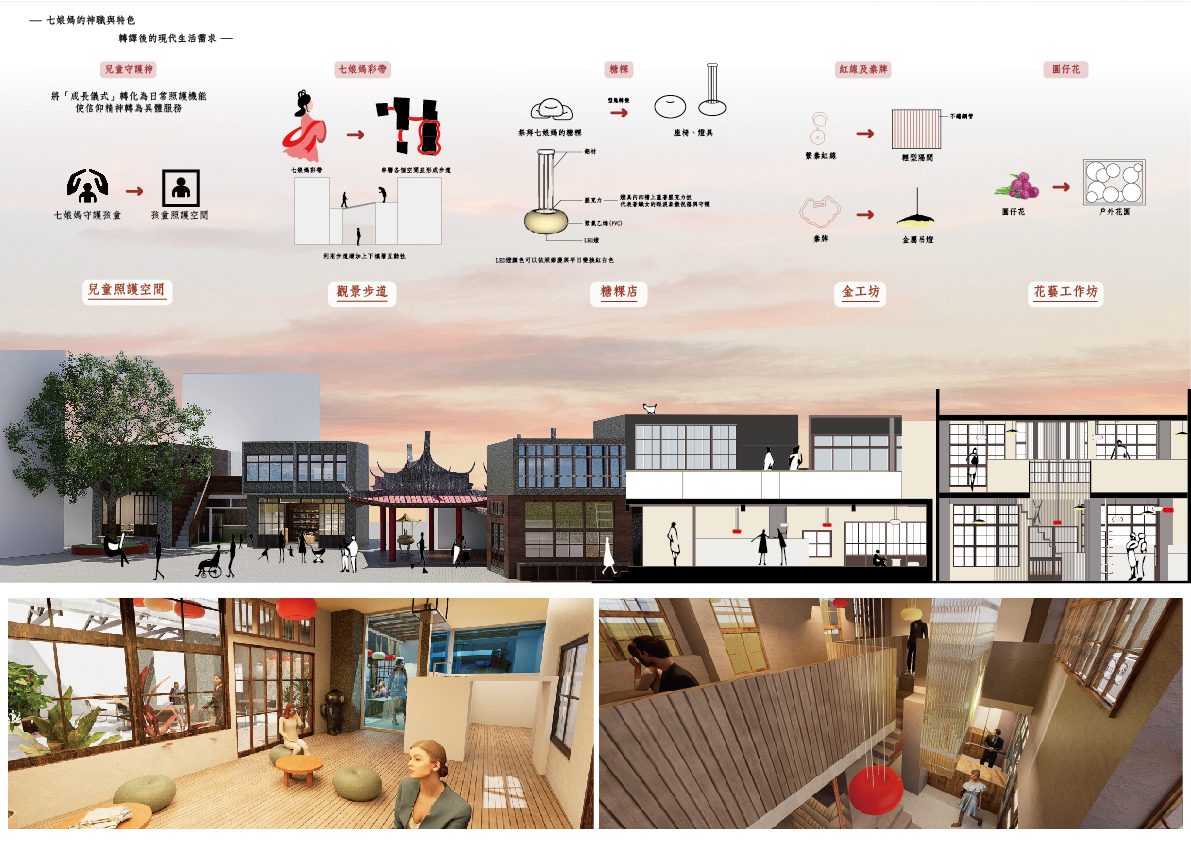
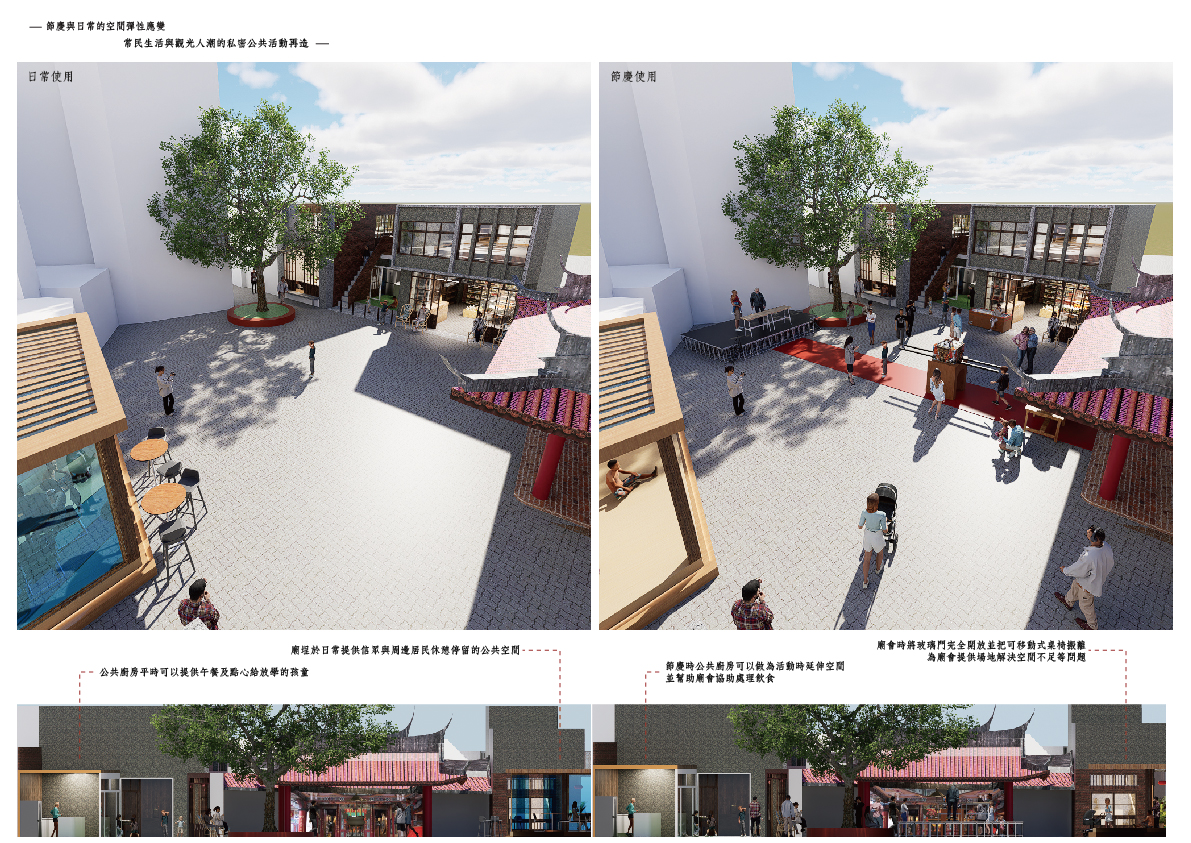
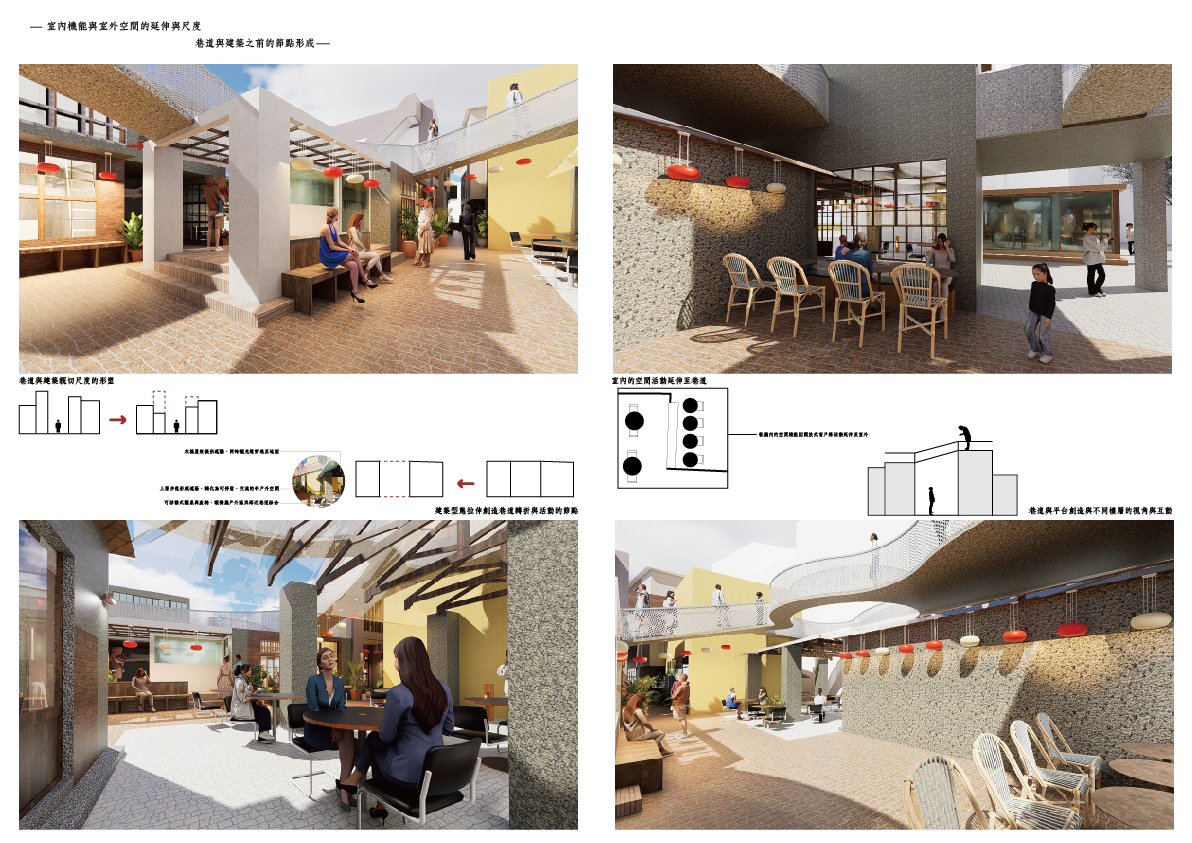
當代生活節奏與社會結構的轉變,使傳統信仰逐漸由日常生活中抽離,轉為節慶式、儀式性的存在,導致其文化意涵與社會連結日益弱化。以台南開隆宮為起點,重新檢視七娘媽信仰所承載的庇佑、成長與守護等神職意涵,並將其轉譯為符合當代需求的空間語彙與使用機能,嘗試回應信仰與現代生活之間的斷裂問題。透過巷道尺度的調整、動線的重新組織以及建築量體的退縮與延伸,重塑廟埕與周邊街區之關係,使其由單一宗教場域轉化為多元開放的生活節點。同時將七娘媽信仰中對兒童成長與日常庇護的象徵,轉化為具體的公共機能,如交流、休憩、學習與活動空間,使信仰不再僅存在於儀式之中,而能被實際感知與使用。透過設計介入,重建人與信仰、人與場域之間的關係,使傳統文化得以在當代語境中持續被理解與實踐。最終期望形塑一處兼具文化深度與日常活力的場域,讓信仰不再只是被觀看與參與的對象,而是自然融入生活、持續發生的存在,進而促進地方認同與文化延續的可能性。
The changing pace of modern life and the transformation of social structures have gradually detached traditional beliefs from daily life, transforming them into festive and ritualistic entities, leading to a weakening of their cultural significance and social connection. Starting with Tainan Kailong Temple, this study re-examines the divine connotations of the Seven Maidens worship—namely, protection, growth, and safeguarding—and translates them into spatial vocabulary and functional uses that meet contemporary needs, attempting to address the disconnect between faith and modern life. Through adjustments to alleyway scale, reorganization of circulation routes, and the receding and extending of building volumes, the relationship between the temple courtyard and the surrounding neighborhood is reshaped, transforming it from a singular religious space into a diverse and open living node.