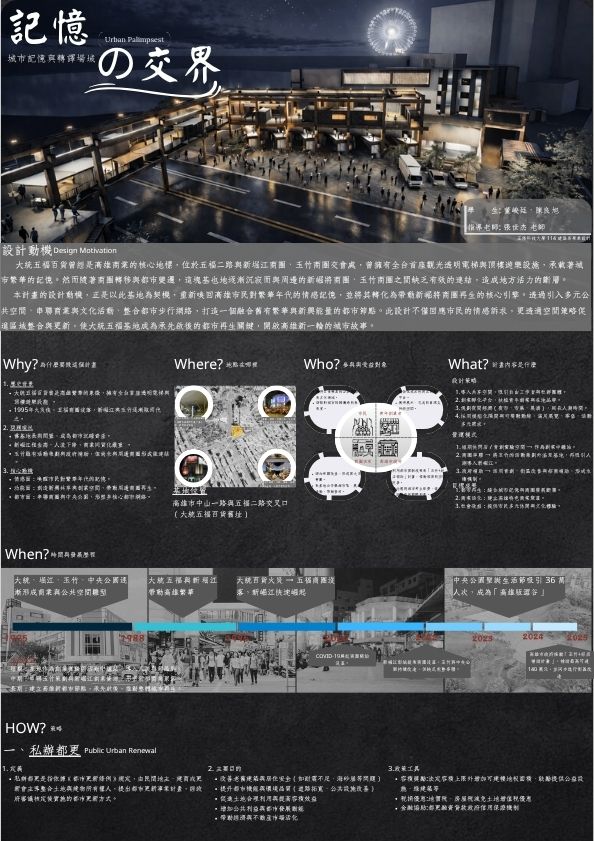
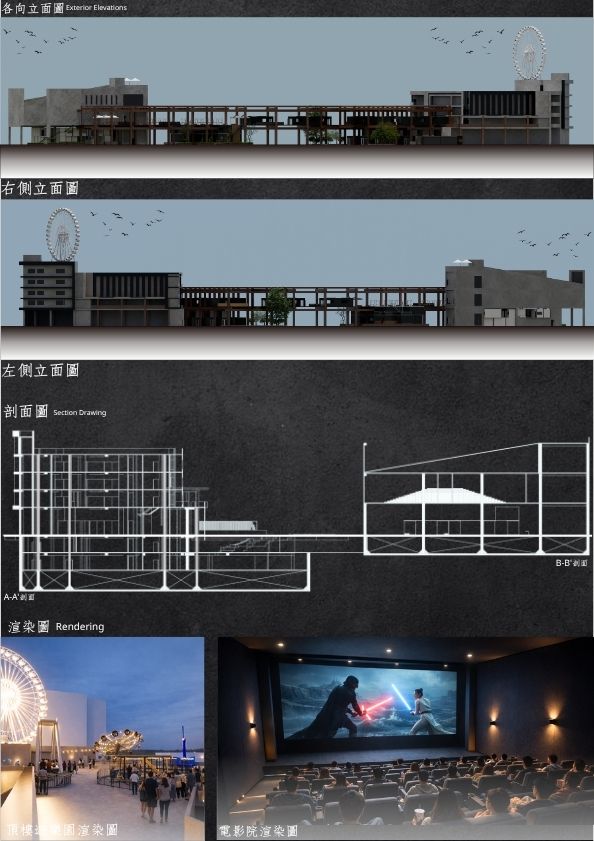
大統五福百貨曾為高雄核心商業地標,位於五福二路串聯新堀江與玉竹商圈的關鍵節點,承載城市繁華記憶。然而隨都市發展與商業重心轉移,基地逐漸失去活力,並與周邊商圈產生斷裂,形成都市紋理中的缺口。
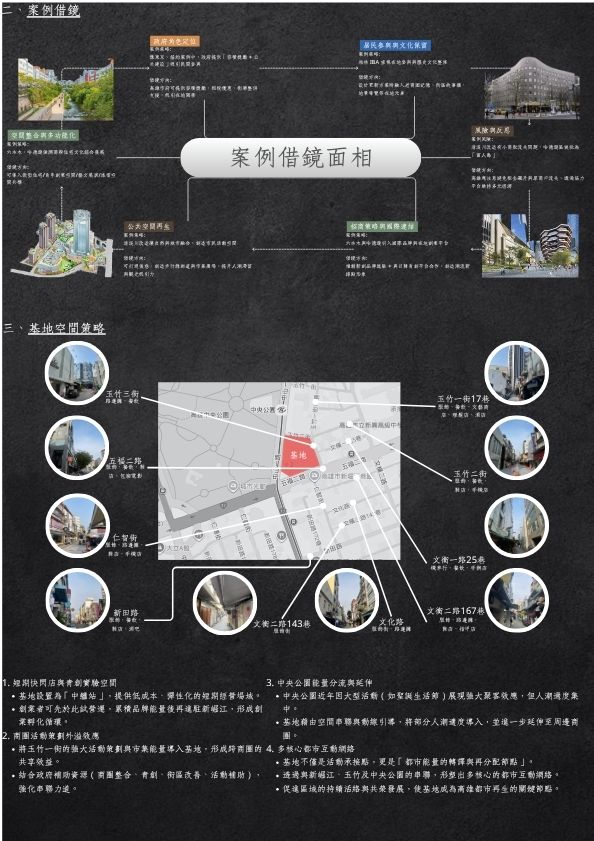
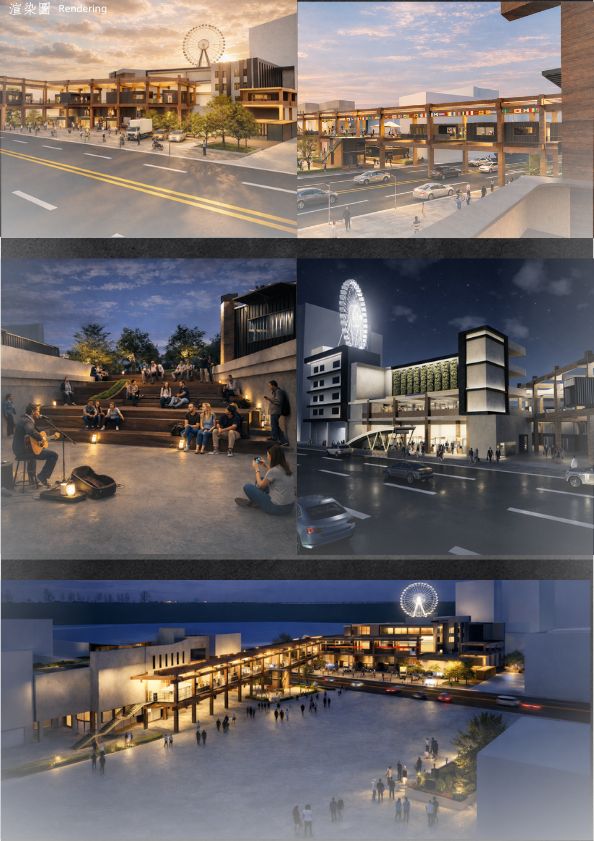
本計畫以「都市縫合」為核心命題,將基地視為串聯新舊商圈的轉譯介面,透過空間介入重新建構人流、活動與場域關係。設計導入複合式公共空間系統,整合商業、文化與開放空間,作為觸發區域再生的催化節點,重塑城市日常與集體記憶的交織場域。
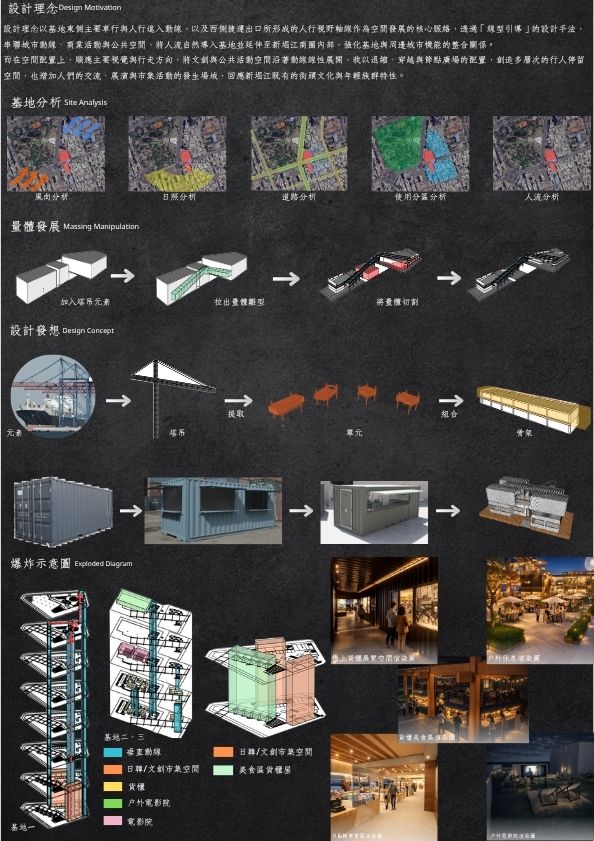
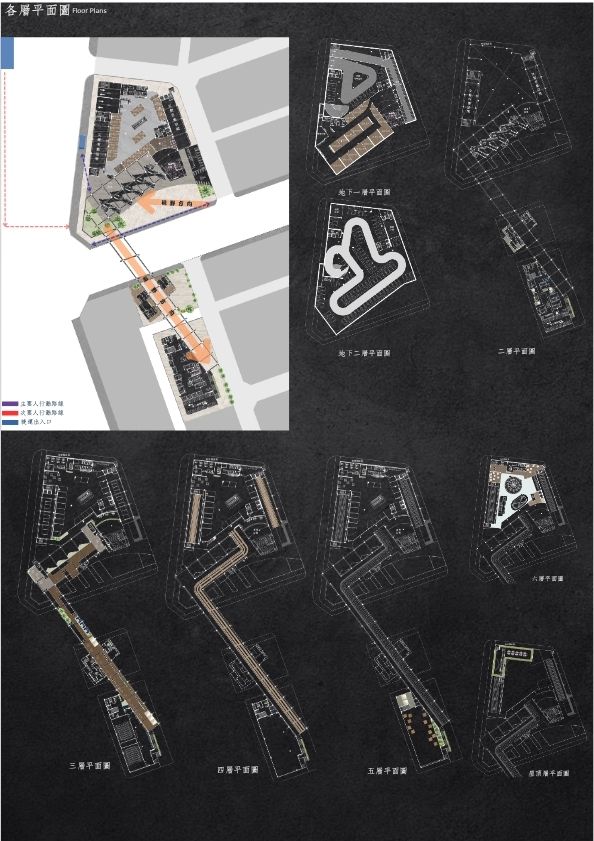
空間策略以東側主要人車動線與西側捷運出口所構成之視覺與行為軸線為基礎,發展「線性滲透」的設計語彙。透過開放通廊、穿越動線與視覺延續,引導人流穿越基地並延伸至新堀江內部,建立連續且可滲透的都市界面。
量體配置順應動線展開,結合退縮、穿透與節點廣場,形成多層次的公共場域結構。沿線配置文創展演、街頭活動與市集空間,強化停留與互動機制,回應新堀江既有的青年文化與街區特性。
本設計透過空間重構與動線整合,將基地轉化為連結過去與未來的都市觸媒,重新啟動場域活力,開啟高雄城市再生的新敘事。
The President Department Store Wufu site was once a major commercial landmark in Kaohsiung, located at the intersection of Wufu 2nd Road, the Xinjuejiang district, and the Yuchu market area. However, with urban transformation and the relocation of commercial centers, the site has declined, resulting in fragmentation between surrounding districts.
This project adopts “urban stitching” to redefine the site as an interface that reconnects fragmented urban fabrics. A hybrid public space system integrates commercial and cultural functions to reactivate urban life. The design is structured around a primary east–west axis, developing a “linear permeability” approach that guides movement through open corridors and visual continuity. Building volumes are arranged along this axis with setbacks and nodal plazas to create a layered public realm. The project ultimately transforms the site into an urban catalyst that restores connectivity and reactivates the district.