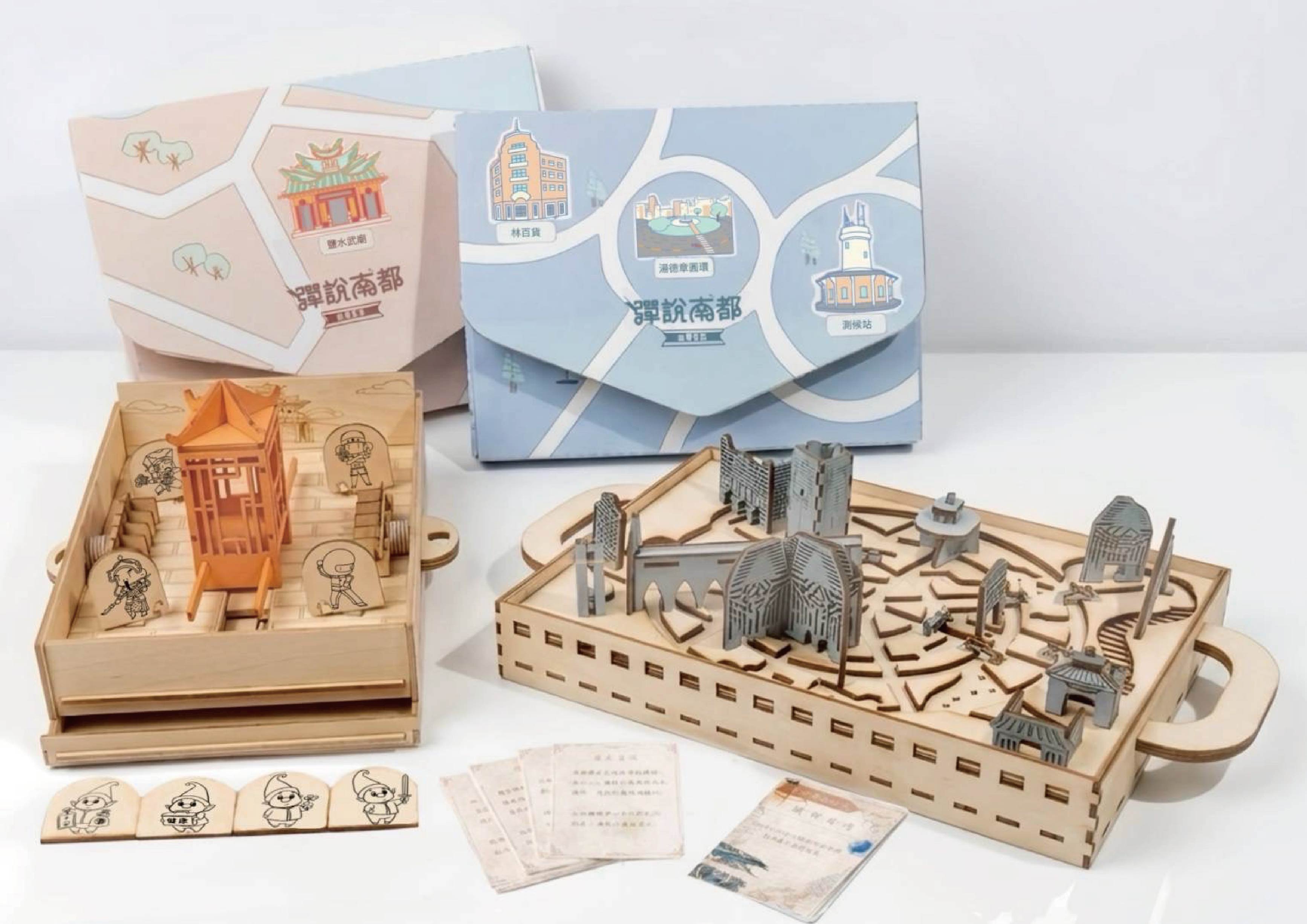
本專案打破傳統彈珠台的單一線性路徑,開發出兩套完全不同物理回饋的交互系統,將台南的「空間認知」與「祭典動能」轉化為深度的遊戲機制。
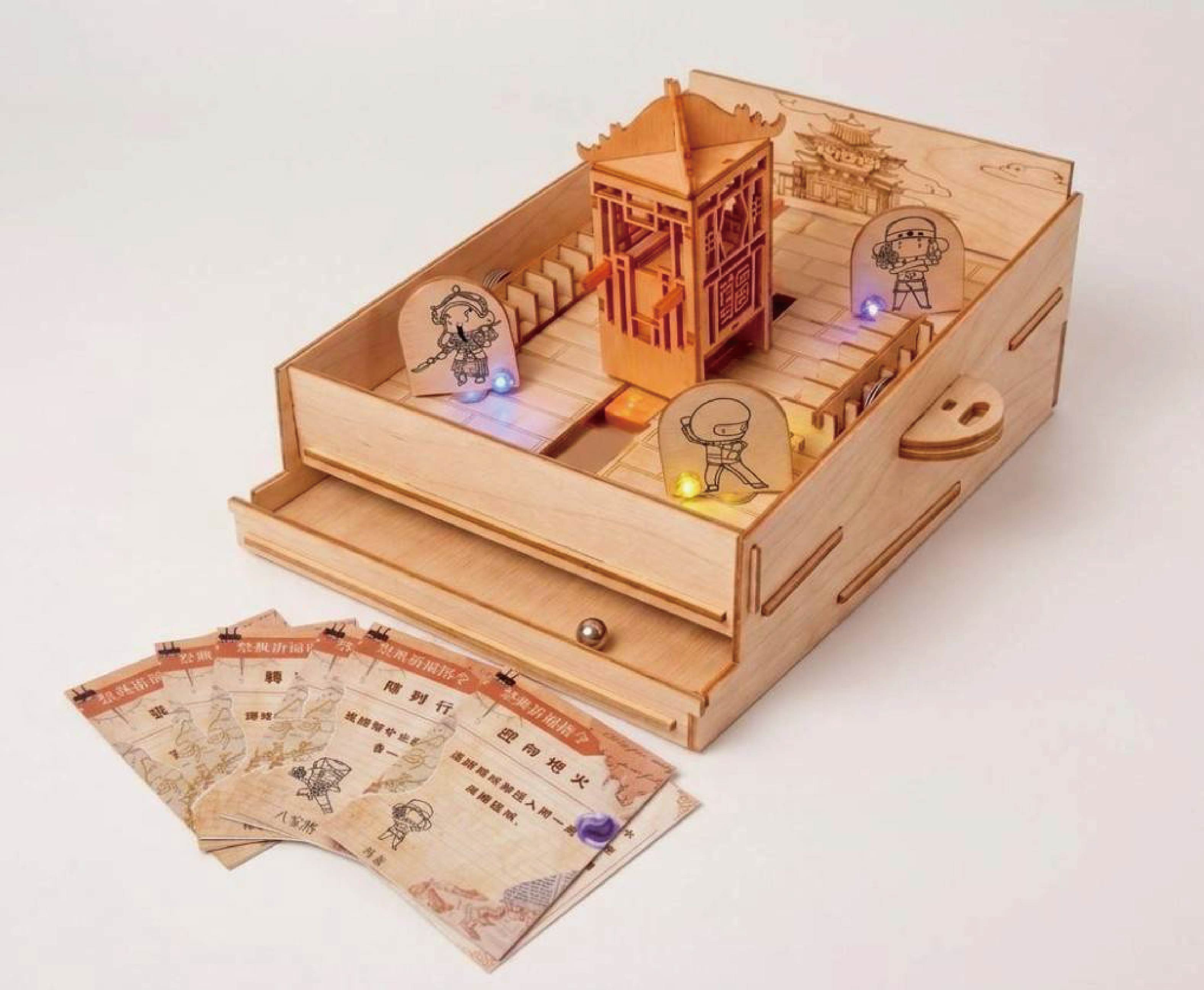
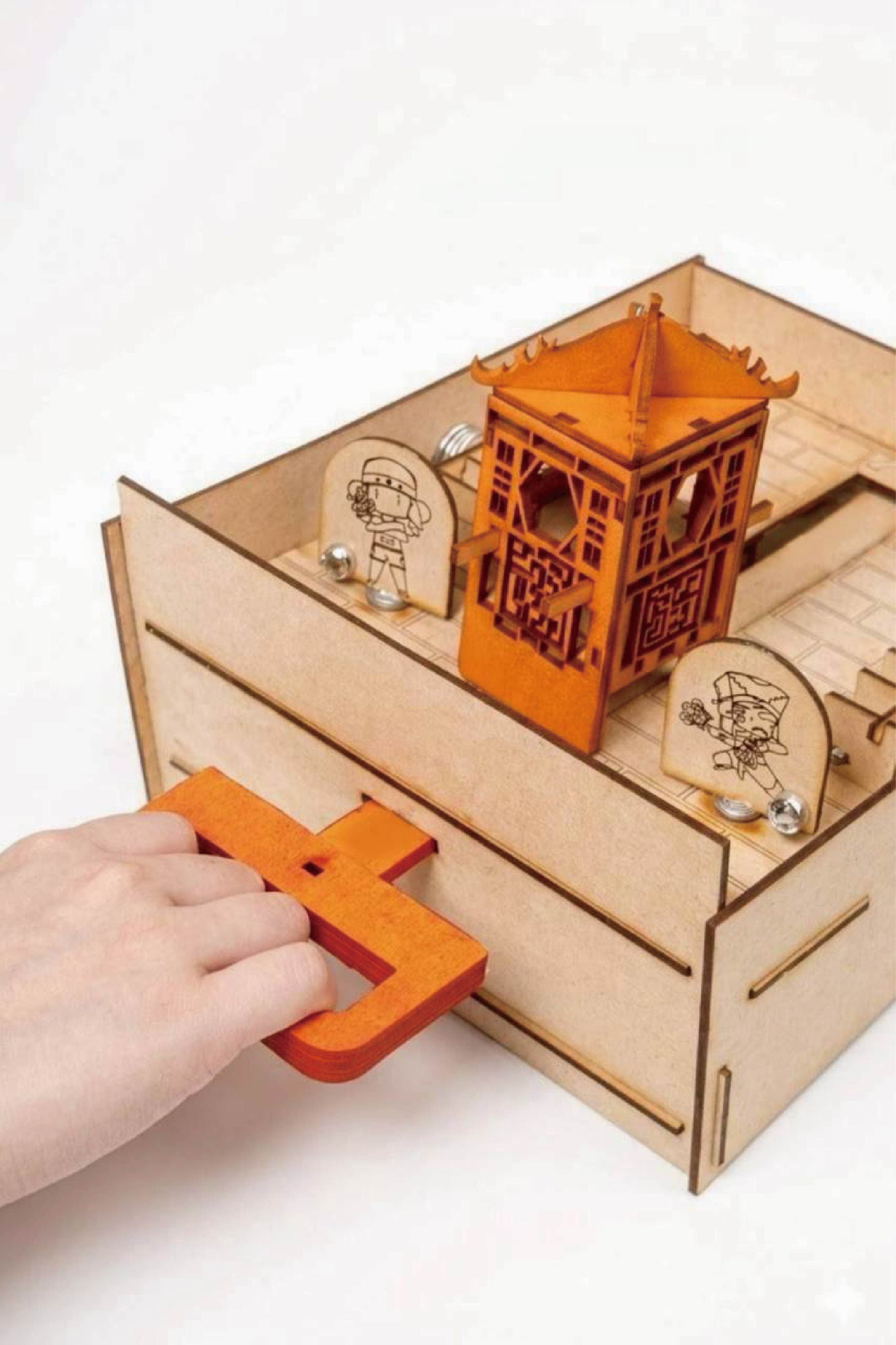
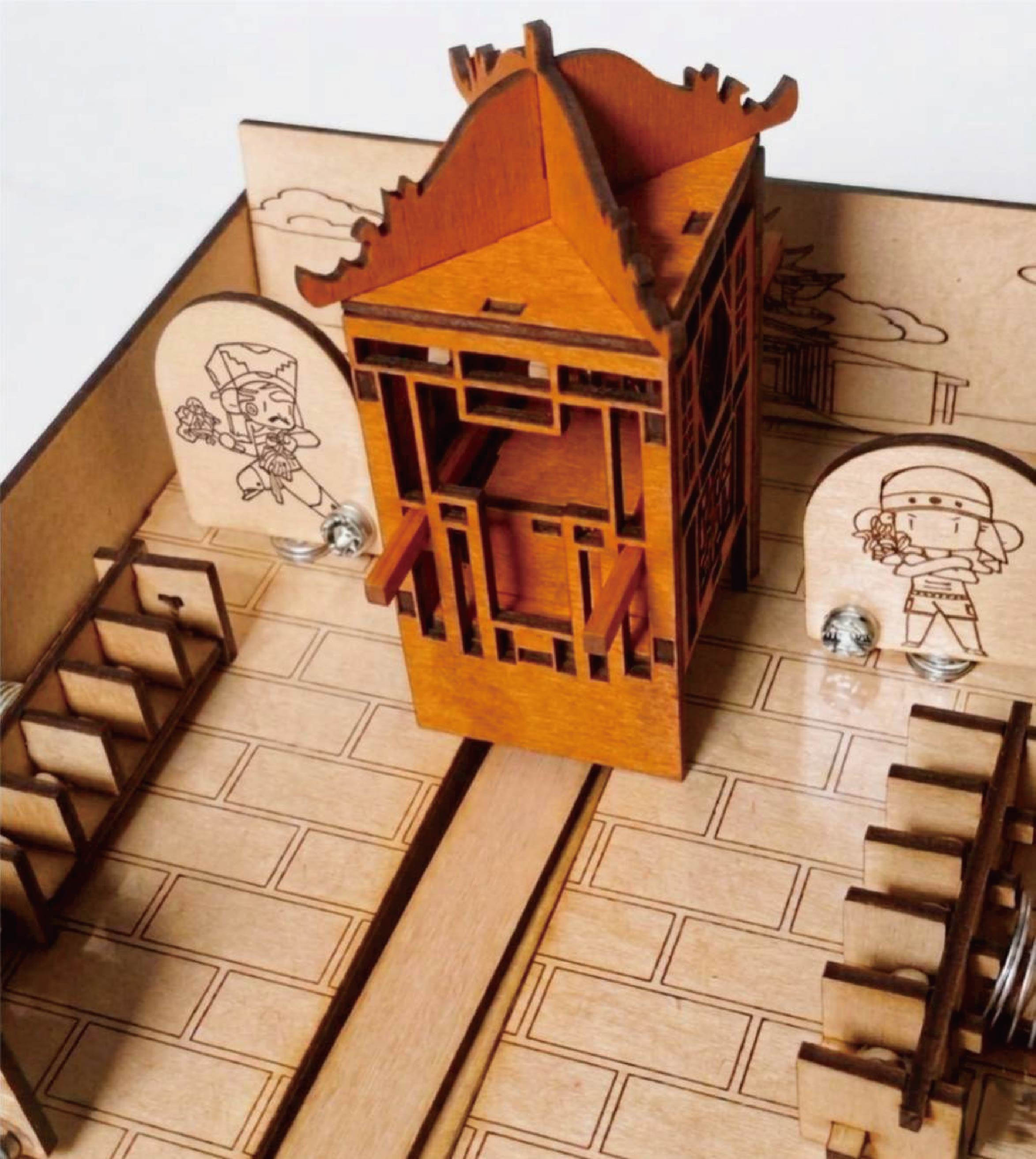
在「鹽水蜂炮」中,交互邏輯轉向「動態時機博弈」。我們將民俗核心「犁神轎」轉化為可手動抽拉的位移機構,玩家必須在神轎「三進三退」的動態障礙中,精準抓準「五連發發射器」的彈射時機。這種強調「入陣」與「節奏感」的設計,重現了祭典現場的壓力與爆發力。
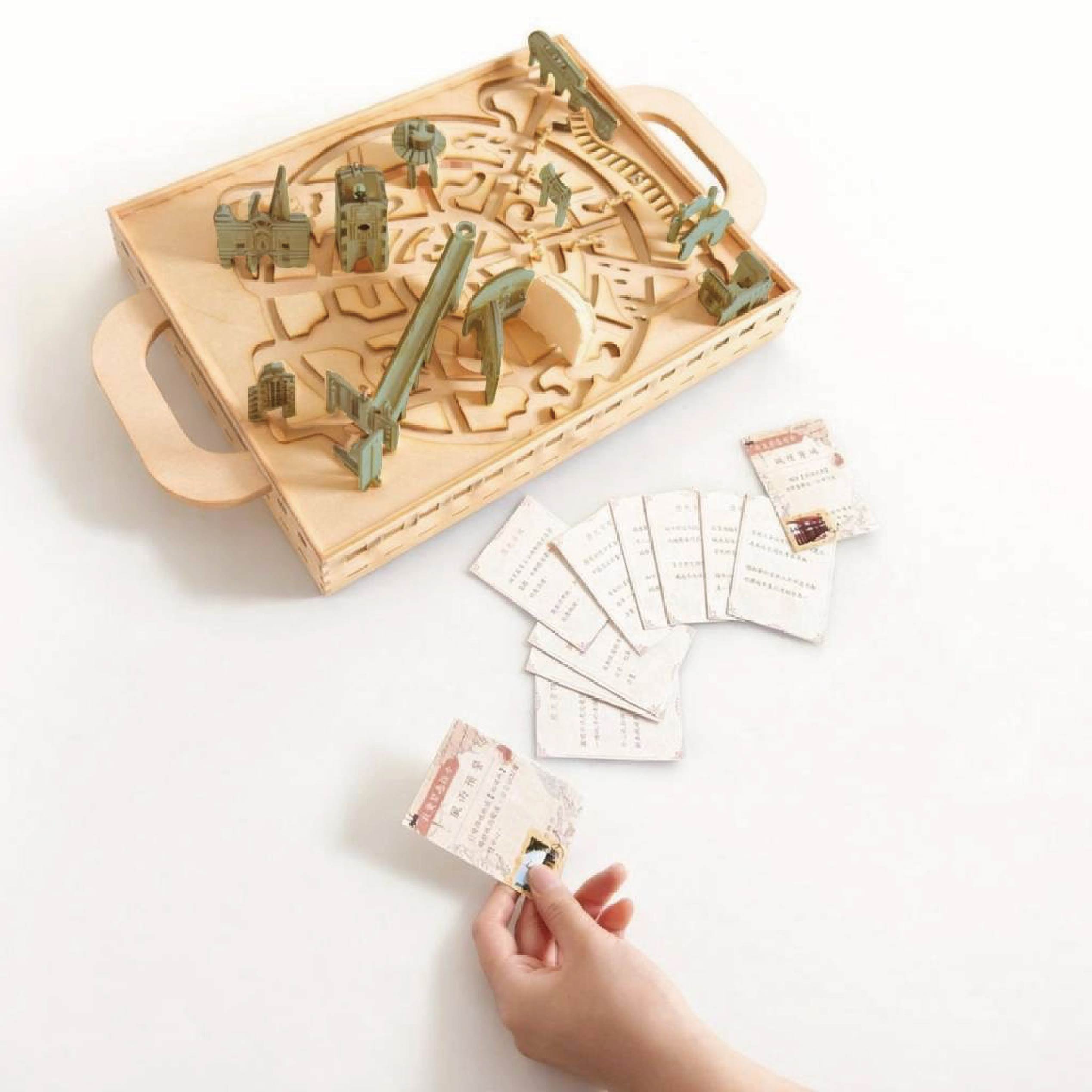
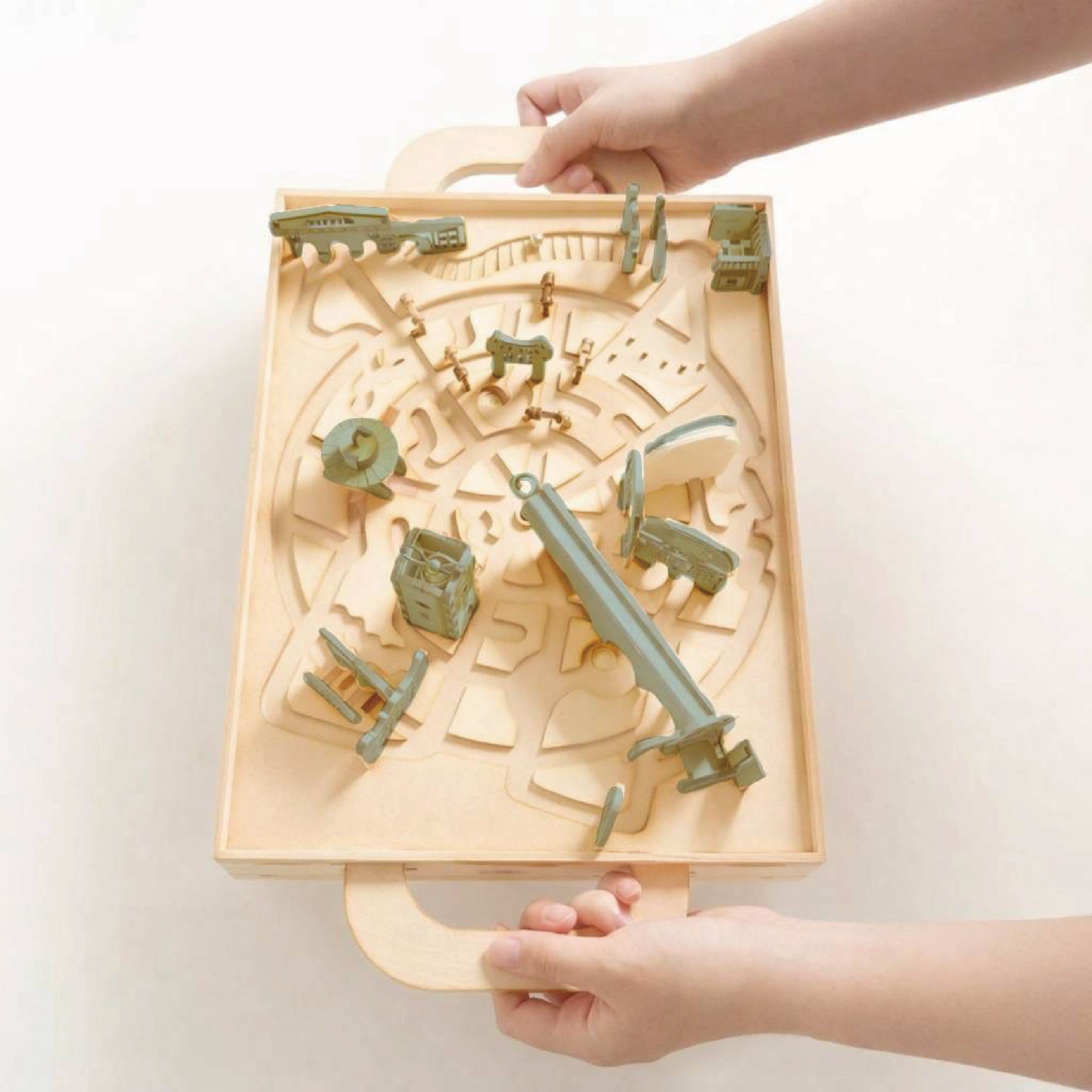
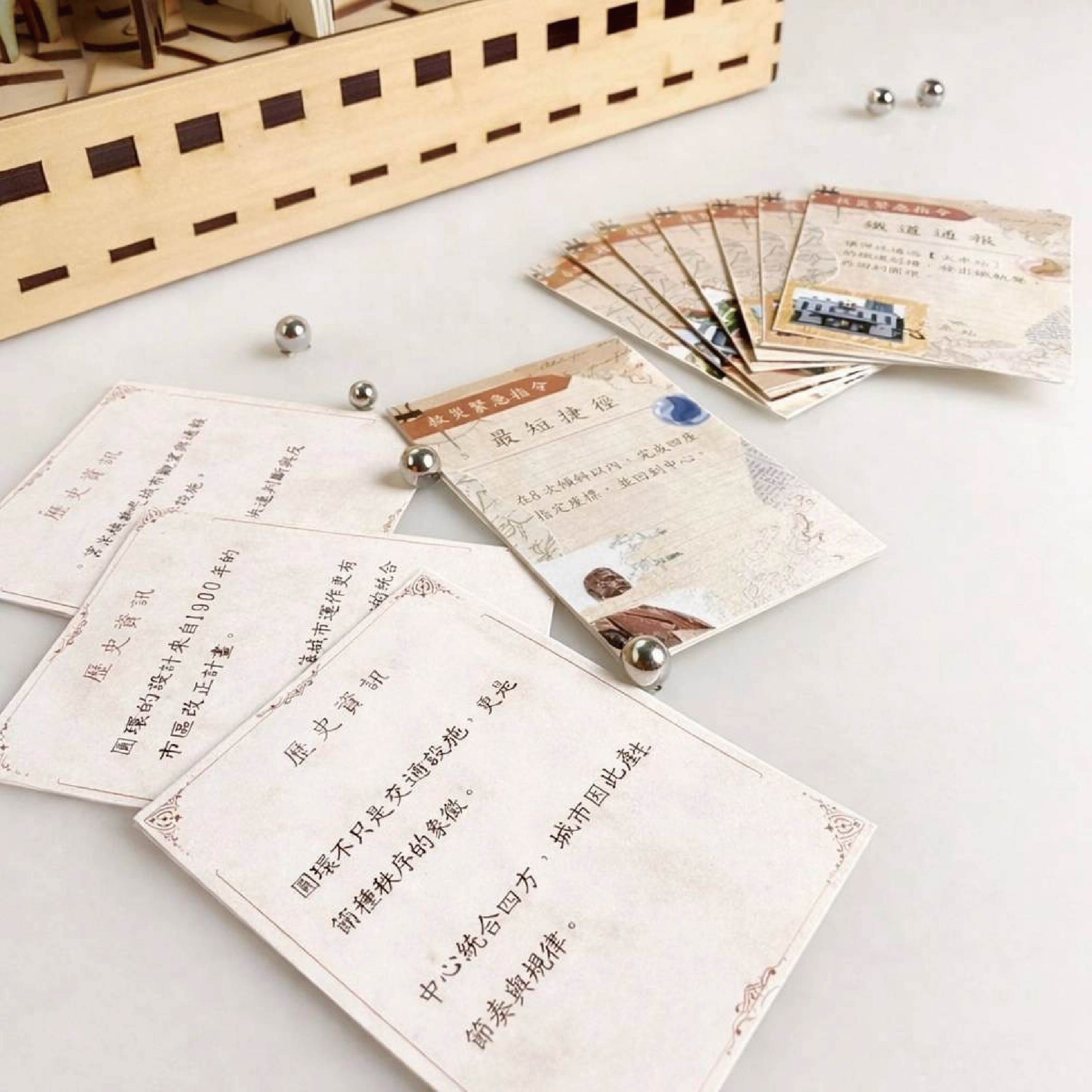
而在「湯德章圓環」中,核心玩法採取「雙手重心平衡控制」。玩家不再是旁觀彈珠隨機跳動,而是化身為城市領航員,透過雙手微調盤面的傾斜角度,引導彈珠在復刻1947年的放射狀溝槽中滑行。這種「非發射式」的重力博弈,強迫玩家必須在路徑選擇與物理慣性間取得平衡,將枯燥的地景導覽轉化為高專注力的體感挑戰,進而達成對城市空間結構的深刻理解。
遊戲更透過「感官回饋」建立特殊的交互循環:彈珠擊中林百貨、文學館或蜂炮障礙時,會觸發模擬真實聲景的碎響。這種結合「平衡重心」與「動態時機」的雙軌設計,讓這套作品不只是玩具,而是一場透過指尖操作,重新定義文化資產參與方式的「感官式桌遊」。
This project reimagines traditional pinball by creating two interactive systems, transforming Tainan’s spatial layout and festival energy into immersive gameplay.
In the “Yanshui Beehive Fireworks,” players engage with timing-based mechanics. A sliding palanquin obstacle requires precise launch of a five-shot marble emitter, recreating the rhythm and explosive energy of the festival.
In the “Tang Dezhang Roundabout,” gameplay focuses on two-handed balance control. Players tilt the board to guide marbles through radial tracks inspired by 1947 streets, turning spatial navigation into a tactile challenge.
Sensory feedback enhances immersion: impacts trigger sounds that mimic real environments. By combining rhythm, balance, and environmental cues, the project transforms a tabletop game into an interactive, cultural experience that engages both touch and perception.