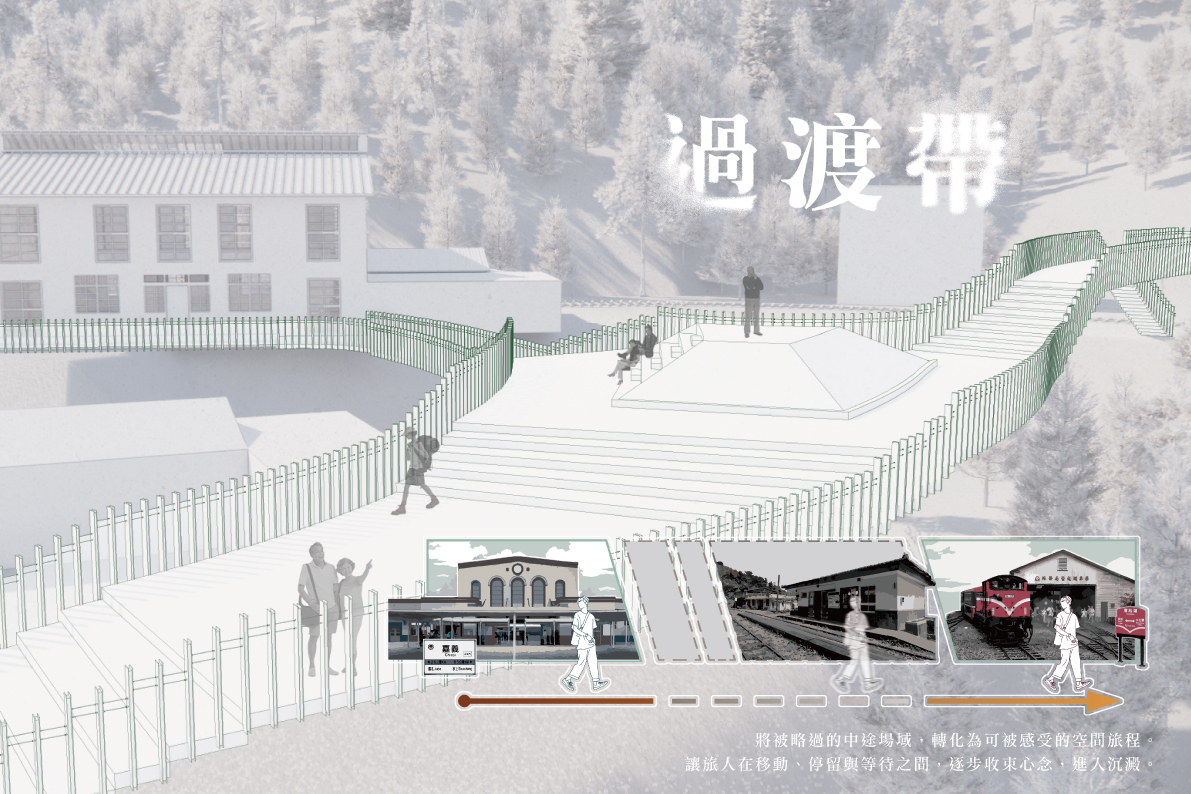
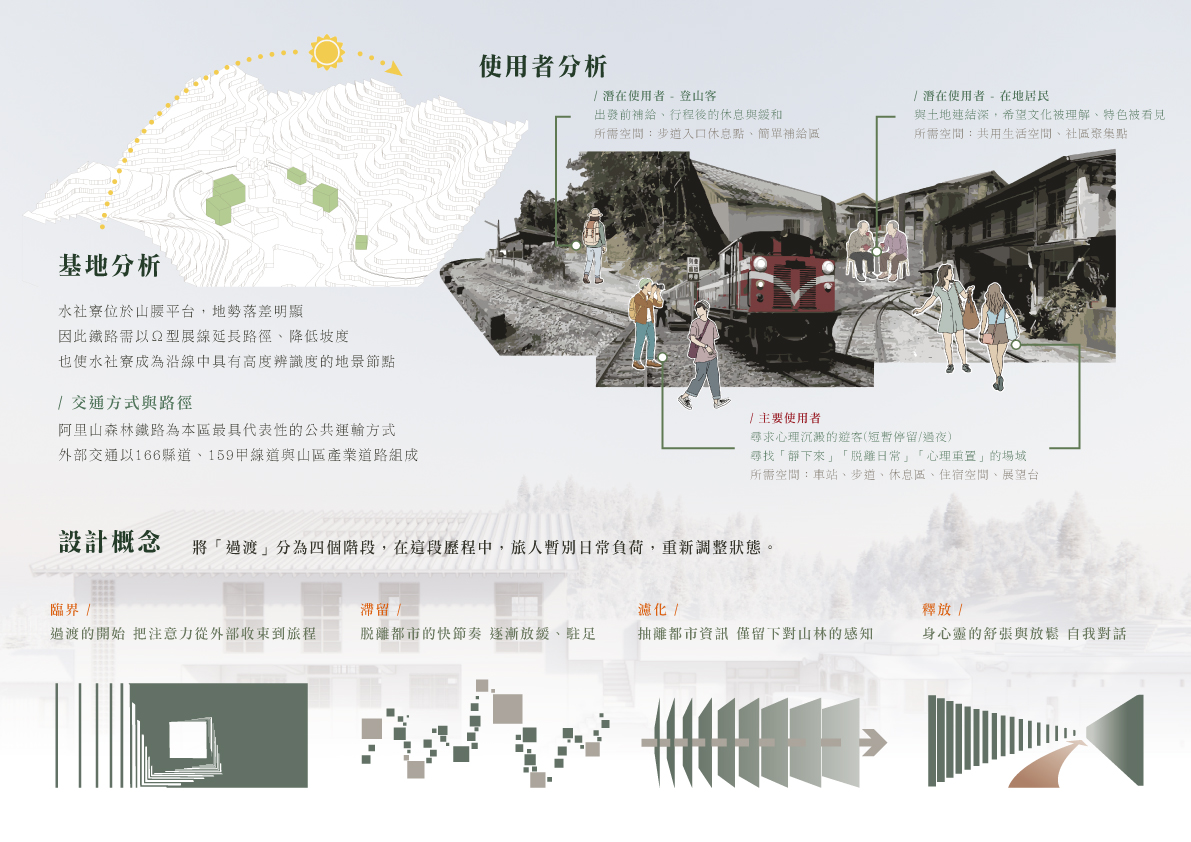
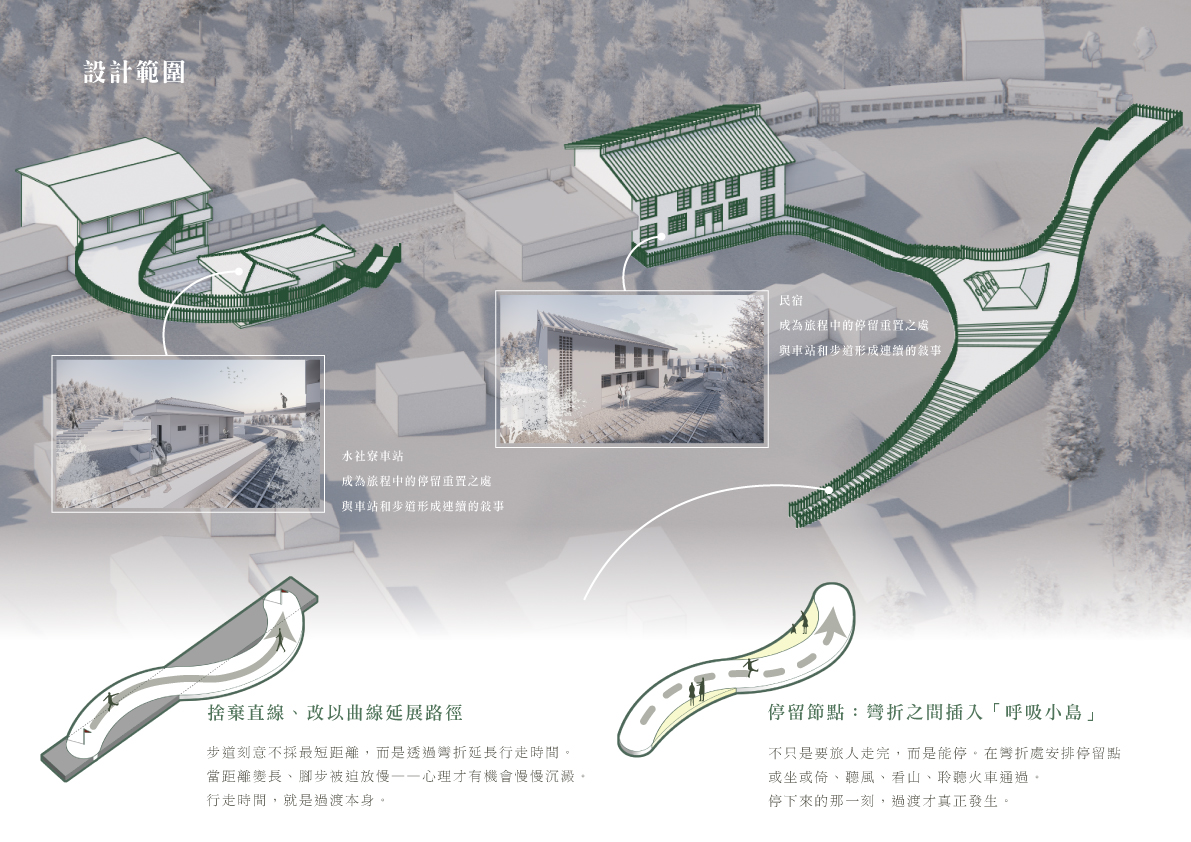
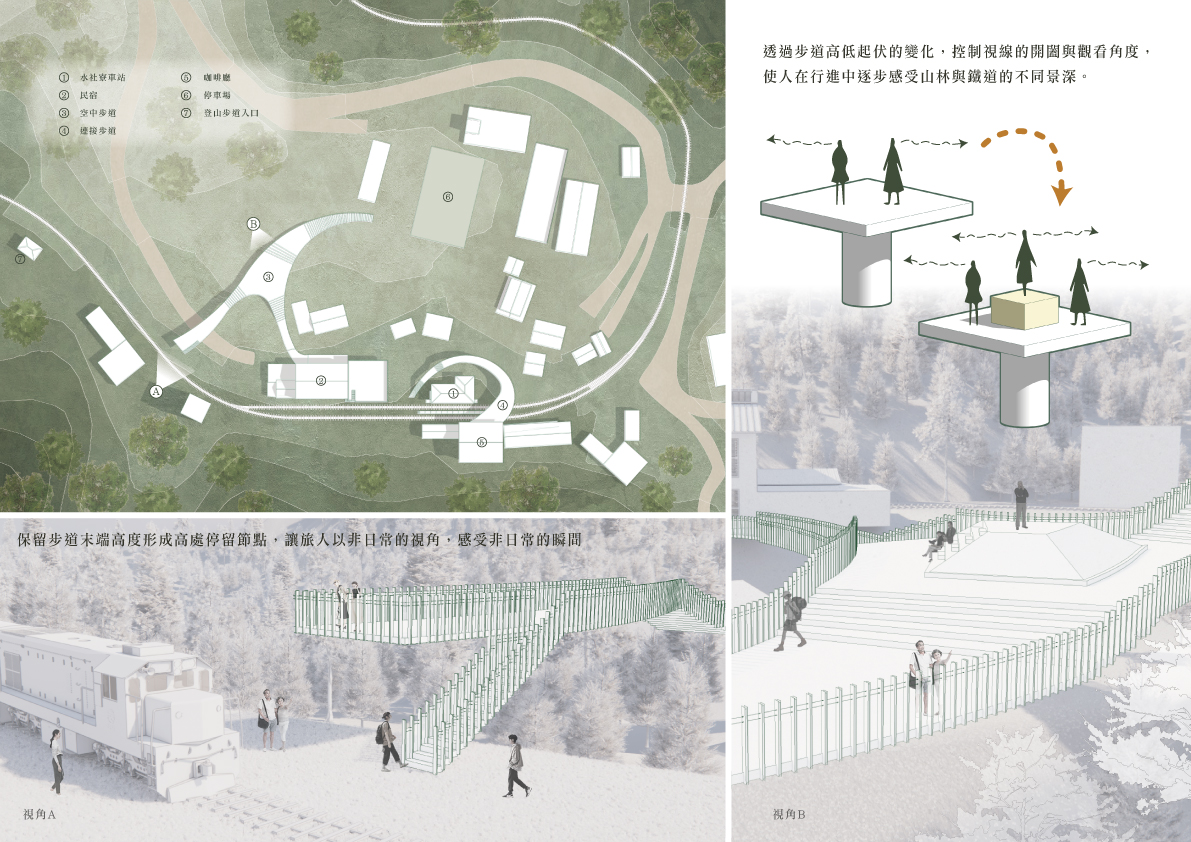
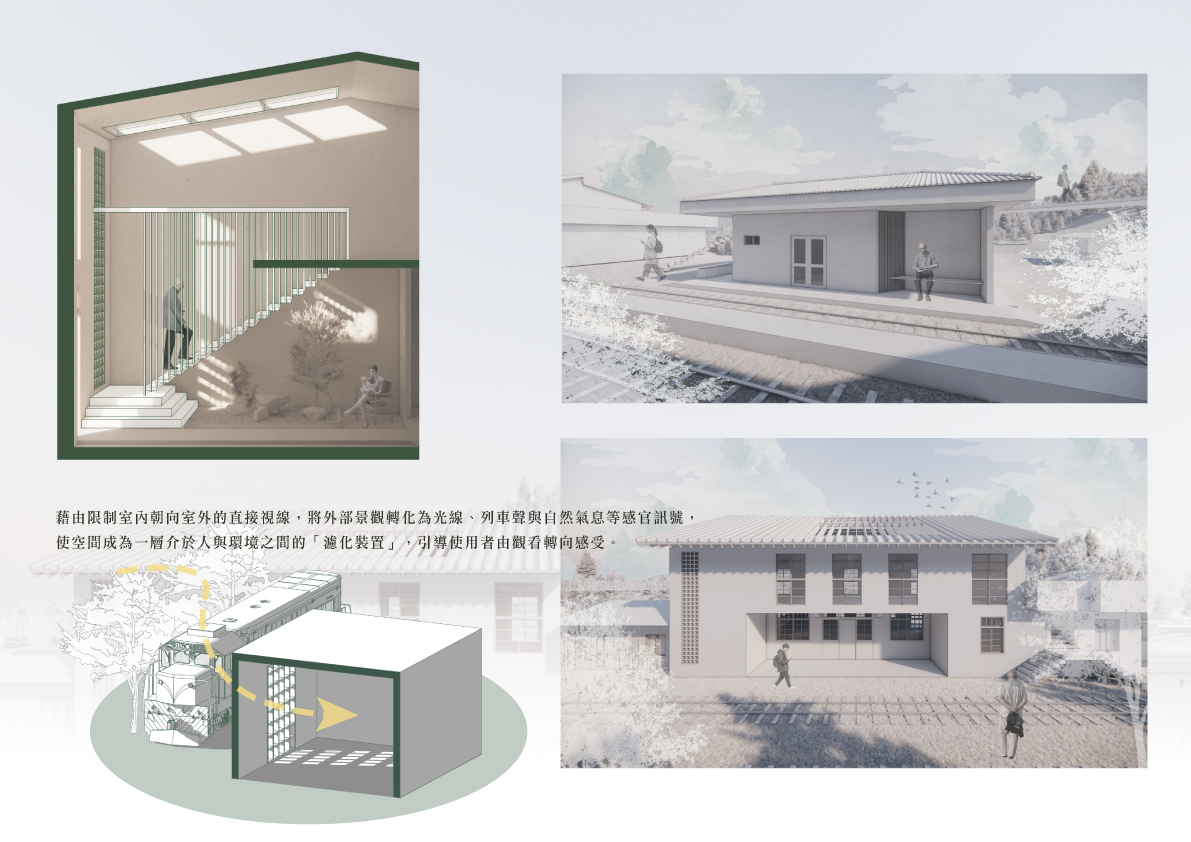
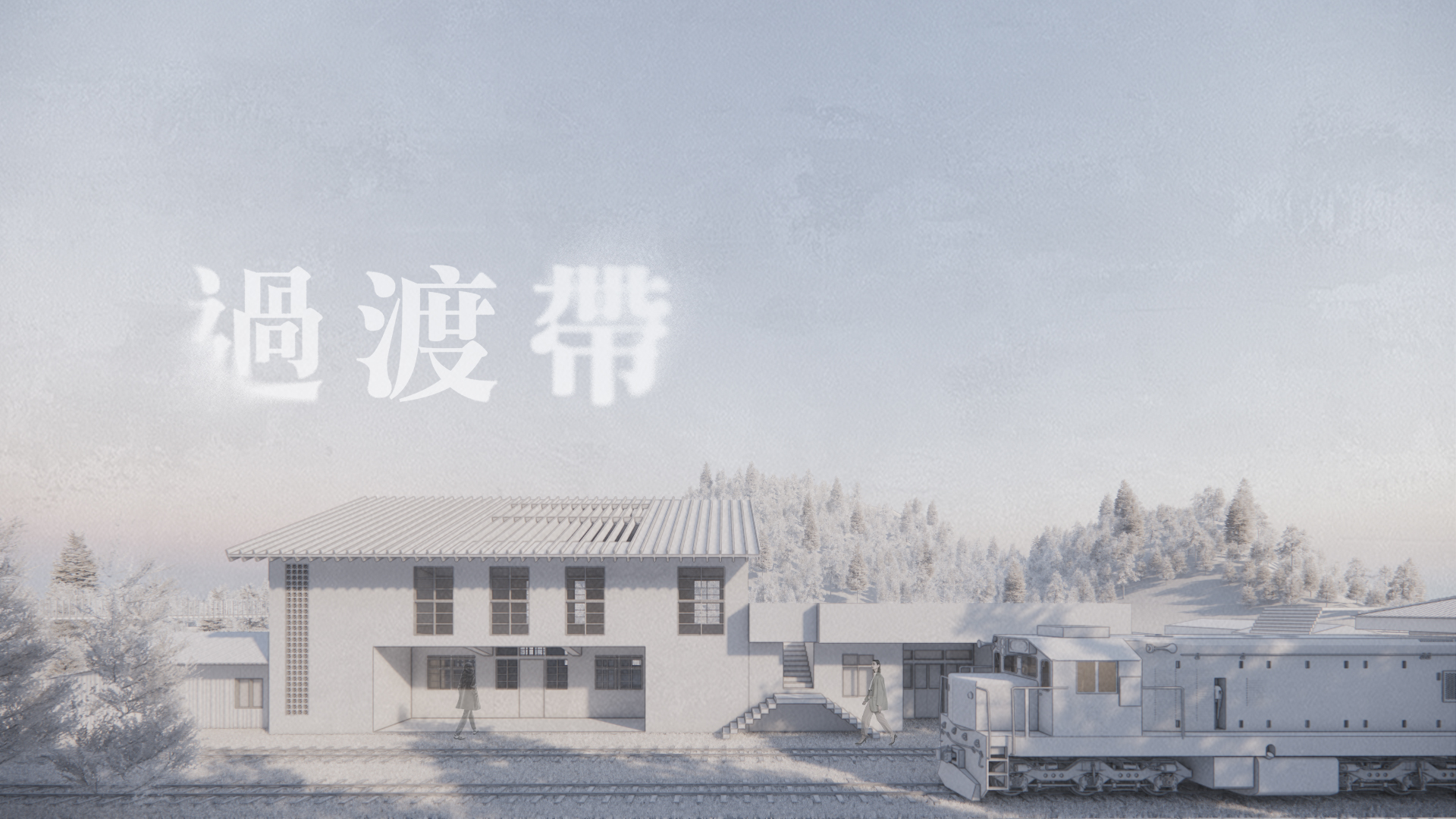
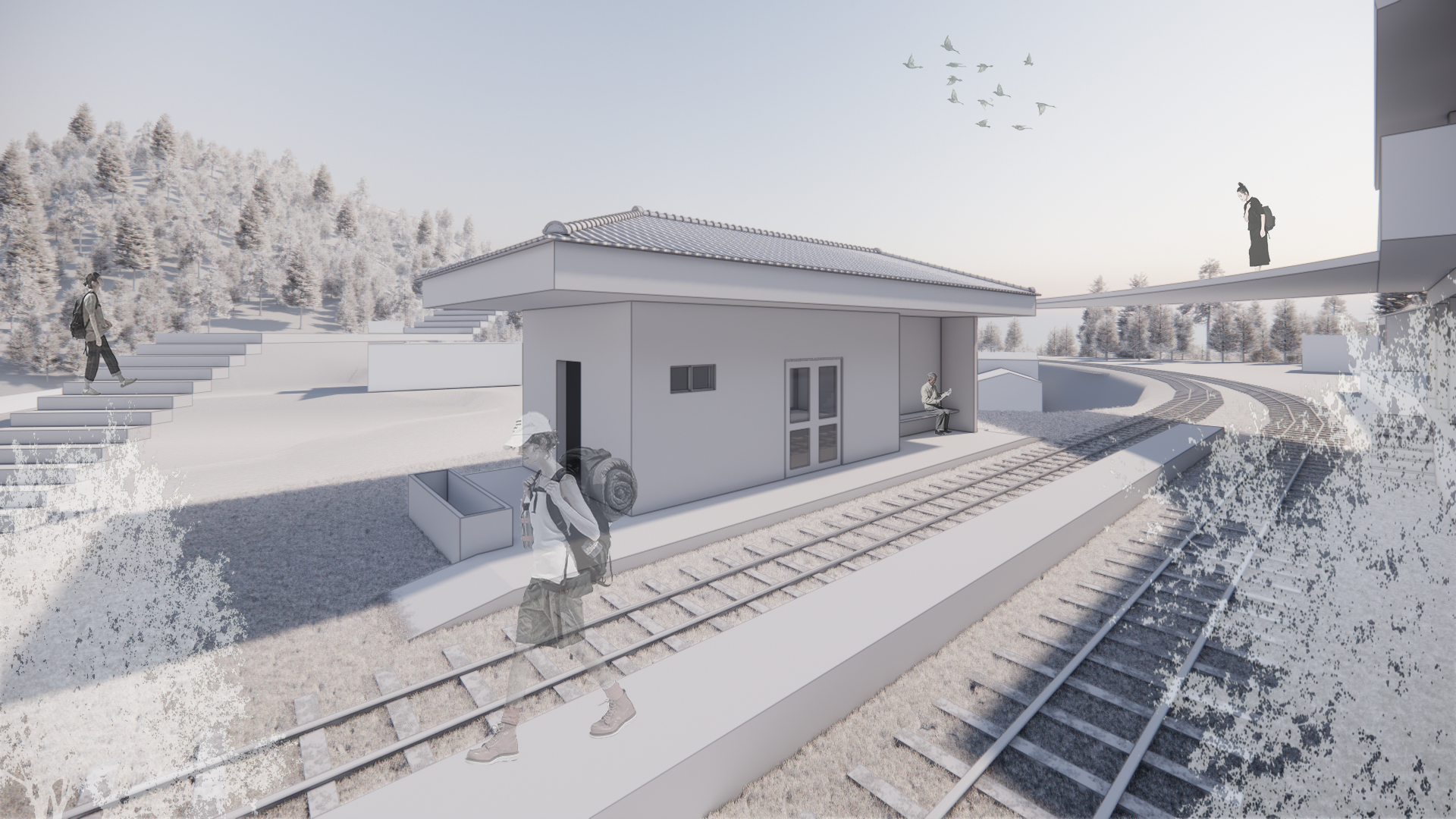
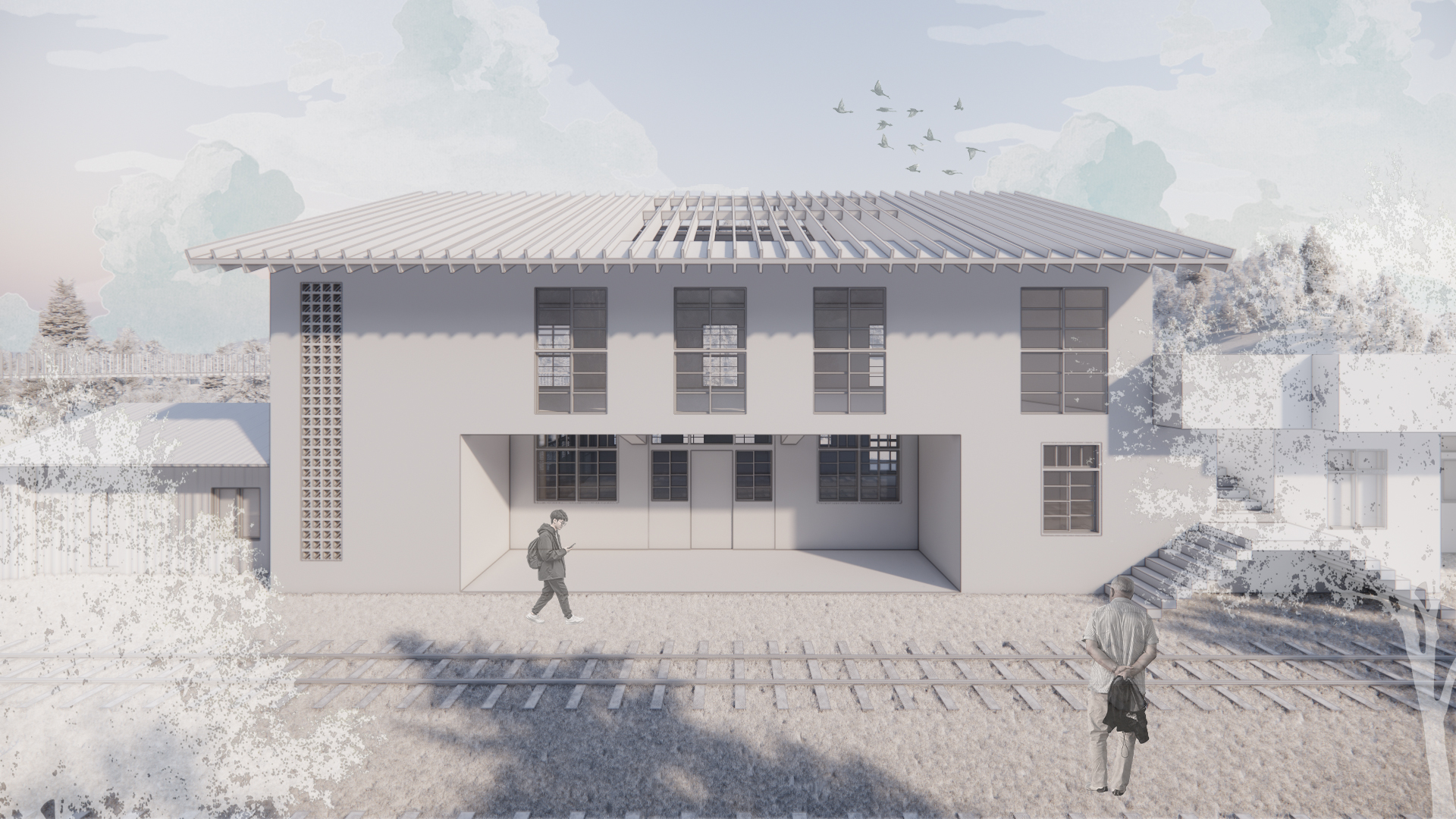
本設計以水社寮作為觀光旅程中的中介場域,回應其長期作為被忽略的過渡節點之狀態。相較於奮起湖作為明確目的地所承載的停留價值,水社寮更多時候僅被視為通往目的地的途中,缺乏被感知與停留的可能,也因此逐漸失去作為聚落與車站節點的空間意義。因此,本案試圖重新定義「中途」的價值,將原本被略過的過境經驗,轉化為一段可被感受、可被停留的旅程片段。透過節點串聯、空間層次轉換與感官濾化等設計手法,整合車站、聚落、停車場與周邊山林環境,重構旅人在移動、停留與等待中的感知節奏,建立具有連續性與層次感的空間經驗。藉由限制直接觀看風景的方式,轉而引入光線、列車聲與自然氣息,使空間成為人與環境之間的過渡介面,讓旅人在行進與停留之間逐步收束心緒,從單純的經過轉向感受與沉澱,重新體會旅程中「途中」本身所具有的空間價值與心理意義。
This project takes Shuishèliáo as an intermediate site within a tourist journey, responding to its long-standing condition as an overlooked transitional node. Unlike Fenchihu, which is recognized as a clear destination, Shuishèliáo is often treated merely as a point along the way, lacking opportunities to be truly perceived or inhabited. This project seeks to redefine the value of the “in-between” by transforming a bypassed transit experience into a perceivable and inhabitable journey fragment. Through node connection, spatial layering, and sensory filtering, the design integrates the station, settlement, parking area, and surrounding mountain landscape. By limiting direct views and instead introducing light, train sounds, and forest atmosphere, the space guides travelers from mere passage toward reflection, pause, and emotional settling.