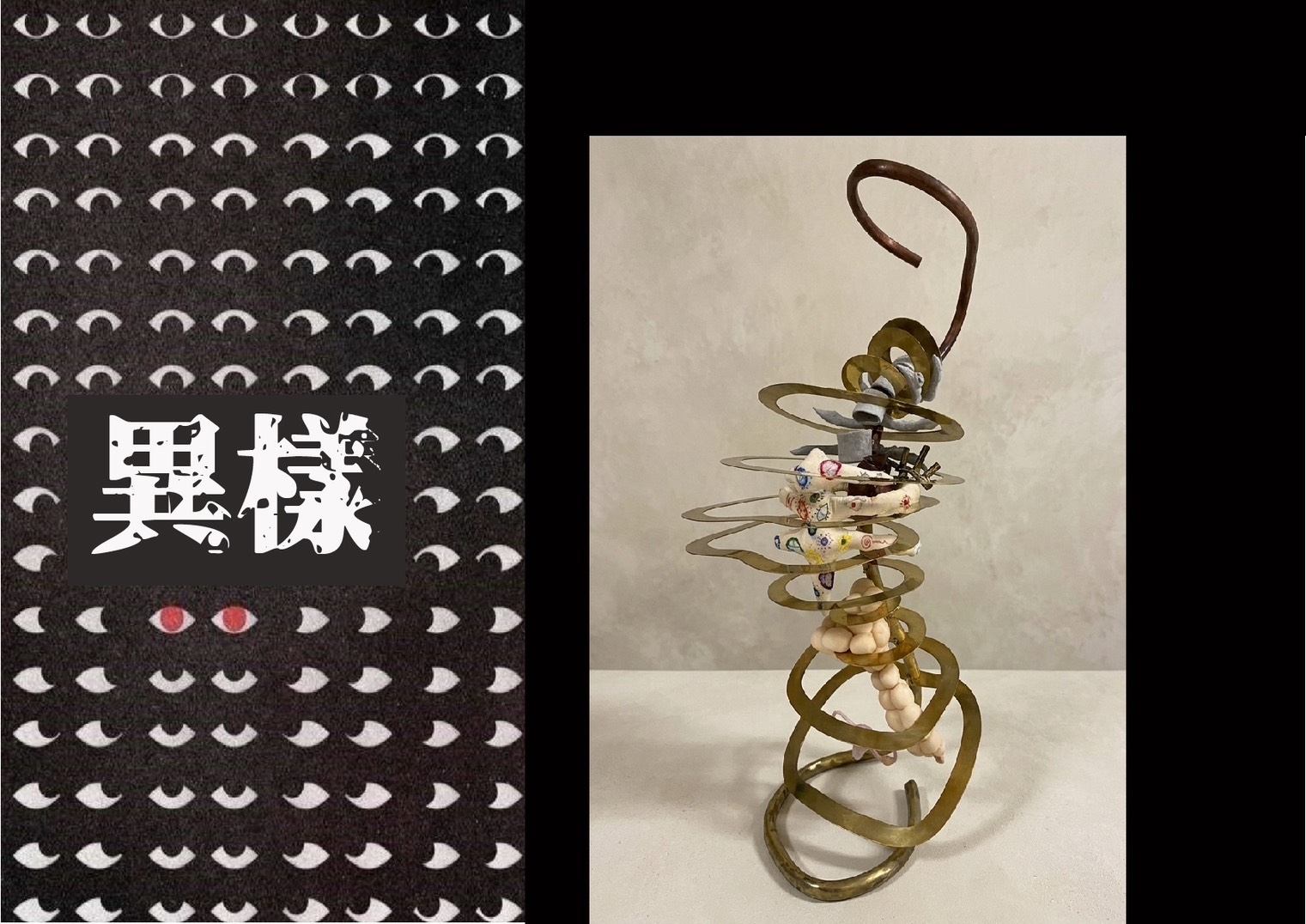
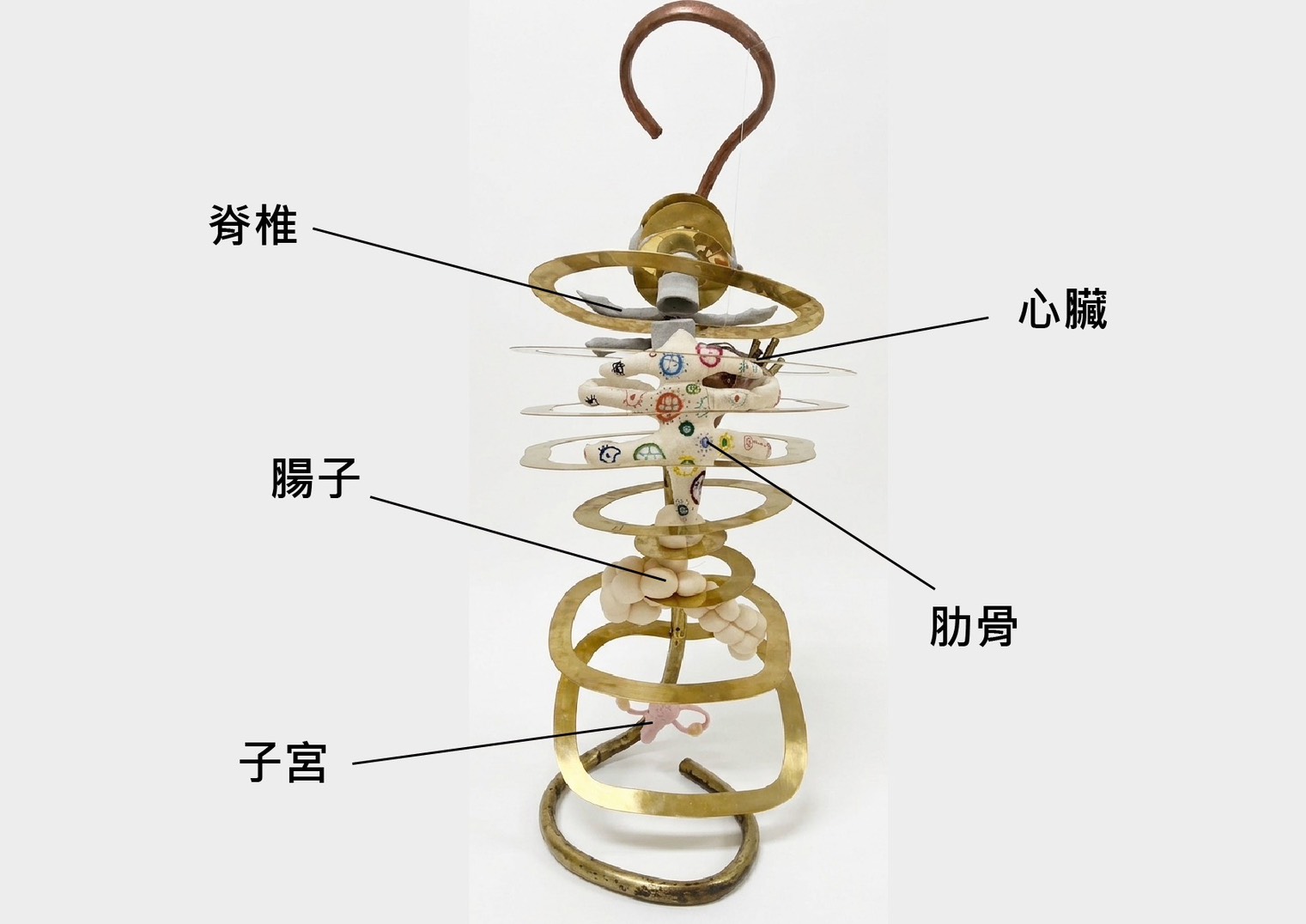
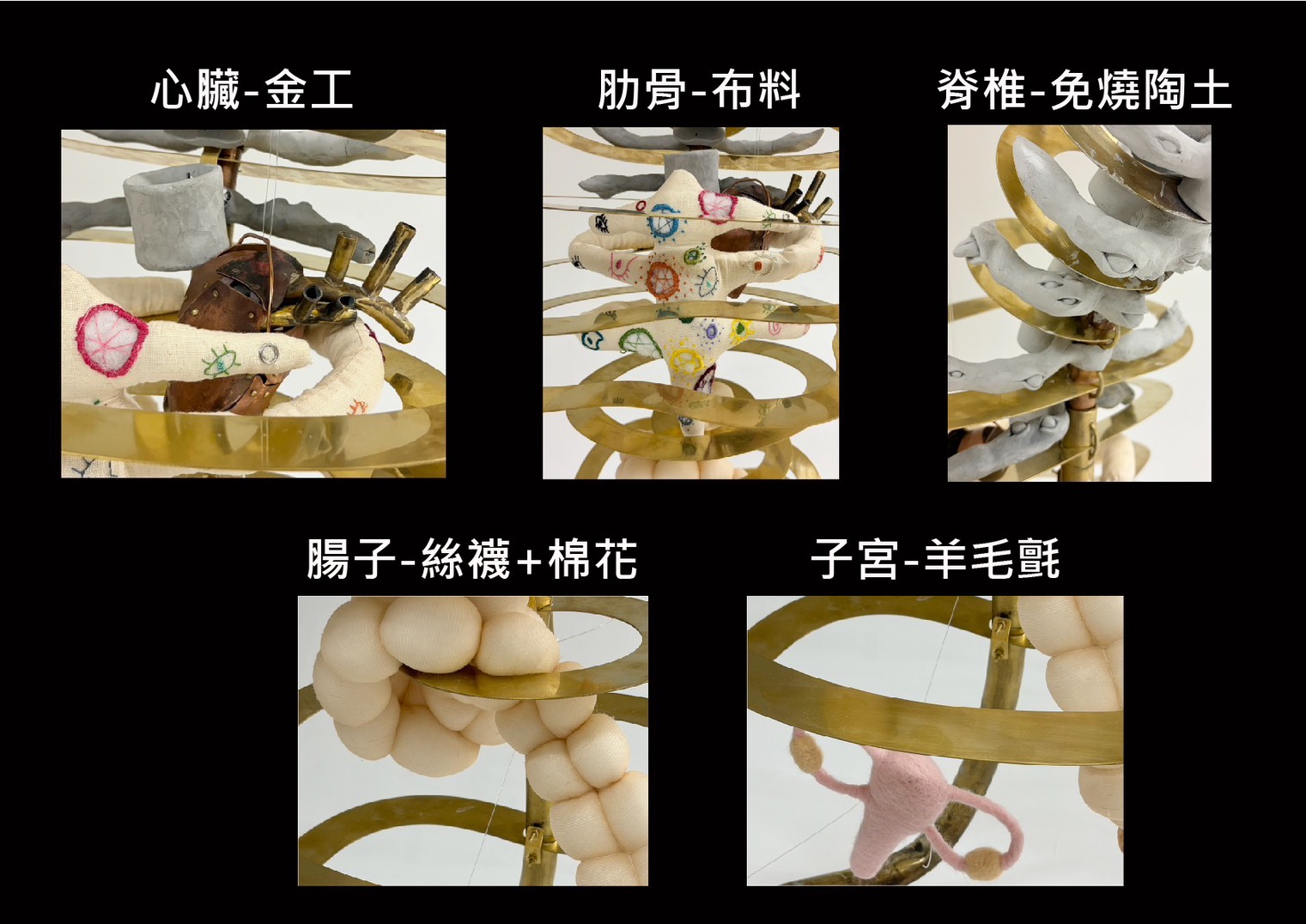
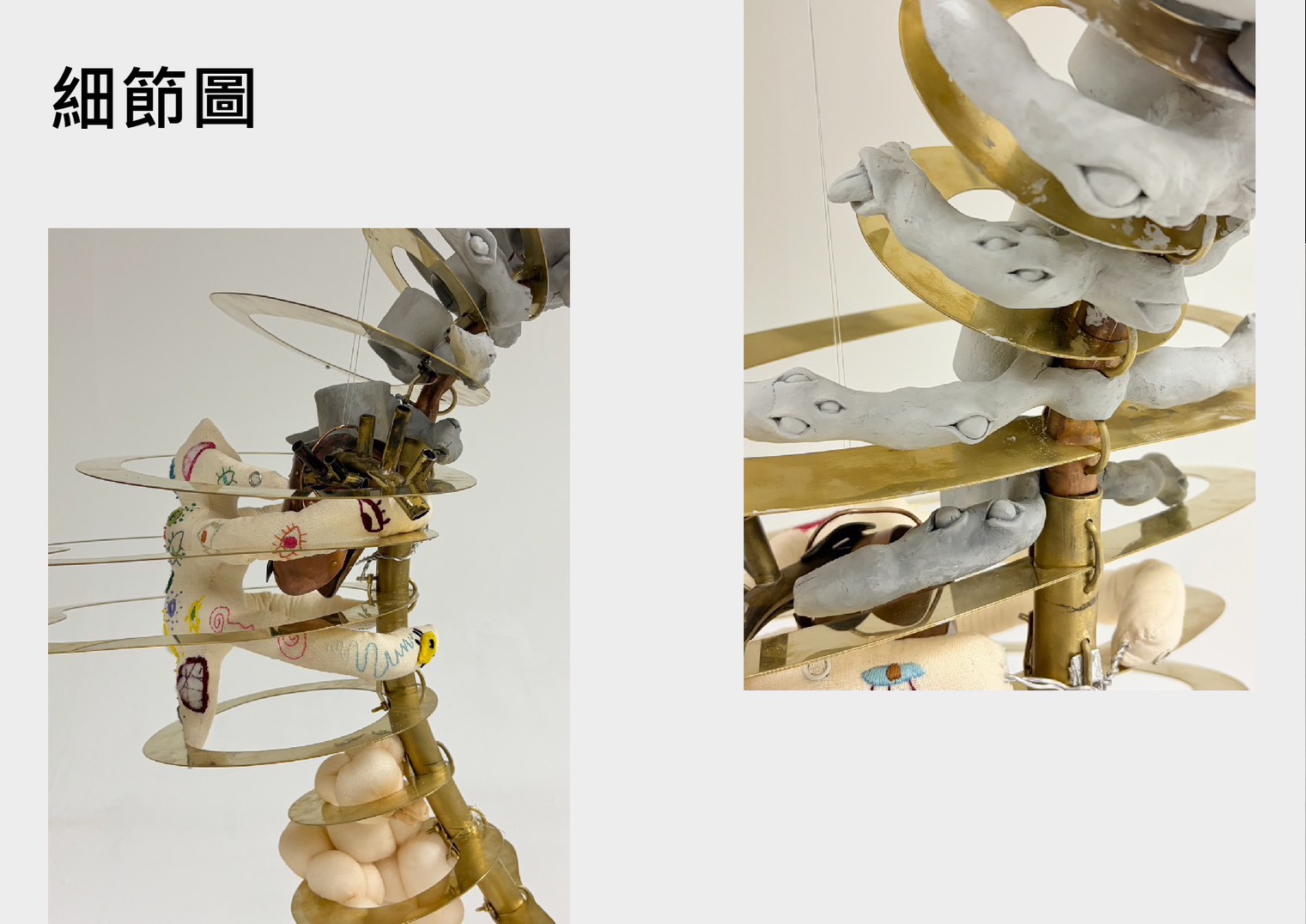
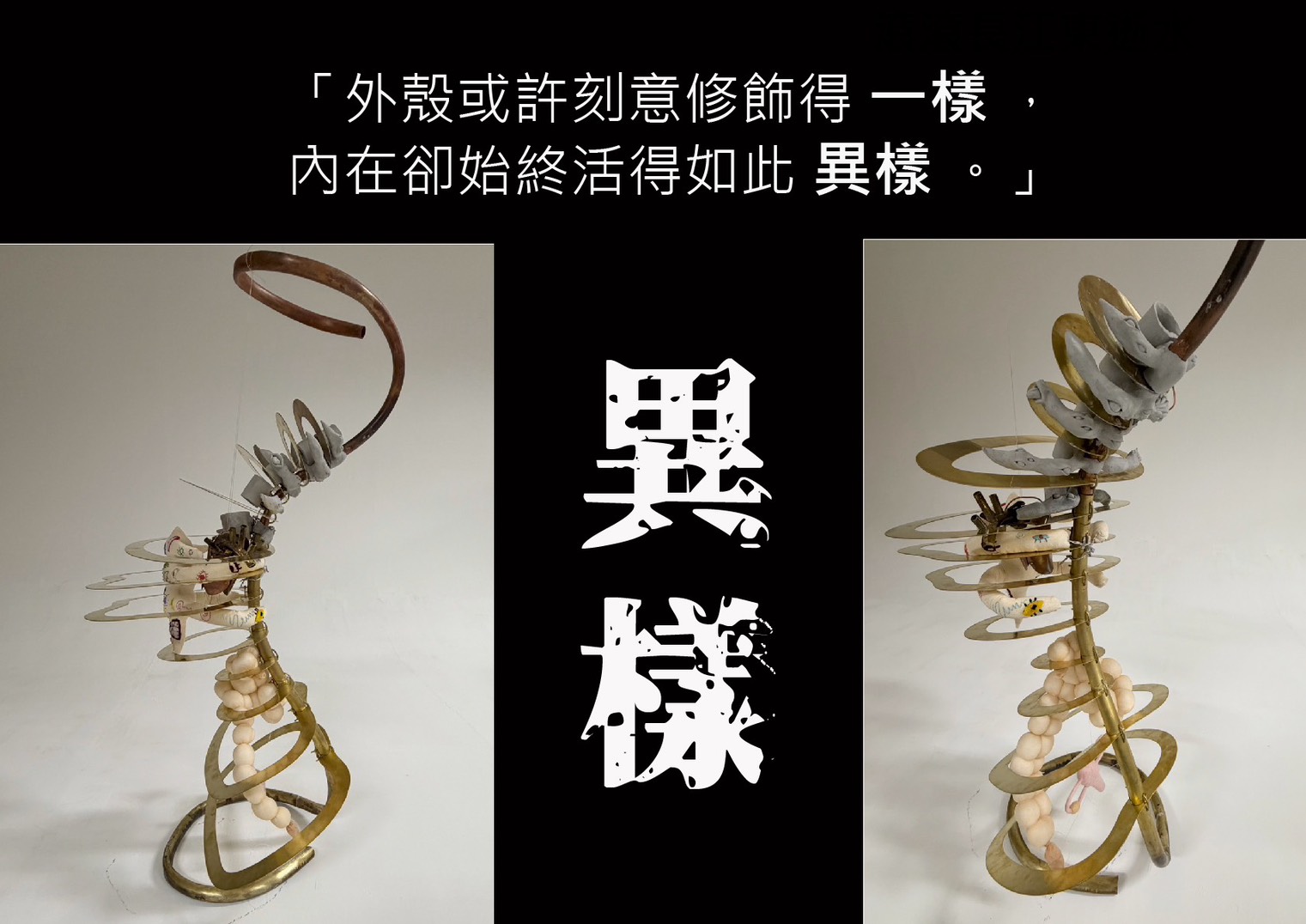
本作品透過刻意失衡與扭曲的人體比例,營造強烈的不適與壓迫感,以反諷手法批判當代社會對單一、理想化身體審美的迷思。外框以金工切片塑形,呈
現被規訓與切割的冷硬身體外殼,象徵社會對身體的控制與束縛;內部器官則因不合理體態而產生變形、擠壓與位移,隱喻人在長期迎合審美期待下所承
受的身體與心理負荷。自西方歷史中馬甲的出現以來,女性身材長期被要求符合特定的理想比例,例如胸部豐滿、腰身纖細與臀部上翹等標準,而「馬
甲」正是將此理想具體化的身體工具。早期馬甲多以鯨魚骨製成,材質堅硬、塑形效果強烈,雖能有效雕塑身形,卻同時對身體造成嚴重傷害,包括內部
器官位移、肋骨變形,甚至影響生殖功能,反映出極端審美對女性身體的暴力本質。進入現代社會後,馬甲在材質與穿著體驗上逐漸趨於舒適,然而身
體壓迫並未因此消失,而是轉化為更為隱蔽的形式,形成一種無形卻持續存在的「隱形馬甲」。
This work uses distorted and imbalanced human proportions to create discomfort and oppression, critiquing society's fixation on a single ideal of
beauty.
The metal outer shell suggests a body that is controlled and disciplined, while the distorted internal organs reflect the physical and psychological strain caused by conforming to unrealistic standards.
Since the rise of the corset in Western history, the female body has been shaped to fit ideal proportions. Early whalebone corsets effectively sculpted the body but caused harm, including organ displacement and rib deformation, revealing the violence behind beauty standards.
Today, although corsets are more comfortable, bodily oppression persists in a more subtle form-an invisible yet enduring "invisible corset."