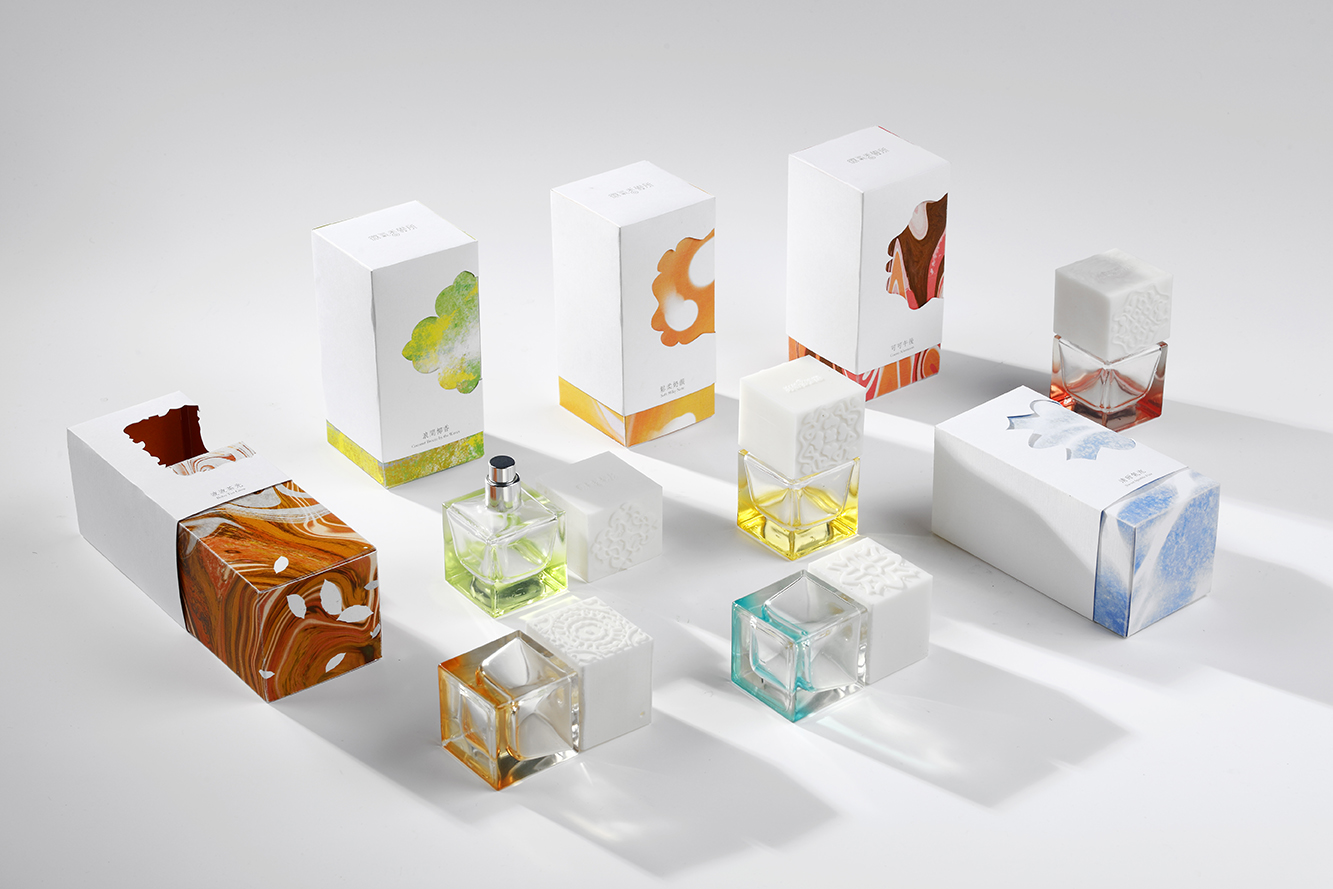
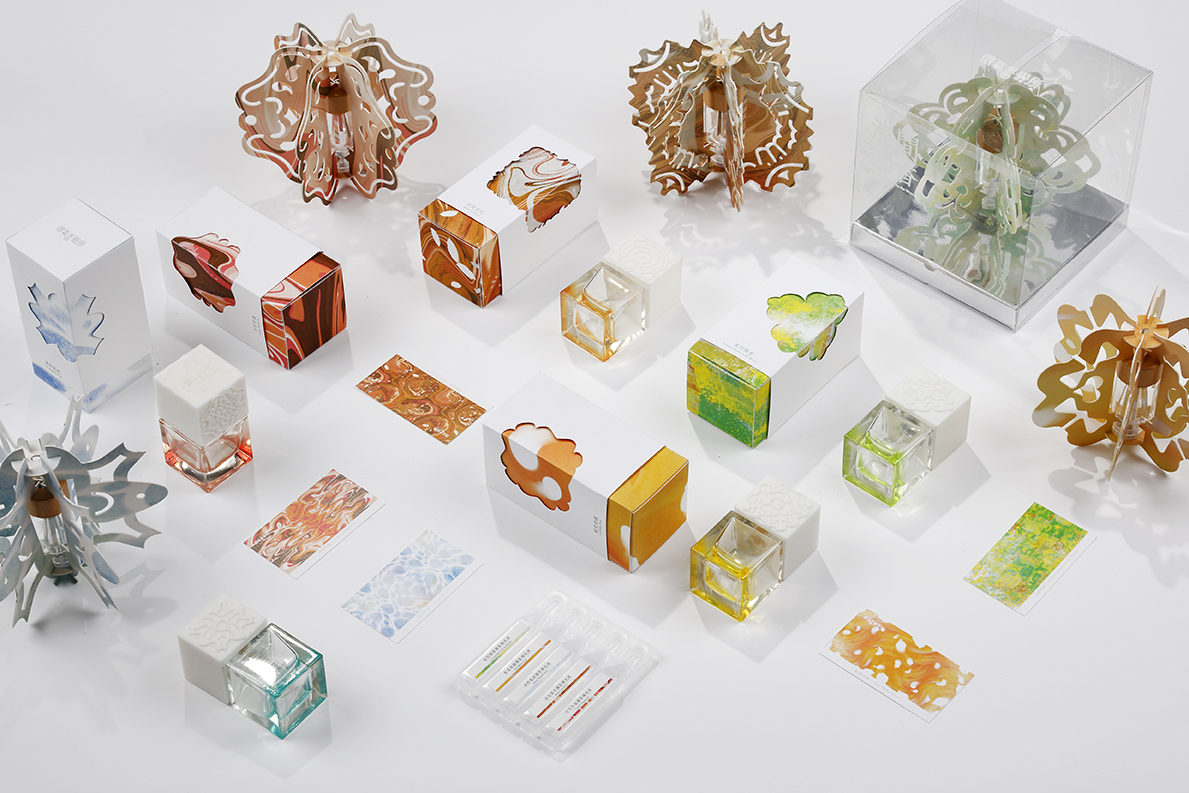
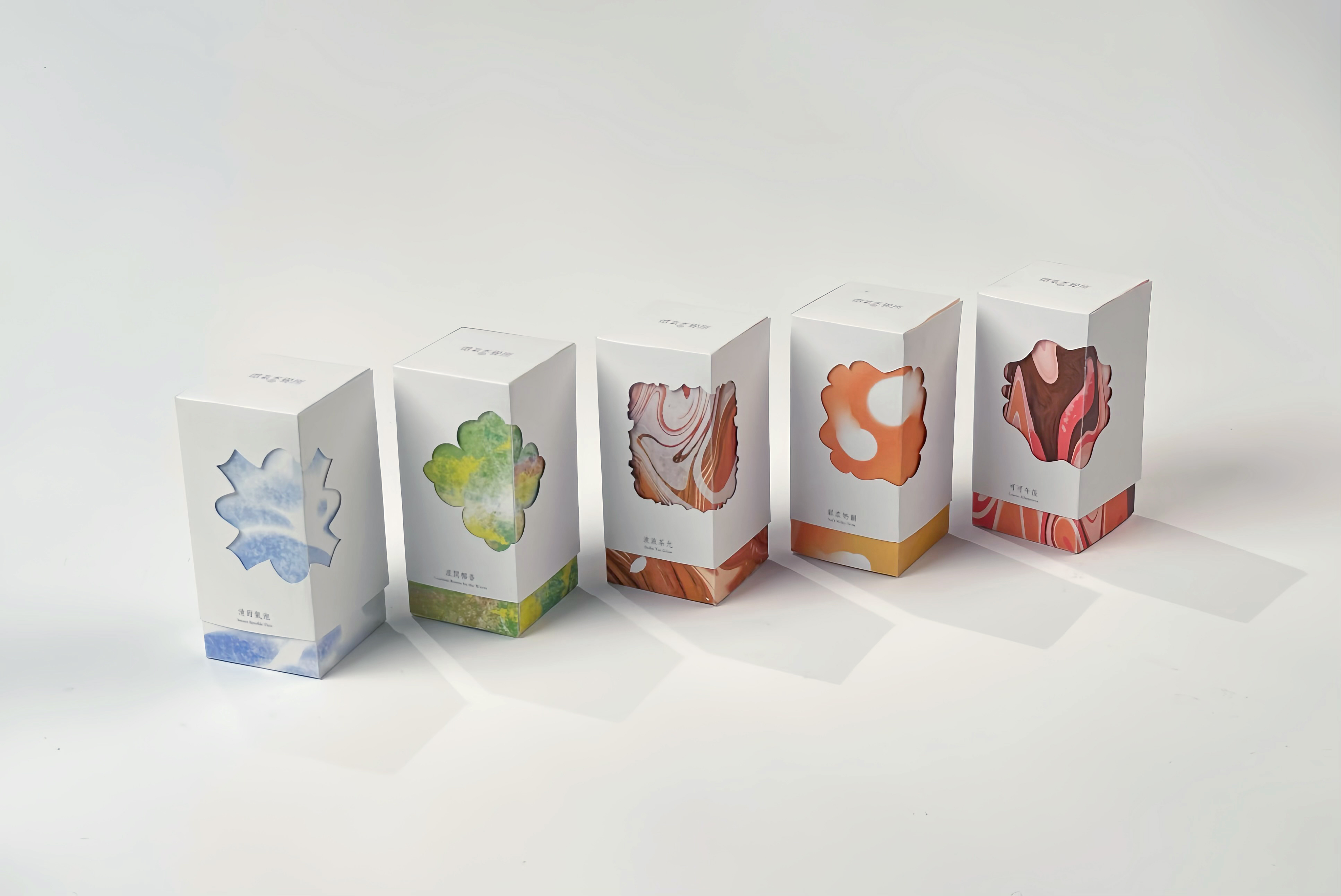
以「聲音、氣味與視覺的三種感官交織」為核心,探索聲波共振如何轉化為可視化與可觸化的藝術形式。以ASMR聲音療癒為起點,結合克拉尼圖形聲波共振理論,將食物咀嚼聲的酥脆、柔軟與氣泡音階頻率轉化為視覺化紋理,並融入嗅覺設計,創造多感官體驗。研究以台灣經典零食與飲品為靈感,提煉味覺與嗅覺記憶,設計香水、擴香瓶等產品。
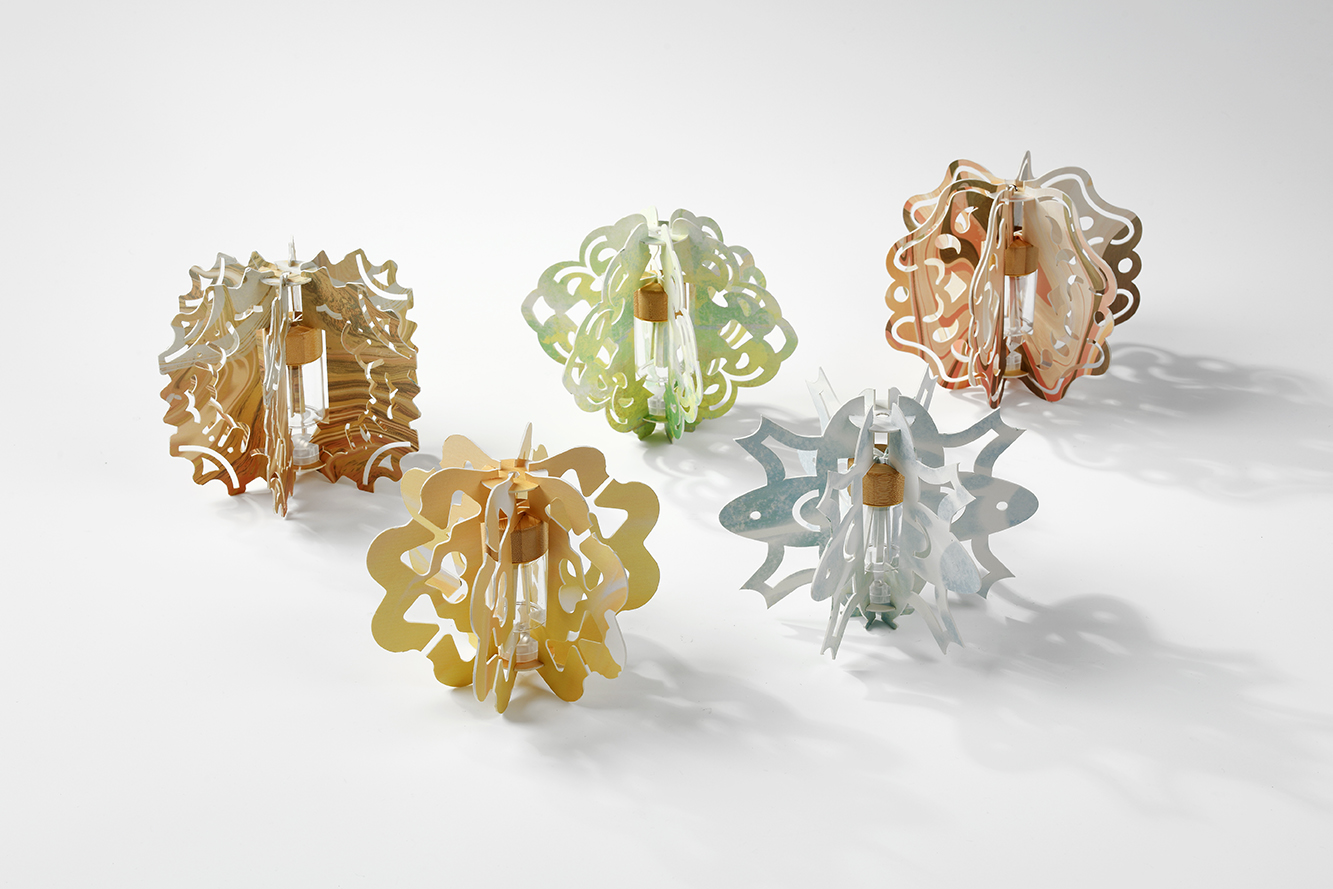
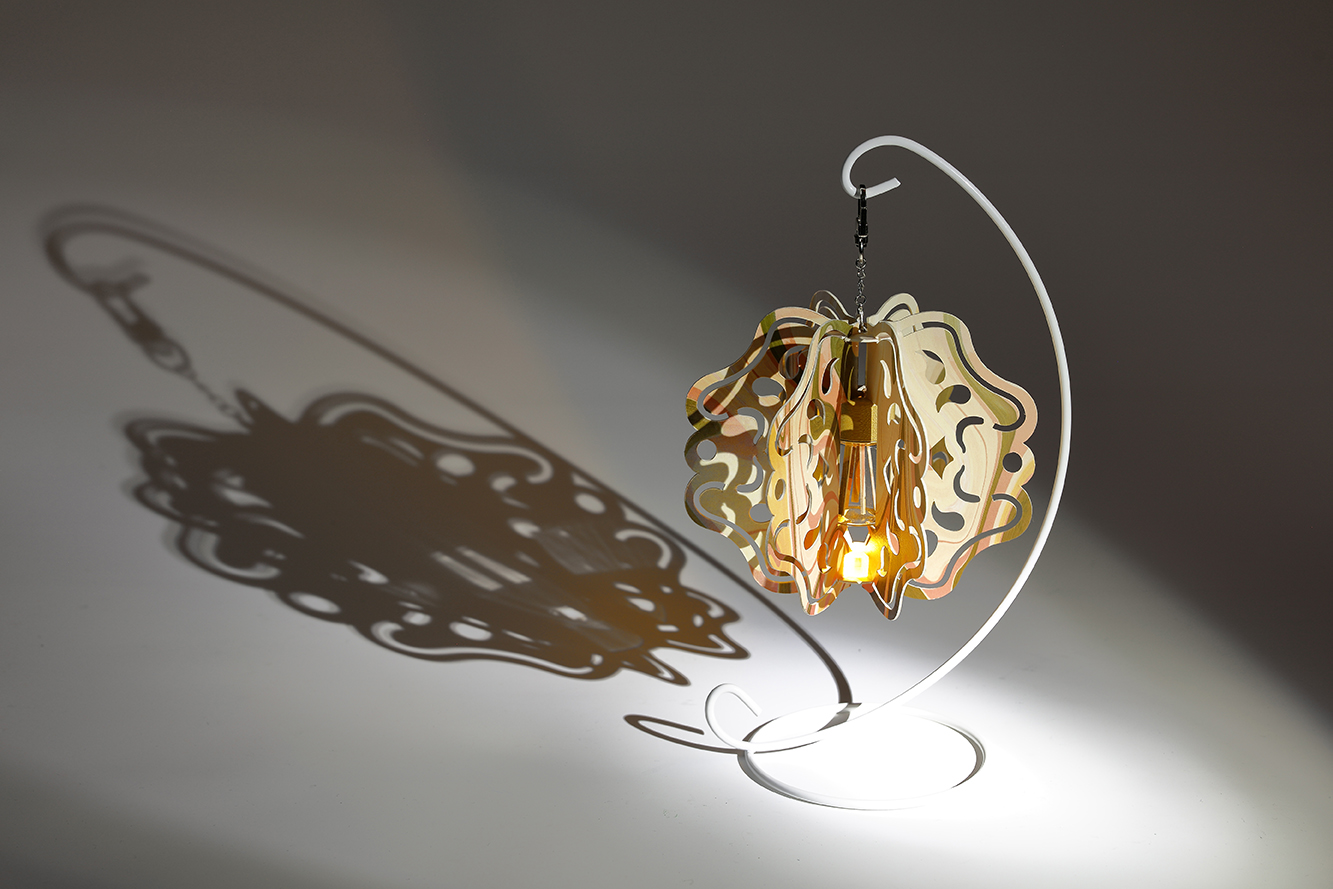
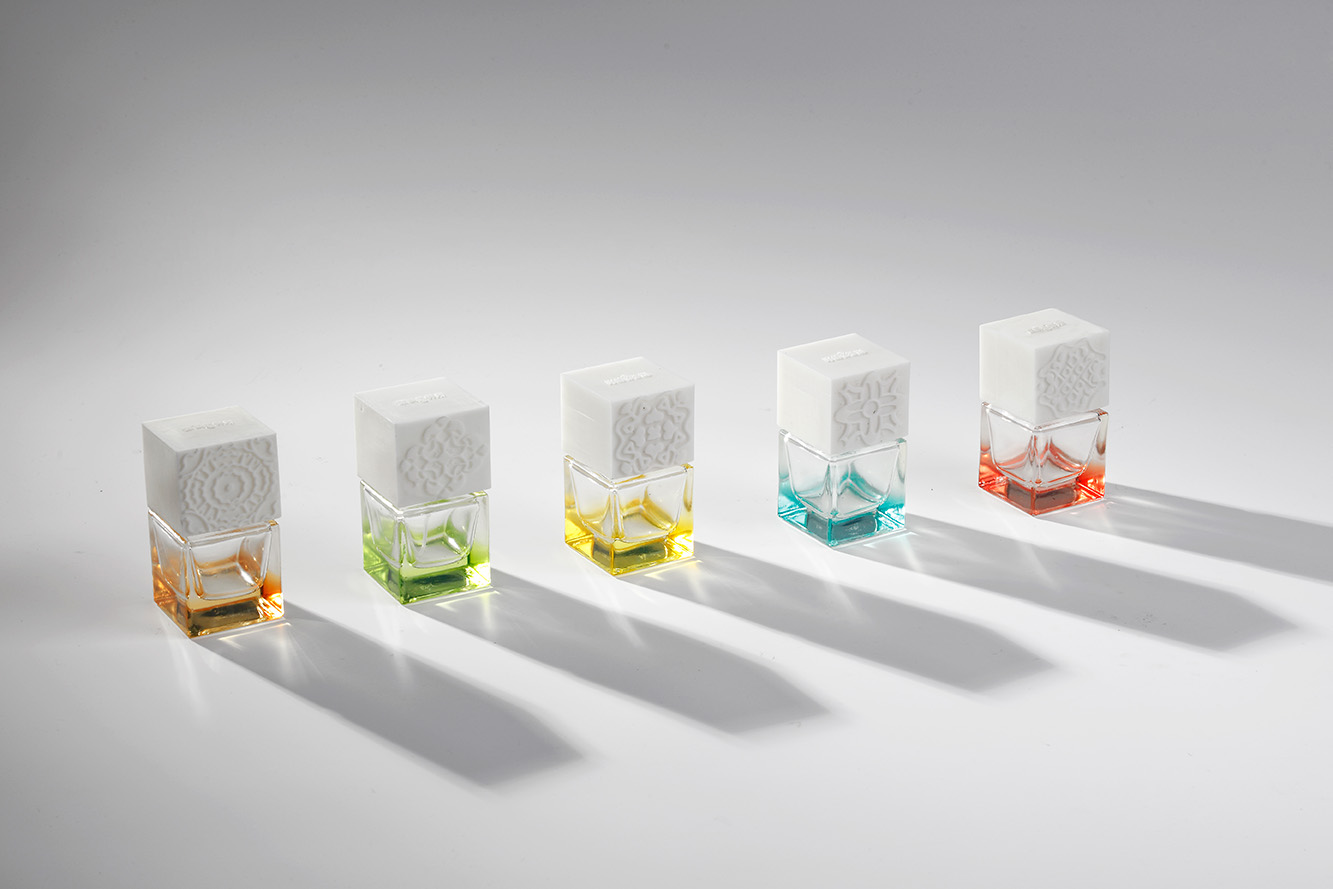
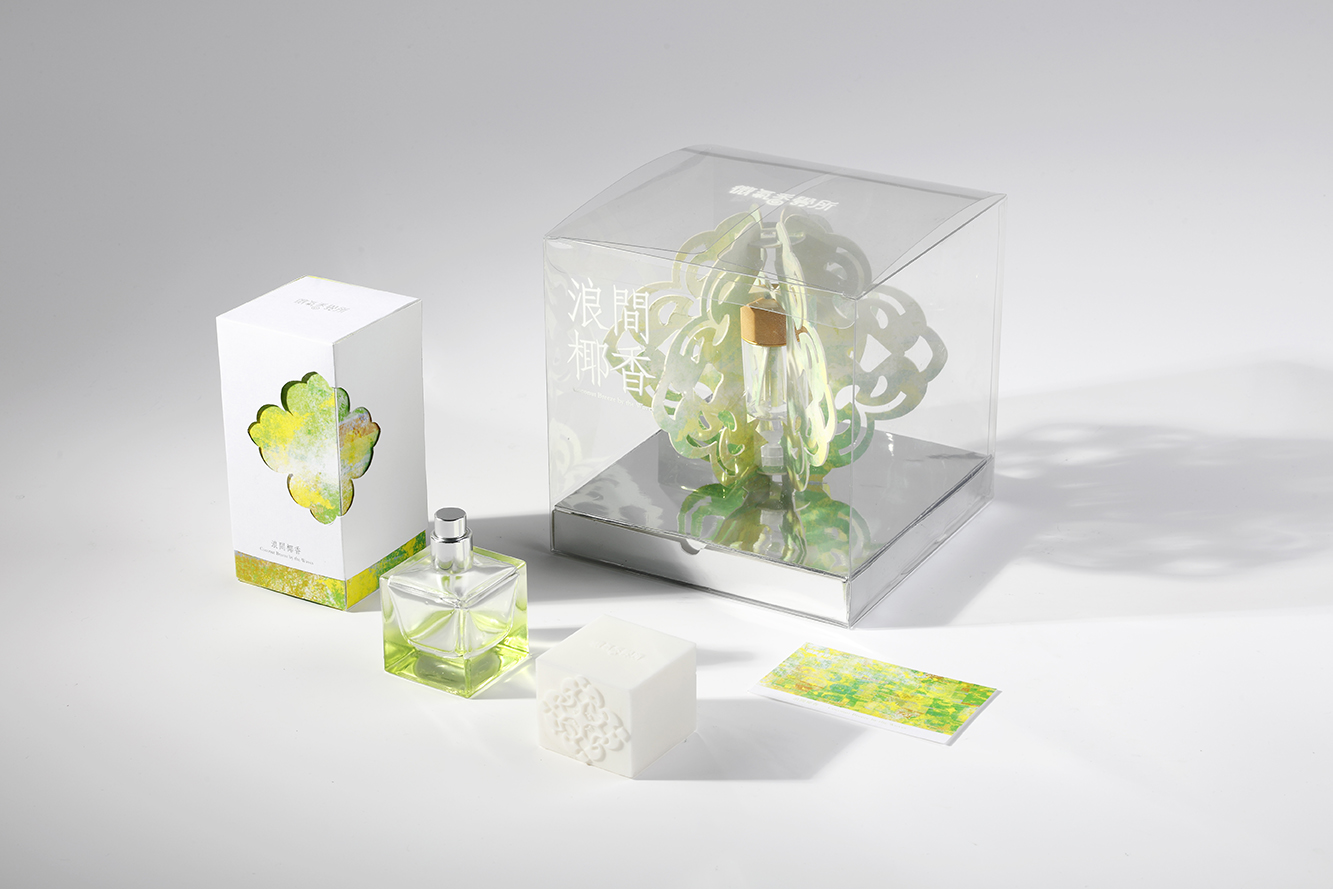
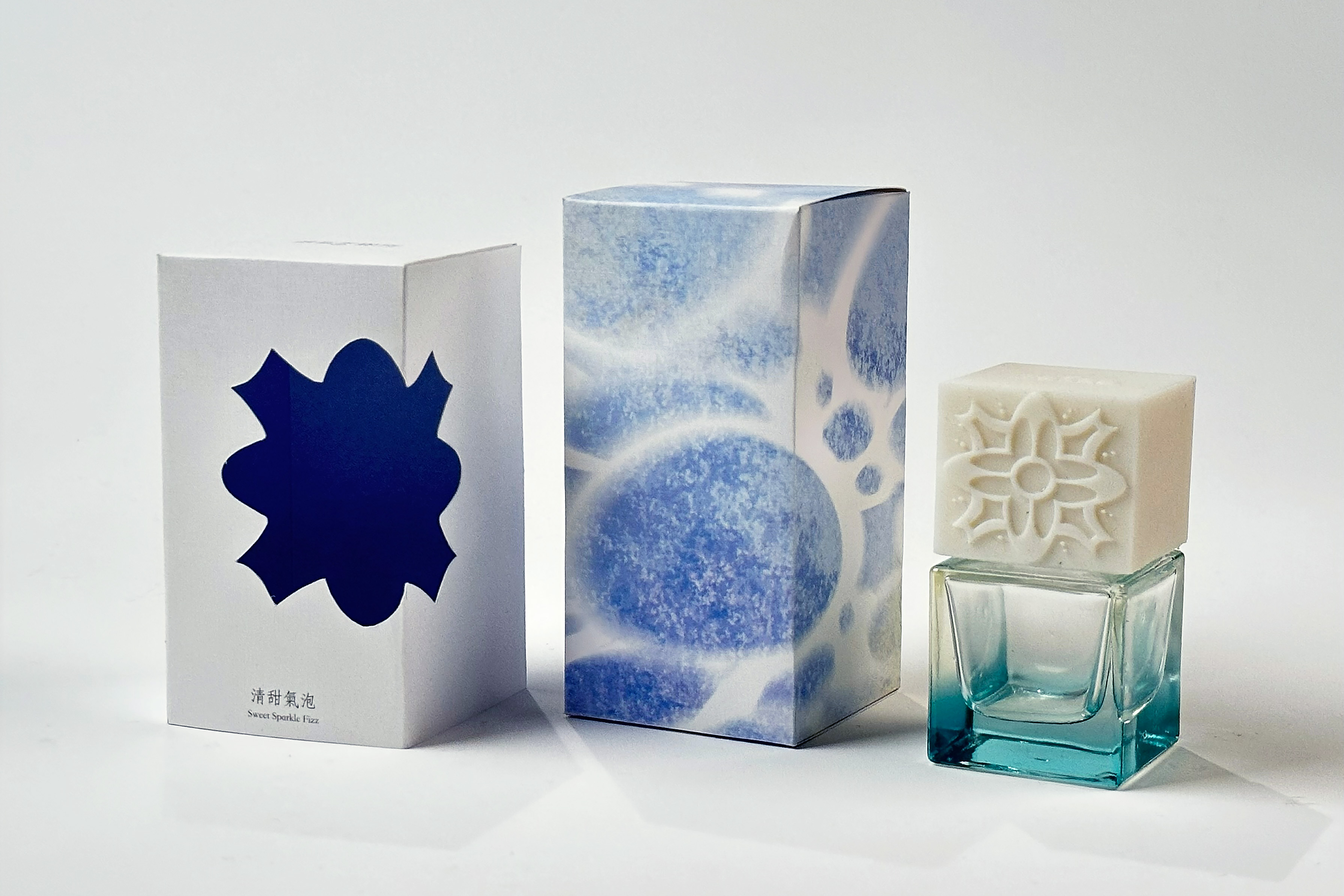
擴香瓶設計兼具穩定性與情境性,可置於桌面或懸吊於空間,高度差形成的空氣流動使香氣自然擴散,並搭配燈光投射花紋陰影,增強視覺與嗅覺互動。香水瓶瓶蓋則雕刻對應香氣的克拉尼圖形,將聲波振動的紋理具象化為可觸摸立體雕刻,使無形聲音轉化為具美感的產品語彙。透過聲音、氣味與視覺整合,呈現跨感官立體造型設計的可能性,結合在地文化與日常生活,讓產品既具藝術性亦具生活性,打造具有台灣特色的感官工藝創作。
This study explores sound, scent, and vision, turning sound waves into visual and tactile forms. Inspired by ASMR and Chladni patterns, food chewing sounds—crisp, soft, and bubbling—are analyzed and visualized as patterns, combined with scent design to create multi-sensory experiences. Taiwanese snacks and beverages inspire perfumes and diffusers, capturing taste and scent memories.
Diffusers are stable and versatile, placed on tables or suspended, using height differences to spread fragrance naturally, while lighting casts shadows to enhance visual and olfactory interaction. Perfume caps are engraved with Chladni patterns matching each scent, materializing sound vibrations into tactile, three-dimensional forms. Integrating sound, scent, and vision, this project shows the potential of cross-sensory three-dimensional design, blending local culture with daily life to create functional and artistic works reflecting Taiwan’s sensory craftsmanship.