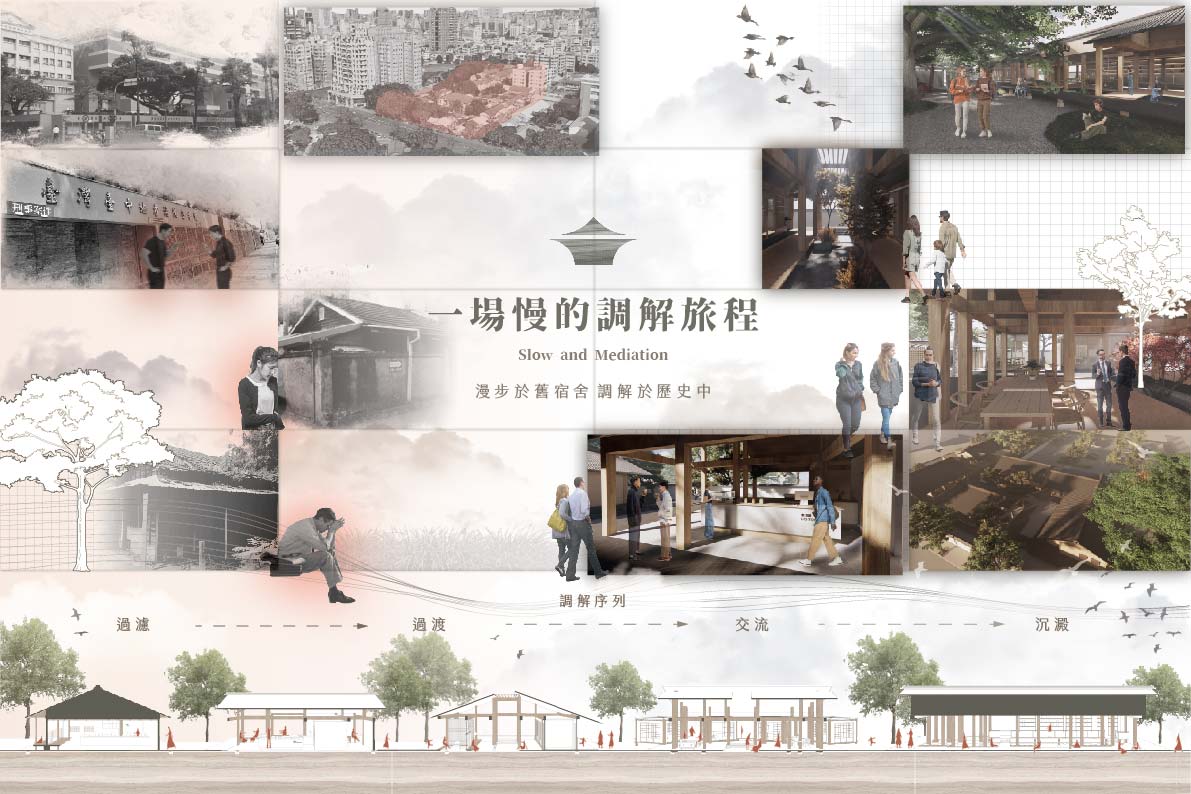
「漫步於舊宿舍,調解於歷史中 」
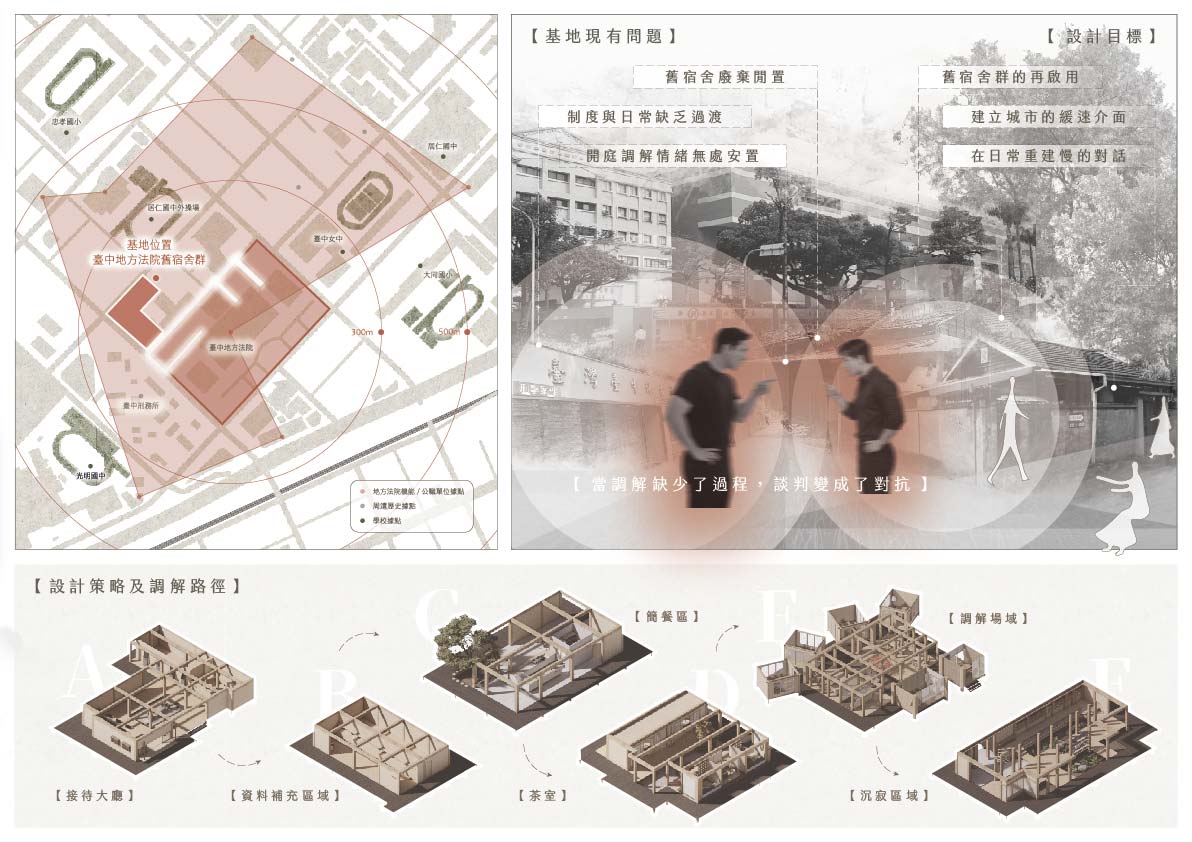
調解,是因為人與人之間的距離出了問題。當事人帶著情緒走進法院,面對的是沒有緩衝的走廊、簡陋的等候椅,以及一扇直接通往對立的門。現有的調解空間從未問過:這個人準備好了嗎?
我們設計選址臺中地方法院西側日治時期舊宿舍群,這排長年閒置的木造建築,恰好夾在法院制度與城市日常之間。我們不新建調解大樓,而是讓這段被遺忘的距離,變成一段有節奏的過程。
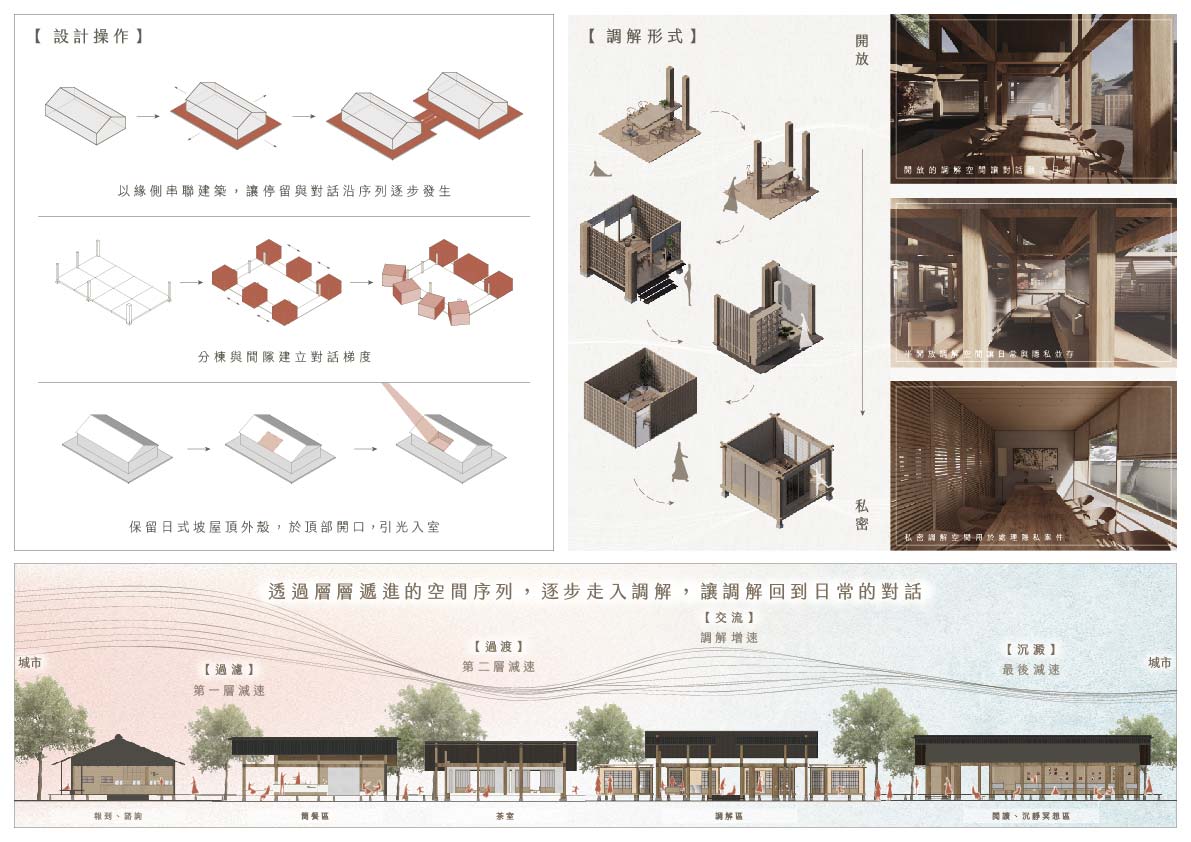
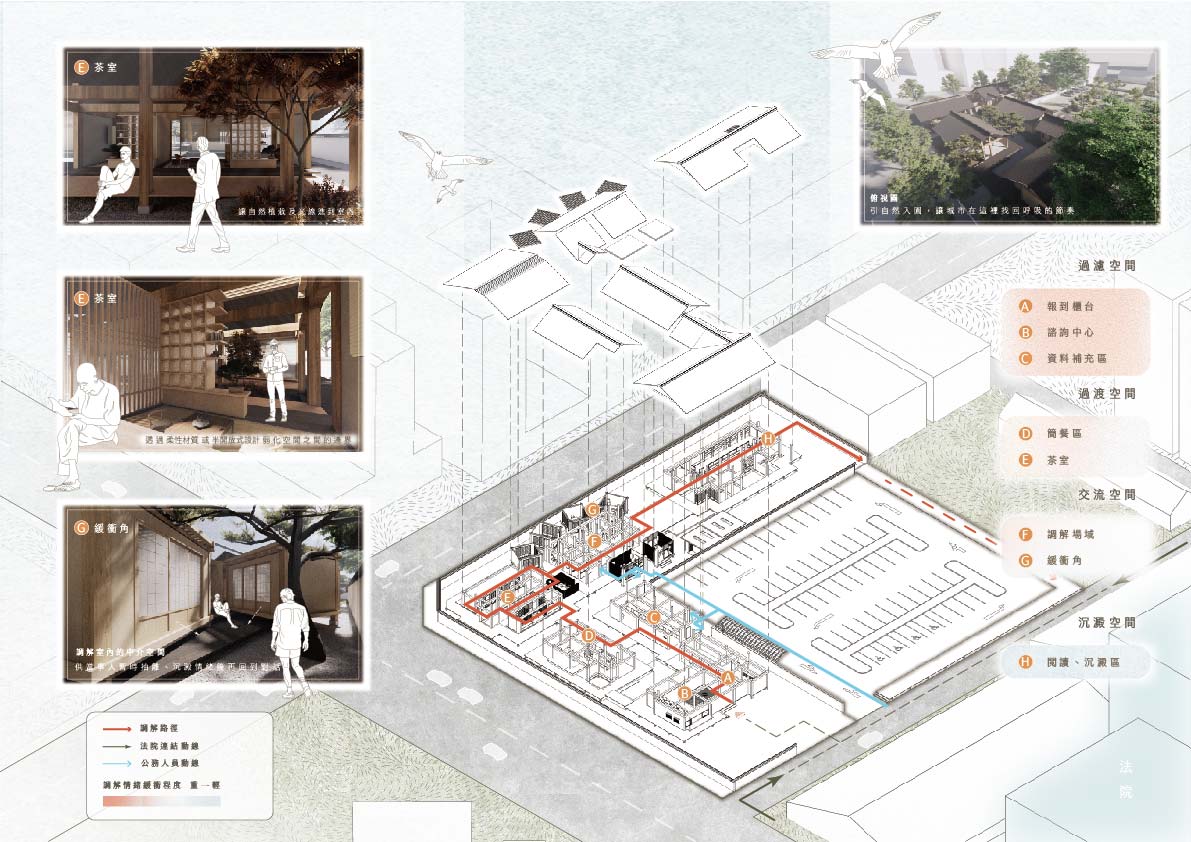
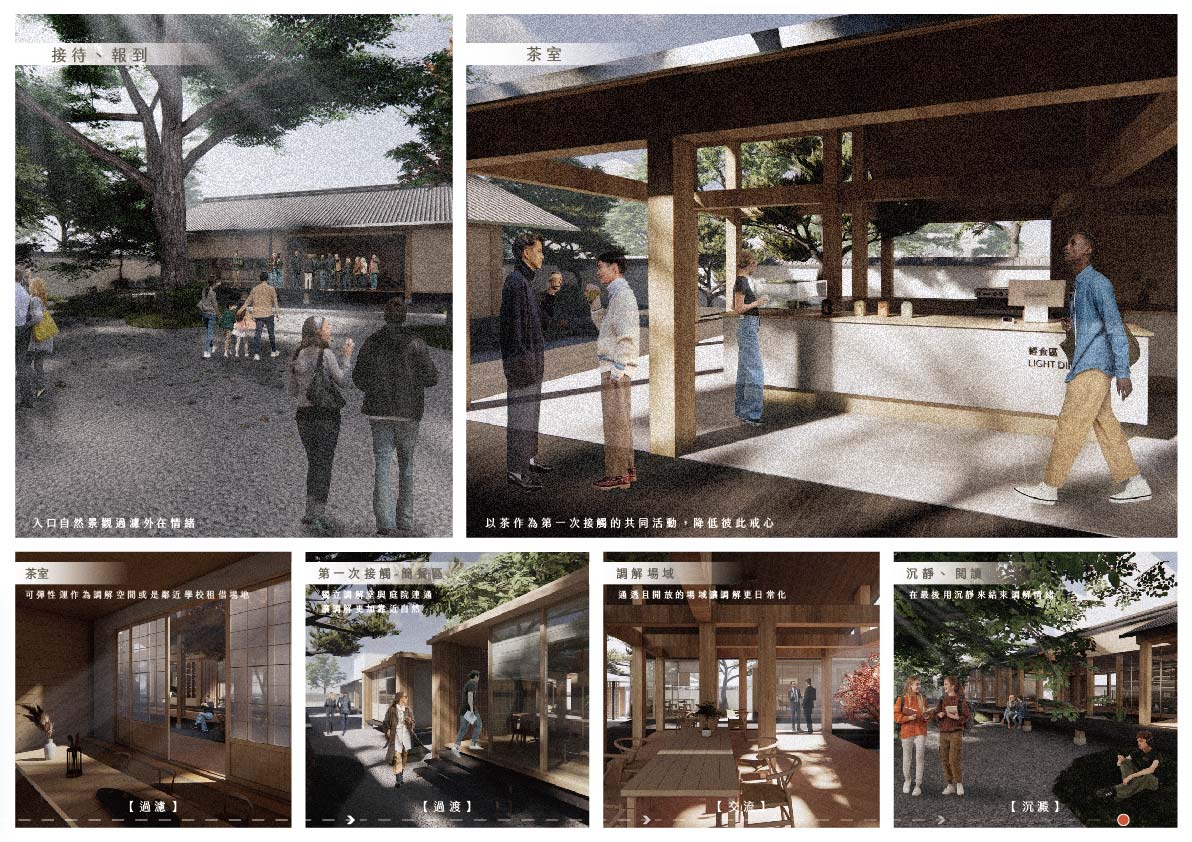
日式建築從公領域走向私領域的空間邏輯,成為我們設計序列的依據。我們提出過濾、過渡、交流、沉澱四段空間序列——從城市入口的樹下平台、沿緣側廊道漫步、在茶室放慢腳步、於下沉庭院短暫停留,直到緩緩走入調解場域。每一步都在幫人減速。
調解不從坐下開始,從踏進來的那一步開始。當人們走到調解場域的那一刻,他們是準備好開口了,而不只是被要求開口。舊宿舍在當代需求中再次被啟用,歷史空間成為修復關係的場所。
"Wandering Through the Old Dormitory, Mediating Within History"
Mediation happens when something goes wrong between people. Those who enter a courthouse face a bare hallway, a row of chairs, and a door that opens straight into conflict. No space ever asks: is this person ready?
Our project reactivates Japanese-era dormitories beside Taichung District Court — turning a forgotten stretch of ground into a four-stage journey: filter, transition, exchange, settle. From a shaded plaza, through an engawa corridor, a tearoom, and a sunken courtyard, each step slows people down before they reach the mediation room.
Mediation doesn't begin when you sit down. It begins the moment you walk in. A dormitory finds new purpose; a historic site becomes a place to rebuild.