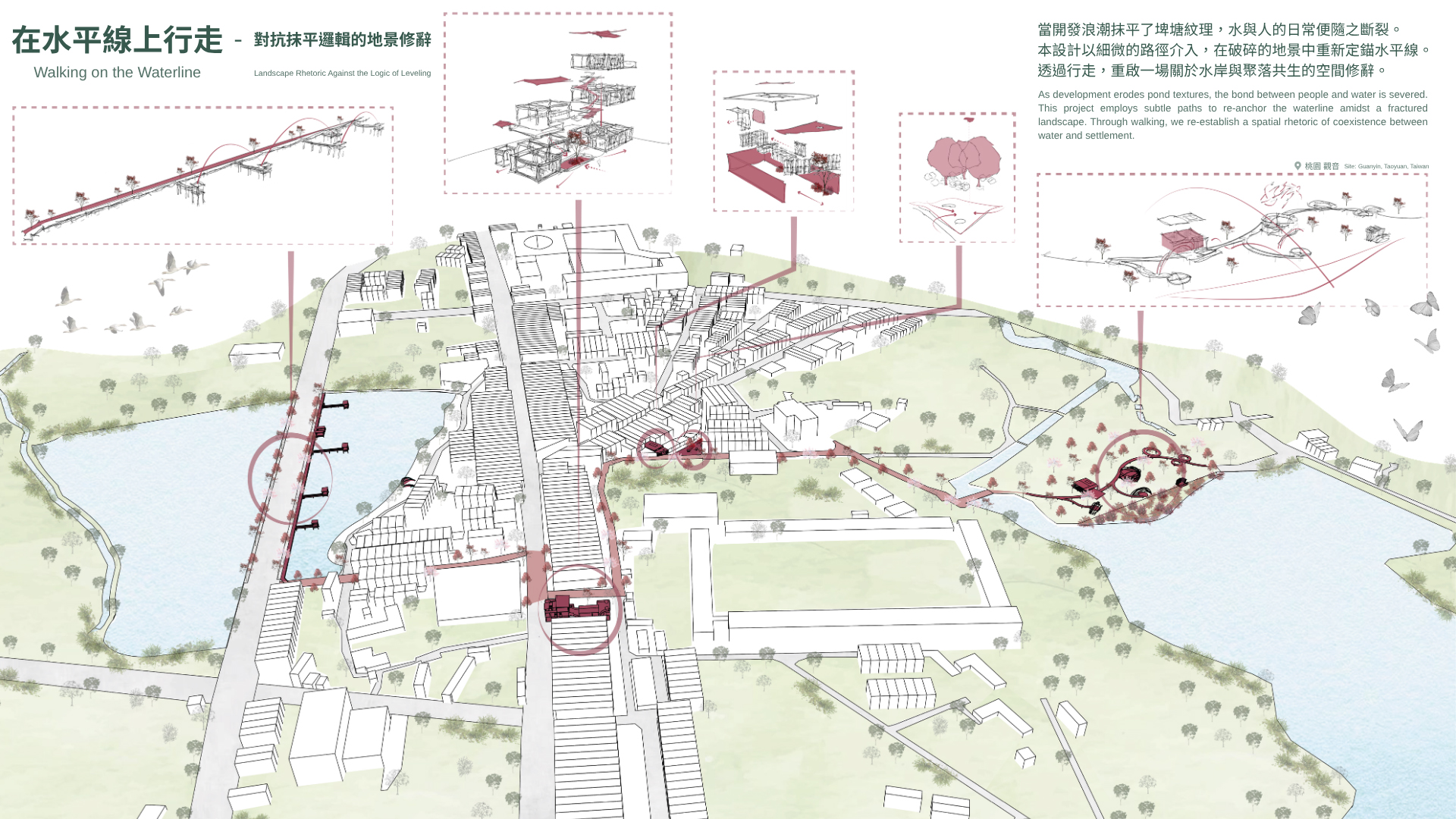
面對桃園新坡埤塘在都市擴張計畫中即將被抹除的命運,本設計提出一場預見性的對抗—《在水平線上行走》。當開發邏輯預謀將破碎的水文紋理填平為均質的土地資源,我們選擇以一條具備感官刻度的路徑,在推土機到達前,搶先定錨人與水的日常座標。
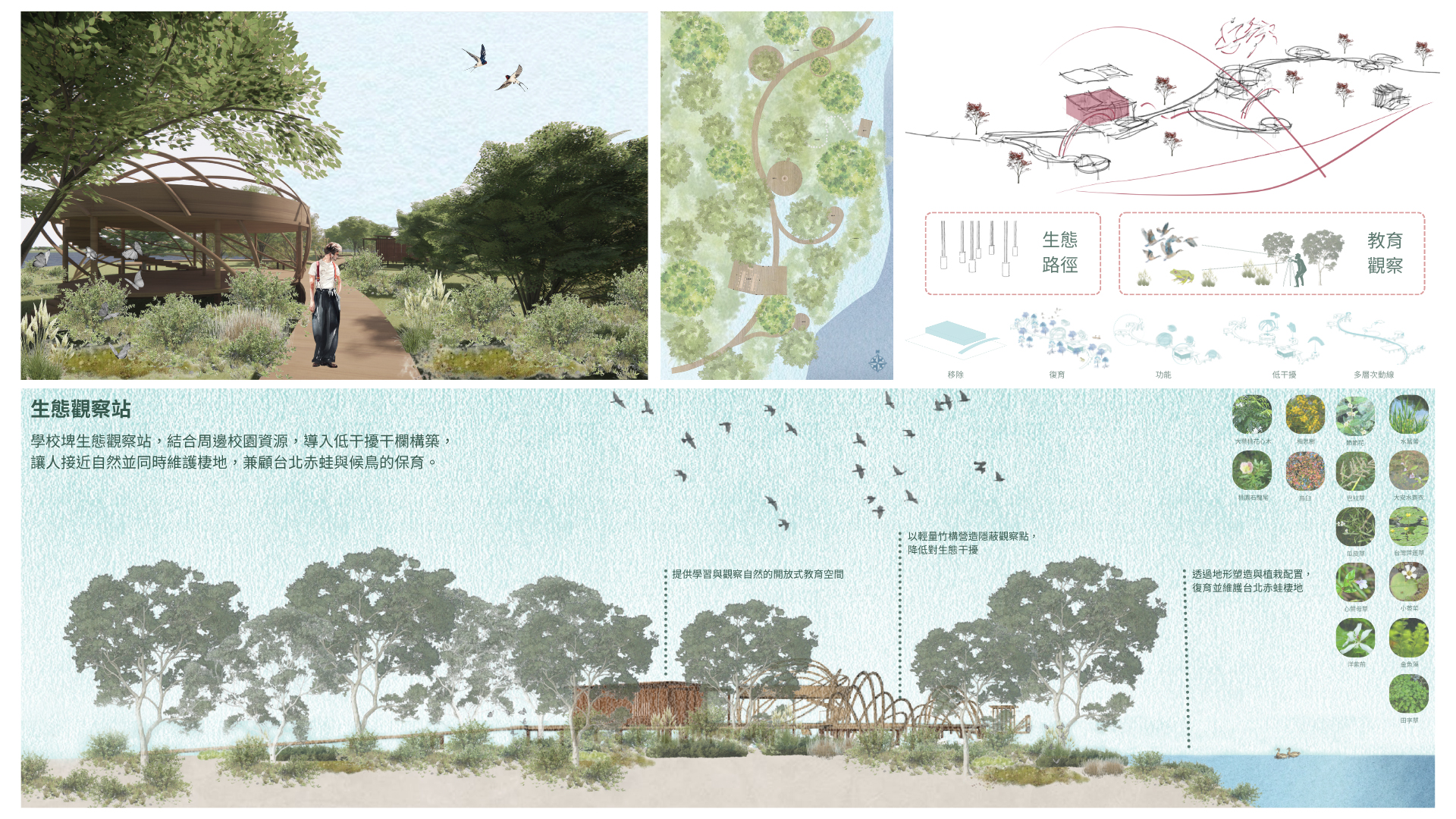
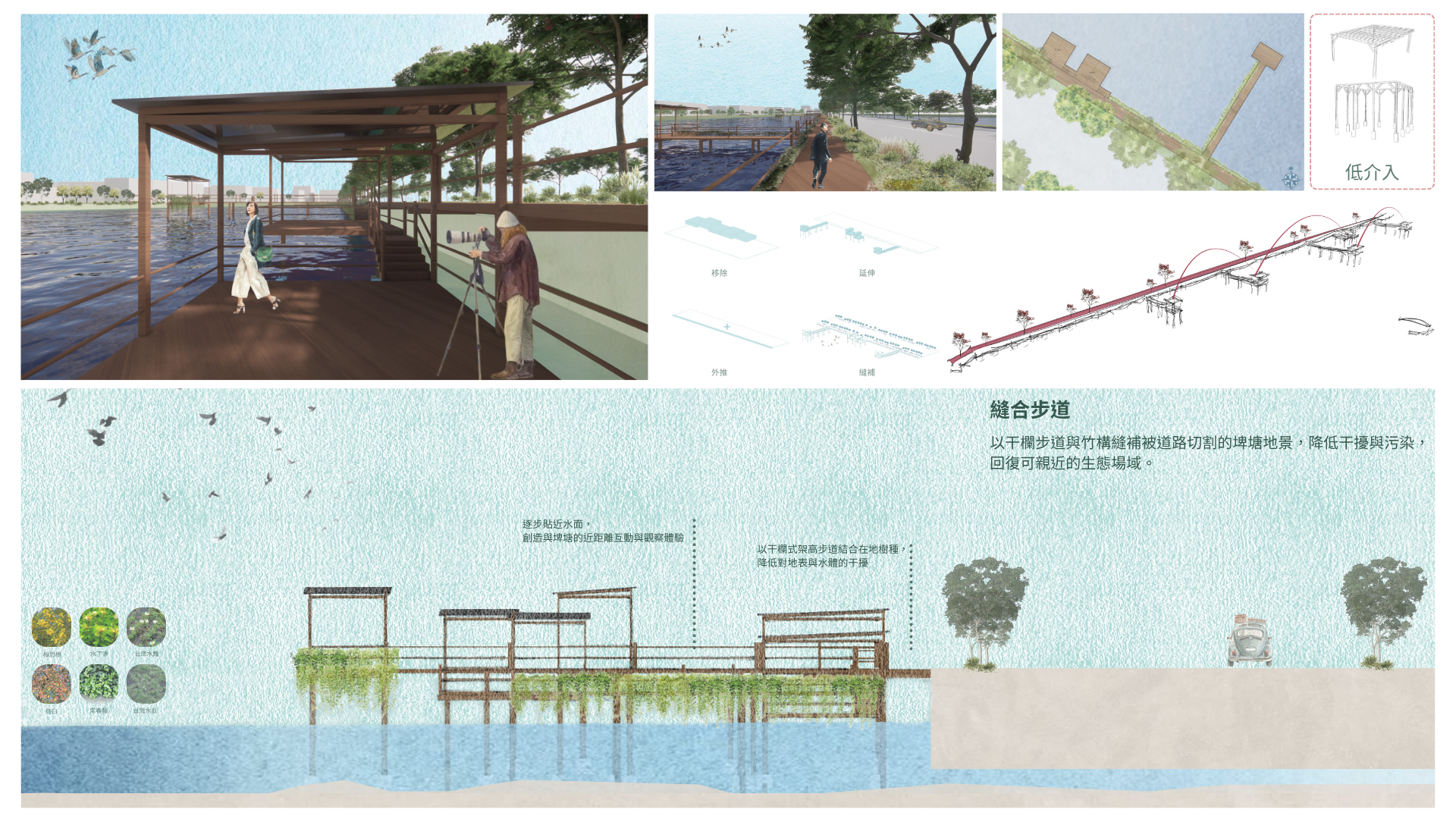
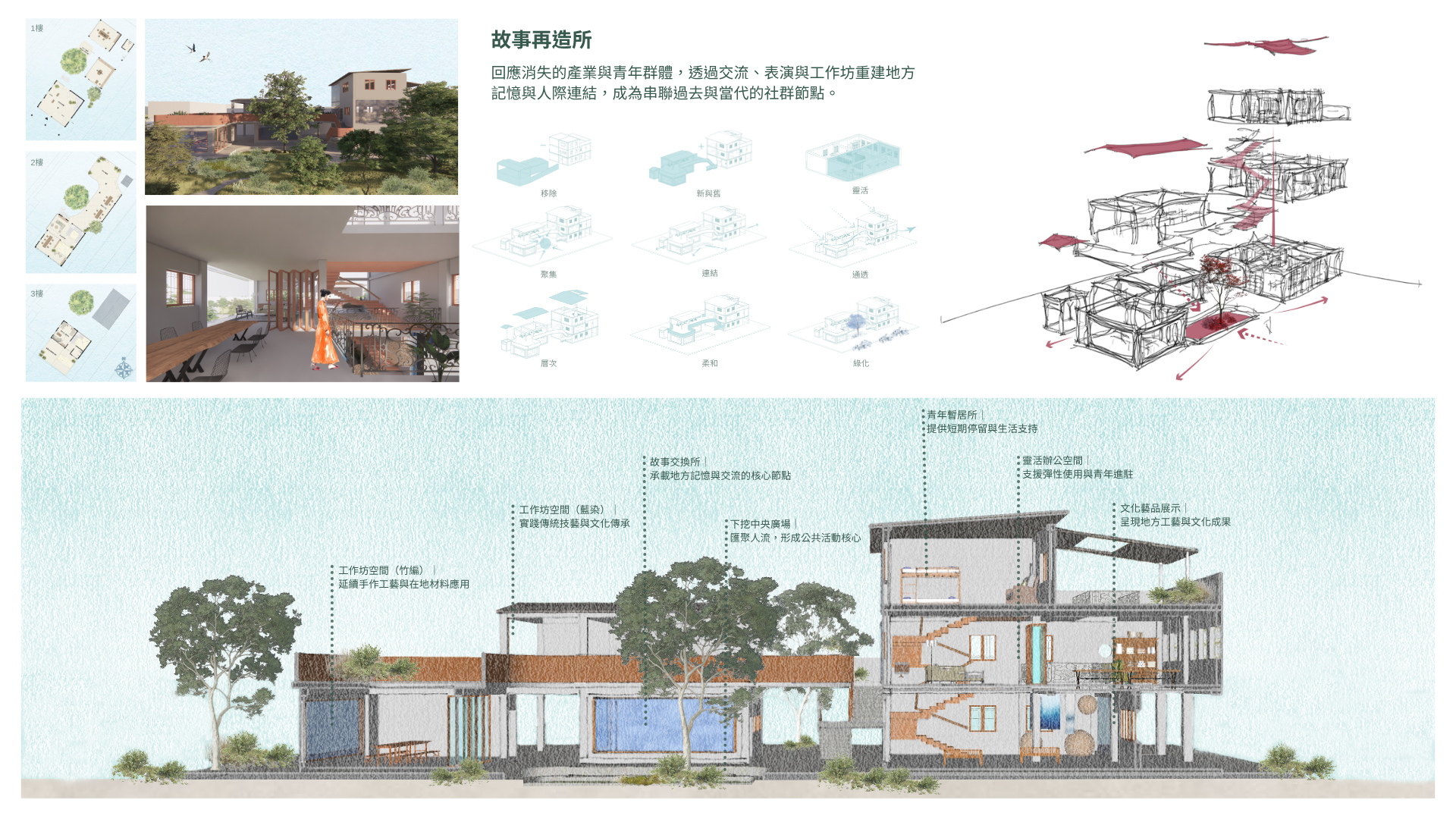
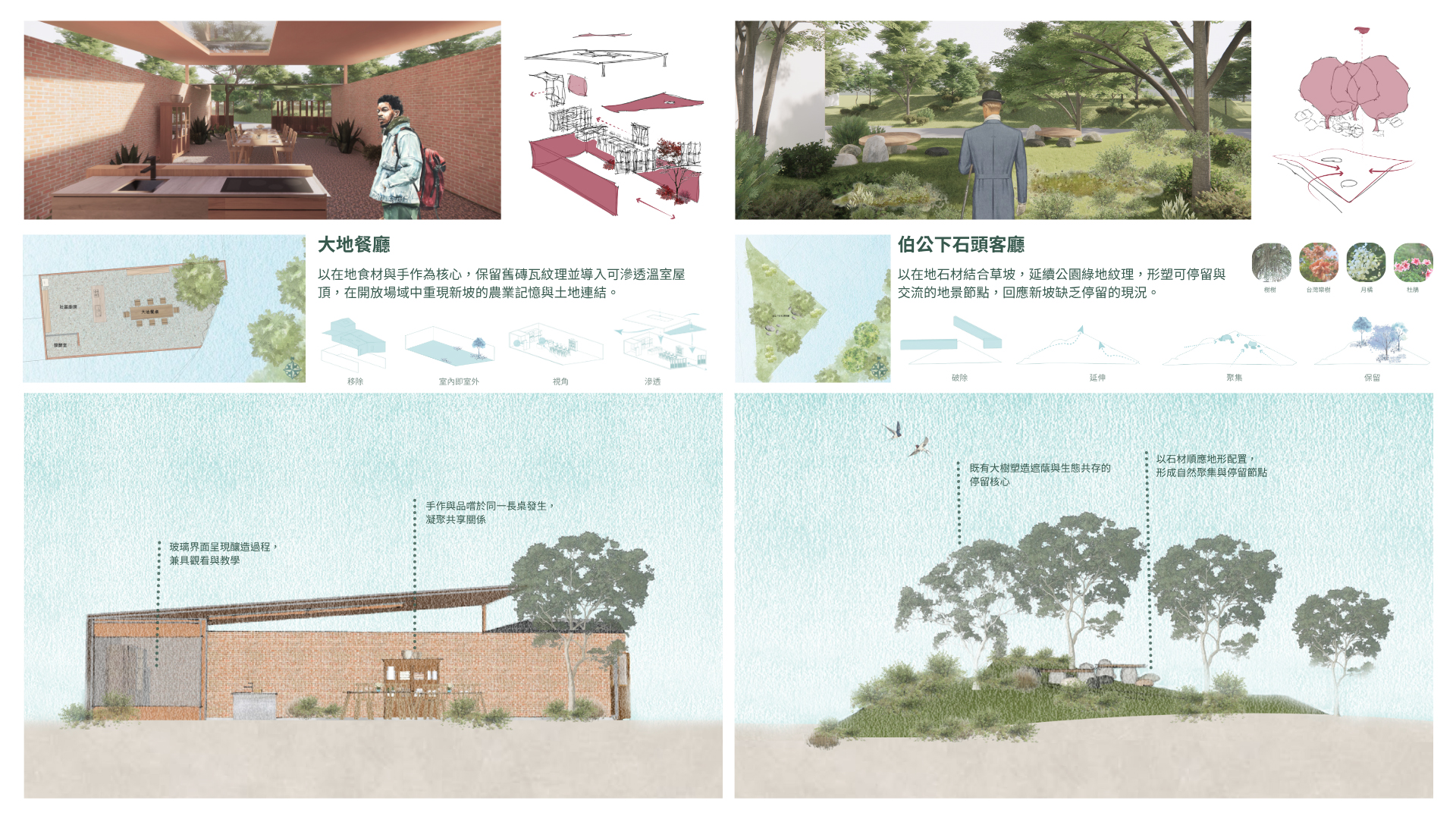
這不僅是地景的縫補,更是一場溫和的空間修辭。路徑串聯起大地餐廳、在地故事館與生態客廳,將舊磚瓦的滲透感、下挖廣場的聚集能量,以及竹構跳島的生態連結,轉化為移動中的感官介面。在此,建築不再是孤立的終點,而是路徑上的節奏,引導人們重返水邊,透過手作、共餐與演出,重新奪回對場域的詮釋權。
試圖在計畫填埋前,以最平和的介入,重組聚落邊緣的斷裂敘事。讓行走成為一種守護,使原本被忽略的邊界轉化為承載記憶與時間的共生介面,在流動的水岸中,重新定義人、水與土地的依存關係。
Confronting the imminent erasure of Xinpo’s ponds, "Walking on the Waterline" acts as a preemptive resistance. Against the logic of leveling fragmented water textures into homogenous land, we propose a path of "sensory scales" to re-anchor daily coordinates before reclamation begins.
More than restoration, this is a subtle spatial rhetoric. The path integrates the Field Restaurant, Local Story House, and Ecological Parlor, transforming old brickwork, sunken plazas, and bamboo "stitching islands" into tactile interfaces. Architecture here is not a destination but a rhythmic pause, inviting the community to reclaim sovereignty through craft and communal dining.
By intervening before the planned infill, walking becomes an act of preservation. This peaceful intervention reconstructs fractured narratives, turning overlooked boundaries into living interfaces that redefine the symbiotic bond between humanity, water, and the landscape.