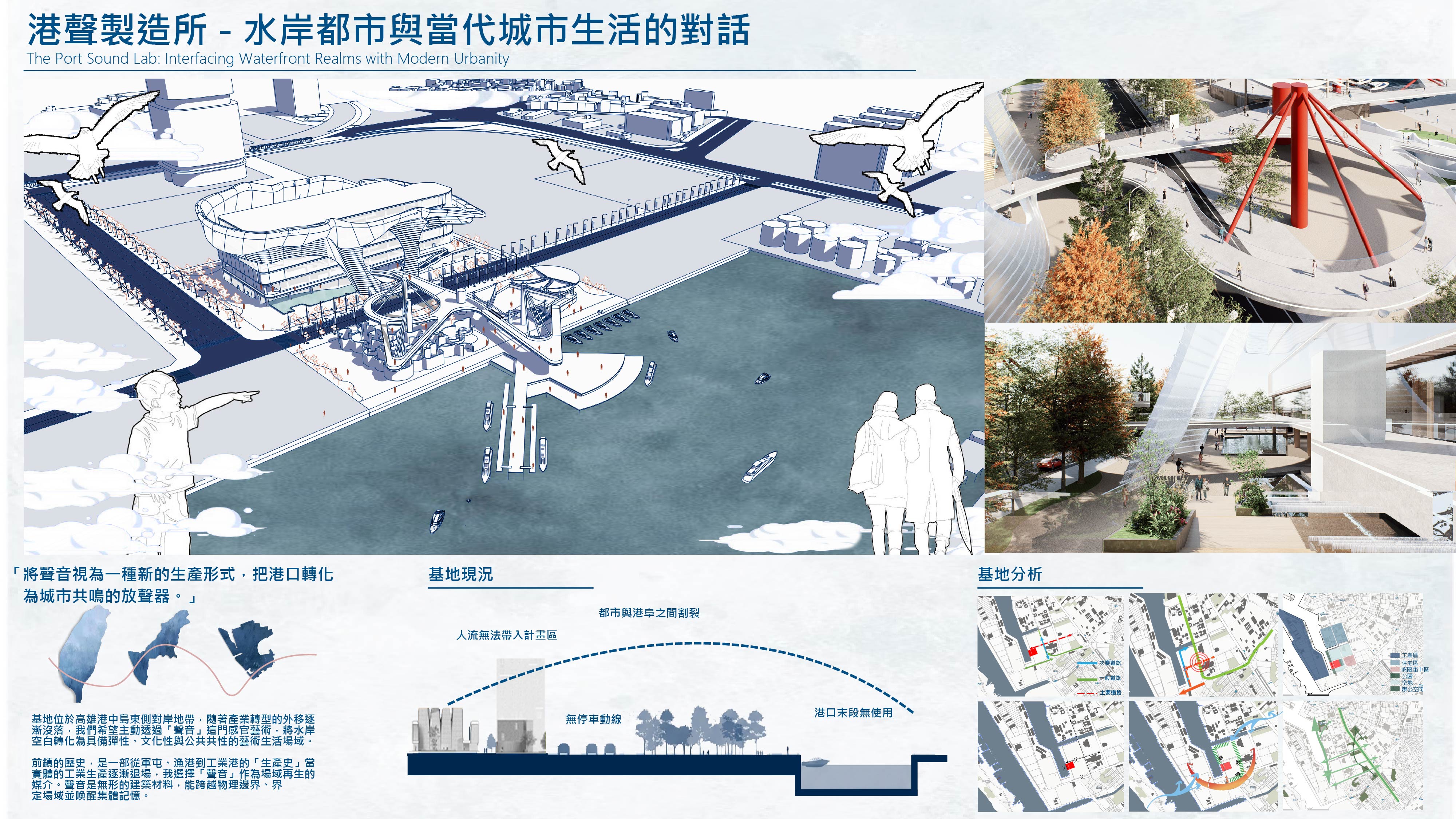
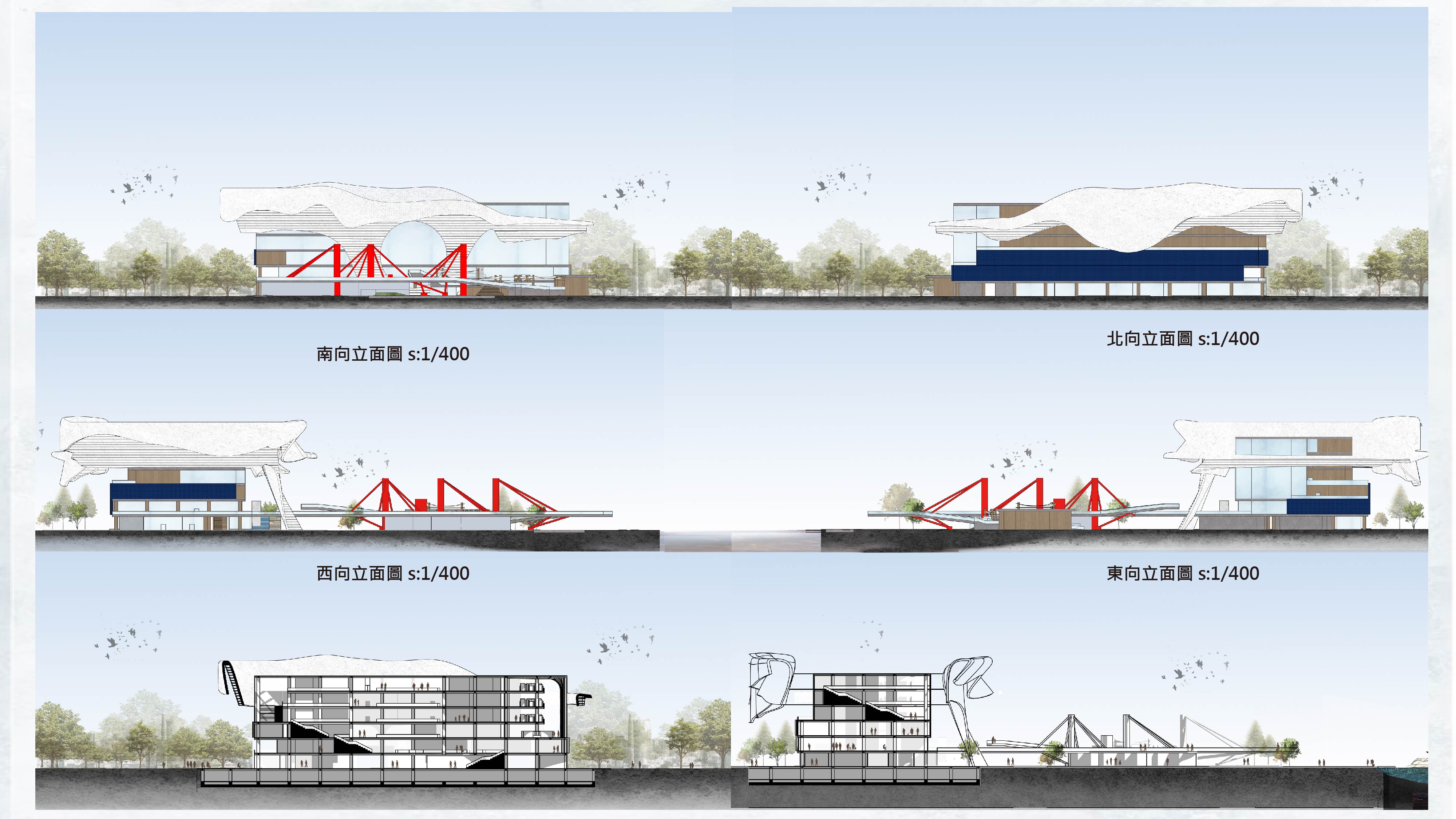
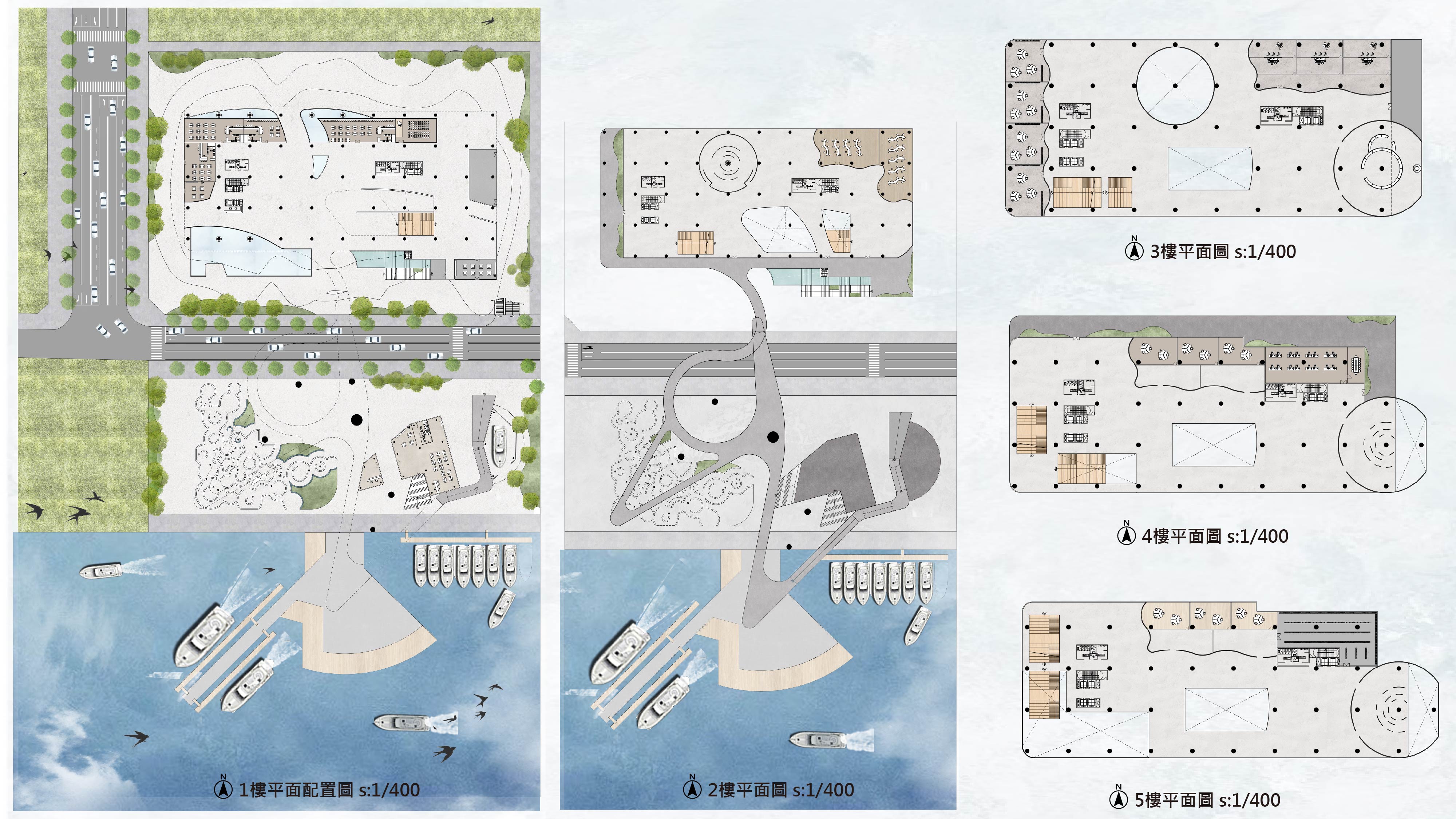
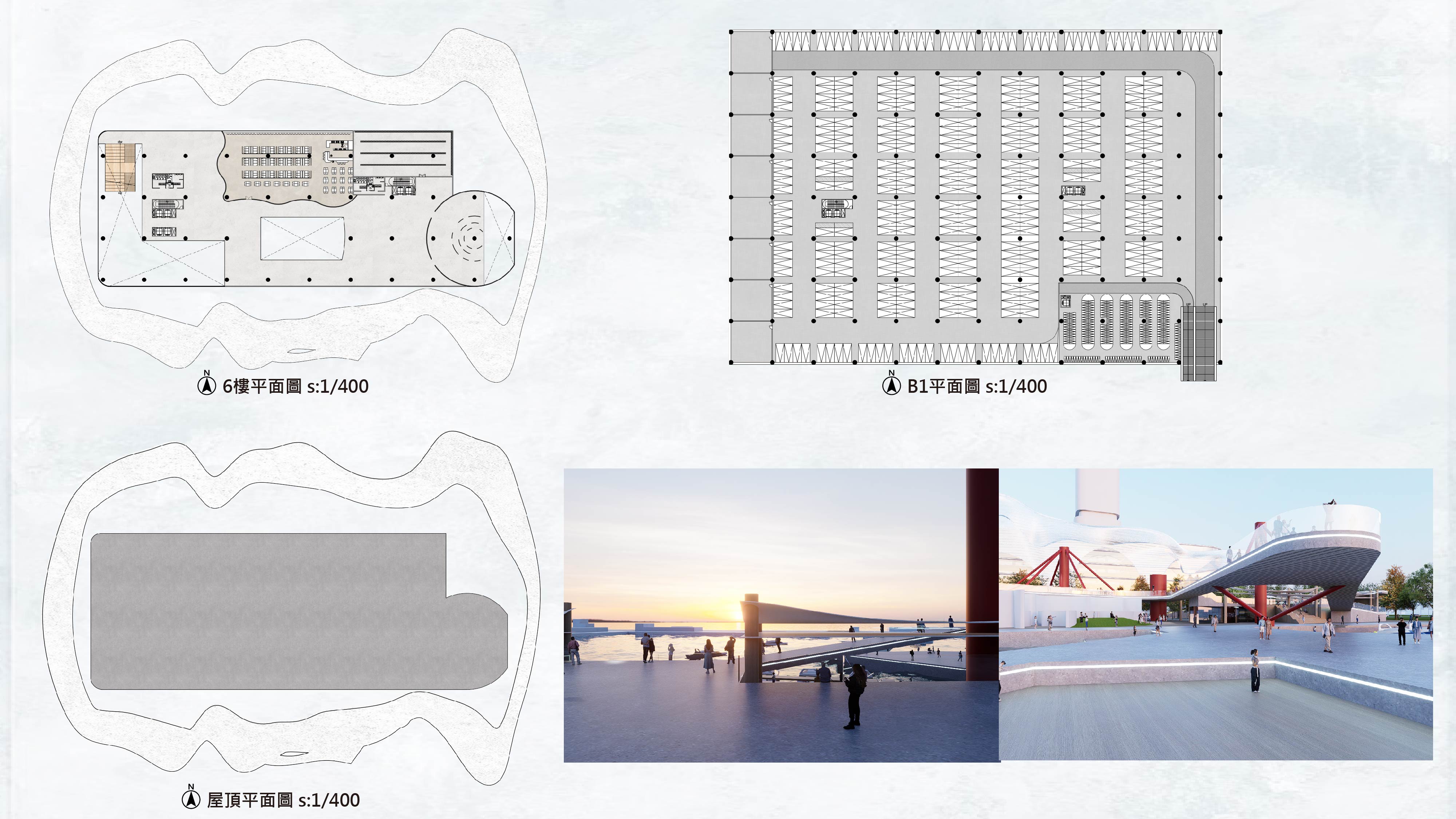
計畫位於時代大道端點,介於高密度商業區與缺乏停留節點的港灣水岸之間,形成轉型下的都市斷裂帶。前鎮由軍屯、漁港至工業港,長期圍繞「生產」。本設計以「聲音」作為介入起點,將其視為新型態生產形式,透過聲景重新連結城市與人。
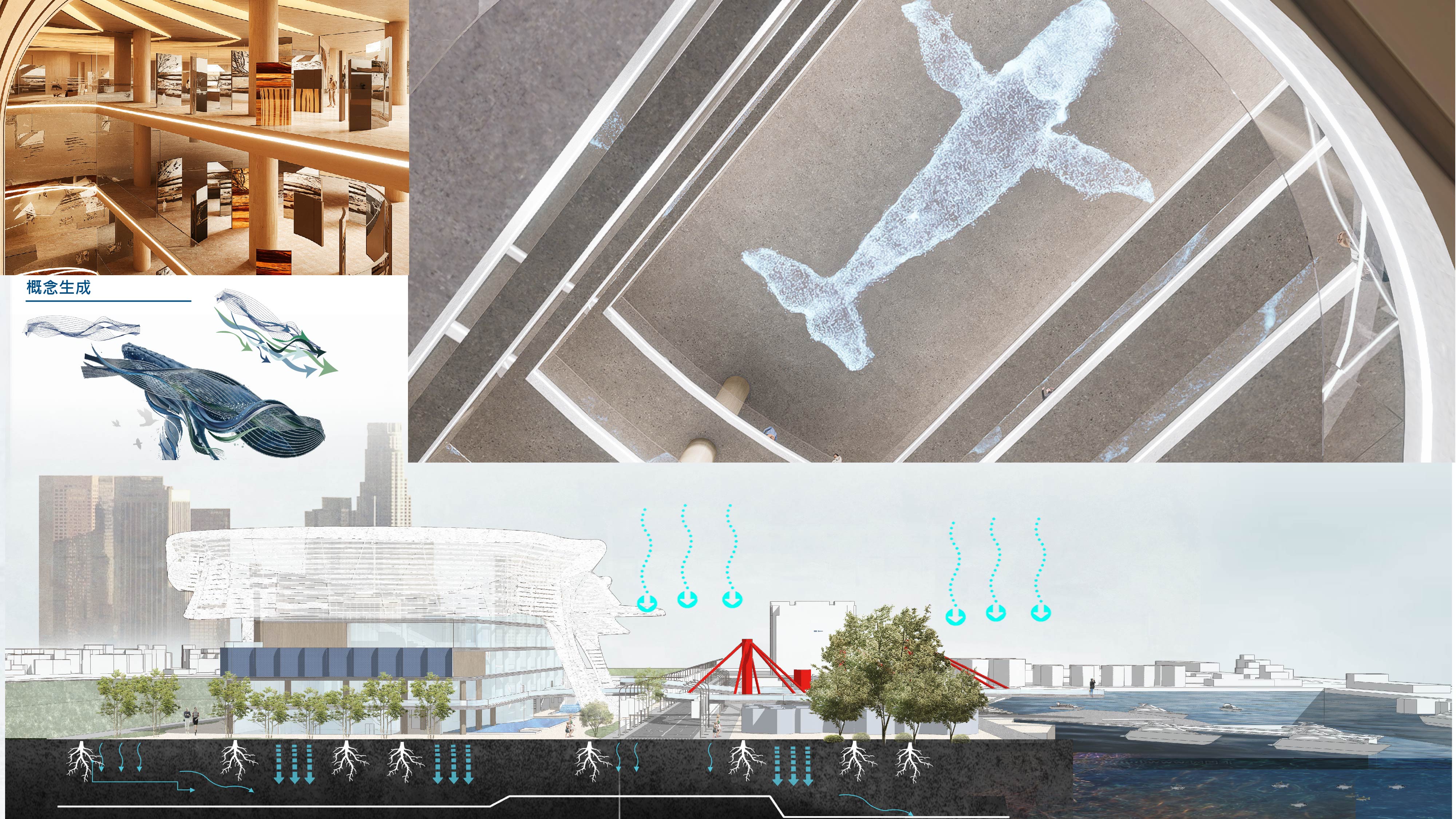
概念上結合聲波傳播與鯨魚生物聲學意象,轉譯為地標性的「聲音放生器」。建築不僅為視覺焦點,更作為感知媒介,引導人流由商業區延伸至水岸,並在行進中穿越多層次聲音場域。
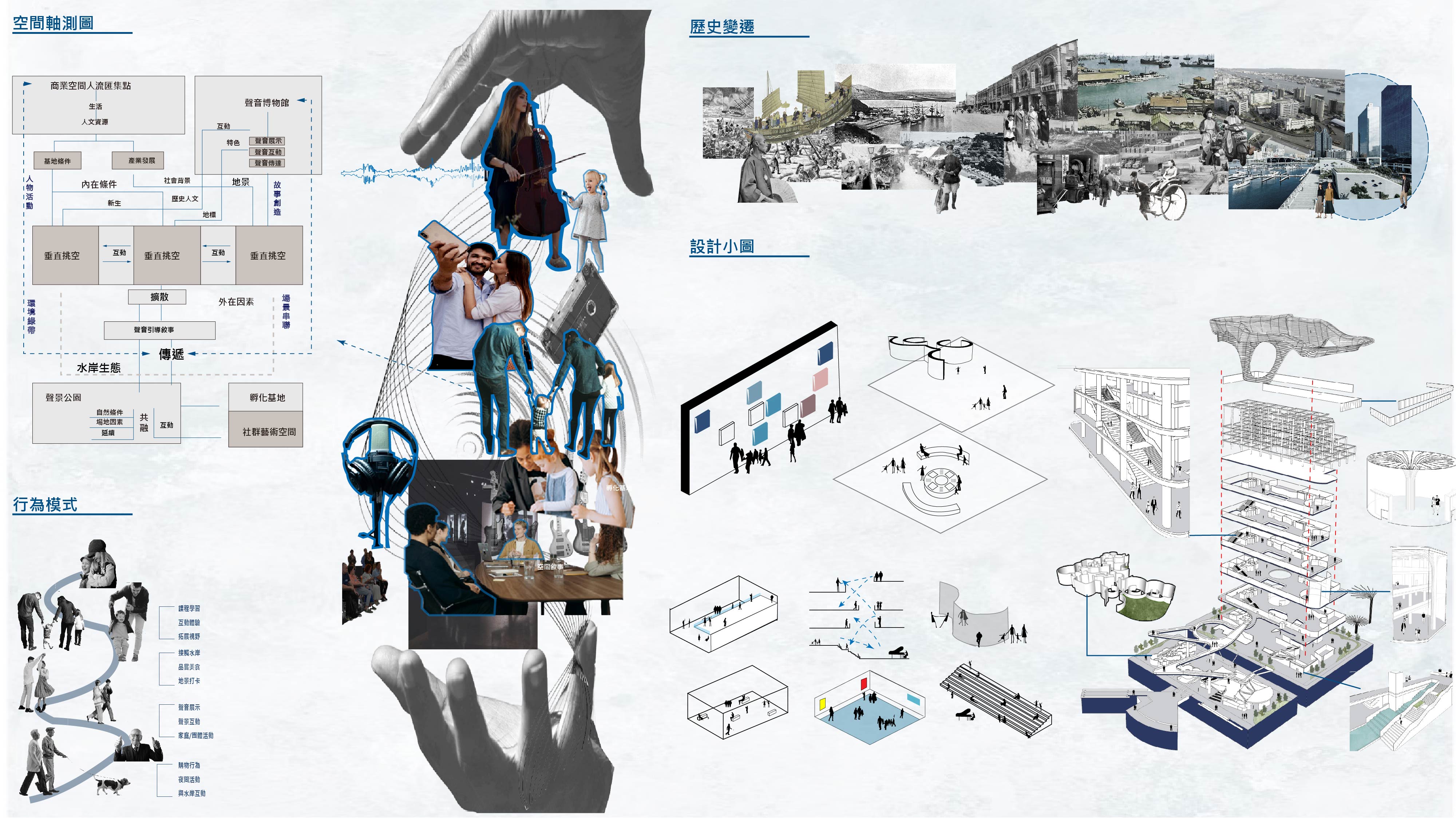
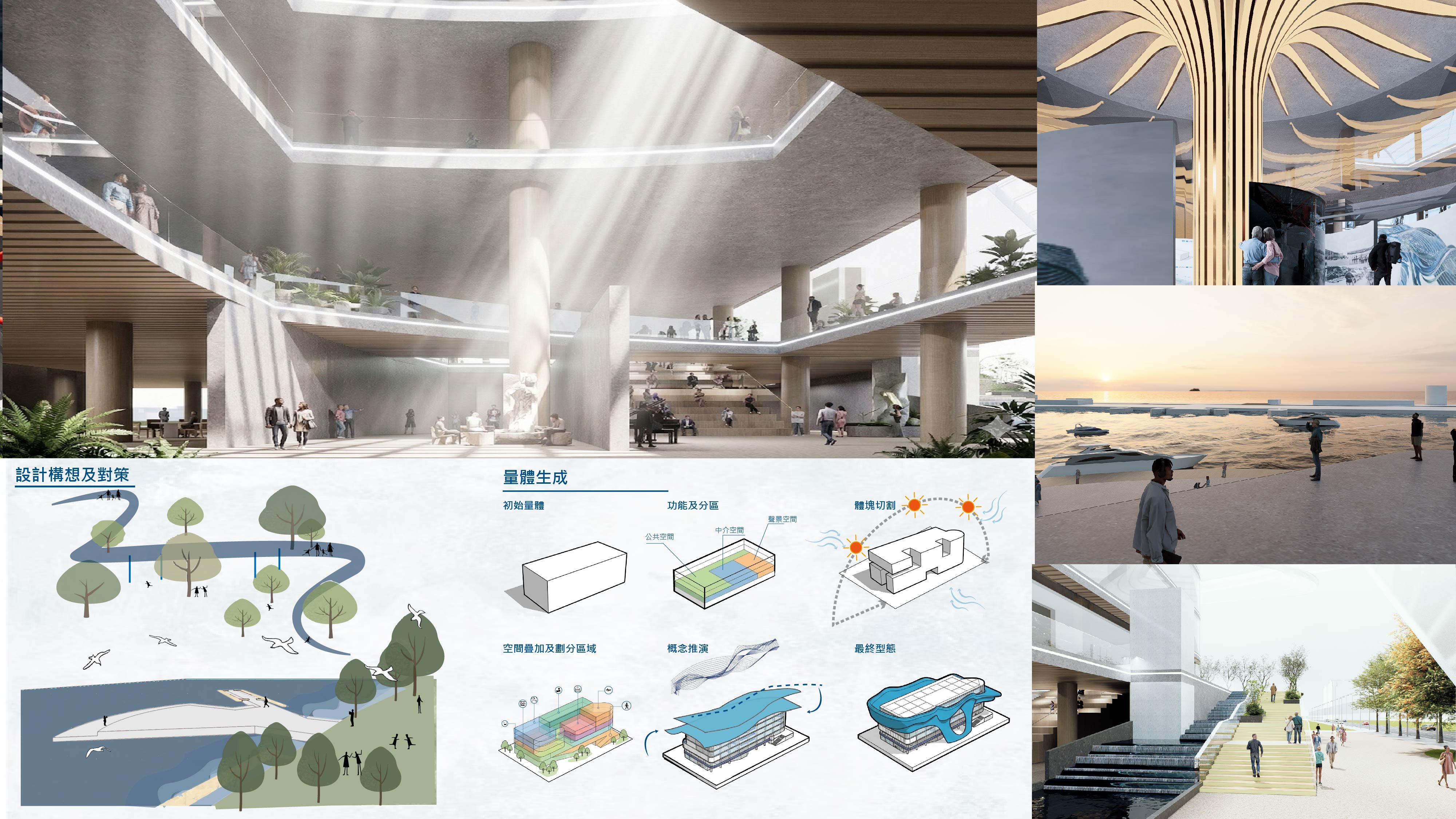
空間採無固定入口的開放策略,以垂直分層構成感官旅程。地面層為「聲音迷宮」,透過多孔隙材質捕捉風聲與海潮,弱化視覺導向;二樓為「聲音緩衝帶」,配置行政與工作坊,並以退縮空間過渡噪音並銜接碼頭;三至五樓為展示與創作空間,透過挑空建立垂直敘事,頂層為寧靜實驗室,完成由公共至私密的轉換。
最終透過「上觀景、下聽風」策略,將單一碼頭轉化為結合感官體驗與創作孵化的複合場域,使建築成為聲音互動與記憶的城市媒介。
Terminating Shidai Boulevard, this project bridges the rift between commercial zones and the waterfront. Reimagining Qianzhen’s industrial past, sound becomes a new medium to reconnect the city and its people.
The "Sound Emitter" concept merges sound waves with whale bio-acoustics. The architecture acts as a sensory filter, guiding visitors through layered acoustic fields toward the sea.
An open, vertical layout defines the experience. The ground-level "Sound Labyrinth" captures wind and tides, prioritizing hearing over sight. Level two buffers noise for workshops and pier access. Upper floors host studios and exhibition voids, ending at a rooftop "Silent Lab."
By "viewing above and listening below," the pier becomes a hybrid hub for sensory growth, turning architecture into a collective urban memory.