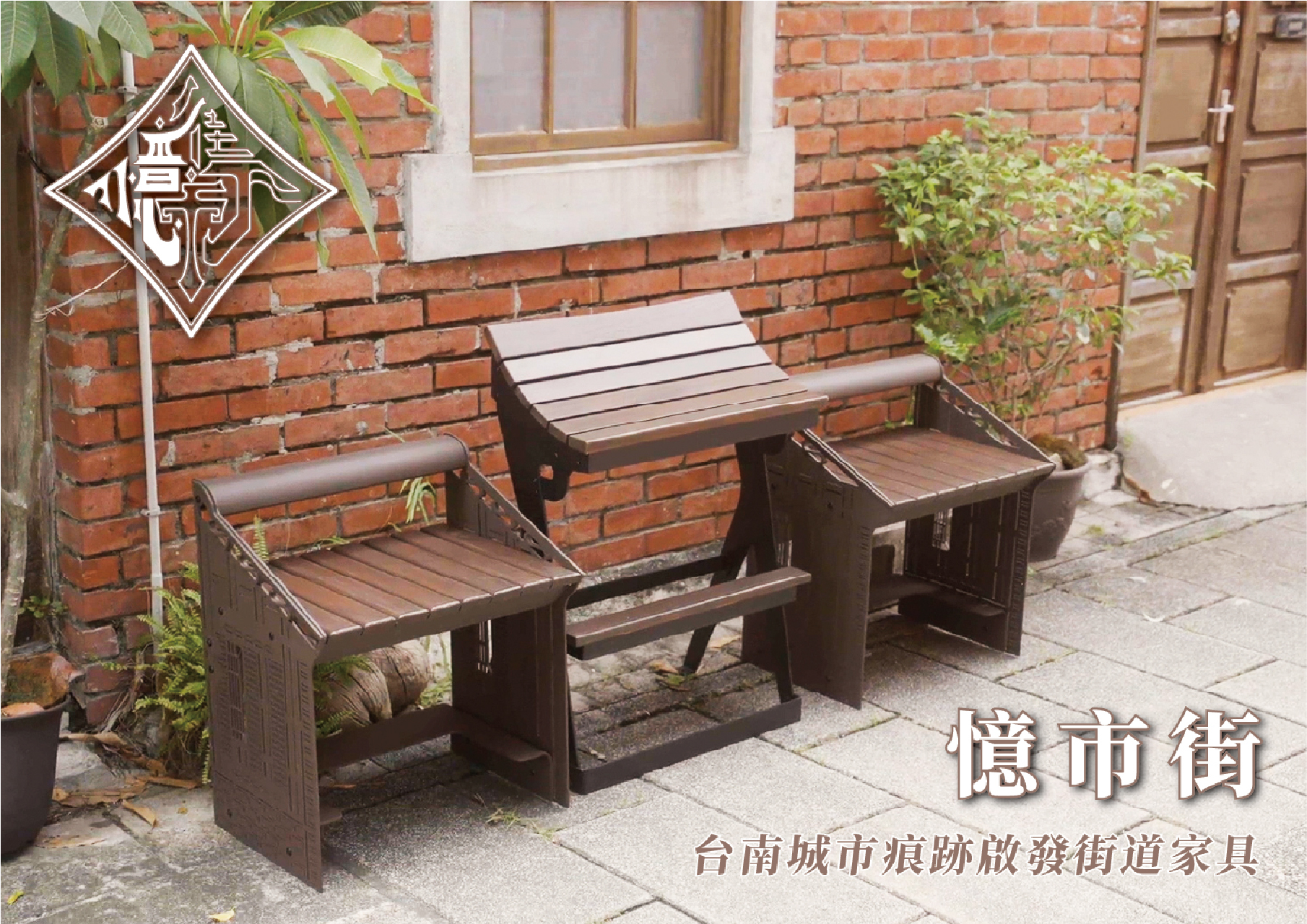
「憶市街」是一組從台南城市痕跡出發的街道家具設計。我們日常行走在街道之中,卻很少真正閱讀街道所留下的歷史。紅磚的剝落、鐵皮的覆蓋,逐漸掩蓋了這座城市曾經存在的痕跡。本作品透過對街道細節的觀察、轉譯,將隱藏在小巷中的歷史語彙,轉化為可被使用的街道家具,讓人們在停留與休憩之間重新感受城市的過去。
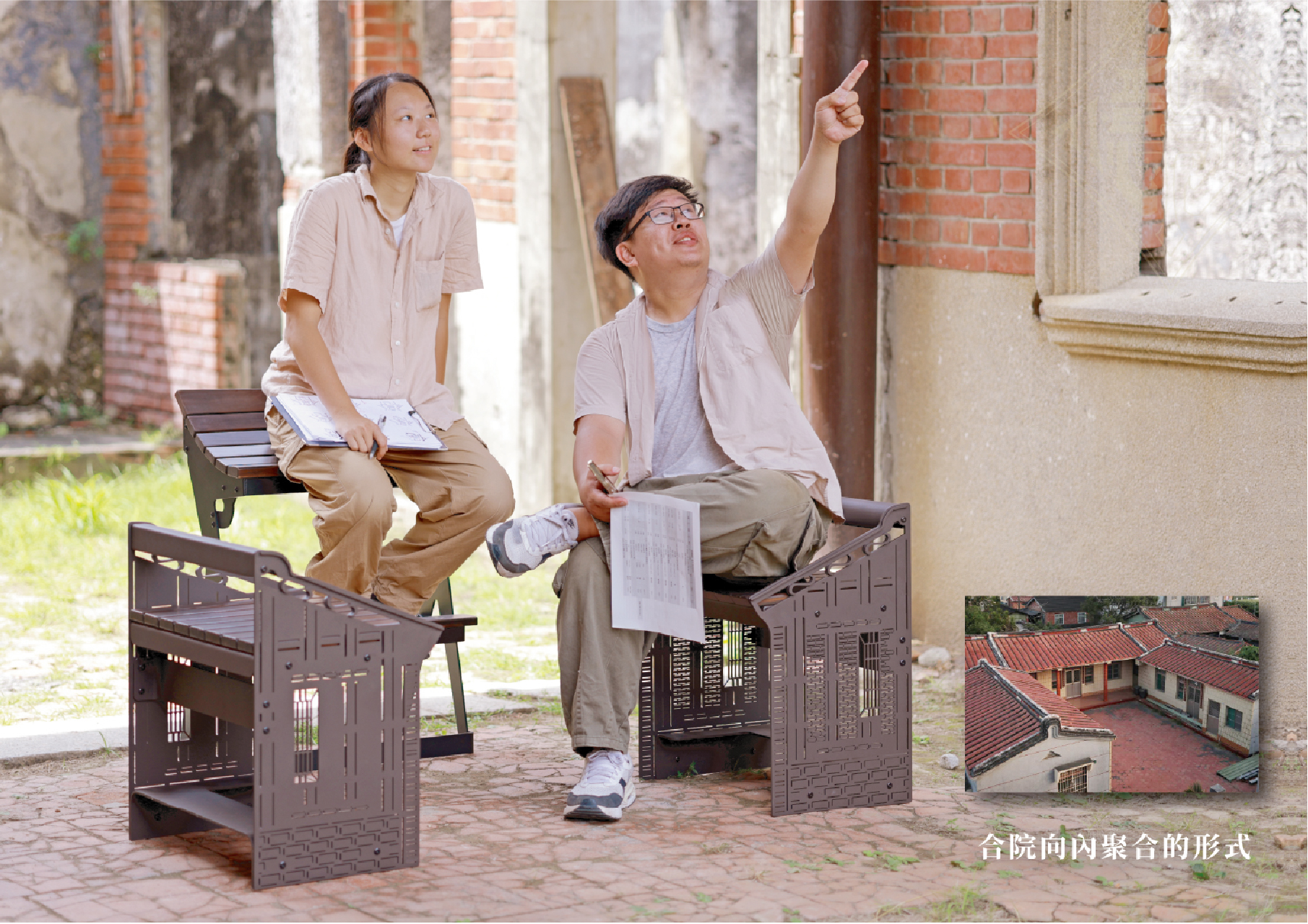
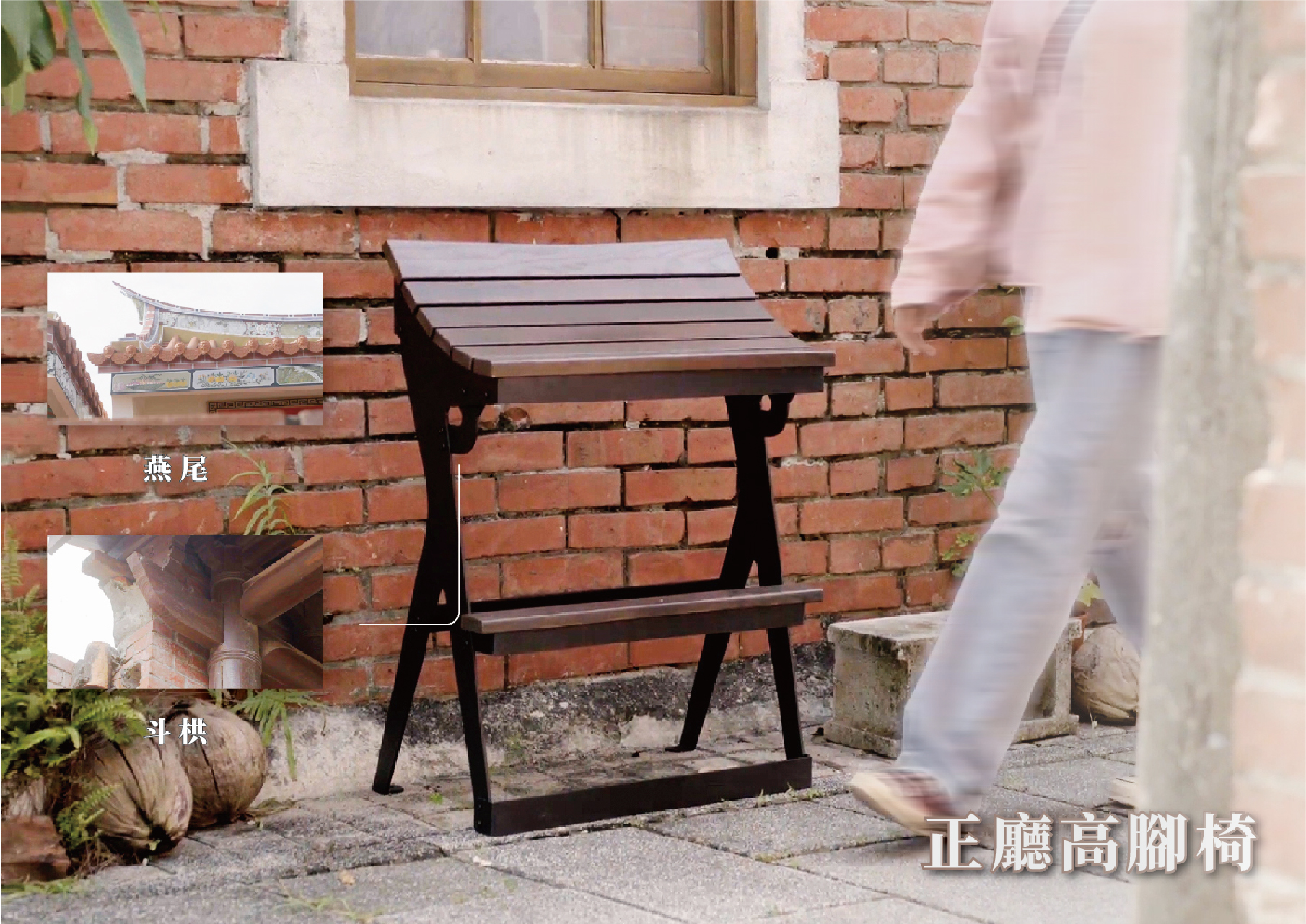
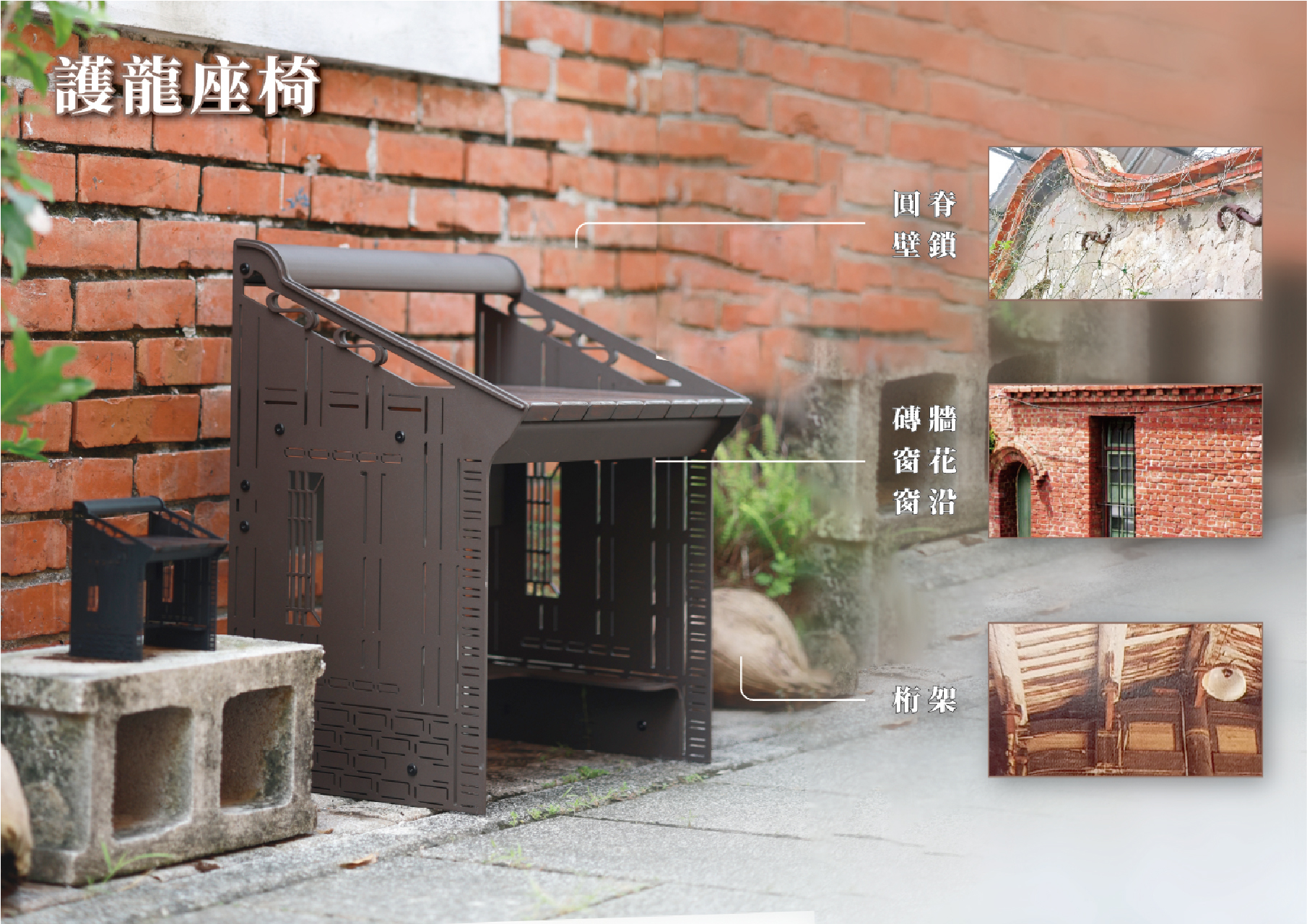
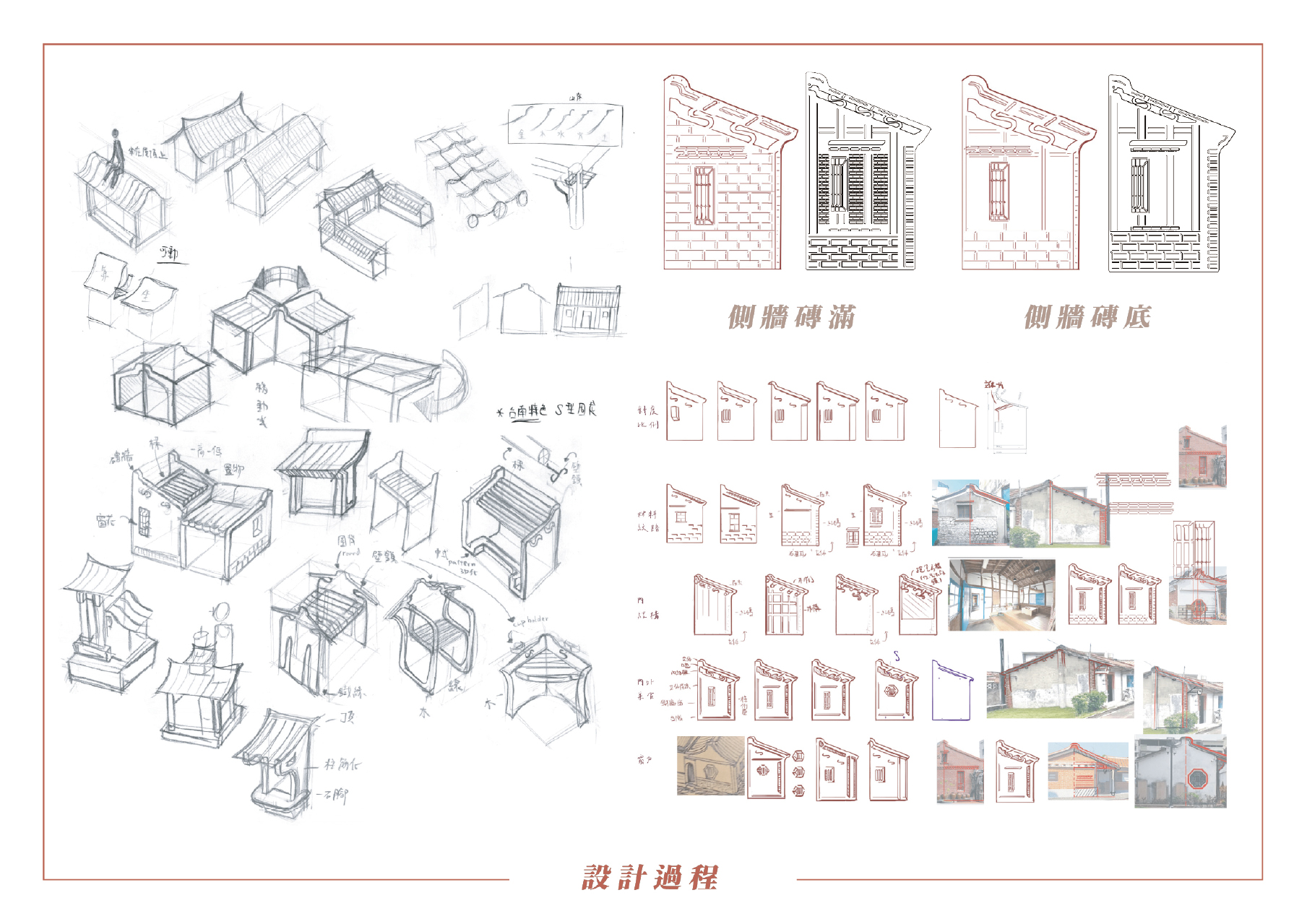
設計概念取自中式三合院的空間形式。合院向內聚合的關係,轉化人與人之間的交流與聚集於街道上。作品包含「正廳高腳椅」與「護龍座椅」兩種形式。坐在椅面之上,如同坐在屋頂之上,透過不同的高度與視角,重新靠近那些逐漸被忽略的建築記憶。「正廳高腳椅」的椅面延續傳統建築屋頂的尖脊與燕尾意象,並轉化木構架中的斗拱結構,使建築語彙成為可被感受的造型元素。「護龍座椅」則在側牆描繪建築由外而內的構造層次,包括圓脊、屋簷、紅磚與鐵窗花等細節,同時加入台南常見的構件「壁鎖」,也被稱為鐵剪刀。它不僅具有結構功能,也承載避邪的文化象徵,成為地方文化融合的痕跡。
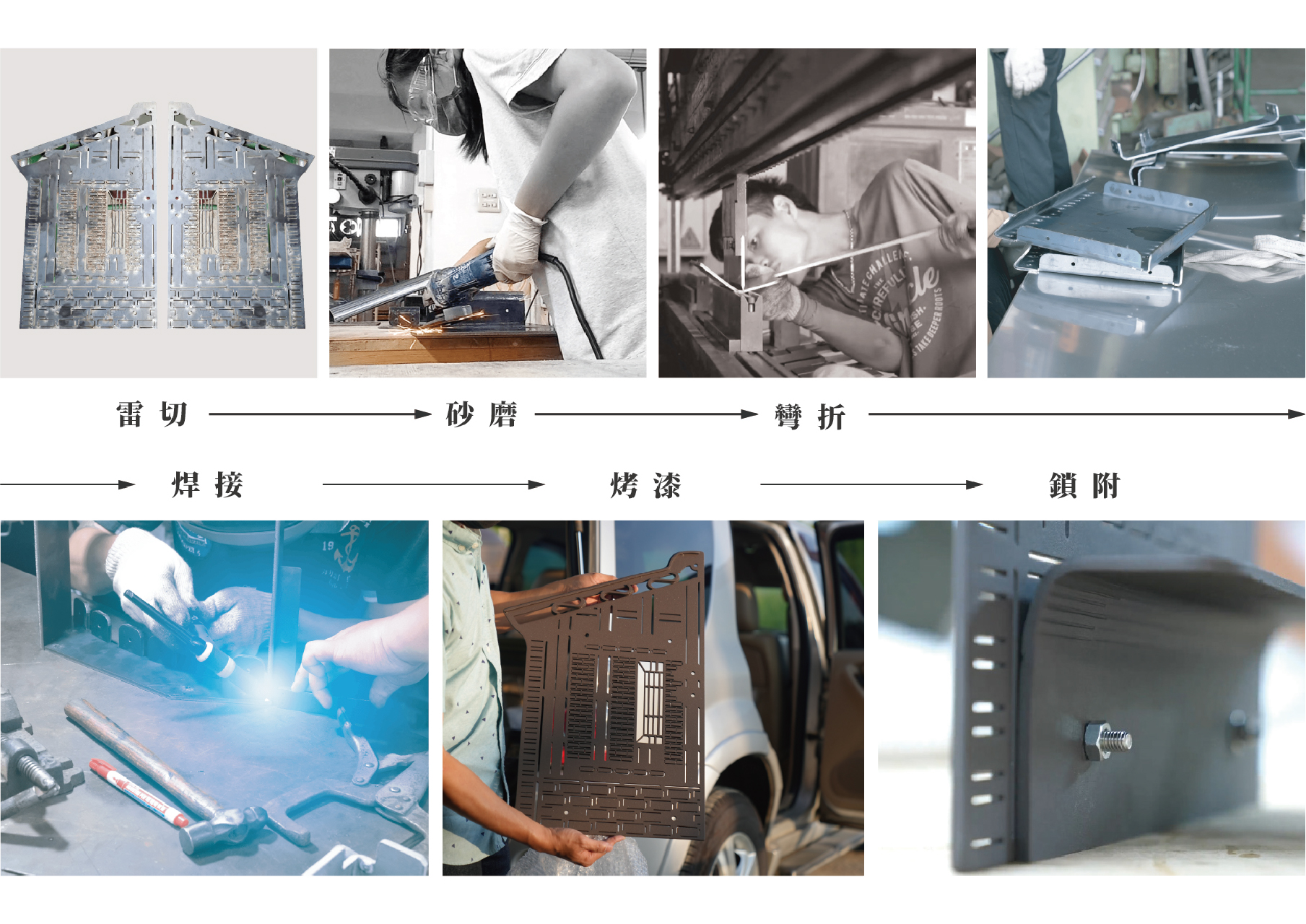
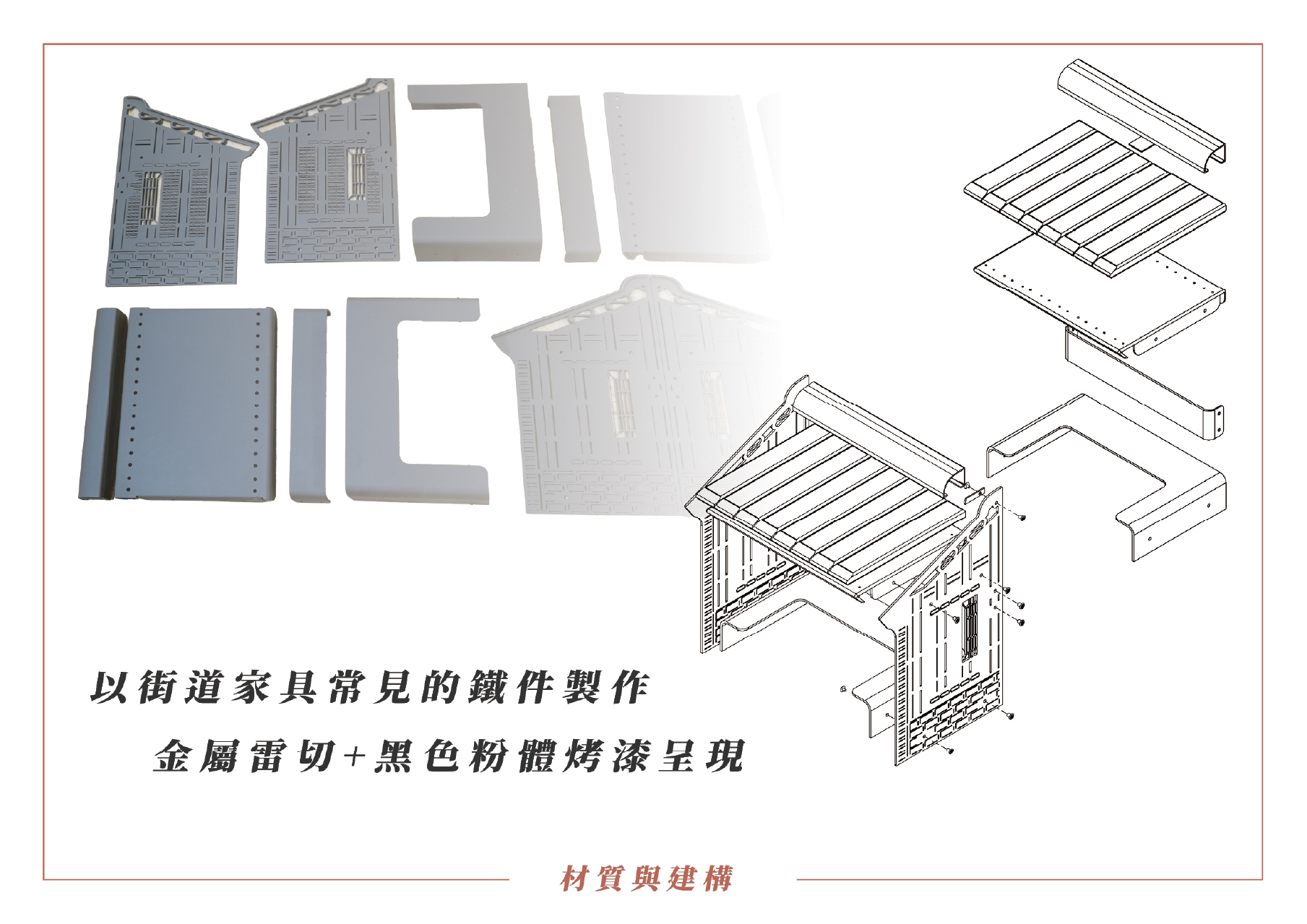
整體以鐵件製作並施以黑色粉體烤漆,如同建築投射在街道中的影子,形成城市記憶的縮影。「憶市街」希望讓街道的歷史不再只是被觀看的痕跡,而是能被觸碰、被使用的存在,使現在的城市生活重新與過去展開對話。
Roofmembrance reinterprets Tainan’s urban traces into functional street furniture. This project translates hidden architectural languages from small alleys into design that allow people to reconnect with the city’s past. Inspired by the sanheyuan courtyard, the design symbolizes social gathering within the street.
The Main Hall High Chair features sharp swallowtail ridges and traditional roofline structures. The Wing House Chair layers eaves, grilles, and the symbolic bi-suo iron scissors, which once warded off evil. Crafted in black powder coated metal, these pieces act as architectural shadows cast onto the street. Sitting on them is like resting on a rooftop, offering a new perspective on overlooked memories. Through these designs, history is transformed from something only seen into a tactile experience for contemporary urban life.