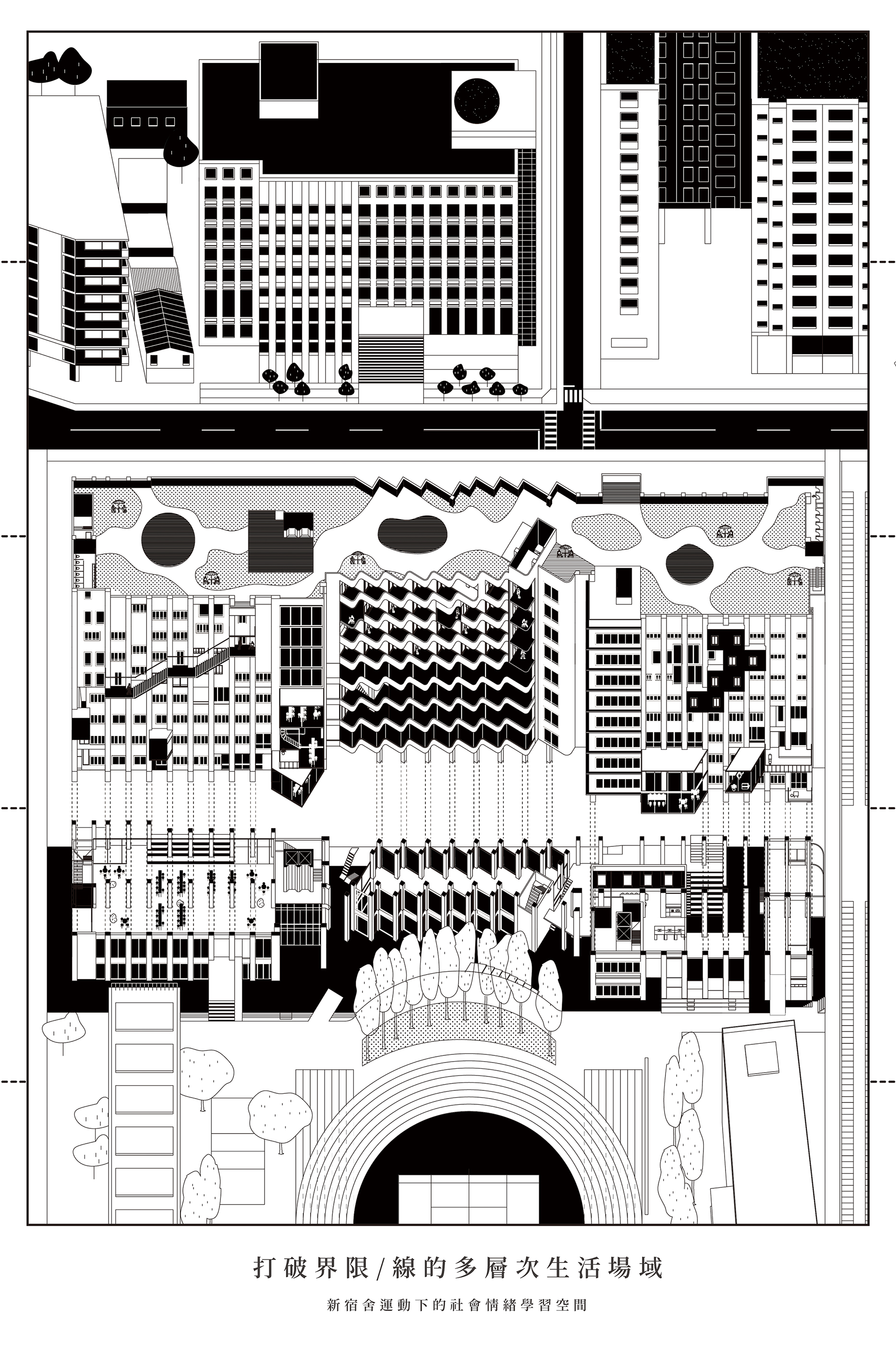
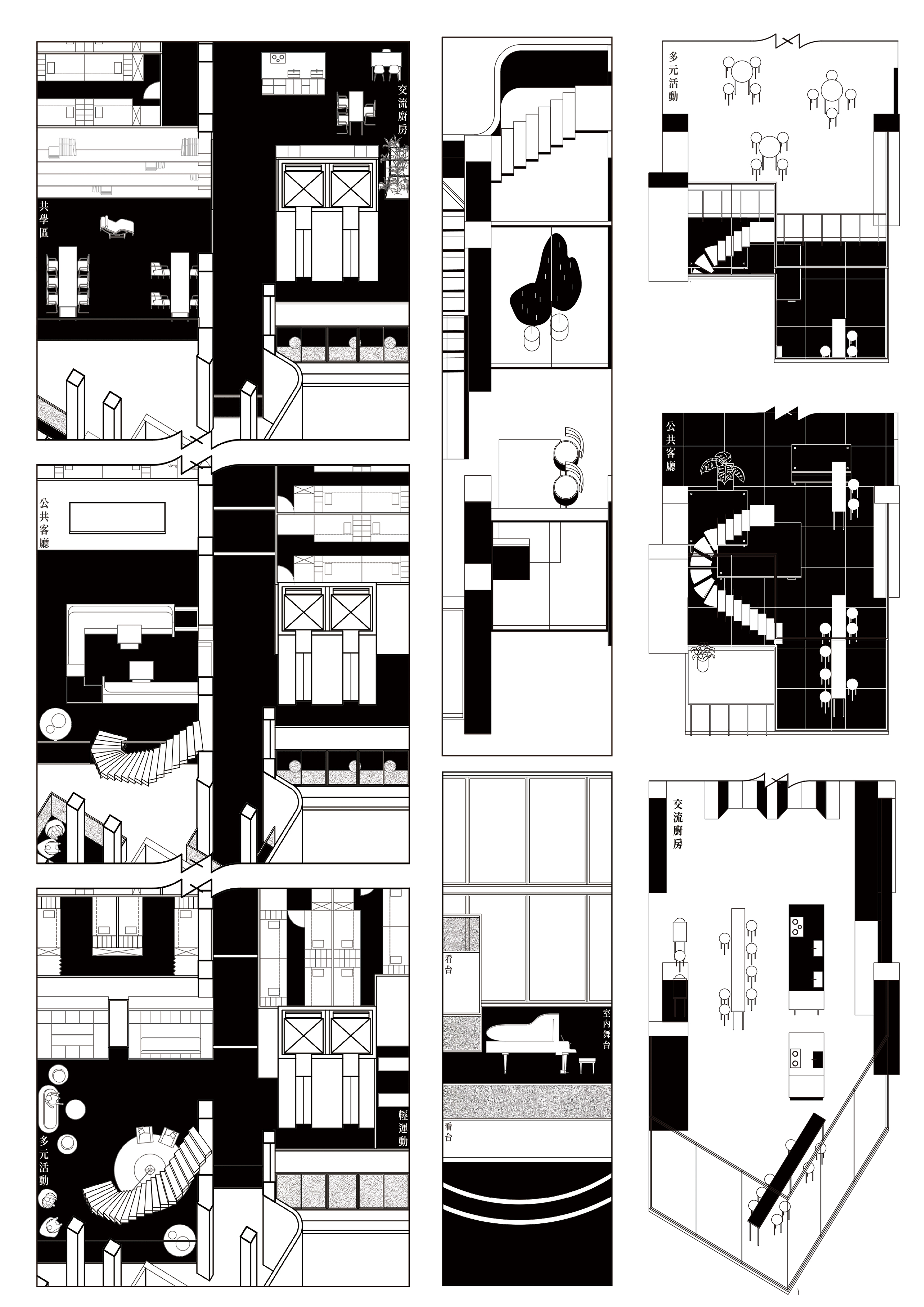
本設計立基於新宿舍運動的背景,並以大學生之社會情緒學習為核心目標,希望在高密度卻低交流的生活狀態中,重新建立空間支持互動與情緒發展的可能。學生宿舍作為共處的重要場域,長期受機能導向影響,往往淪為單一的睡眠倉庫,缺乏支持情緒交流與心理安全的空間條件,使互動難以自然發生。
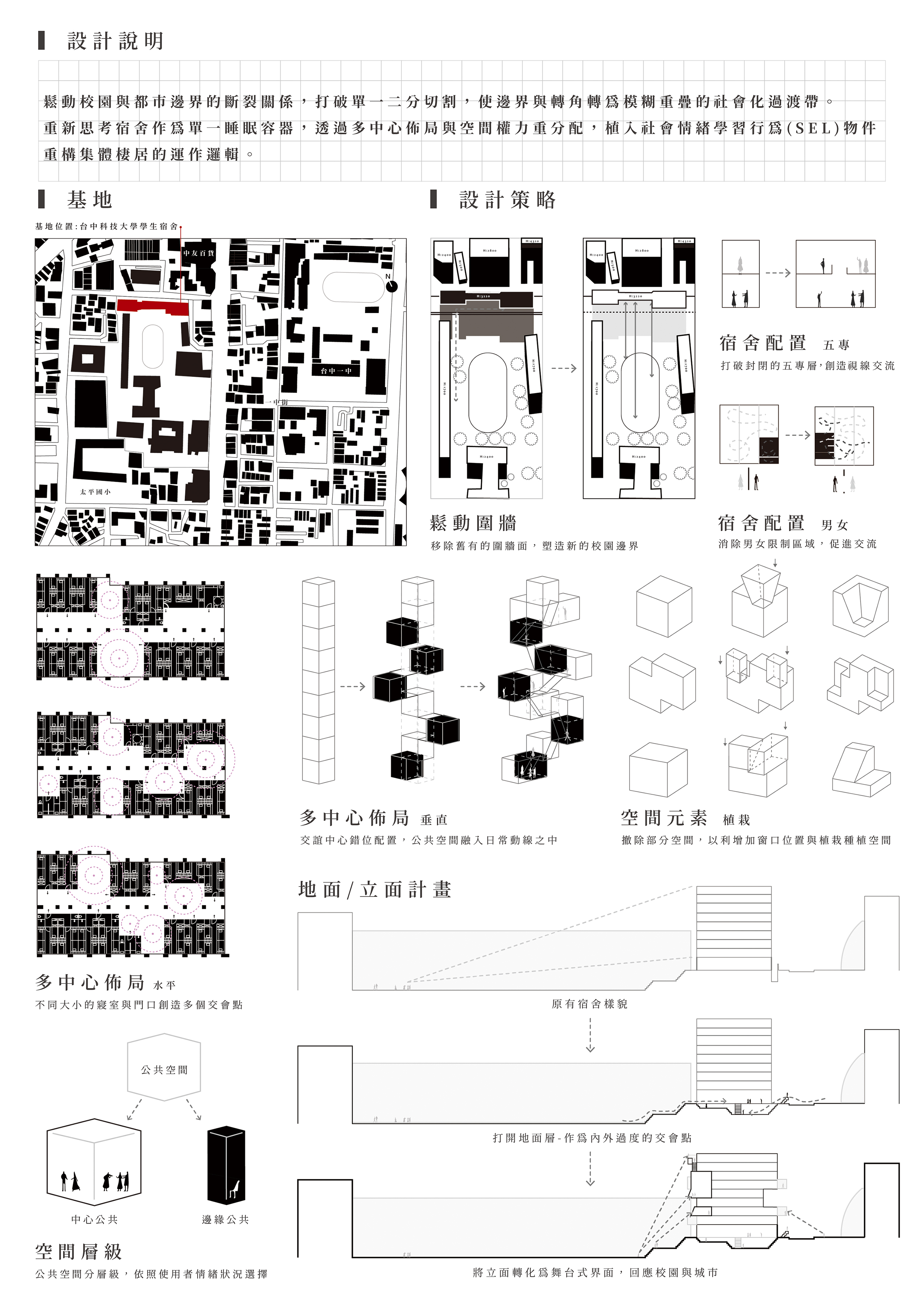
從重新理解「界限」出發,將其視為可被轉化的空間操作對象。基地中的街道、圍牆、操場邊界與樹籬等外部界限,以及室內公共空間中的動線、界面與節點,皆被重新詮釋為可被調整的「線」。透過鬆動校園與都市之間既有的邊界關係,打破單一且二分的空間切割,使邊界與轉角不再是限制,而轉化為模糊且重疊的社會過渡帶,延伸生活場域的可能。
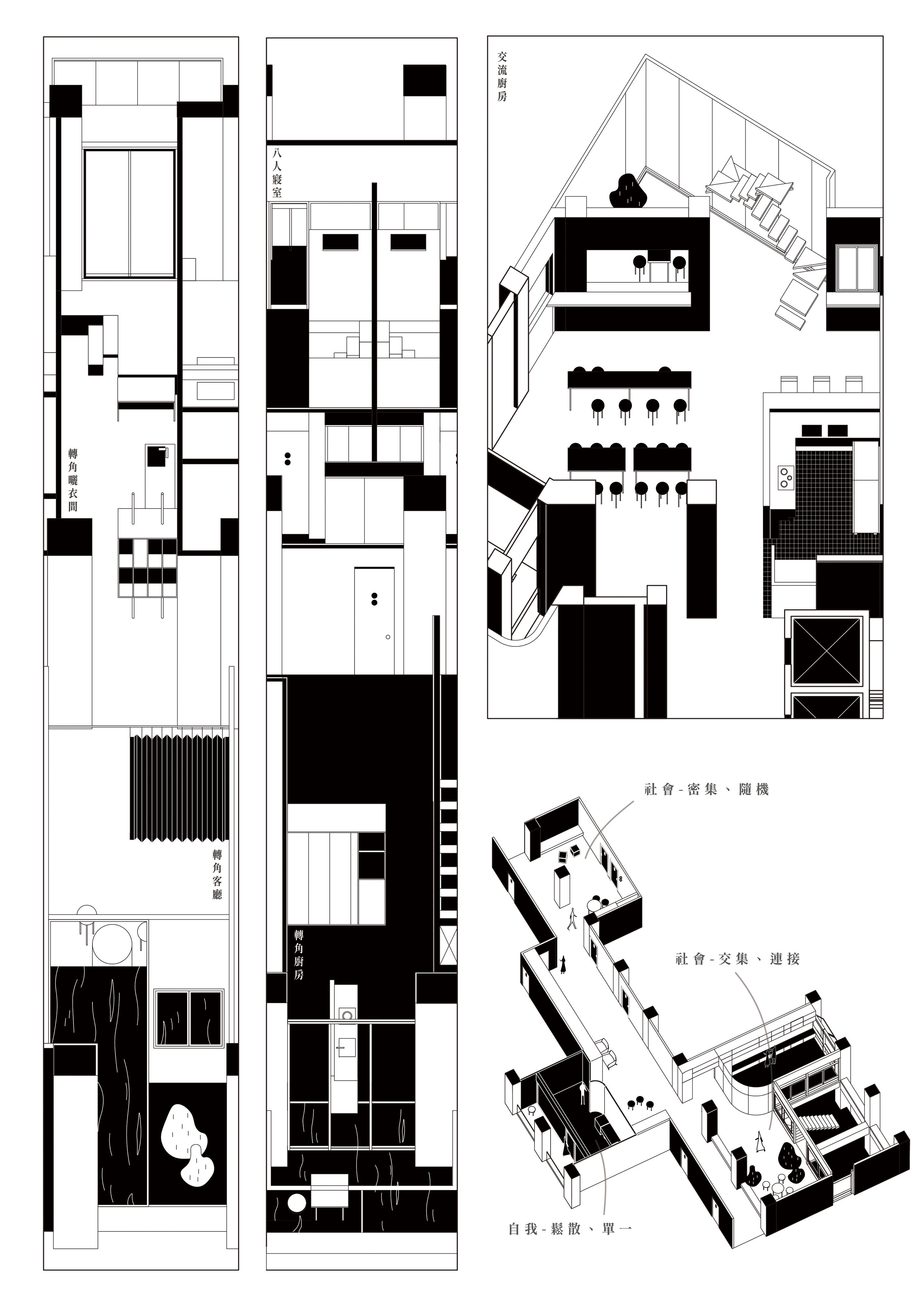
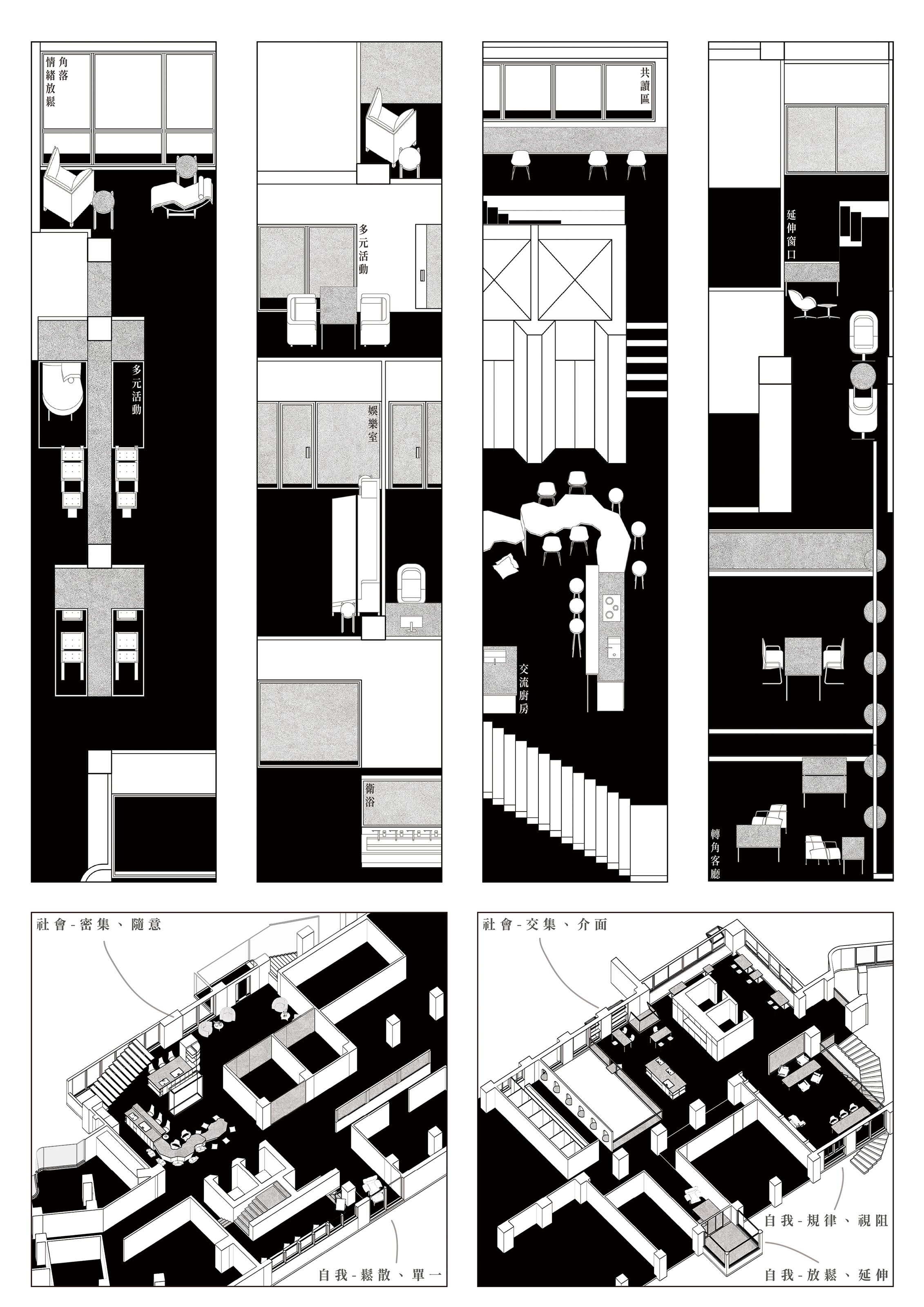
在空間策略上,透過分散的多中心佈局,重新分配空間權力,並結合介面層次、距離控制與節點轉化等設計手法,將社會情緒學習(SEL)的行為物件植入日常空間之中,使靠近不再被迫,互動得以逐步生成。
環境不再只是容納生活的容器,而成為影響行為與關係的媒介,重構集體棲居的運作邏輯。
Grounded in the New Dormitory Movement, this project centers on university students’ Social-Emotional Learning (SEL) and explores how space can support interaction and emotional development in high-density, low-interaction living conditions. Student dormitories, often reduced to mere sleeping warehouses, lack conditions for emotional exchange and psychological safety.
Boundaries—streets, walls, sports field edges, hedges, and interior circulation, interfaces, and nodes—are reinterpreted as adjustable “lines.” Loosening campus-city boundaries and breaking binary spatial divisions transforms edges and corners into blurred, overlapping social transition zones, extending everyday living possibilities.
A decentralized, multi-nodal layout redistributes spatial agency, embedding SEL elements into daily spaces. Interactions emerge gradually, and the dormitory becomes an active medium shaping behavior and relationships, reconfiguring the logic of collective habitation.