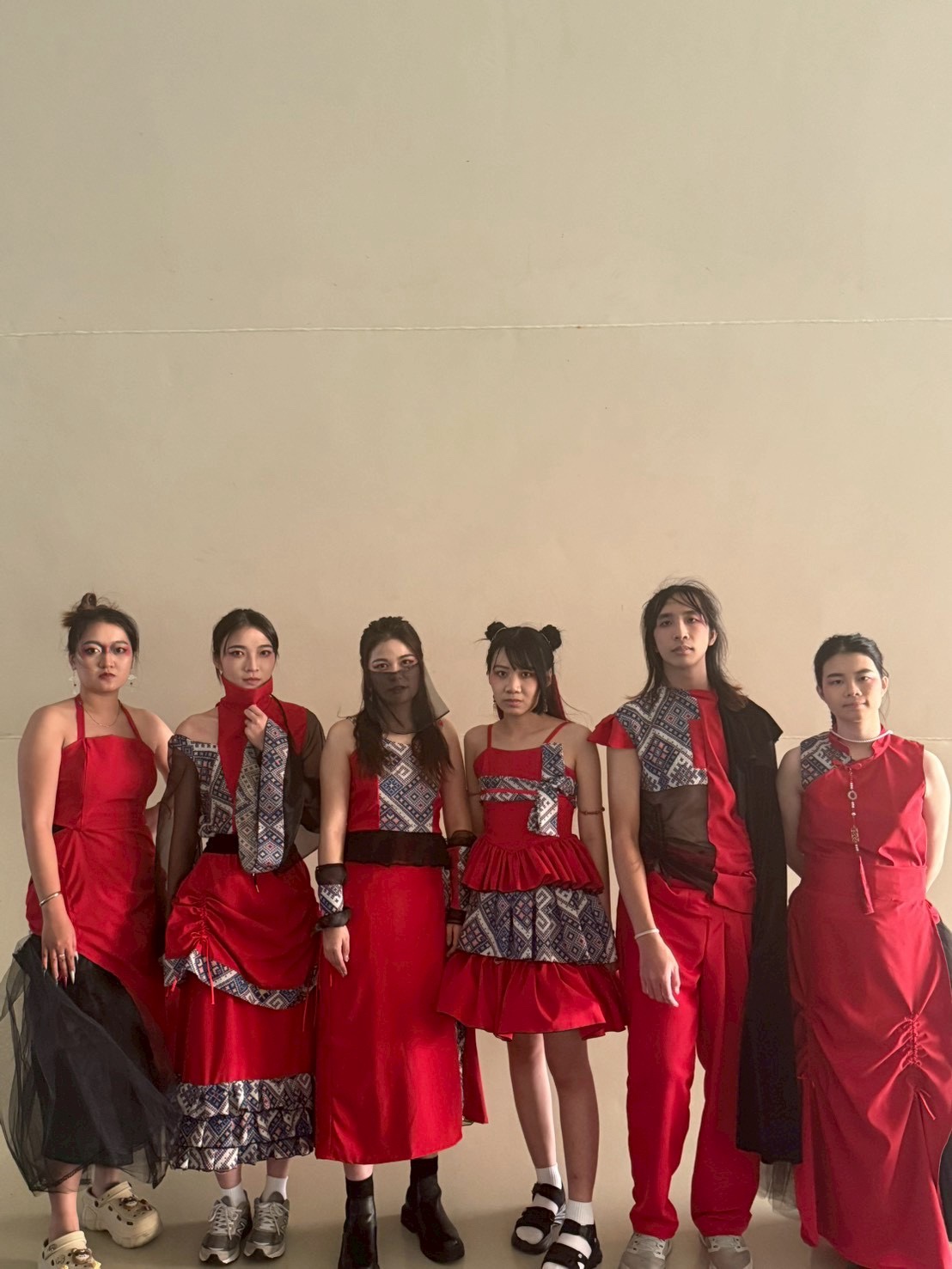
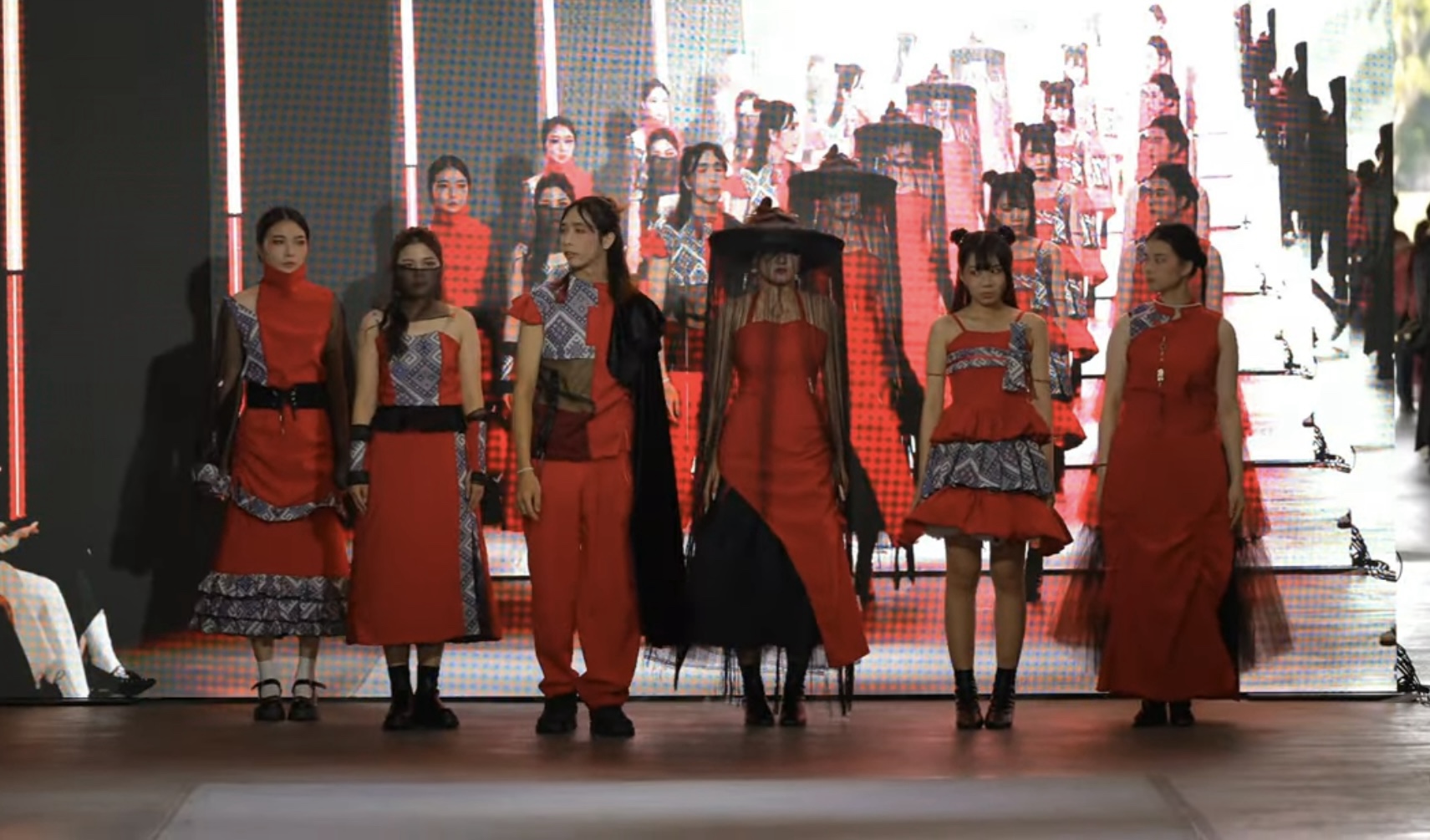
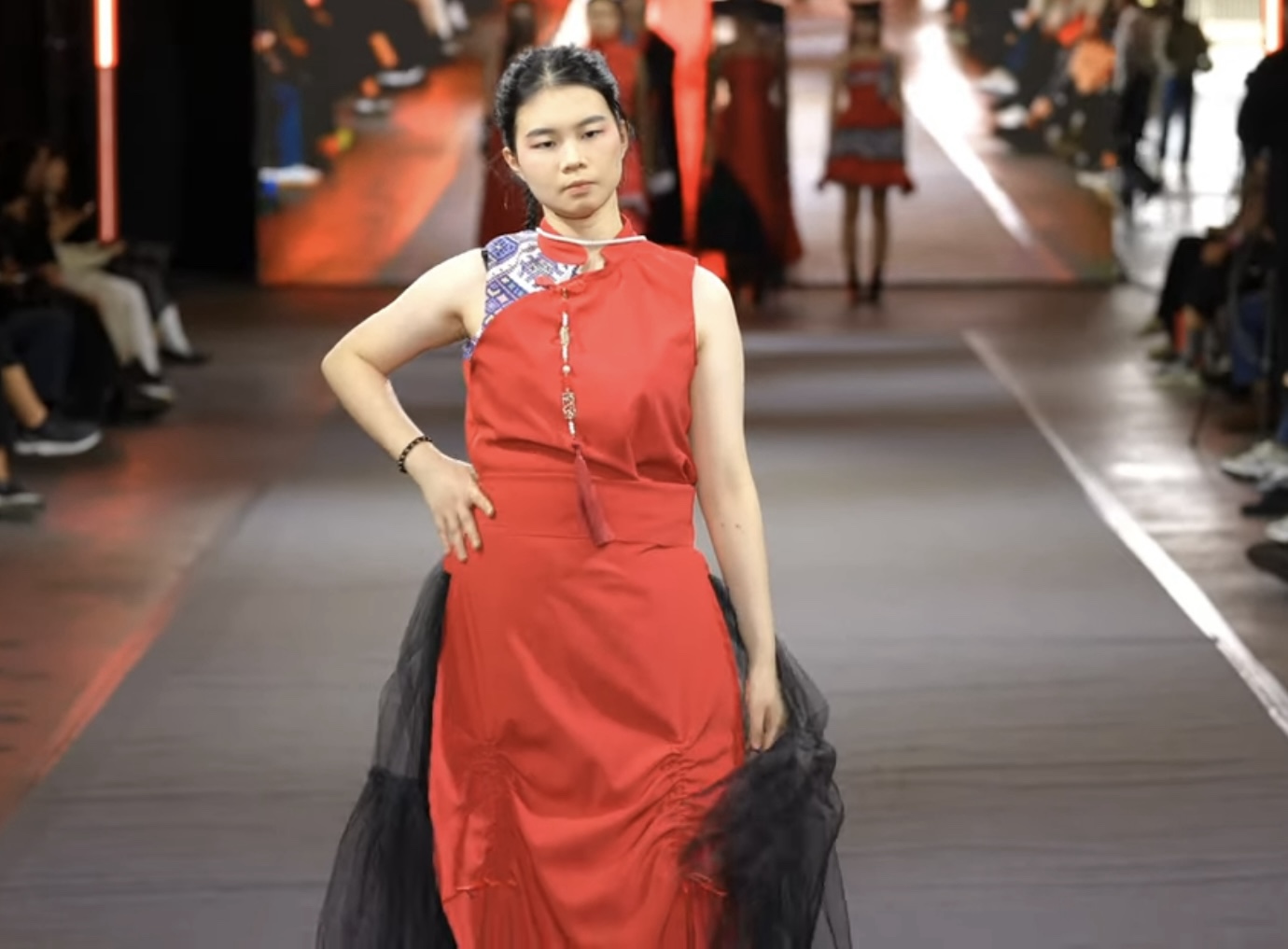
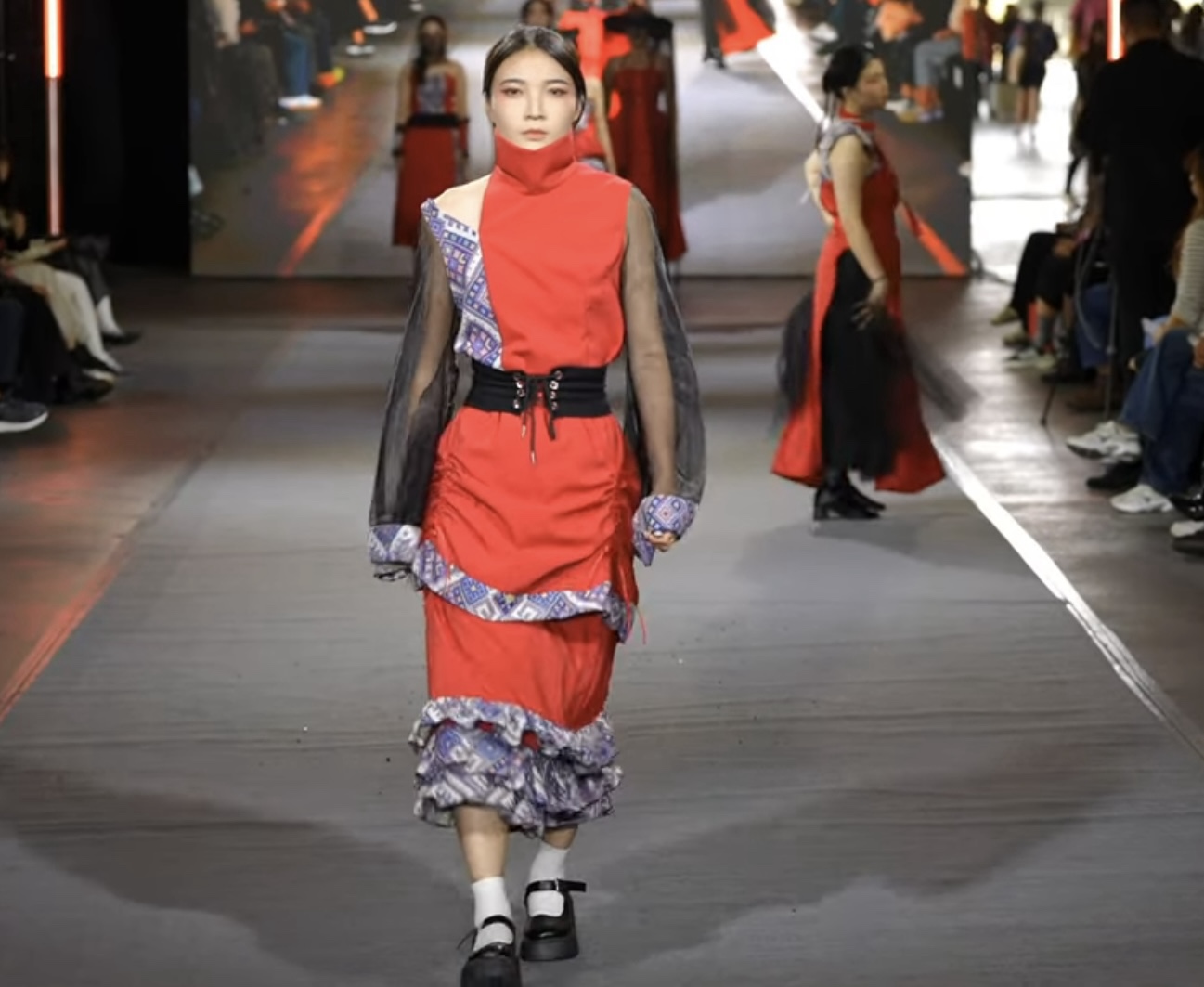
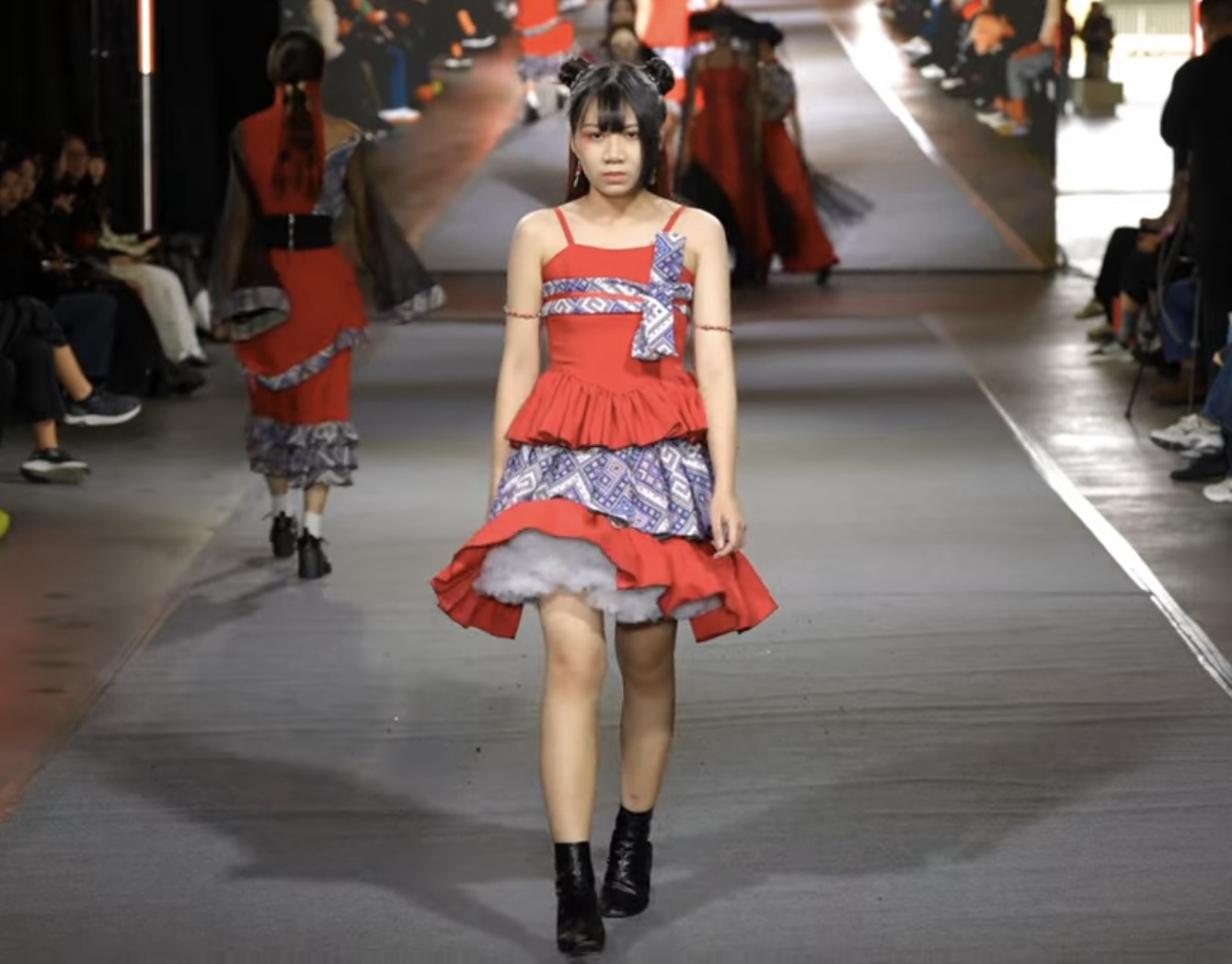
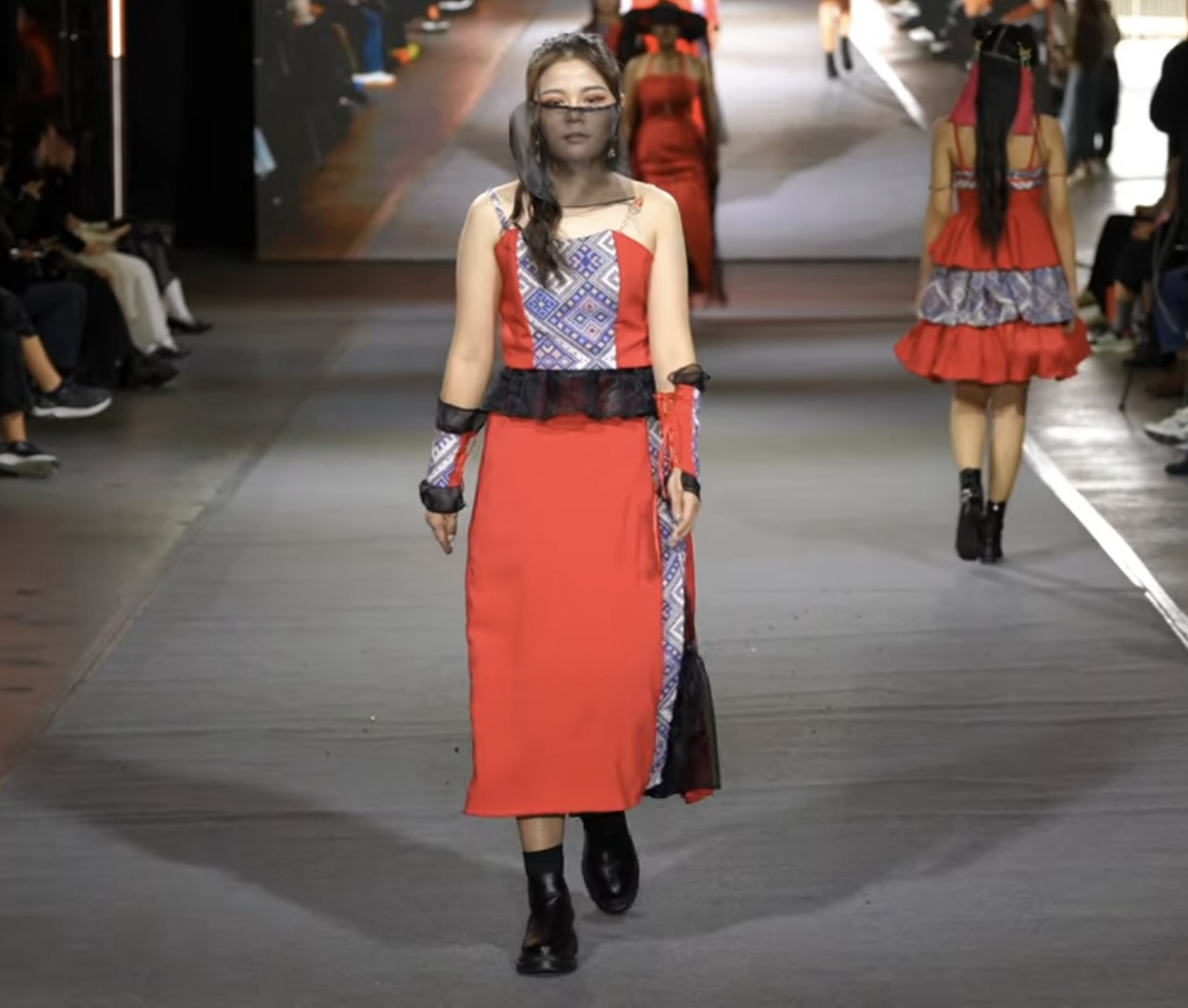
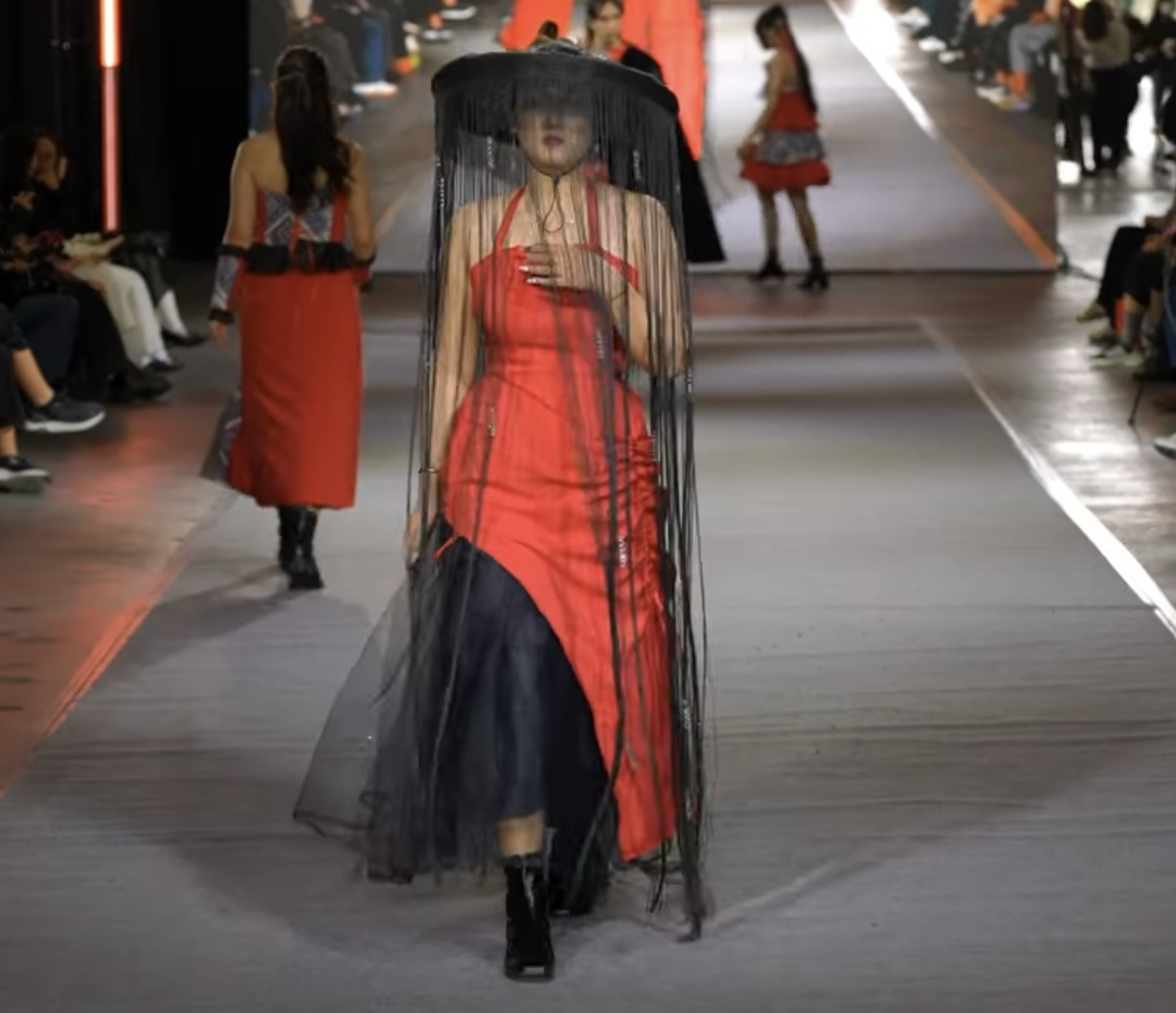
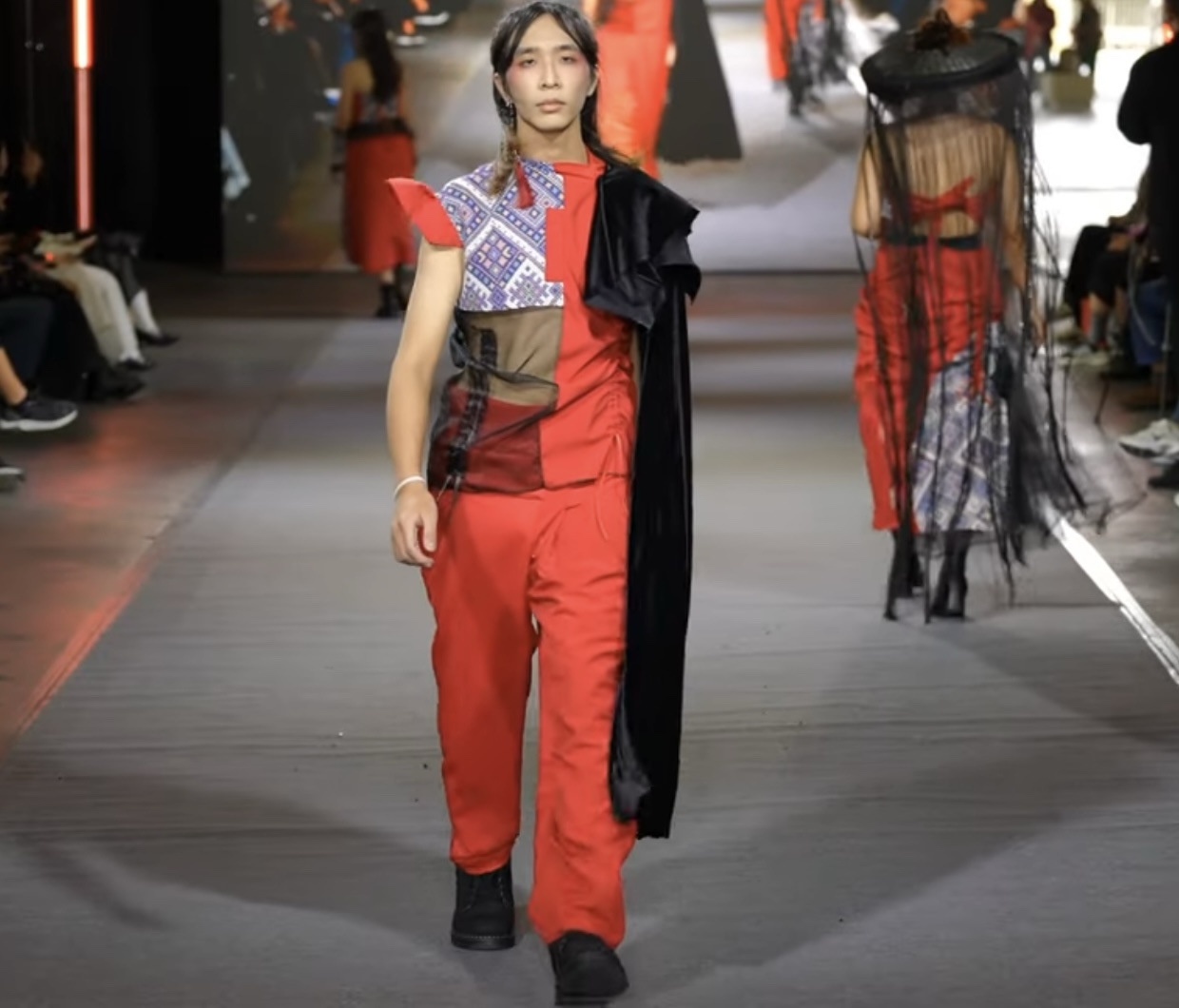
「渺」象徵著微小與幽遠,也指涉時間與記憶長河之中,族群文化所留下的細語與回聲,那些看似微弱卻從未消失的存在;「紅」則象徵血脈、情感與土地,不僅是阿美族傳統服飾中的重要色彩,也承載著中華文化中關於吉祥、生命力與精神力量的意涵。兩者交織,形成一種既內斂又深層的文化語彙。本設計以新中式結構為載體,嘗試在當代身體上重新詮釋傳統,使過去不再只是被觀看的符號,而能再次被感知與發聲。「渺紅」源自我對原住民族文化與自我身分認同的探索。在參與阿美族部落儀式的經驗中,我被族人身著傳統服飾、隨著鼓聲踏步、低聲吟唱的畫面深深觸動。那樣的紅,不張揚卻深沉,彷彿從血液中緩緩流出,是山林與海洋共同見證的記憶之色。於是我開始思考,當兩種文化在當代相遇,是否能交織出一種新的語言,使傳統不被定格,而是在流動中延續,於身體與時代之間,持續回響。
“Miao” suggests subtlety and distance, evoking faint yet lasting traces of cultural memory. “Red” represents bloodline, emotion, and land, holding significance in both traditional Amis attire and Chinese culture. Together, they form a layered cultural language.
This design reinterprets traditional structures through a contemporary lens, using the body to reconnect with the past. Rather than treating tradition as static, it allows it to remain active and resonant.
Inspired by my experience in an Amis ritual, I was moved by the quiet yet powerful presence of red—flowing like memory shaped by mountains and sea.
Through this work, I explore whether cultural intersections can generate a new, fluid language, allowing tradition to continue evolving between body, time, and identity.