台灣閩南語在教學上面臨家庭語境流失與生活應用不足的困境,加上現有教材常與日常脫節,導致學生的實際使用率偏低。本專題的核心目的純粹在於「教育」,我們致力於打造能讓學童真正應用於日常的學習解方。
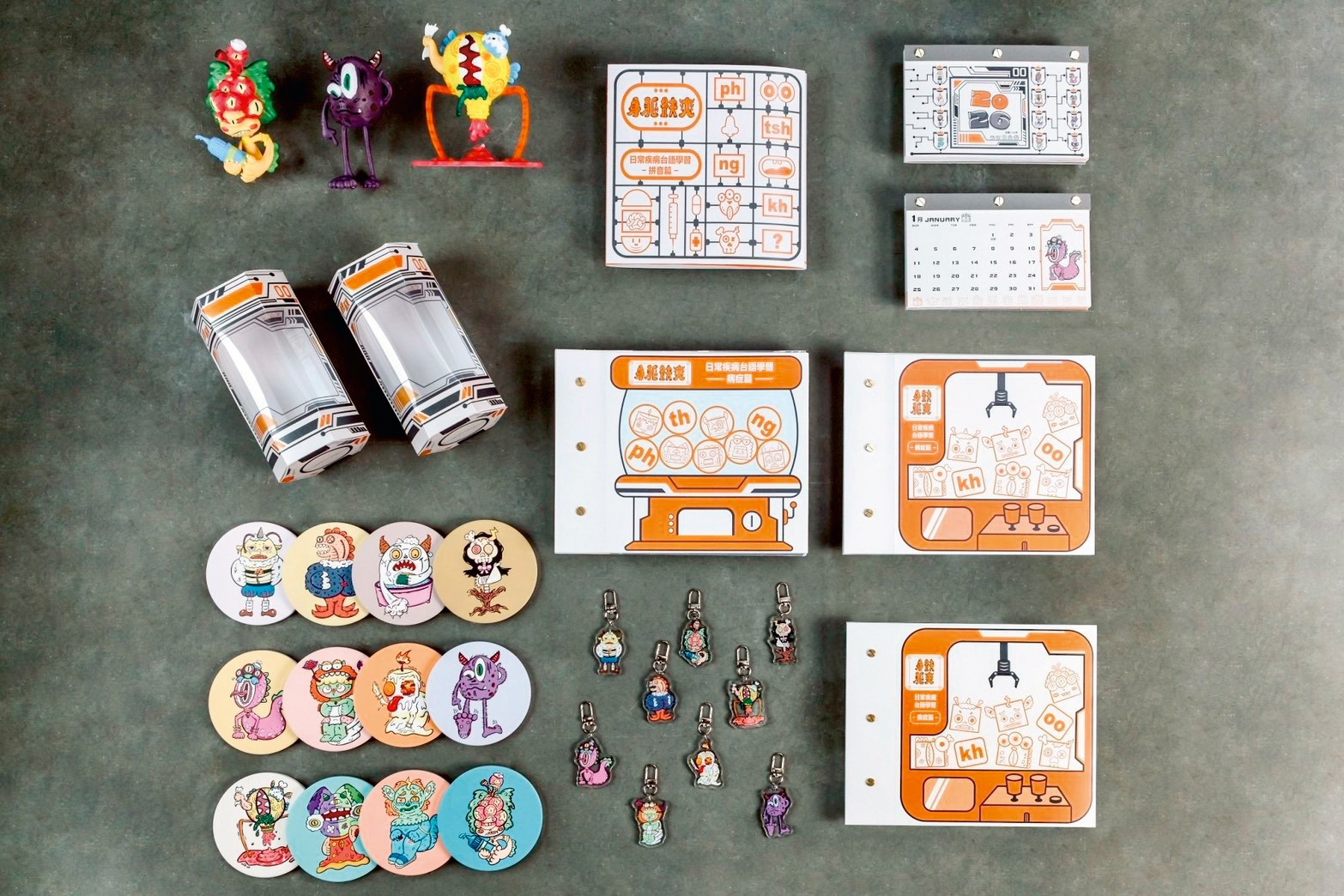
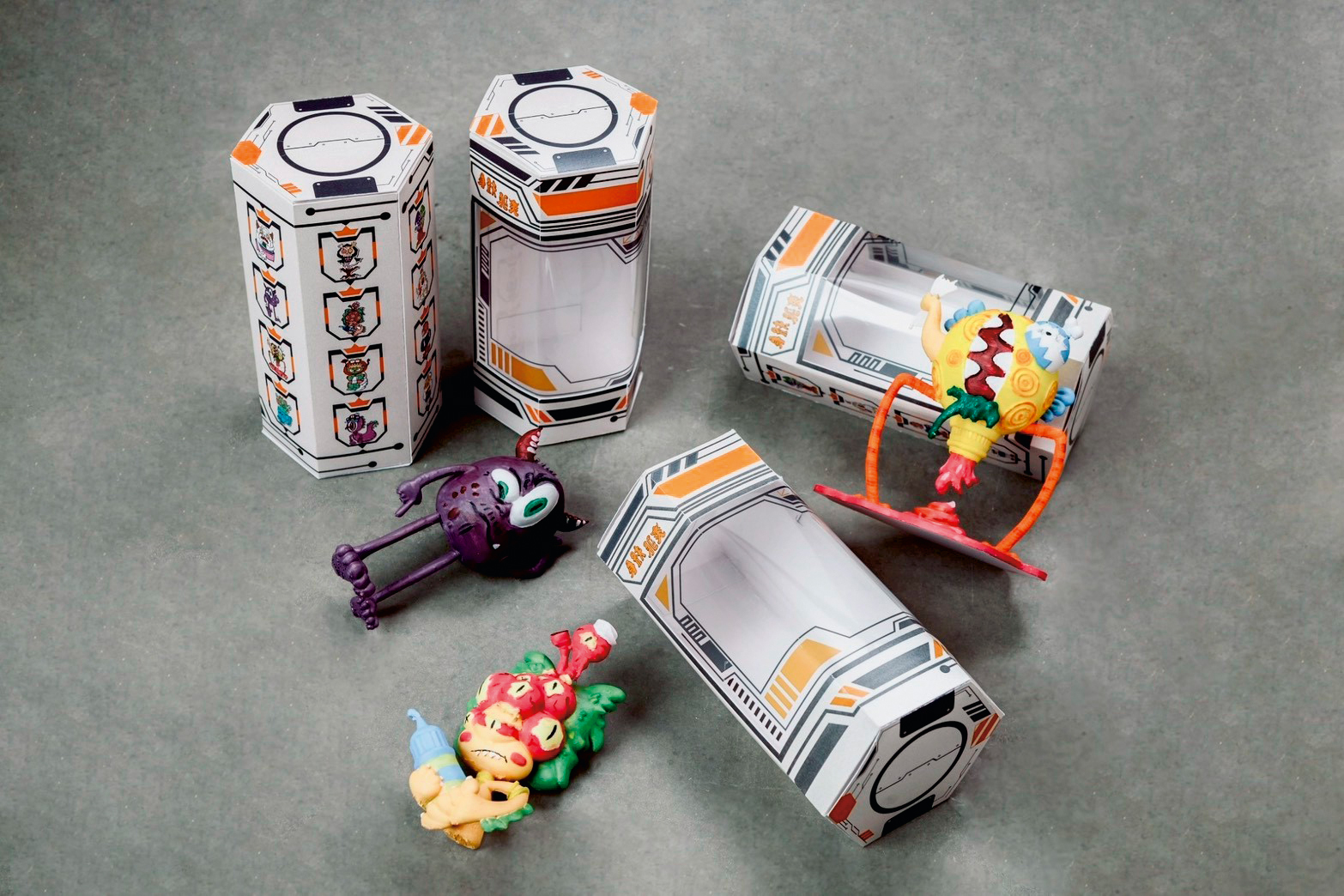
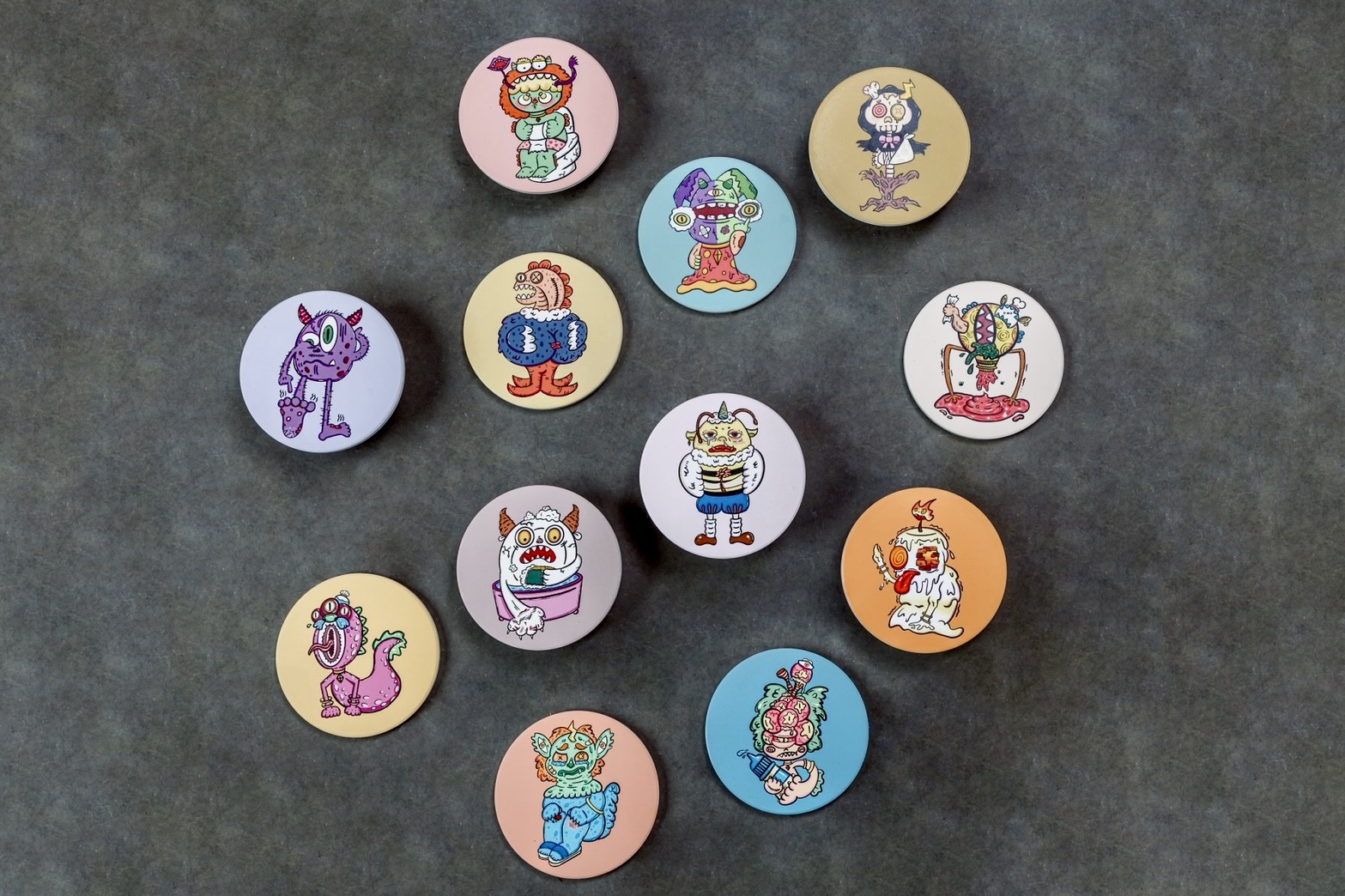
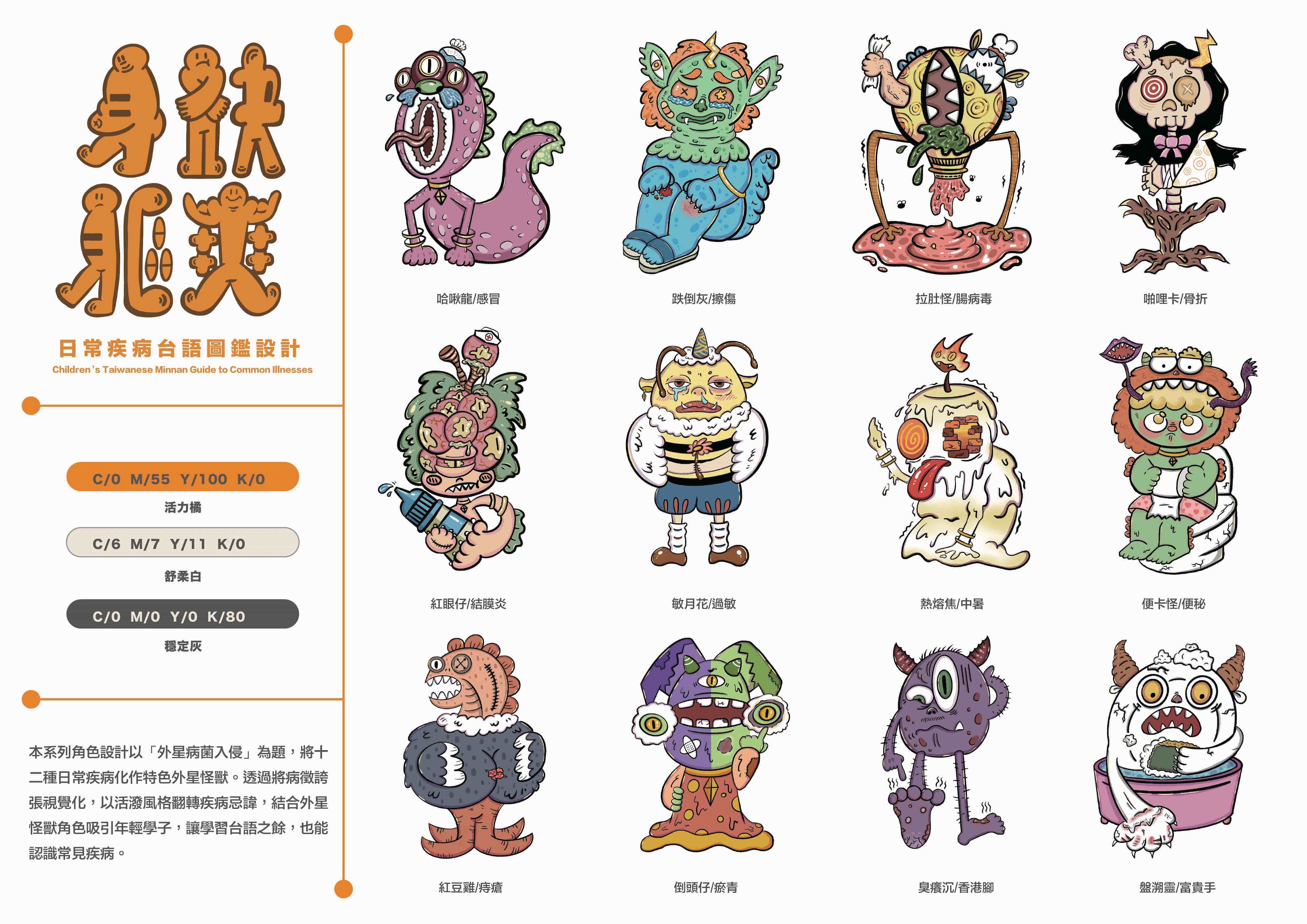
為解決這個教育痛點,我們結合「日常疾病」與「台語」,創作跨領域兒童圖鑑《身軀袂爽》(Sin-khu bē-sóng),意指身體不適。為了貼近孩童喜好,我們捨棄傳統教科書排版,將常見疾病擬人化為怪獸角色,並將病徵融入外觀設計,藉由生動的視覺轉譯引發學習好奇心,有效降低閱讀的排斥感。
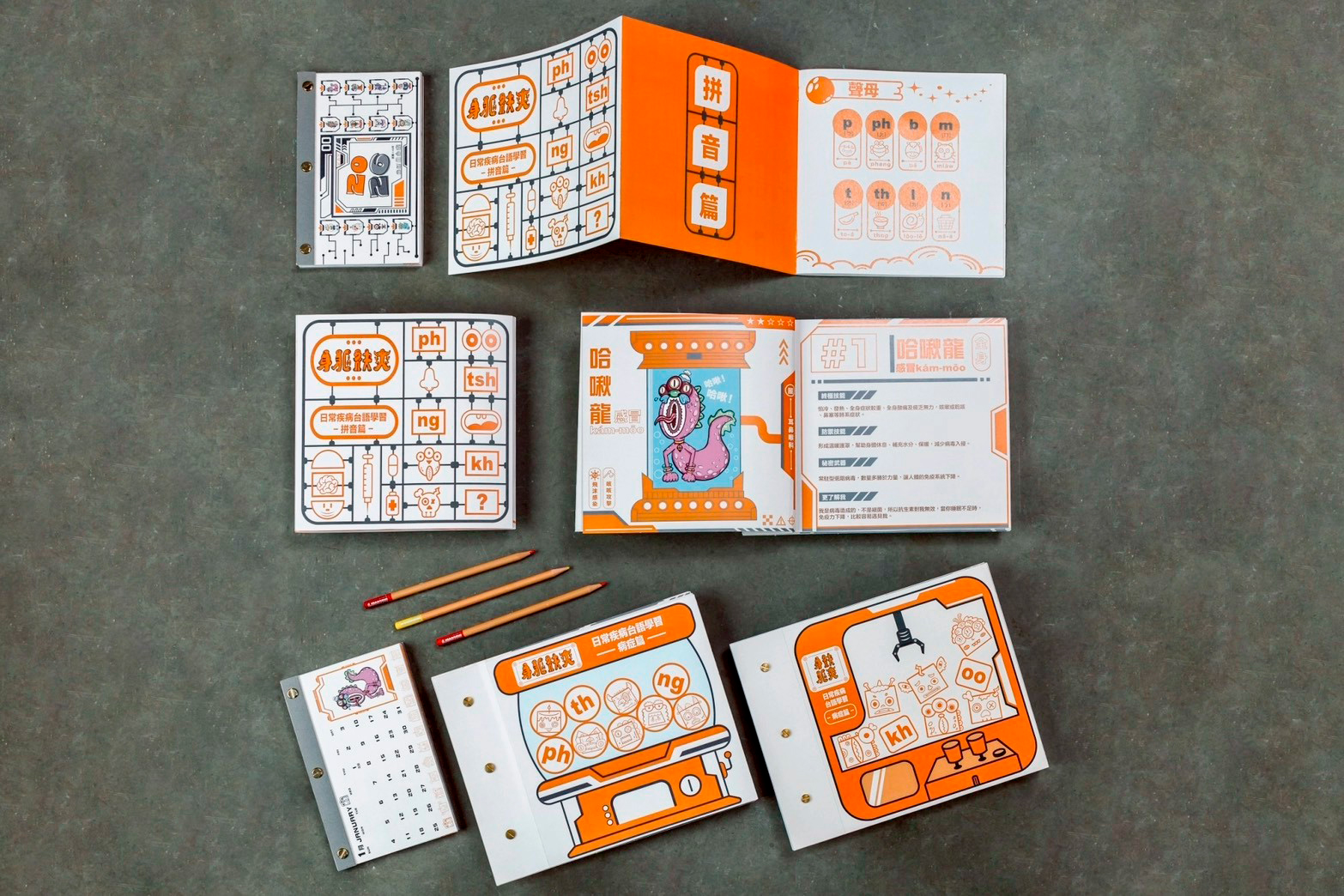
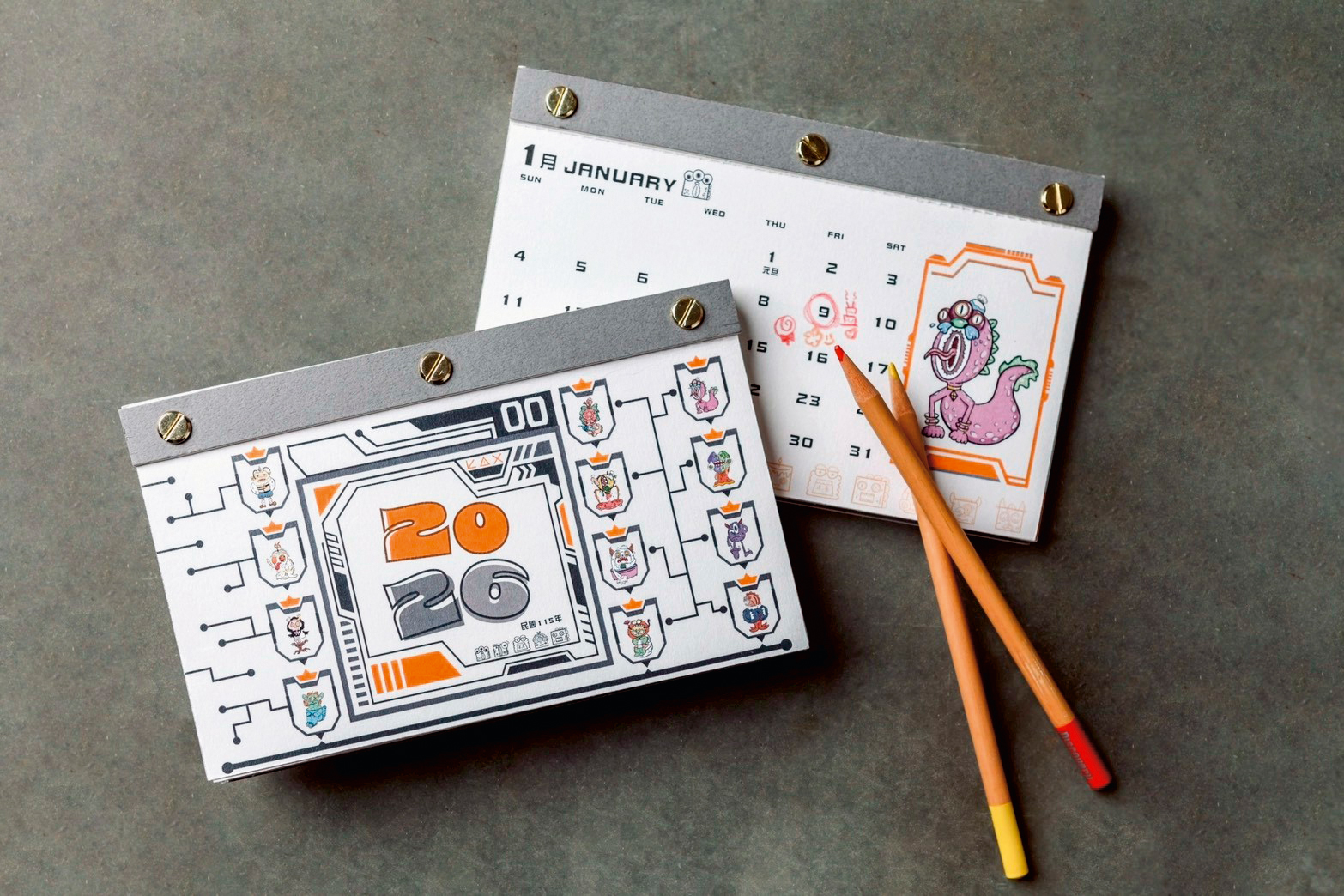
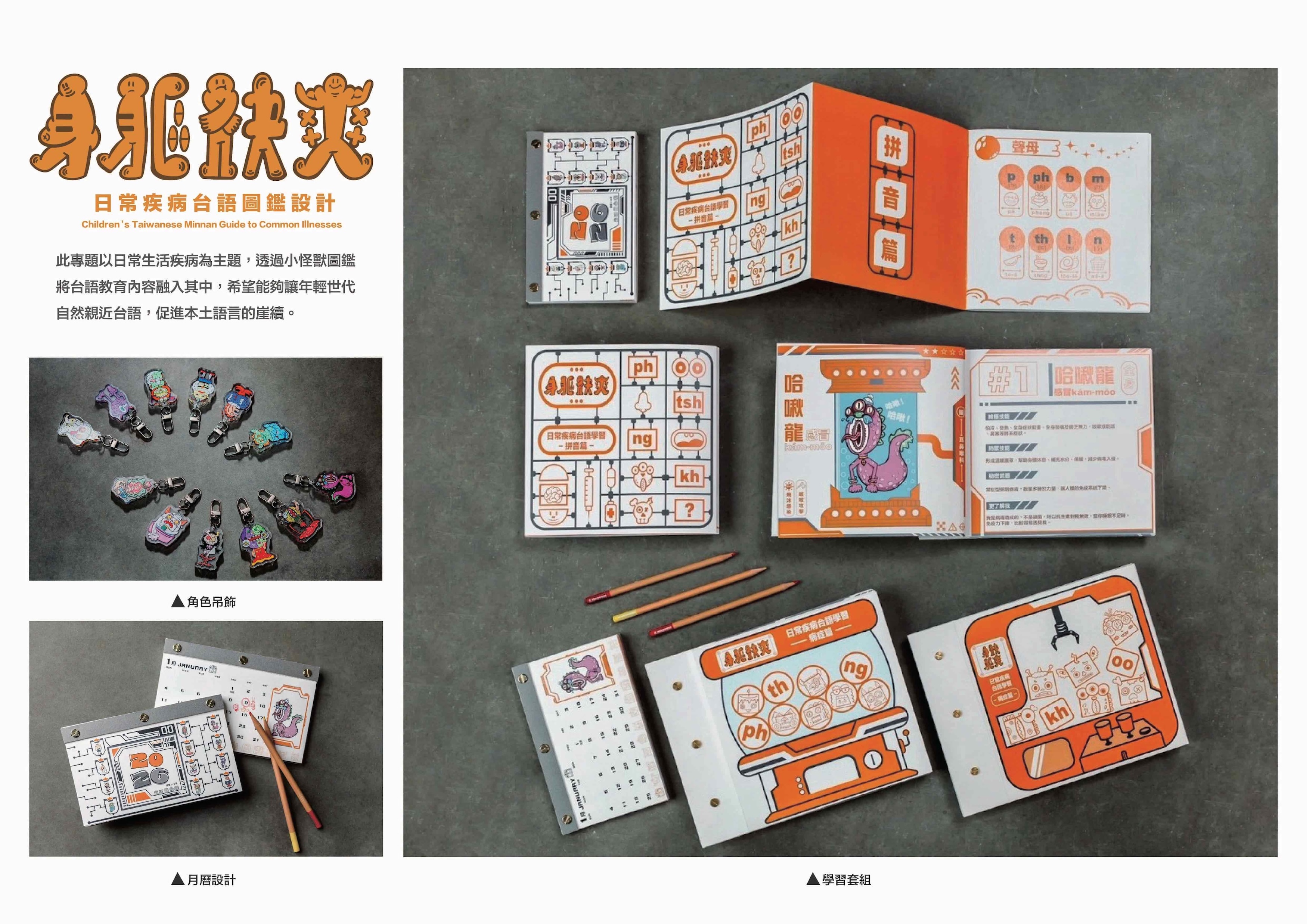
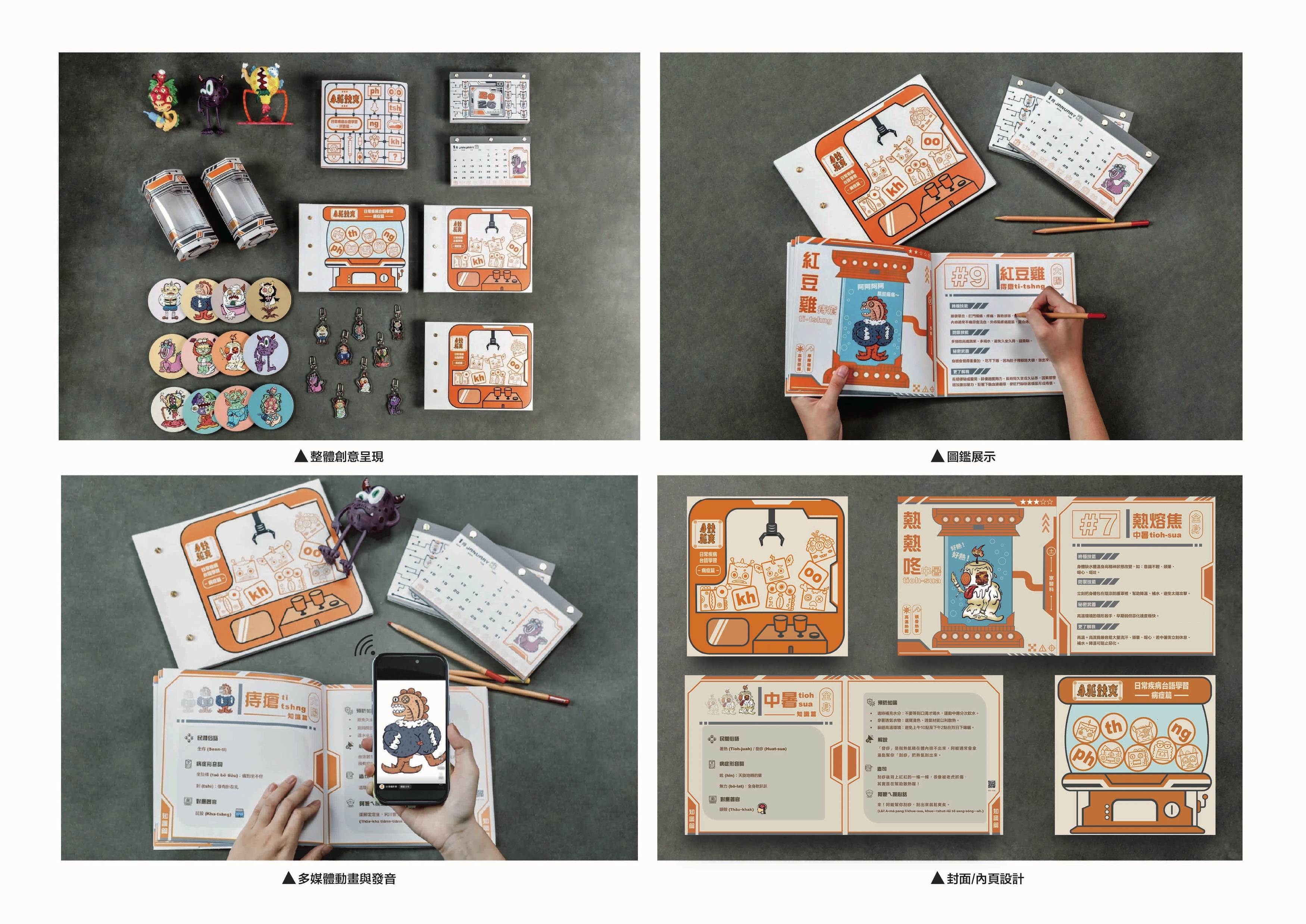
圖鑑整體採用太空科技視覺風格,每隻疾病怪獸皆有專屬頁面,巧妙結合插畫、精確台語讀音、情境對話與預防衛教知識。這套設計同時延伸至月曆,包含台語羅馬拼音、病徵介紹與 QR 碼圖音檔。讓兒童在翻閱與互動的過程中,自然建立衛教觀念並熟悉台語發音,將語言教育切實融入生活之中。
Lost family environments and disconnected materials cause low Taiwanese Hokkien usage. To solve this educational pain point, we created Sin-khu bē-sóng (feeling unwell), a children's guide merging daily illnesses with Taiwanese.
Abandoning traditional textbooks, we anthropomorphized common diseases into monsters reflecting their traits. This vivid visual translation sparks curiosity and reduces reading resistance.
Set in a space-tech theme, each monster's page combines illustrations, Taiwanese pronunciations, situational dialogues, and prevention tips. A calendar extension adds Romanization, symptoms, and QR audio files.
The core value is a "painless" learning experience. Through the guide and animations, children naturally absorb hygiene concepts and Taiwanese pronunciations, applying native language learning to daily life.