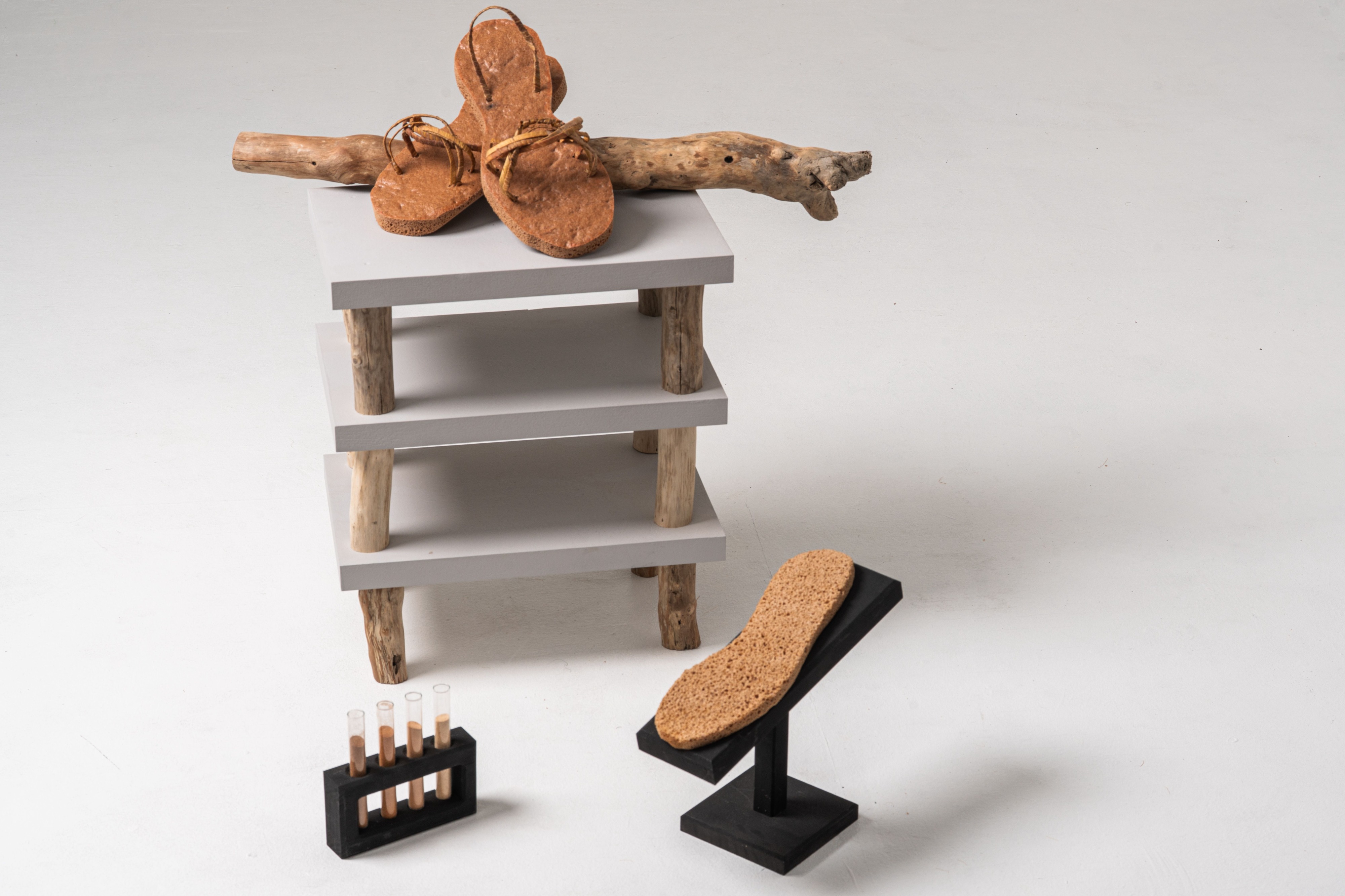
本專題以「重新理解材料價值」為核心,將環境負擔轉化為守護的力量。設計靈感源自漁村長輩在沙灘「牽罟」作業中,曾受漂流木刺傷的疼痛記憶,以及古早利用「黃槿葉」製鞋的生活智慧。
我們透過設計導向研究,建構出以下三大設計特色:
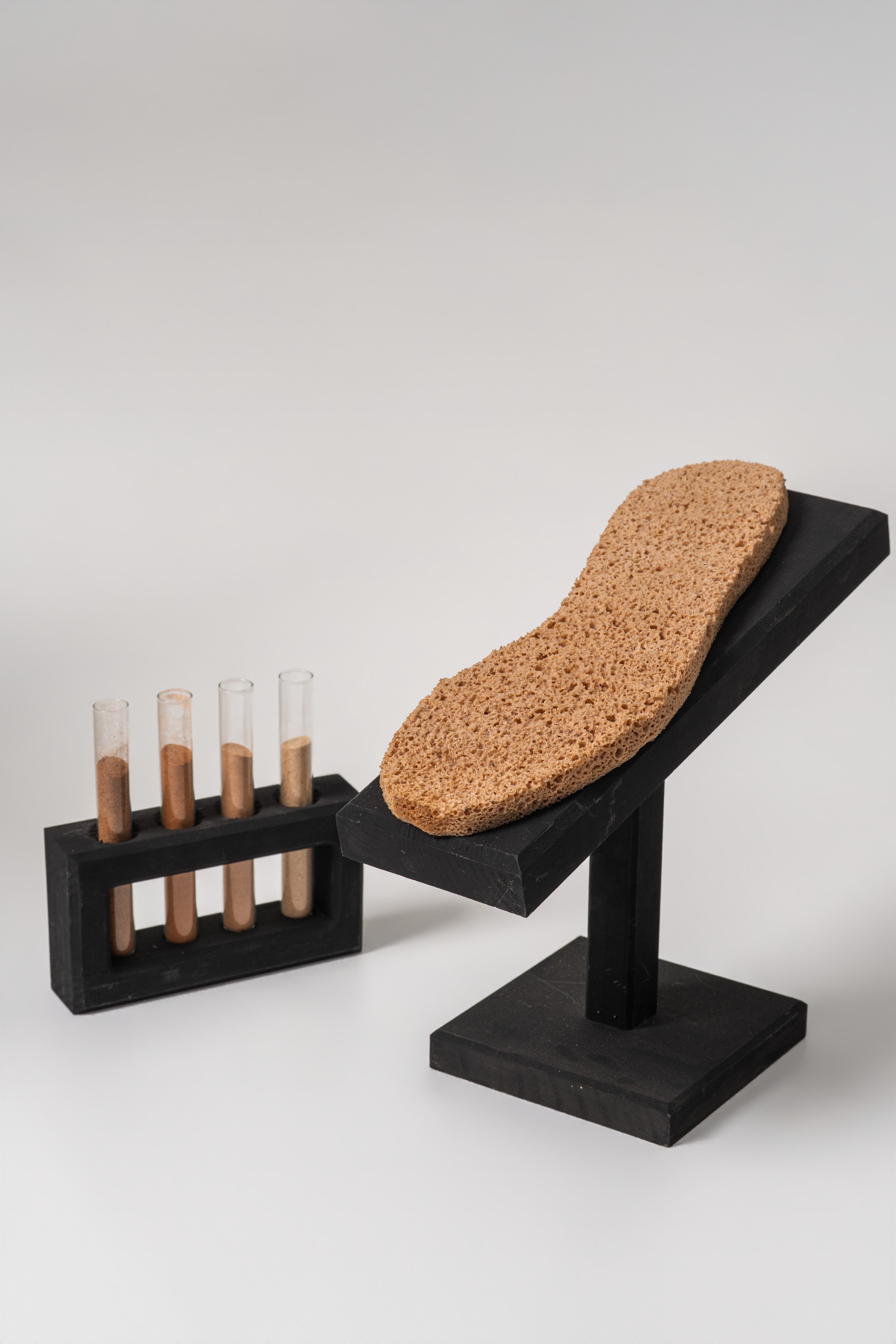
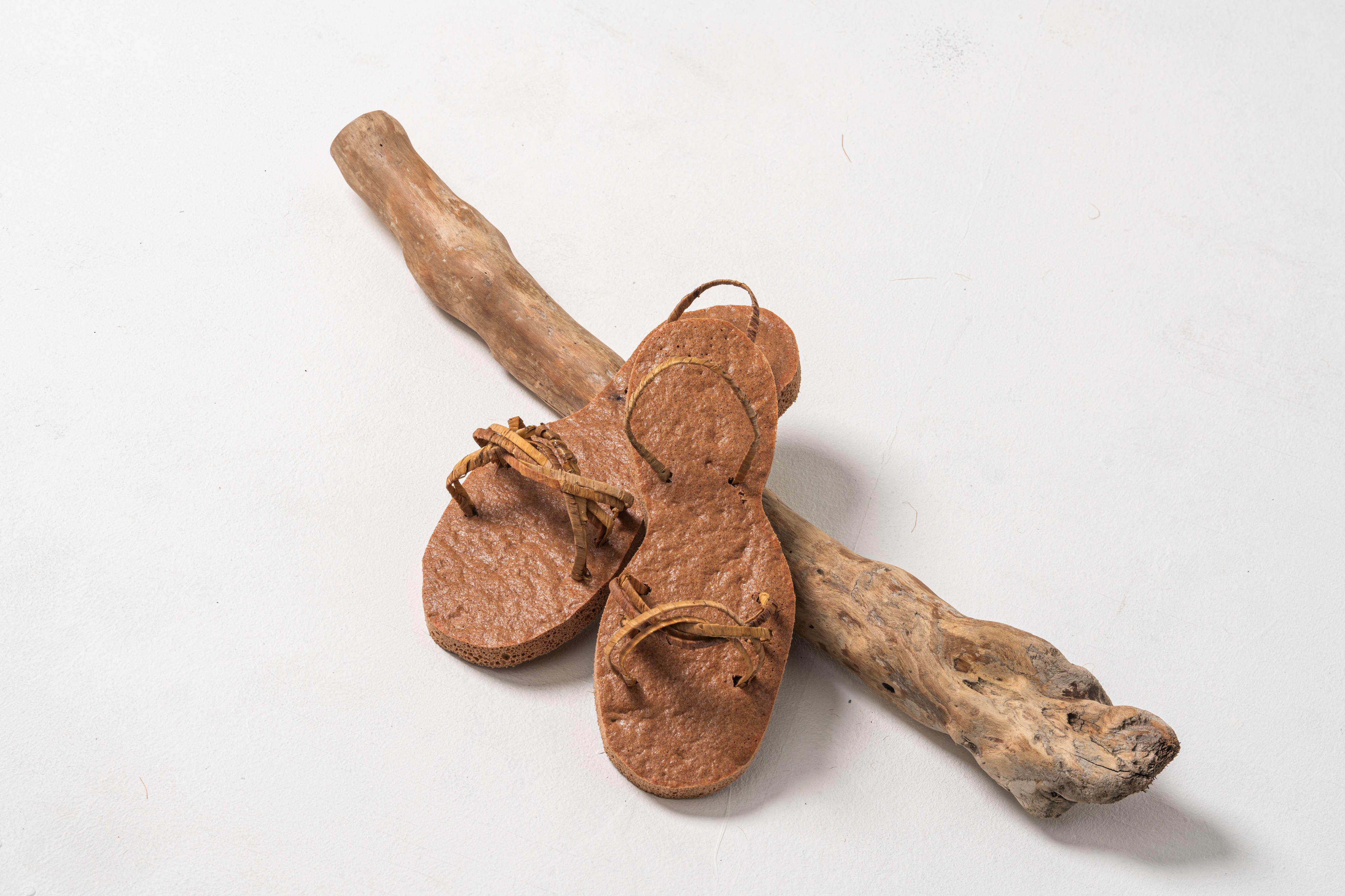
循環思維: 將沿海廢棄的小型漂流木破碎研磨,混合無毒、不含塑化劑的水性PU發泡技術,製成具緩衝防護功能的再生中底,實現資源循環。
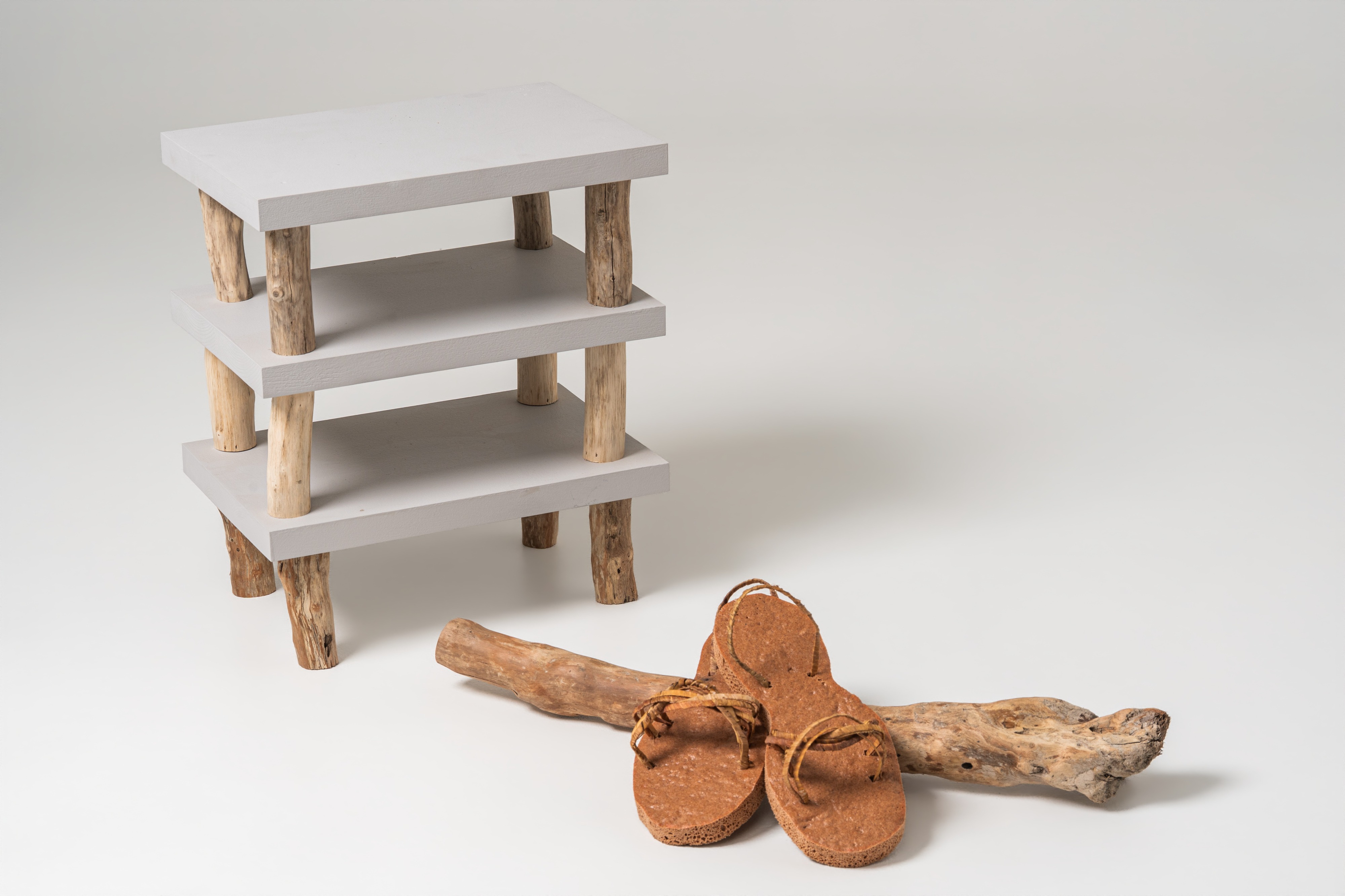
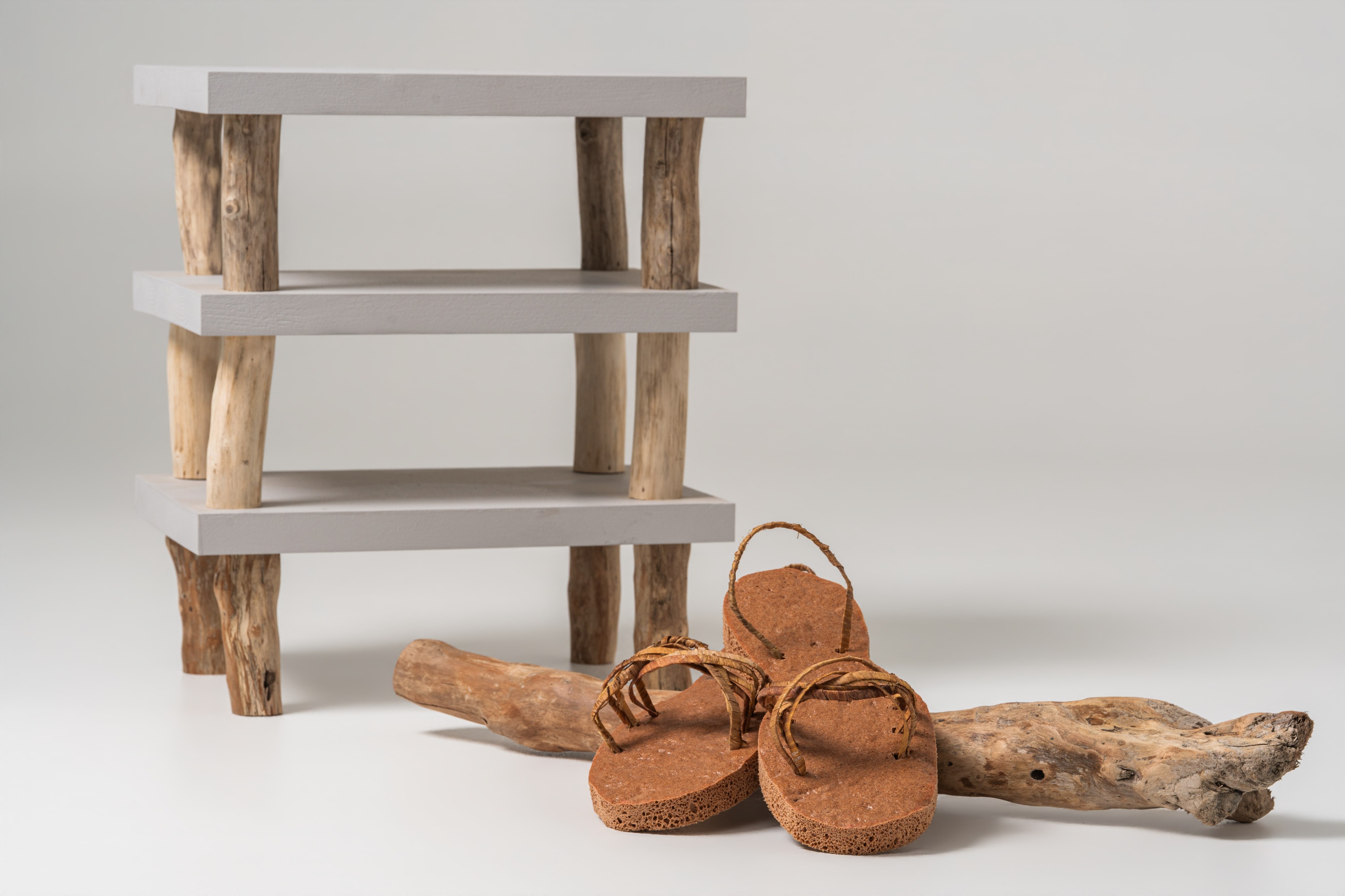
在地元素: 夾腳帶選用具韌性且耐鹽的黃槿天然纖維。這不僅是對傳統工藝的再詮釋,更讓產品如同植物脈絡般,成為連結「皮膚、材料與土地」的溫暖載體。
社區共創: 產品延伸至輔助家具(換鞋凳),建立一套完整的使用系統。透過淨灘與再利用行動,降低參與門檻,讓永續理念轉化為日常實踐與文化傳承。
本設計旨在落實 SDGs 永續目標,證明設計不僅能解決安全問題,更是促成對話與地方創生的重要媒介。
The core concept, “Reinterpreting Material Value,” transforms environmental burdens into protective design. Inspired by “Stow Netting” (Qiangu) culture, the project responds to fishermen’s injuries caused by sharp driftwood while reinterpreting traditional Hibiscus-leaf footwear.
This design-driven research unfolds through three aspects. First, circular thinking: discarded driftwood is processed into powder and combined with non-toxic, water-based PU foaming to create regenerated midsoles, achieving material reuse.
Second, local heritage: toe straps made from salt-tolerant Hibiscus fibers reconnect traditional craft with contemporary design, linking body, material, and place.
Third, community co-creation: the design extends to shoe-changing stools, integrating beach cleaning with upcycling. This lowers participation barriers and transforms sustainability into a daily practice and a continuation of local culture.