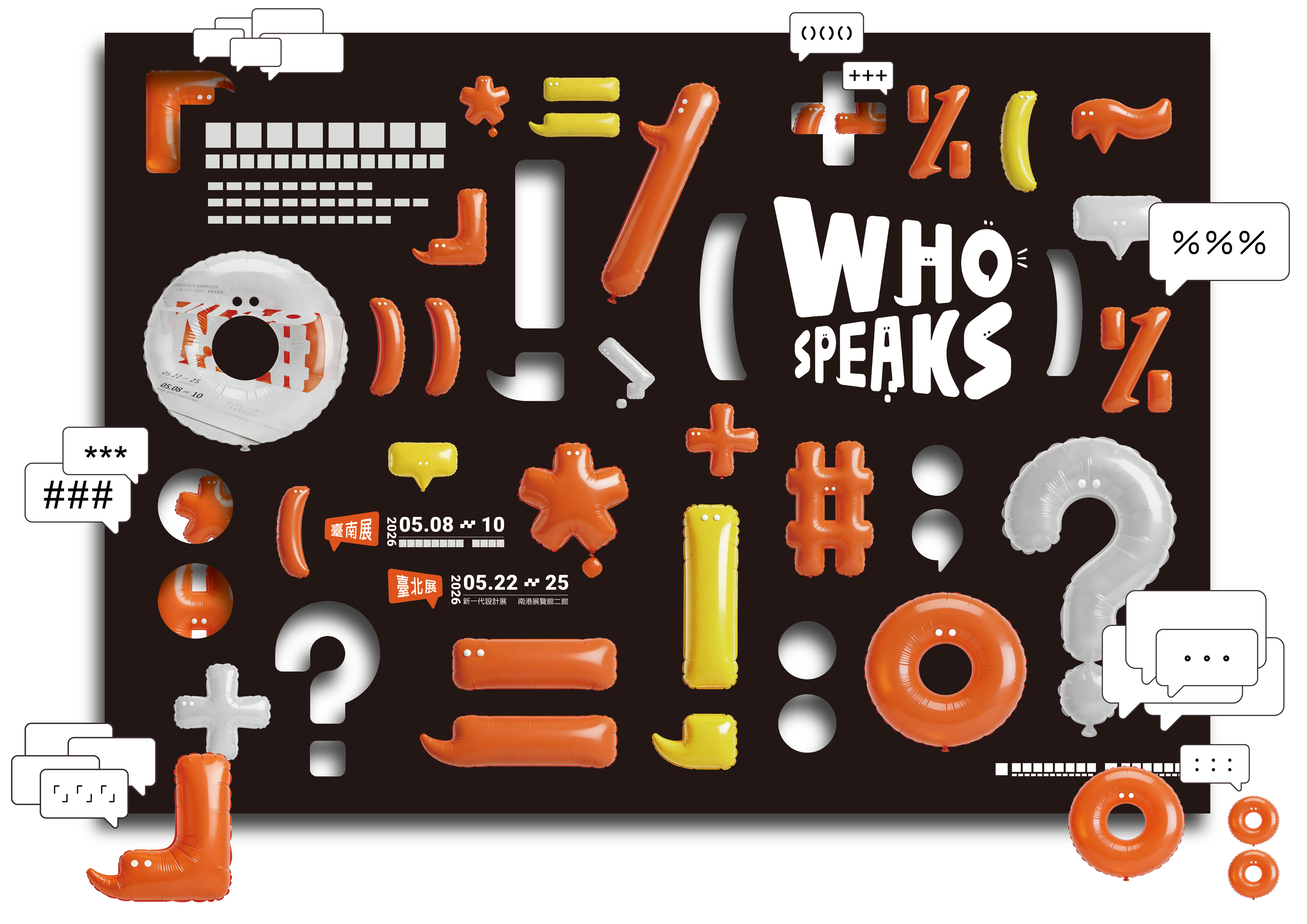
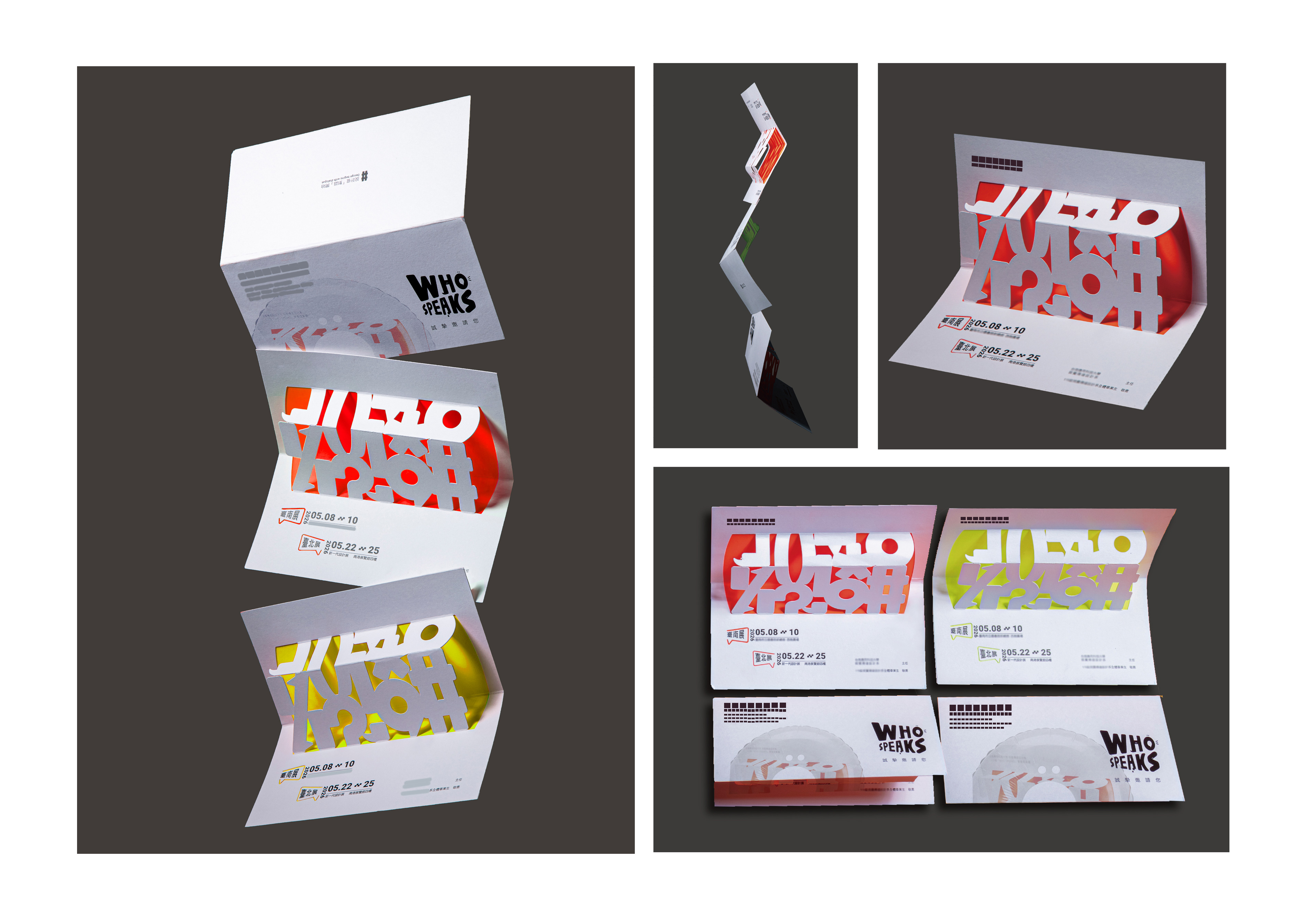
本設計以「WHÖ SPEAKS」為題,從「誰在發聲」出發,重新思考設計在多重觀點之中的角色與位置。透過訪談本屆十七組創作團隊,擷取其對話內容與創作脈絡,歸納出具代表性的標點符號,作為轉譯語言與情緒的核心媒介。
設計將標點符號由原本輔助文字的角色,轉化為承載語感、節奏與情緒的視覺元素,使隱含於對話中的語氣變化得以被看見。透過符號的重組與系統化發展,建立一套可被閱讀的視覺語言,回應對話中非語言因素的重要性,並強化訊息在傳遞過程中的層次與張力。
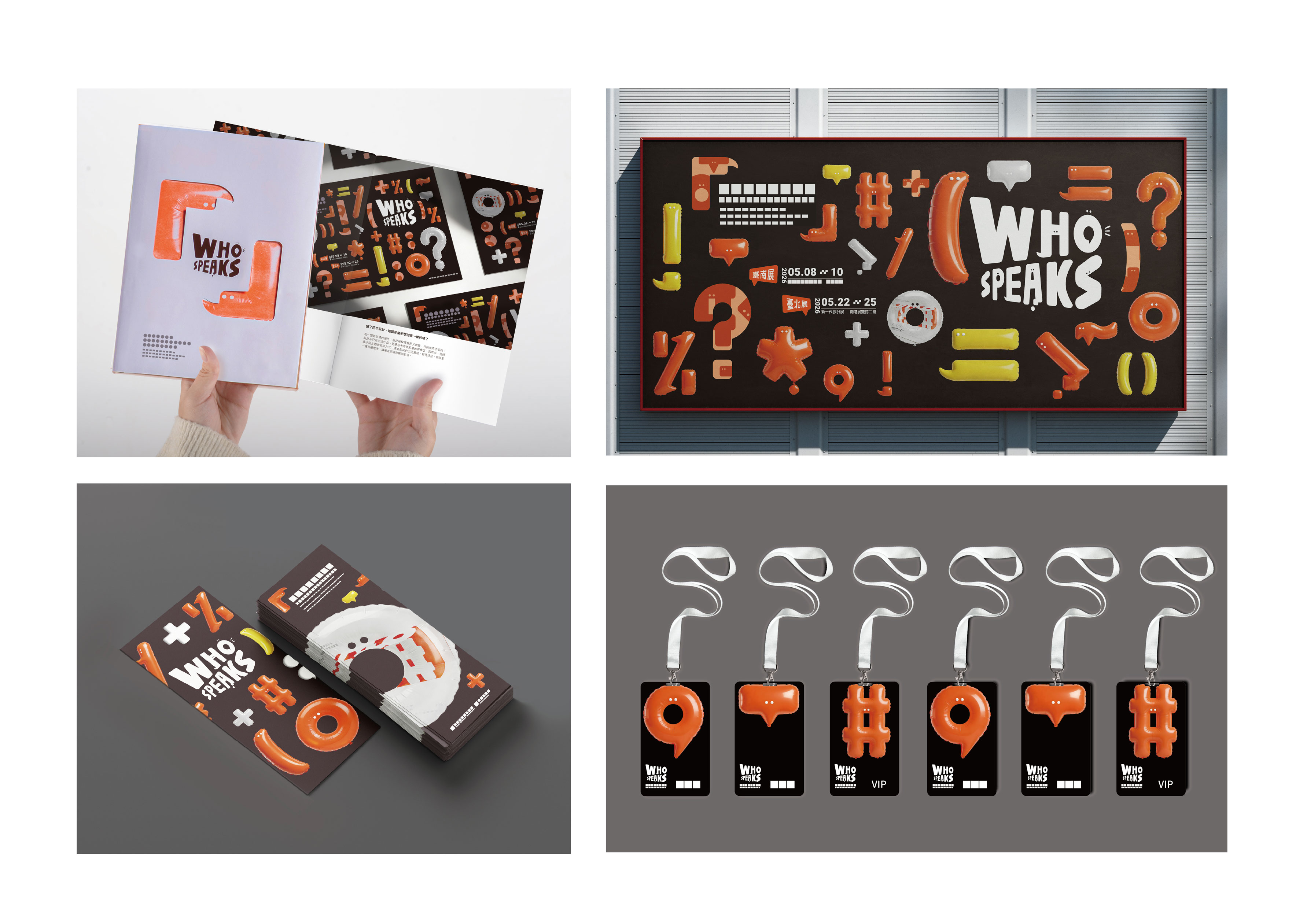
整體形象架構以「人」、「產品」與「環境」為設計循環核心,透過三者之間的關係建構出持續運作的溝通系統,形成動態且開放的交流狀態。本設計不追求單一觀點,而是呈現多重聲音並存的樣貌,使設計成為持續發生的對話機制。
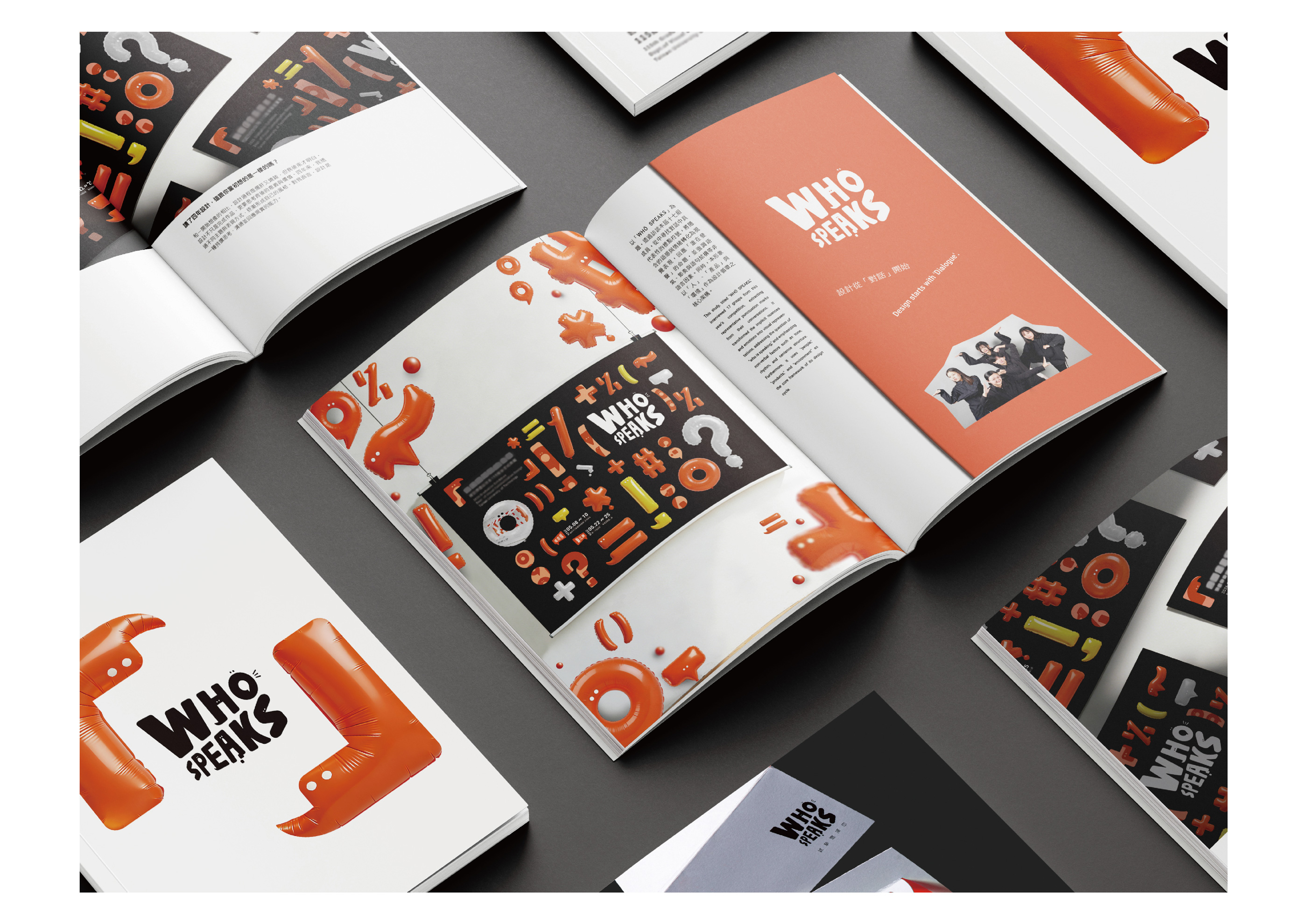
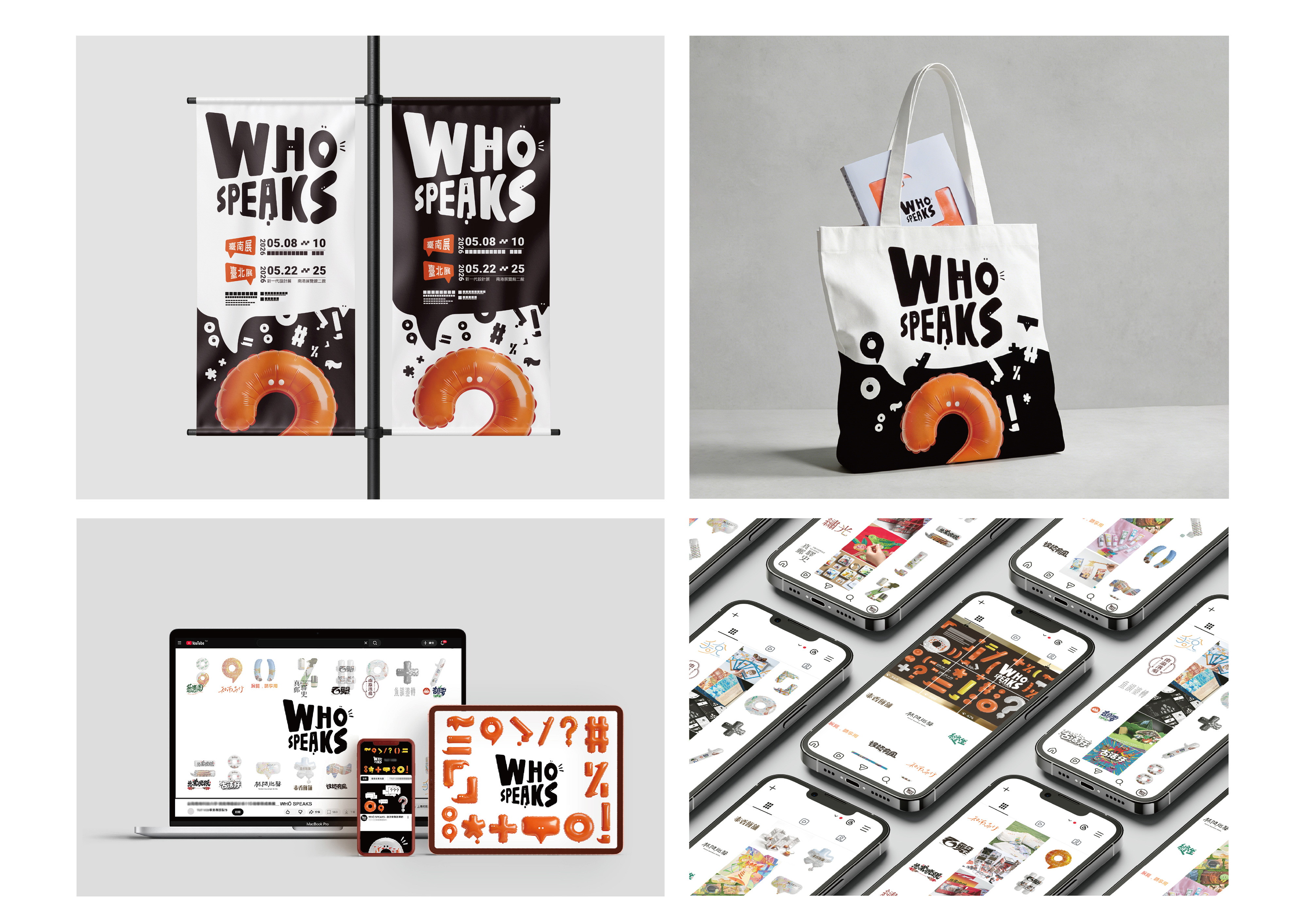
本作品部分內容運用 Gemini 輔助生成:氣球視覺為將自行繪製之向量圖形轉化為氣球材質效果;帆布袋與外牆主視覺為生成情境後再行設計加工;專刊擺放圖為 mockup 製作,整體視覺構成仍由創作者完成。
WHÖ SPEAKS explores “who is speaking,” rethinking the role of design through multiple perspectives. Based on interviews with seventeen creative teams, the project extracts dialogue and uses punctuation as a medium to translate language and emotion.
Punctuation is transformed into visual elements carrying tone, rhythm, and subtle shifts in dialogue, forming a readable visual language that highlights non-verbal communication.
The system is structured around “people,” “objects,” and “environment,” where people speak, objects convey messages, and the environment shapes context, creating a dynamic cycle of communication. The design reflects multiple voices rather than a single viewpoint.
AI-assisted tools (Gemini) are partially used. Balloon visuals are generated from original vectors, while tote bag and exterior visuals are based on generated contexts and refined. Mockups are used for publication images, with overall design directed by the creator.