一、研發背景:
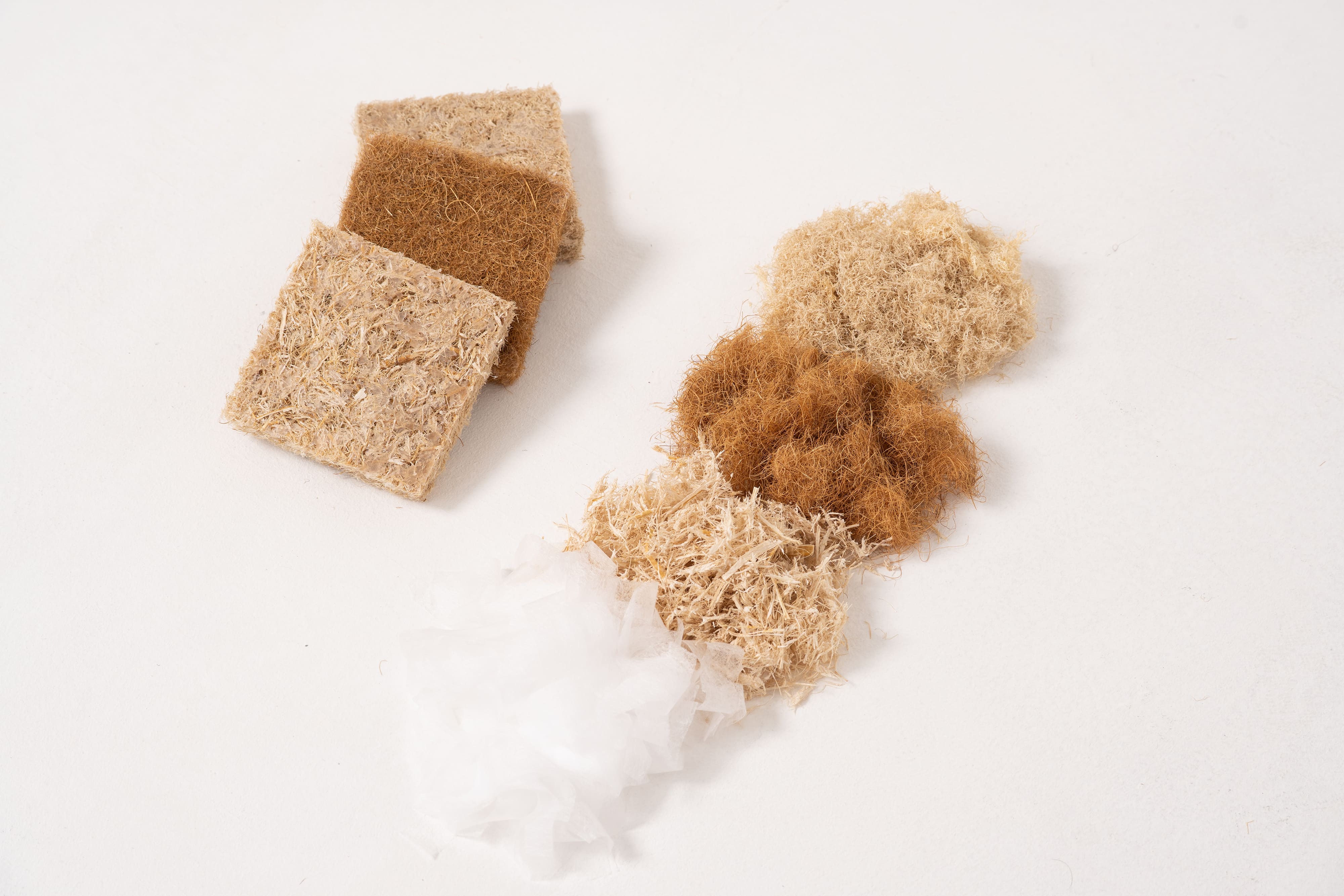
當代家具軟墊多依賴石化聚氨酯(PU)發泡材,雖具彈性卻面臨高能耗與回收困難等環境痛點。「纖墊墊」以剩餘植物纖維(甘蔗、椰殼)結合熱塑性樹脂複合材的生質複合材料,作為軟墊支撐層。透過「低化石替代」路徑,減少碳排並落實永續循環。
二、技術核心:
作品透過物理與化學預處理去除纖維雜質、帚化表面,強化熱塑性樹酯的接合面。經精準熱壓製程,形成兼具穩定支撐、受力分散與形變回復的機能複合層。最後將其與高密度軟墊整合,在維持優質坐感的前提下,顯著降低化石材料比例。
三、造型語彙:
作品將「纖維」的特徵轉化為設計語言,展現材料與家具的共生關係:
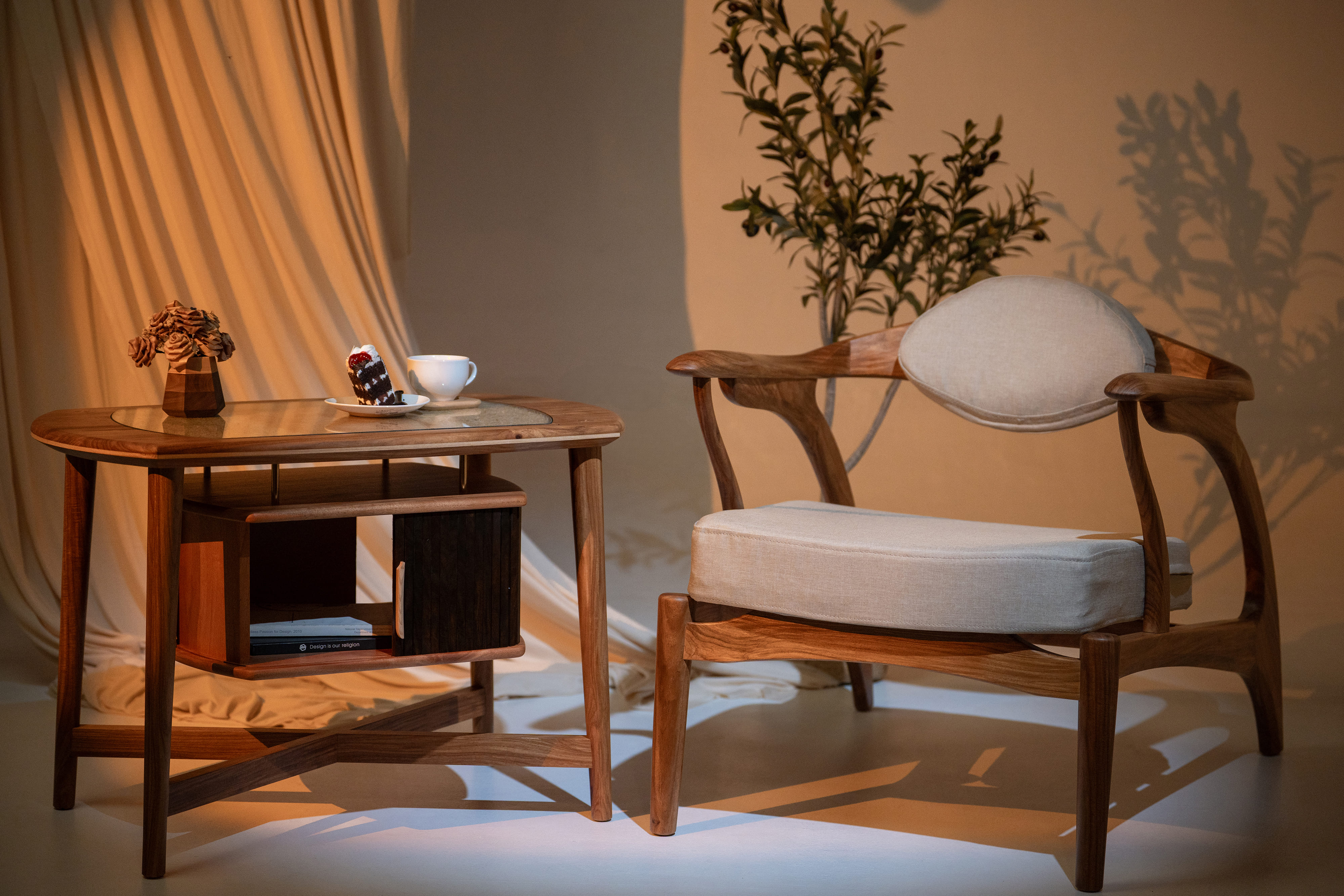
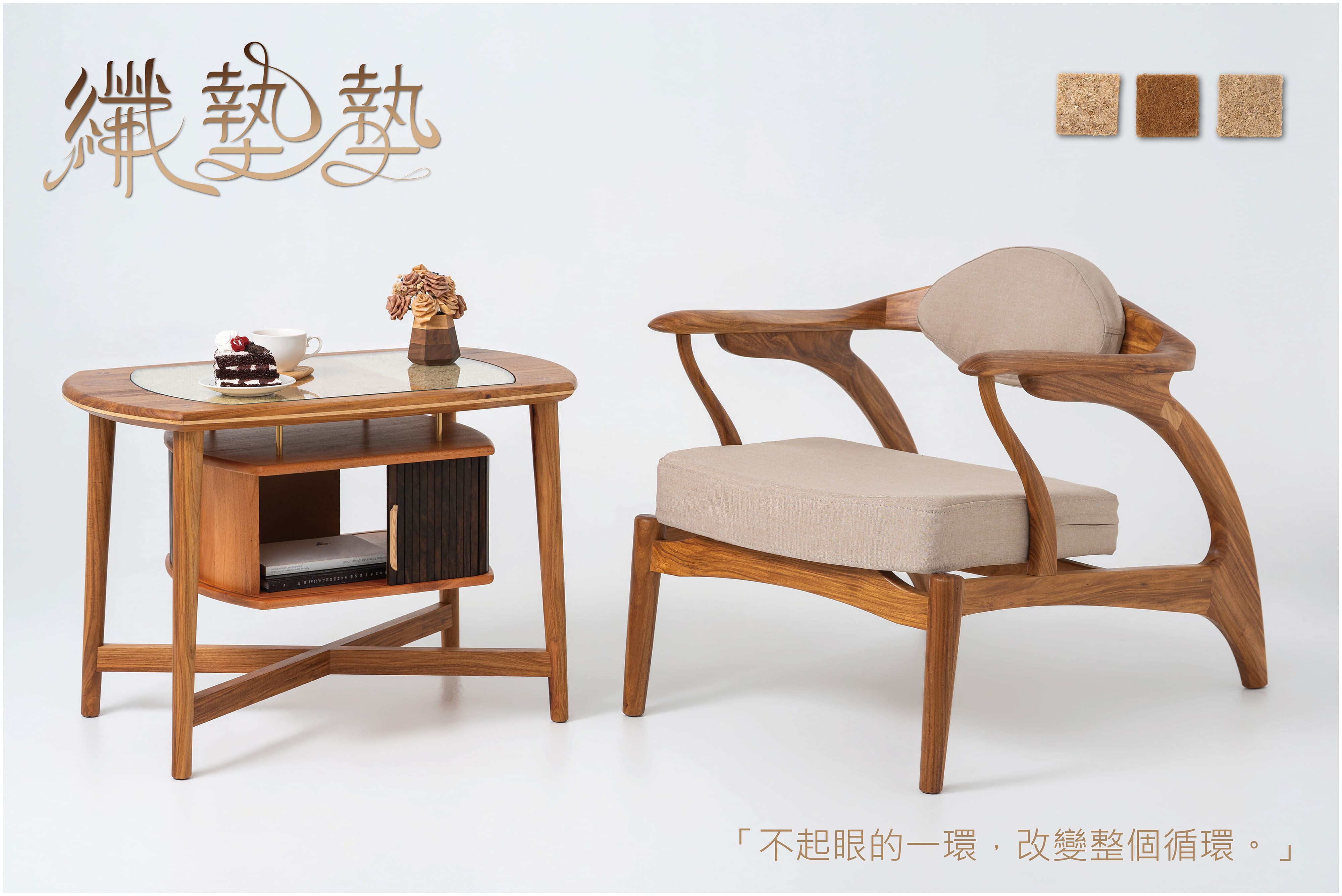
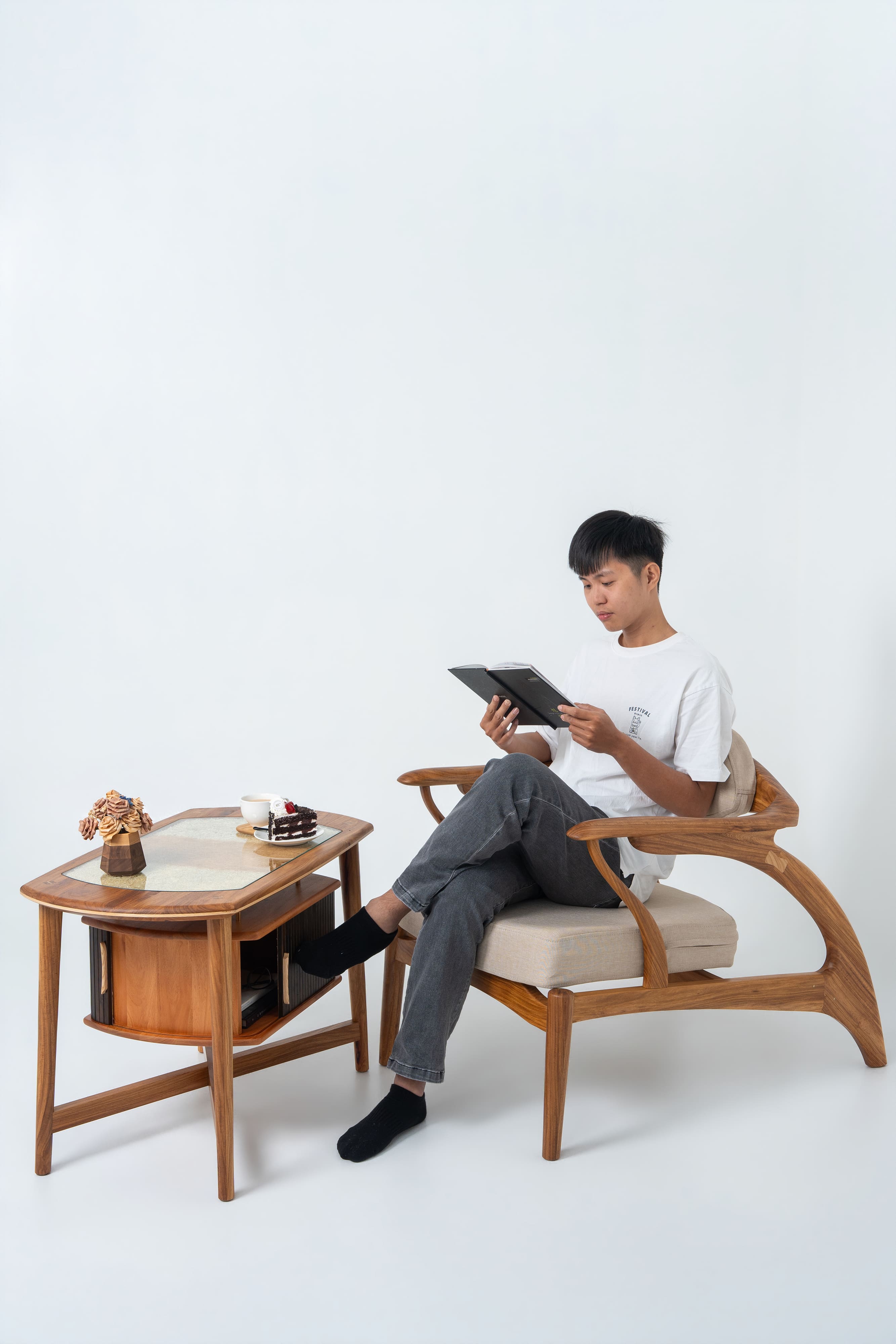
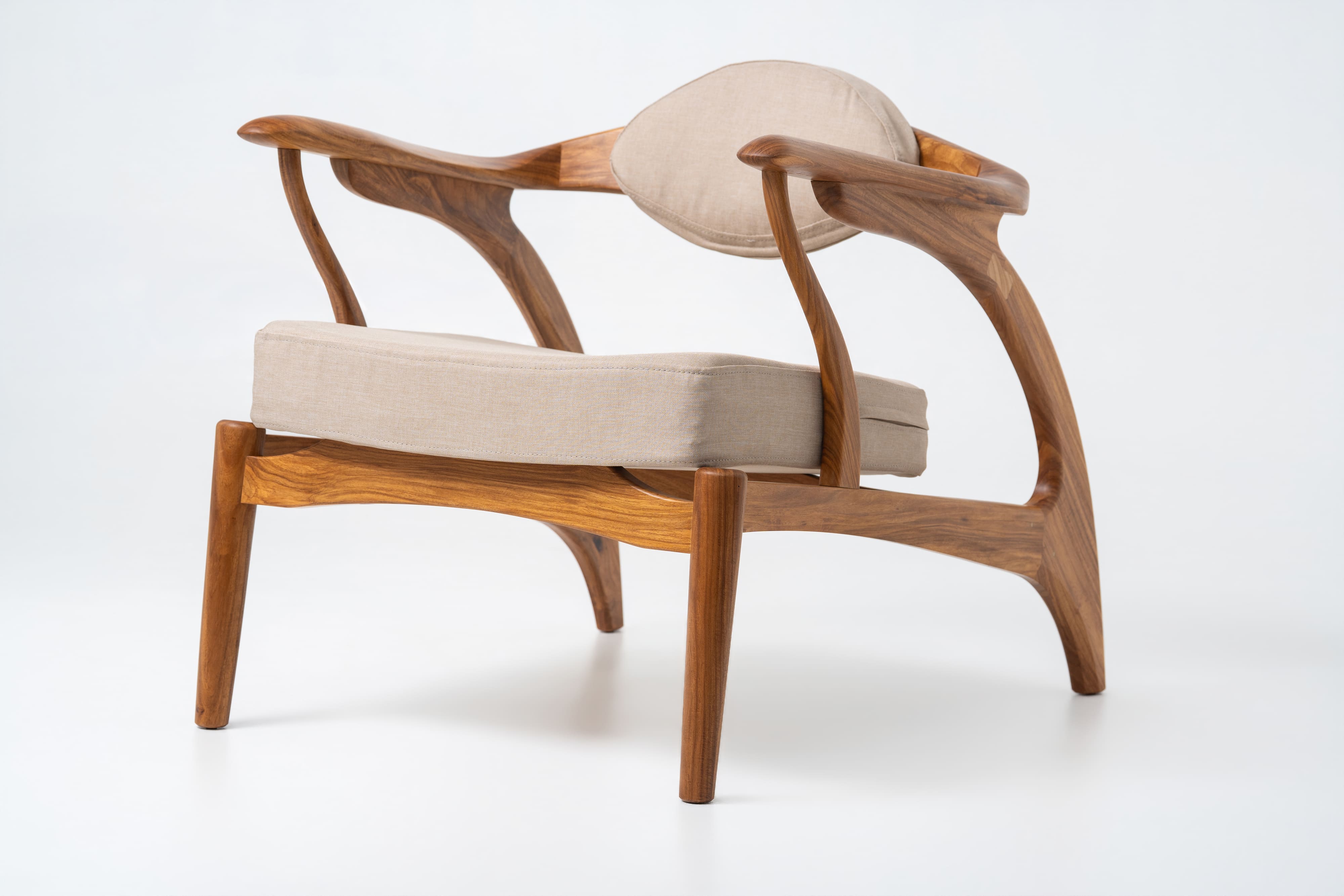
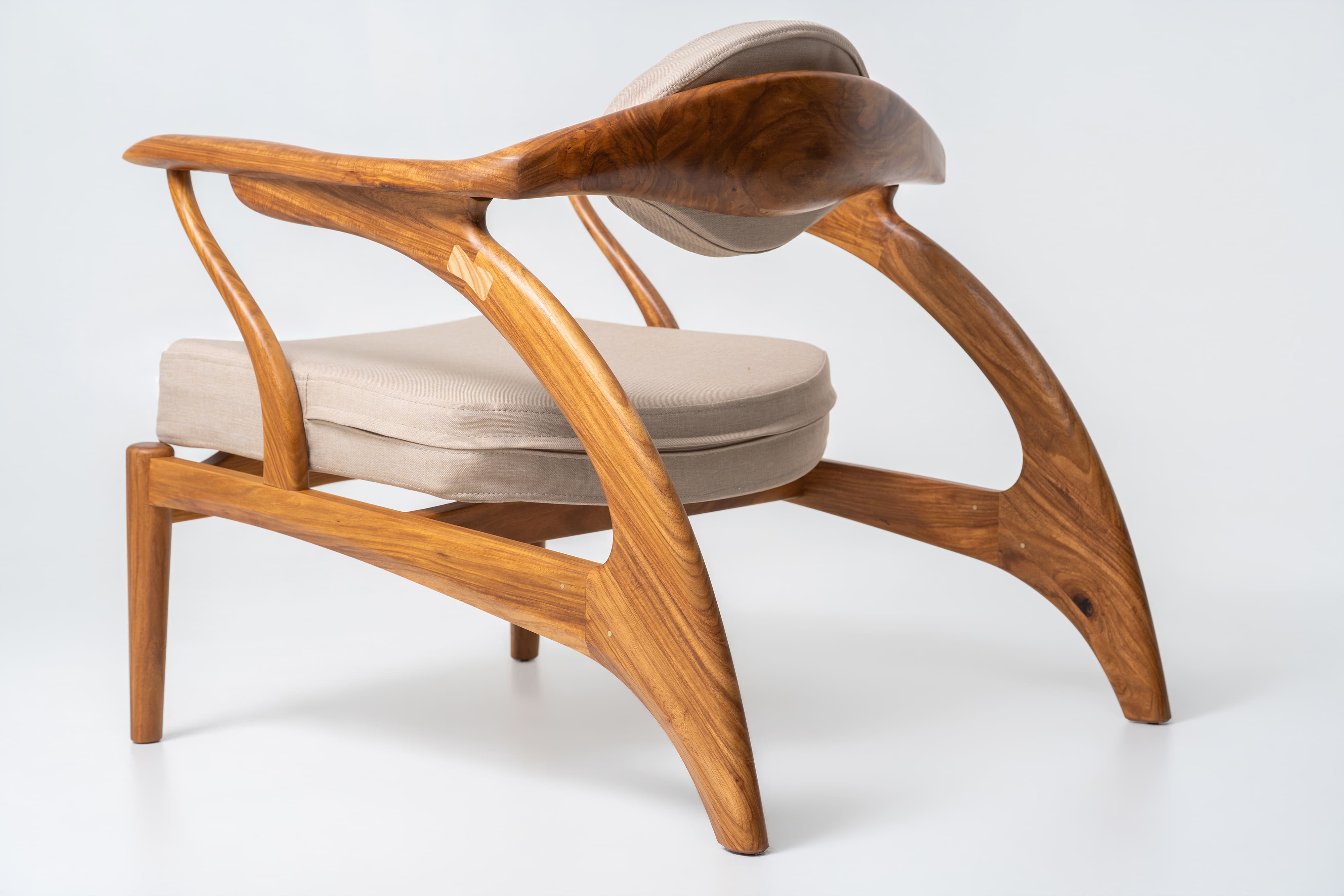
沙發: 融合甘蔗與椰殼纖維的柔韌特質,流線型人體工學扶手,提供自然且直覺的支撐體驗。
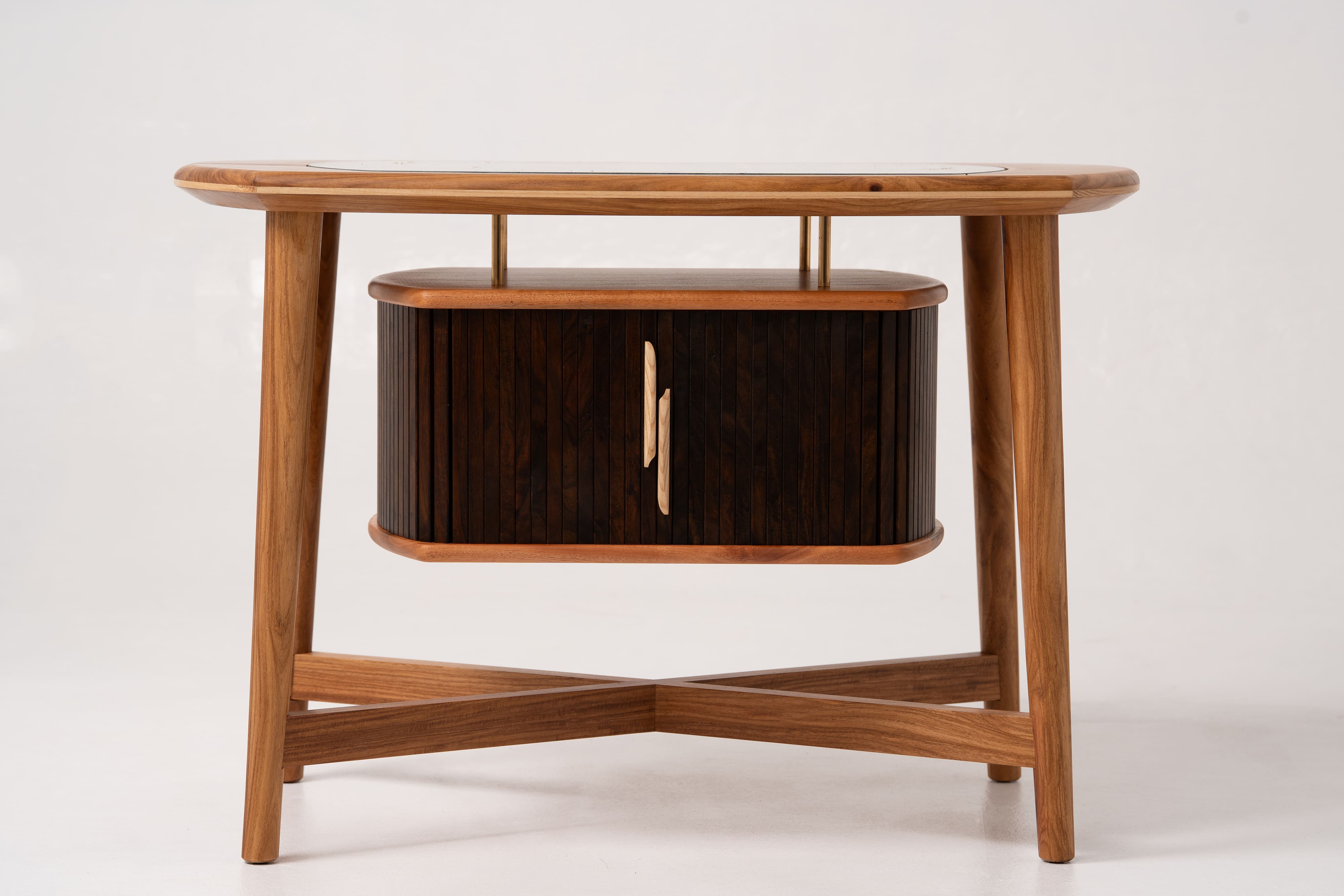
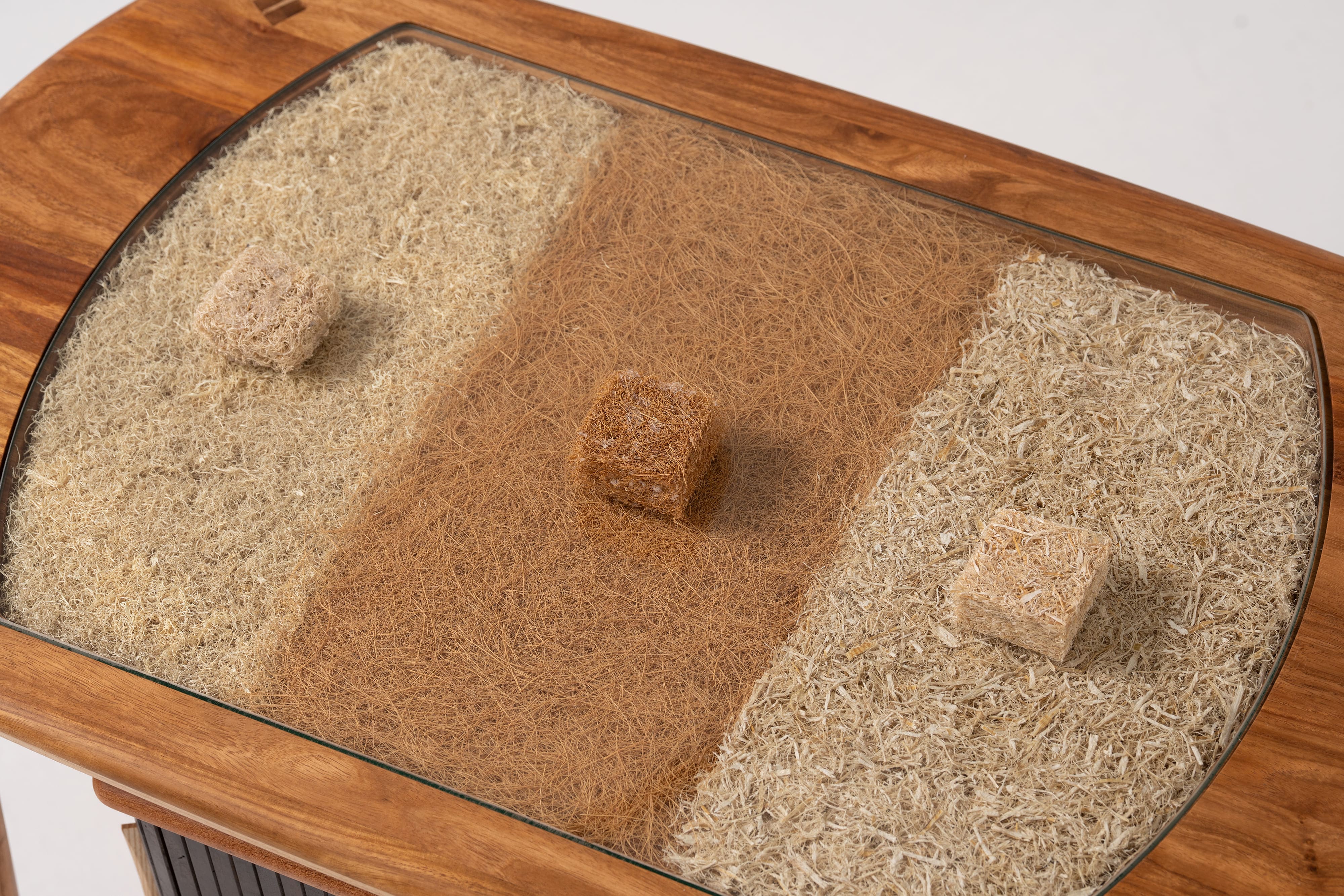
邊桌: 以銅棒懸吊櫃體創造視覺層次;桌面特設「材料展示區」,將核心生質材料外顯化,賦予家具置物以外的環境教育功能。
四、不起眼的一環,改變整個循環。
「纖墊墊」精準定位於家具內部的複合結構層。透過國產材與剩餘生質纖維的應用,縮短在地供應鏈碳足跡,並建立可回收的材料系統。這不僅是家具設計,更是針對減碳趨勢的產業升級提案,證明綠色替代能兼顧穩定功能、美學價值與環境永續。
FiberCushion: Small Part, Big Cycle
Contemporary furniture cushioning relies heavily on petrochemical PU foam, which raises concerns over energy consumption and recyclability. FiberCushion introduces a bio-composite support layer made from sugarcane and coconut fibers bonded with thermoplastic resin. Through physical and chemical pre-treatment and precision thermal pressing, it forms a composite with stable support, effective load distribution, and shape recovery. Integrated with high-density cushioning, it reduces fossil material use while maintaining comfort. The sofa features ergonomic armrests inspired by fiber flexibility, while the side table adopts a copper-rod suspension and a material display zone for environmental education. By utilizing local biofibers, it shortens supply chains, lowers carbon footprint, and establishes a circular material system—demonstrating a sustainable solution that balances performance, aesthetics, and environmental responsibility.