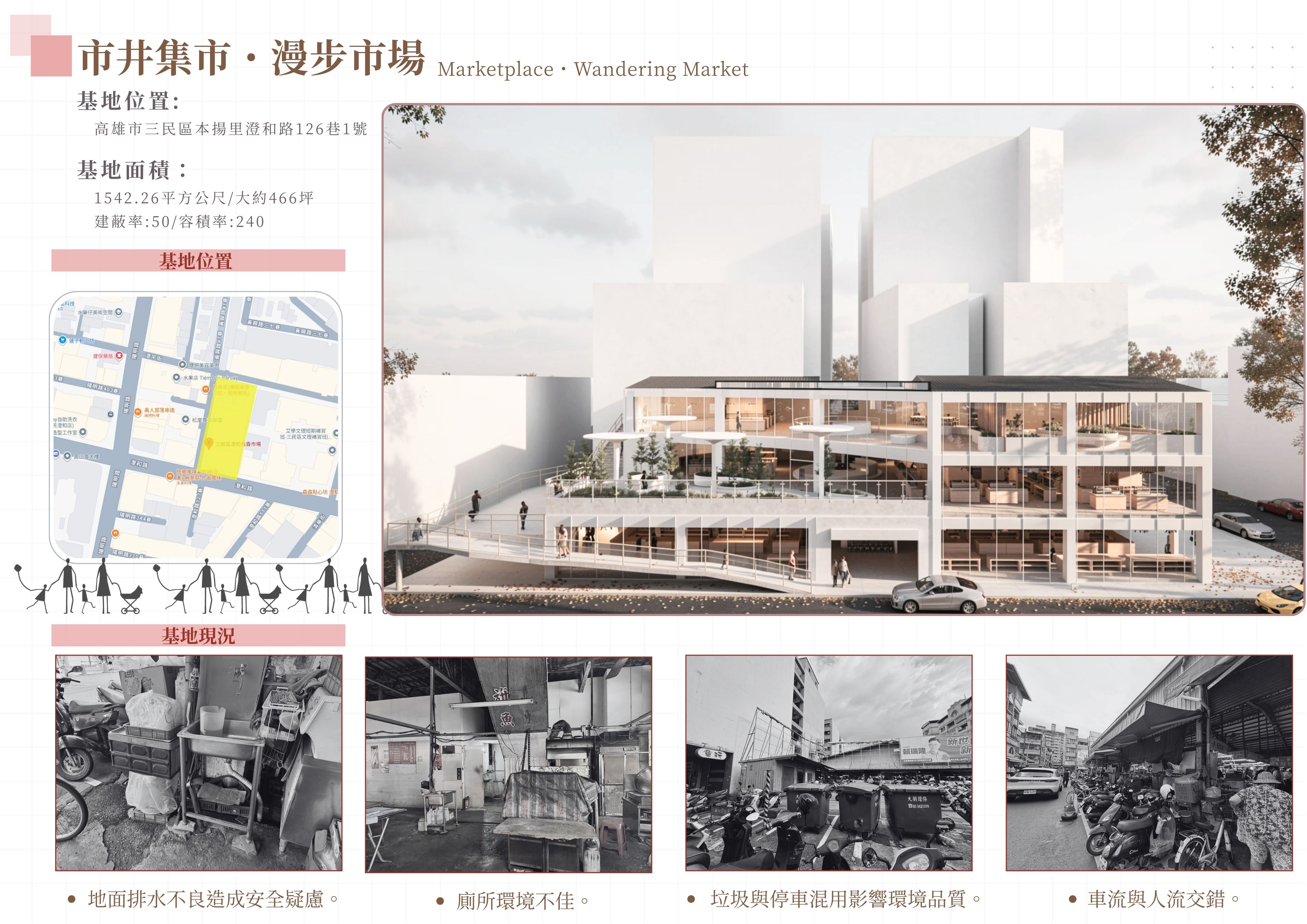
傳統市場不僅是買賣交易的場所,更是生活中重要的人情載體。現有的市場建築已老舊,不僅不符合現代耐震標準,更面臨地面排水不良造成安全疑慮、廁所環境不佳、垃圾處理與停車空間混雜等問題,導致人流與車流在狹窄動線中交錯,降低了整體的購物體驗與環境品質 。
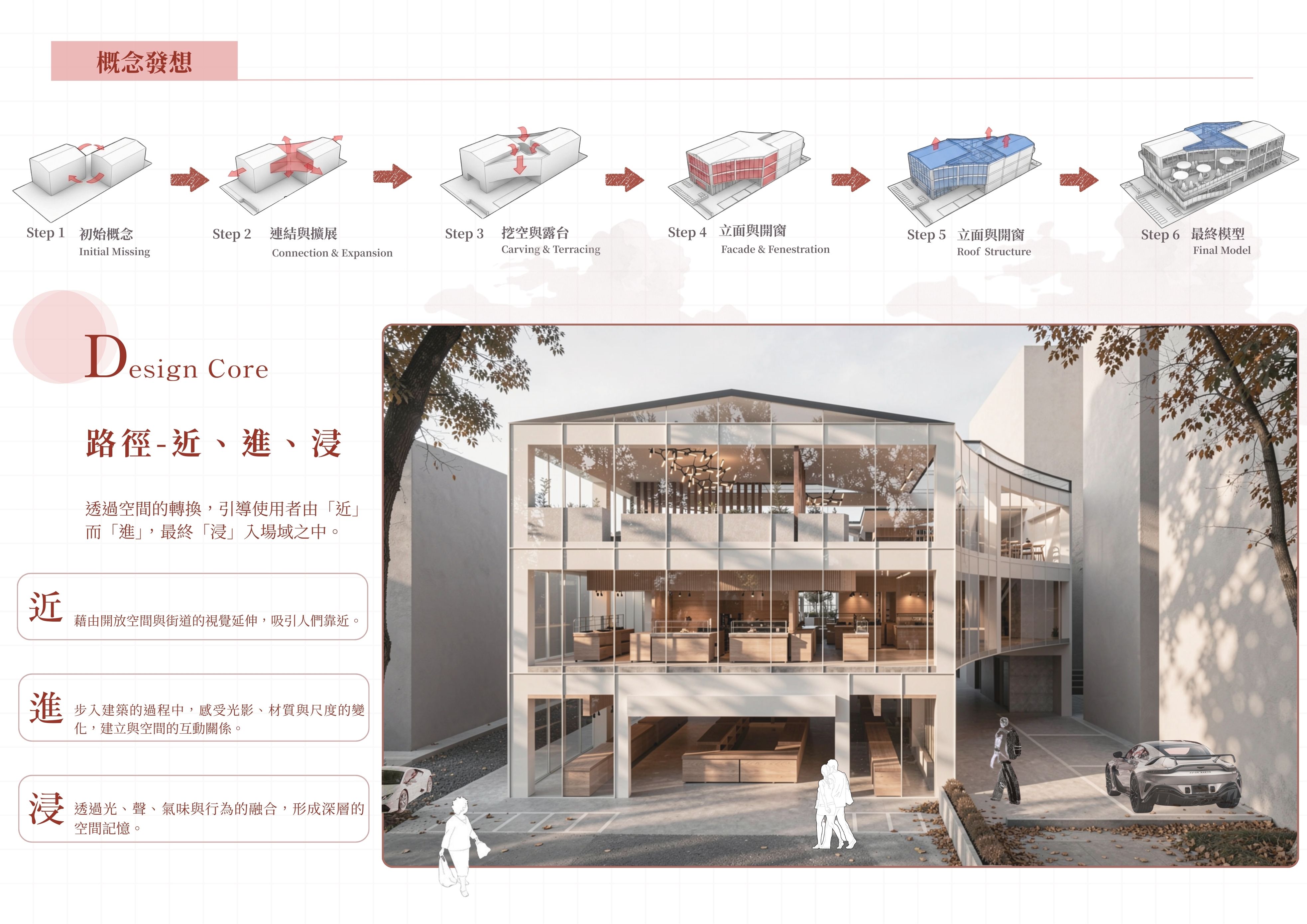
我們以「流動的建築語彙 × 市場的社會性」為核心 ,透過建築形體的「流動化」與「層疊式」策略,重新定義人與人的互動關係。設計中導入了「近、進、浸」的路徑層次,藉由開放性立面與街道的視覺延伸,吸引居民自然「近」看 ;引導使用者在步入建築的過程中,感受光影、材質與尺度的變化,體會與空間互動的「進」;最後透過光線、聲音與氣味的融合,讓使用者深度「浸」入場域的感官記憶中,塑造具備透明性與公共性的都市節點 。
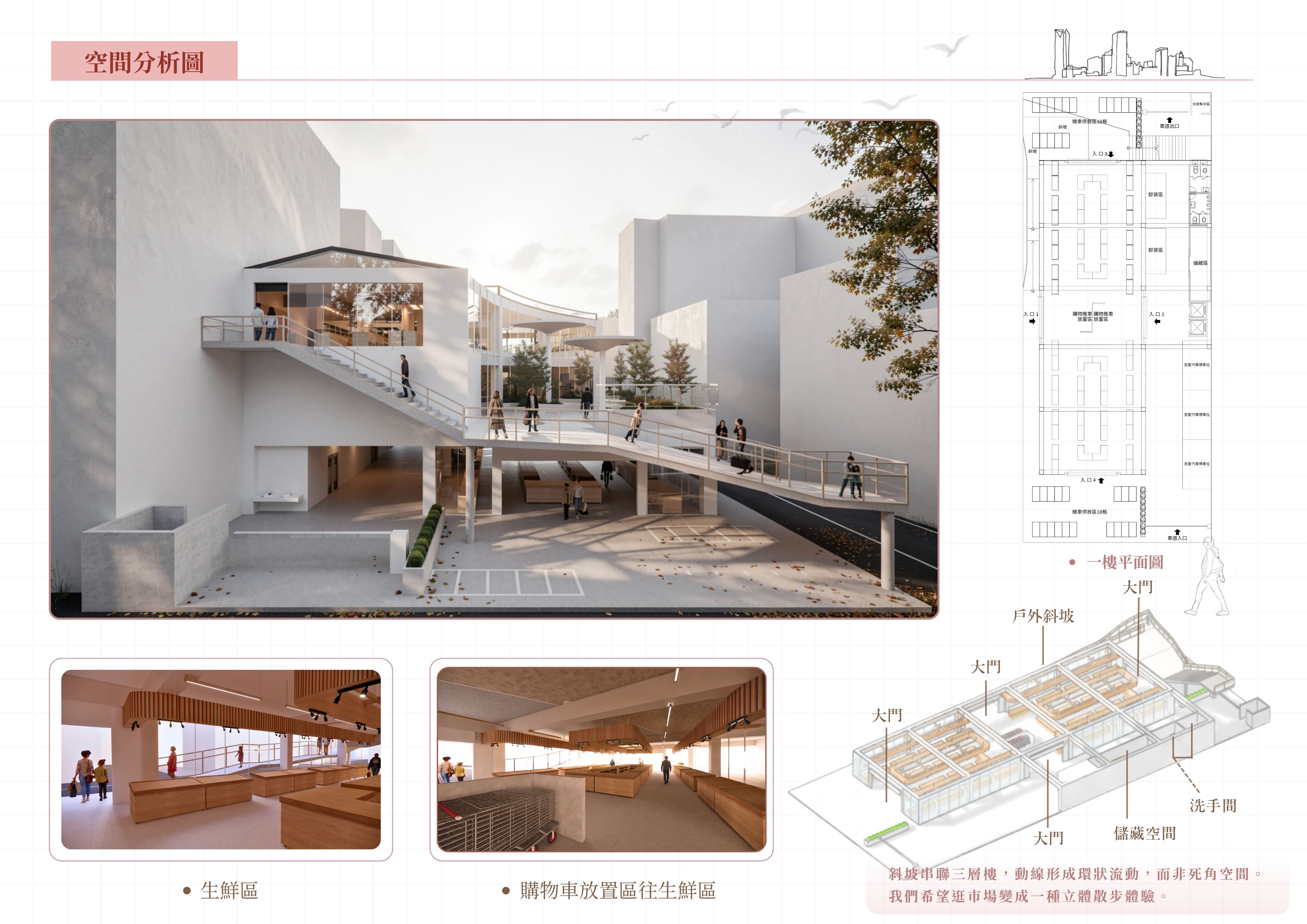
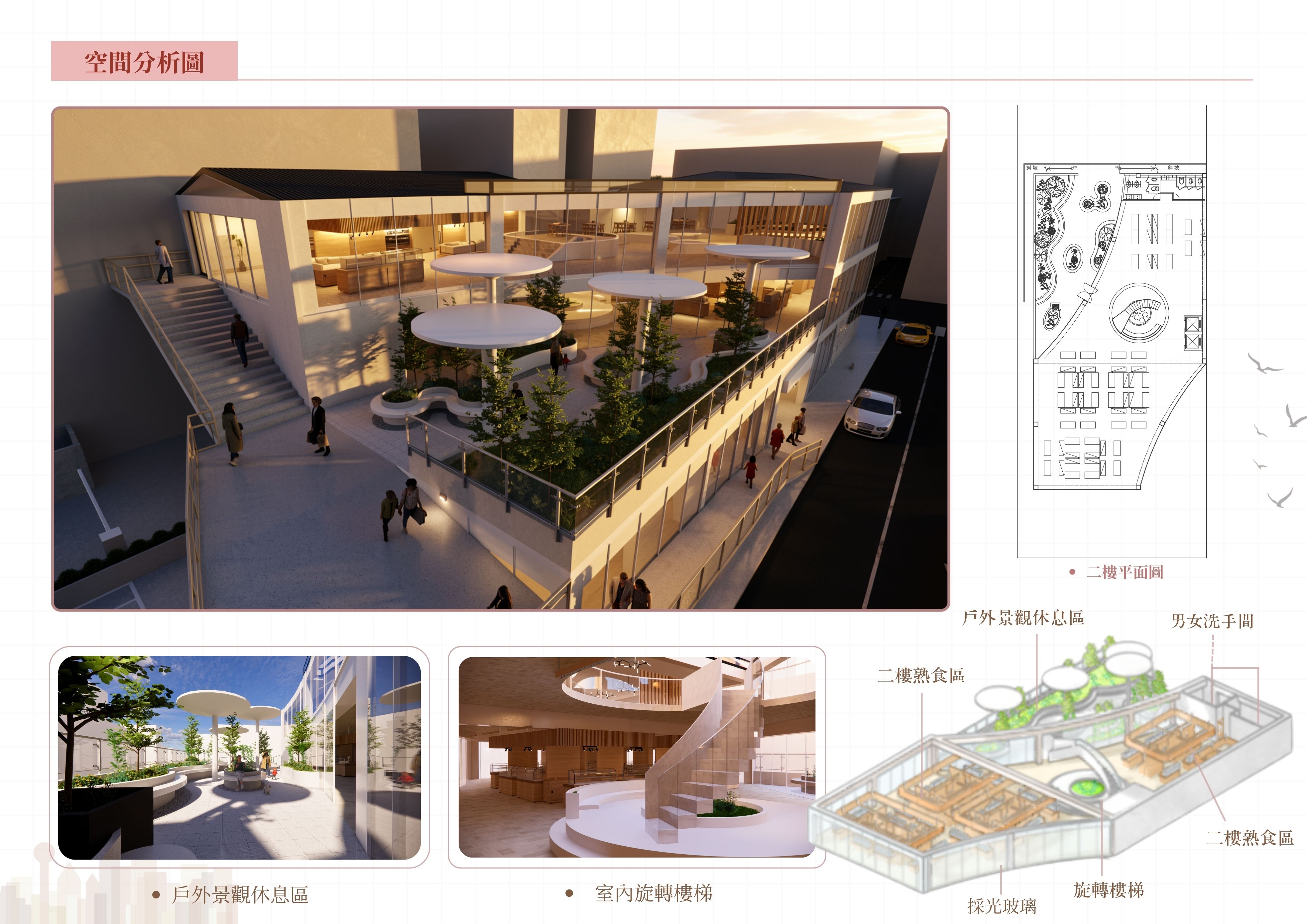
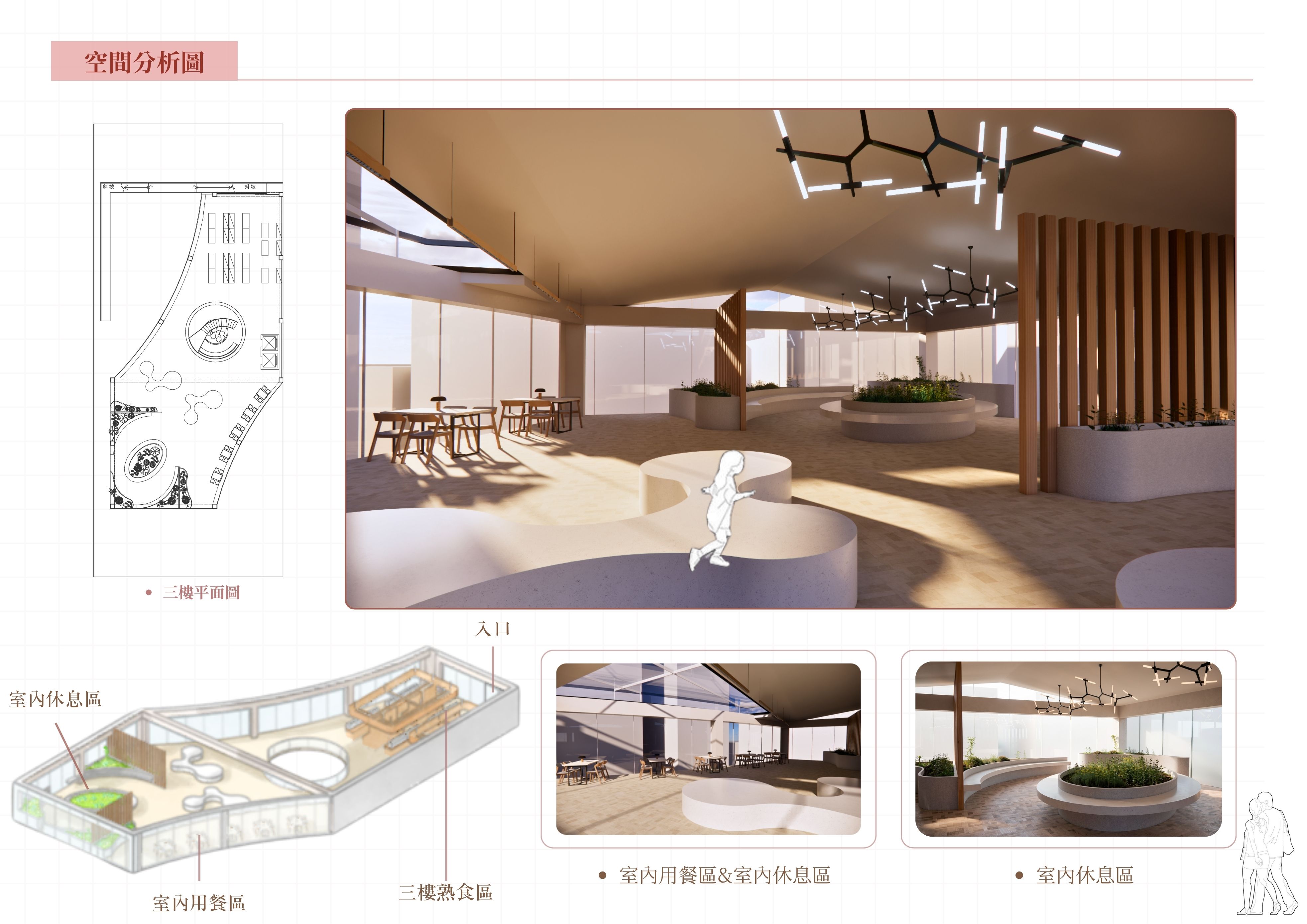
空間規劃上,我們利用斜坡串聯三層樓空間,打破傳統市場封閉且易產生死角的配置,讓動線形成環狀流動,使採買過程轉化為一場輕鬆的散步體驗 。一樓配置高效且開放的生鮮蔬果區 ;二、三樓則向上延伸出用餐區、熟食區與戶外花園平台,成為都市中珍貴的綠意緩衝層與社交場所 。更透過建築空間的重新配置,為老舊社區注入多元文化交織的新活力 。
Centered on "fluid architectural language × market sociality," this project redefines interaction through "fluidity" and "layering." The design employs a spatial hierarchy of "approach, entry, and immersion": an open facade draws residents in, while shifting light and scale foster a deep sensory connection to the site. By replacing traditional dead-ends with a continuous ramp system, we create a circular flow that transforms shopping into a "relaxed stroll." The layout transitions from efficient fresh produce on the ground floor to dining areas and an outdoor garden platform on the upper levels. This green buffer zone and revitalized spatial configuration inject new vitality into the community, seamlessly interweaving diverse cultures within a transparent urban node.