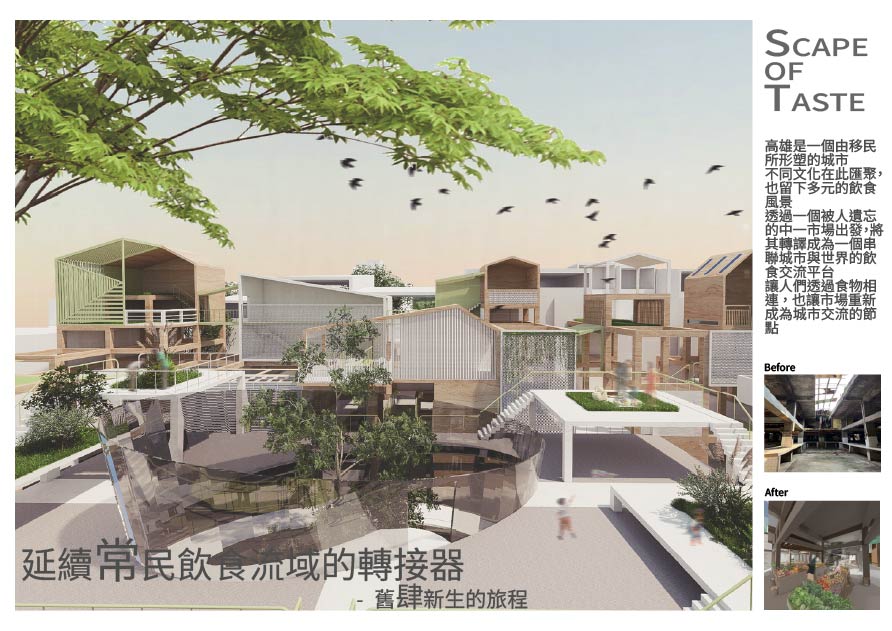
高雄是一個由移民形塑而成的城市,不同時期、不同背景的人在此匯聚,帶來各自的文化,也留下多元的飲食風景。飲食不只是滿足生理需求的行為,更是文化交流與身份認同的重要媒介。
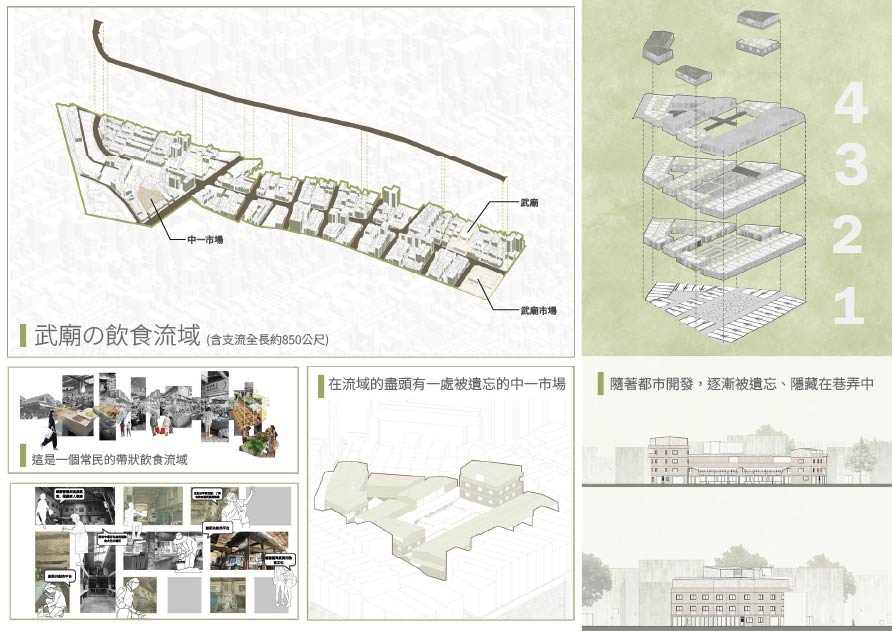
而位於苓雅的武廟周邊,發展出一條極具特色的帶狀飲食流域,從街邊小吃到市場攤販,這是一個常民生活的飲食脈絡。然而,在這條流域的尾端,存在著一處逐漸被遺忘的空間 - 中一市場,其曾經的繁榮已被時間掩蓋,留下的是閒置與沉寂。
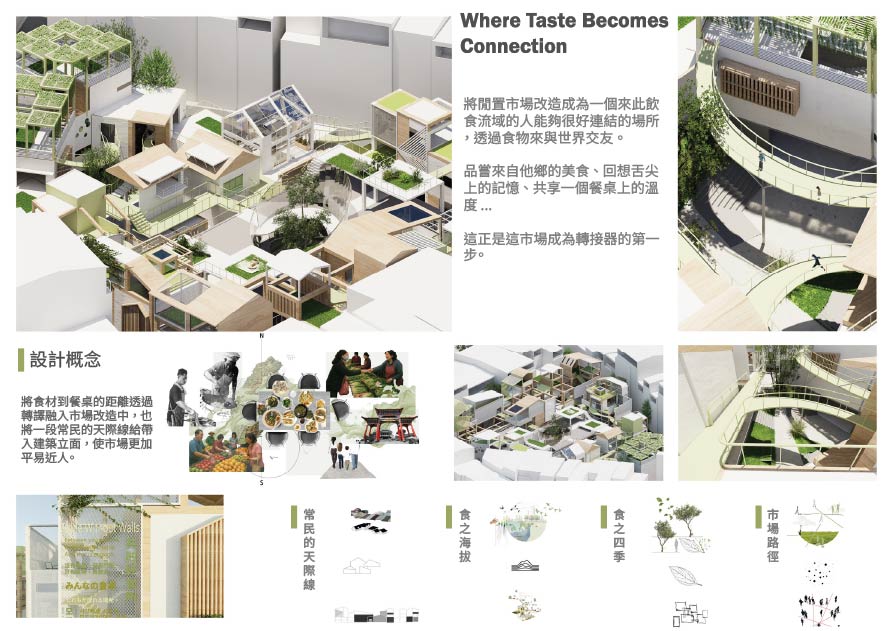
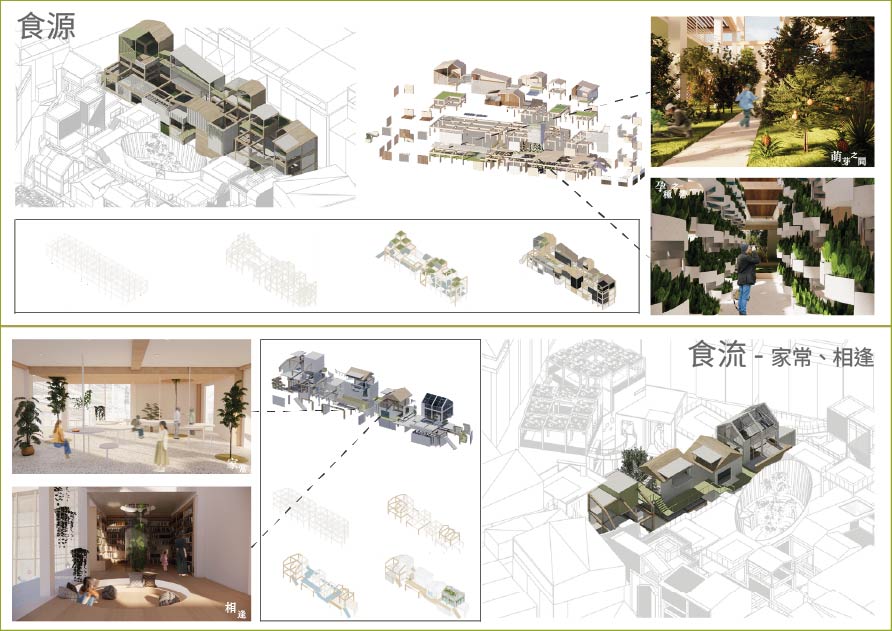
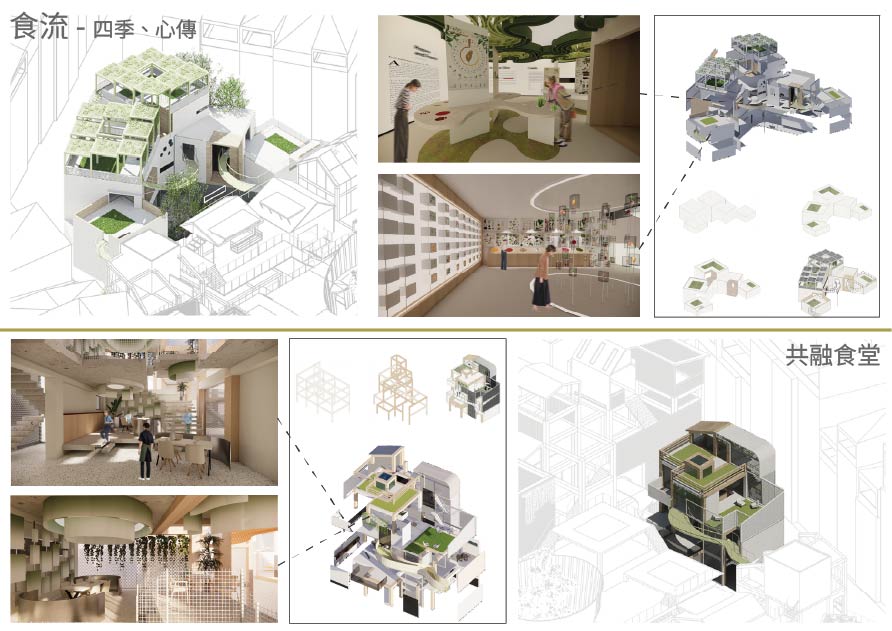
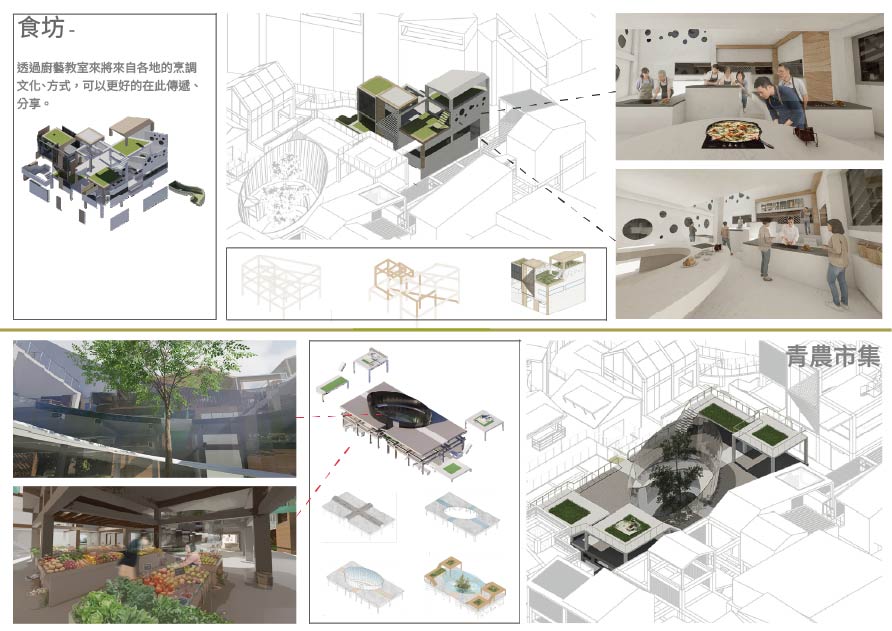
而我們嘗試將中一市場重新轉譯為一個串聯城市與世界的飲食交流平台,透過「從食材到餐桌的距離」、「用食物理解文化」、「認識飲食流域的形成」以及「以食物與世界交友」四個階段,重新詮釋飲食文化的多層次意義。同時,藉由串聯武廟既有的飲食流域,使在地的常民文化得以轉接並延伸至更廣泛的文化交流之中。
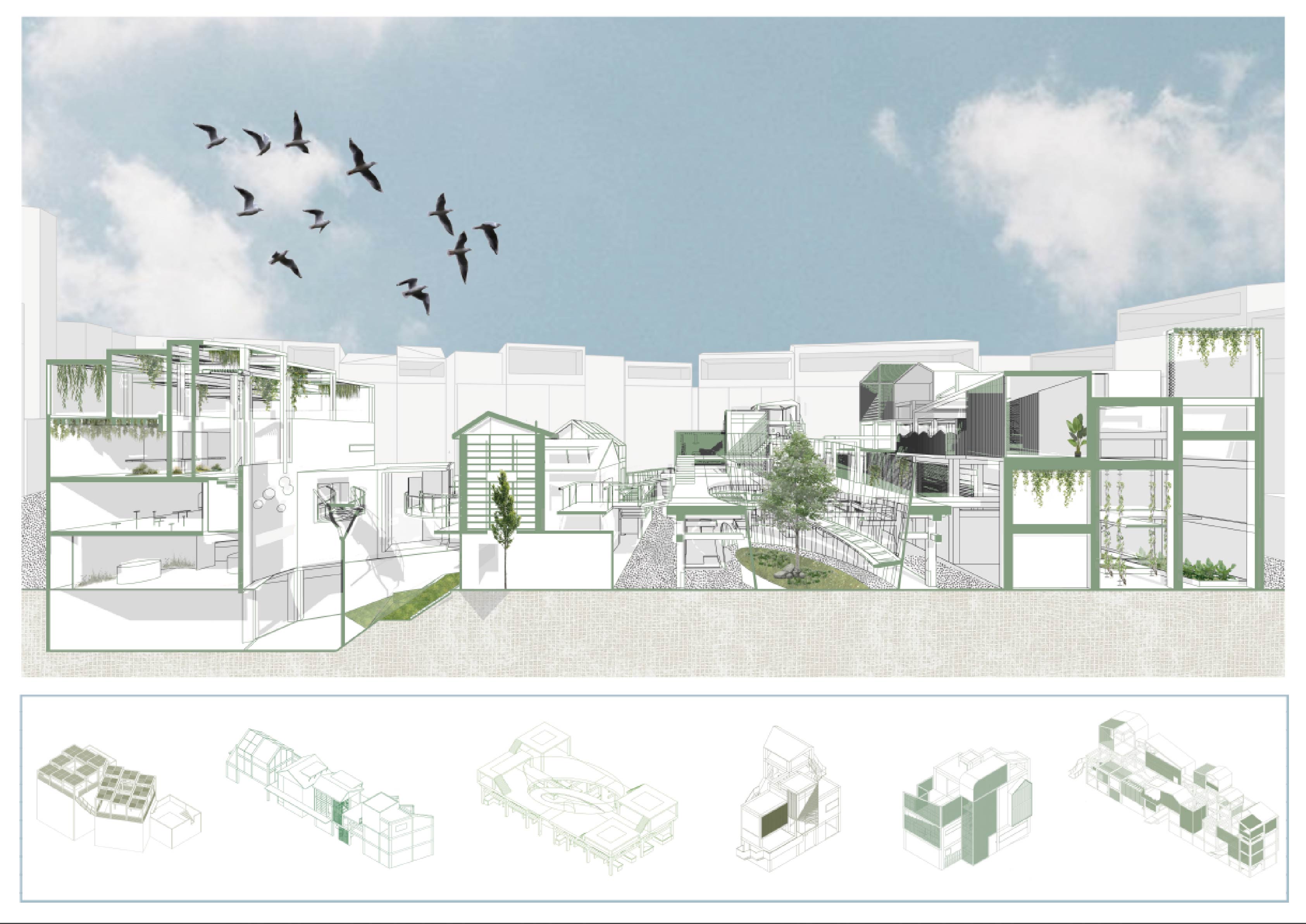
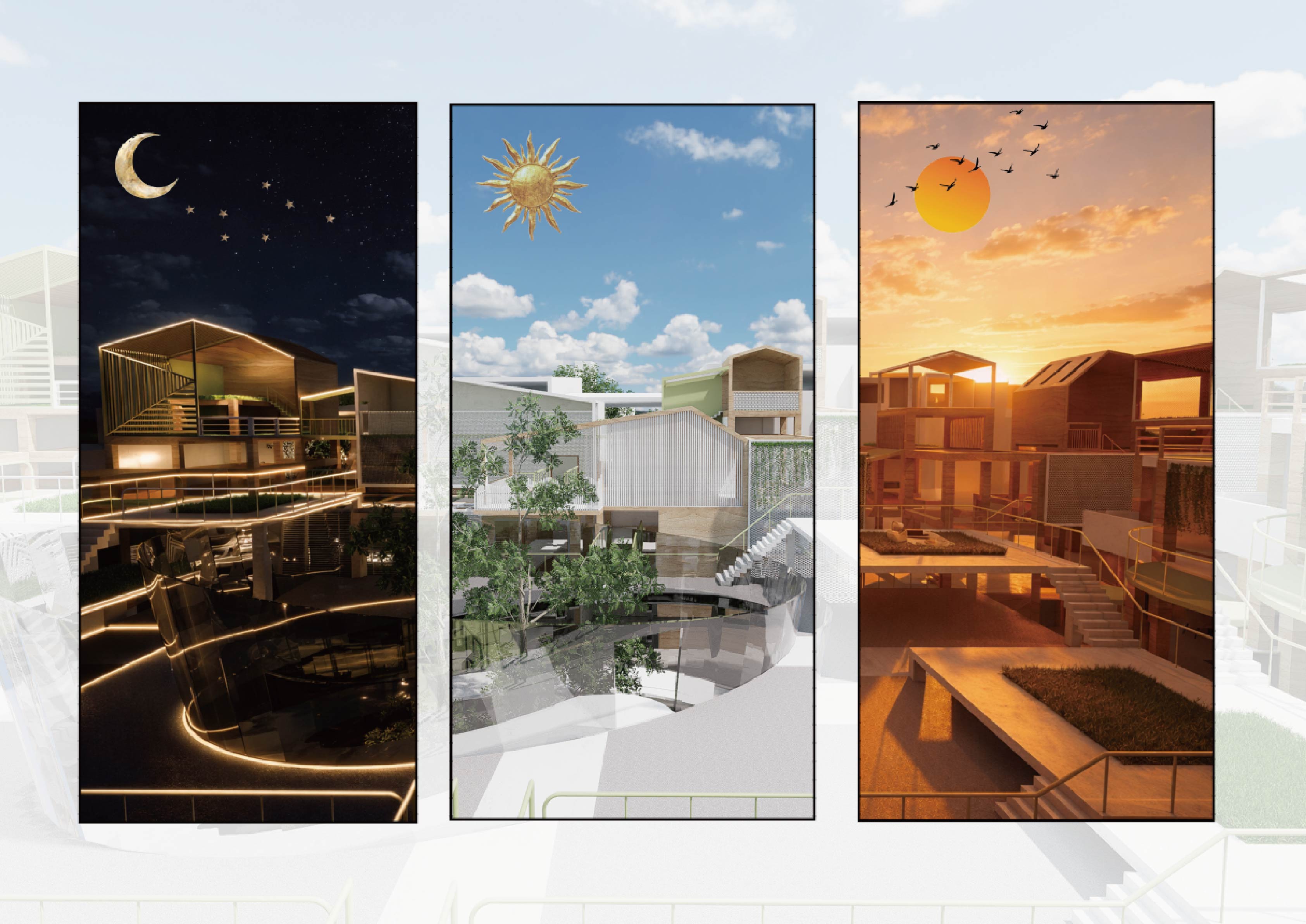
於此同時也將武廟市場及周邊街道所產生的剩食納入系統之中,透過再分配與再利用機制,減少浪費並創造新的價值。最終,使原本閒置的中一市場重新被激活,不僅成為地方居民再度聚集的場域,也轉化為一個具有開放性與交流性的城市節點,讓人們在此透過食物建立連結,重新認識彼此與世界。
Kaohsiung is a city shaped by migration, where diverse cultures have formed a rich culinary landscape. Food is not only for sustenance, but also a medium for cultural exchange and identity.
In Lingya, the Wumiao area has developed a unique linear food corridor rooted in everyday life. At its end lies Zhongyi Market, a once-thriving space now left idle and forgotten.
This project reinterprets Zhongyi Market as a platform for culinary exchange connecting the city with the world. Through themes such as the journey from ingredients to the table, understanding culture through food, and building global connections, it extends the existing food corridor into a broader cultural network. At the same time, it incorporates surplus food from the area through redistribution and reuse, reducing waste while creating new value.
Ultimately, Zhongyi Market is revitalized as an open urban node where people reconnect through food.