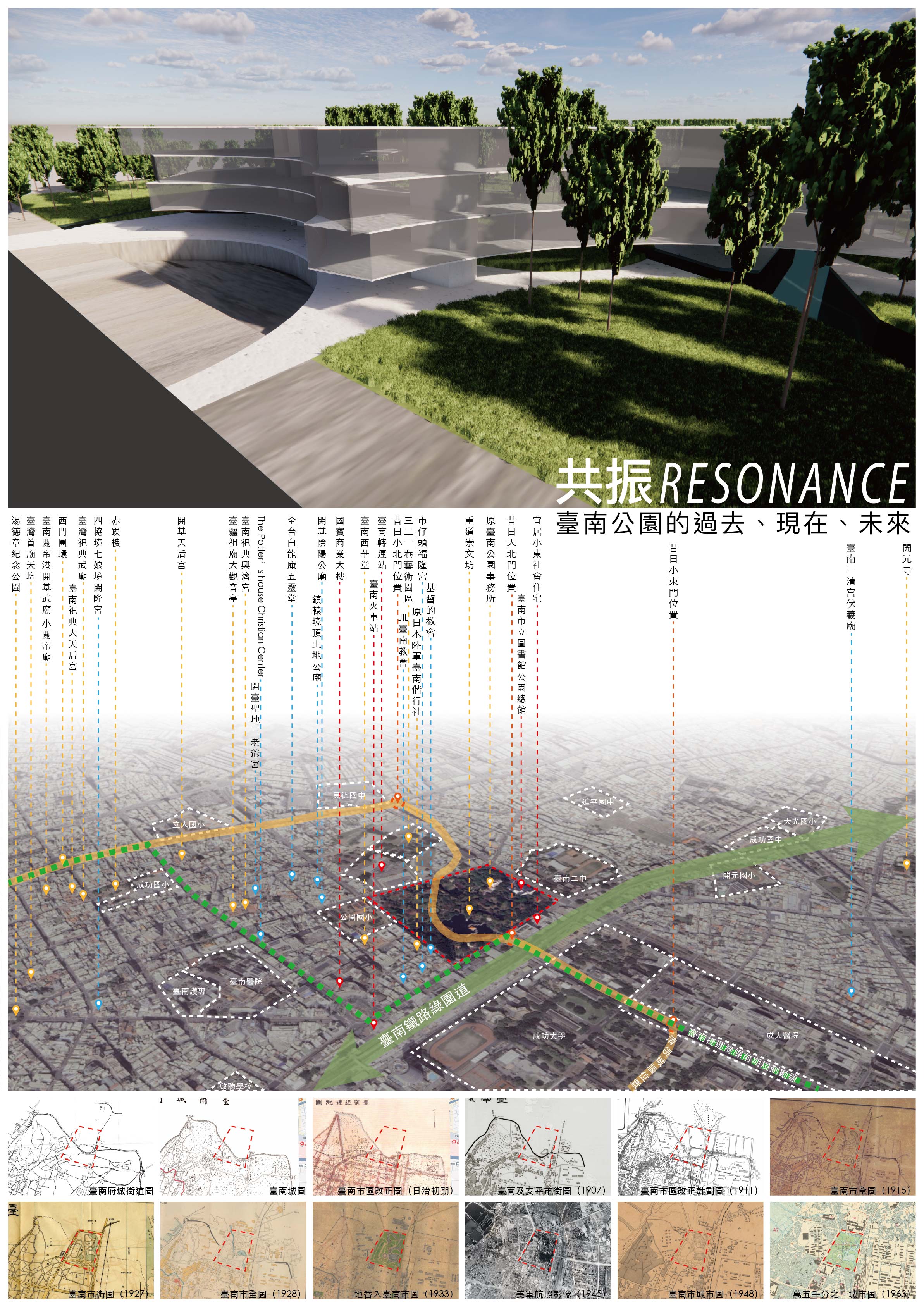
台南,一座層次極深的城市。
它乘載著清領時期城牆座落的軌跡與日治時期的都市規劃,也見證了現代城市更新與外籍移工文化的形成;這樣的歷史與社會結構並不是單一線性,而是多重且交織的。不同時間、不同文化的痕跡互相纏繞、拉扯、甚至在彼此抵觸後又碰撞出新的火花。
這樣重疊的力量,我稱之為「共振」。
在《台南公園,如鏡反射》這本百年紀念冊裡,造園學家進士五十八留下了一句話: 「建物は時間が経つと劣化するが、公園はずっと美しく成長しつづけるものなのです。」 (建築會被時間磨損,但公園卻隨著時間茁壯,並持續綻放它的美。)
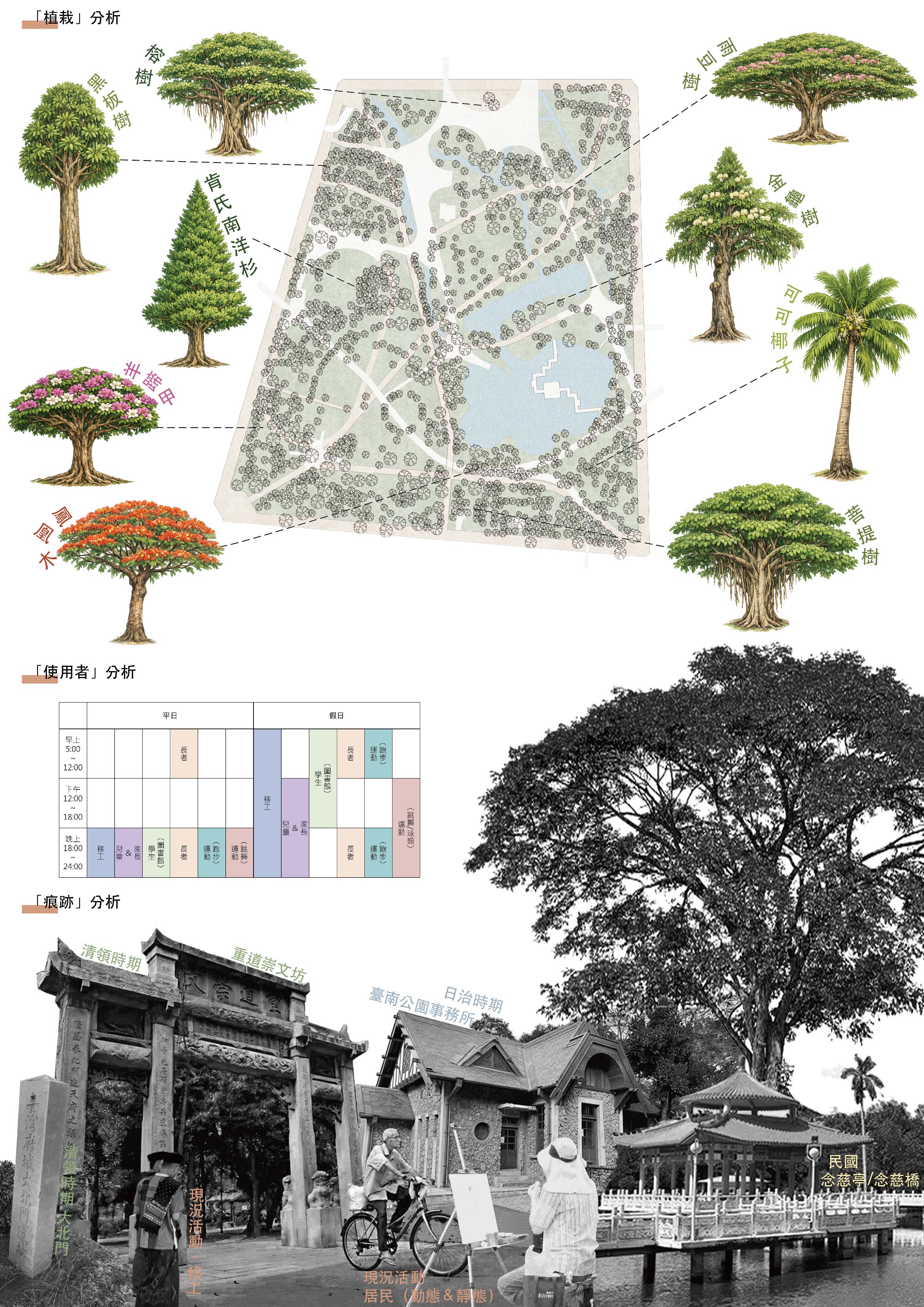
這句話給了我很大的啟發:建築通常是一個被時間侵蝕的載體,但公園卻是一個會隨時間成長的有機體,它不斷在變動、在生長,卻又同時維繫著城市的某種恆定。
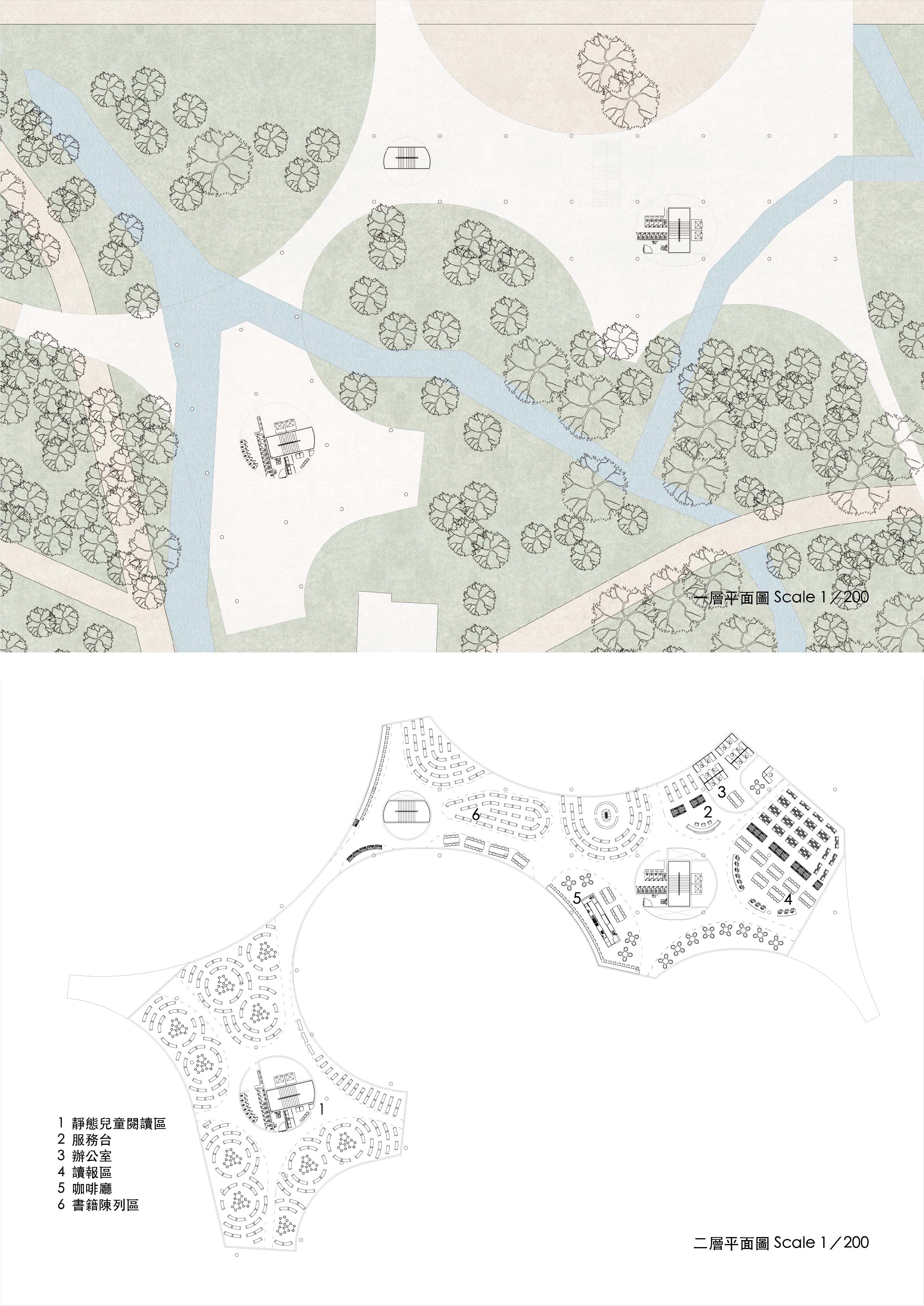
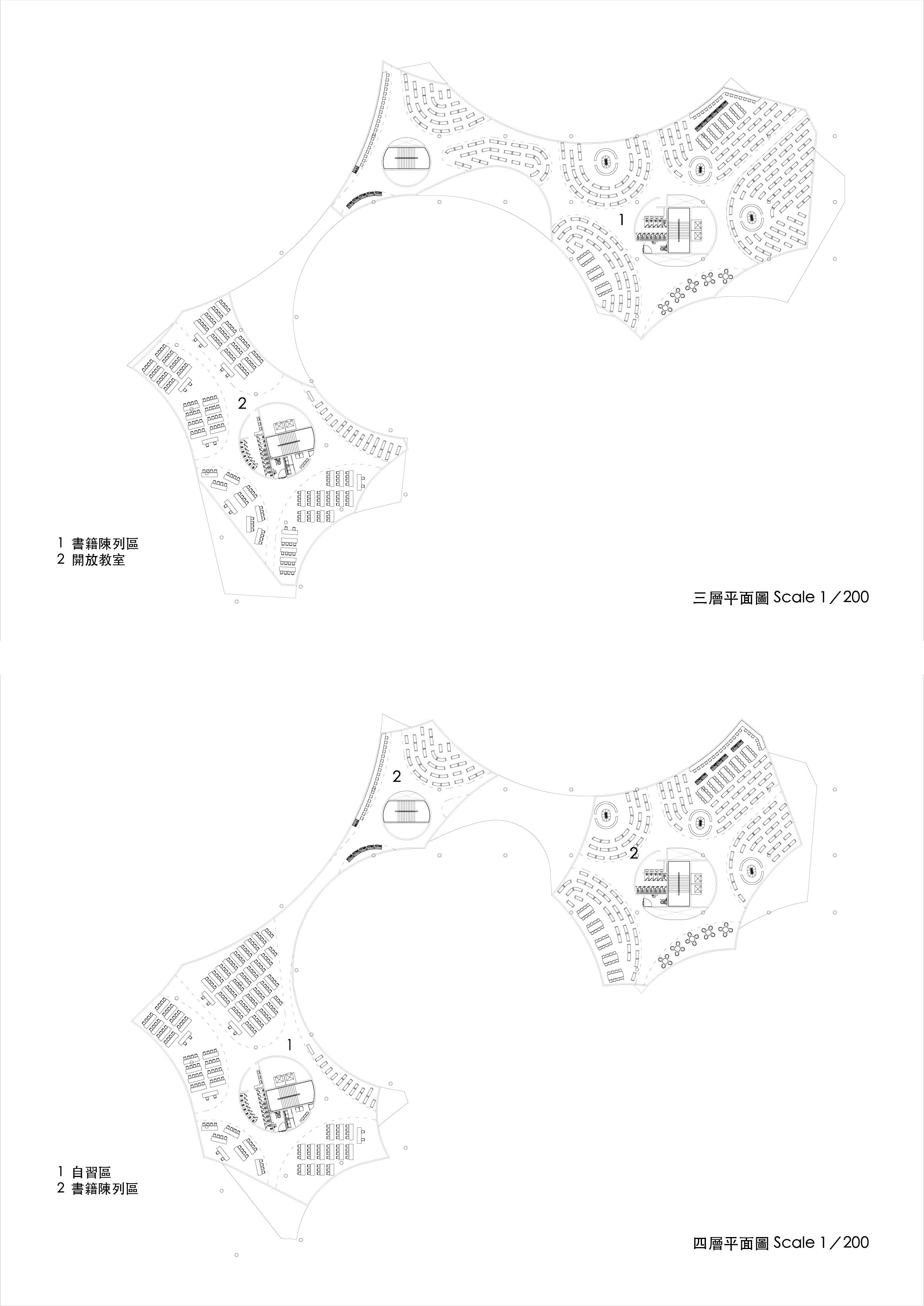
在我的畢業設計裡,我想做的不只是「公園設計」或「建築設計」,而是想試著去思考:當建築被放進一個會自己成長的環境裡,它能不能跟著一起變動?能不能像樹木一樣,陪伴著在這塊土地上生活的居民們一起,去呼吸、去共存、去延續?
Tainan, a city of layered histories.
It holds traces of Qing-era walls, Japanese colonial planning, and contemporary urban change with migrant cultures. These structures are not linear, but intertwined. Different times and cultures overlap, conflict, and generate new possibilities.
I call this force “resonance.”
In As a Mirror : A Century of Tainan Park (Lee Jui-Tsung, 2017), the landscape architect SHINJI Isoya once wrote: “Buildings deteriorate over time, but parks continue to grow in beauty.”
This suggests a contrast: architecture is often eroded by time, while a park grows as an organism. It changes and evolves, yet sustains continuity within the city.
In my project, I go beyond “park design” or “architecture.” I try to figure out: when architecture enters a self-growing environment, can it also evolve?
Can it, like trees, coexist with people—breathing, adapting, and continuing over time?