
基督教以「耶穌為世人贖罪」的核心教義為基礎,發展出深具象徵性的宗教視覺語言。此一信仰意涵不僅具有神學層面的救贖意義,也可作為映照當代社會現象的隱喻,尤其是在公共輿論中,無辜者往往被推向「替罪羊」的位置,承擔集體情緒與責難。本研究以「神的羔羊」之神學意象為出發點,結合現代社會中常見的輿論替罪現象,探討替罪者在承擔、掙扎與尋求救贖過程中的精神歷程與心理轉變,並嘗試透過服裝創作轉化為具象的視覺語言。
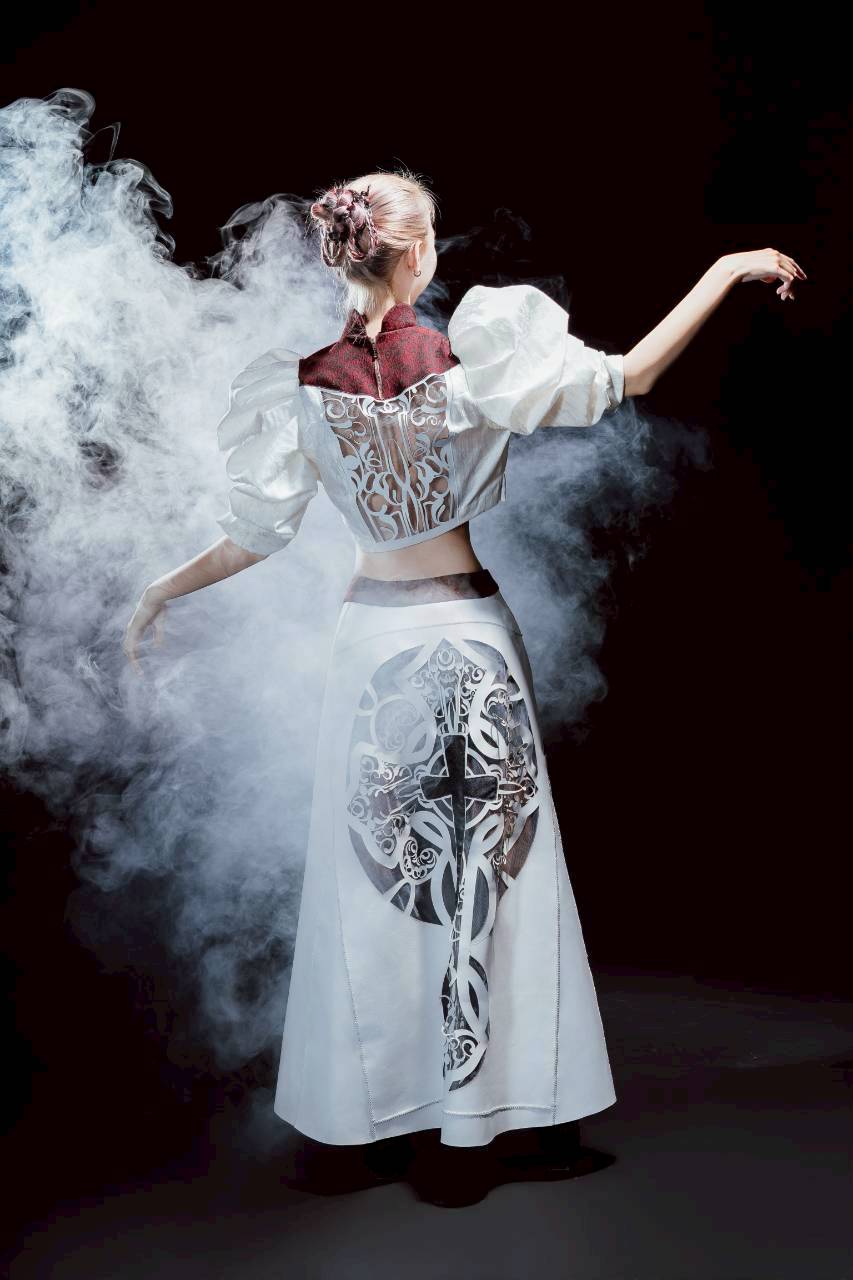
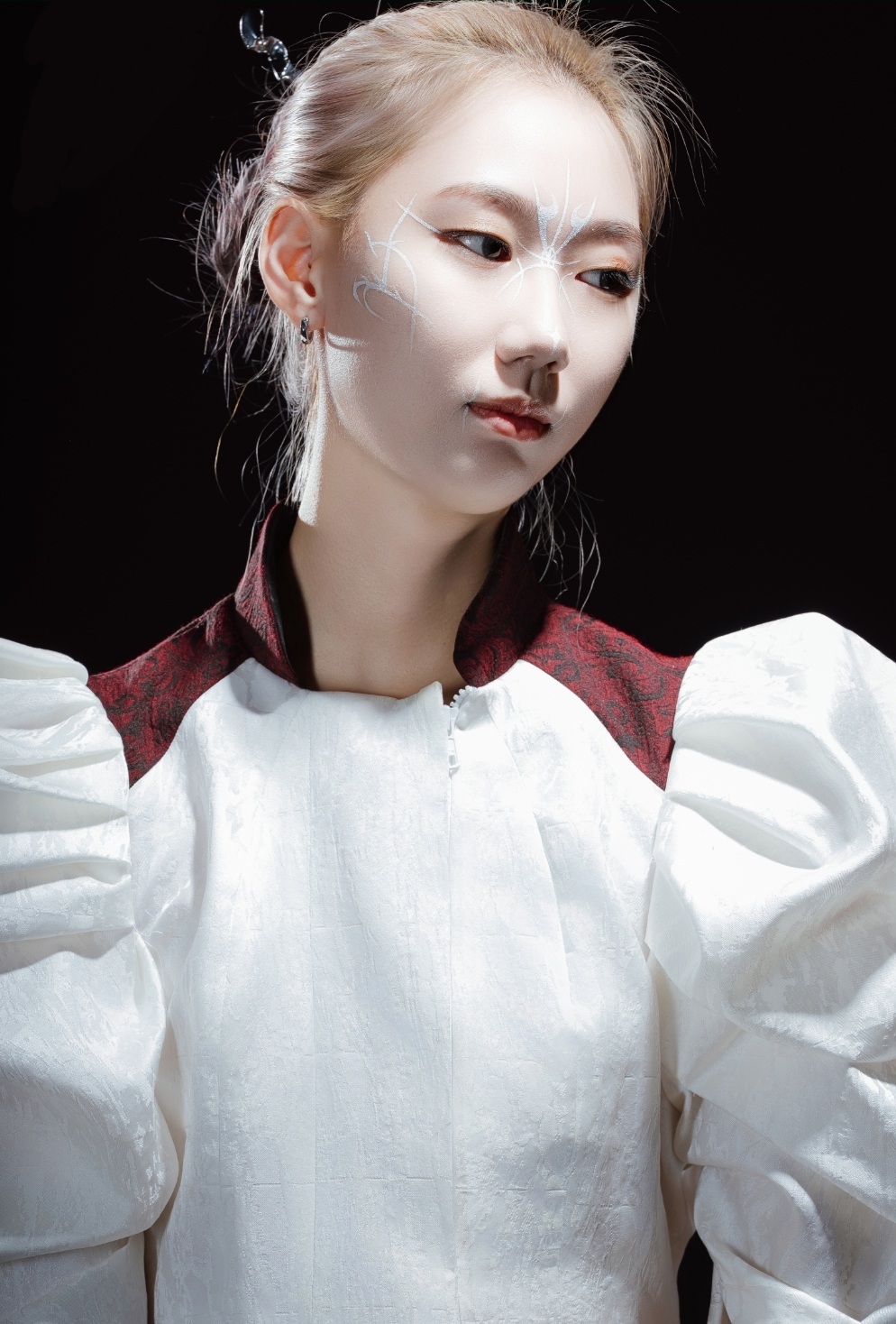
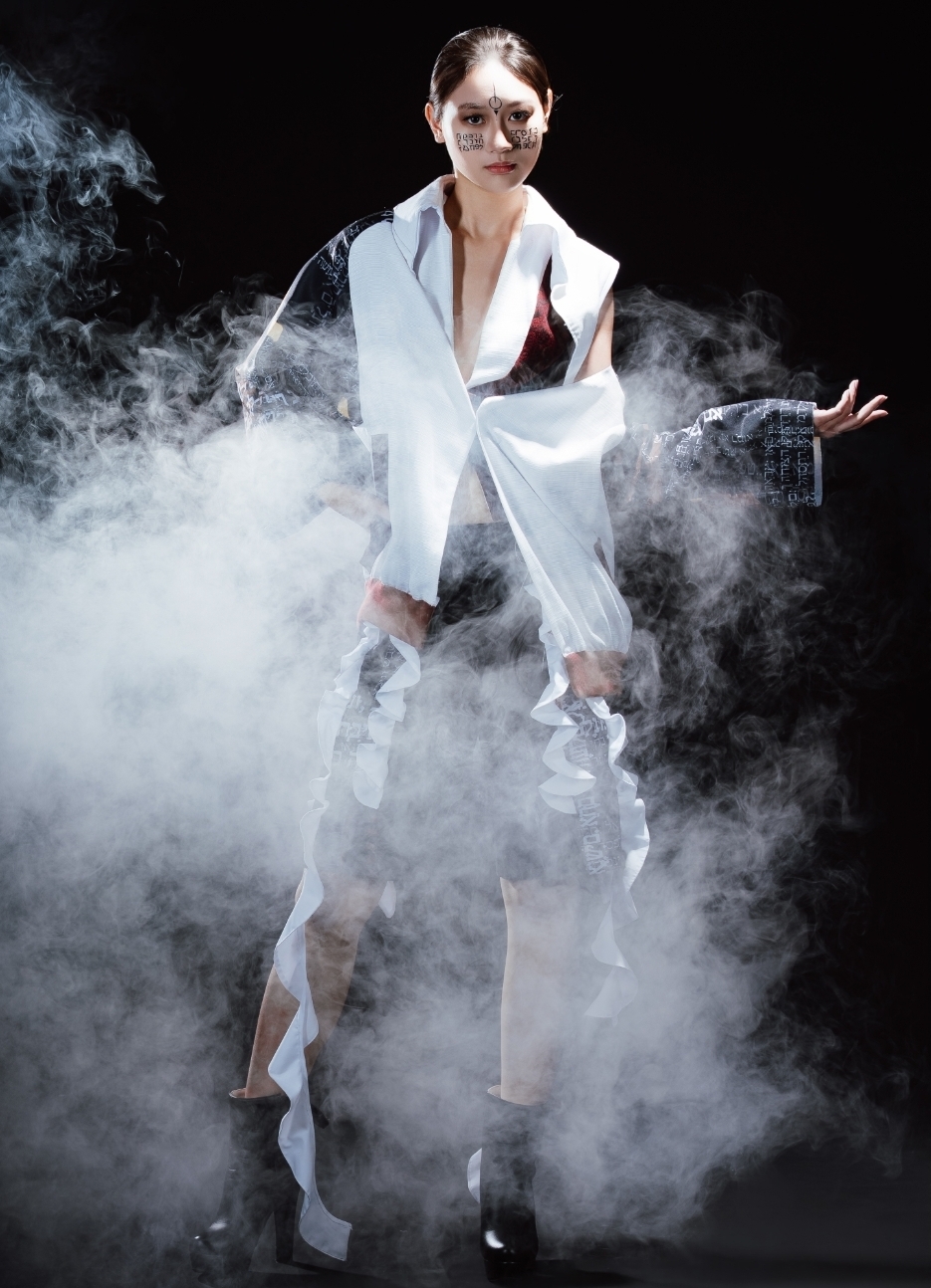
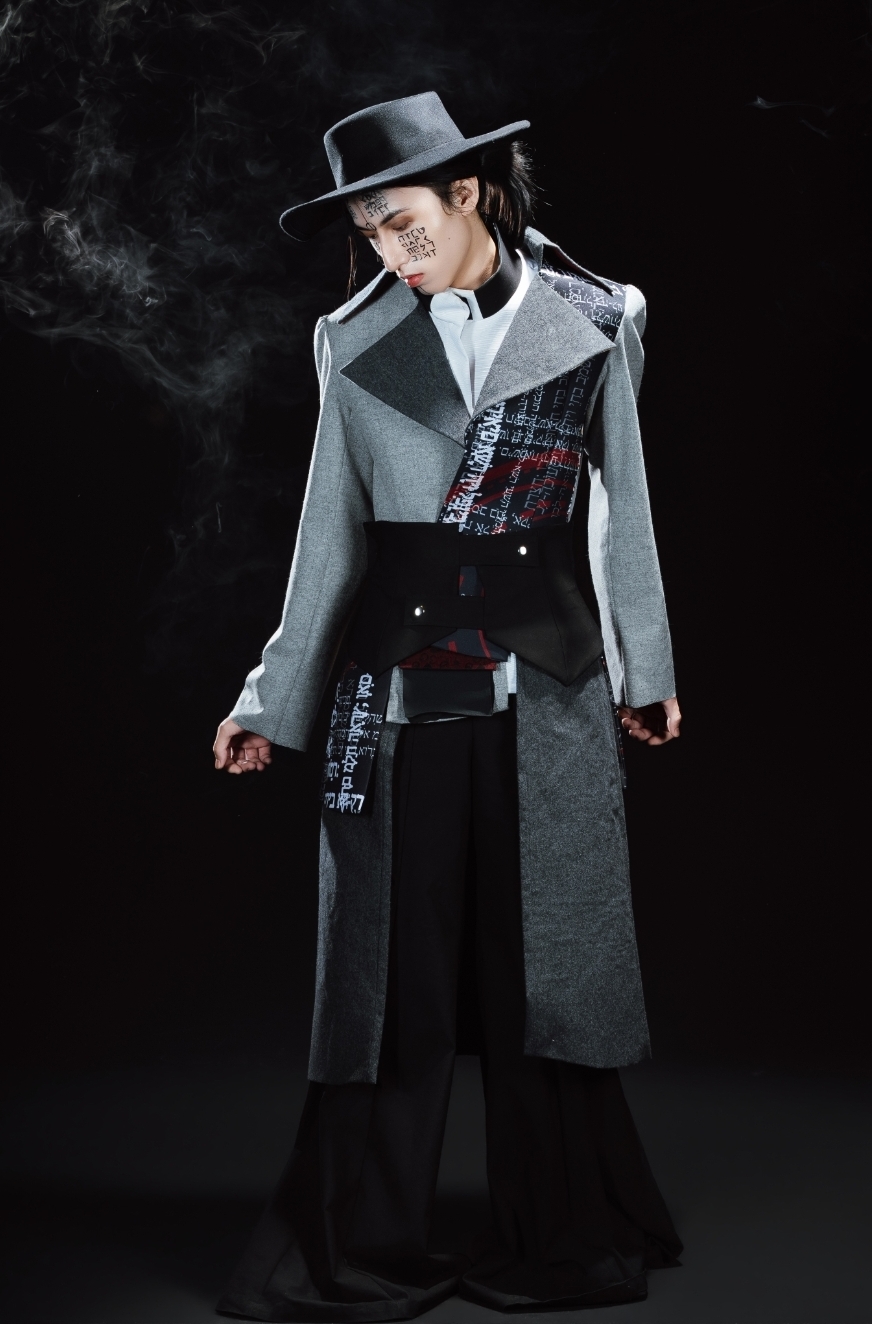
在創作表現上,運用宗教圖騰進行雷射切割並設置於服裝背部,象徵信仰如同支撐個體的精神力量;同時以舊約聖經中的希伯來文字為元素設計數位印花,使文字在視覺上形成壓力般的覆蓋效果,象徵外界輿論的壓迫與內在信仰所帶來的心靈慰藉。此外,藉由服裝刻意未收邊所形成的毛邊與破碎質感,呈現表面光鮮、實則隱含陰暗的社會人設,暗示陷害與指責背後的複雜人性。
整體色彩大量運用黑與白的對比關係,建構由黑暗走向重生的視覺敘事,象徵罪、苦難與救贖之間的轉化過程,進而呈現宗教信仰在當代語境中的轉譯與延續。
The belief that **Jesus atoned for the sins of humanity** carries theological meaning in Christianity and also serves as a metaphor for contemporary society. Innocent individuals are often pushed into the role of a “scapegoat,” forced to bear collective blame and criticism. This study explores their psychological and spiritual journey, focusing on endurance, struggle, and the search for redemption.
In the design, religious totems are laser-cut on the back of the garments to symbolize faith as spiritual support. Hebrew texts from the Old Testament are used in digital prints to represent both the pressure of public opinion and the comfort of faith. Unfinished edges and frayed textures reveal the contrast between polished public images and hidden darkness. The use of black and white creates a visual narrative from darkness to rebirth, symbolizing the transformation between sin, suffering, and redemption.