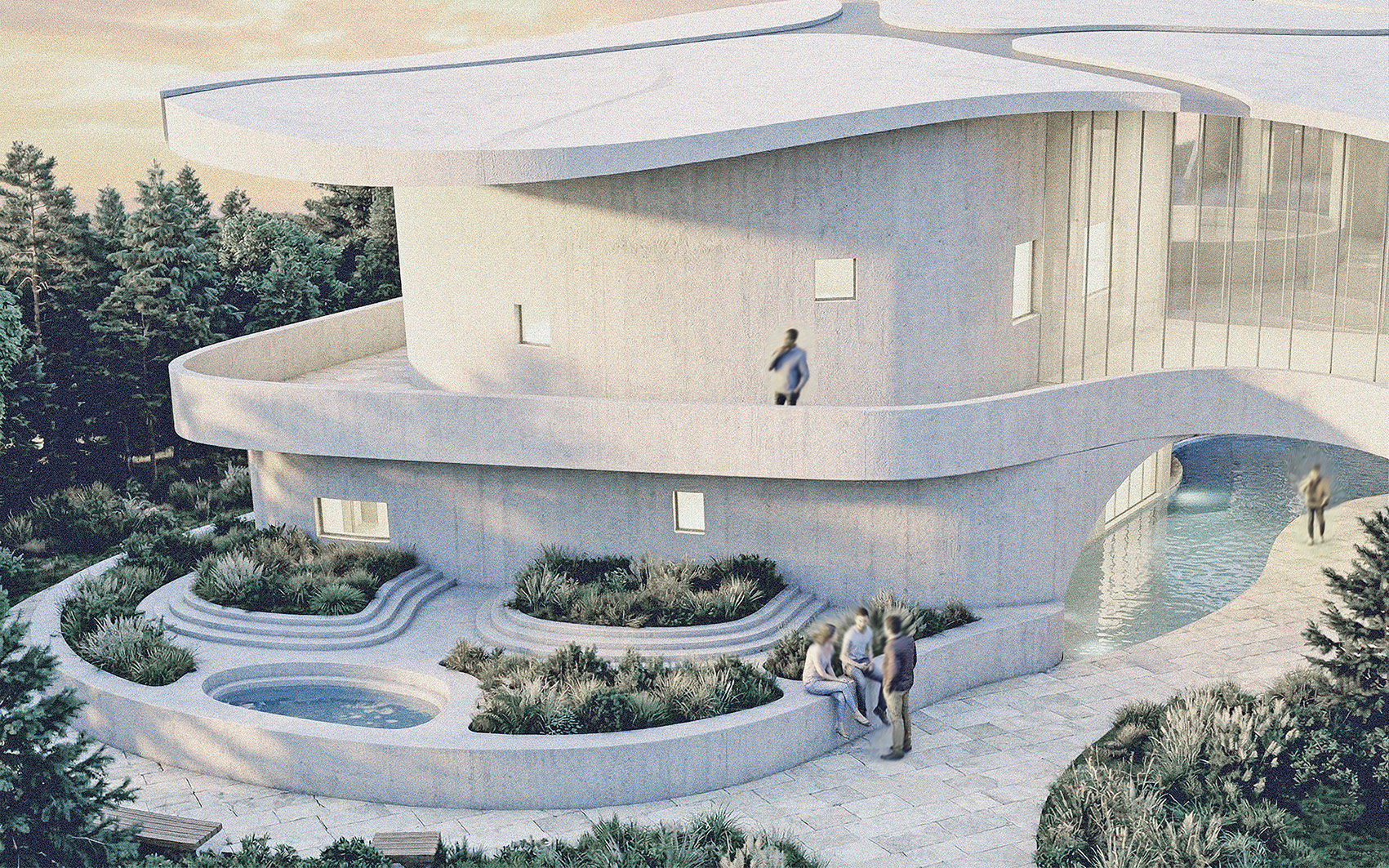
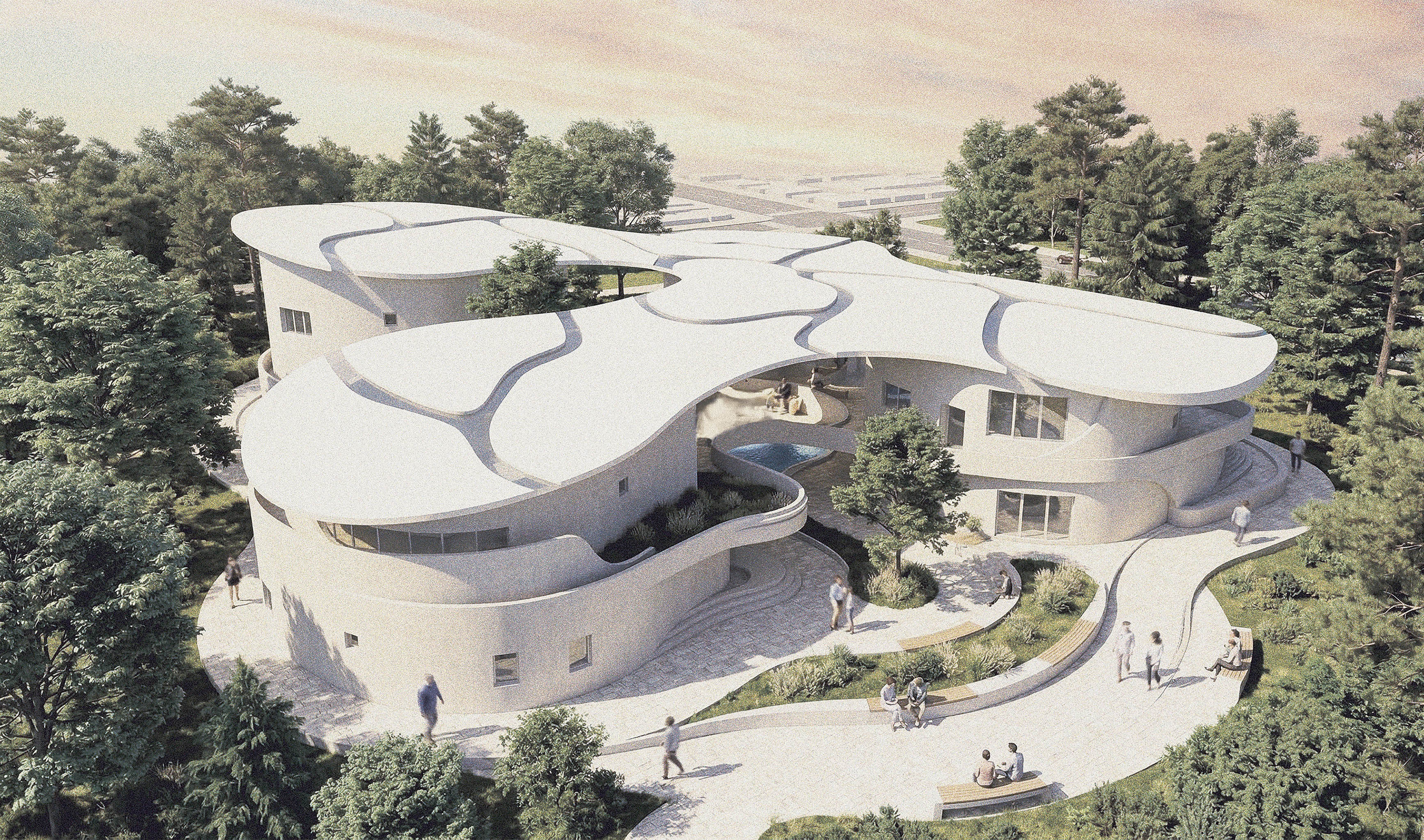
純粹棲所是一個回應台灣亞熱帶氣候的被動式住宅設計,基地位於礁溪鄉。在過程中,本研究發現現代建築所造成的碳排放相當驚人,其中很大一部分來自人們長期依賴空調來對抗台灣潮濕悶熱的氣候。因此本研究希望換一種思考方式,讓建築回歸與環境共存的本質,不再只是封閉的空間容器,而是能與自然互動、會調節自身狀態的「會呼吸的建築」。
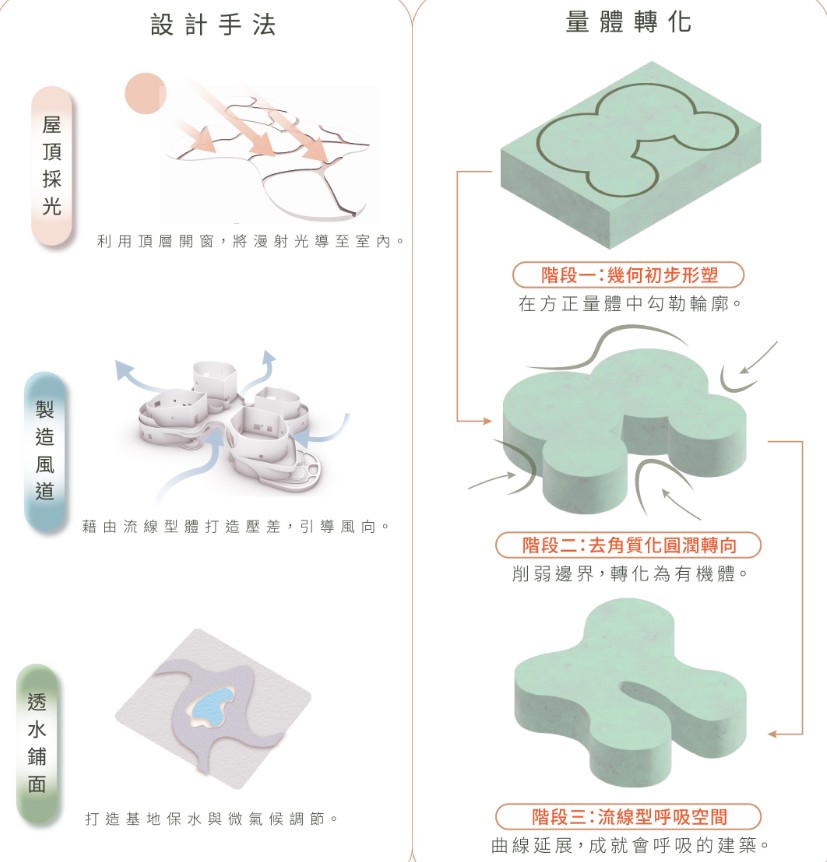
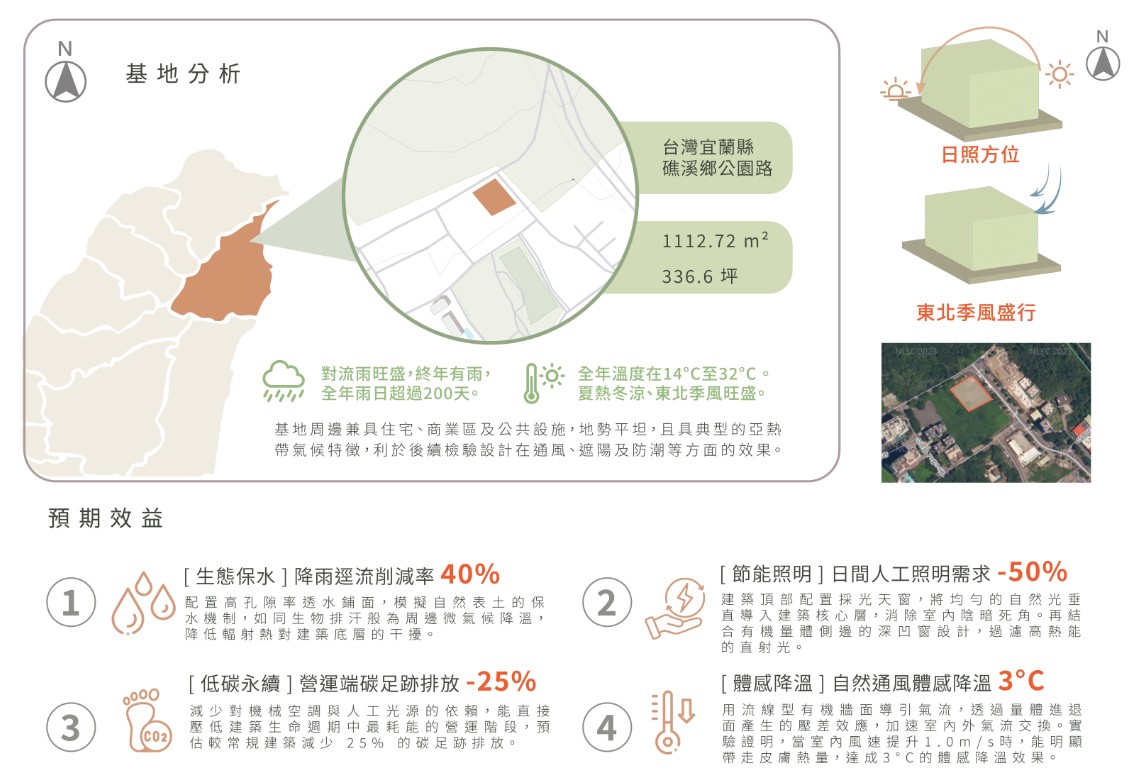
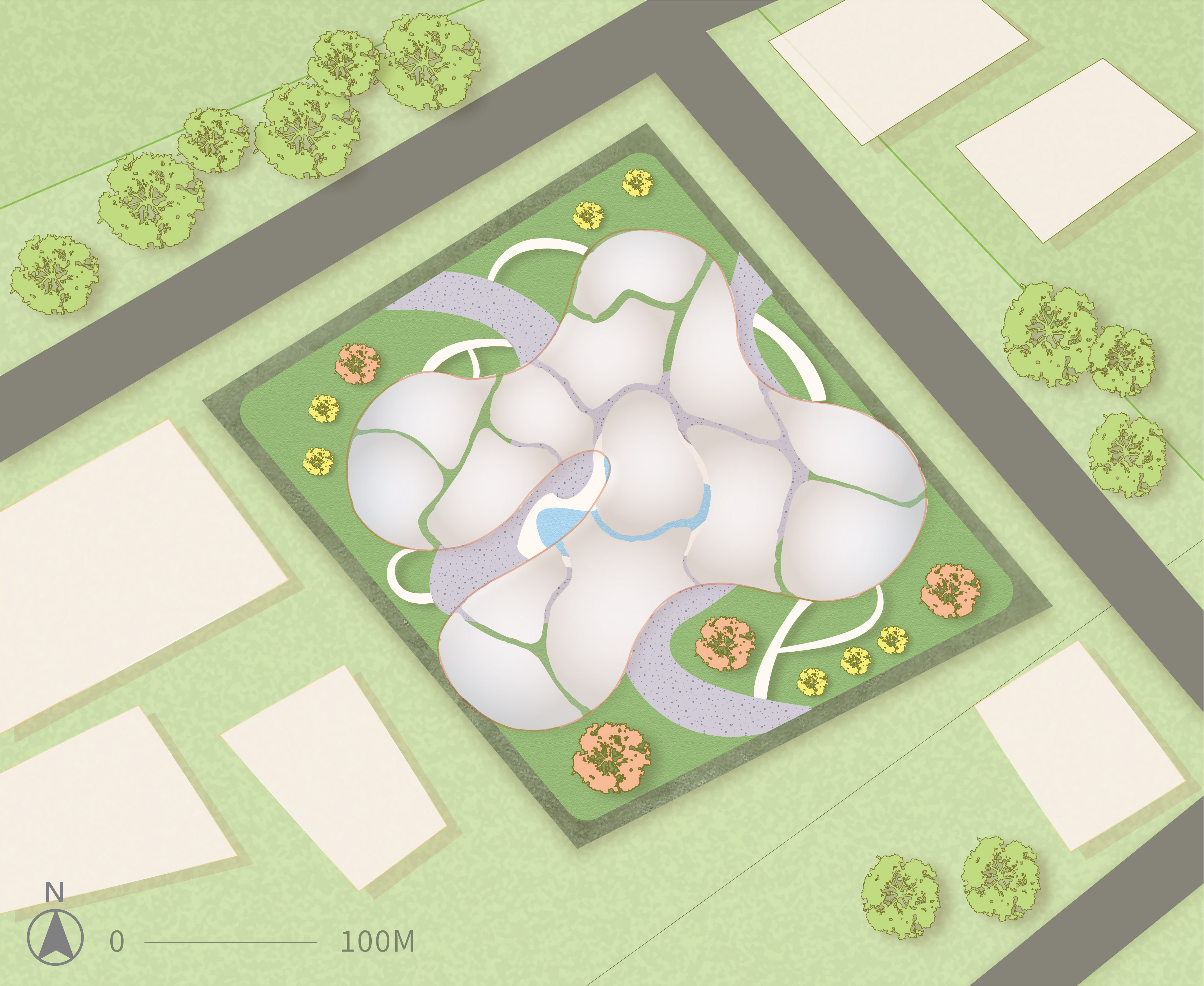
設計從方正量體出發,透過去角質化與圓潤轉向,逐步削弱原本僵硬邊界,轉化為具有流動感的有機體設計。流線型外牆與量體進退形成壓差,引導自然風進入建築並形成風道,促進室內外空氣交換,使空間產生如呼吸般的節奏。當室內風速提升至約1.5 m/s時,可以帶走人體表面熱量,產生約3°C的體感降溫效果,讓空間在降低空調依賴的情況下仍能維持舒適。
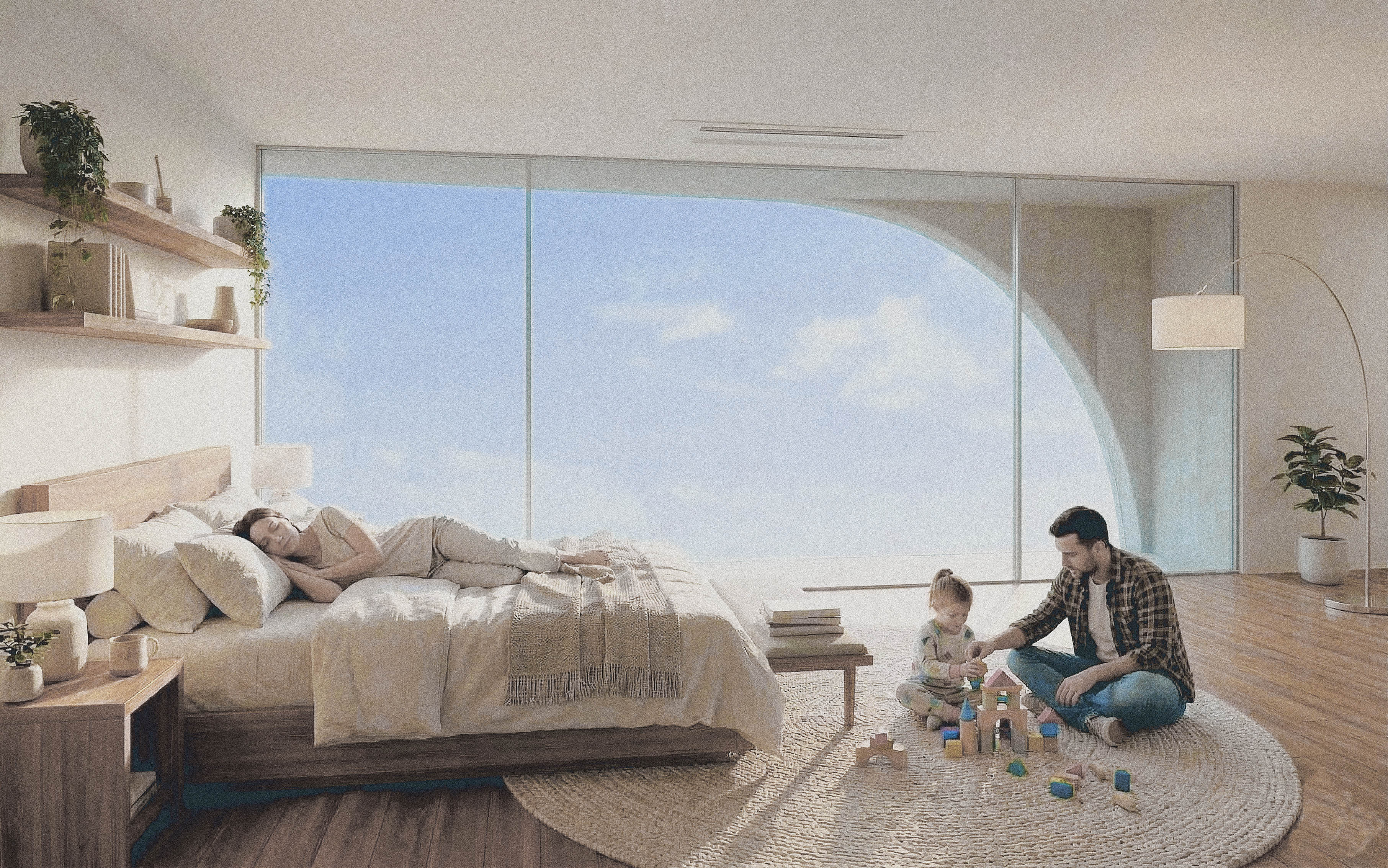
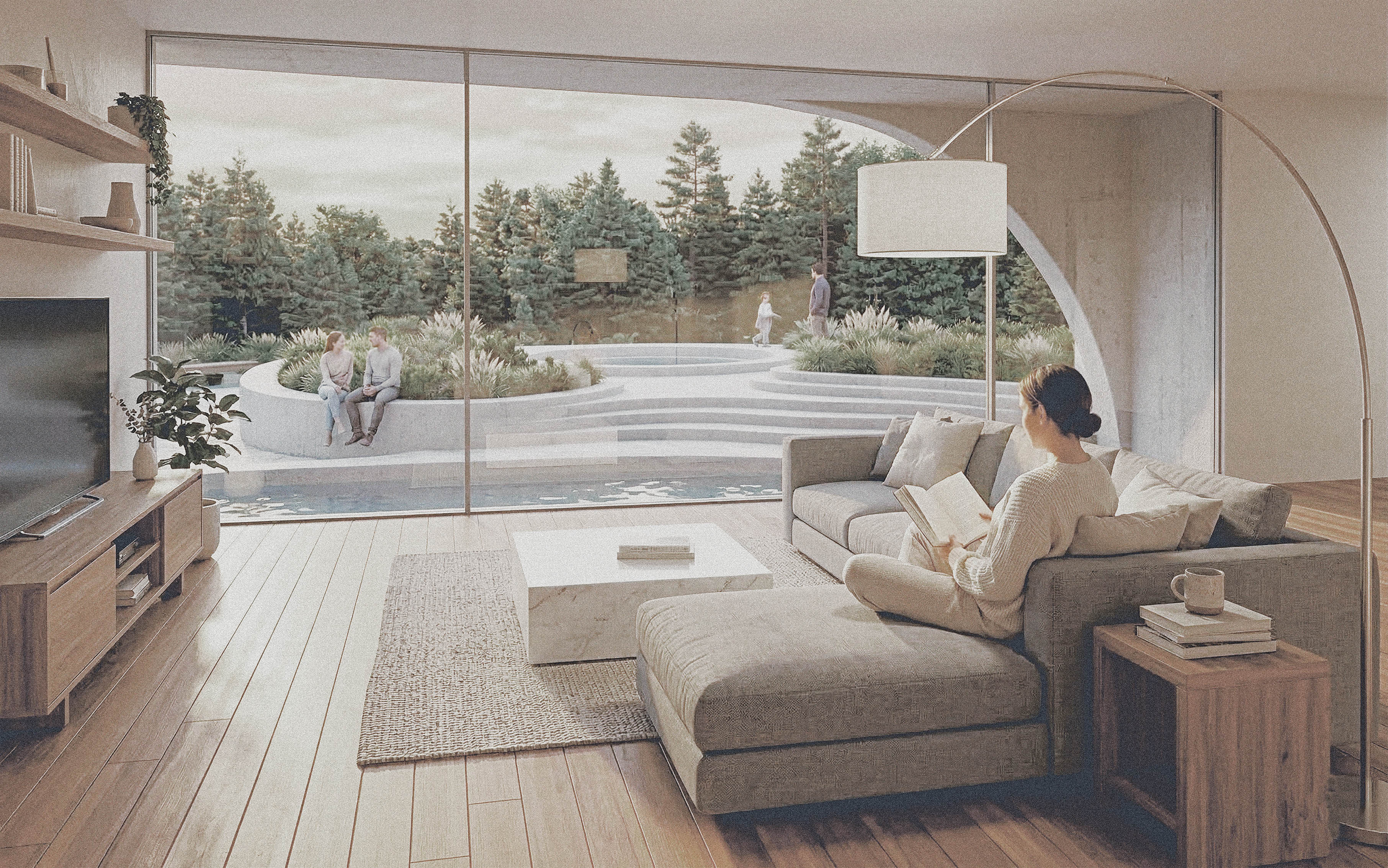
在採光與熱環境上,屋頂開窗將漫射自然光導入建築內,減少白天人工照明需求;側邊凹窗結合遮陽設計,過濾直射光降低室內熱負荷。透過自然通風、採光與遮陽等被動式策略,預估可降低約30%的建築營運碳排放。在基地鋪設高孔隙率透水鋪面,使降雨逕流削減率可達50%,並透過保水與蒸發作用調節微氣候。
純粹棲所是一種重新思考人、建築與自然關係的嘗試。當建築開始呼吸,空間也回到更自然、純粹的居住狀態。
PurPassive is a passive residential design responding to subtropical climates. To combat high carbon emissions from air conditioning reliance, this study transforms architecture from a closed container into a "breathing building" that coexists with nature.The design evolves from a square volume into a fluid organism. Its streamlined exterior creates pressure differentials that guide natural wind into air ducts, promoting constant air exchange. At wind speeds of 1.5 m/s, it provides a 3°C cooling effect, maintaining indoor comfort while significantly reducing air conditioning dependence.Regarding environmental strategies, roof windows introduce diffused light while recessed windows filter direct heat. These passive methods reduce operational carbon emissions by approximately 30%. Additionally, high-porosity pavement cuts rainfall runoff by 50% and regulates the microclimate via evaporation.