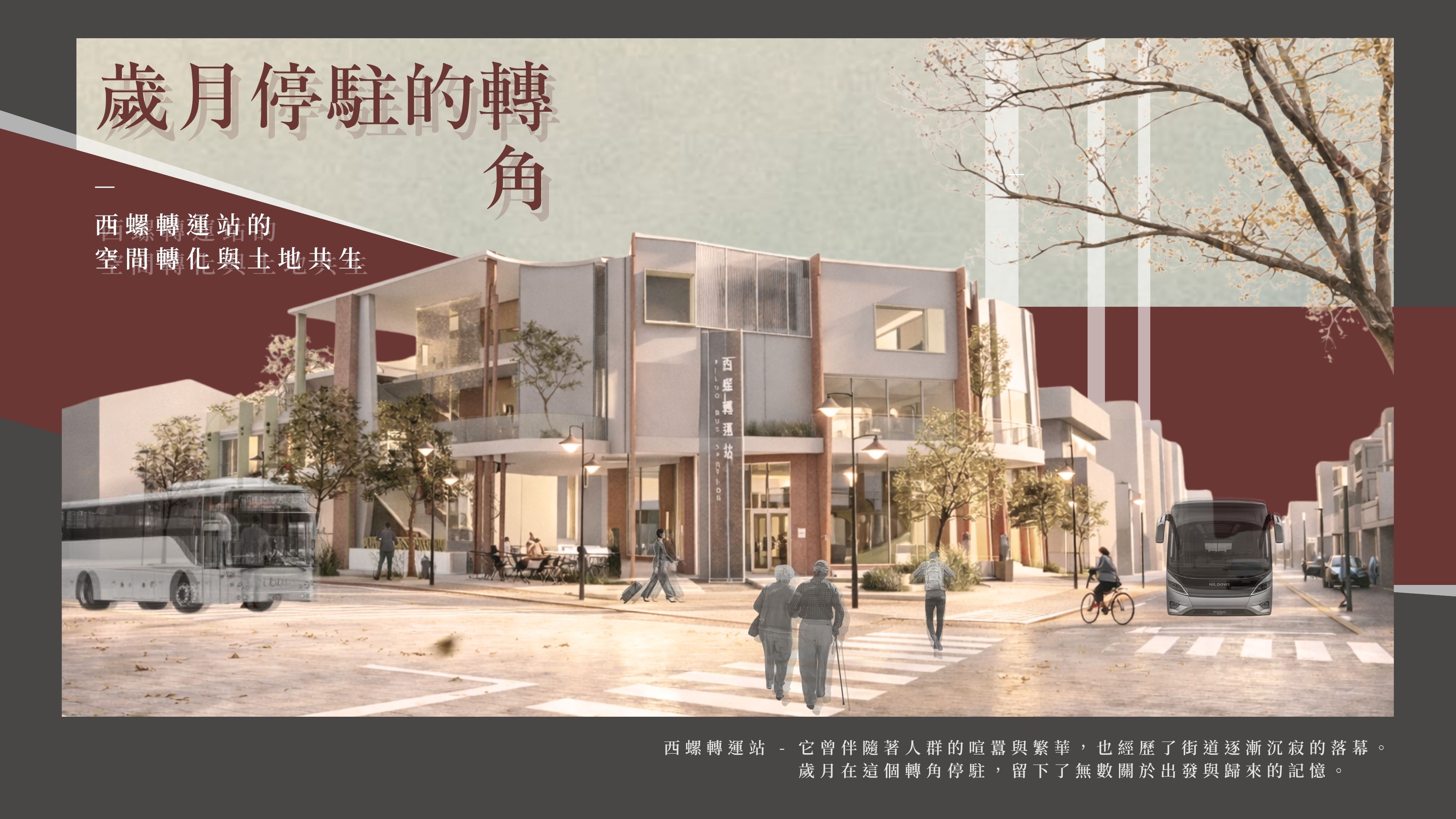
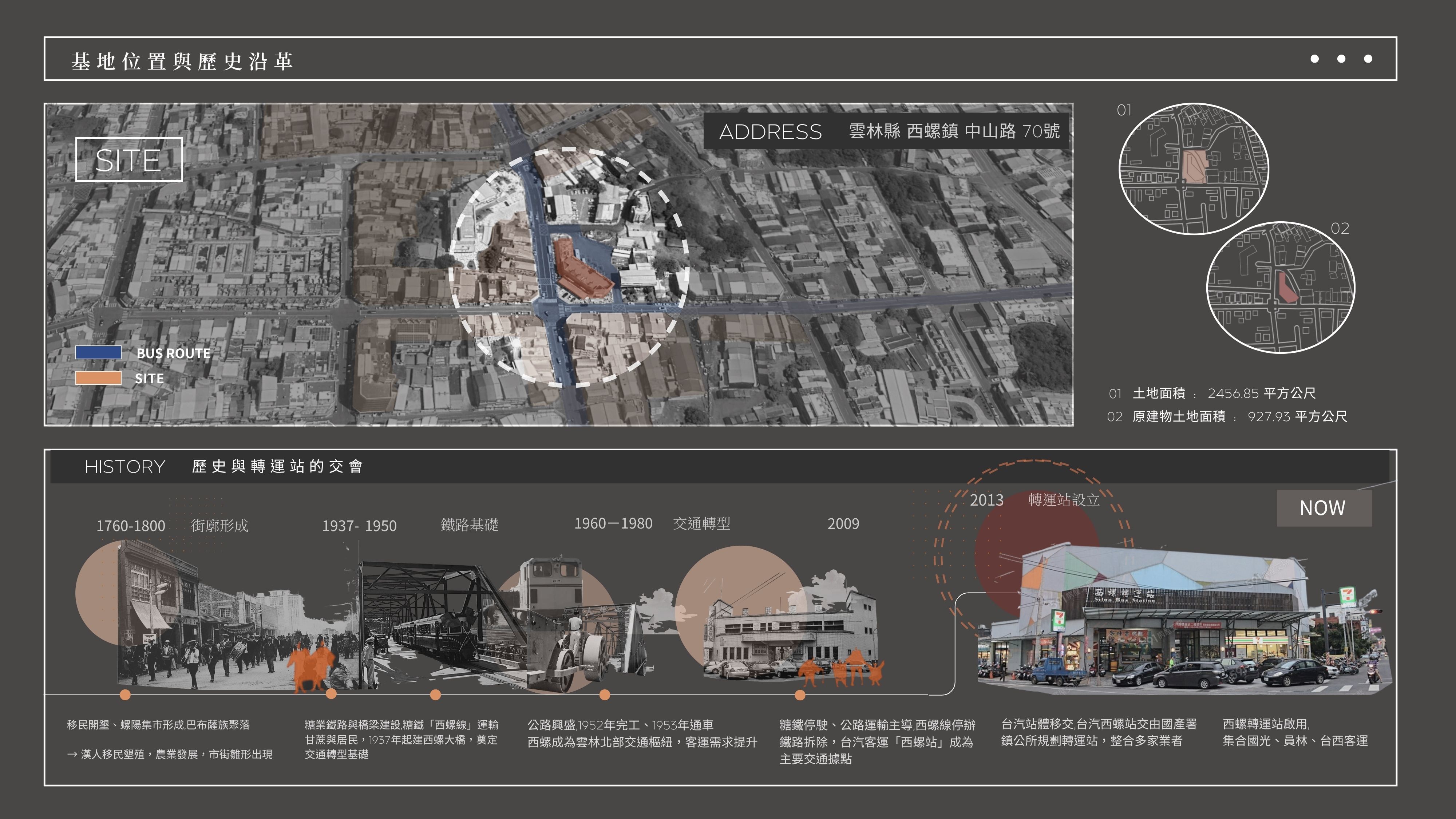
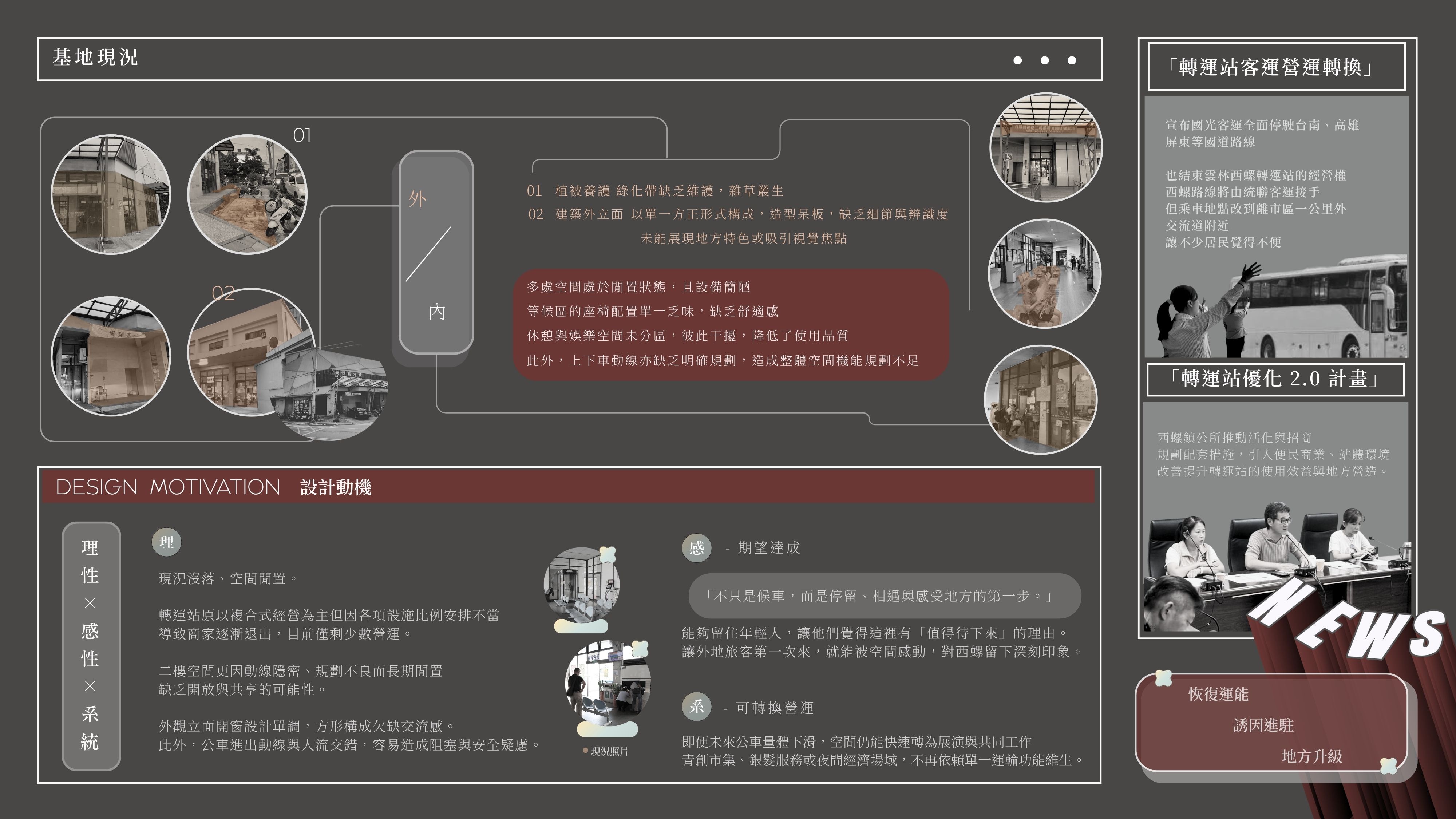
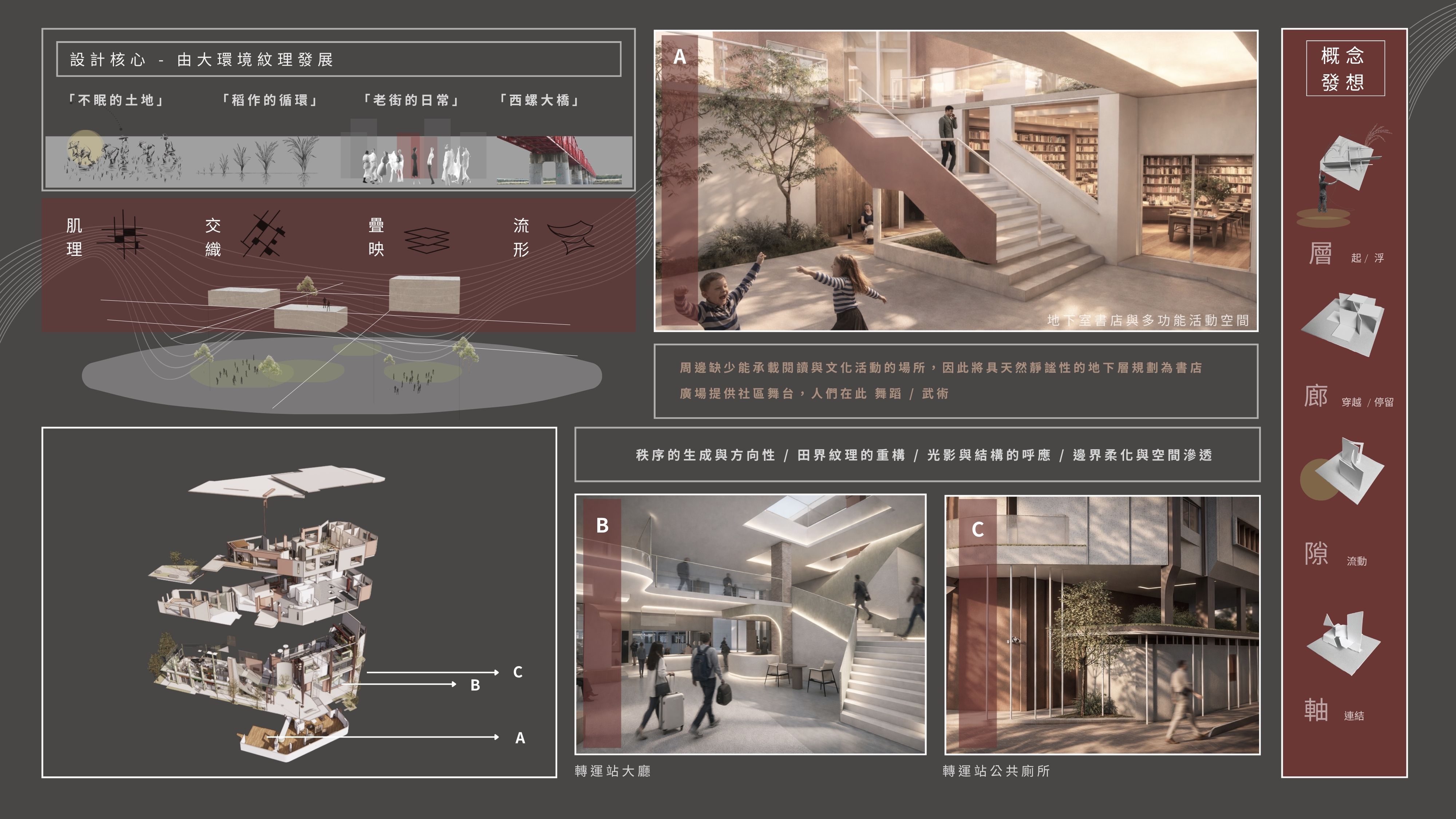
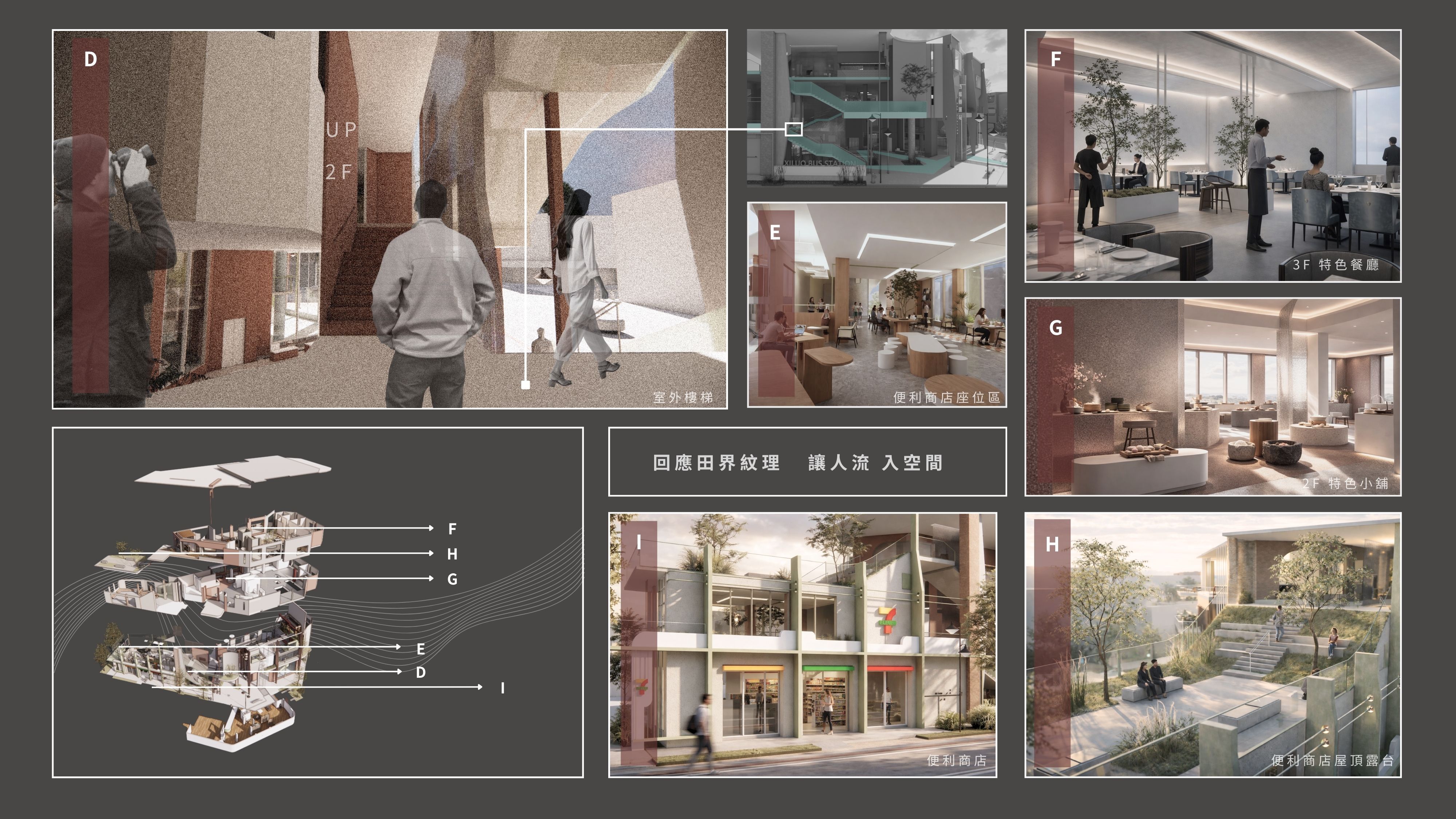
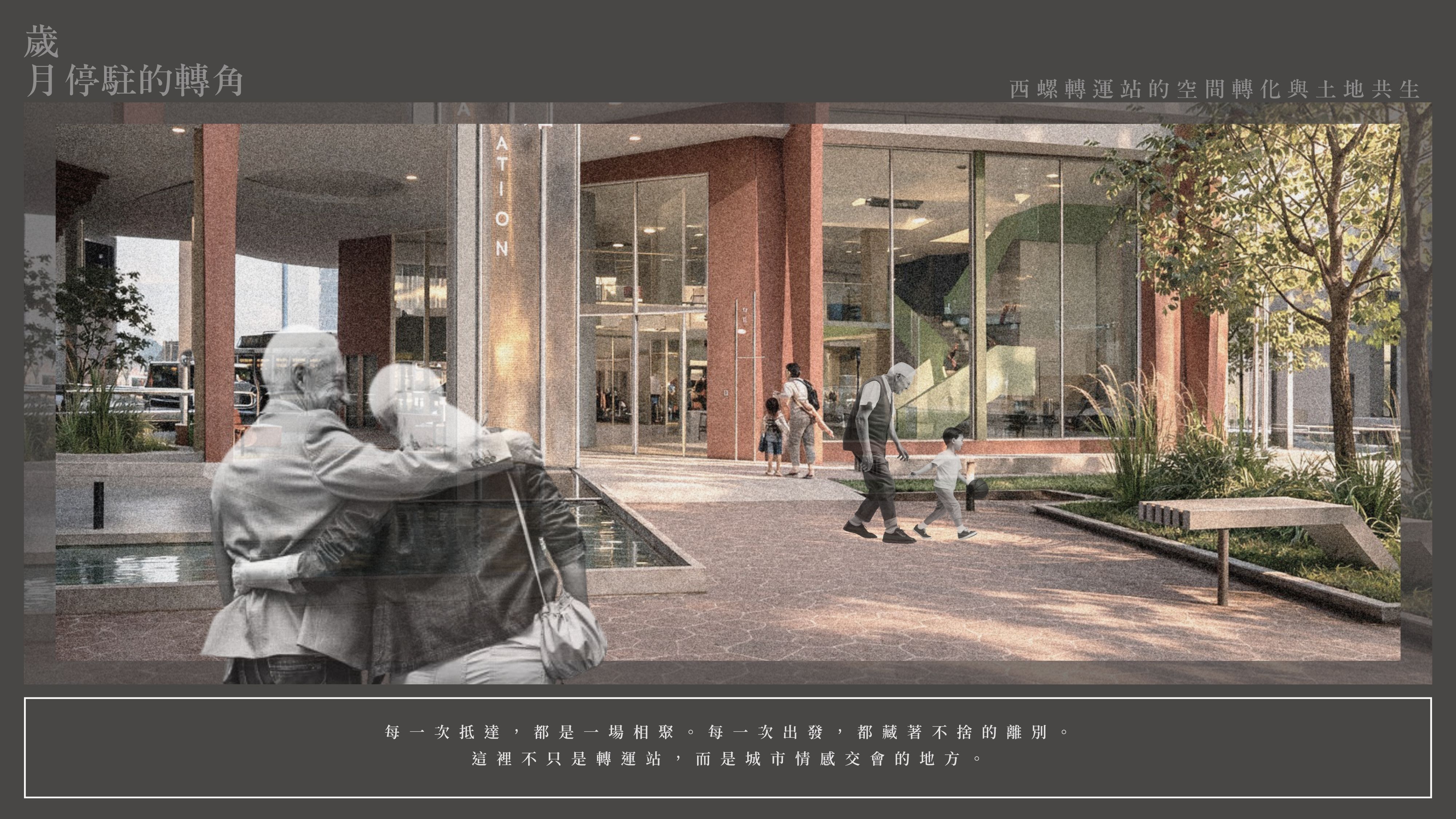
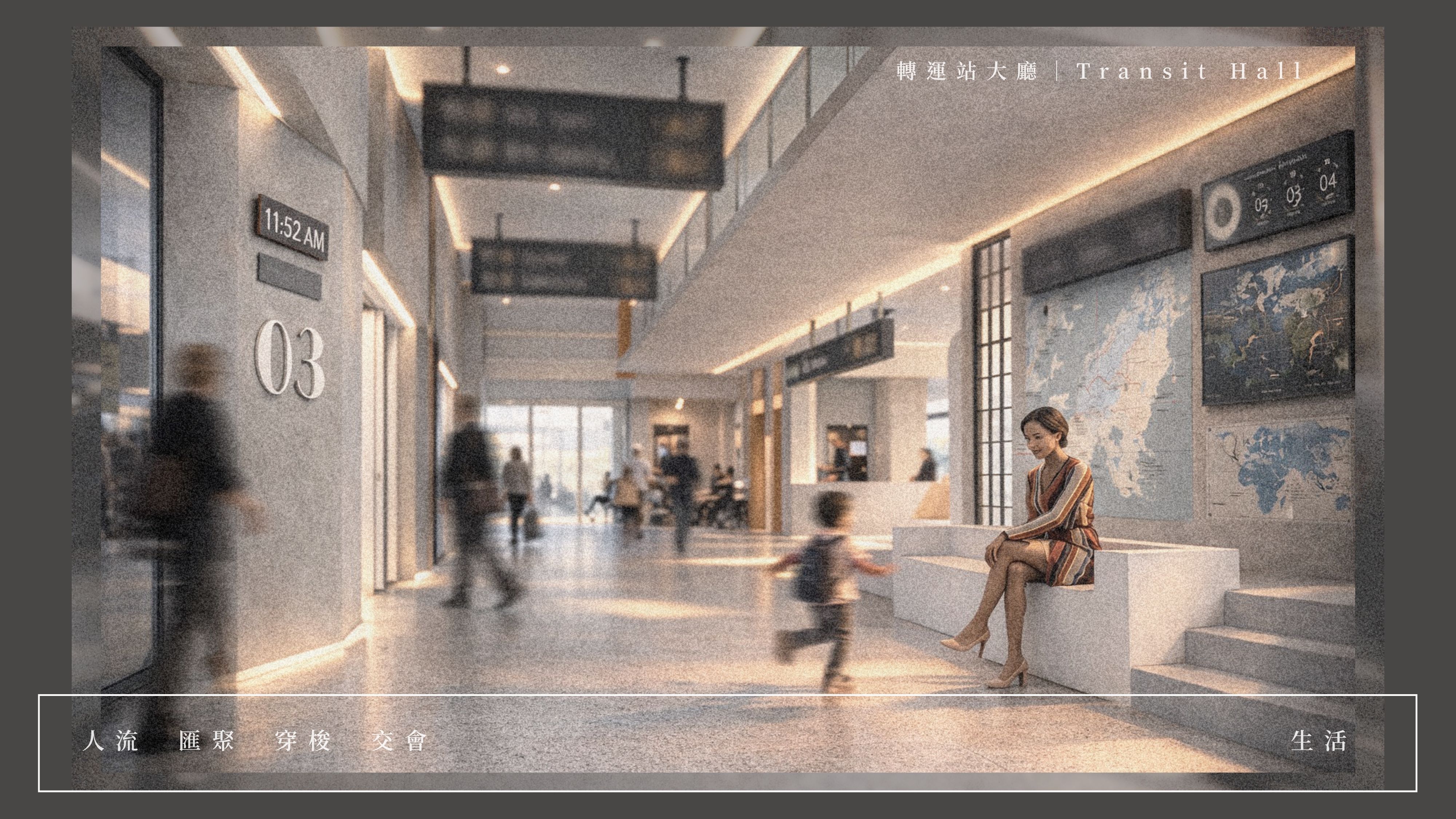
本設計以 西螺轉運站 為主題,重新思考交通節點在地方城市中的角色。
轉運站不僅是旅客上下車與轉乘的場所,更是連結城市生活與地方文化的重要空間。
設計概念取自 西螺大橋 的橋梁結構語彙與周邊農田田埂的線性紋理,將橋樑桿件的節奏轉化為建築立面與結構語言,並以延展的線條回應西螺平原開闊的地景特質。
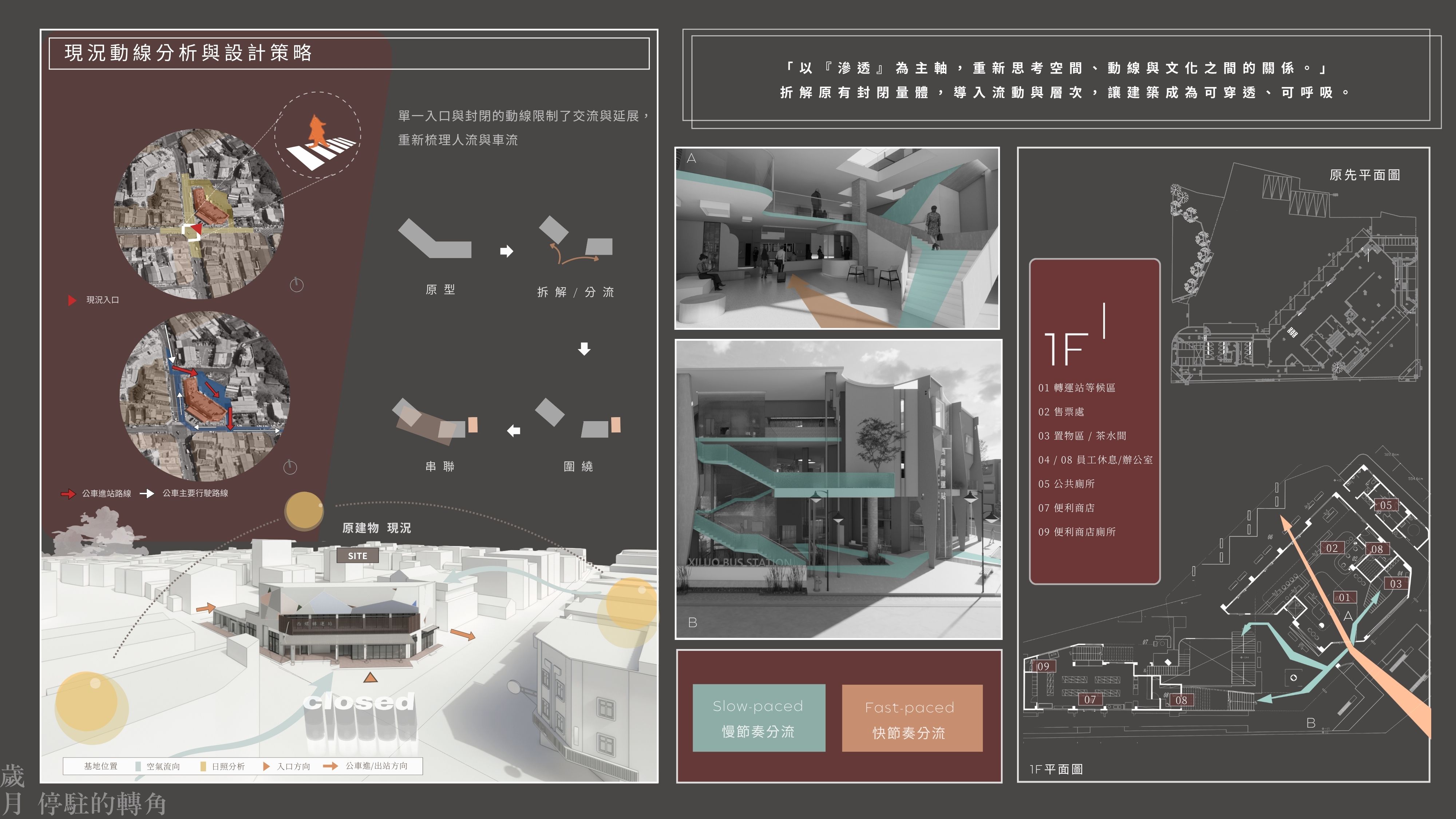
空間配置上,一樓作為主要的轉運與候車空間,強調開放與流動,使人流能自然地進出與停留。二樓規劃為地方特色小舖,讓轉運站不只是短暫停留的節點,也能成為展現地方文化與生活氣息的平台;三樓則設置景觀餐廳,呼應周邊自然環境,使旅客在停留之餘,也能感受西螺的風景與生活節奏。
透過交通、商業與公共空間的整合,本設計希望將轉運站塑造成一個具有地方記憶與情感連結的城市節點,使人們在此相遇、停留與出發,讓轉運站成為承載日常生活與城市故事的場所。
This project proposes a new design for the Xiluo Bus Transit Center, rethinking the role of transportation hubs in local cities. Rather than serving only as a place for boarding and transferring buses, the transit center is envisioned as an urban node connecting mobility, community life, and local culture.
The architectural concept draws inspiration from the structural rhythm of Xiluo Bridge and the linear patterns of surrounding farmland ridges, translated into the building’s structural language and façade composition.
The ground floor serves as the main transit and waiting area with open circulation. The second floor introduces local specialty shops, while the third floor features a restaurant that visually connects with the surrounding landscape.