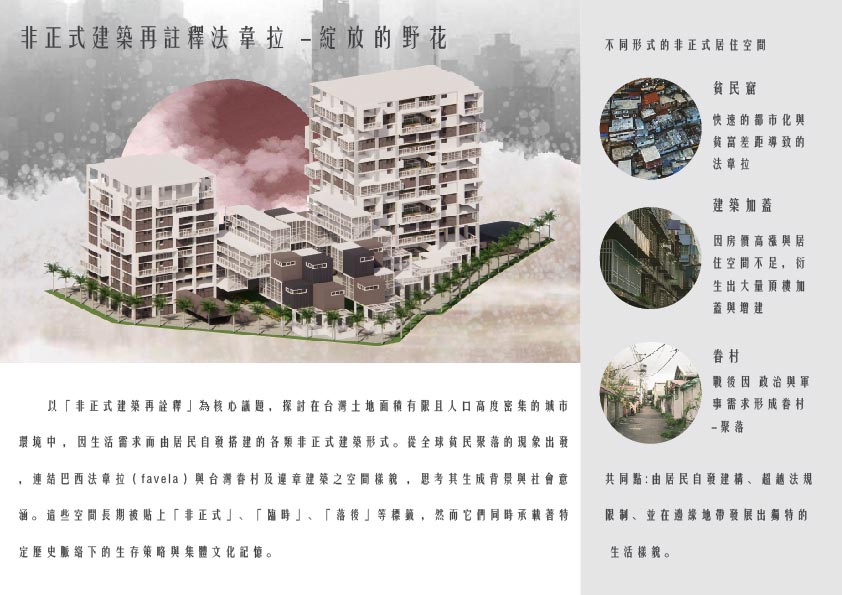
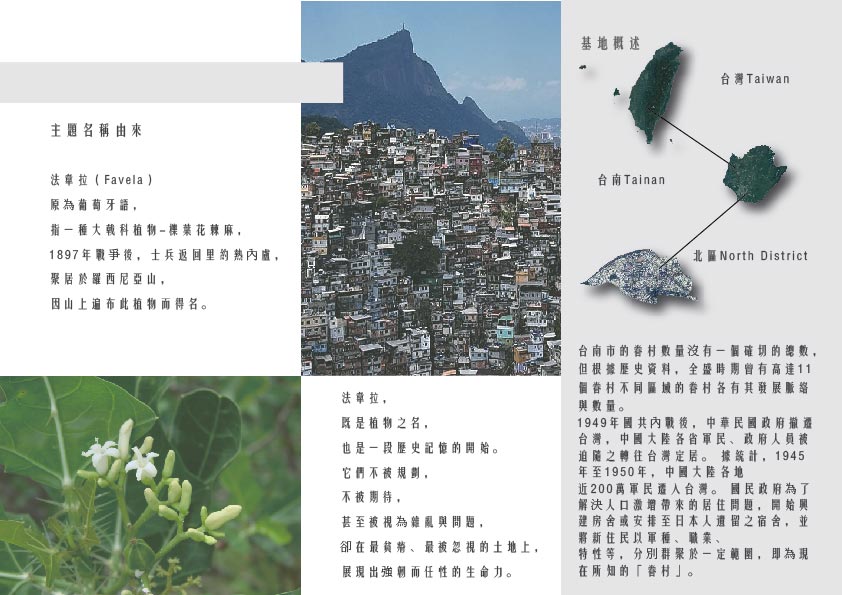
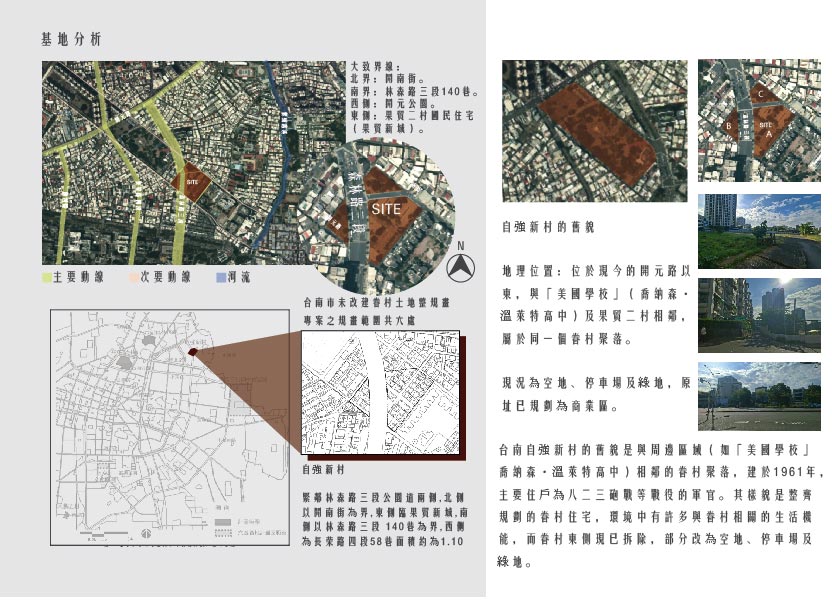
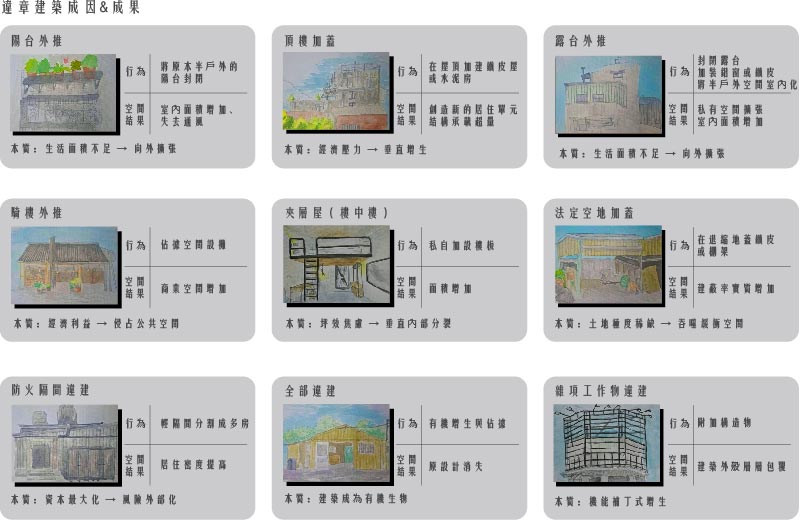
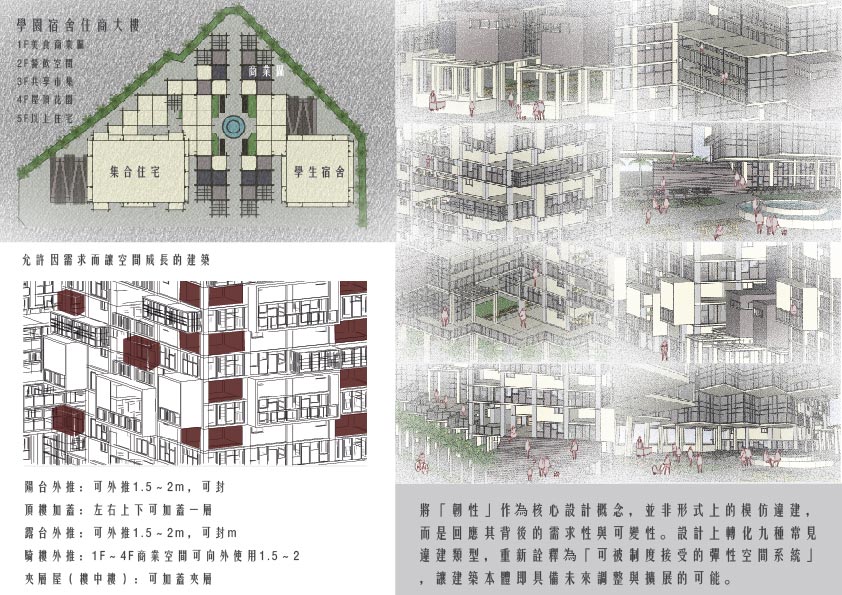
以「非正式建築再詮釋」為核心議題,探討台灣土地面積小及人口密集的城市環境中,因生活空間所需居民自發搭建的各種非正式建築。從世界各地的貧民窟發想致議題,巴西法韋拉(favela)連結到台灣的眷村與違章建築,這些空間被視為「非正式」、「臨時」、「落後」的象徵,卻同時承載了特定時代的生存策略與文化記憶。基地位於台南自強新村,透過基地分析與空間觀察,嘗試以設計介入的方式,再重新詮釋非正式建築的空間,使其成為能延續生活文化與公共性的空間。探討台灣土地面積小及人口密集的城市環境中,因生活空間所需居民自發搭建的各種非正式建築。從世界各地的貧民窟發想致議題,巴西法韋拉(favela)連結到台灣的眷村與違章建築,這些空間被視為「非正式」、「臨時」、「落後」的象徵,卻同時承載了特定時代的生存策略與文化記憶。不同形式的非正式居住空間,如貧民窟(快速的都市化與貧富差距導致的法韋拉)、眷村(戰後因政治與軍事需求形成眷村聚落)及建築加蓋(在當代都市中,則因房價高漲與居住空間不足,衍生出大量頂樓加蓋與增建)等,共同點都是居民在生活空間需求有限的情況下,使用不同的建材在空間上自行增建也反映出真實的城市生活樣貌。
Taiwan's small and densely populated urban environment to meet their living space needs. Inspired by slums around the world, the study connects Brazil's favela to Taiwan's military dependents' villages and illegal structures. These spaces are seen as symbols of "informality," "temporary," and "backwardness," yet they simultaneously embody survival strategies and cultural memories of specific eras. Different forms of informal living spaces, such as slums (favela resulting from rapid urbanization and wealth inequality), military dependents' villages (post-war settlements formed due to political and military needs), and rooftop additions (in contemporary cities, soaring housing prices and insufficient living space have led to numerous rooftop additions and extensions), all share the common thread of residents using different building materials to expand their living space under limited conditions, reflecting the true face of urban life.