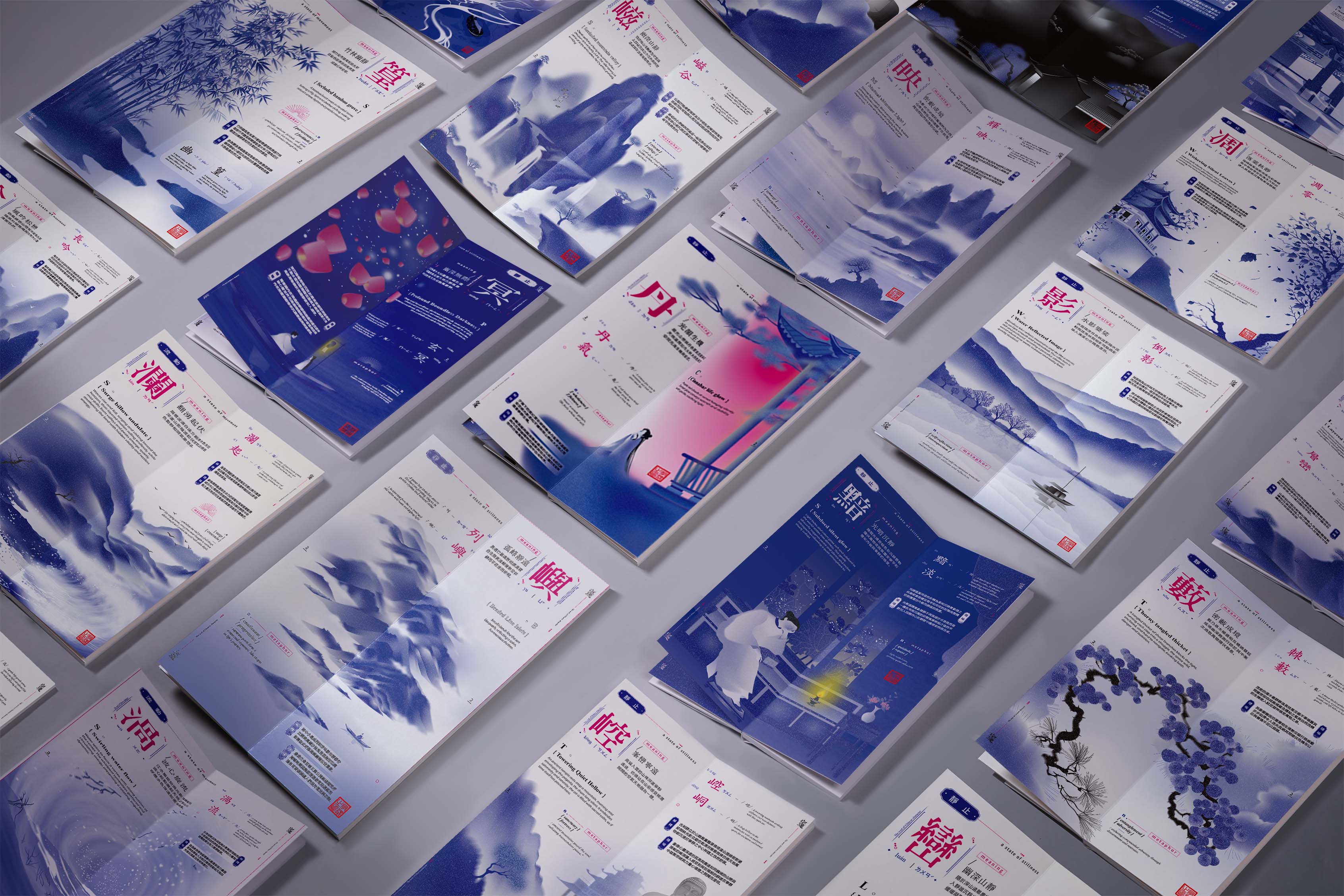
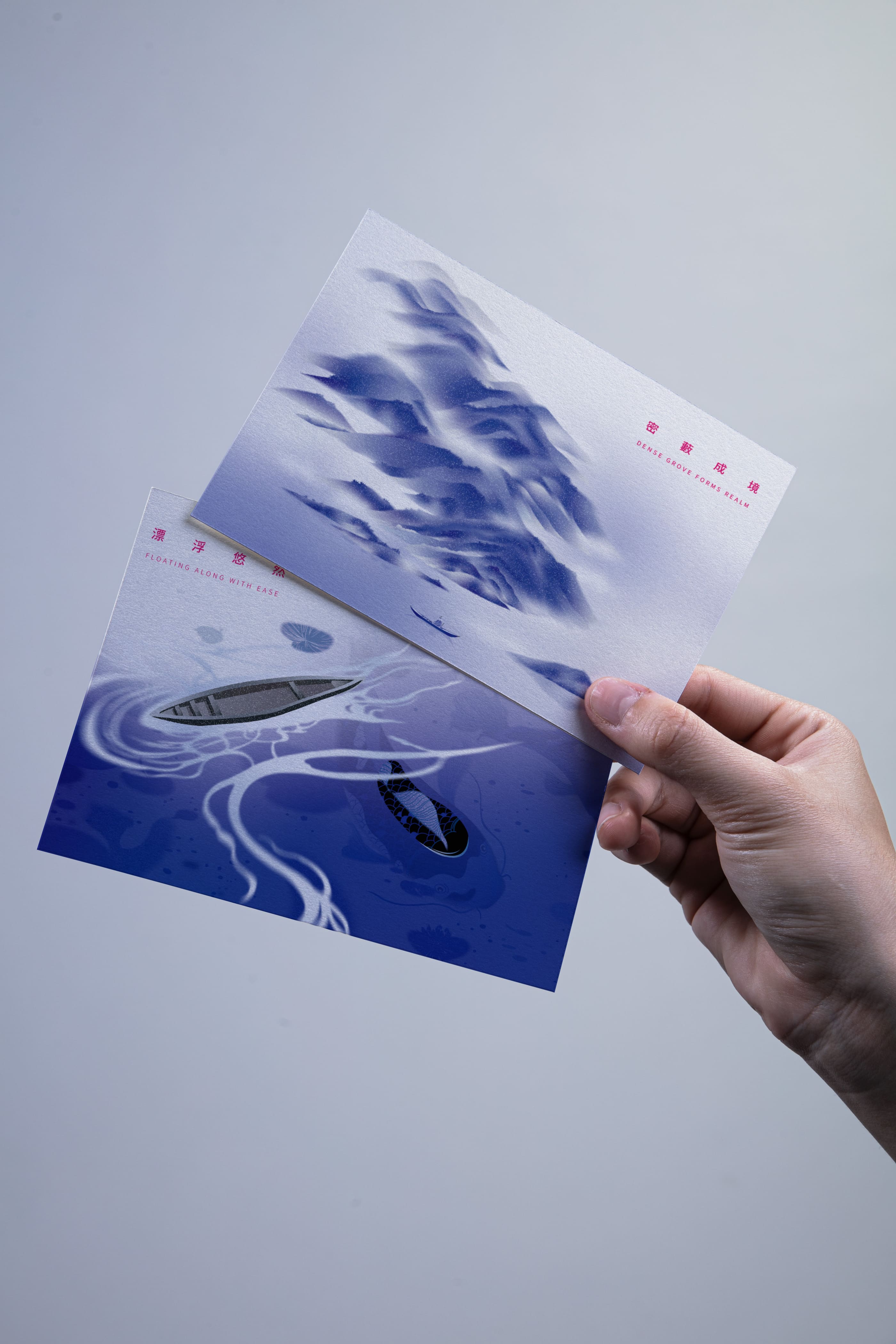
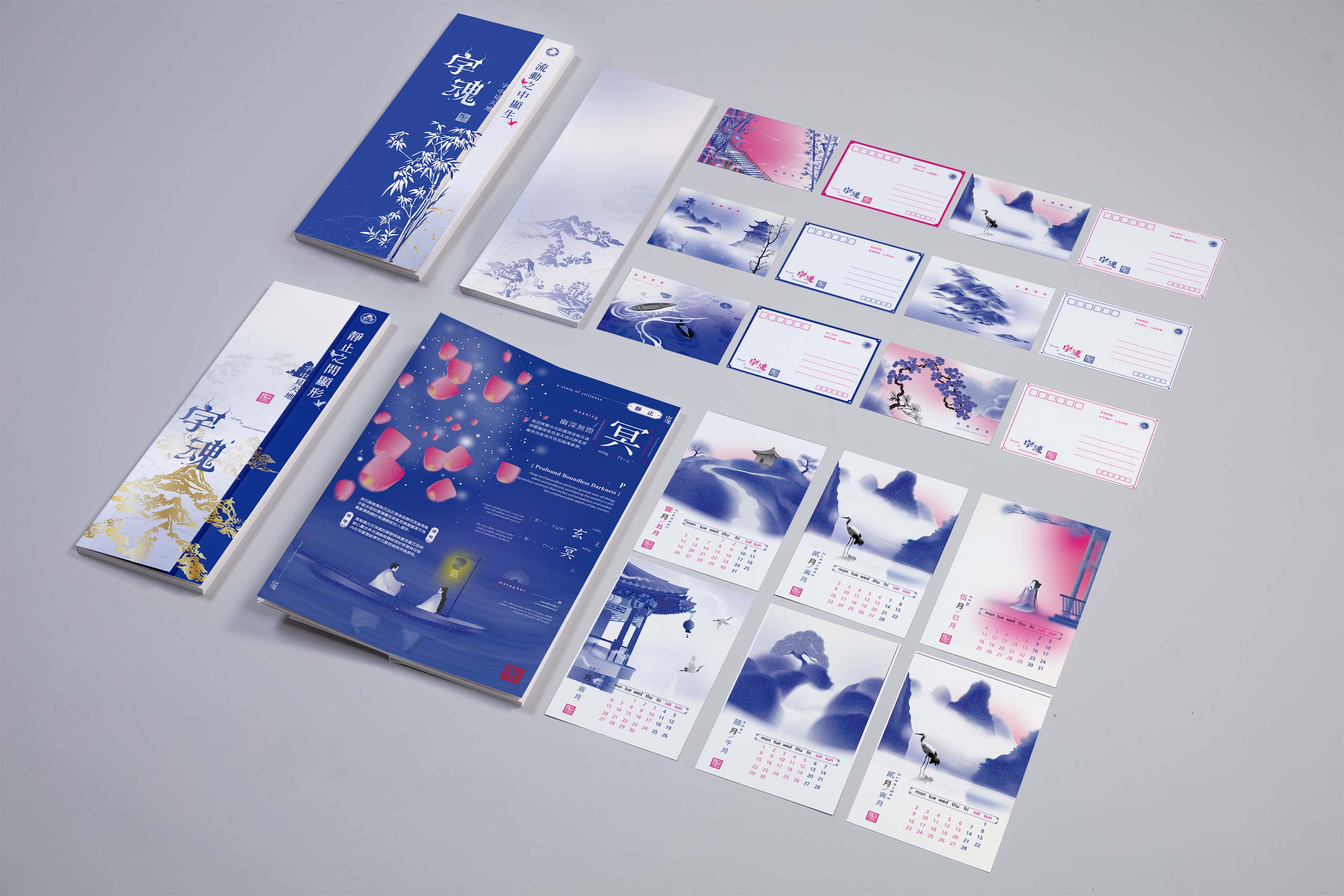
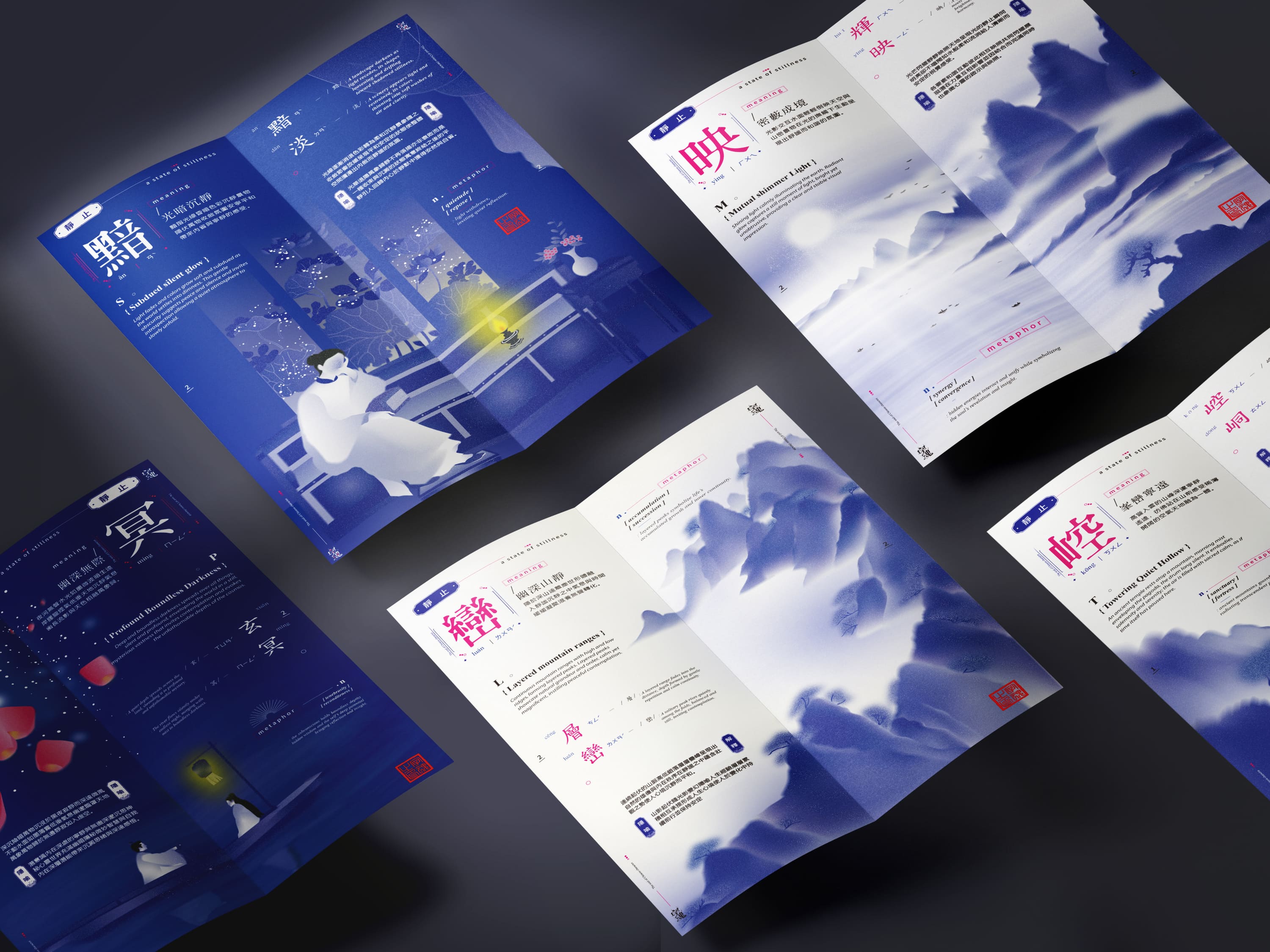
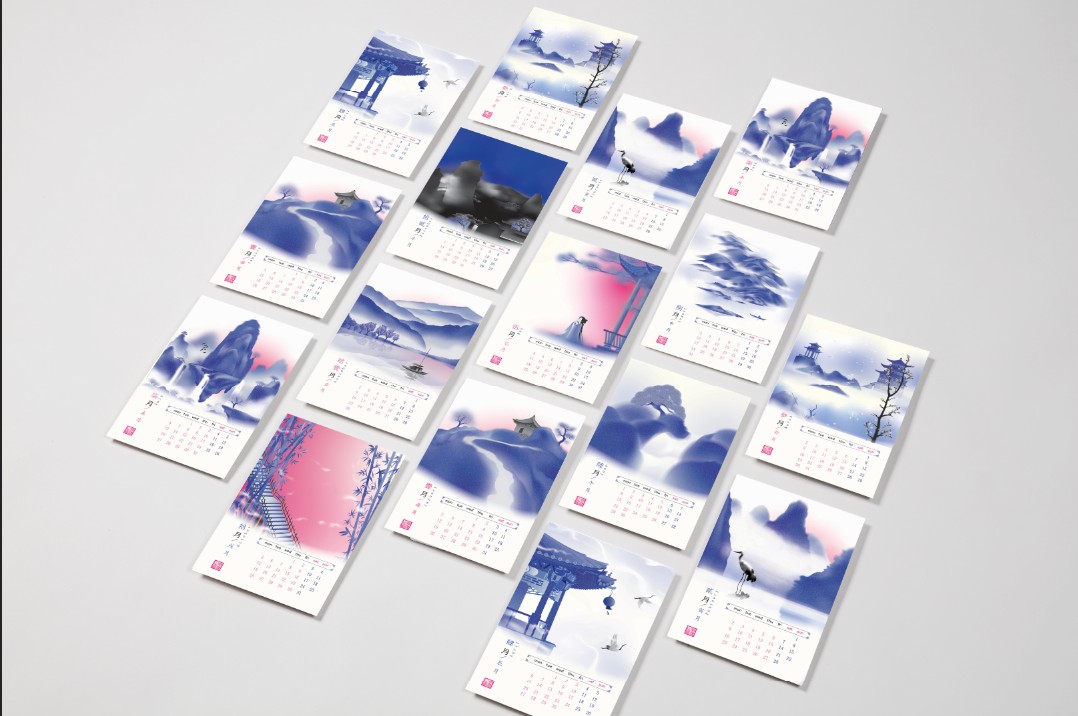
《字魂》不以字體設計為核心,而是自漢字深層的意象出發,喚醒潛藏於筆畫之間的「精神靈魂」。作品聚焦古老中文,從文化脈絡中提煉象徵意涵,轉化為山勢、光影、霧氣與幽谷,構築出既可視又可感的精神空間。
漢字作為中華文化的重要符號,最初以象形方式記錄自然與人文活動,承載豐富的哲學與美學意涵。隨著文字符號化與語言演變,其原有的象形精神逐漸淡化,使現代觀者難以感受其中的文化深度。本團隊以「字魂」為創作主題,從古典詩文與成語中蒐集具自然與文化象徵的字詞,分析其字源與意涵,並透過水墨留白與幾何構成融合的視覺語彙,轉化為具象的圖像表現。本創作期待並促進觀者,以直觀方式理解漢字的文化意境,實現跨文化的美學交流與文字再感知的可能,呼應SDGs第11項「永續城市與文化保存」,強調文化傳承與教育推廣的重要性。
作品以《老子.第十五章》「孰能濁以靜之徐清?孰能安以動之徐生」的意境為核心,在靜與動的交錯中,畫面時而凝止、時而流動,形成細膩而持續的張力,使觀者感受文字的深層韻律與結構。透過水墨風格的美學與當代設計語彙的融合,每一筆觸皆承載節奏與呼吸,使文字成為承載記憶、情感與人生哲思的載體。
Zi Hun begins with the deeper imagery of Chinese characters, awakening the “spiritual landscape” within their strokes. Focusing on ancient script, it transforms cultural symbols into mountains, light, mist, and valleys, creating a space that is both visible and perceptible.
As a key symbol of Chinese culture, characters were originally pictographic, carrying rich philosophical and aesthetic meanings. Over time, this essence has faded. This project draws from classical poetry and idioms, analyzing meanings and translating them into visuals through ink-wash and geometric forms. It encourages intuitive understanding and cross-cultural exchange, responding to SDG 11.
Inspired by Chapter 15 of the Tao Te Ching, “Who can remain still and gradually clarify the murky? Who can remain at rest and come to life through movement?”, the work explores tension between stillness and motion. Through ink and contemporary design, characters become vessels of rhythm, memory, and reflection.