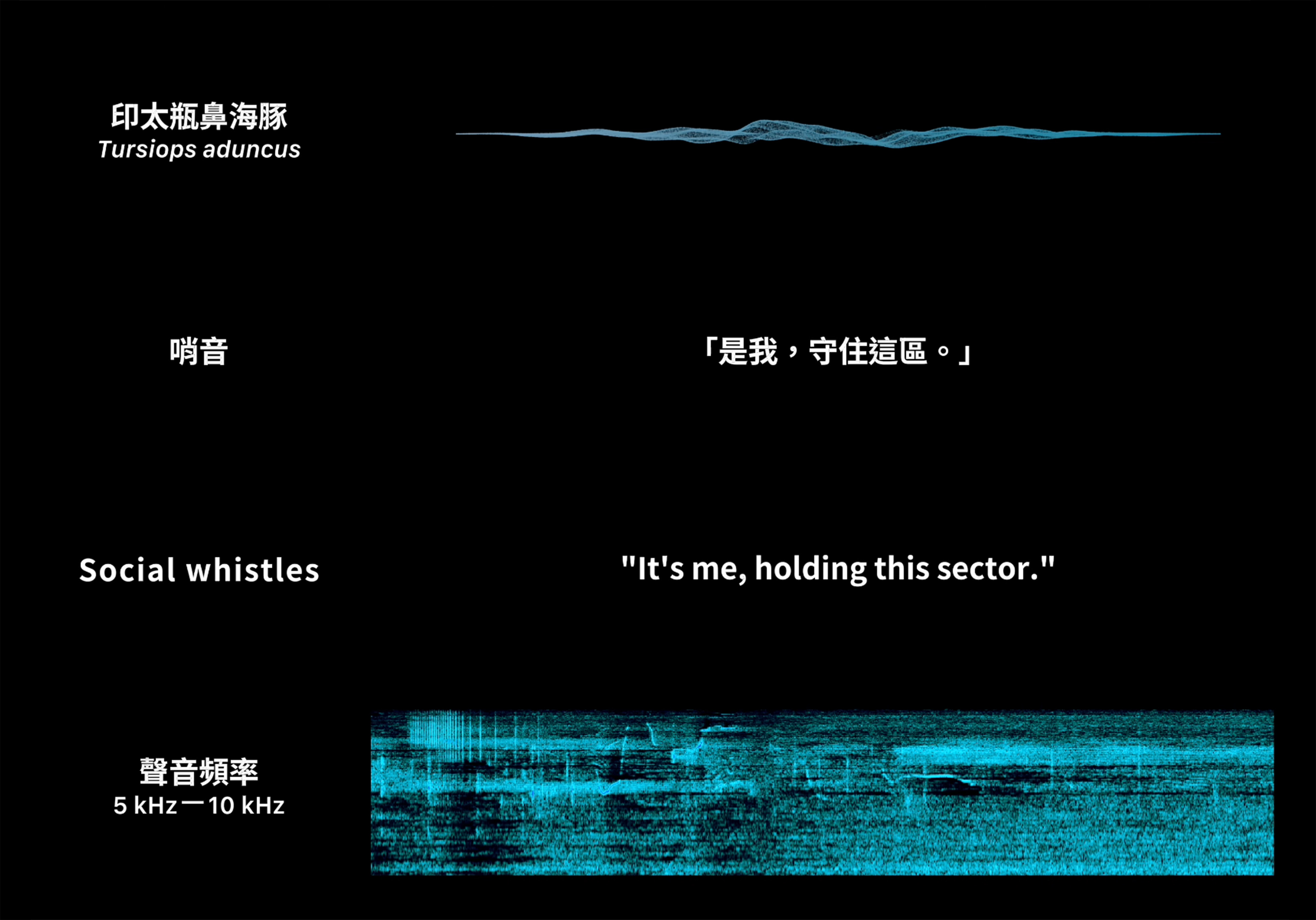
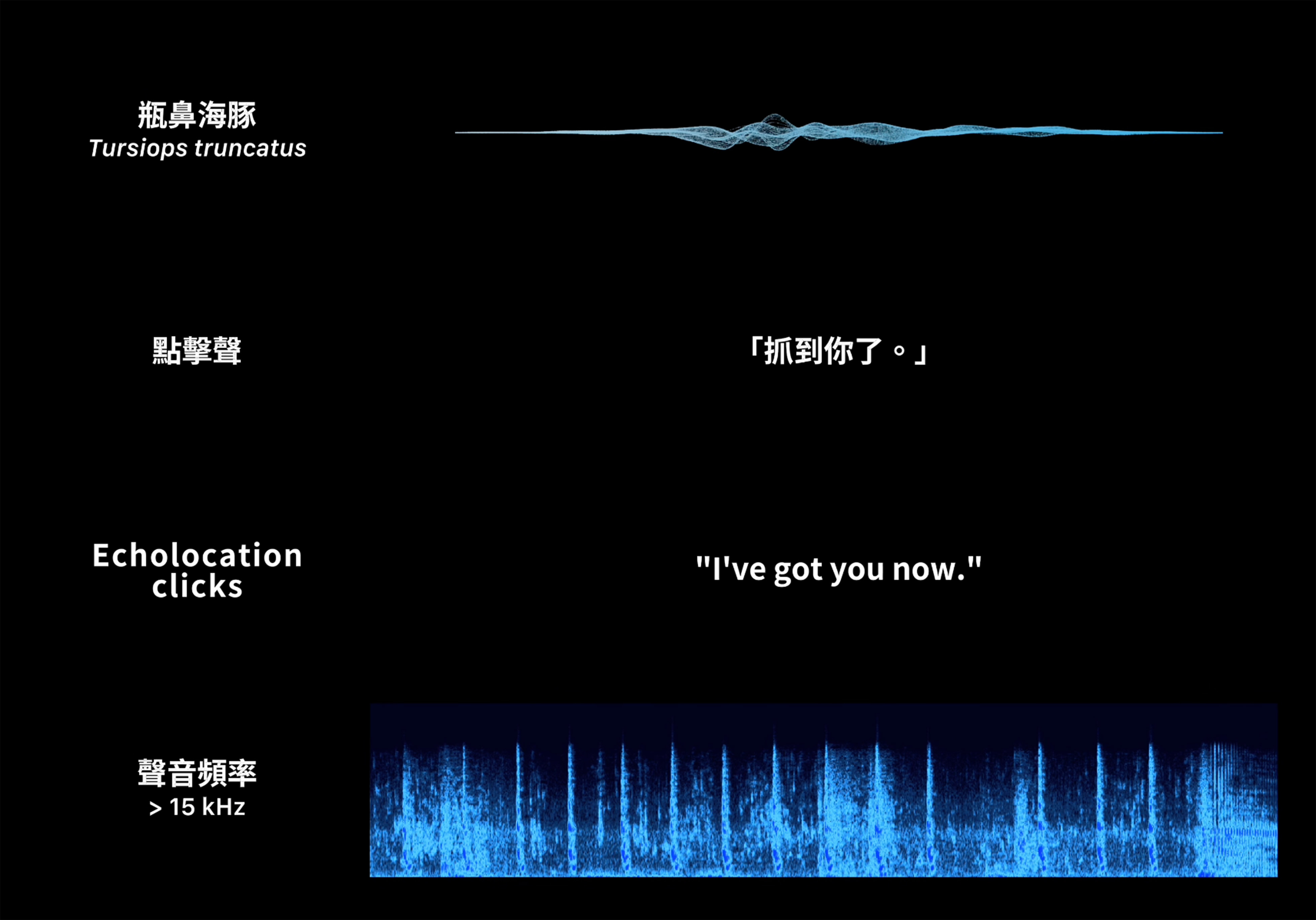
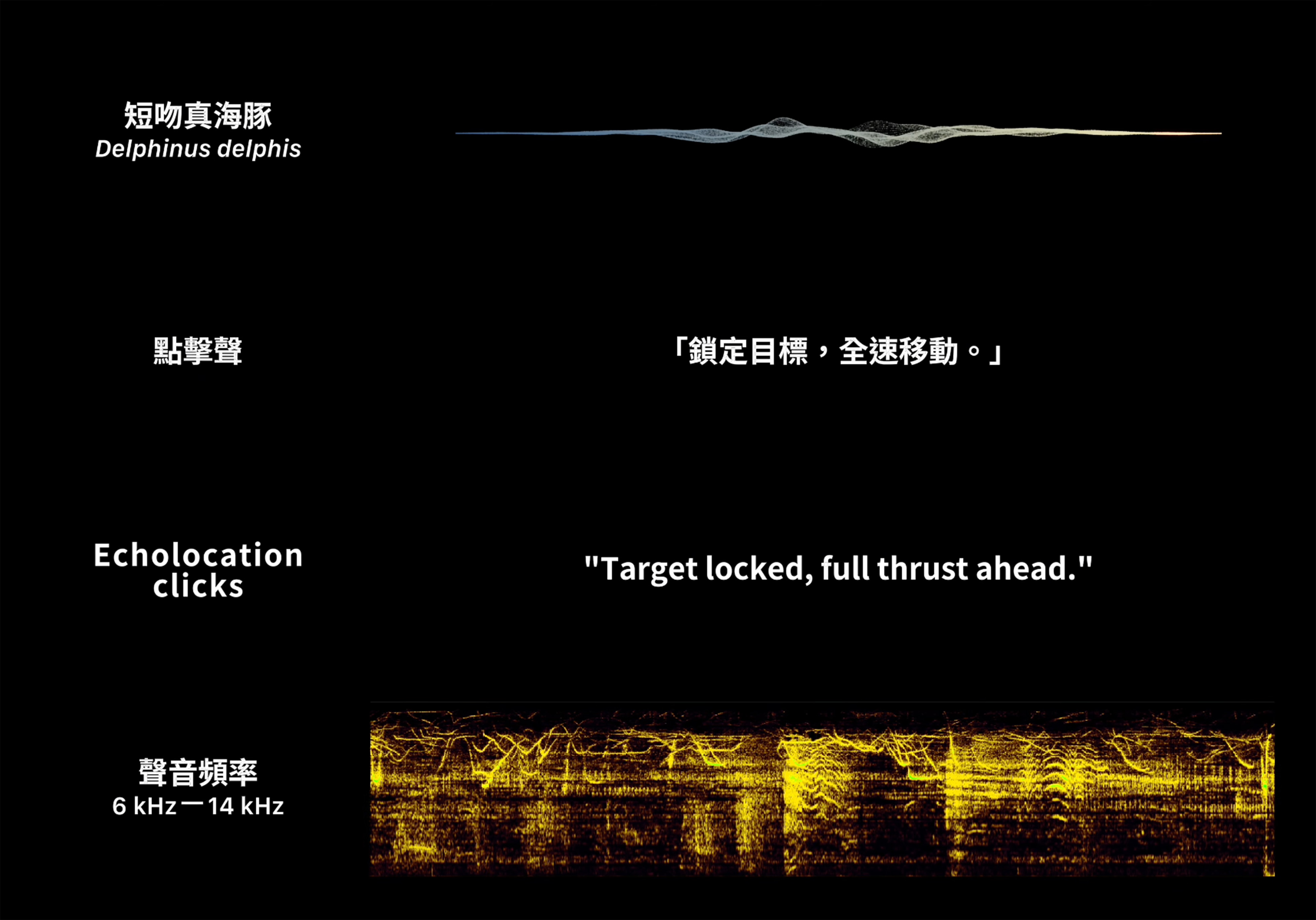
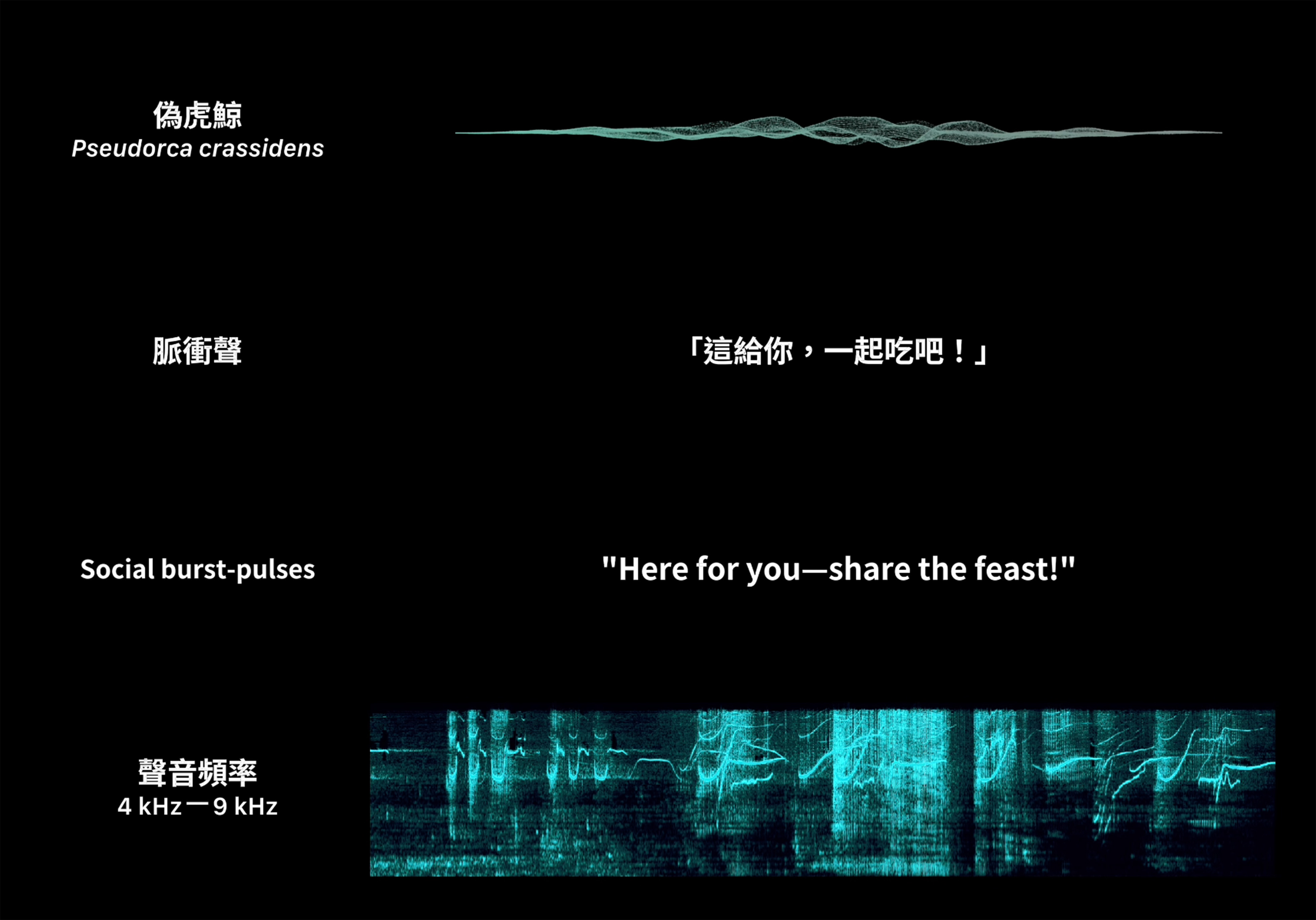
以台灣海域 16 種海豚科(Taiwanese Odontoceti)鯨豚為核心,將隱形的深海回聲轉譯為人類可閱讀的視覺語言,引領觀者同時「看見」與「聽見」海洋訊息。並將其聲音轉化為可操作的按鈕物件,透過「全域同步感應系統」連動聲音按鈕與動態顯示裝置,旨在解構鯨豚聲音意涵,使隱形的海洋語言得以被感知與理解。
視覺上,以鯨豚聲波為基礎,透過聲譜分析建構具密度流線的「聲形圖(Delphinid Sonograms)」與「專屬色紋系統」,將聲音的頻率與質地轉化為具象的聲形。16 件聲音裝置拼組構成連續的海浪意象,透過材質的光影變化與色彩層次,在不同視角下展現如海面波光粼粼的視覺效果。
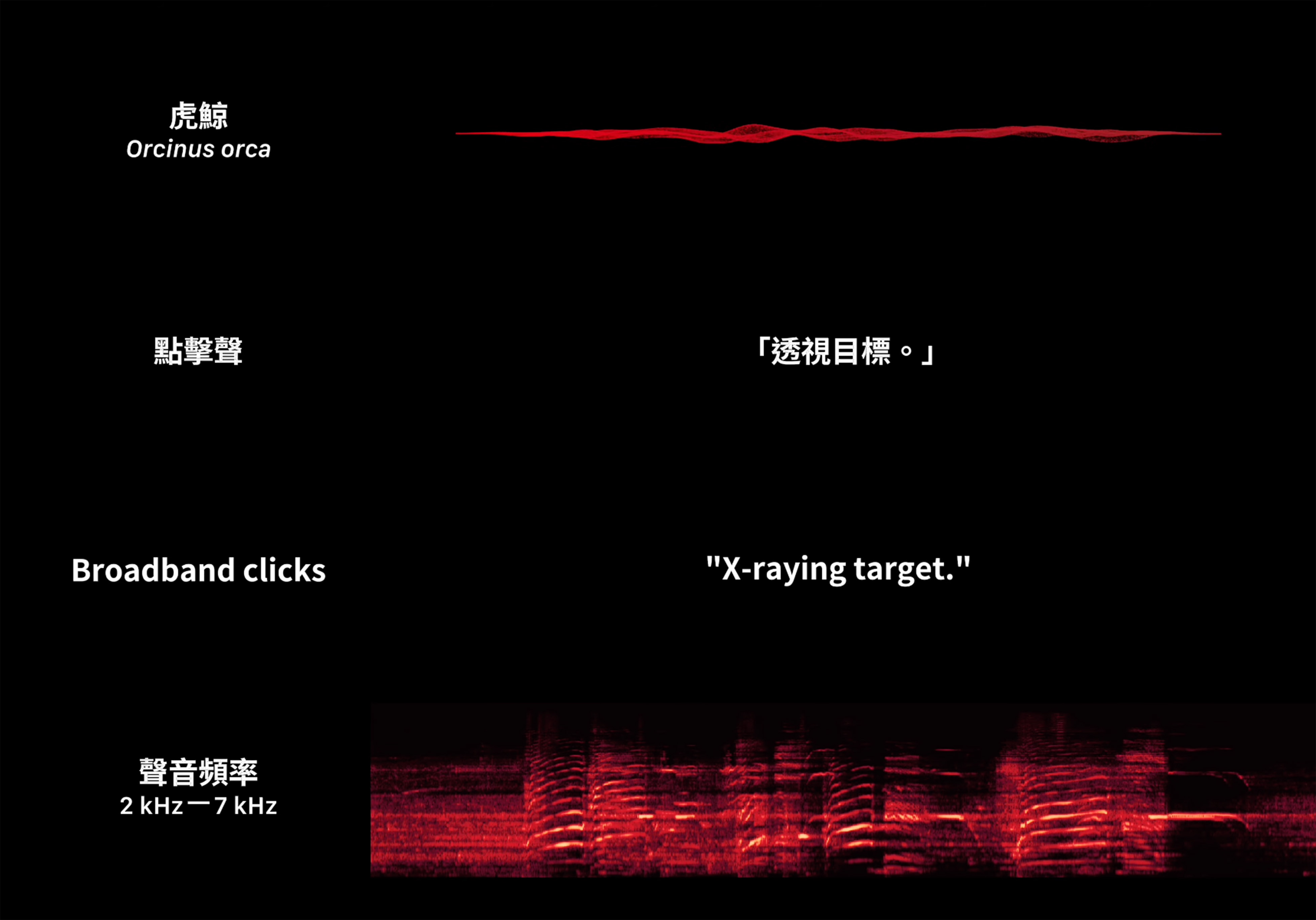
互動核心強調感應觸發的即時同步性,當觀者將聲音按鈕與感應區互動時,雙螢幕即同步呈現結合物種棲地與習性的「語言對白」。顯示裝置左側展示精確的物種動畫,右側則展現轉譯後的聲紋與文字訊息。透過全方位的感官路徑,使海洋的聲音得以真正被看見、被理解,有效傳遞台灣海洋生態的文化價值。(所有音訊皆經正式授權)。
Centering on 16 Taiwanese odontocetes, this project translates deep-sea echoes into a visual language, letting audiences “see” and “hear” marine messages. Cetacean vocalizations become interactive sound buttons, linked via a “Full-Field Synchronous Sensing System” to dynamic displays, making the ocean’s hidden language perceptible.
Visually, the design draws from cetacean sound waves. Spectrographic analysis creates “Delphinid Sonograms,” translating acoustic frequencies into “sound-forms.” The 16 units form a continuous wave structure, where light and material changes evoke an oceanic effect.
Interaction emphasizes real-time feedback: engaging a sound button triggers a dual-screen display—left shows species animations, right presents voiceprints and texts on habitats and social behaviors. This approach allows audiences to see and understand sea sounds, highlighting Taiwan’s marine value.(All audio materials are fully licensed).