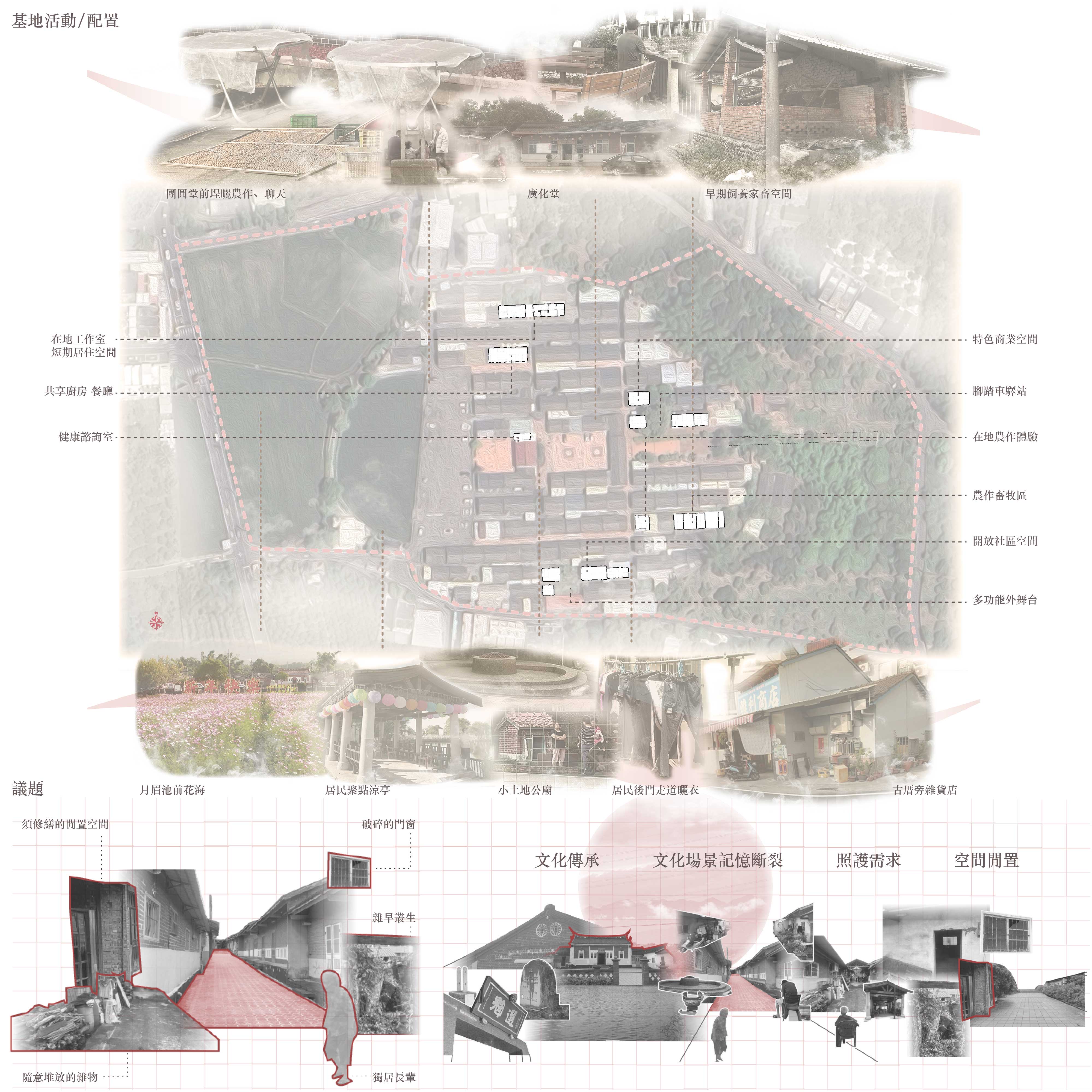
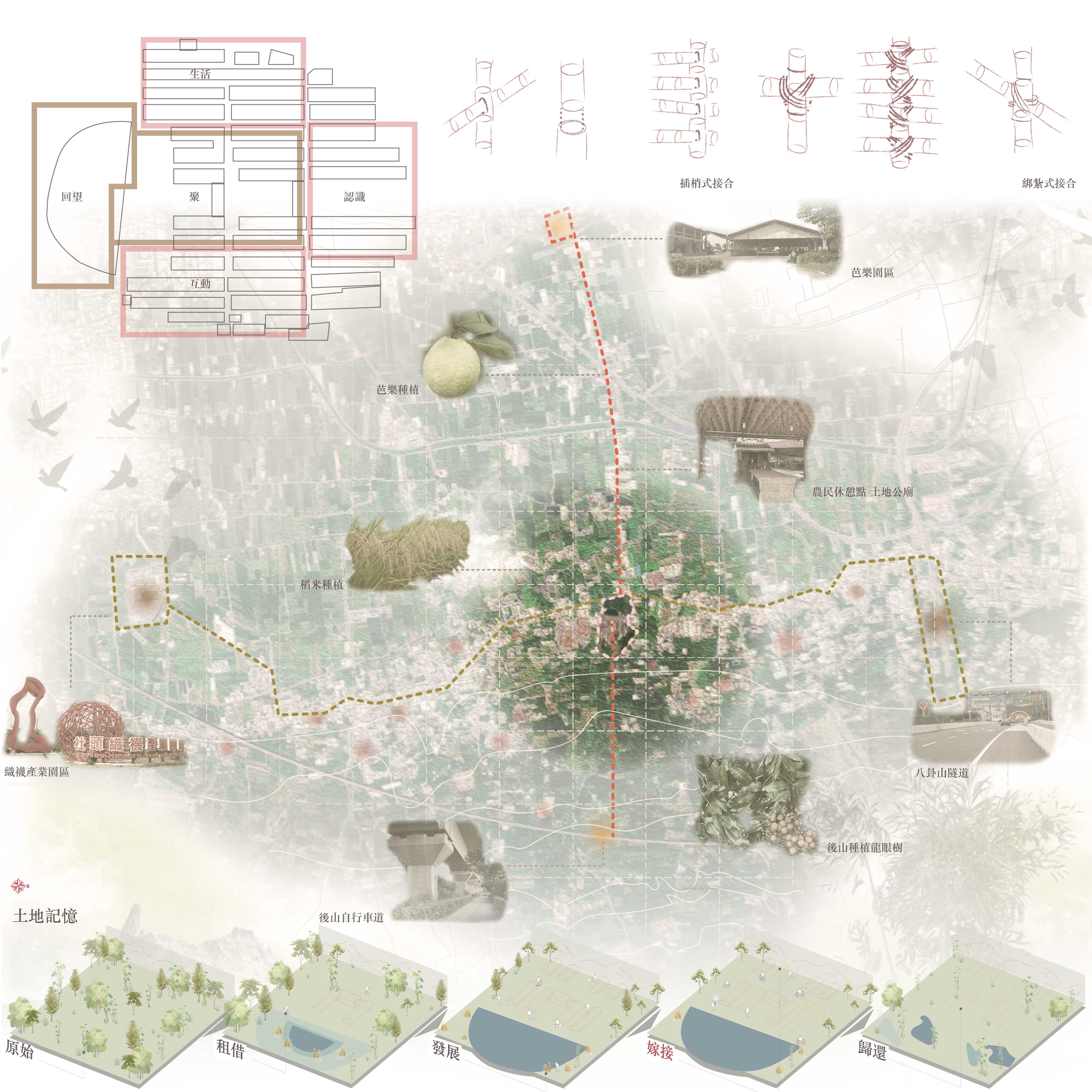
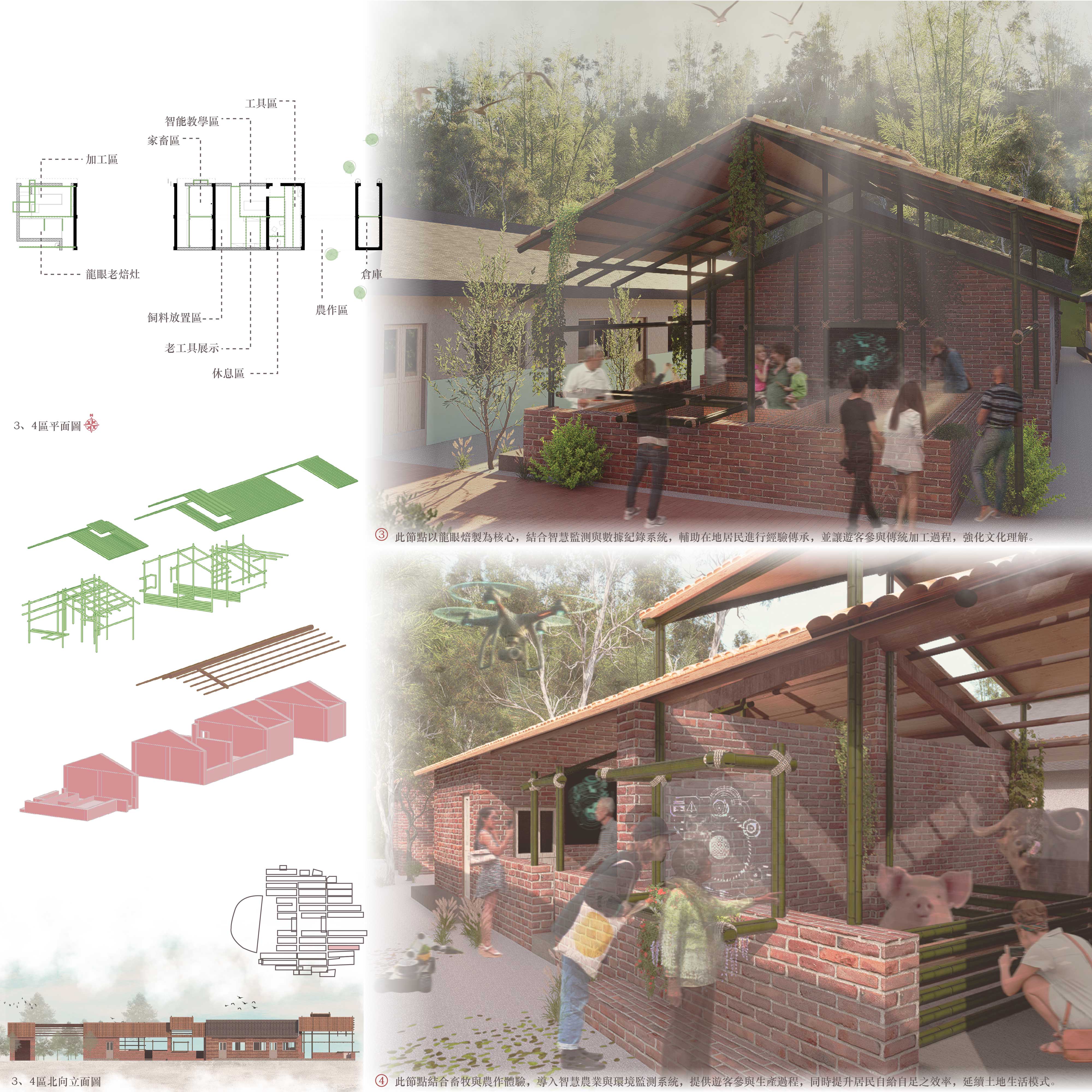
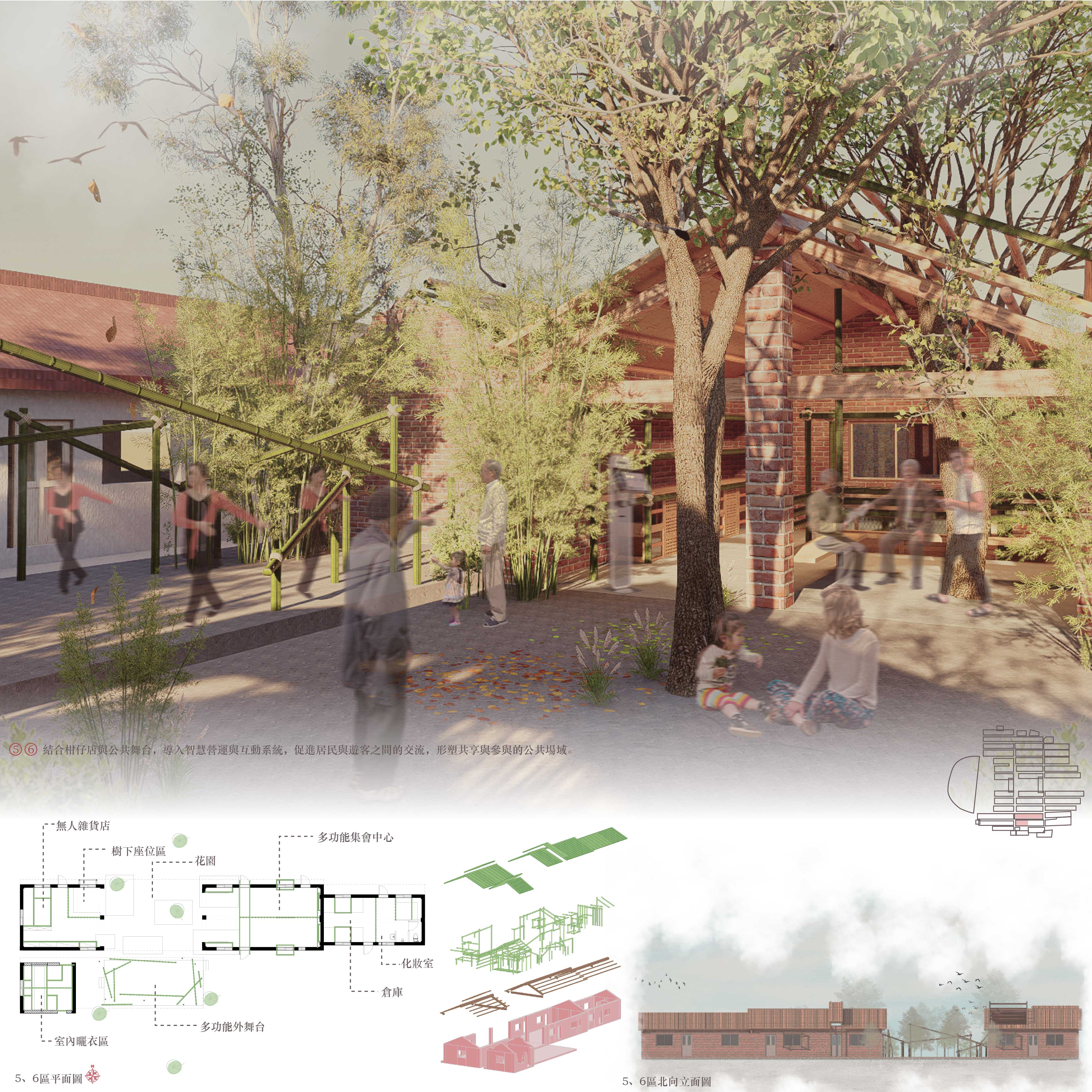
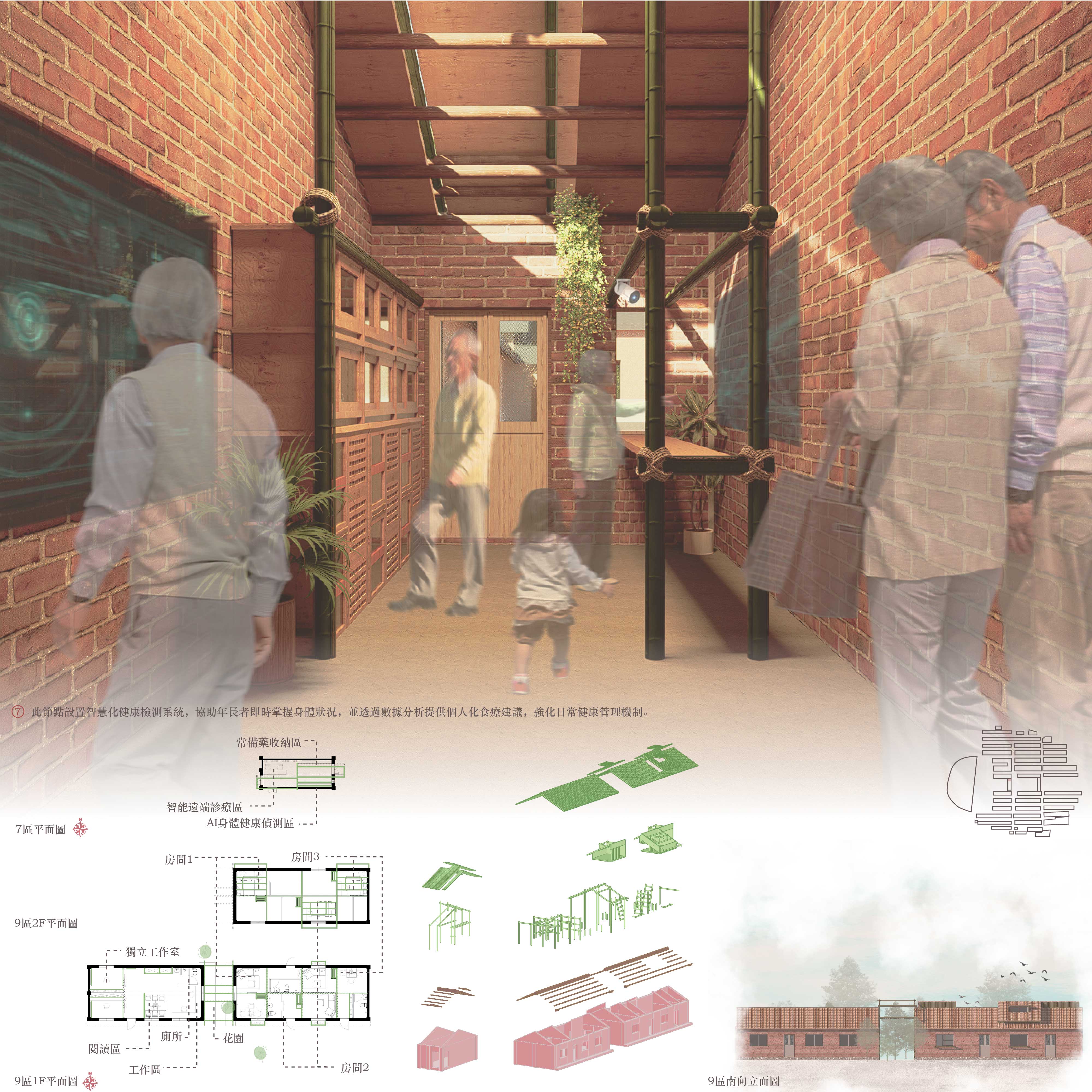
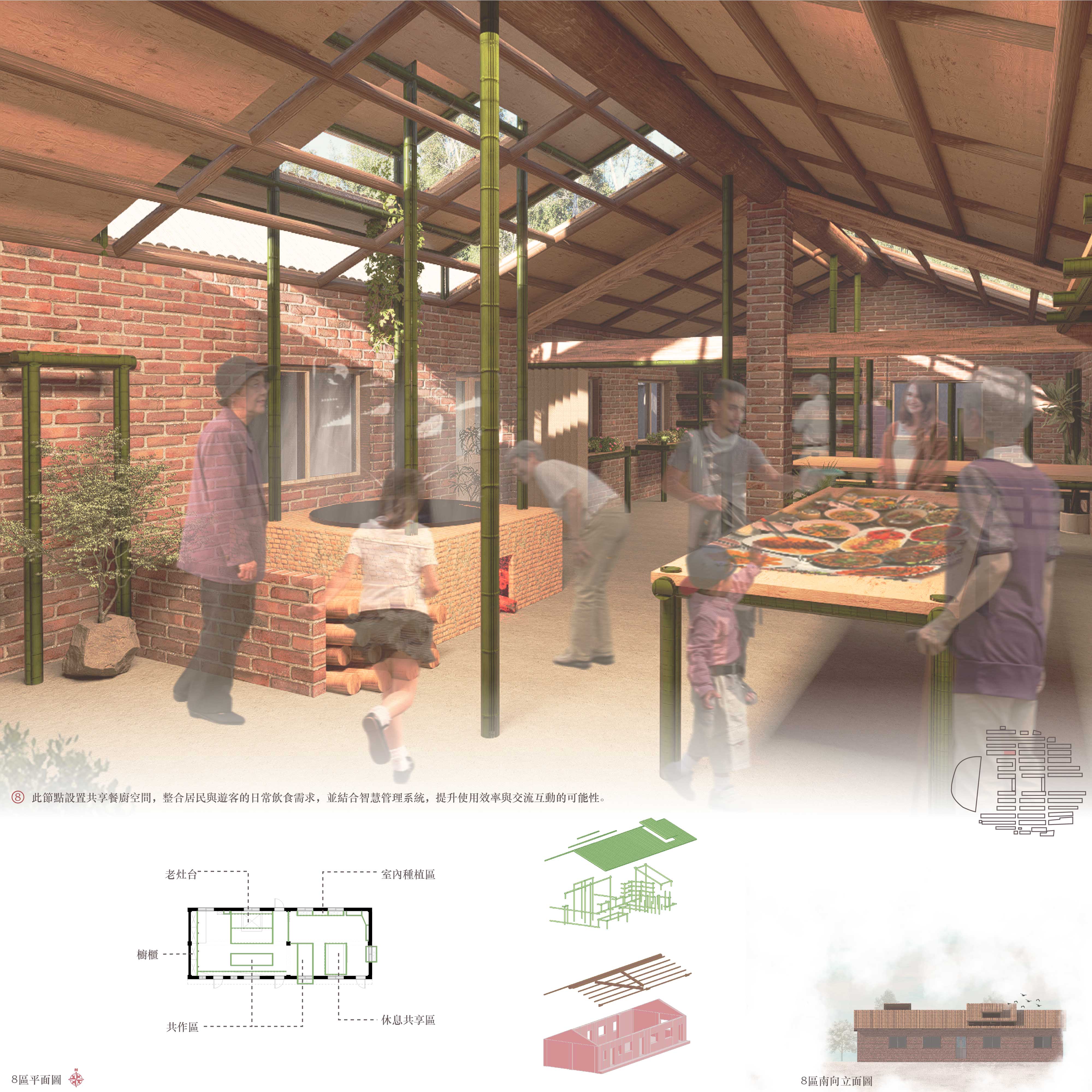
以彰化社頭劉家古厝為基地,本設計從聚落歷史與土地關係出發,重新思考人、建築與自然之間的互動關係。過去人們向自然「借地」開墾,逐步發展出以農作、畜牧與加工為核心的生活系統,形塑依附土地而生的聚落文化。然而隨著產業轉型與人口外移,原有生活模式逐漸消失,空間亦趨於閒置與破敗,聚落面臨衰退與轉型的課題。
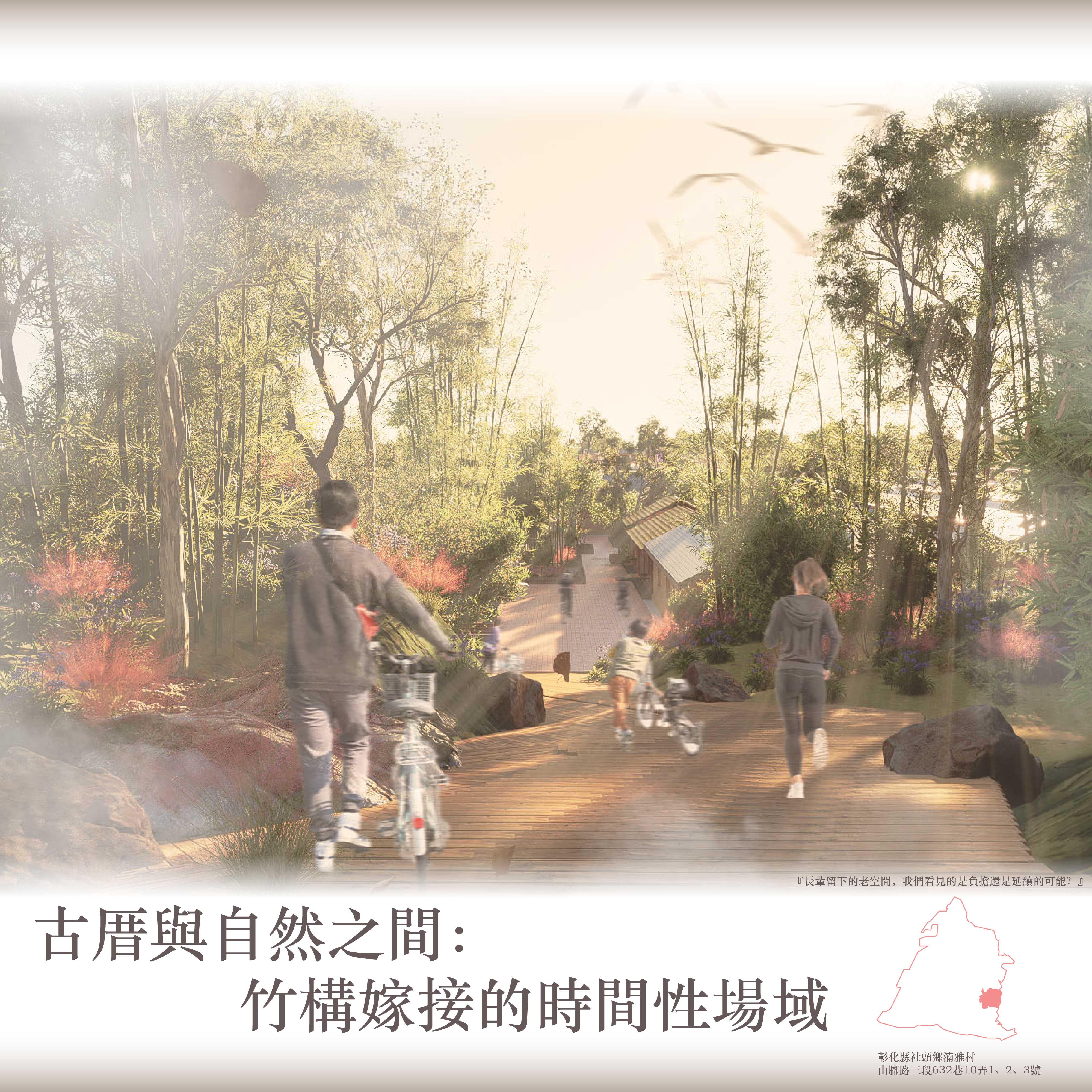
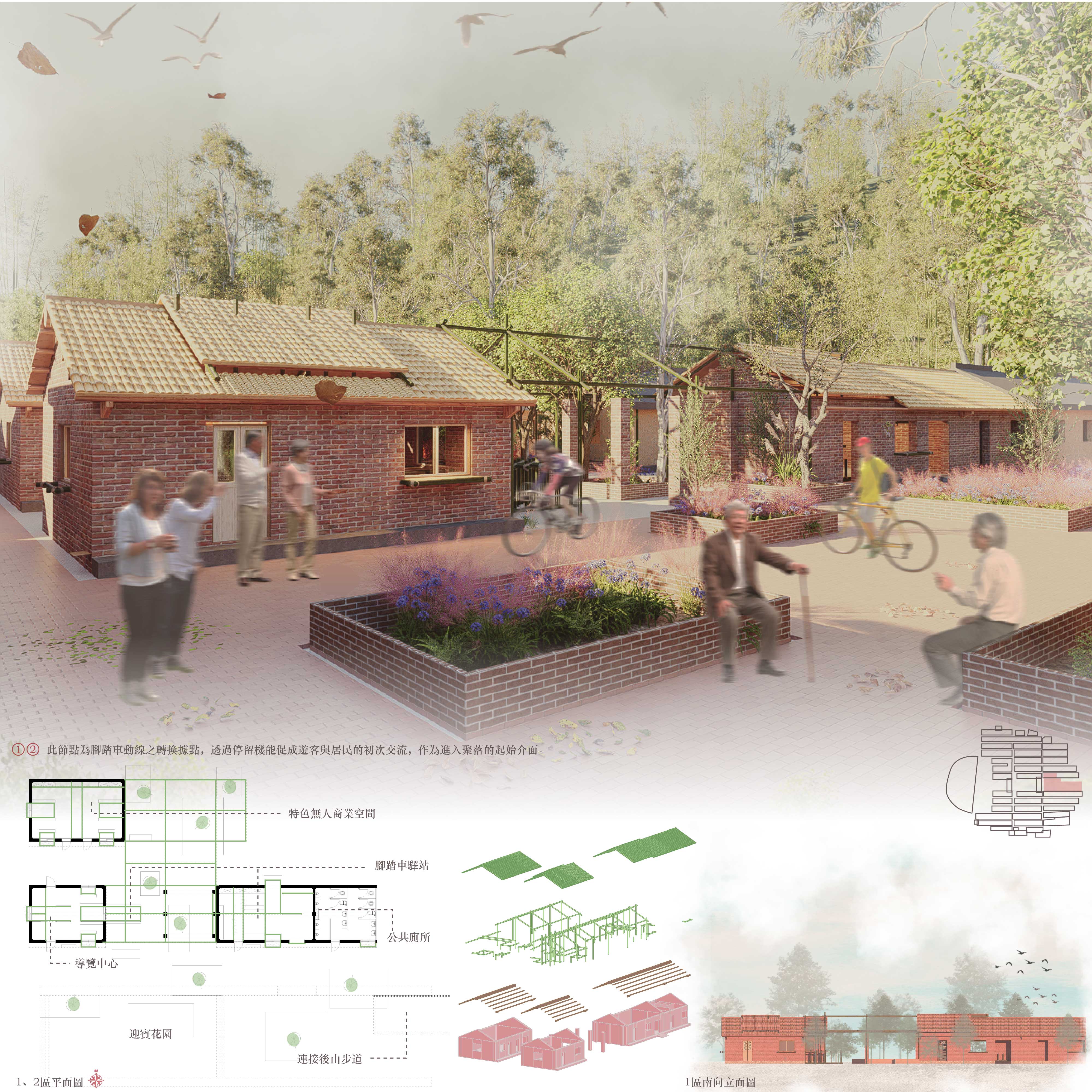
本設計提出「還地於自然」作為核心概念,透過梳理古厝既有空間語彙,將竹構嫁接於既存建築之上,形塑介於人為構築與自然環境之間的過渡性場域。竹作為基地原生材料,不僅回應竹林地景,更發展為一種可生長、可轉化、可消解的構築系統,承載地方活動與生活行為,呈現聚落隨時間演變的空間敘事。
空間策略以節點串聯,透過故事性路徑引導使用者逐步參與聚落生活,從認識土地與產業、參與共作、耕養農牧、群聚交流到共享飲食,重建人與土地之間的關係。同時導入智慧農業、畜牧與健康監測系統,使傳統生活模式得以在當代轉化與延續。
最終,本設計透過竹構嫁接與時間性空間操作,使新的生活型態在舊有場域中生成,並逐步回歸自然,形成從開墾、使用到「還地於自然」的循環過程,使古厝轉化為承載地方文化記憶與未來生活想像的綠色公共場域。
Taking the Liu Family Historic Residence in Shetou, Changhua as its site, this project reexamines the relationship between people, architecture, and nature through the lens of settlement history. Based on the concept of “returning the land to nature,” bamboo structures are grafted onto existing buildings to form transitional and adaptable spaces.
Through narrative pathways that connect farming, livestock, co-working, and social interaction, and with the integration of smart agricultural and living systems, the design revitalizes local life and reestablishes connections between people and the land. Ultimately, it creates a time-based spatial framework that supports transformation, continuity, and a gradual return to nature.