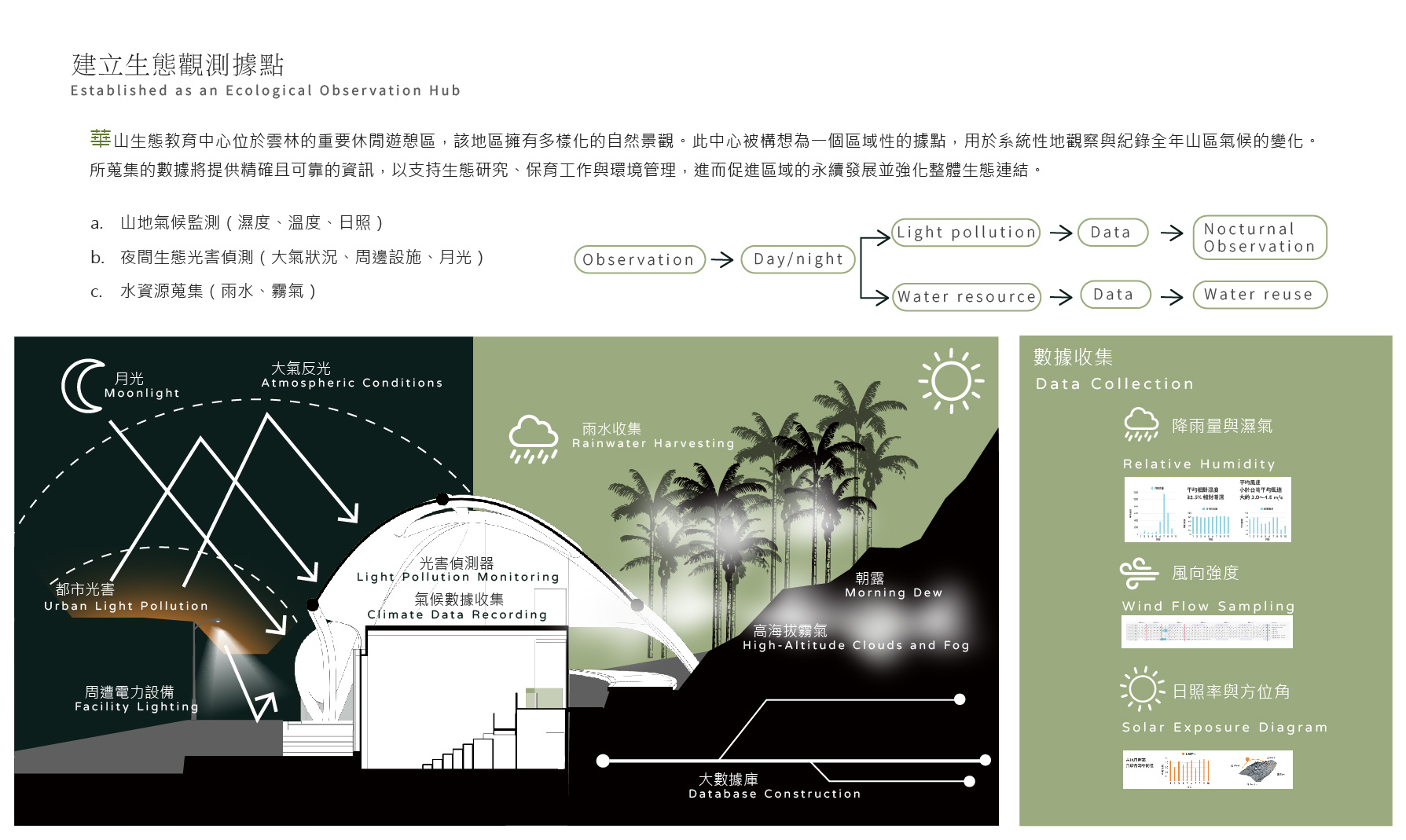
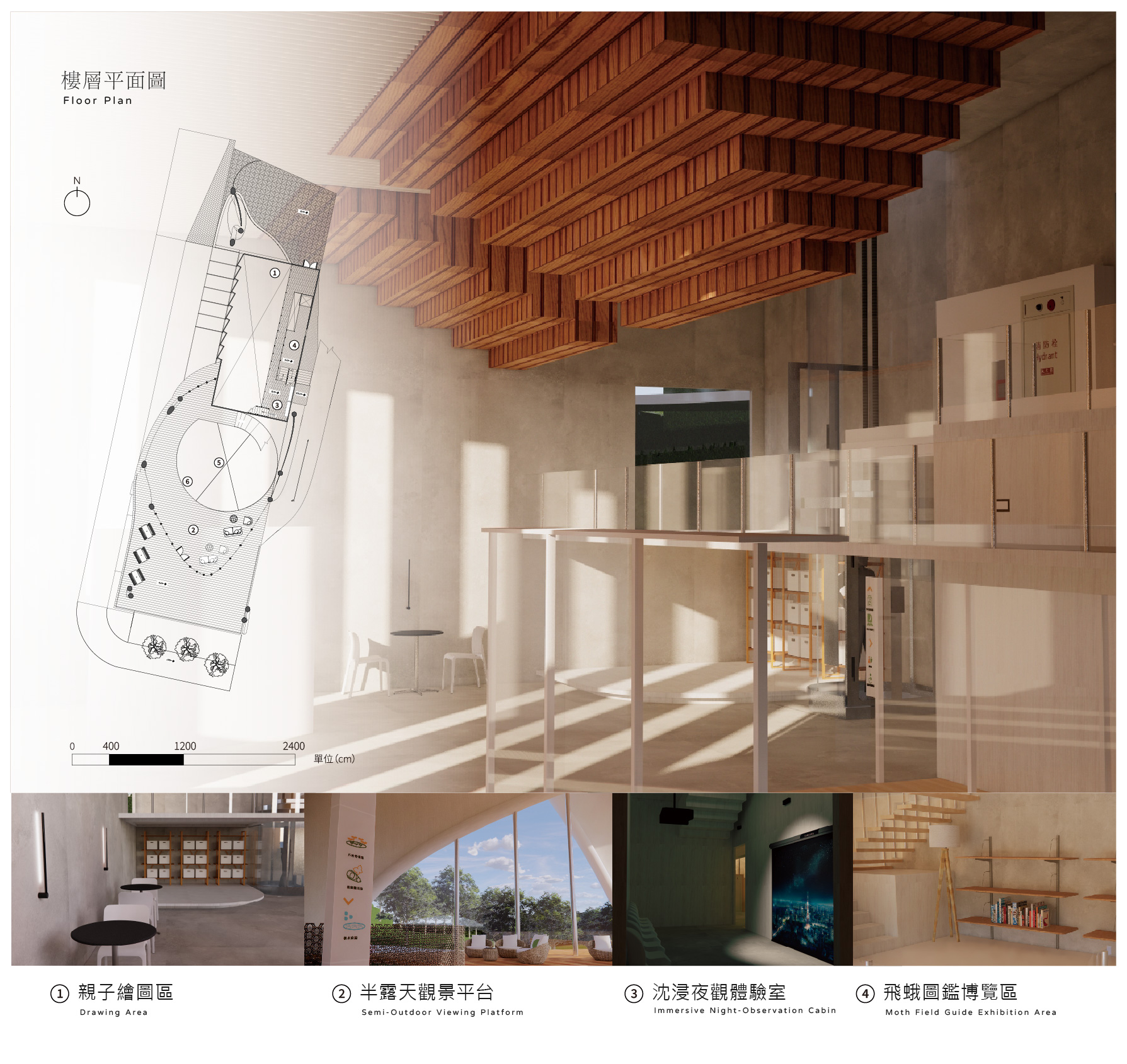
基地位於雲林的重要休閒娛樂區,其生態的樣貌與資源豐富,希望以華山生態教育中心為據點,觀察全年山區的天氣變化與觀測,精準地提供給生態研究、生態維護等需求者利用。也講對此區域的生態永續發展締造更美好的環境與鏈結。
系統以夜間光害與水資源利用爲大宗觀察點,包含基礎的氣候觀察資料一併收集,儲存成雲端數據庫,公開放平台使用。夜間光害部分則將作為本館對於蛾類夜間觀察的考據與參考資料。而水資源利用將量化成歷年數據,作為未來發展永續能源的基礎參考資料。
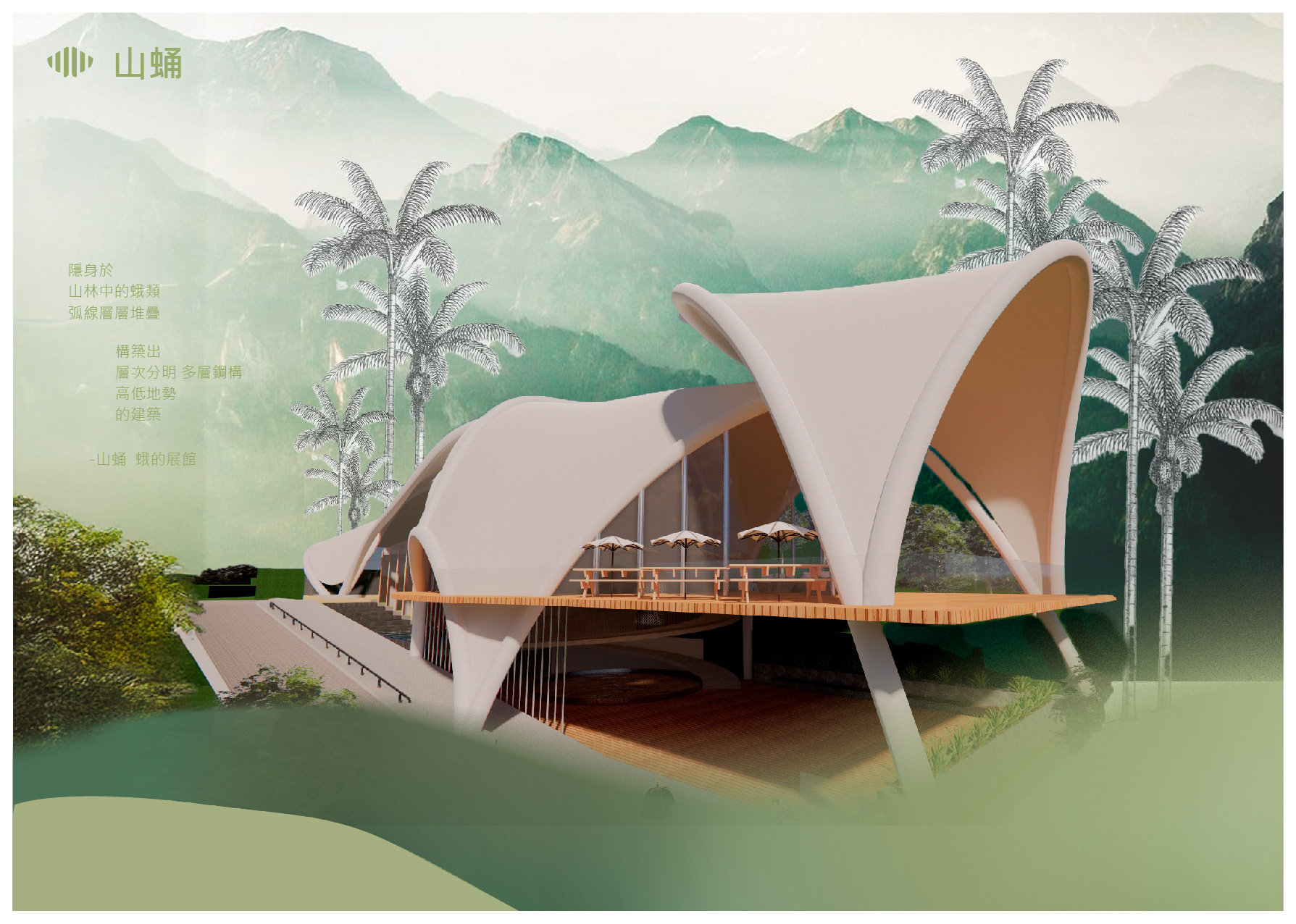
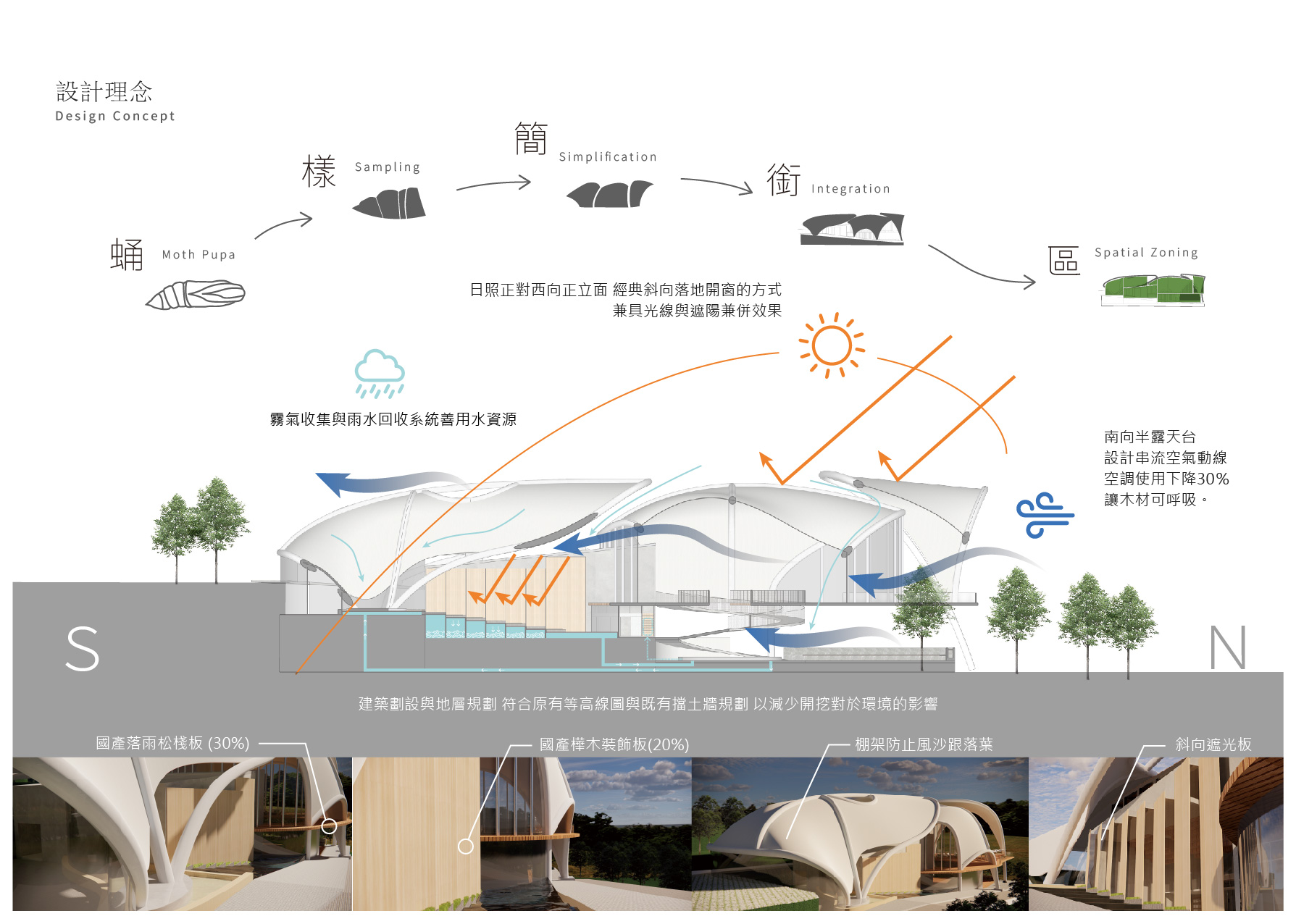
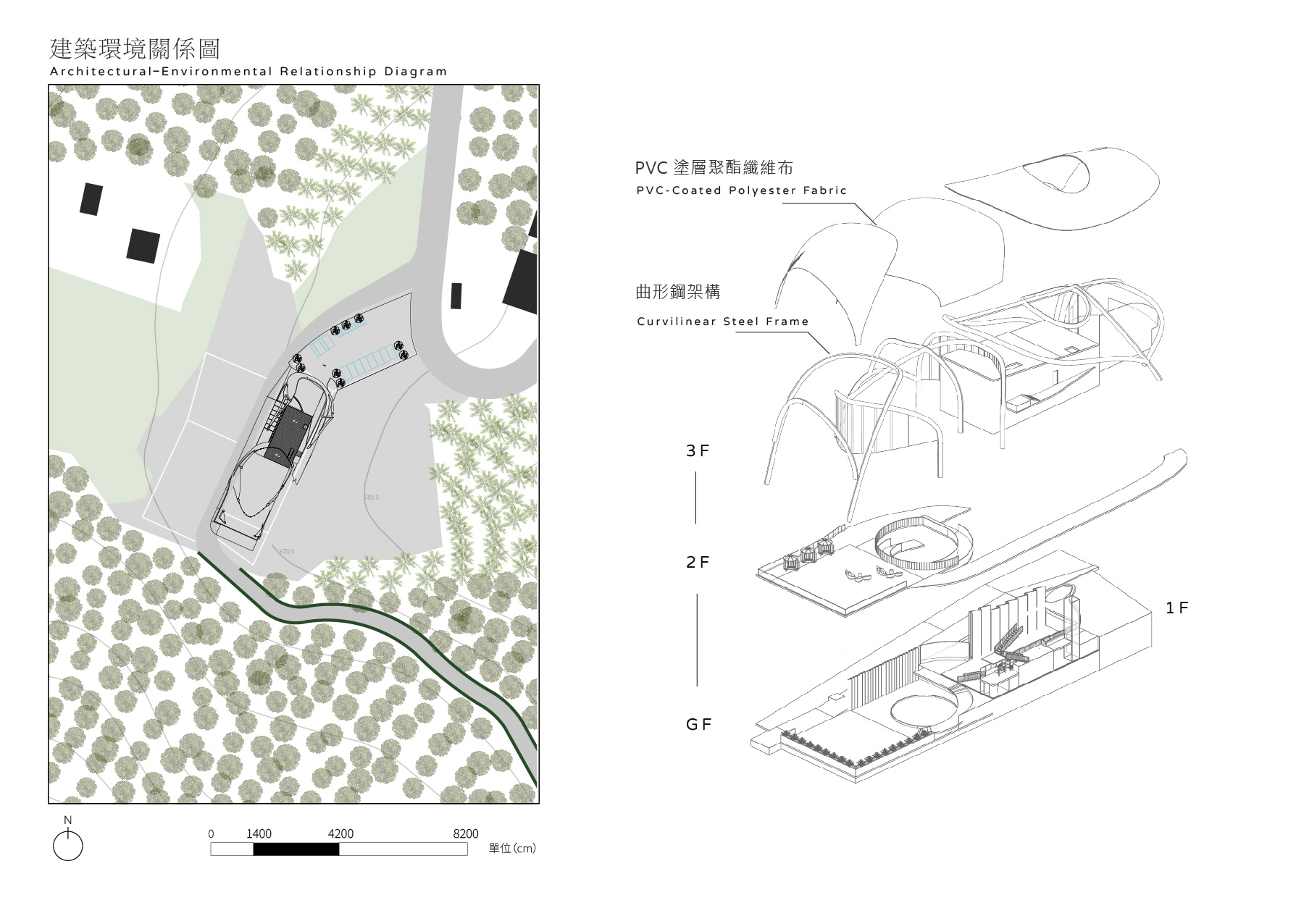
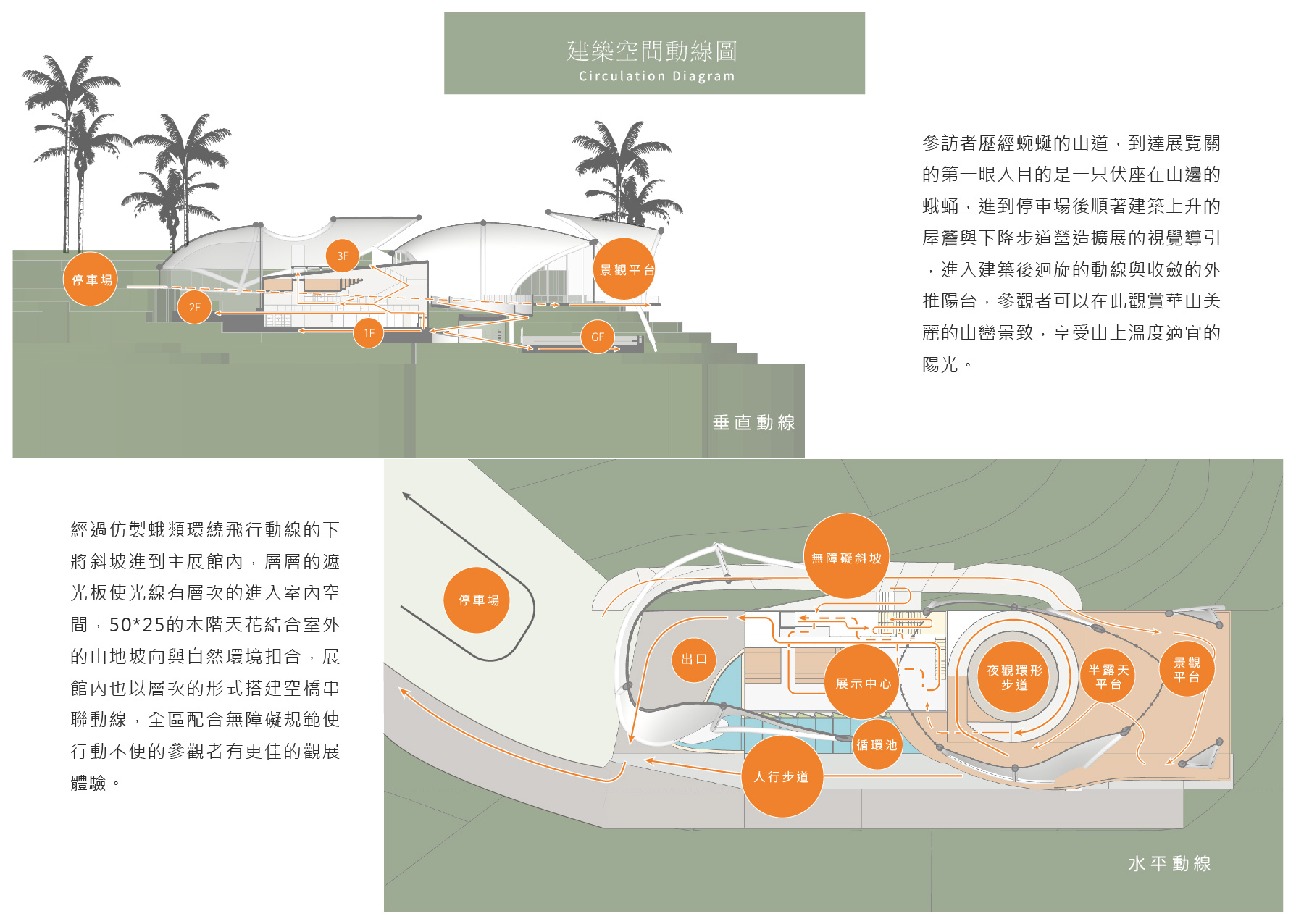
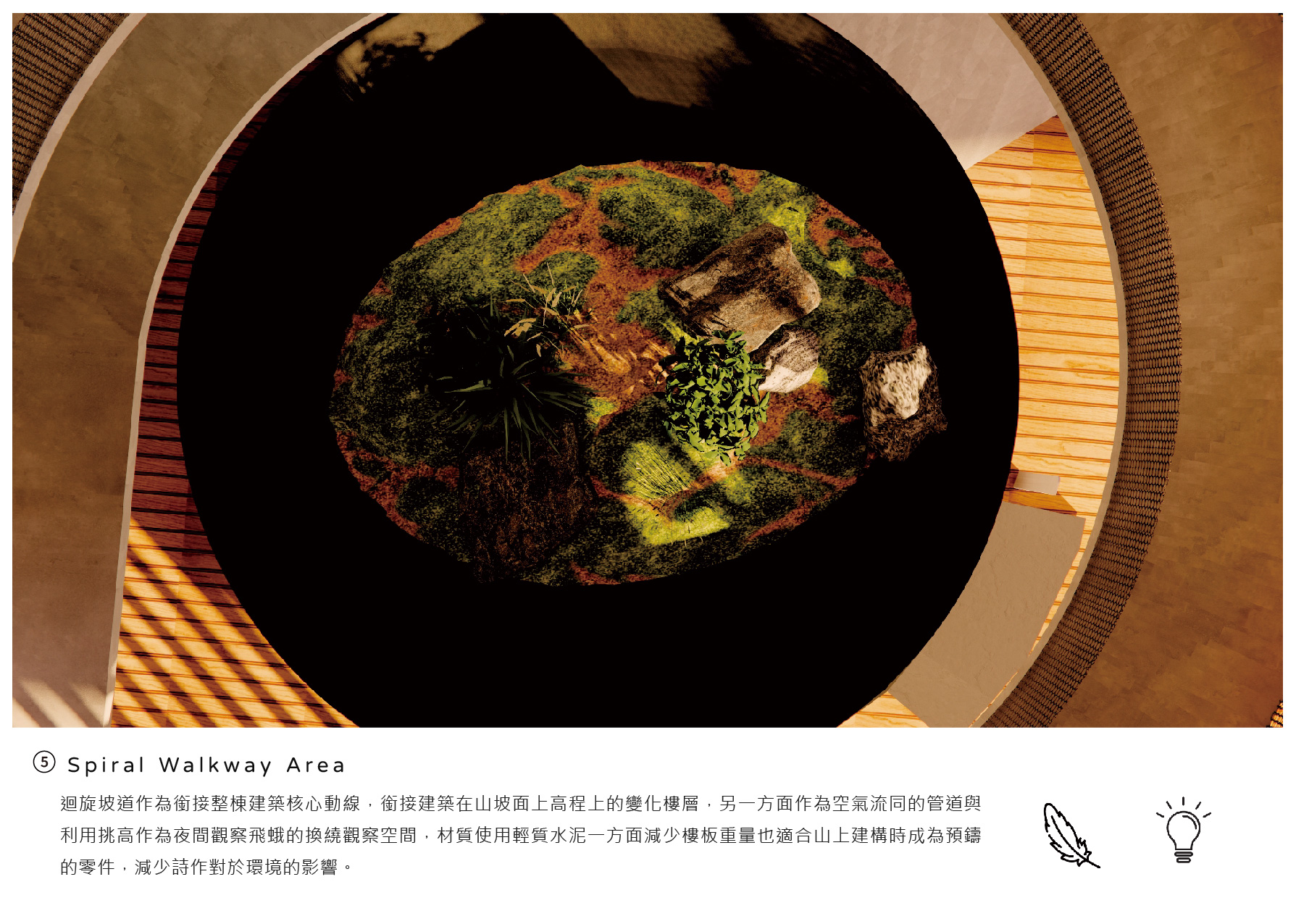
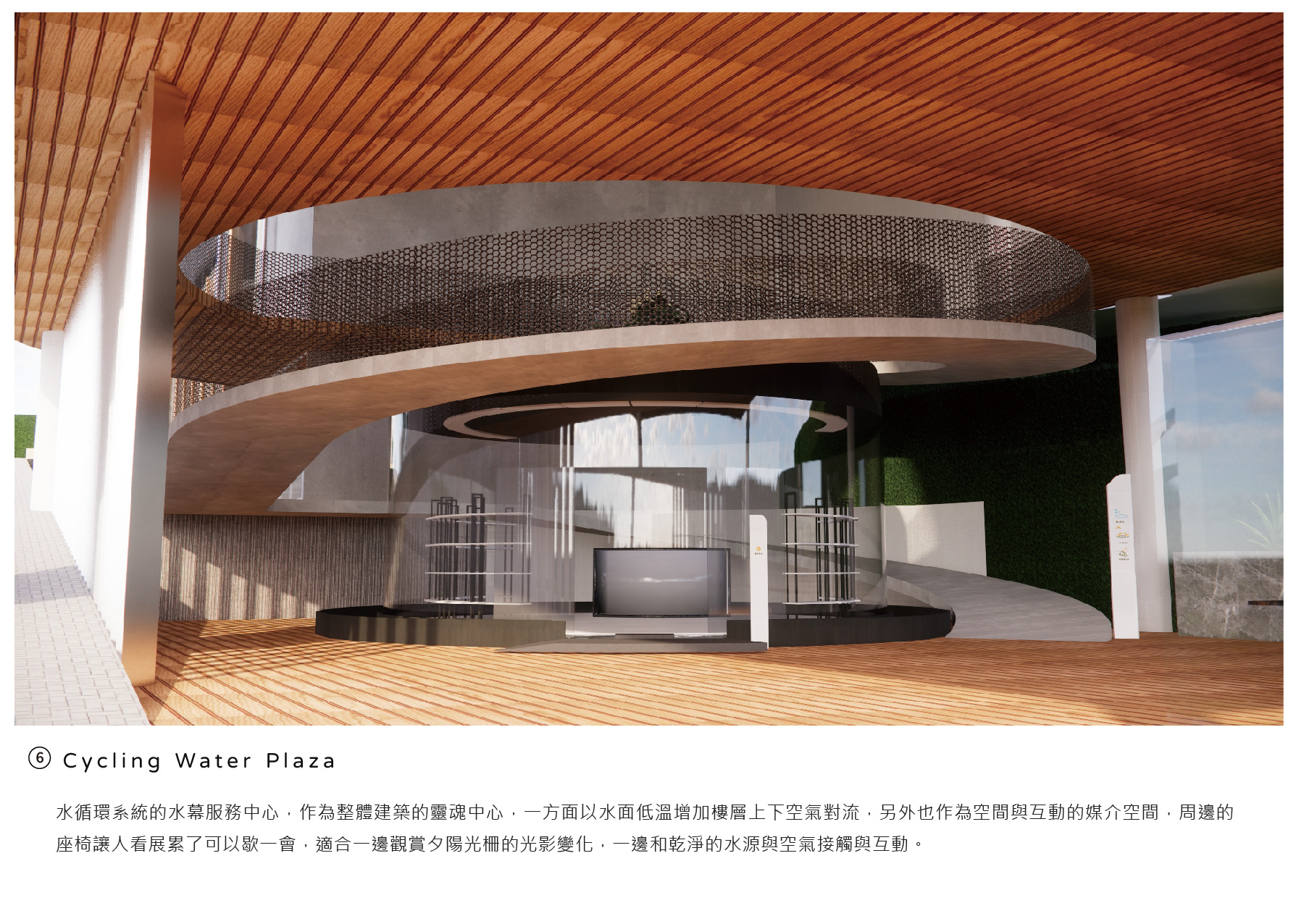
本建築模仿蛾隱身在山林中的樣貌,擷取蛾蛹的造型層次,樓板搭配山坡地與山形呼應,利用天然的光線與風向,透由通風與採光來控制室內外的溫度平衡,也讓木材有呼吸的空間。 利用台灣山中霧氣與多雨的優勢,設置蓄水設備,利用水流順著屋頂斜坡、階梯沈澱池,最中延著主動線如同蛾一般飛行主動線在空中到達—蓄水池,作為建築調結氣溫與回收綜水的要角,隱身在建築的最下層,也呼應了整體建築所想闡述蛾如同隱士般的生存力,收斂出對照人類生存環境的一面圓鏡。
The site, located in Yunlin’s recreational district, features rich ecology and diverse landscapes. The Huashan Ecological Education Center serves as a hub for monitoring mountain climate, supporting research, conservation, and sustainable development. Data on light pollution, water use, and climate is collected and stored in a cloud database, aiding moth observation and resource planning.
Inspired by camouflaged moths, the building adopts a layered cocoon form that responds to terrain while using natural light and ventilation for thermal balance. Rainwater and fog are collected and directed to a central reservoir for climate regulation and recycling, reinforcing the concept of resilience and the relationship between humans and nature.