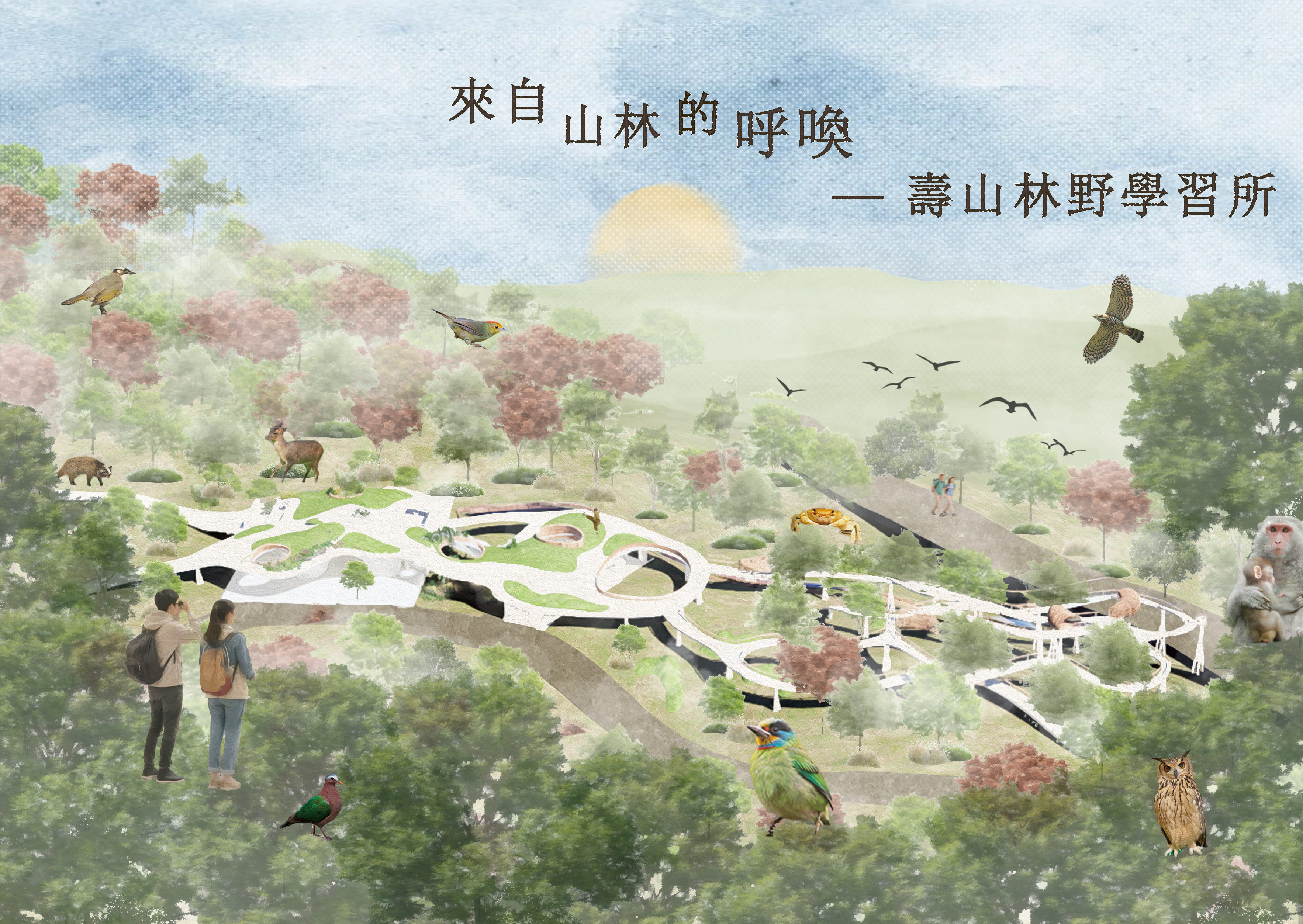
我們與壽山的距離,究竟是從何時開始改變的?
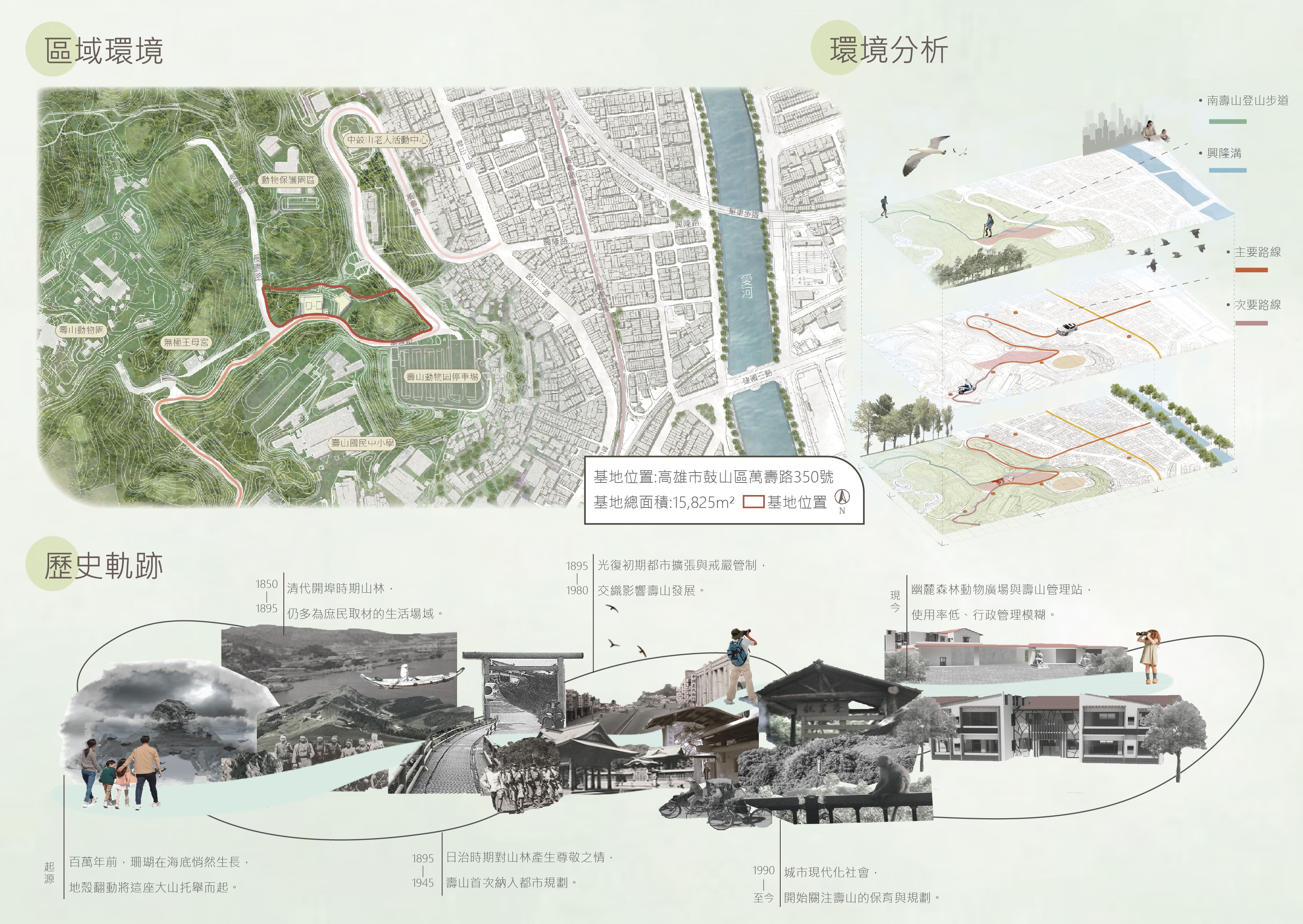
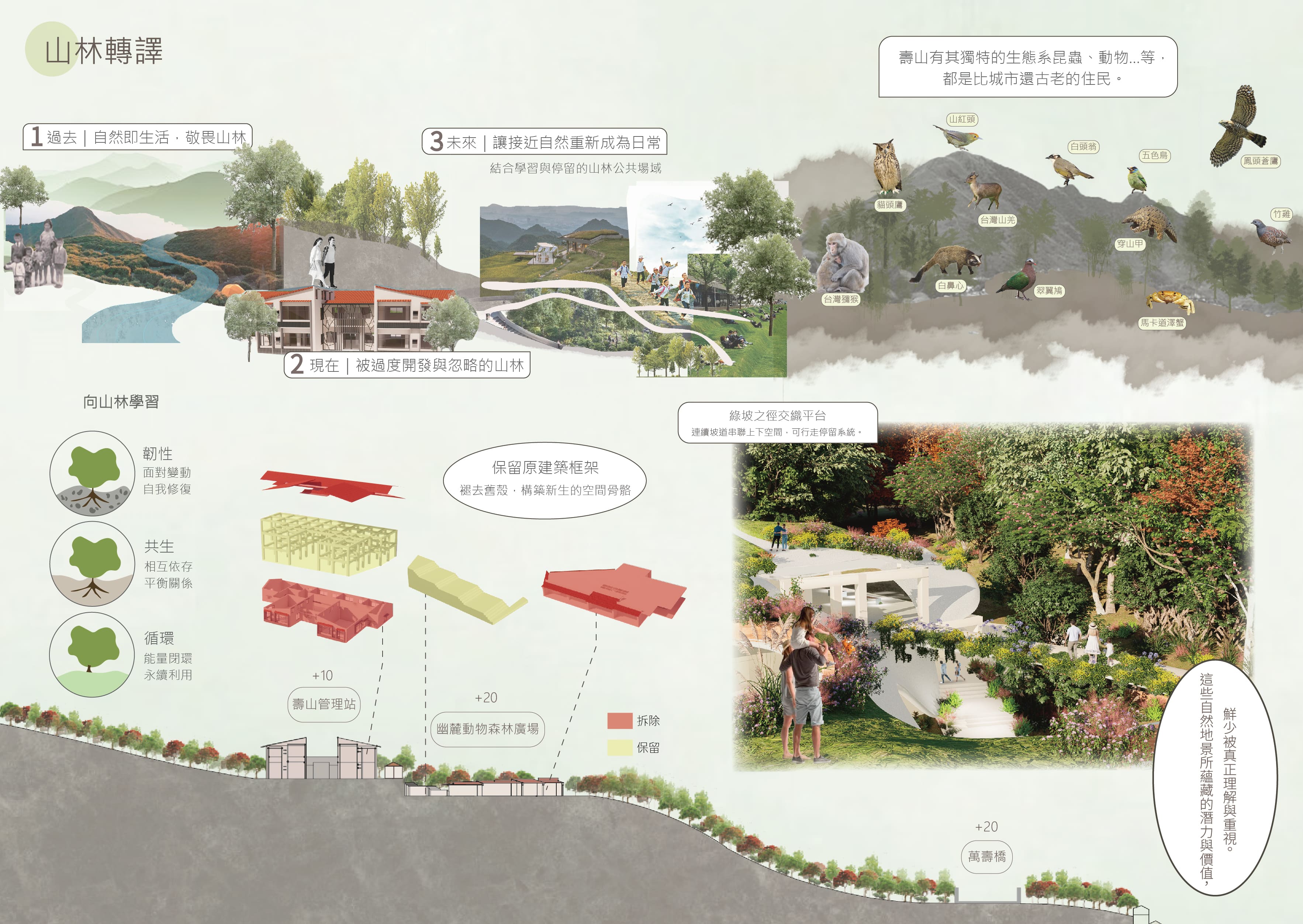
過去,壽山不僅是自然山林,更承載著打狗時期的生活記憶。從原始林地與漁獵路徑,到日治時期的開發與軍事利用,山體逐漸被納入秩序;戰後隨著城市擴張與觀光導入,壽山由生活的一部分轉變為被觀看的對象,人與山的關係亦由貼近轉為疏離。
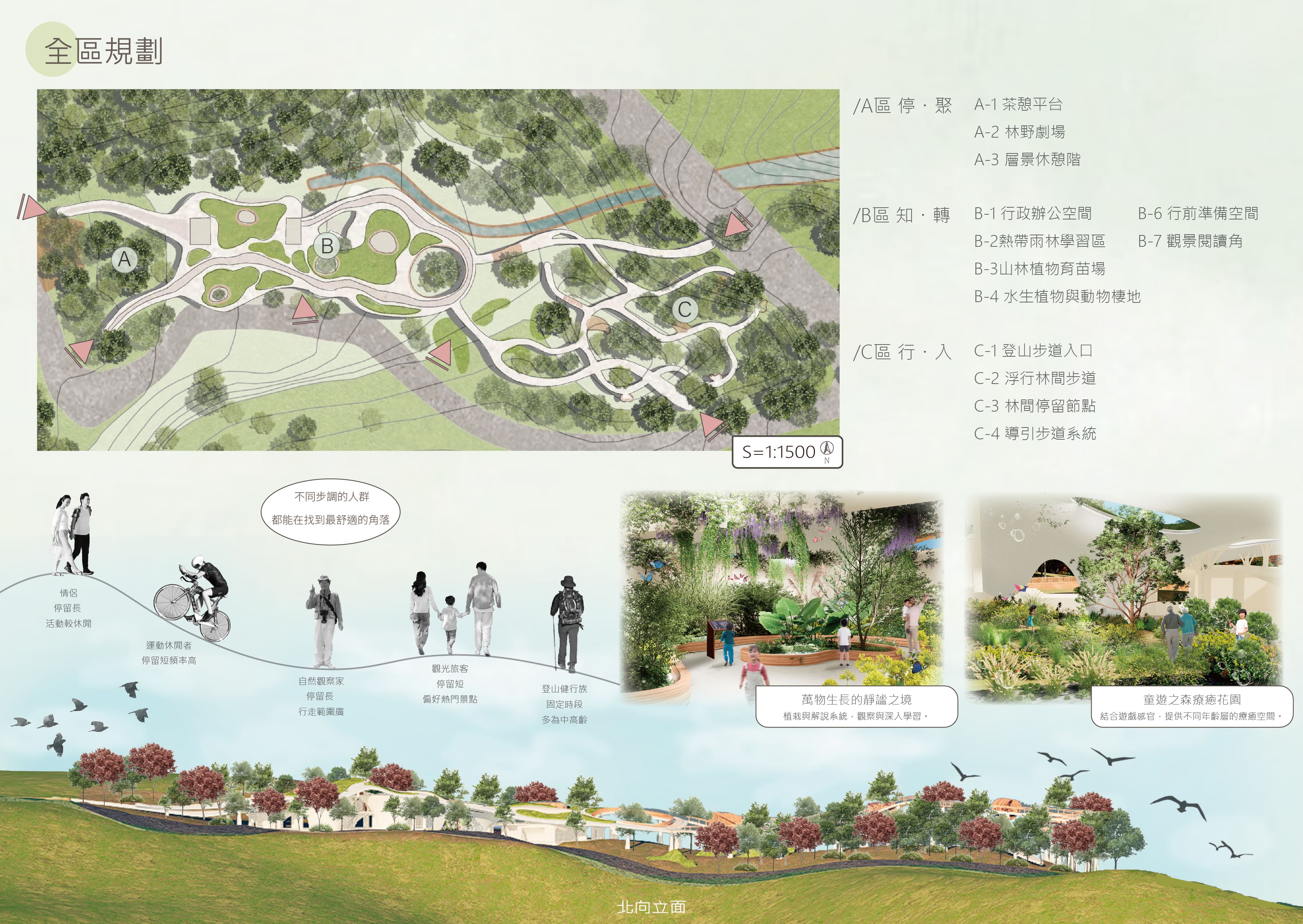
本基地位於登山步道節點,銜接既有動線並鄰近水域,使人流、地形與自然條件在此交會。因此設計將其視為一種「介面」,承接行走中的轉換,使通過成為可停留與感知的過程。
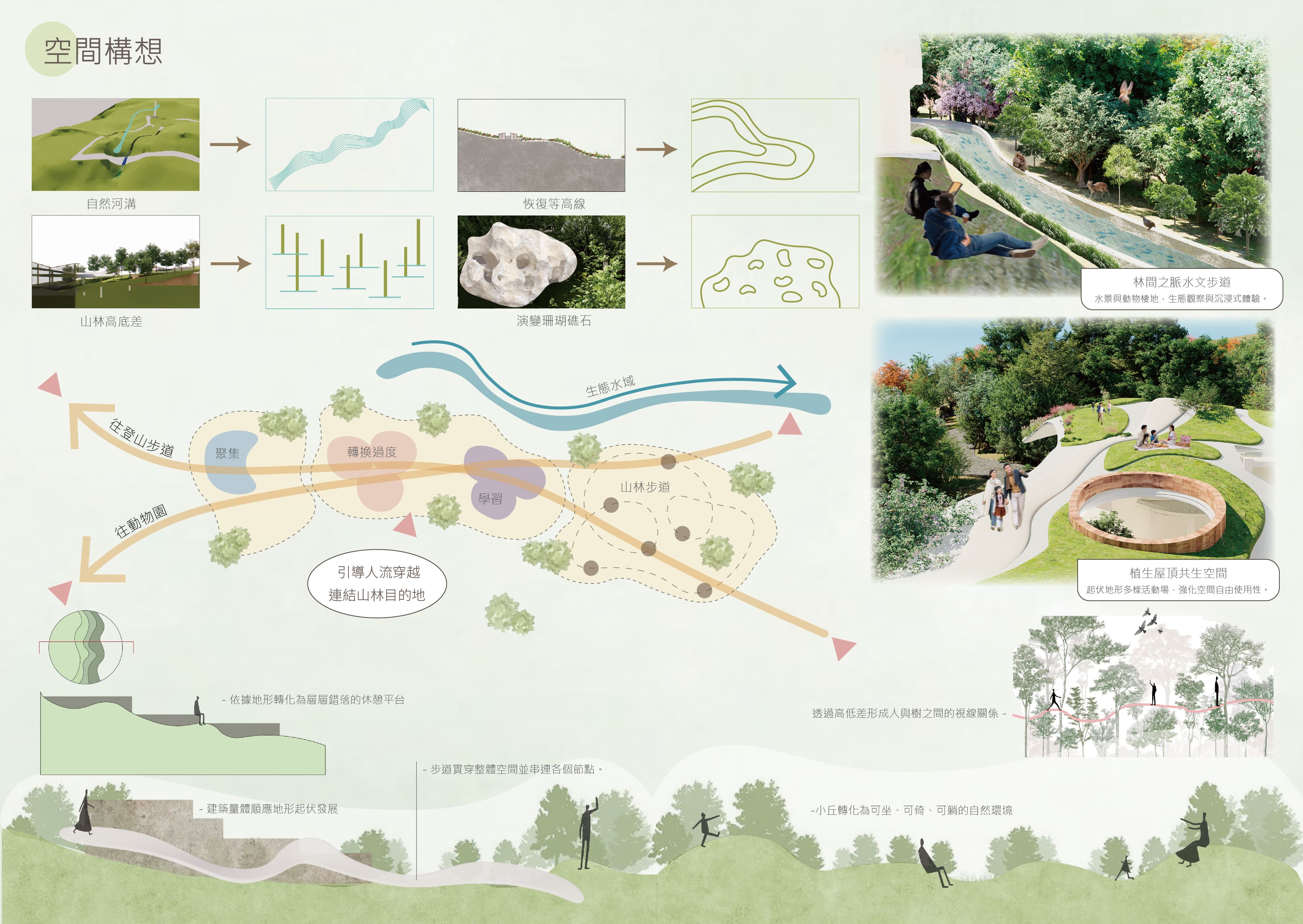
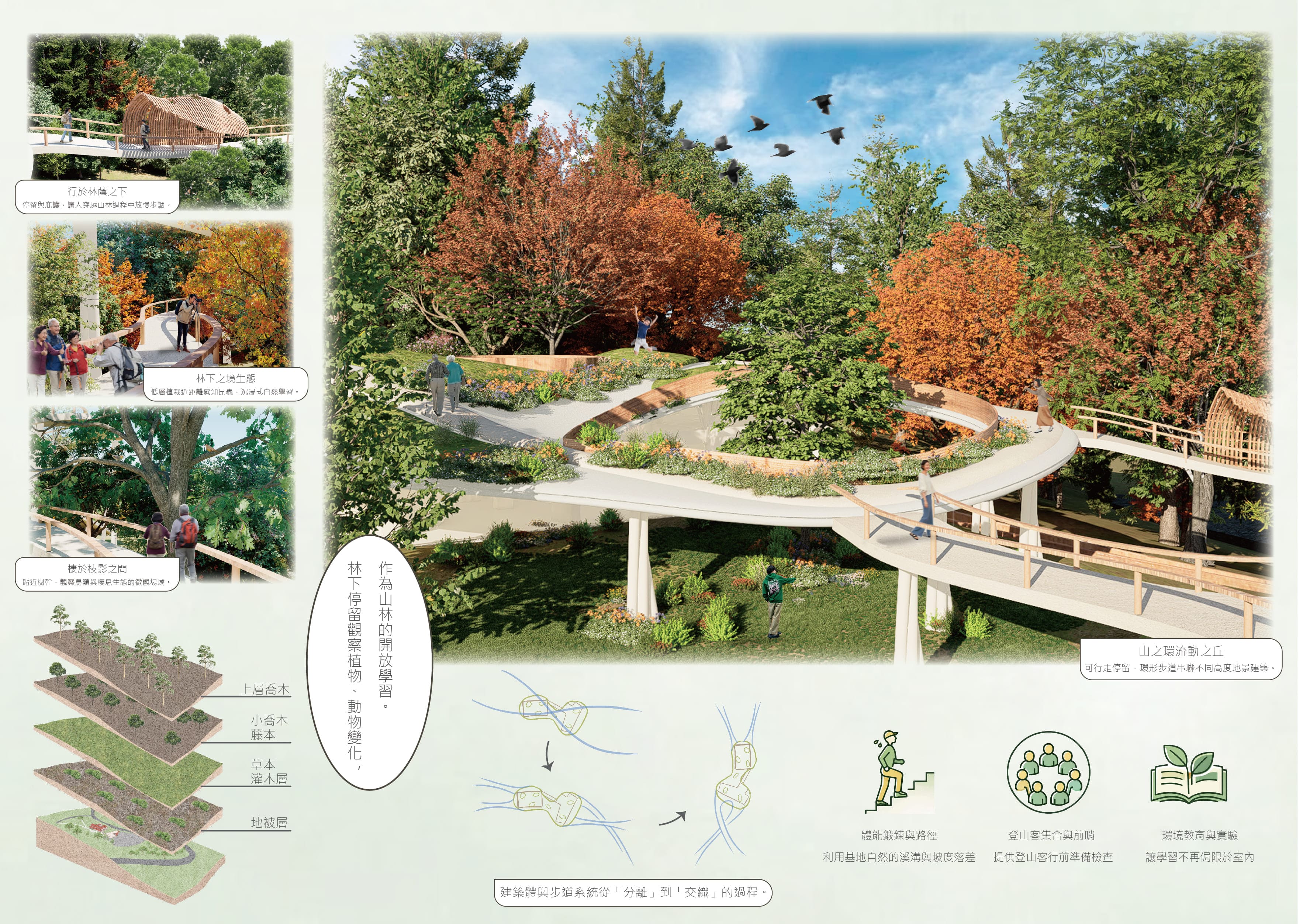
設計順應壽山地貌紋理與高程變化,以流動曲線延展空間,使建築與步道如同生長於地形之中。整體動線以「行走中的感知」為核心,串連不同節點,導入觀察、學習與休憩等機能。人在移動之中,透過光影、風向、植被與水氣變化,逐步建立對環境的理解;水域所帶來的濕度與聲響,也成為空間感知的一部分。
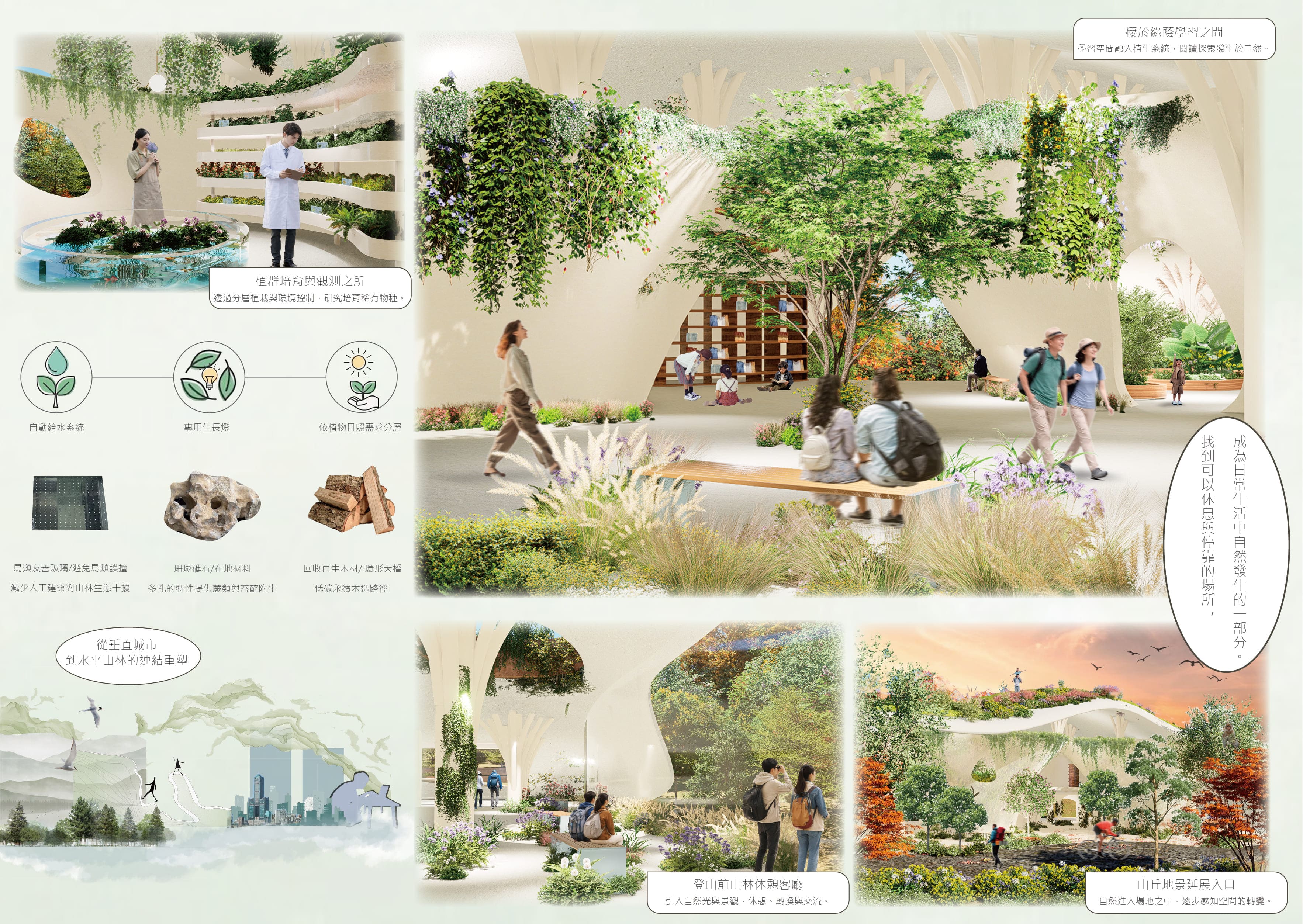
透過弱化邊界與引入自然元素,模糊室內外界線,使環境成為空間的一部分。本案試圖回應人與壽山之間逐漸拉遠的距離,透過行走與停留,重新建立人與自然之間的連結。
When did our distance from Shoushan begin to shift?
Shoushan was once a living memory of Takao. From indigenous paths to colonial order, the mountain was gradually structured. Post-war expansion turned it into a mere object to be "viewed," distancing us from the wild.
Located at a trail node, the site is a confluence of flow and ecology. We reinterpret it as an "Interface"—a transition where passage becomes a process of lingering and perception.
Following the contours, the architecture grows from the earth. The core is "Perception through Movement," weaving observation and repose. Users understand the environment through light, wind, and mist.
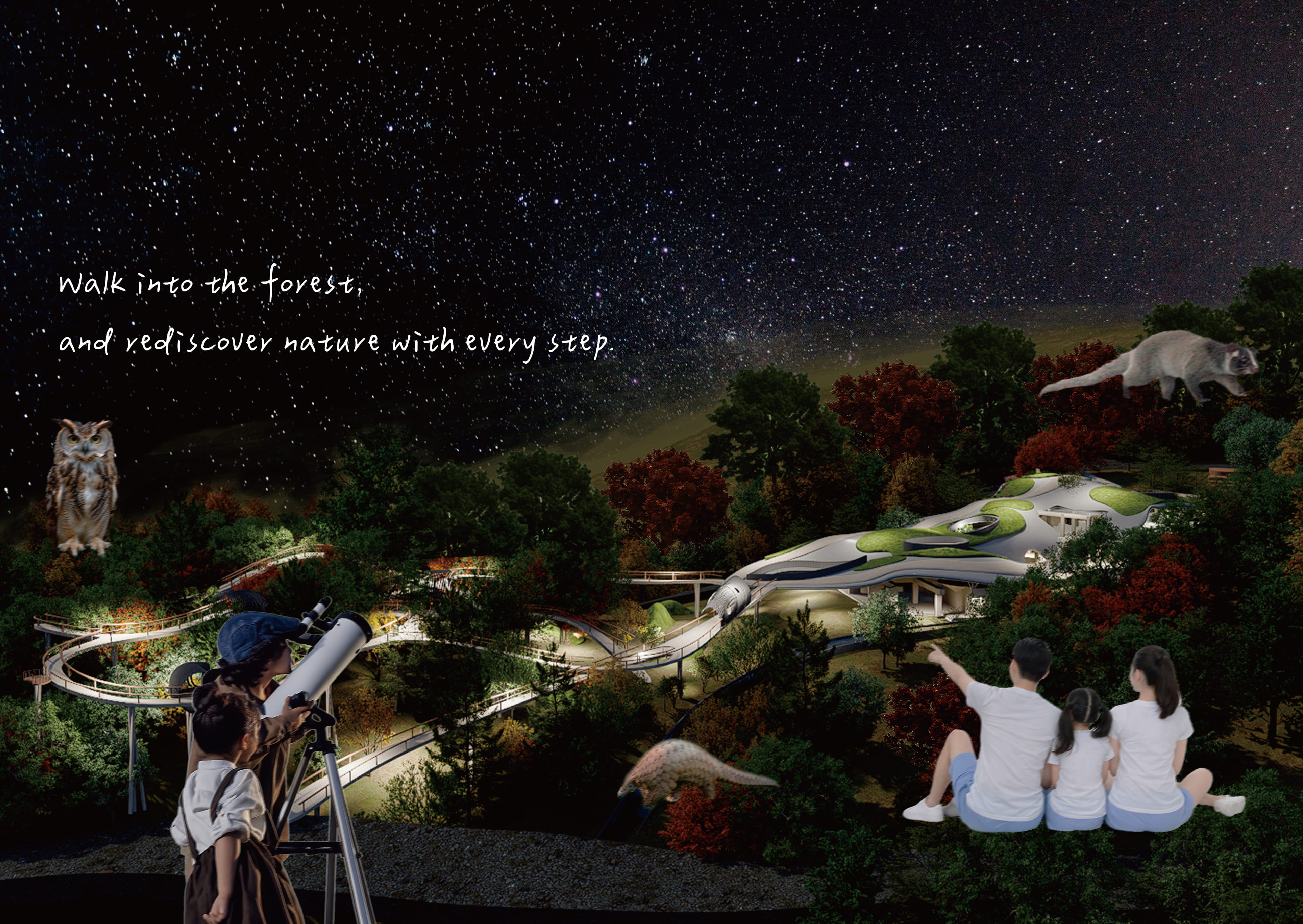
By softening boundaries, the environment becomes the space. This project bridges the gap, rebuilding our connection through the simple acts of walking and staying.