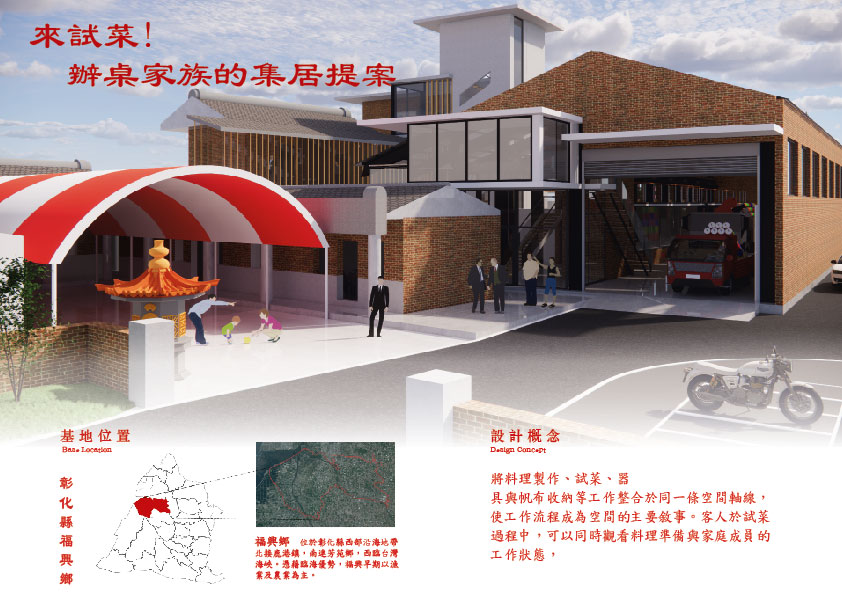
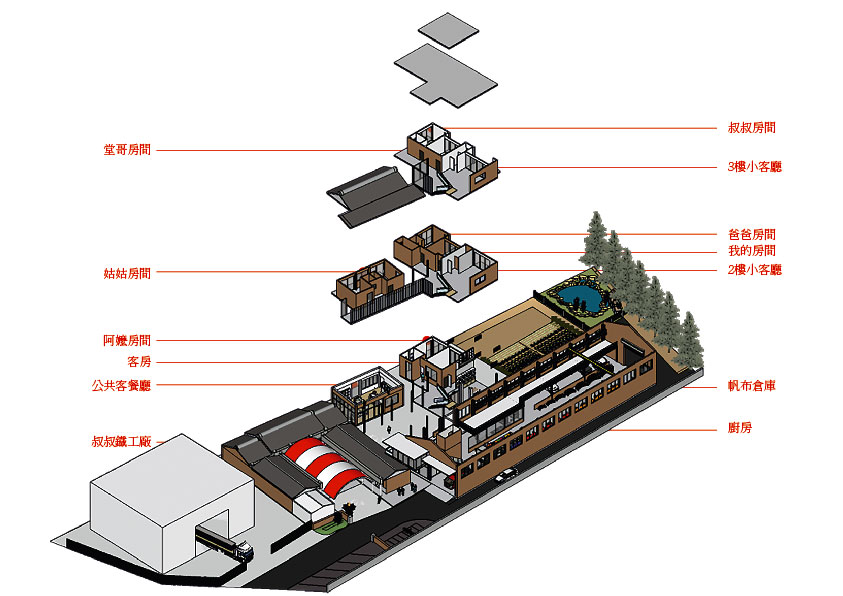
本設計以總鋪師家庭式產業為核心,回應傳統餐飲與宴席空間中前場與後場長期被劃分的空間模式,重新思考料理製作、服務行為與日常生活之間的關係。透過長條型空間配置,將備料、烹飪、試菜、器具收納與棚架帆布存放等多元機能整合於同一條動線之中,使原本隱藏於後場的工作流程轉化為可被觀看與參與的空間敘事。
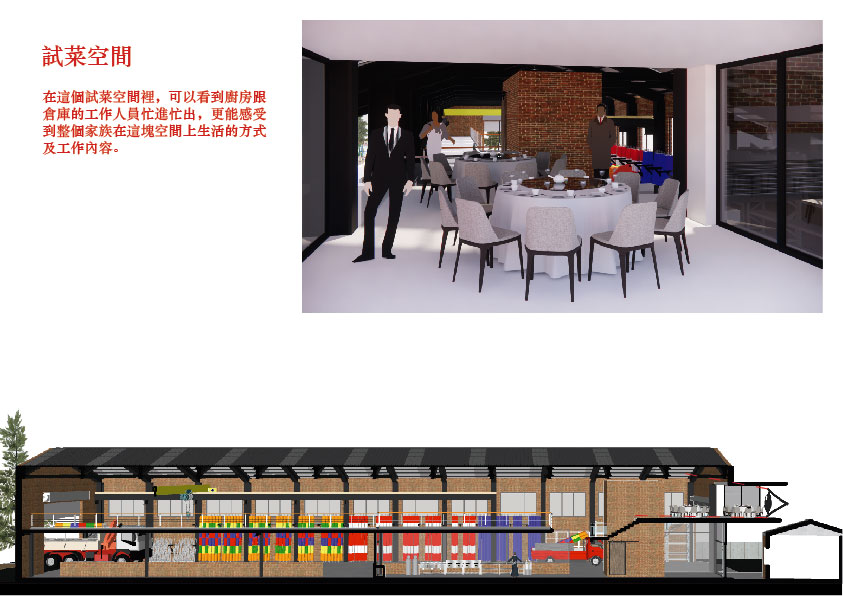
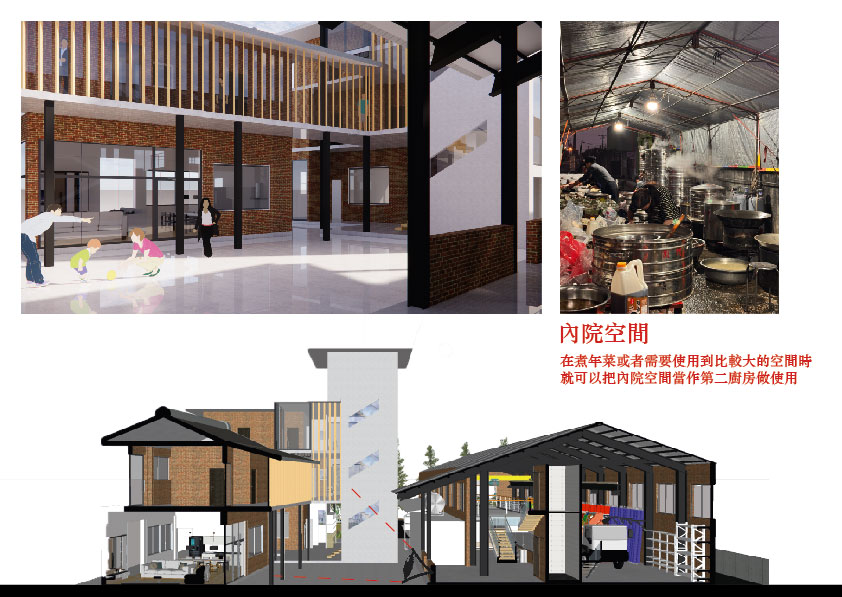
空間前段規劃為接待與試菜區,讓來訪的客人能在用餐過程中,同步觀看料理準備的細節與節奏;中段作為料理核心區,呈現總鋪師的專業技術與工作狀態;後段則設置大型器具與帆布收納空間,回應辦桌產業需頻繁移動與搭設棚架的實際需求。同時,家庭生活的日常活動也滲透其中,使工作與居住不再截然分離,而是交織成一種共存的生活狀態。
本設計試圖打破前後場之間的界線,將被忽略的勞動過程轉化為可見的價值,使空間不再只是服務與消費的場所,而是一個持續運作、具有文化意涵與人情溫度的生活與工作場域。
This design centers on a family-based banquet catering practice, rethinking the traditional separation between front-of-house and back-of-house spaces. Through a linear spatial layout, functions such as food preparation, cooking, tasting, and storage are integrated along a single axis, transforming workflow into a visible spatial narrative.
The front area serves as a reception and tasting space, allowing guests to observe the preparation process, while the middle and rear accommodate cooking and storage, reflecting the operational needs of banquet work. Family life is also interwoven into the space, blurring the boundary between living and working.
By making hidden labor visible, the space becomes more than a service environment—it is an active, lived-in setting that embodies cultural depth and human warmth.