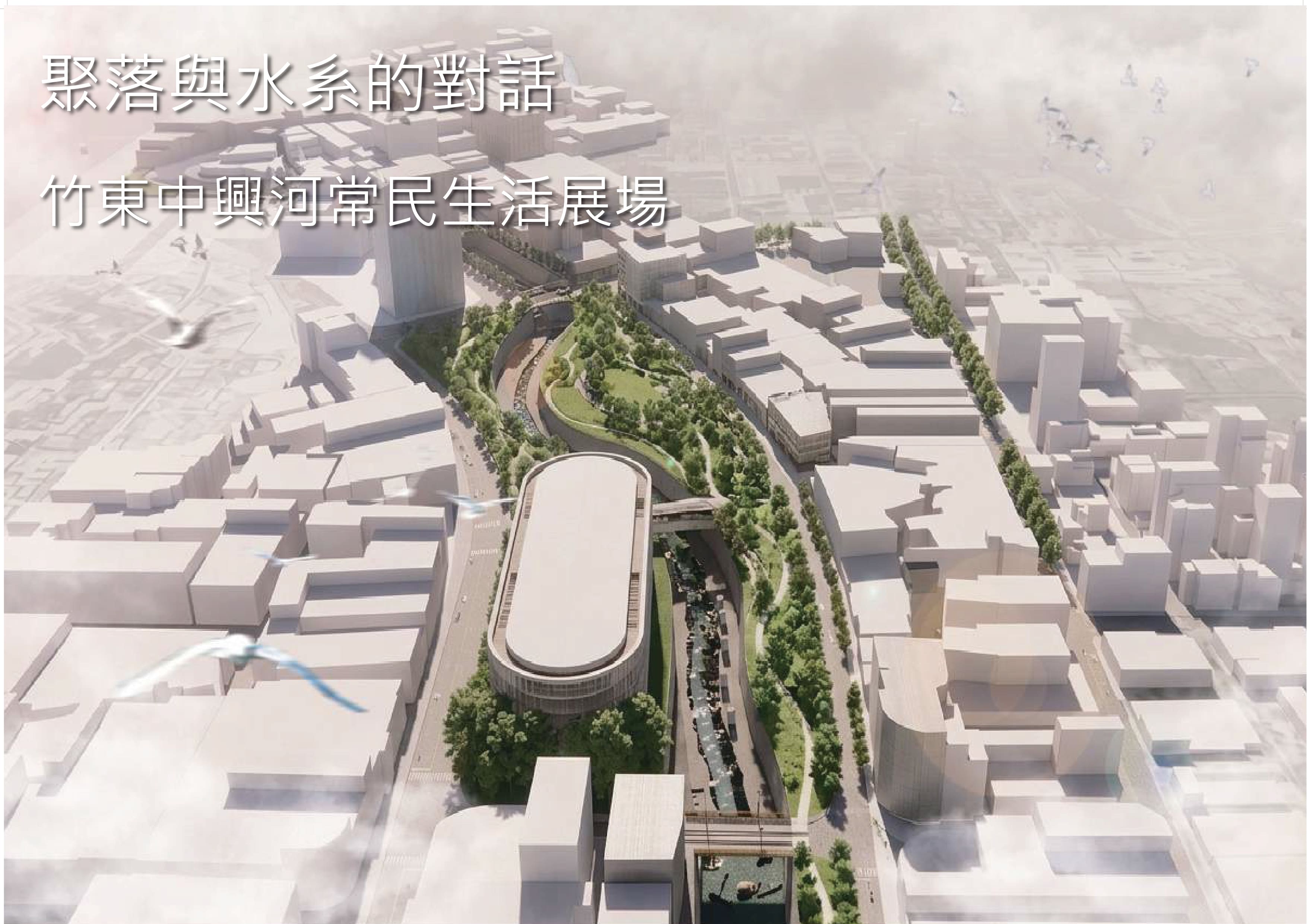
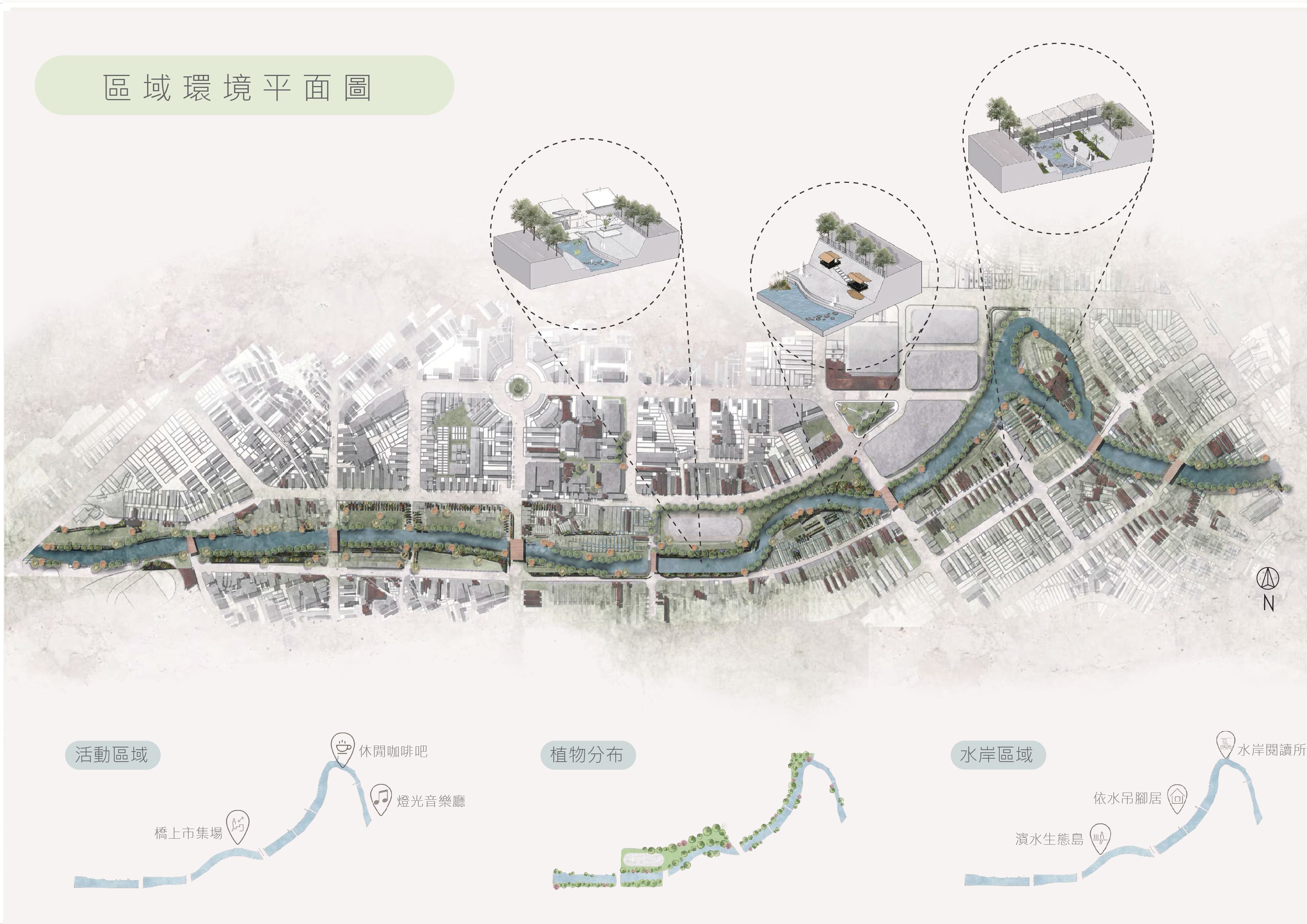
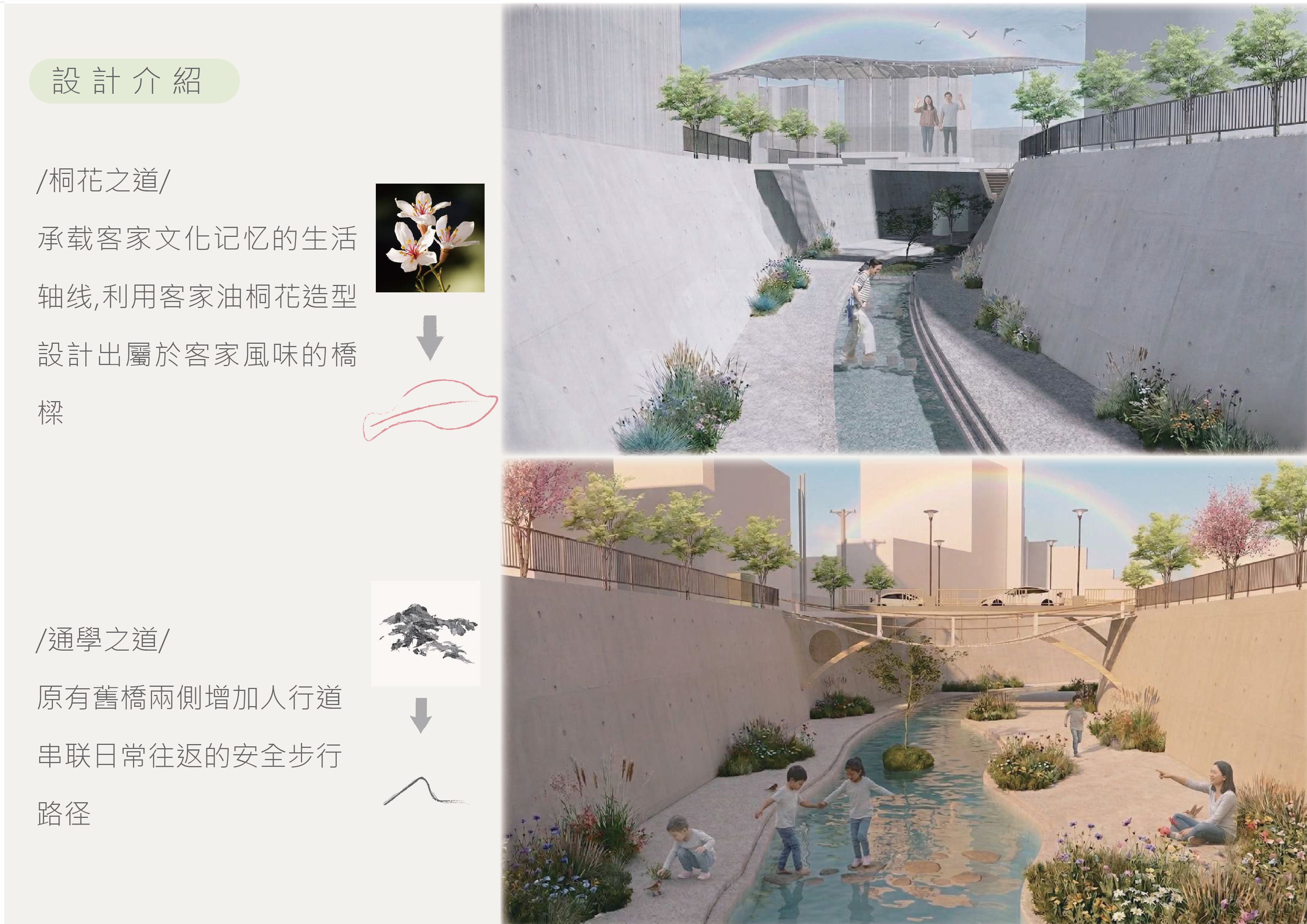
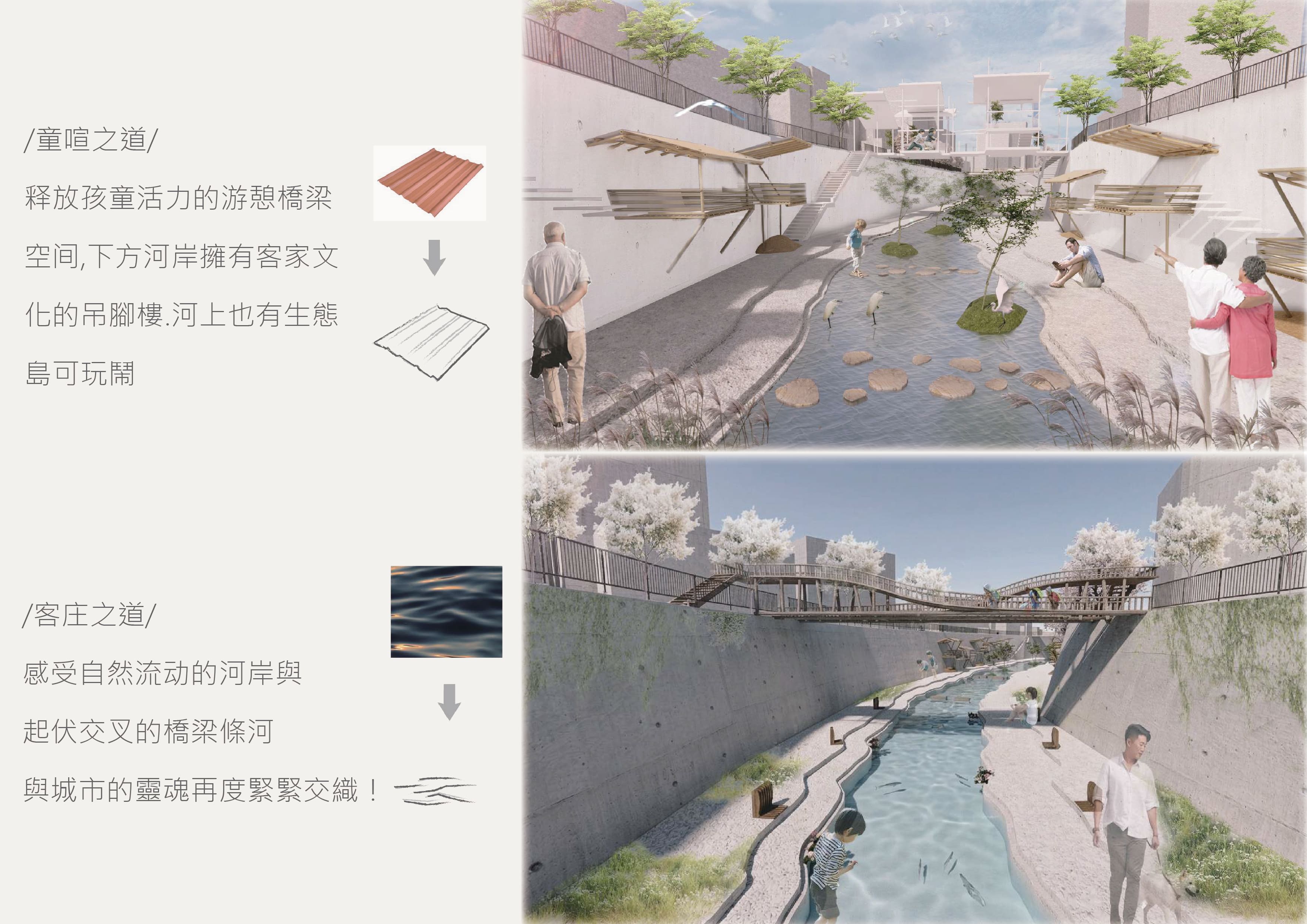
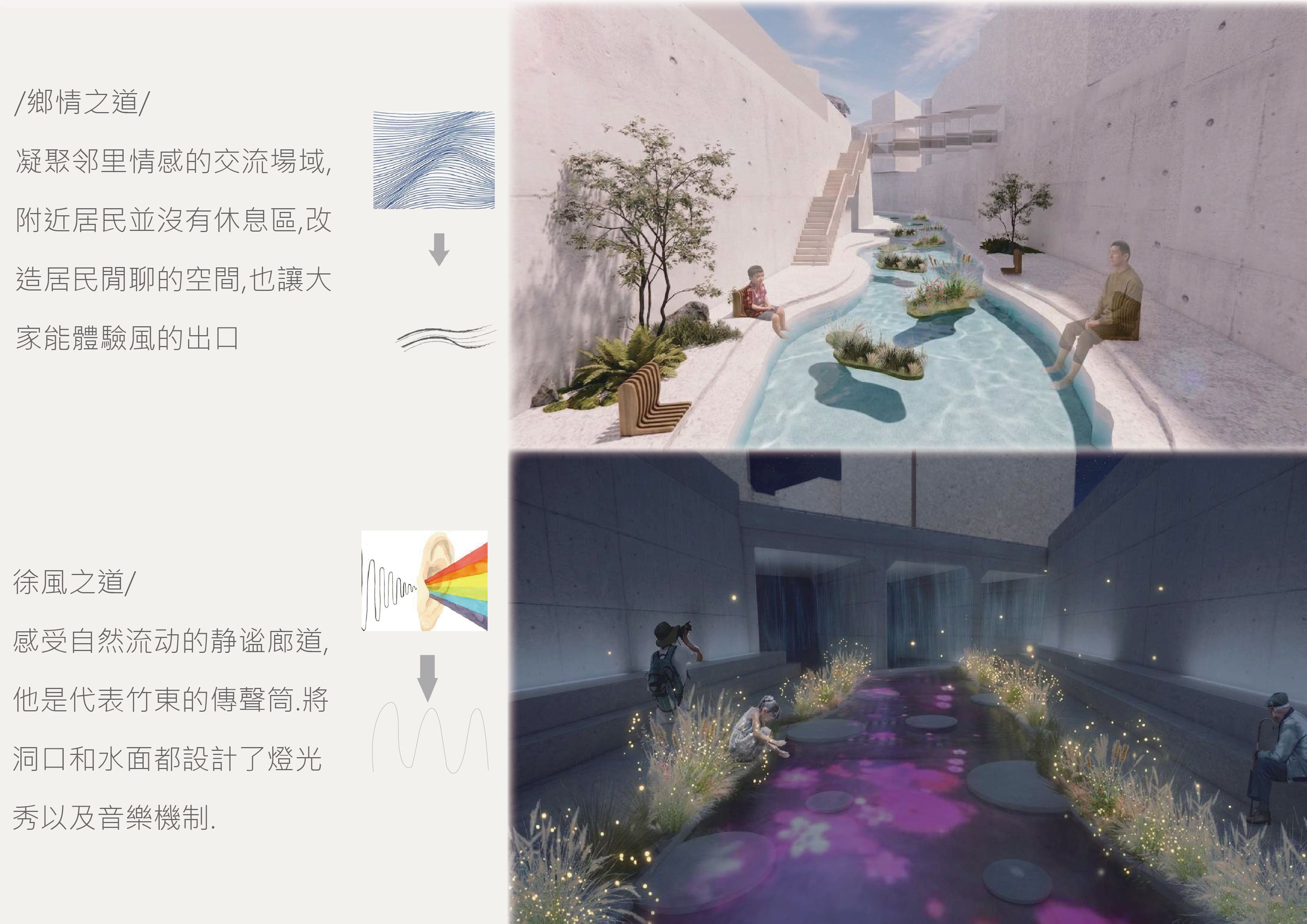
以竹東河域為媒介,本設計重新審視橋下與河岸邊界這些長期被忽視的都市剩餘空間。透過水岸紋理、城市動線與日常記憶的交織,將原本被視為消極與邊緣的場域,轉化為具備公共性與多元使用可能的共生空間,重新建立人與河流、城市與生活之間的關係。
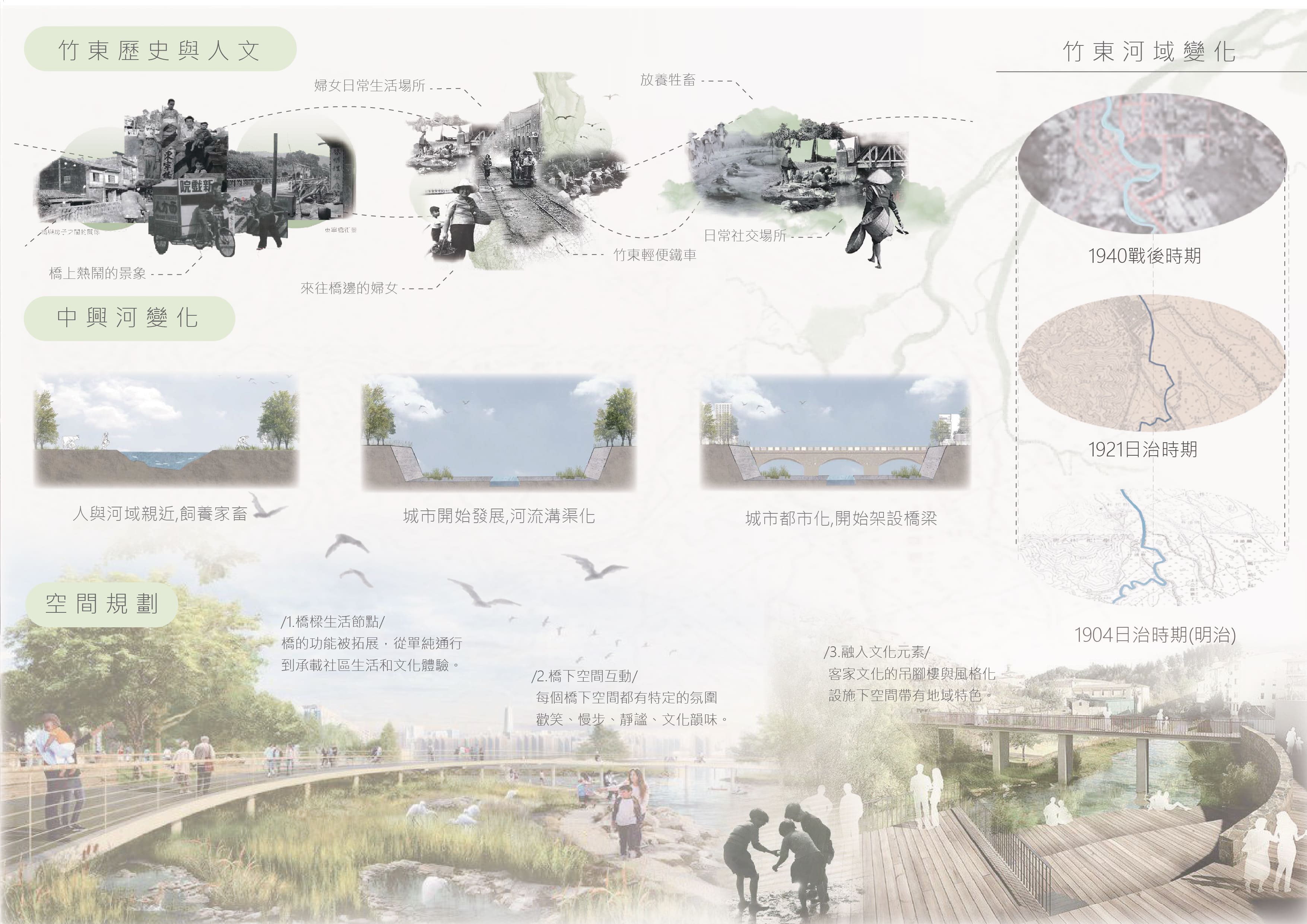
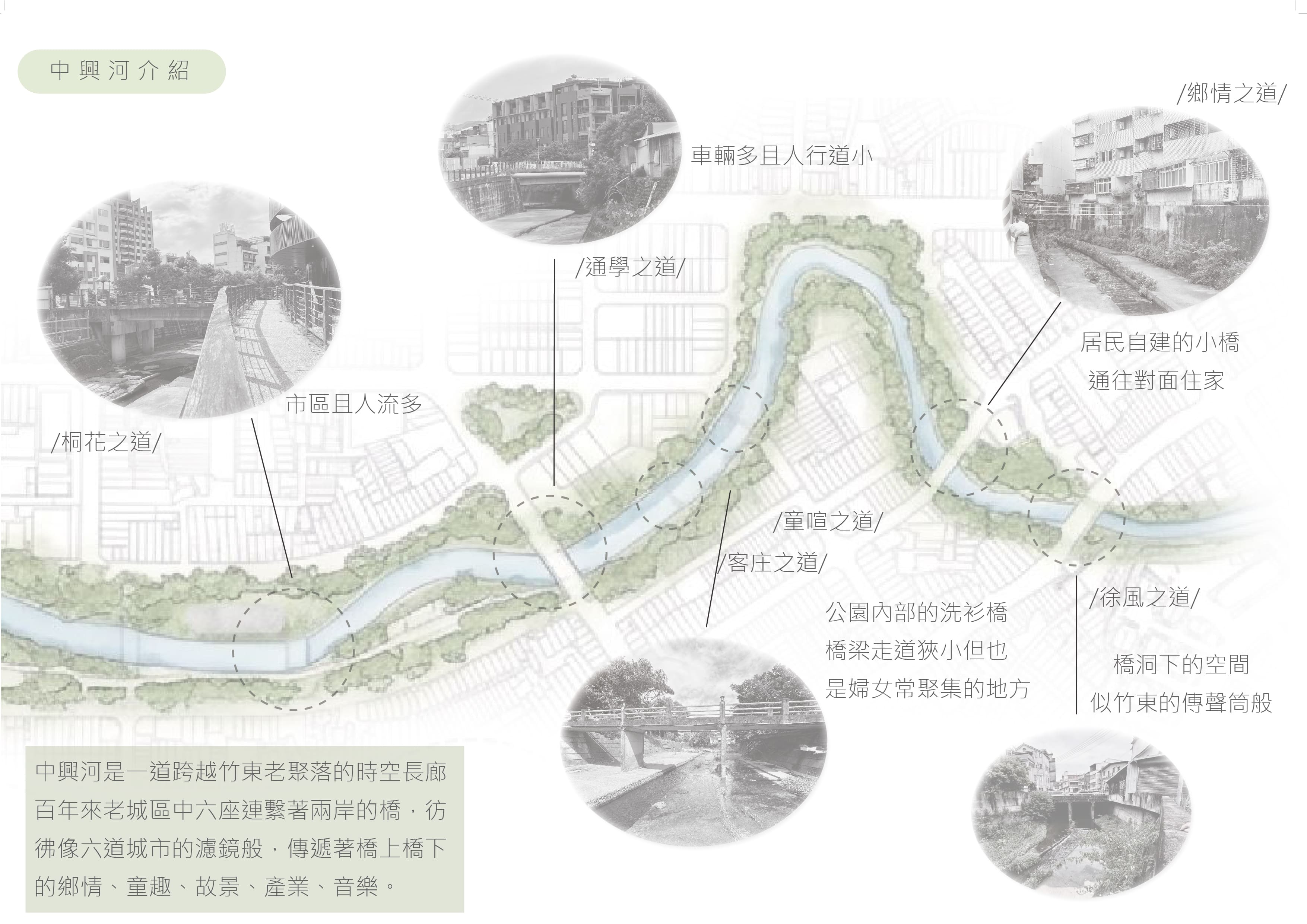
基地中六座橋梁橫跨中興河,串聯竹東的通學、生活、商業、生產與休閒活動,構成地方運作的重要脈絡。這些橋梁不僅是交通節點,更承載著居民的集體記憶與日常經驗。橋上是流動的城市秩序,橋下則是被忽略卻充滿潛力的生活場域,兩者形成強烈的空間對比與關係張力。
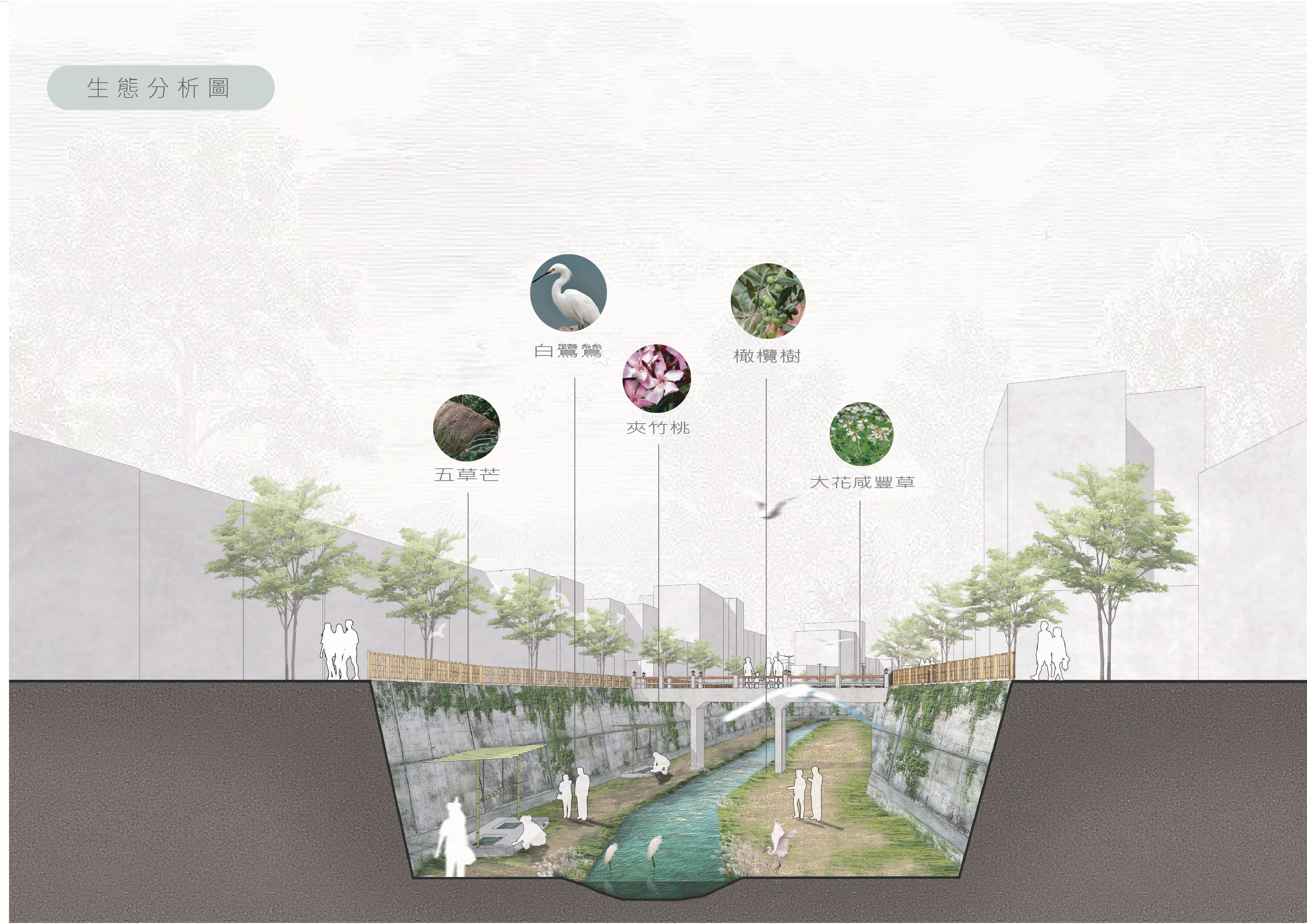
設計透過節點植入與空間介入,將橋下河床轉化為運動、展演與交流的平台,使日常活動得以重新發生並被看見。橋梁與河床之間形成相互對應的空間敘事,使原本隱性的生活軌跡轉為可感知的城市風景,進而形塑出具有地方性、流動性與記憶感的竹東河岸新樣貌。
Using the Zhudong River basin as a framework, this project re-examines the often-overlooked landscape beneath the bridges and along the riverbanks. Through the interweaving of waterfront textures, urban circulation, and everyday memories, it transforms these elements into symbiotic spaces that integrate sports, performances, and daily interactions, shaping a unique local landscape characteristic of Zhudong. These six bridges connect Zhudong's daily life, schooling, commerce, production, and entertainment, spanning the Zhudong Canal (Zhongxing River), which is inextricably linked to the memories of Zhudong residents. The bridges correspond to the life recorded in the river below, and this interplay between the bridges and the riverbed often represents the most beautiful scenery in Zhudong!