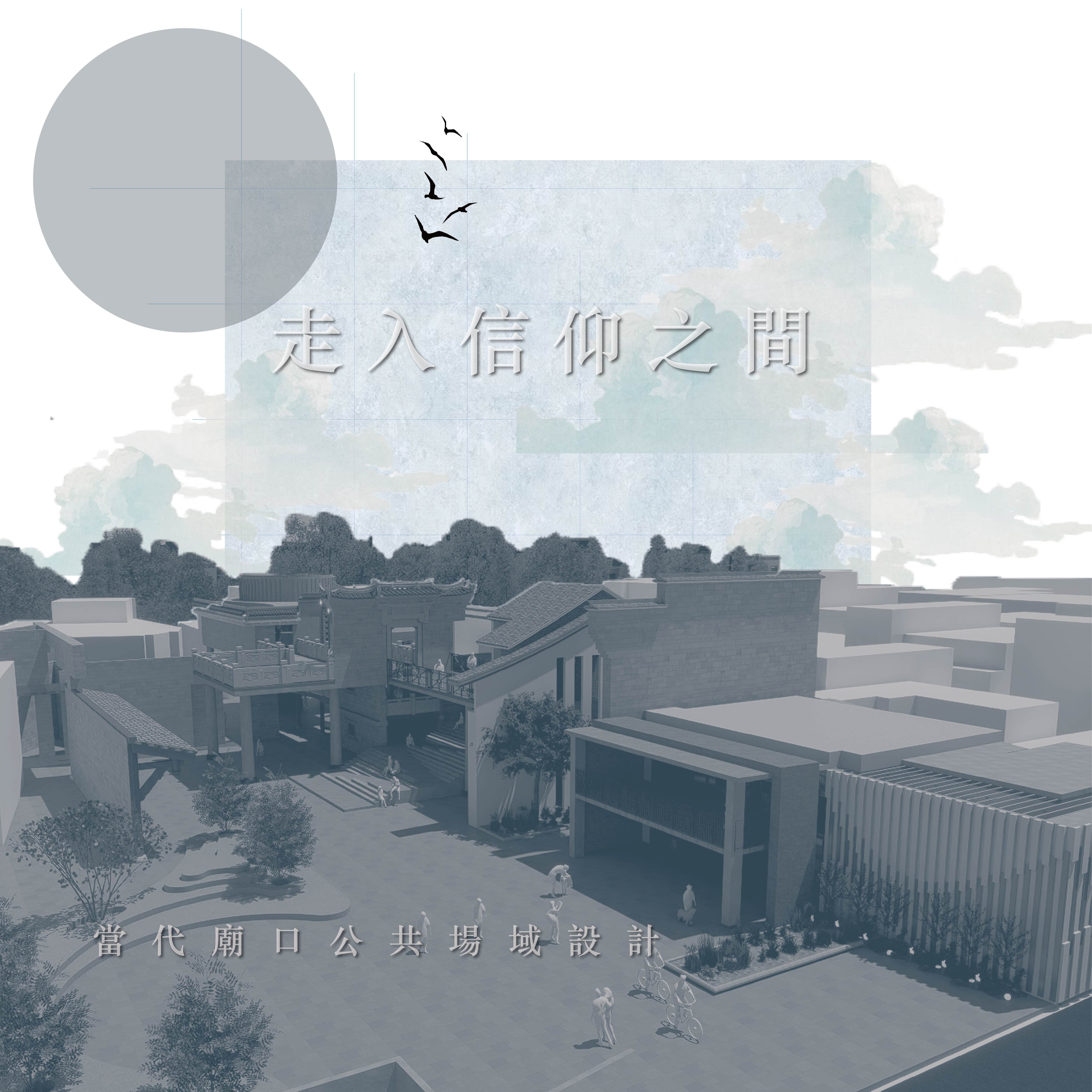
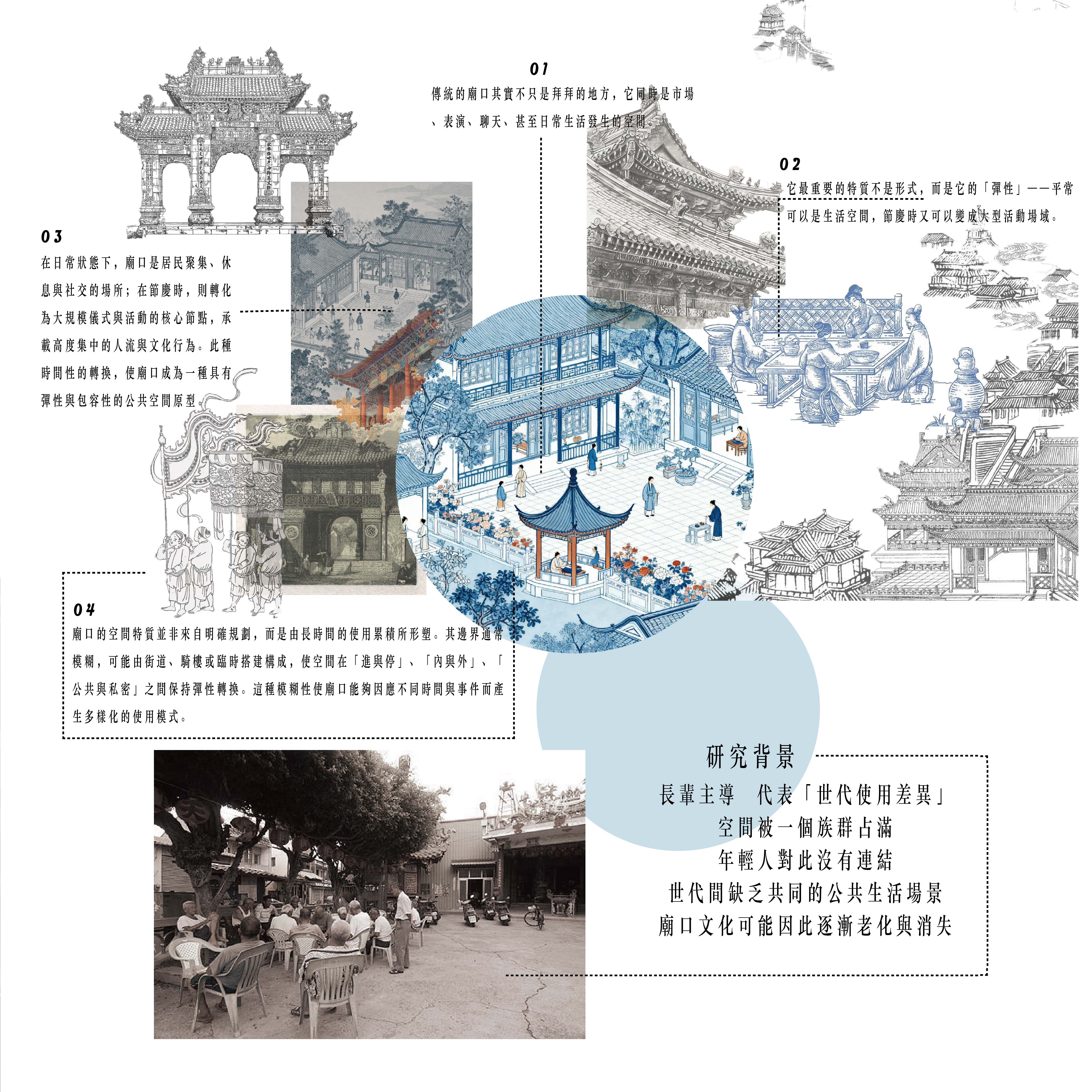
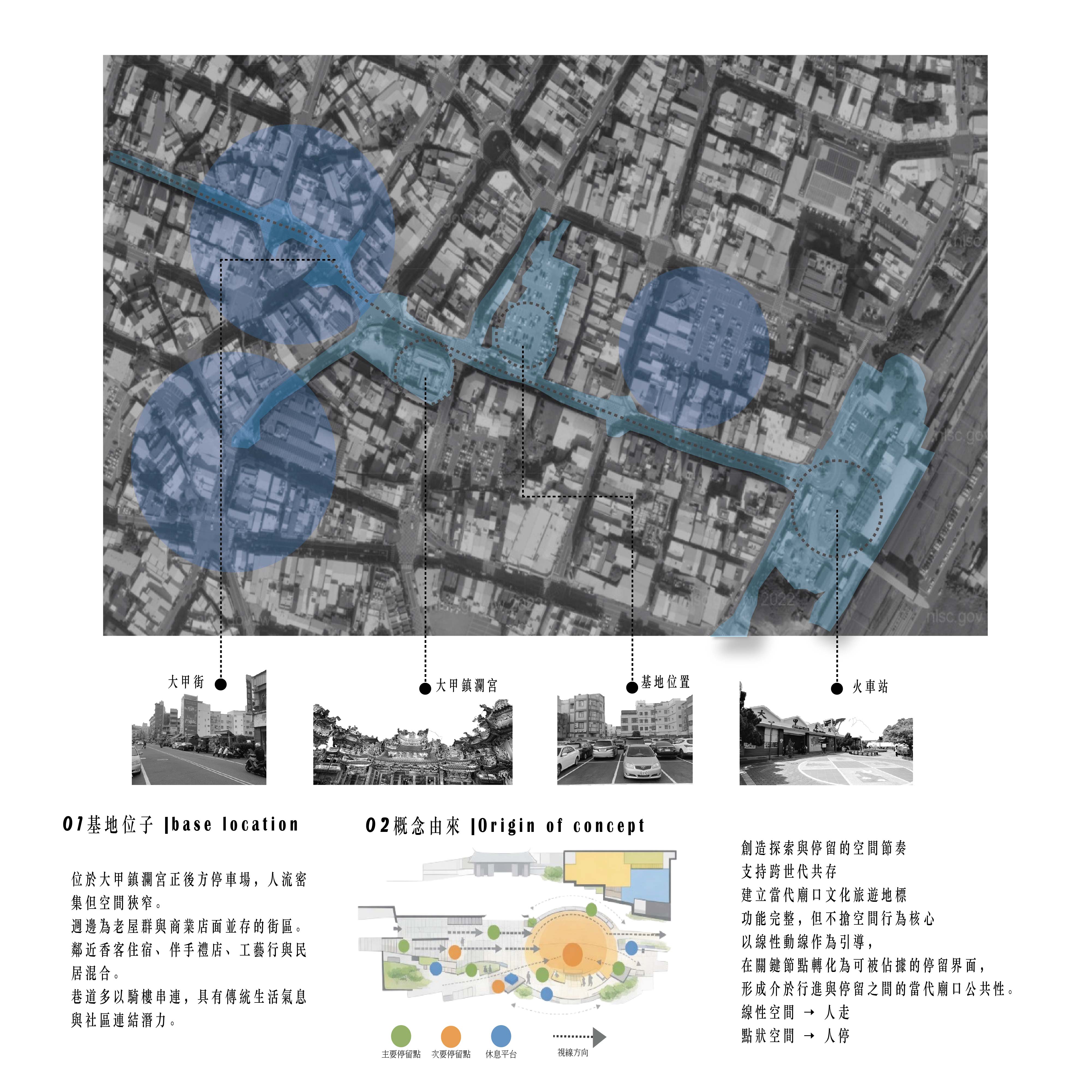
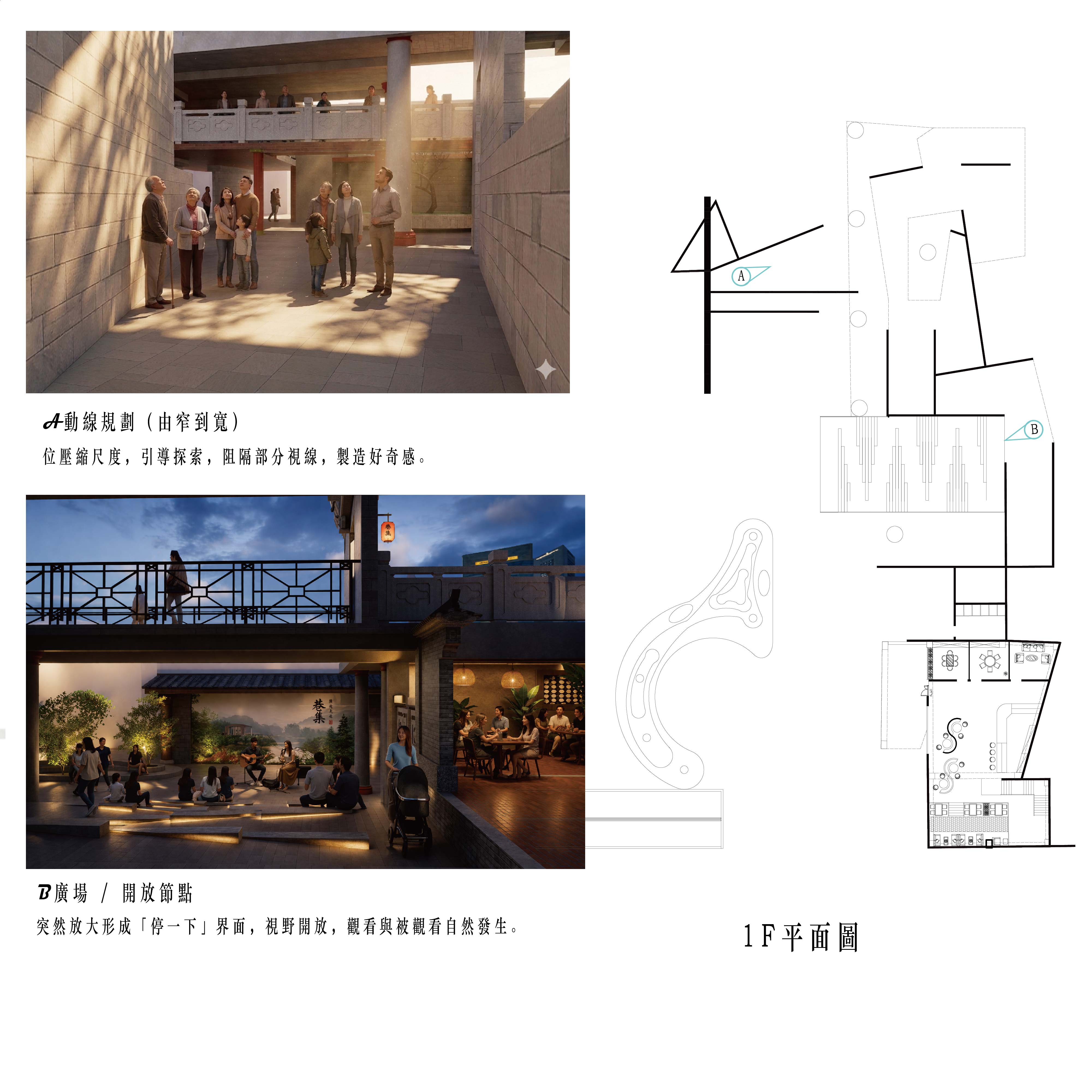
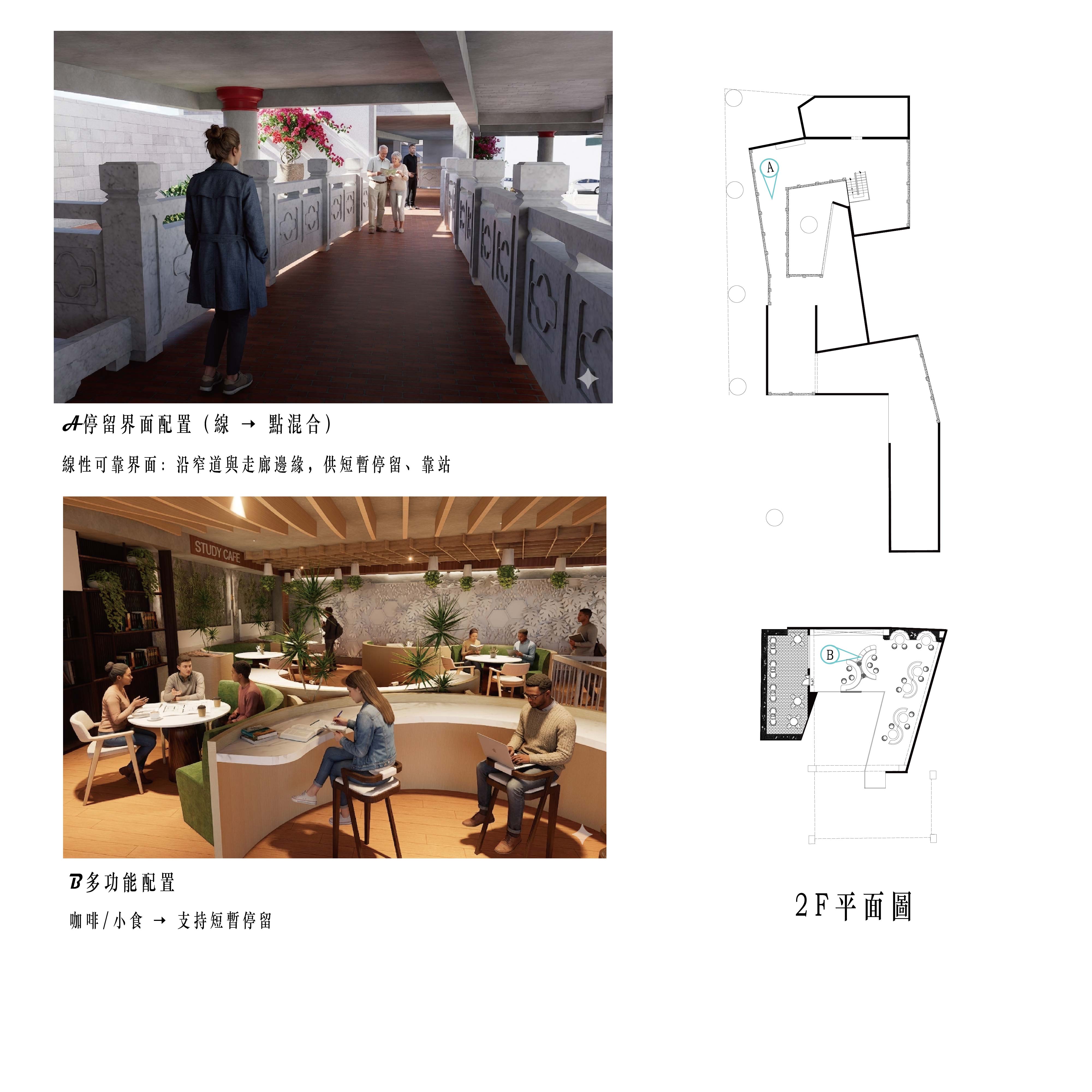
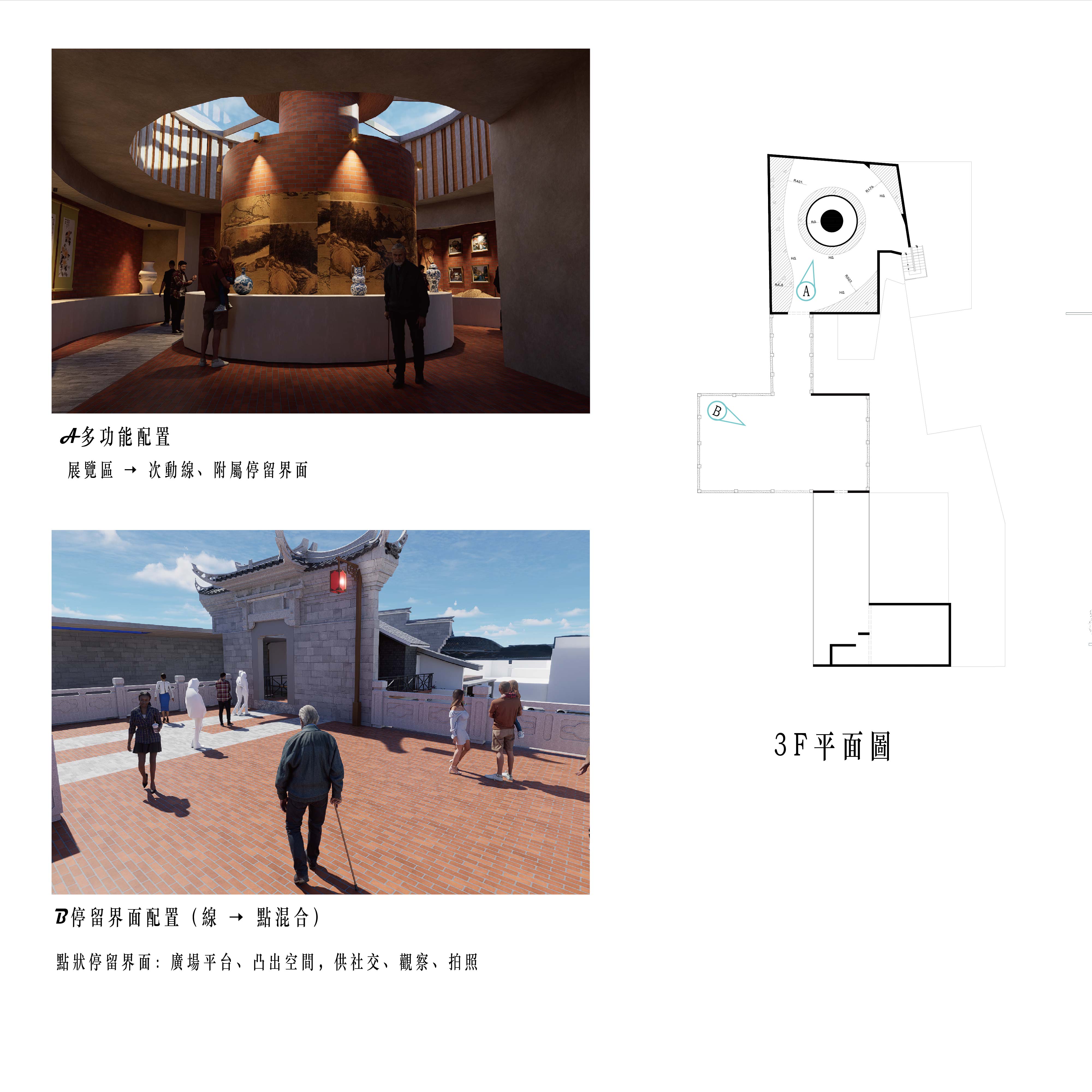
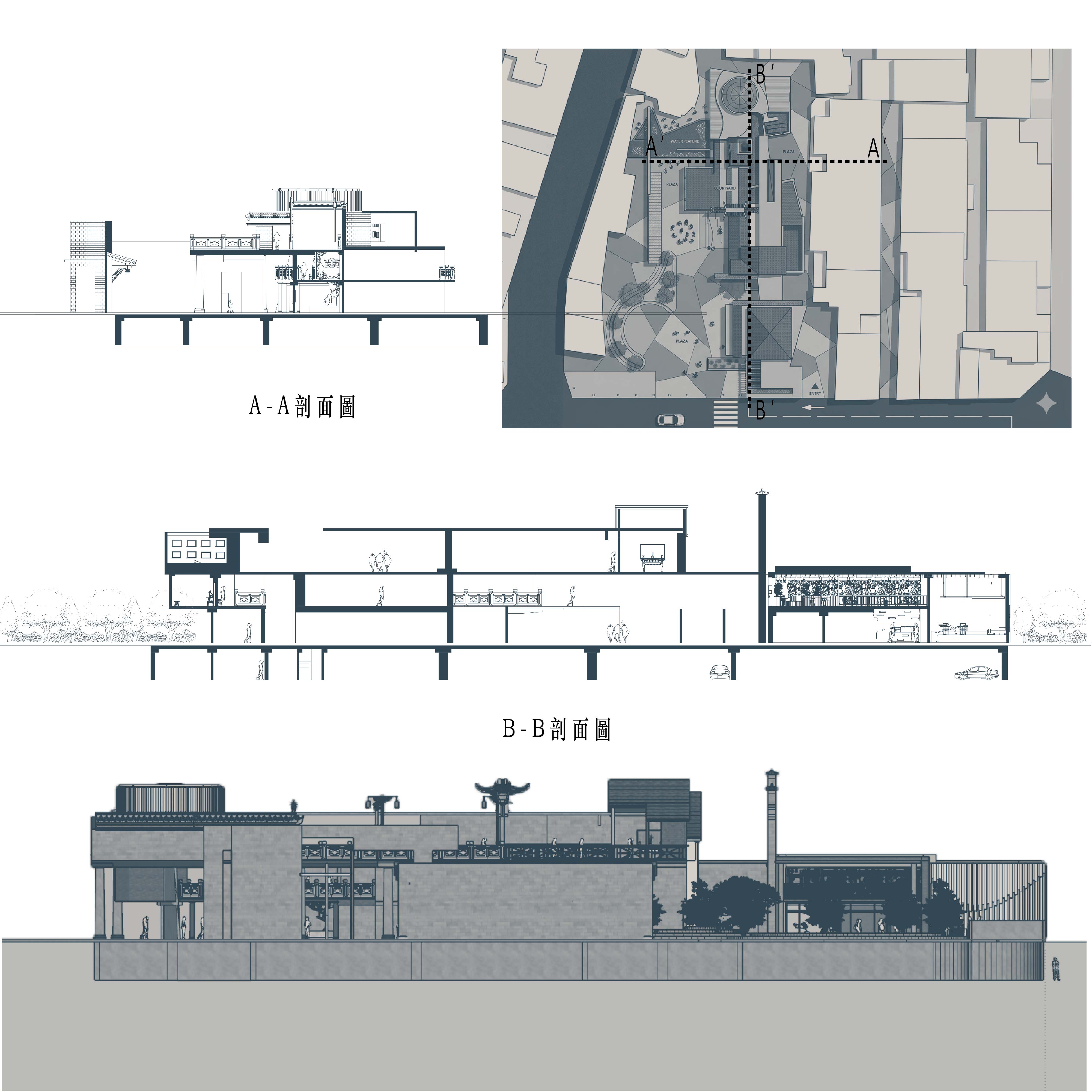
本設計以台中市大甲區鎮瀾街周邊街廓為基地,回應宗教活動高度集中、日常生活密集卻缺乏可停留公共空間的都市現況。基地雖位於文化與人流核心,實際使用卻長期以通過性動線與功能導向停留為主,使公共行為被壓縮於騎樓邊緣,並造成不同世代之間的空間斷裂。
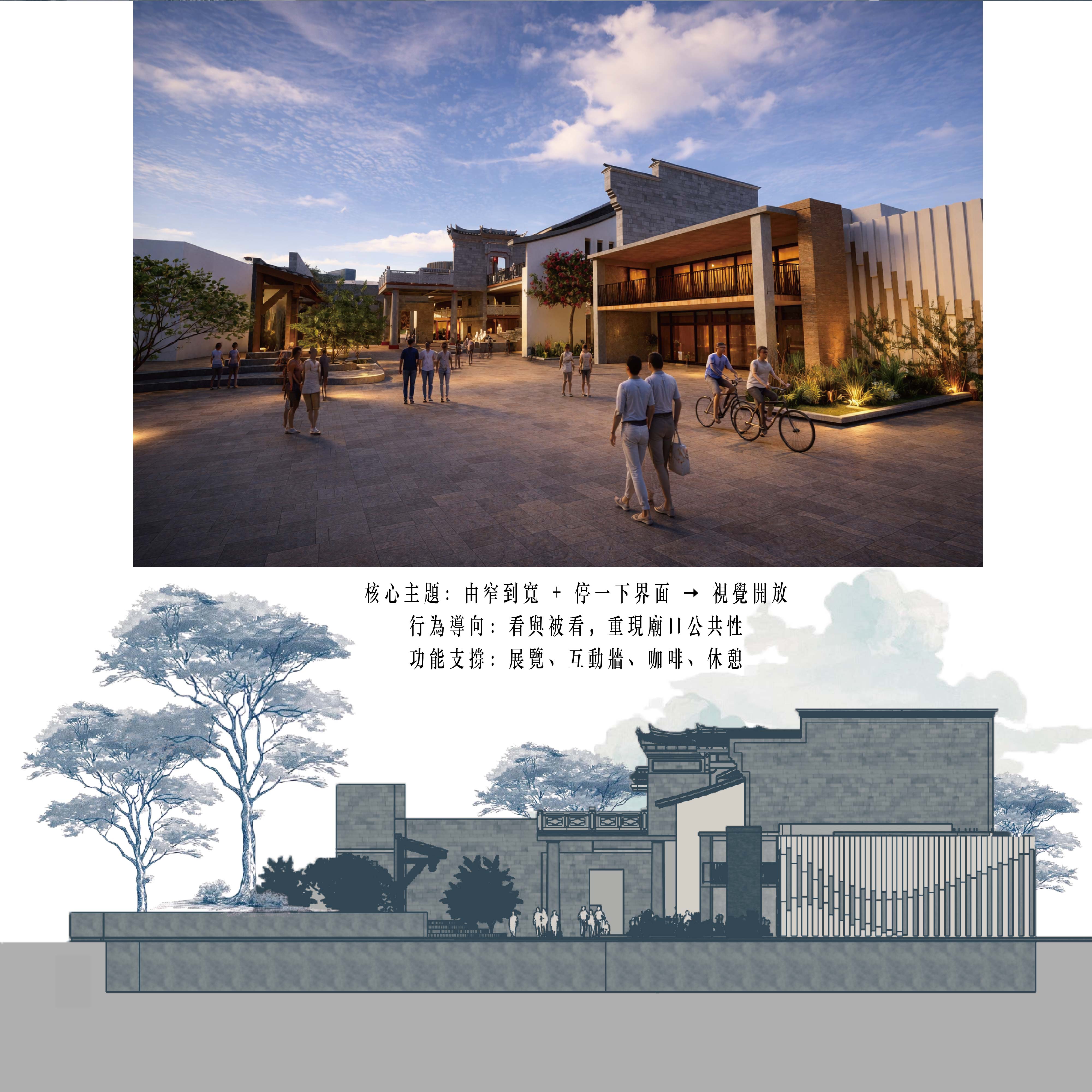
本案不以建築形式或單一機能作為設計起點,而是從「人如何進入、移動與停留」的行為觀察出發,透過量體退縮、留白與高度配置,生成一個介於通過與停留之間的公共核心空間。該空間不預設使用族群與活動內容,而是以開放、模糊的空間邊界,承接既有但無處安放的日常行為。
設計目標在於建立一種由行為生成空間的建築邏輯,使場域能隨時間、節慶與使用方式變化而被重新詮釋,並成為串聯在地生活、宗教文化與跨世代共存的公共空間結構。
This project is located on Zhenlan Street in Dajia, Taichung, addressing a dense urban context shaped by religious activities and daily life, yet lacking spaces for lingering. Instead of starting from form or function, the design is based on how people move and stay. Through mass reduction and spatial voids, it creates a public core between transit and pause. With open and flexible boundaries, the space accommodates diverse everyday behaviors. The project proposes an architecture generated by behavior, allowing the site to adapt over time and connect local life, culture, and different generations.