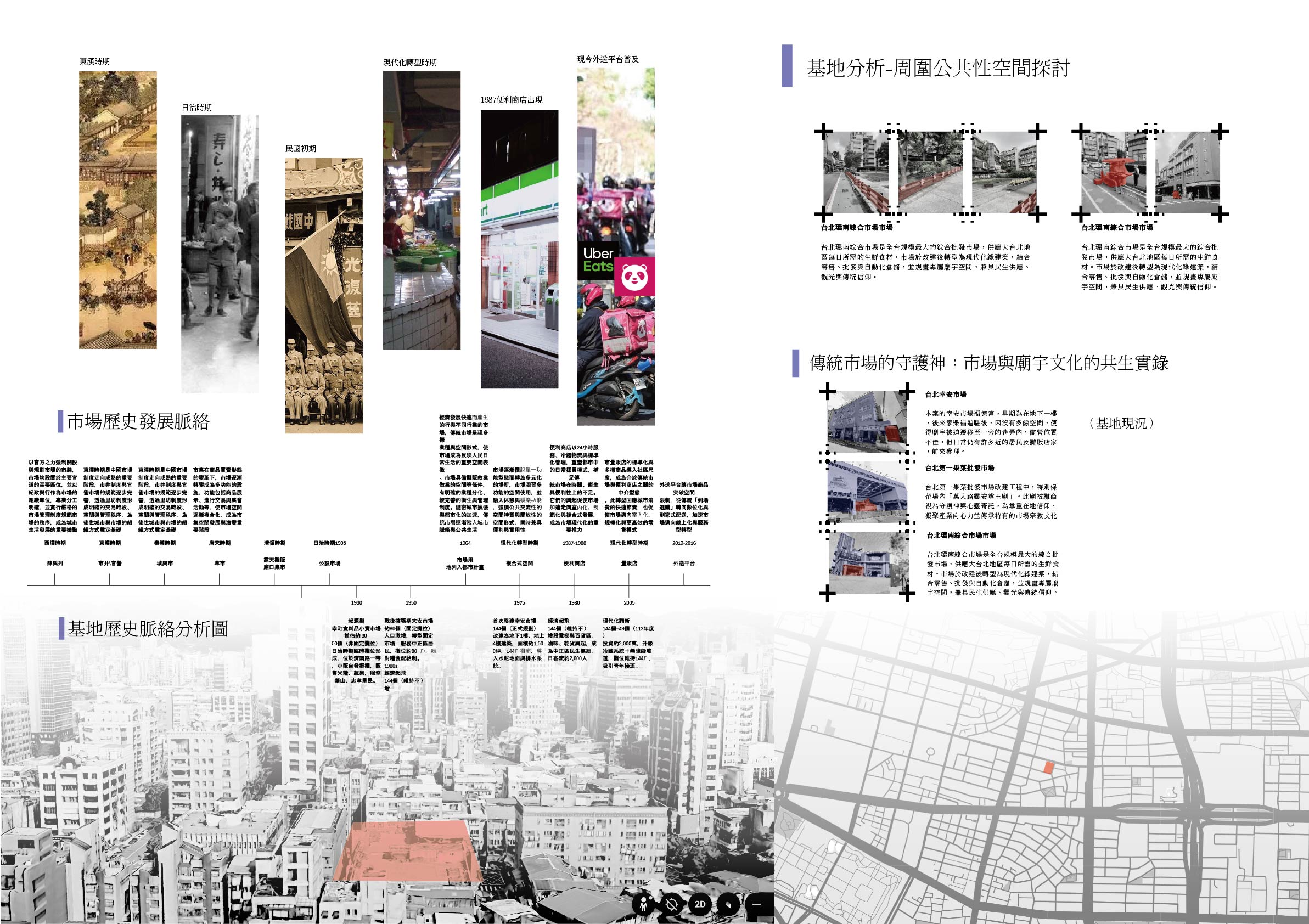
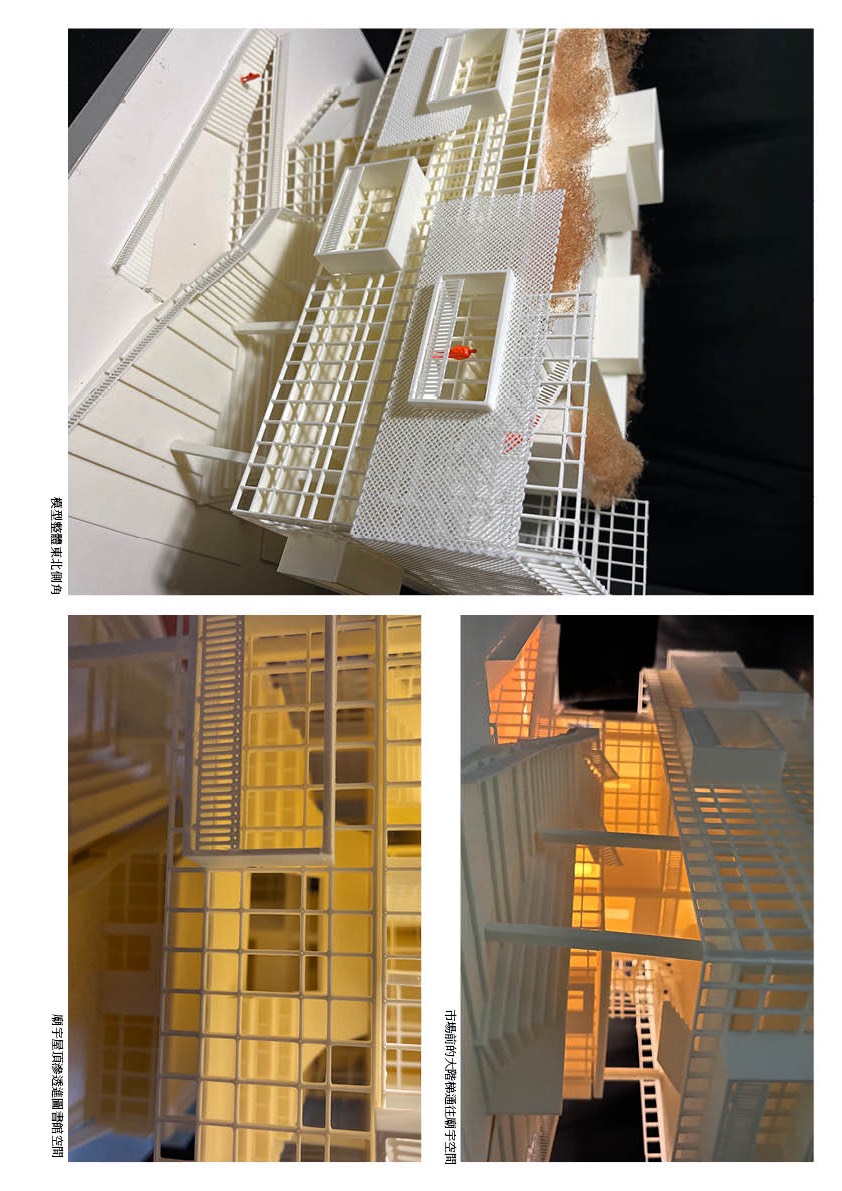
在台灣許多早期的市場,都會依附在廟宇旁邊,因此在這些市場內或是周圍會有自己的小廟、神壇,去供奉特定神明。
台北市的幸安市場位在台北市大安區濟南路上,當我走進去的時候就發現內部的空間幾乎都沒什麼人,但是在市場的旁邊土地公廟有別於市場內部,不管任何時間點都還是有非常多人去參拜,我覺得這是一個非常有趣的現象。於是我開始去分析台灣比較現代的市場。
我認為這些信仰空間不只是宗教象徵,也是市場「地方記憶」的重要一部分。並且市場往往都是從一個廟宇為核心去形成,但是在現今幸安市場的現況中發現,土地公廟被置入在一旁狹窄的巷道內,原本應該被作為核心的空間,在這裡就只是依附在市場角落。
因此我認為市場與廟宇共生是個很普遍的現象,往往市場空間、與廟宇空間基本都有一個共構的可能,不管是環南市場還是果菜市場,這件事情是不可被分割,所以我認為這個Urban Hybrid的事不是都只是把功能性的空間組構,應該是hybrid的部分也要加入到心靈凝聚成在地力量的一種場域,市場空間被超市取代的狀態下那廟會的活動與廟宇的連結性才是把傳統市場成爲一個在地里民的社會凝結器,
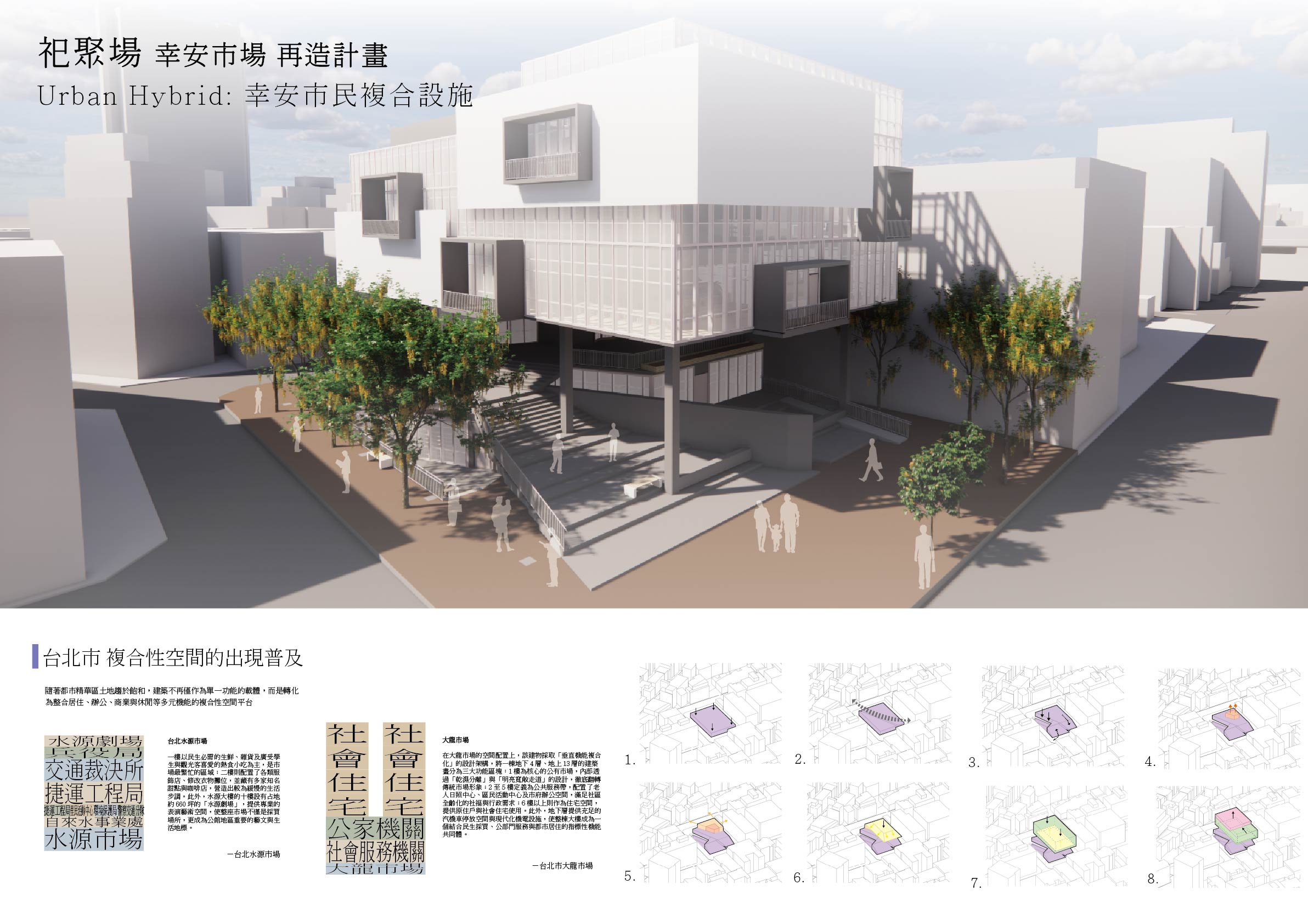
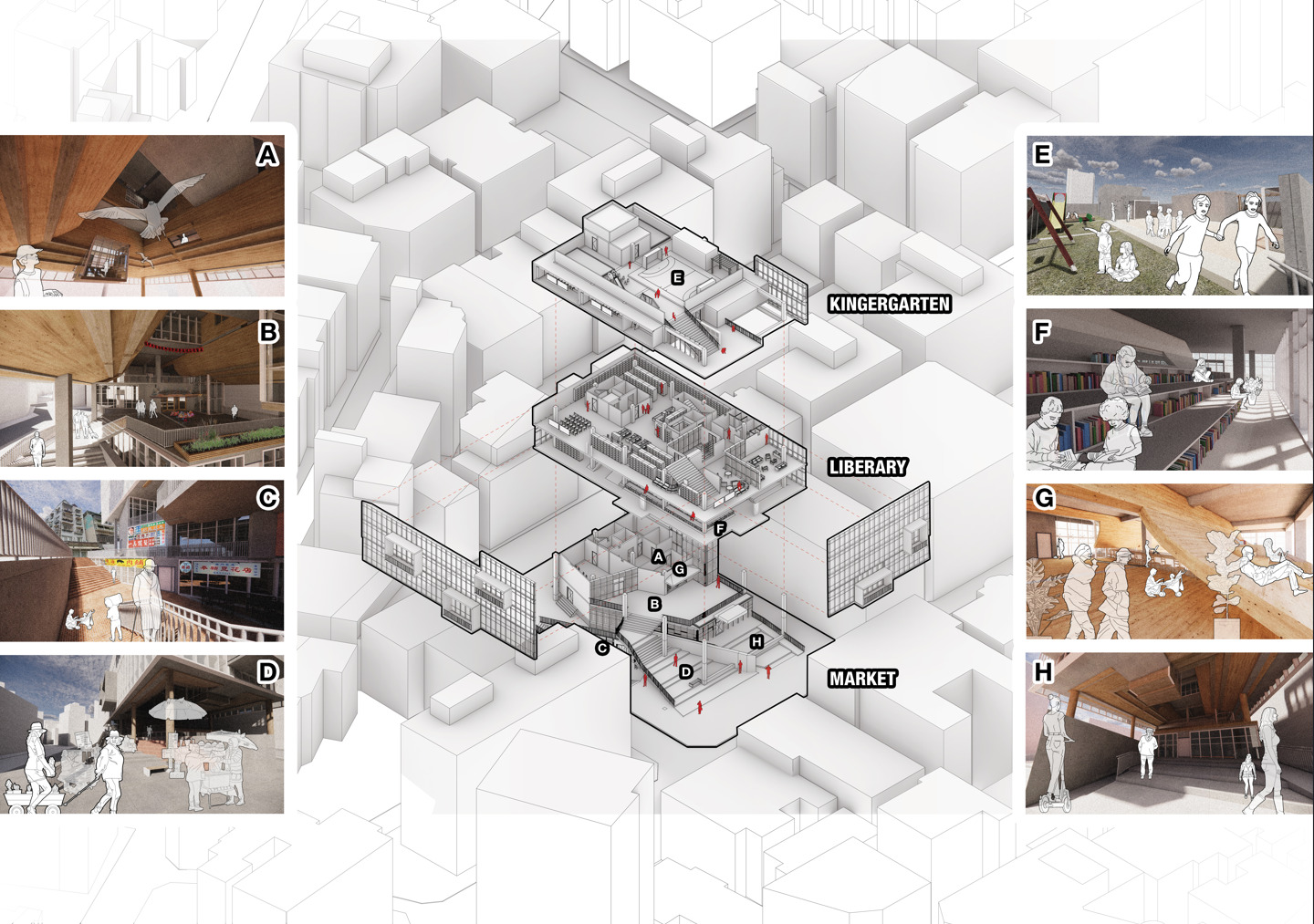
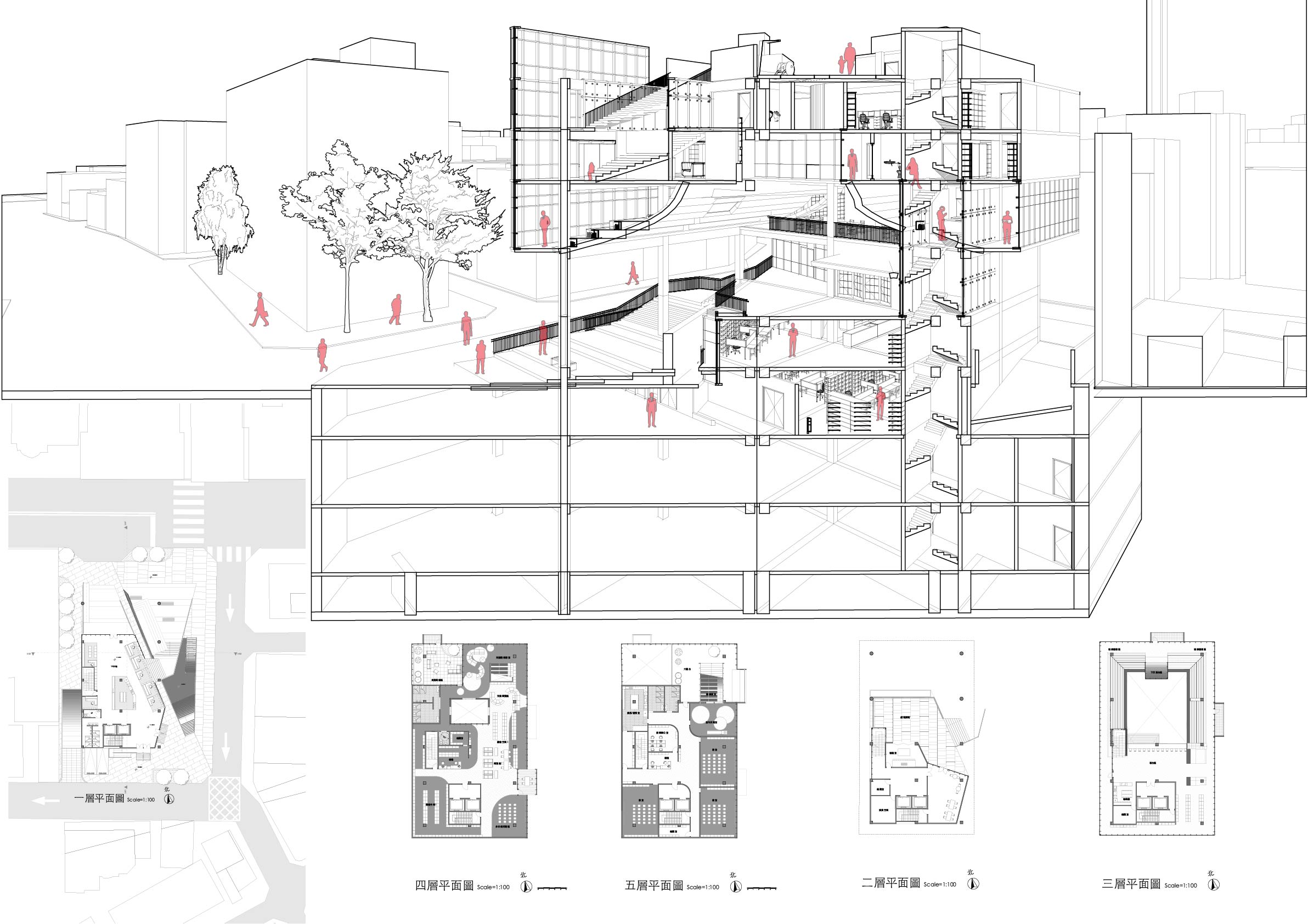
因此我想在這次的設計提案中,以廟宇為核心,將參拜廟宇作為在地里民的社交凝結器。
Many early markets in Taiwan were attached to temples, so these markets often had their own small shrines or altars within or around them, dedicated to specific deities.
The Xing'an Market in Taipei City, located on Jinan Road in Da'an District, was surprisingly empty when I entered. However, the adjacent Earth God Temple, unlike the market itself, was always bustling with worshippers at all times. I found this a very interesting phenomenon. This led me to analyze more modern markets in Taiwan.
I believe these spaces of faith are not merely religious symbols, but also an important part of the market's "local memory." Markets often develop around a temple, but in the current state of the Xing'an Market, the Earth God Temple is relegated to a narrow alleyway. What should have been the core space is merely relegated to a corner of the market.