這是一段有關於界線之間的故事:
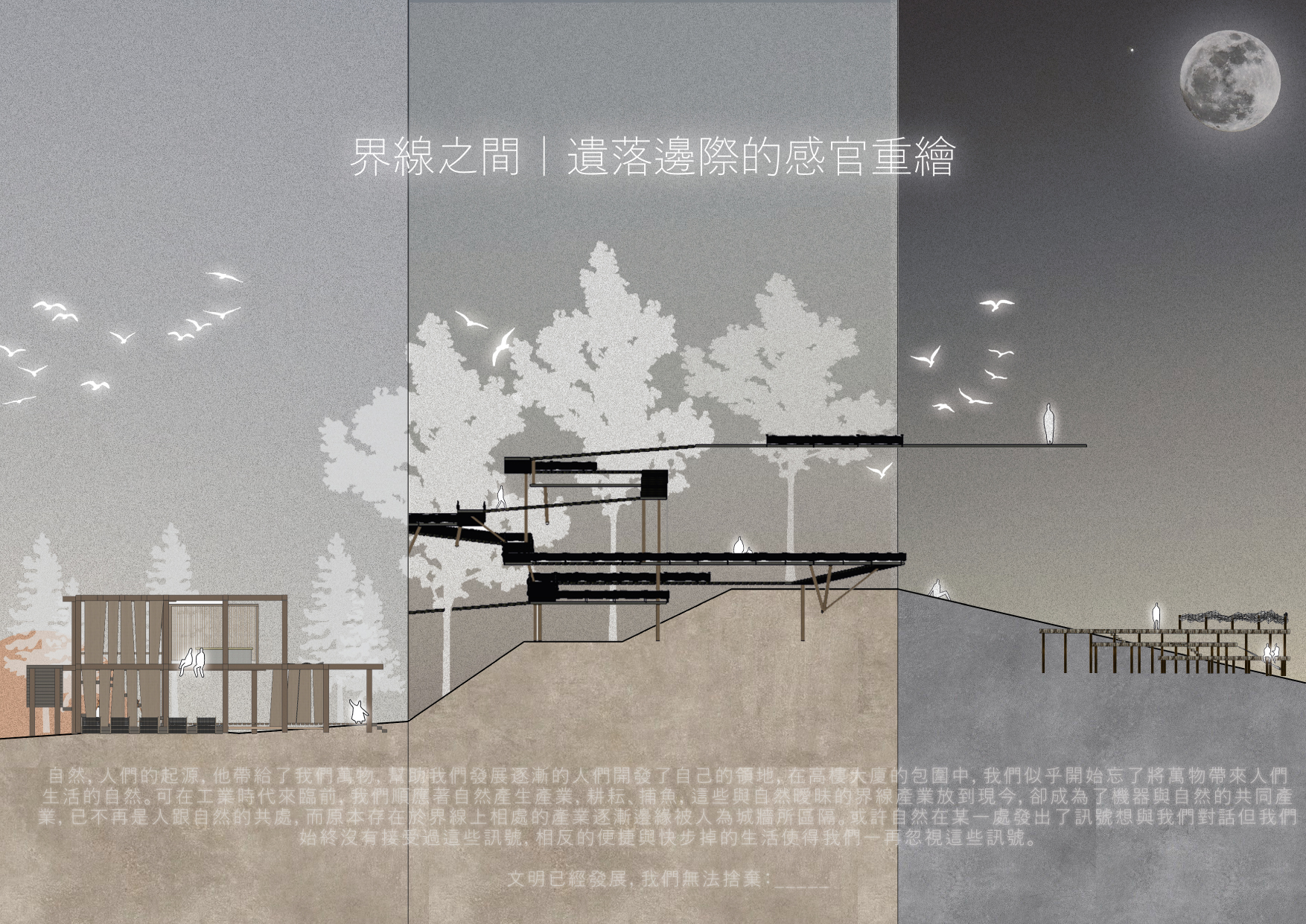
界線是充斥我們生活的一個狀態,從座位之間到建築交界,都是一種無形的劃分,此計畫的核心是人與自然的界線。早期的人文產業與自然息息相關,種稻、捕魚都是與自然的對話;在工業來臨都市開始擴張後,對話逐漸產生隔閡,對話被阻隔,熱絡的交談漸漸消逝,放到現今他們依然存在,也只留下被忽視的他們。
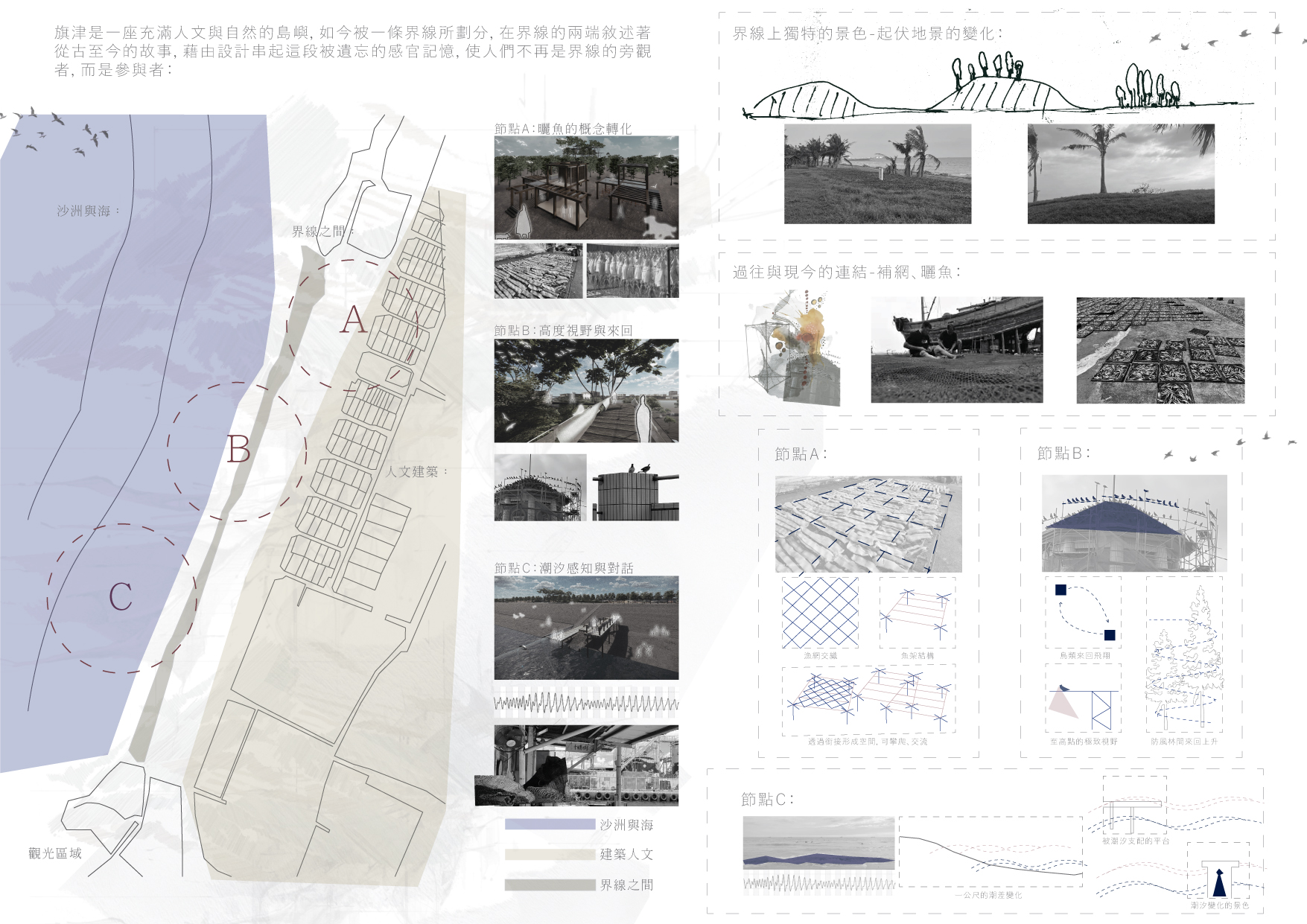
旗津是一座承載歷史人文與自然狀態的島嶼,在島上有一條名為踩風步道的帶狀軸線,他是觀光的產物,如今只是來往觀光的動線,他成為了人們的城牆,劃分了兩域,隔絕了感知,使界線的一端幾乎無人問津,而人們成為了界線形成的旁觀者。
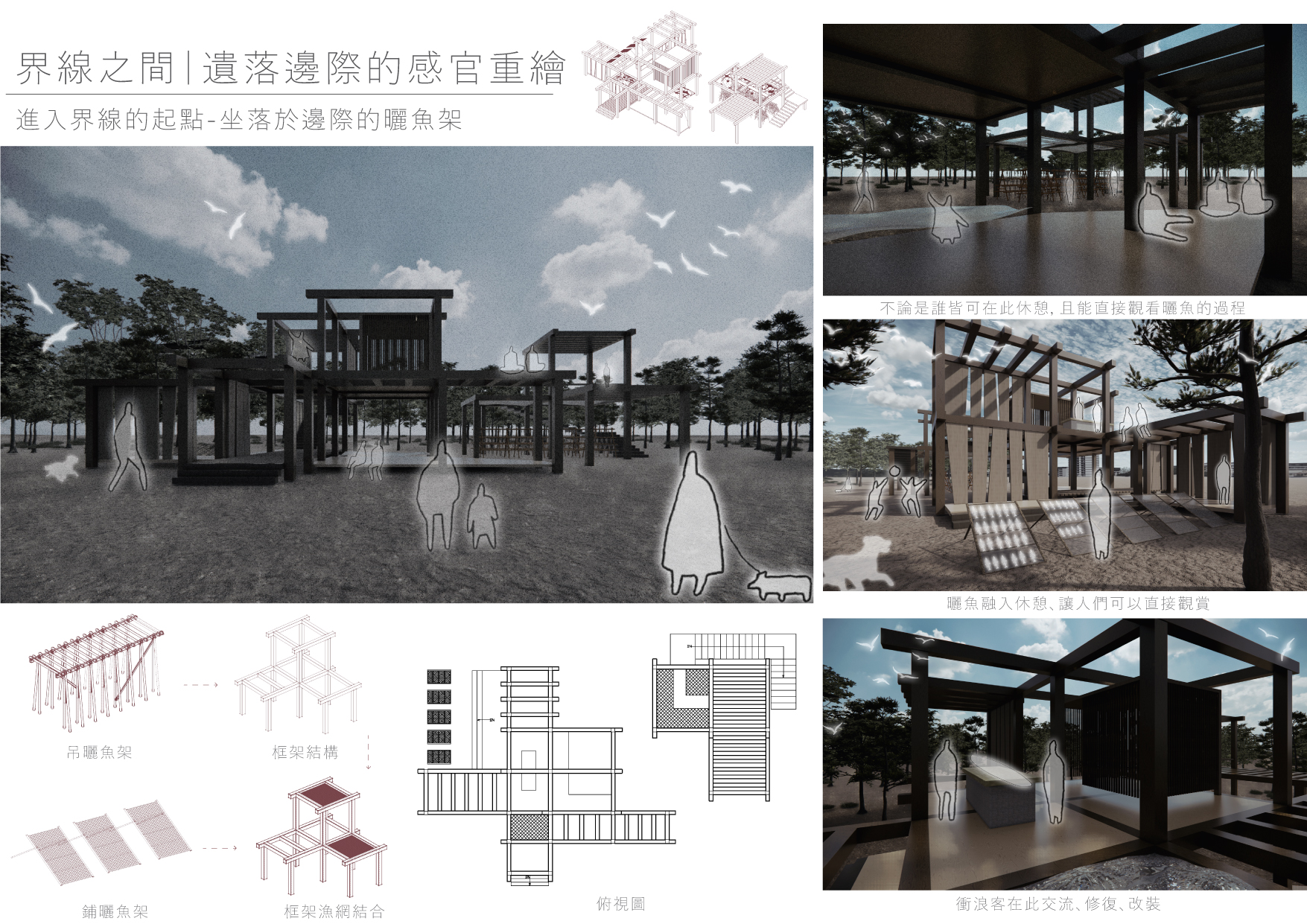
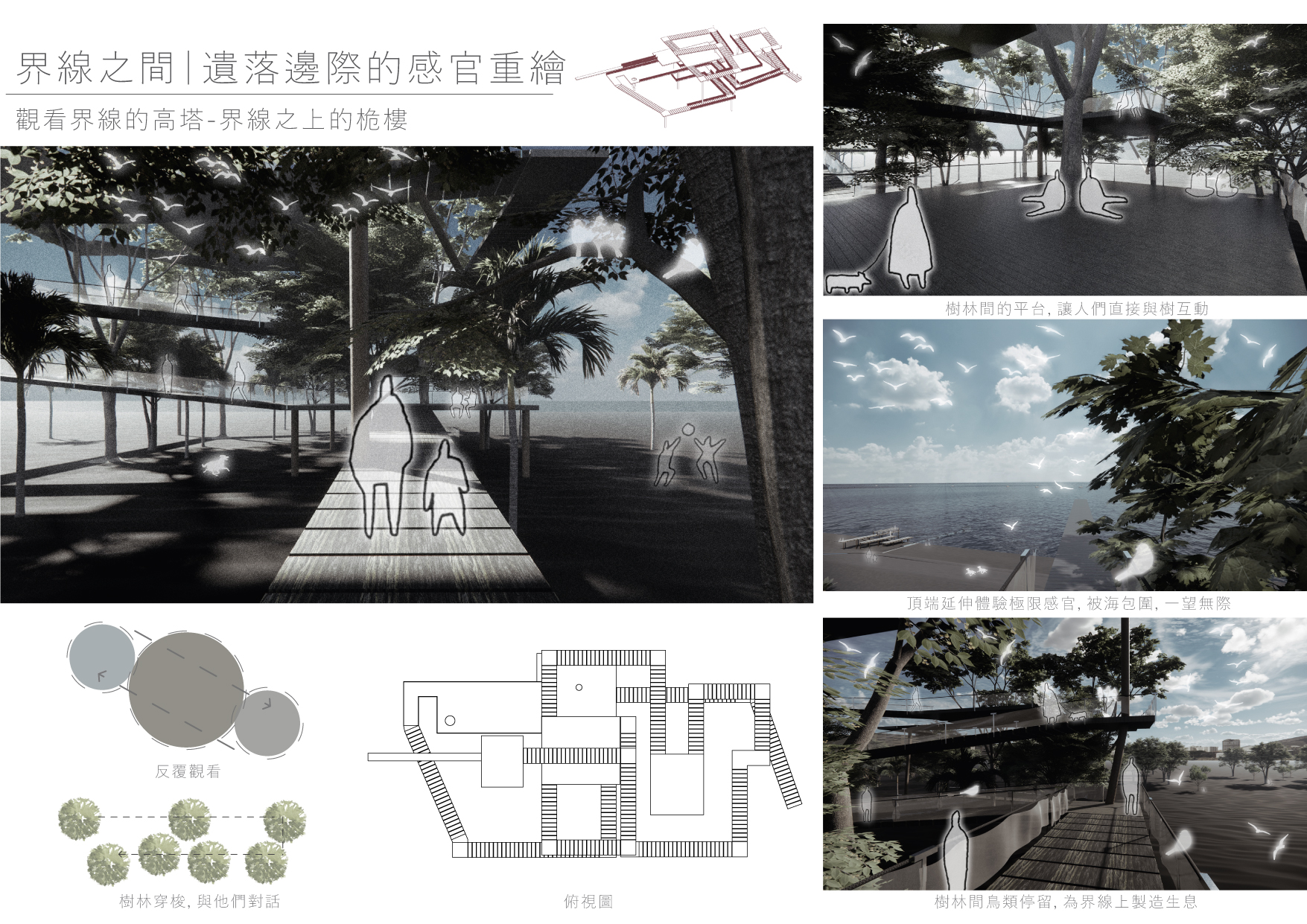
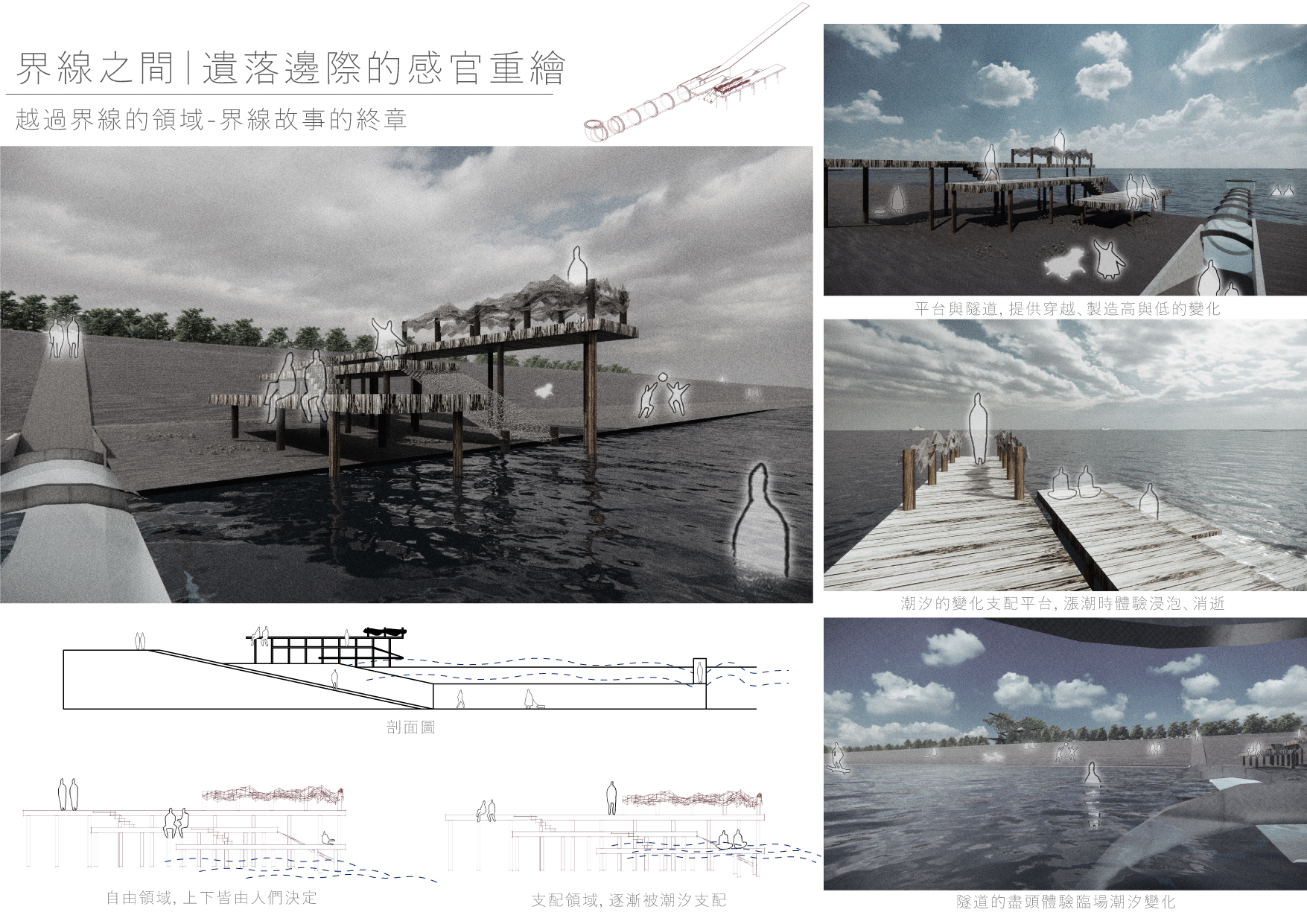
透過調查發現,界線的兩端有著跨越時空的對話故事,藉由設計將串聯這段被遺忘的感官記憶,以建築空間化為節點,引領人們穿越界線,同時訴說著曾經此處人與自然的對話,提出一系列感官空間來重繪界線之間的感知記憶。
至此界線之間的故事各一段落,踩風步道不再是劃分兩域的界線,而是人與人與自然對話的場域,人們不再是界線的旁觀者,而是參與者。
This is a story about the space between boundaries. Boundaries define our lives, from seat gaps to architectural junctions. This project explores the threshold between humanity and nature. Historically, industries like fishing formed a dialogue with nature. However, urban expansion severed this connection, leaving ignored sensory remnants. In Qijin, the "Caifeng Path" has devolved into a "city wall" that isolates perception and divides territories. It renders one side forgotten, leaving people as mere bystanders. Through site investigation, I discovered stories of dialogue spanning time. This design reconnects these memories by transforming spaces into "nodes" of intervention. These nodes lead people to cross boundaries, narrating past dialogues to re-map perceptual memory. Here, the story reaches a turning point. The Caifeng Path is no longer a division but a field for dialogue. People are no longer bystanders; they are active participants.