模組化魚梯系統
MODULAR FISHWAY SYSTEM
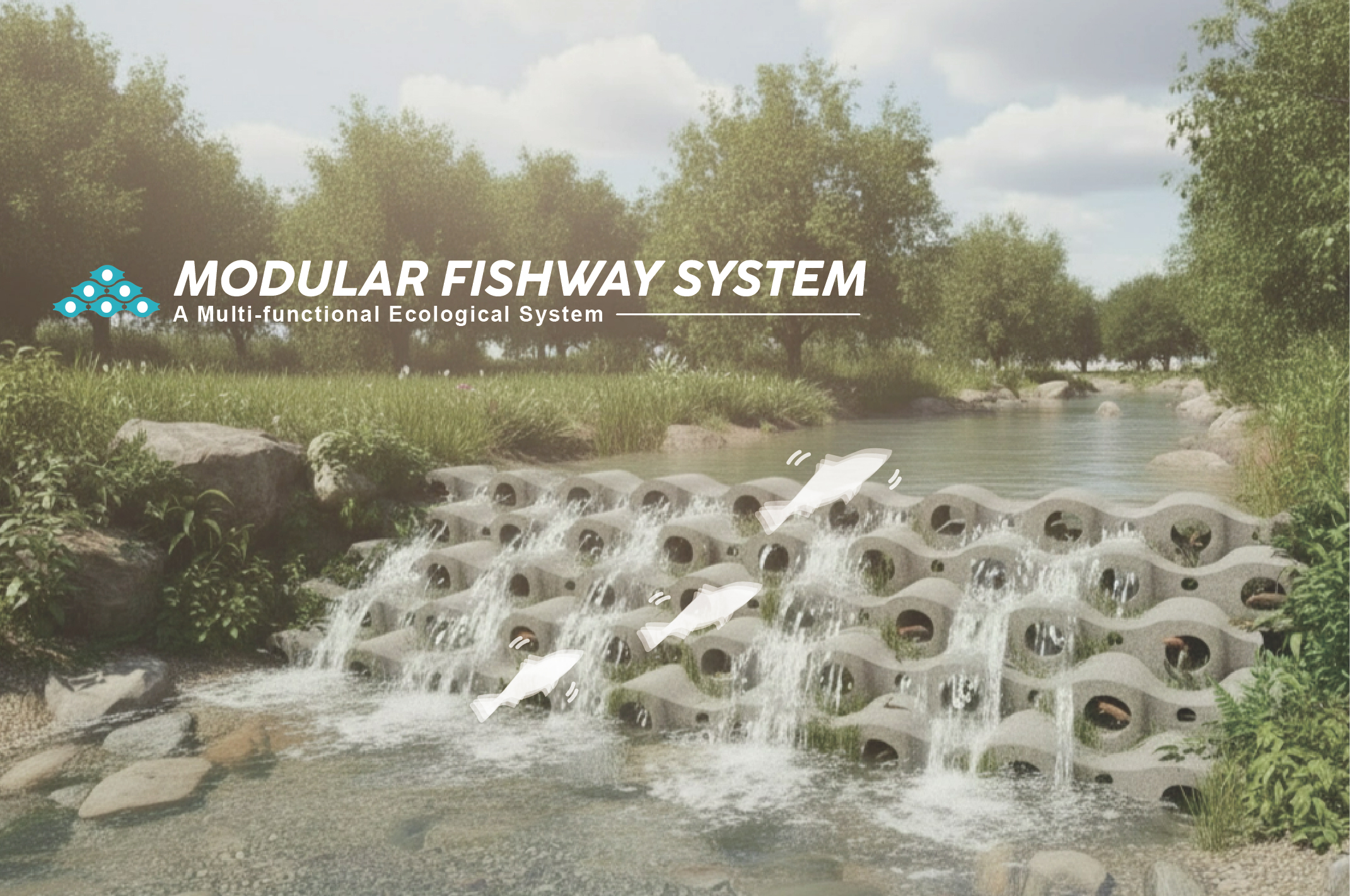
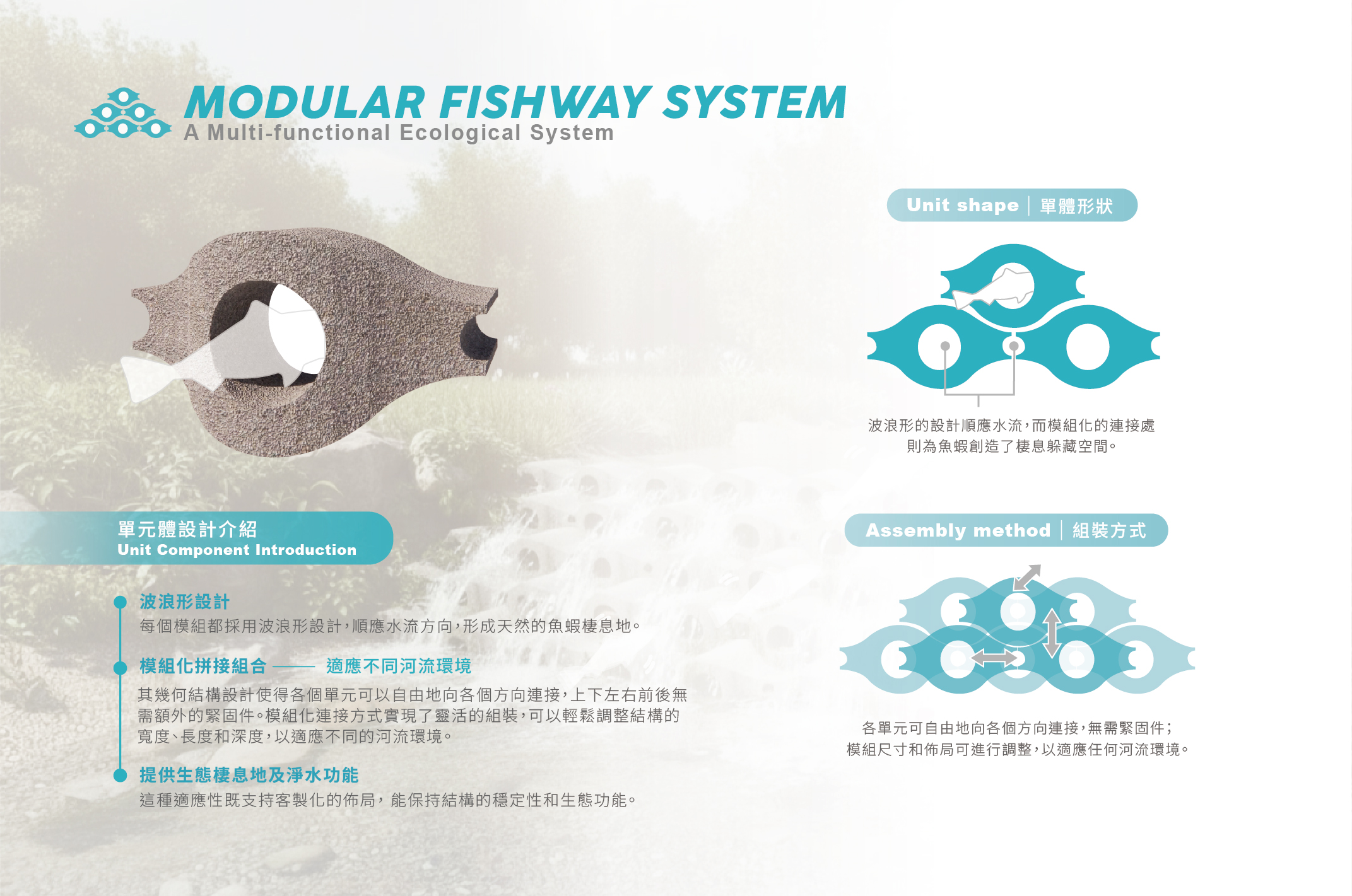
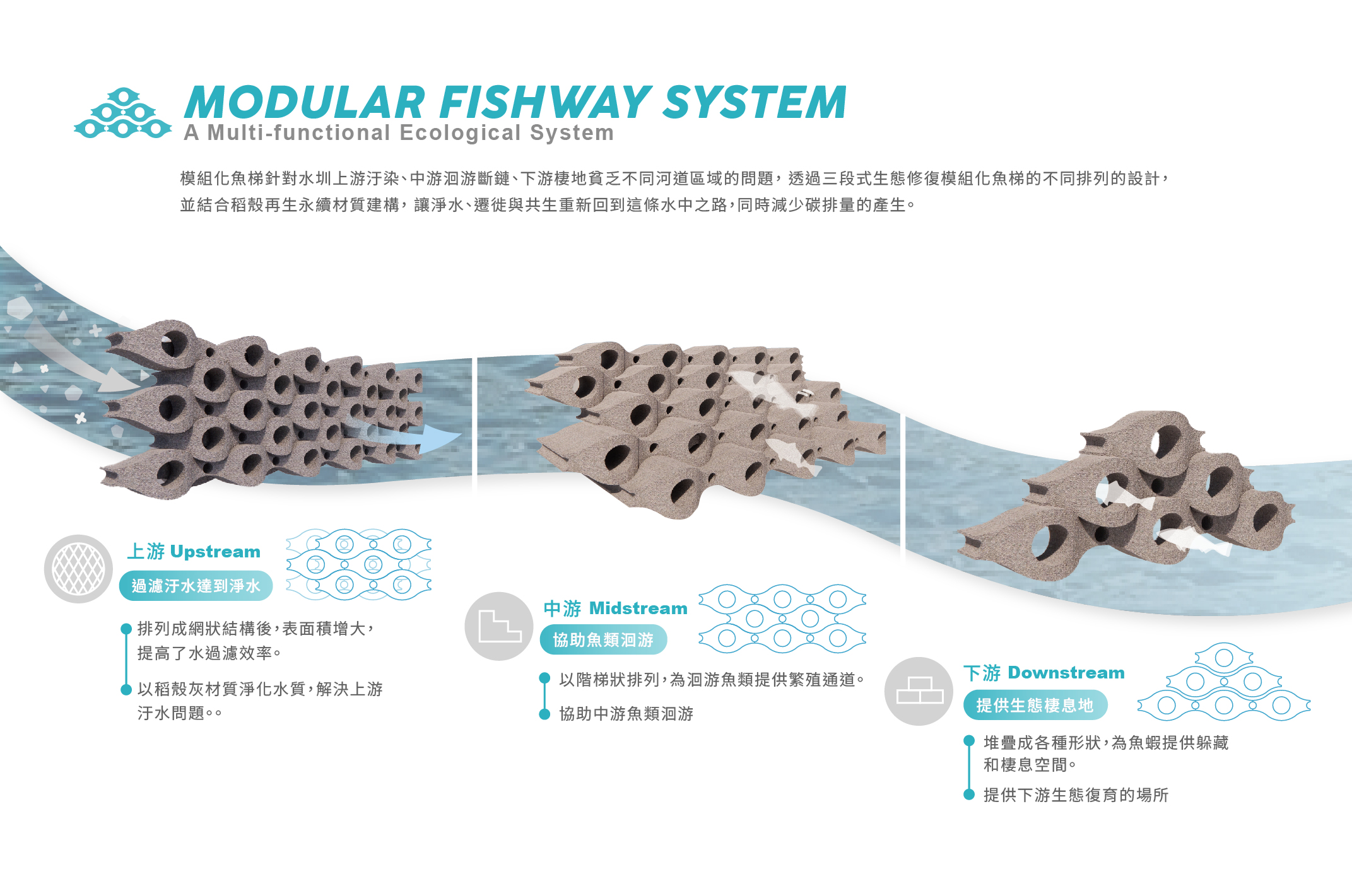
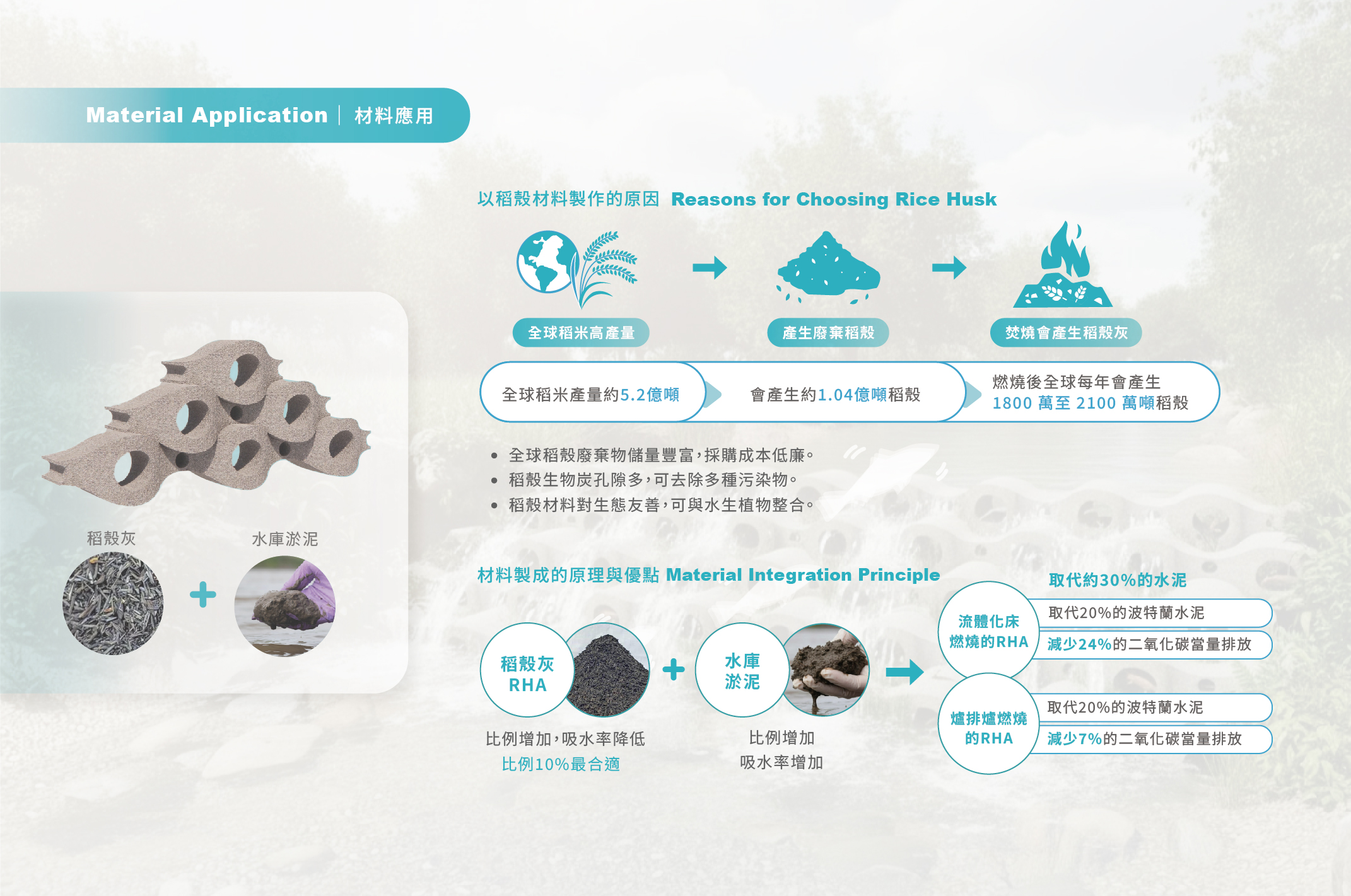
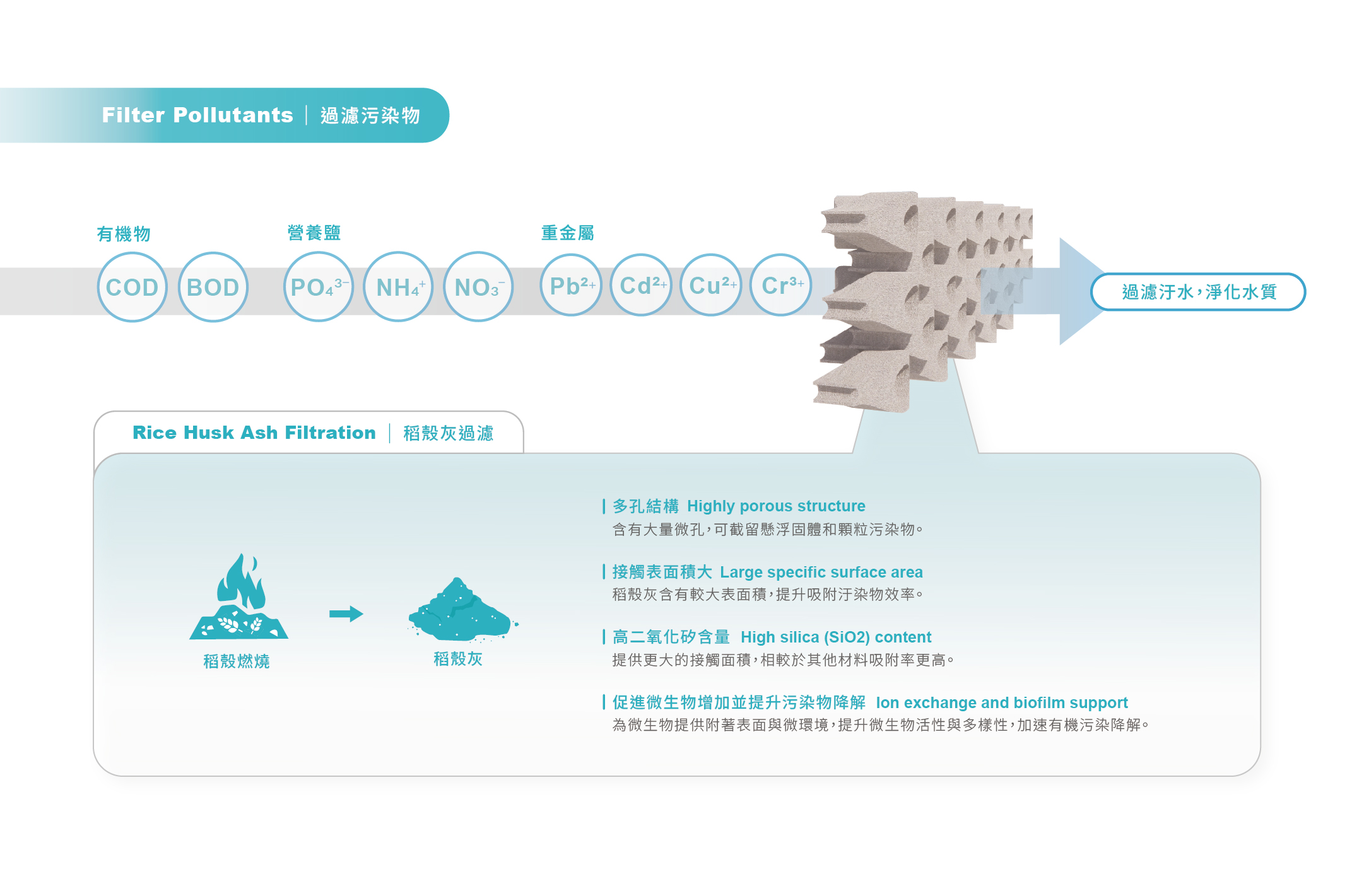
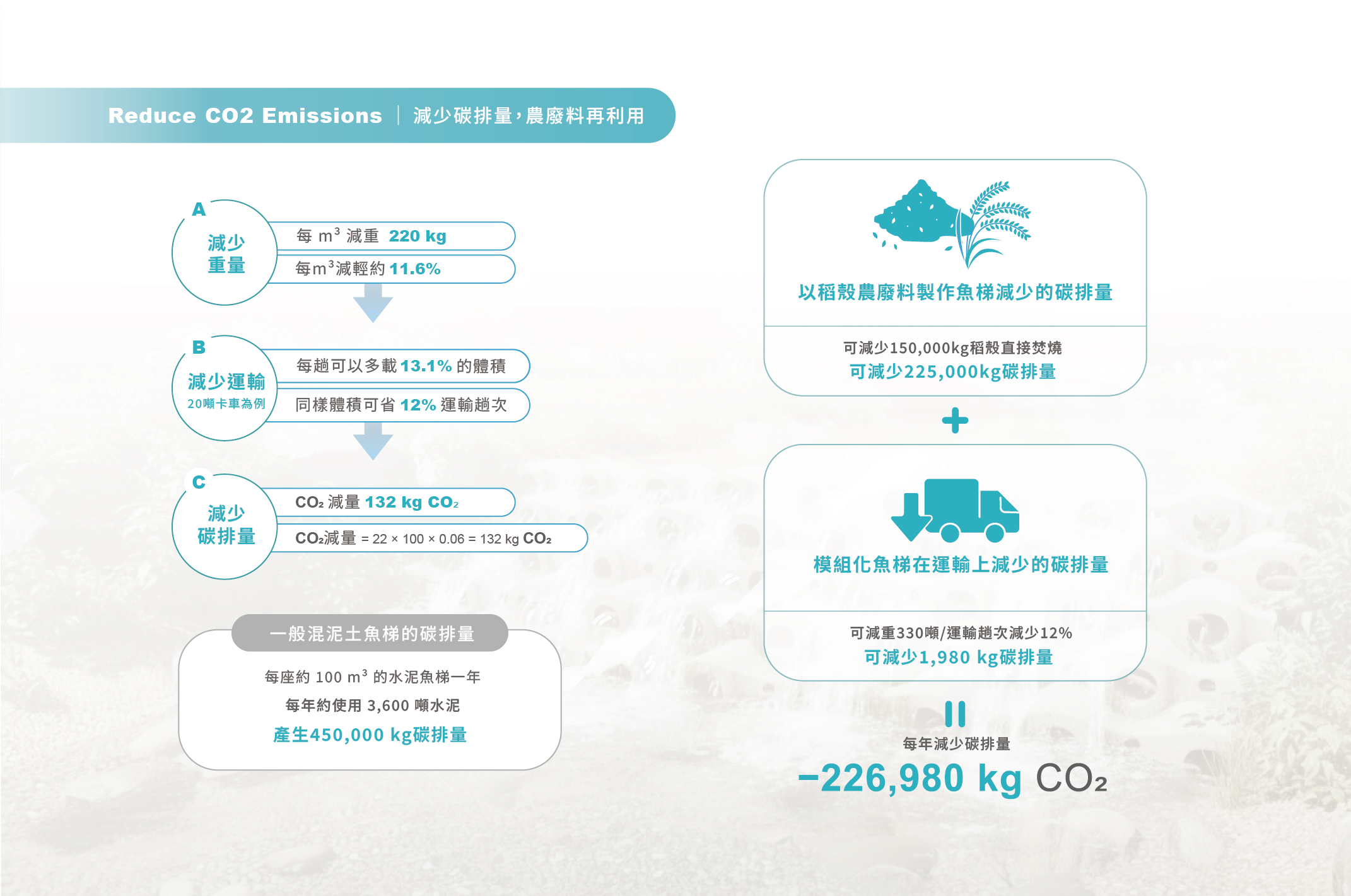
氣候變遷與水利工程破壞河川生態,河川棲地的破碎化不僅阻斷了魚類的洄游路徑,高耗能的基礎設施更進一步加劇了環境負擔。同時農業廢棄物與高耗能基礎設施也進一步增加生態壓力。本計畫提出一種以農業廢棄物與水庫淤泥製成的模組化魚梯,替代傳統高碳排的混凝土,旨在支持水資源管理、水質淨化與生物多樣性保育。這種材質不僅能有效降低生產過程中的碳足跡,其微孔隙構造更有助於生物附著與水質過濾,讓魚梯不僅是路徑,更是支撐生物多樣性的微型棲地,實現從「農廢料」到「生態資產」的價值翻轉。透過再利用在地材料,降低碳排放並恢復生態廊道,依據現地環境彈性調整配置,且具備易於拆卸與維修的特性,大幅降低施工難度與維護成本。這種設計讓河川工程從永久性的「強勢干預」轉向可調整的「動態共存」,為現代水利工程提供了一種更具韌性的永續解決方案。
MODULAR FISHWAY SYSTEM
Climate change and traditional hydraulic engineering have severely fractured river habitats, obstructing fish migration and increasing environmental strain. In response, this project introduces a modular fishway system crafted from agricultural waste and reservoir silt.This bio-based material significantly reduces the manufacturing carbon footprint. Its unique microporous structure encourages biological attachment and natural water filtration, transforming the fishway from a mere passage into a vibrant micro-habitat that supports biodiversity.By repurposing local materials, the project restores ecological corridors while offering a flexible, modular configuration adaptable to various site conditions. This approach shifts river engineering from permanent intervention toward dynamic coexistence, providing a resilient and sustainable solution for modern water management.
雲林科技大學 創意生活設計系
(四年級)
張O晨
雲林科技大學 創意生活設計系
(四年級)
羅O禾
雲林科技大學 創意生活設計系
(四年級) 指導老師 尤O章