療癒庭園.樂齡校園
Healing Garden • Adaptive reuse of vacant school for senior learning
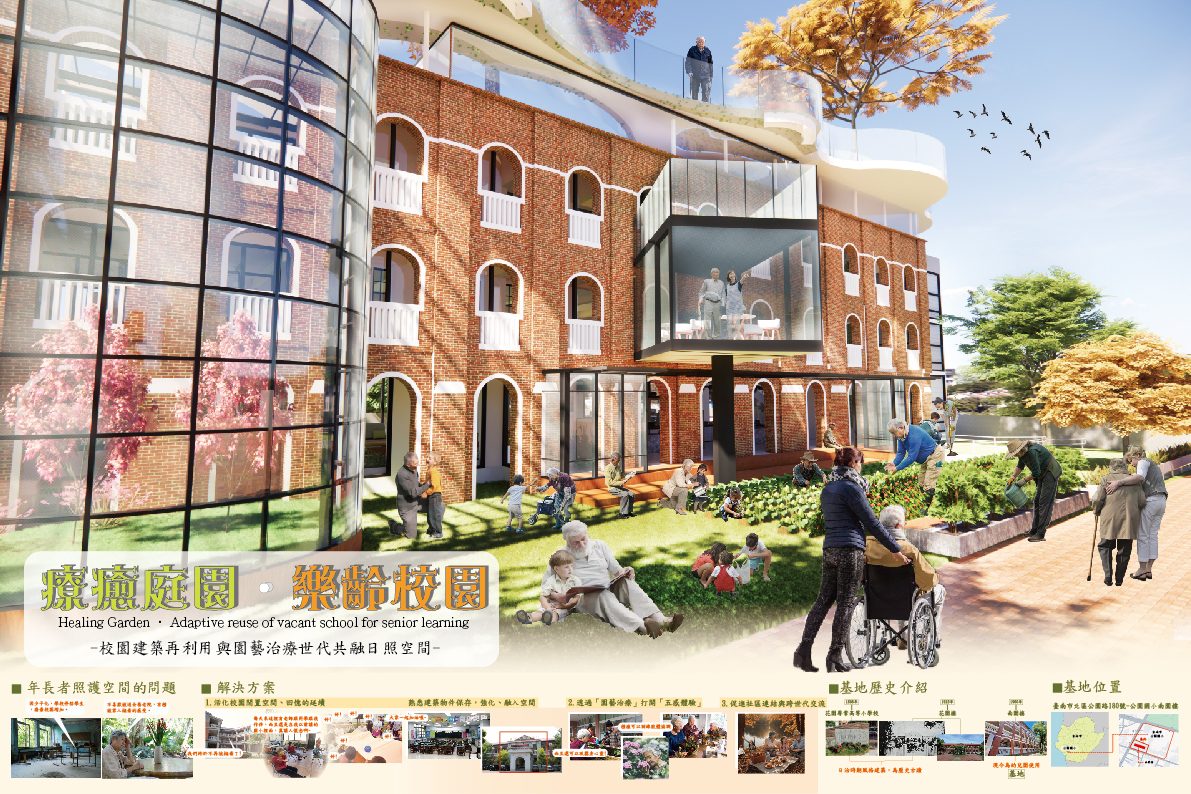
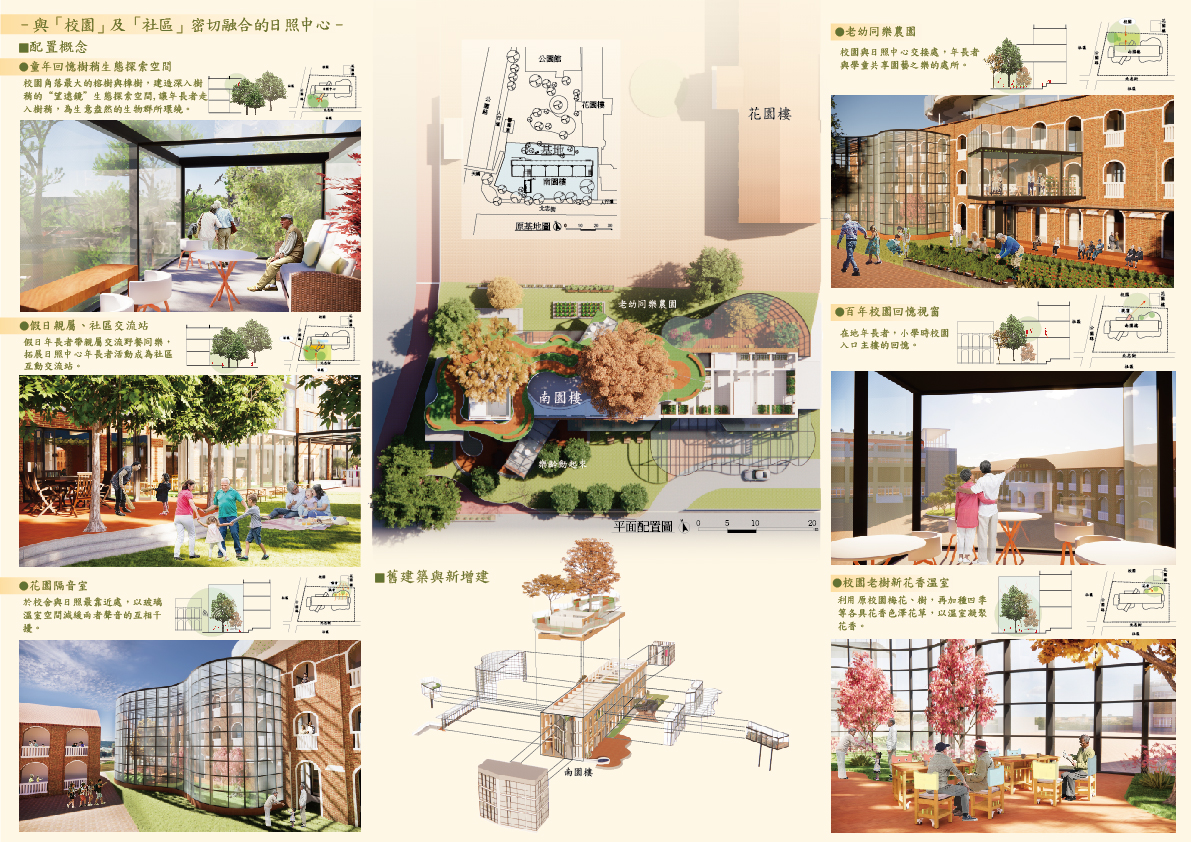
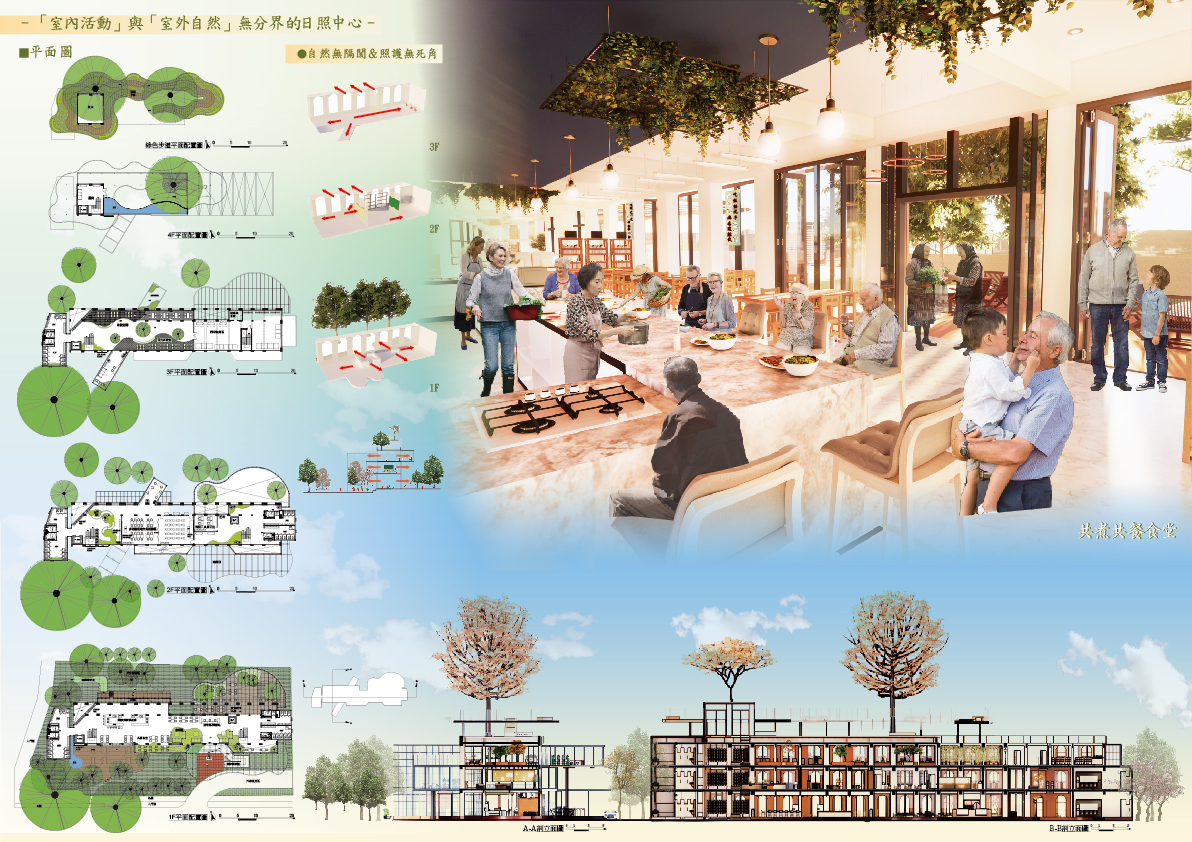
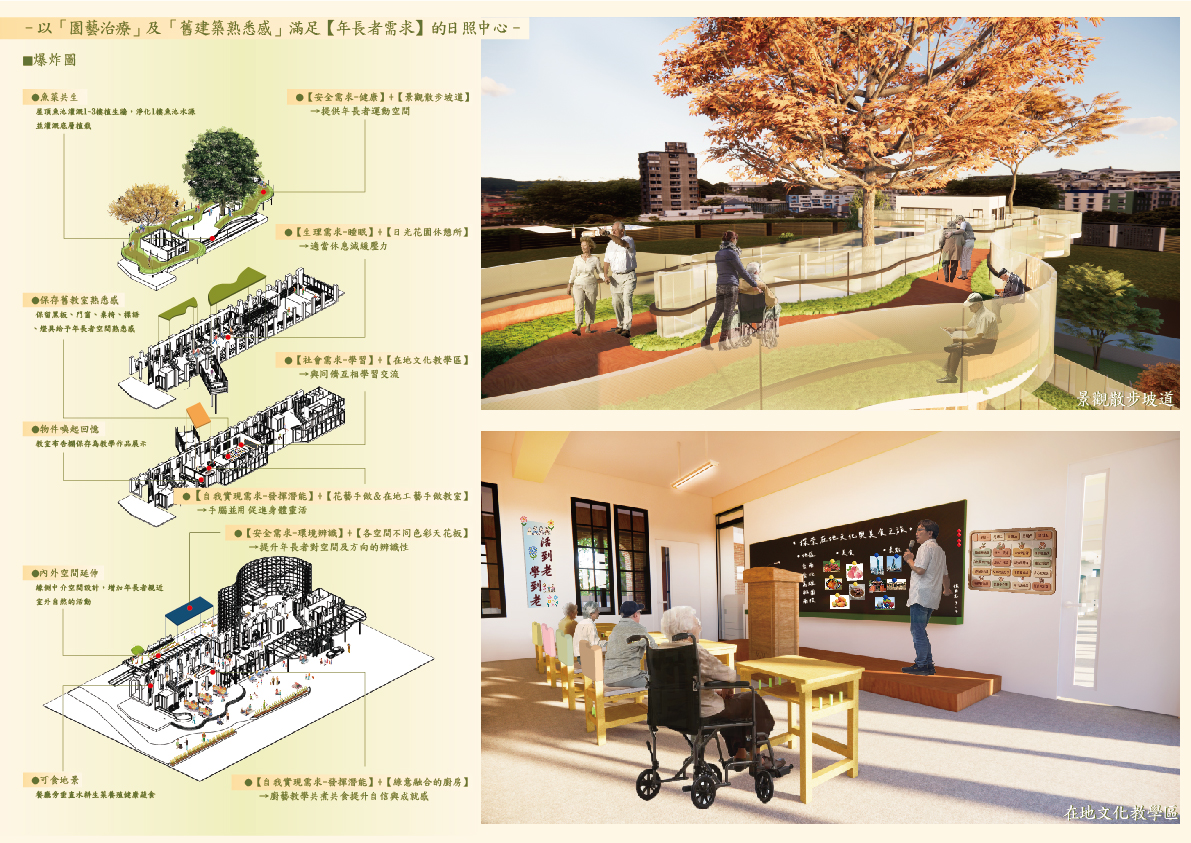
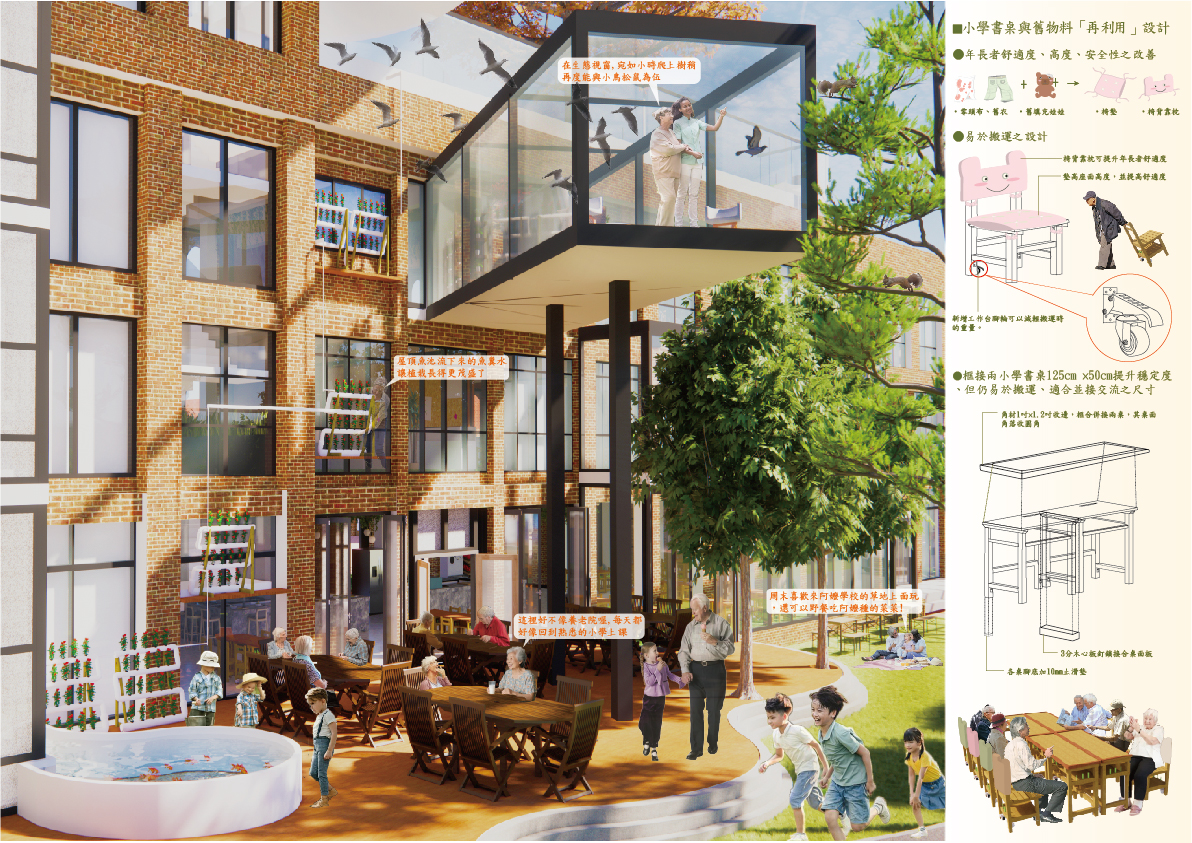
為避免年長者對陌生日照環境產生排斥,活化熟悉的校園閒置空間,創造時空回憶,使年長者自然融入新的生活場域。並利用老校園豐富的植栽資源導入「園藝治療」,將綠意串聯室內外,創造結合自然、學習與交流的場域,並著重「年長者需求」為準則。設計以舊校舍南園樓為中心,「生態探索空間」伸入校園南側最大的榕樹樹梢,讓年長者回憶童年爬樹觀看生態的樂趣;南向與社區交界處,留下戶外的草地銜接室內開放的餐廚空間,作為「假日親屬同樂野餐的交流處」;東北向與目前校舍最貼近處,以一花園溫室擋住冬天寒風,且形成「花園隔音室」,並保留原校園梅花樹再加種四季具花香色澤花草以「溫室凝聚花香」;而西北與校園毗鄰處則闢年長者與學童共享園藝之樂的「老幼同樂農園」;面校園主樓延伸「回憶視窗」空間,引導框景百年校舍花園樓。每層樓室內空間規劃以「中心站」概念,放射狀及開放通透的空間配置,除光線明亮與自然貼近,更使照護者無死角的掌握年長者生活動態提升安全性。設置廚藝教學共煮共食餐廳,提升自我實現與社交;保留部分教室空間規劃在地手作教室;並有休憩區及環形步道提供日常散步,實現一座兼顧健康、安全、學習、有記憶及情感連結的日照中心。
Healing Garden • Adaptive reuse of vacant school for senior learning
To ease older adults’ adaptation to new daycare environments, this project revitalizes underused school spaces, blending past memories with daily life. Horticultural therapy connects indoor and outdoor greenery, integrating nature, learning, and social interaction, guided by older adults’ needs.
Centered on the Nan-Yuan Building, key zones include a banyan tree exploration space, a southern lawn linking to an open kitchen and dining area for family gatherings, a northeastern greenhouse creating a fragrant “Garden Sound Room,” and a northwest intergenerational garden for older adults and children. A “Memory Window” frames views of the historic campus.
Each floor follows a central hub layout with open, radial spaces for natural light and visibility, enabling safe supervision. With shared cooking and dining, craft classrooms, rest areas, and a circular walking path, the design creates a day-care center balancing health, safety, learning, memory, and emotional connection.
台南應用科技大學 室內設計系
(四年級)
張O婷
台南應用科技大學 室內設計系
(四年級) 指導老師 張O娟