Afterform - FDM結晶化實驗
Afterform - FDM Crystallization Experiment
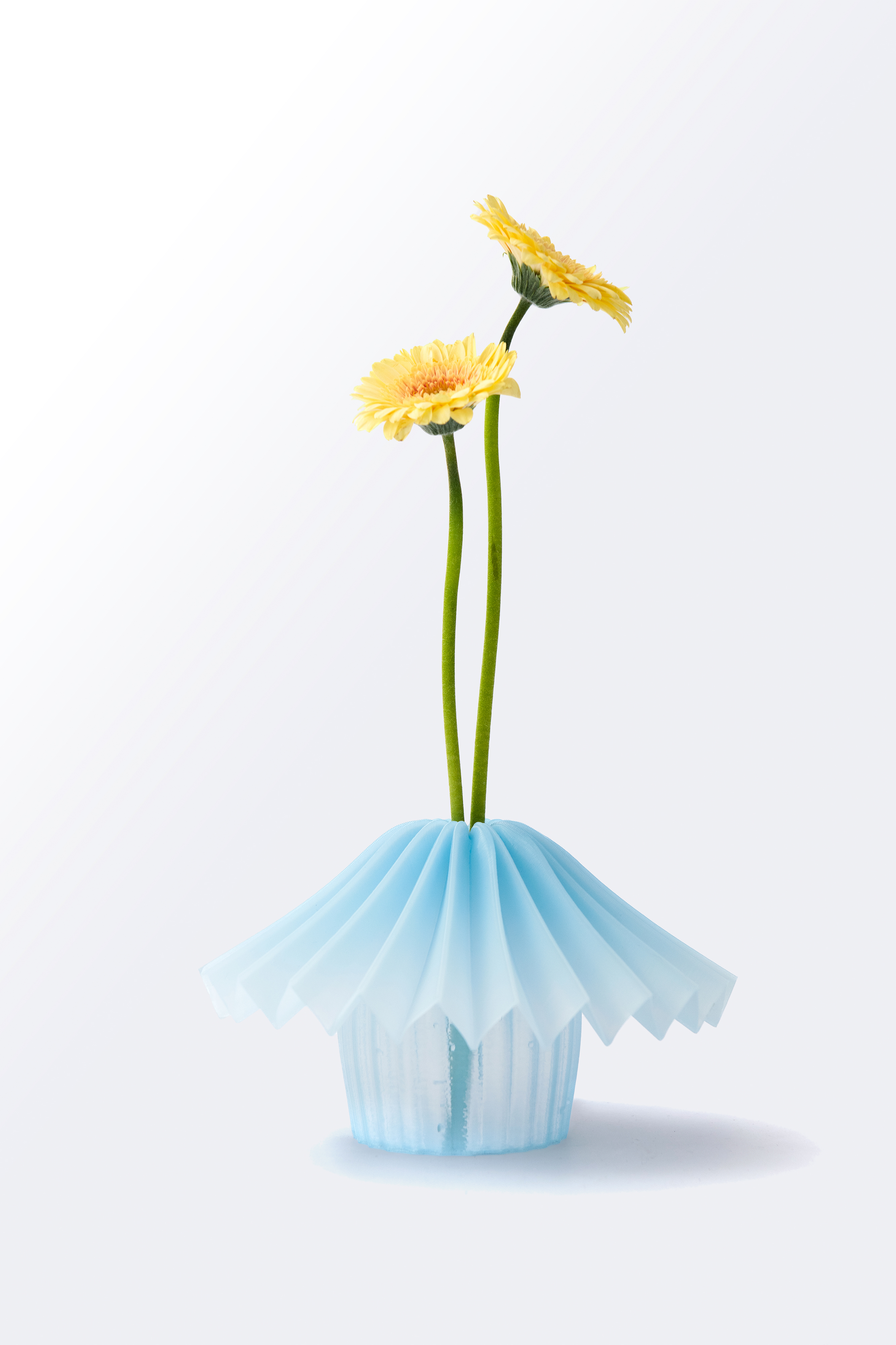
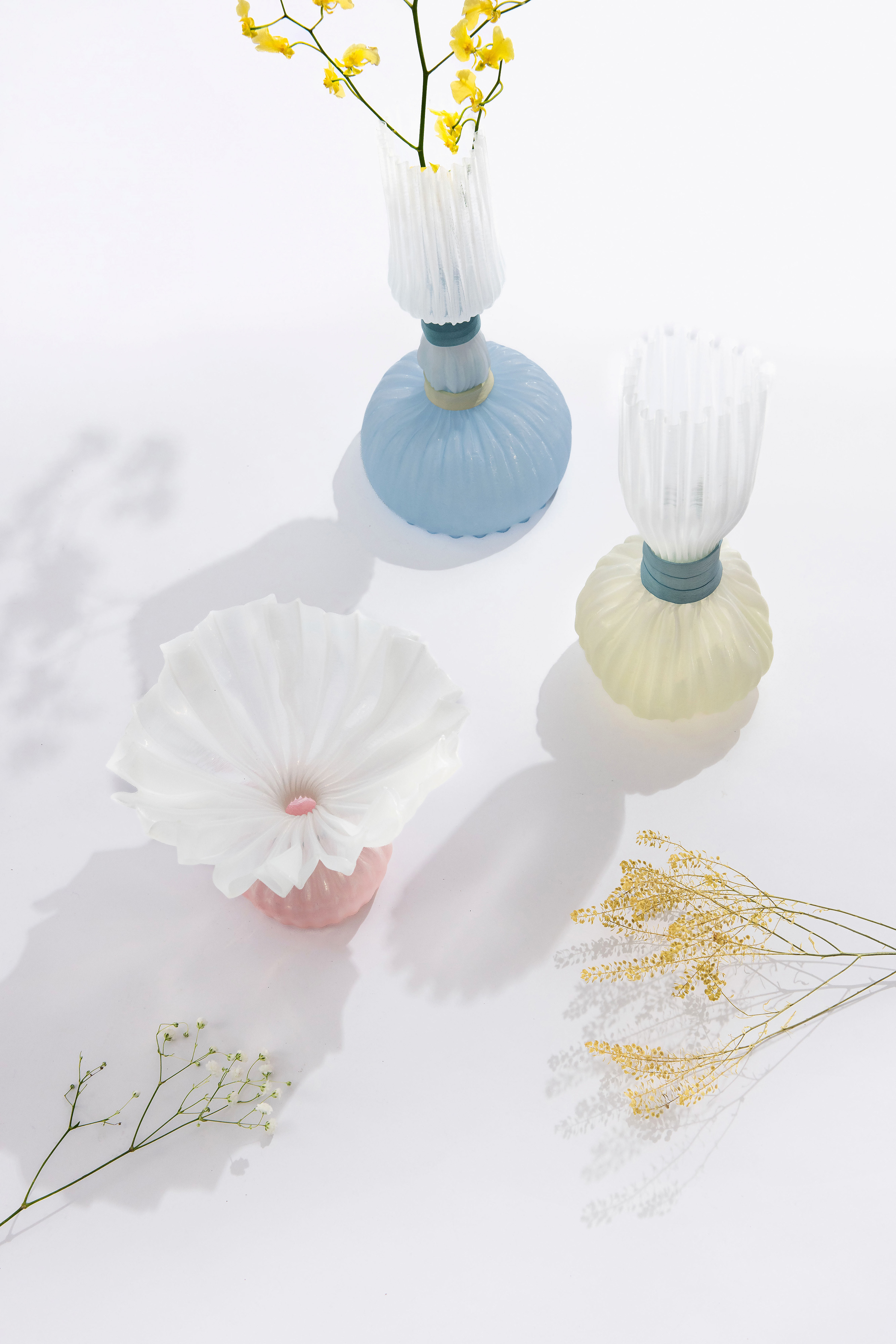
作品概念 :
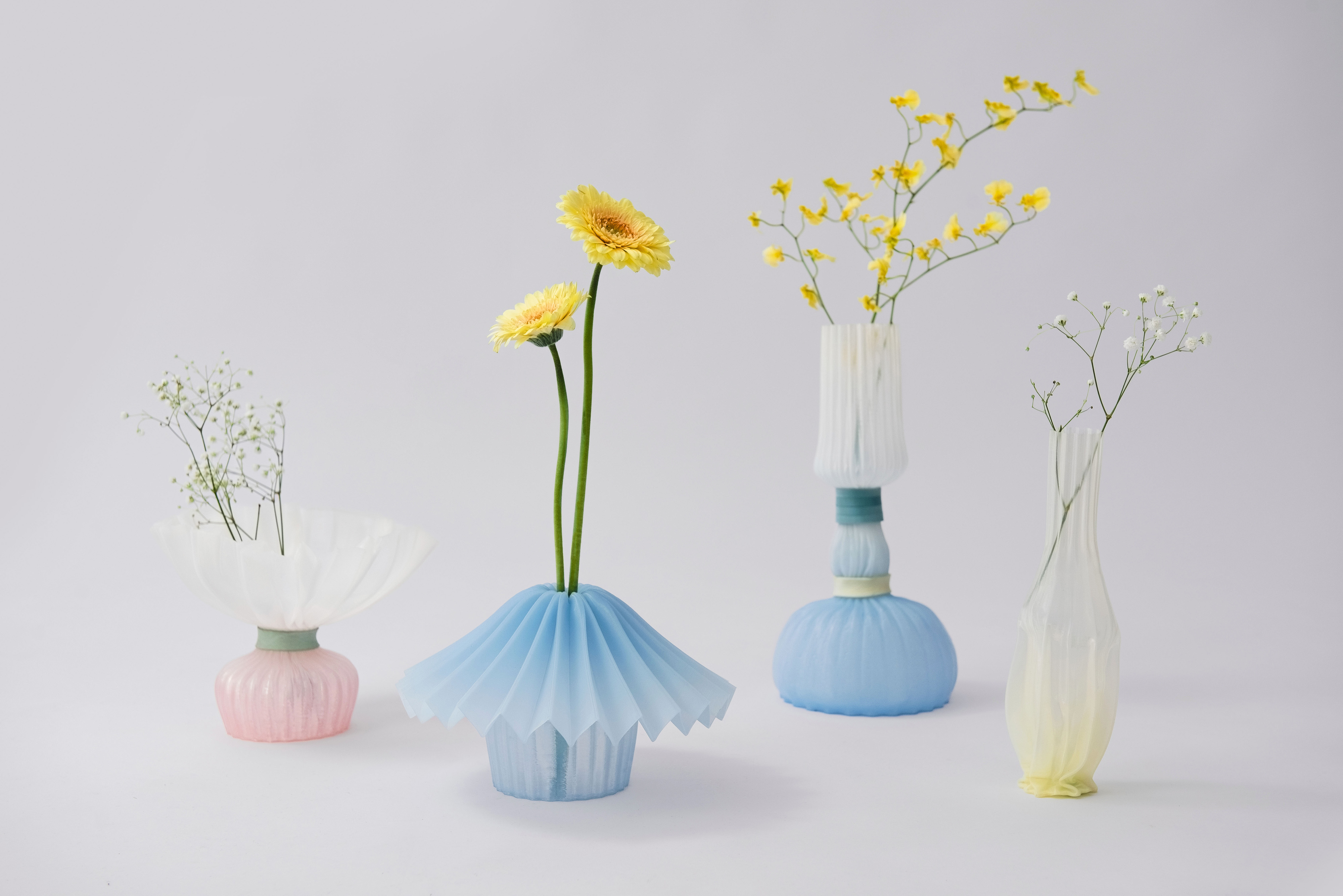
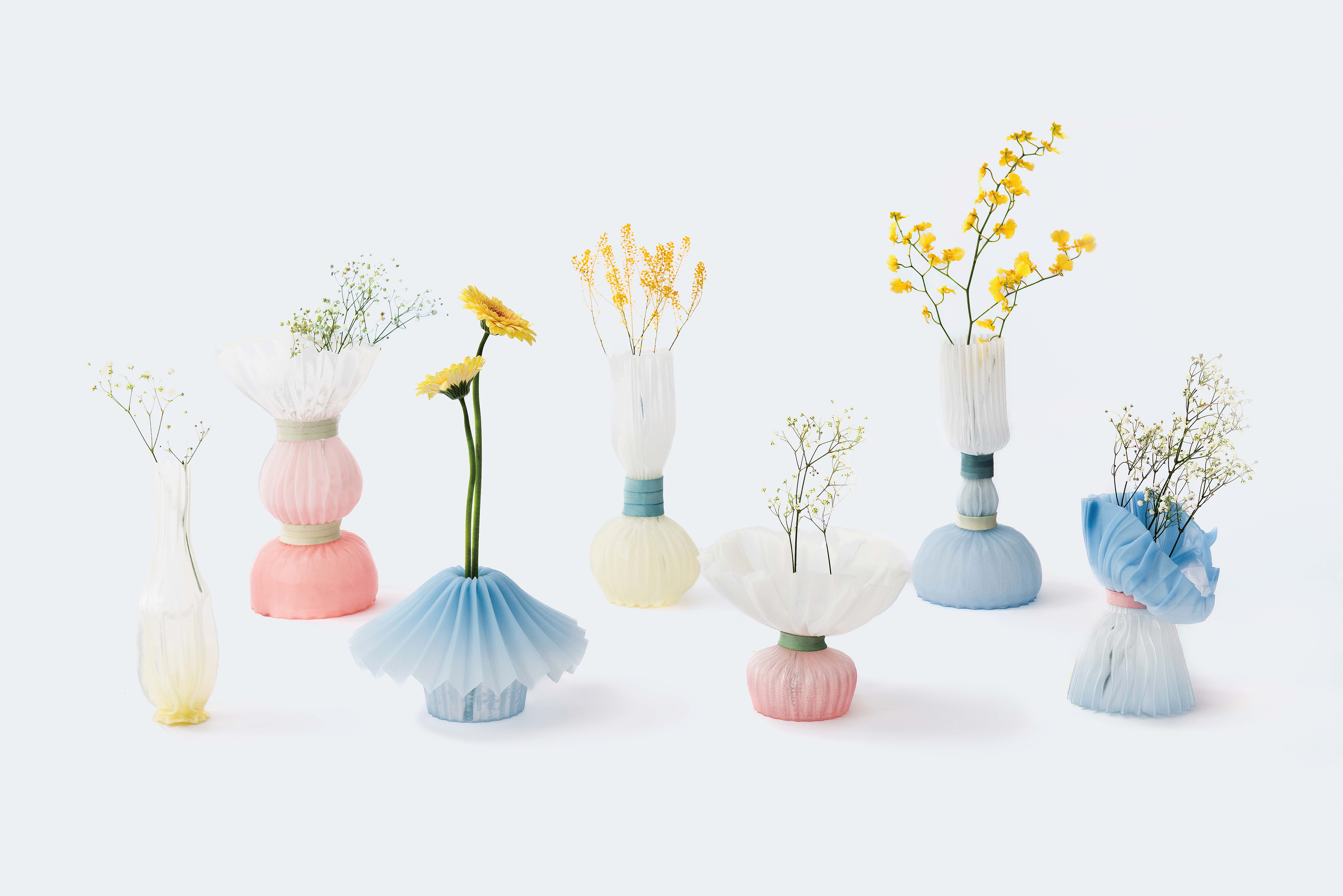
「退火」程序是一種常見的熱熔成型製程(Fused Deposition Modeling, FDM) 的後處理方法。Afterform重新詮釋FDM的「退火」,將原本作為結構強化的工序轉變為型態雕塑的方式,使硬質塑膠呈現出絲綢般的柔軟皺褶型態。突破熱擠出物件作為「造型完成」的想像。實現工業製程結合現代工藝的潛力。
製程介紹 :
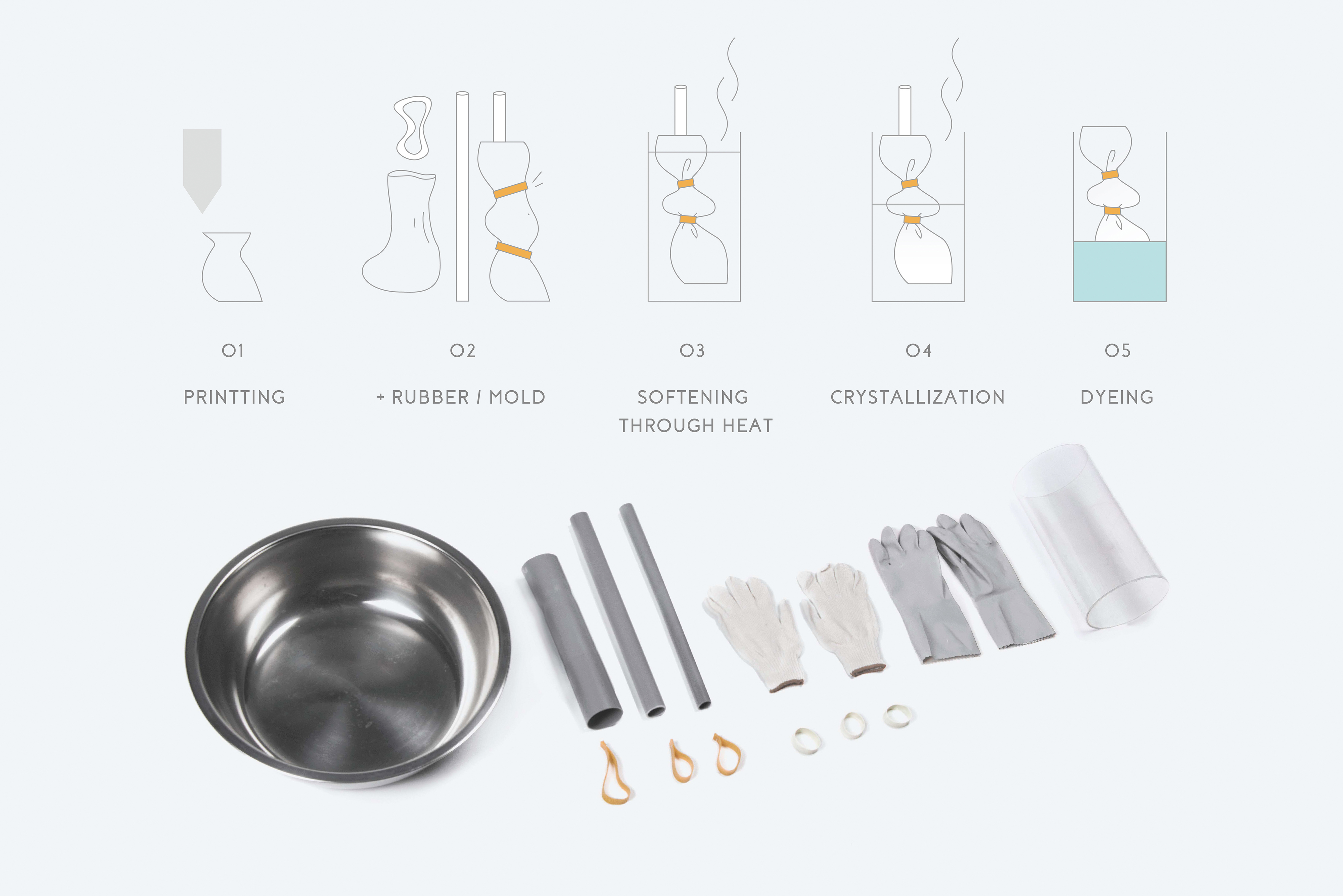
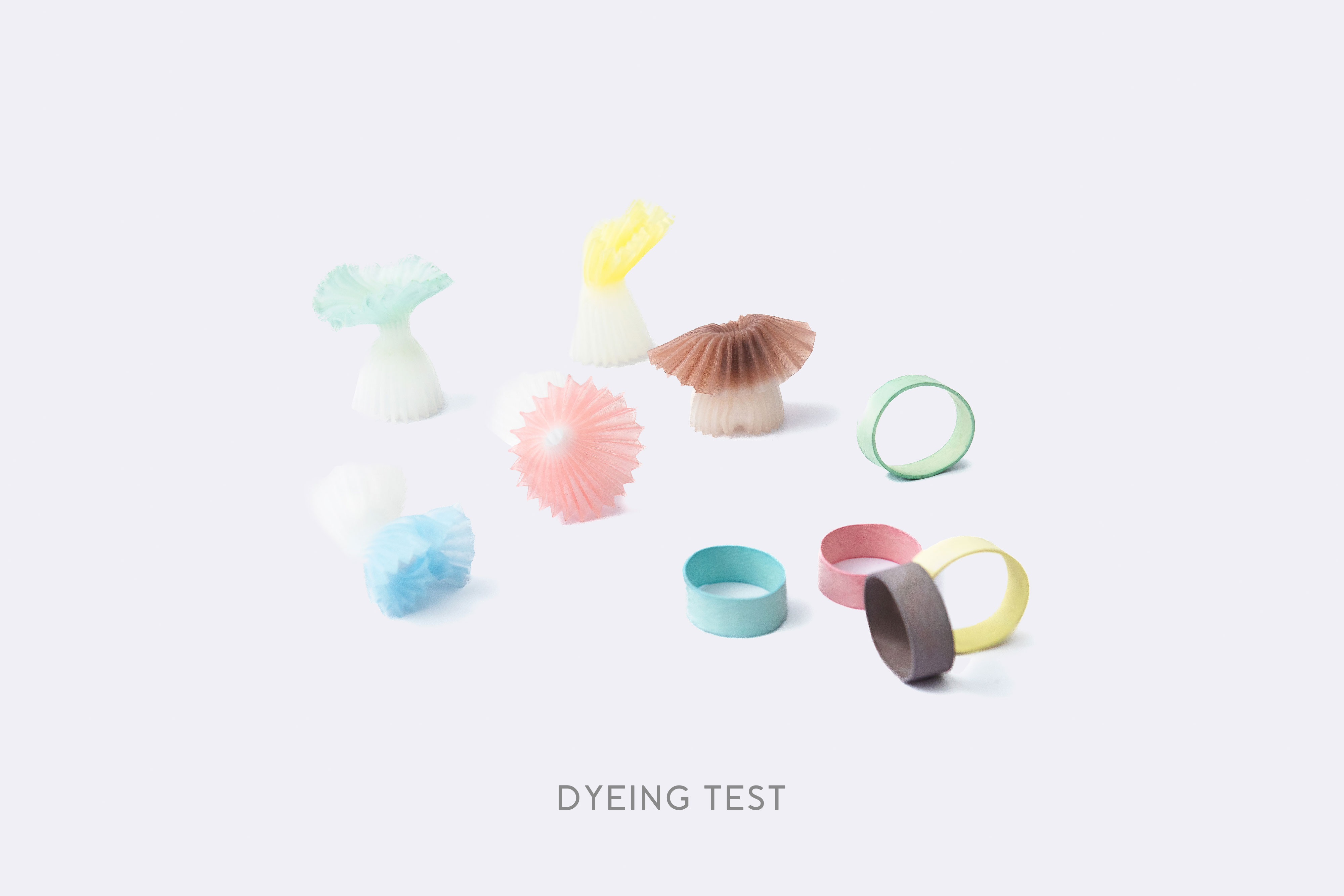
首先將模具、橡皮筋束縛於透明的PLA列印花器上,利用熱水將其加熱至玻璃轉化*溫度區間,使之塑型。完成後再將塑形後的花器局部浸泡熱水讓它結晶*變色,最終以分散染料進行漸層染色。
*「退火」程序(annealingprocess) : 是一種塑膠常使用的後加工製程。其方法是將塑膠在使用前, 先放置於高溫的環境中一段時間,使材料更堅固。
* 玻璃轉化(glass transition) : 指非晶材料或半晶材料(PLA),隨著溫度的升高,由硬而脆且透明的玻璃態逐漸轉變為黏性或橡膠態的漸進可逆轉變。
Afterform - FDM Crystallization Experiment
Concept
"Annealing" is a common step used in FDM 3D printing to make plastic stronger. Afterform reimagines this process. Instead of just using heat to strengthen the material, we use it as a way to sculpt. We transform hard, rigid plastic into forms with soft, silk-like folds. This breaks the traditional idea that a 3D-printed object is completely finished as soon as it leaves the printer. Our project shows the potential of combining industrial manufacturing with modern, handmade craft.
Process
First, we wrap rubber bands and custom molds around a clear, 3D-printed PLA vase. Next, we put the vase in hot water. The hard plastic becomes soft and naturally bends into a new shape, guided by the tight rubber bands. After the new shape is formed, we dip specific parts of the vase into hot water again. This causes a reaction called crystallization, which changes the clear plastic into a solid, milky color. Finally, we use dyes to give the vase fading colors.
實踐大學 工業產品設計學系
(五年級) 指導老師 曾O凱