青銀賦能 HUB
Qing-Yin Empowerment HUB
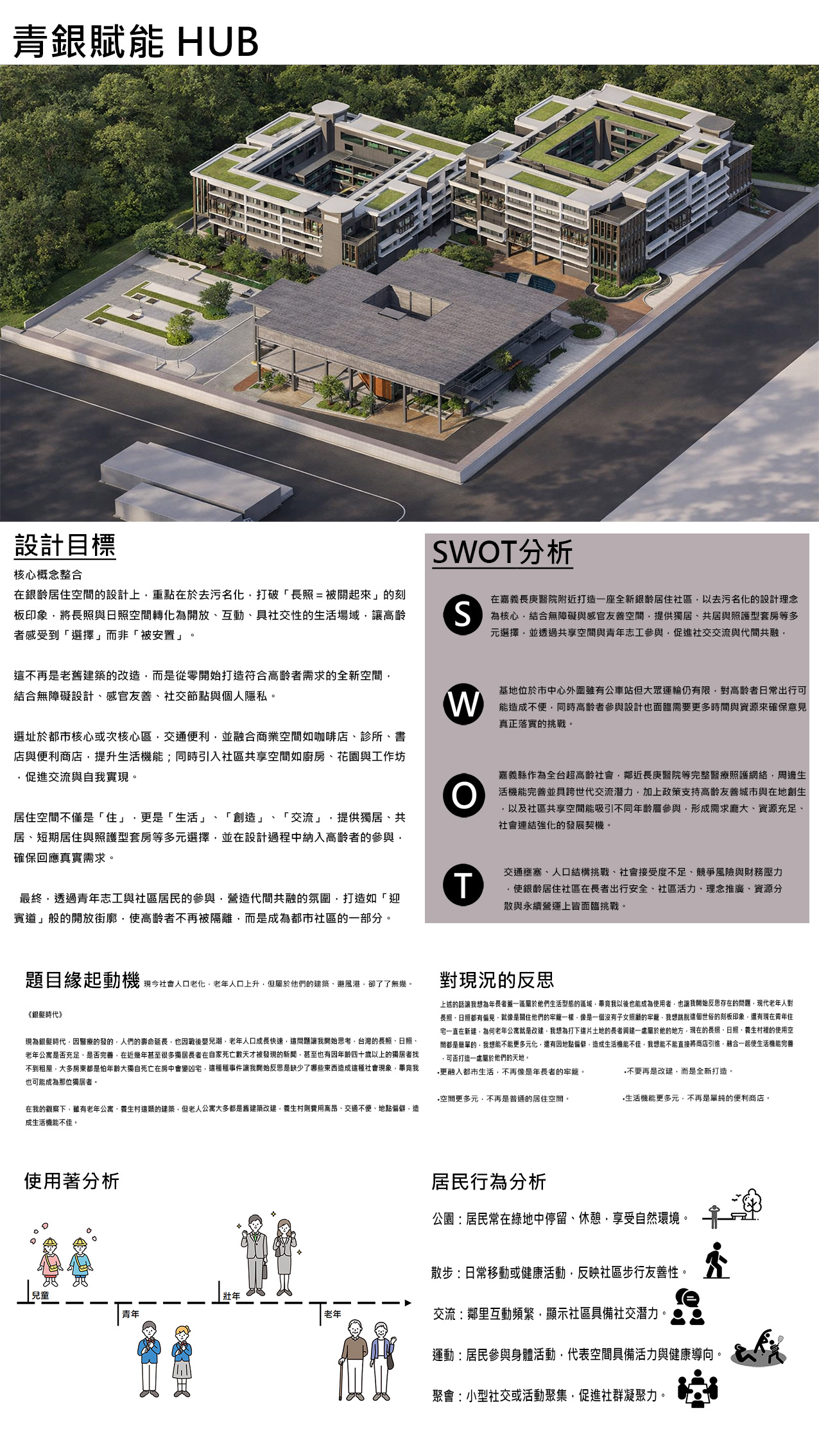
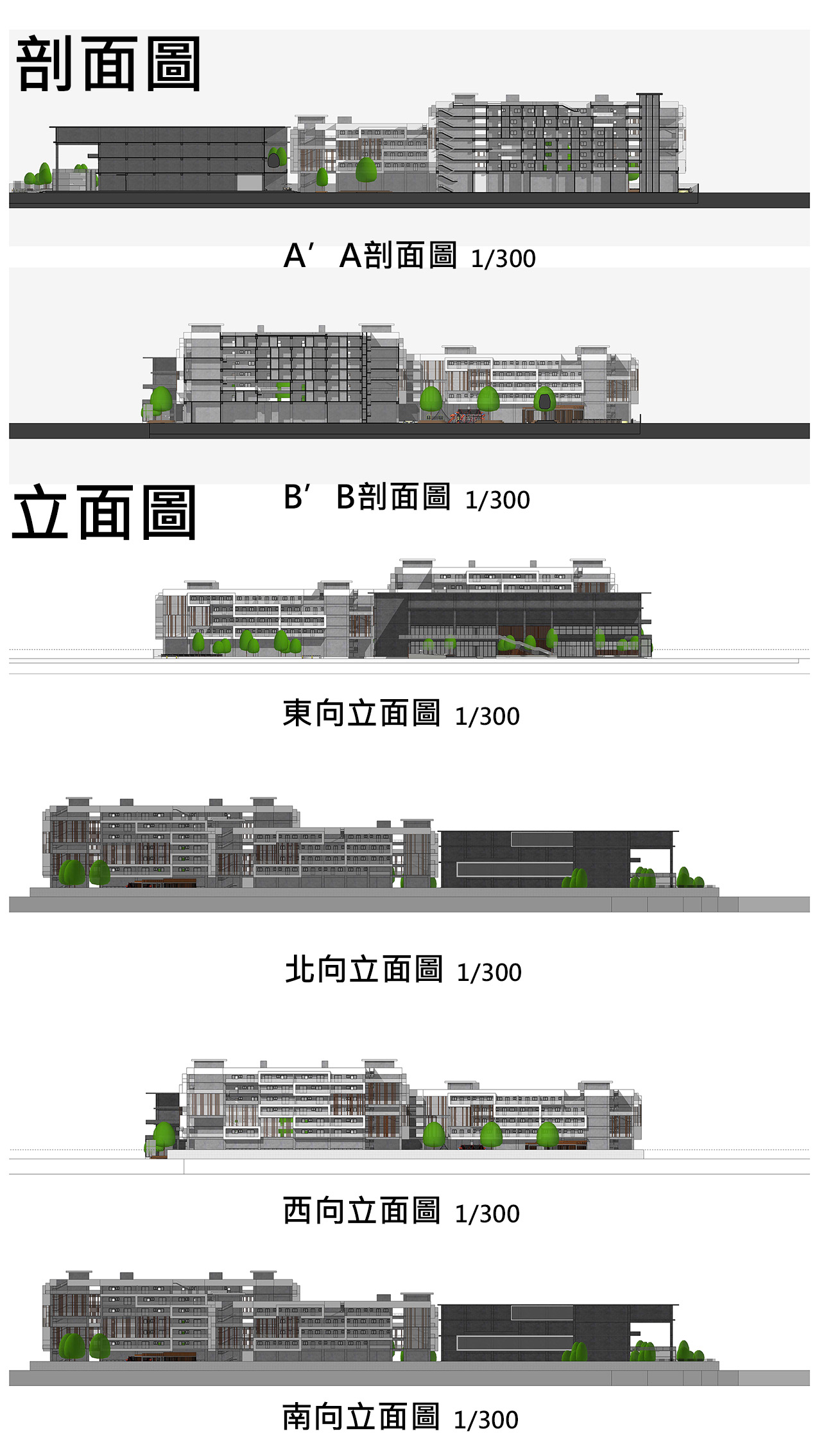
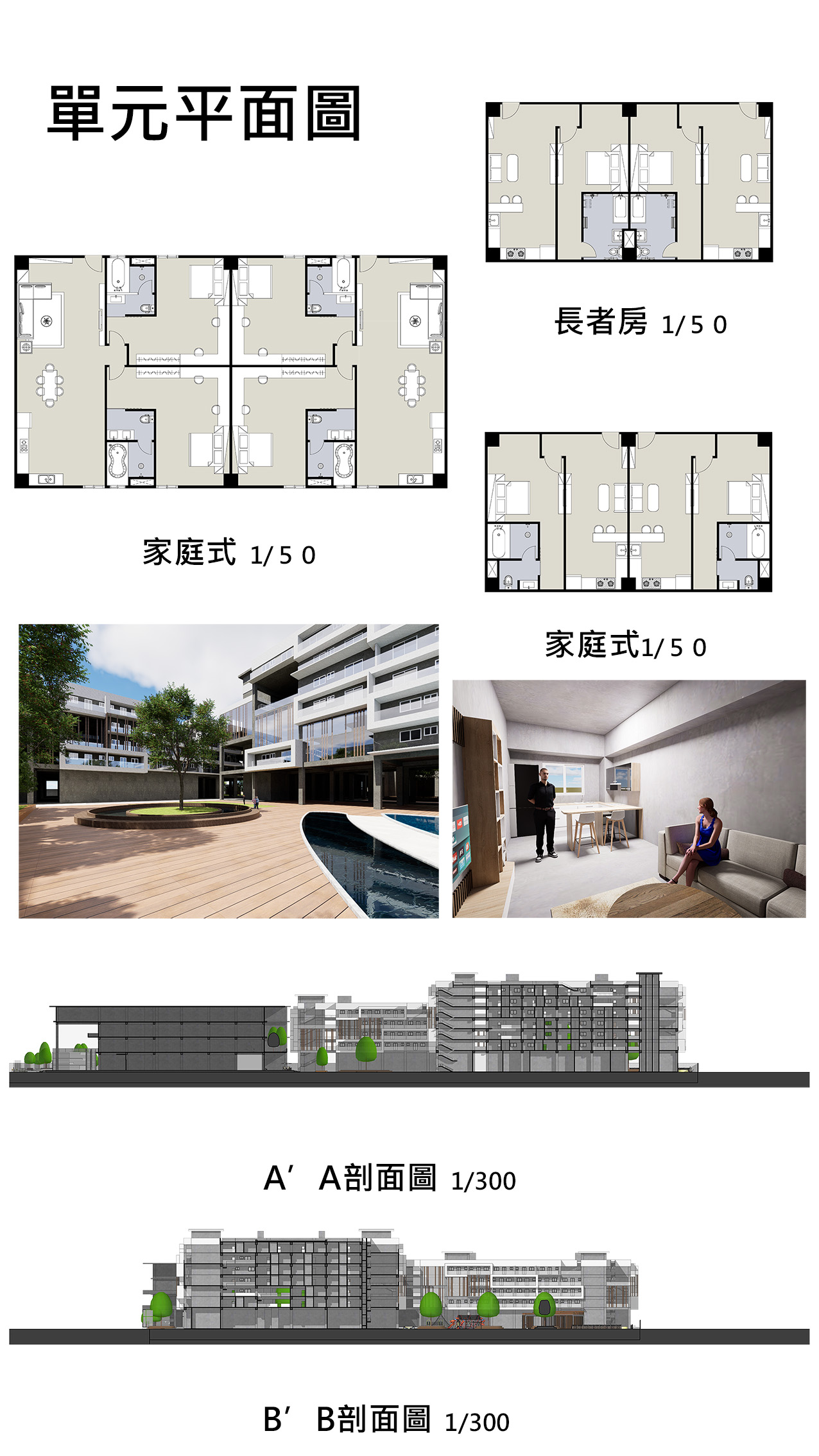
在這片逐漸老去的土地上,長者的身影常被忽略,他們的生活被簡化為「照護」與「安置」。然而,我所追尋的,是一個能讓他們重新被看見、重新被擁抱的場域。這座「青銀賦能 HUB」不是孤立的堡壘,而是一條橋、一個平台、一段走廊,將長者與城市、與青年、與生活緊緊相連。
橋樑,是代間的通道。它跨越了年齡的鴻溝,讓長者與青年能在日常的步伐中相遇,彼此交換故事與笑聲。平台,是生活的舞台。無論是晨間的運動、午後的茶敘,或是夜晚的靜坐,長者都能在此找到屬於自己的節奏。走廊,是流動的血脈。它不只是通行的路徑,而是交流的延伸,讓每一次移動都成為互動的契機。
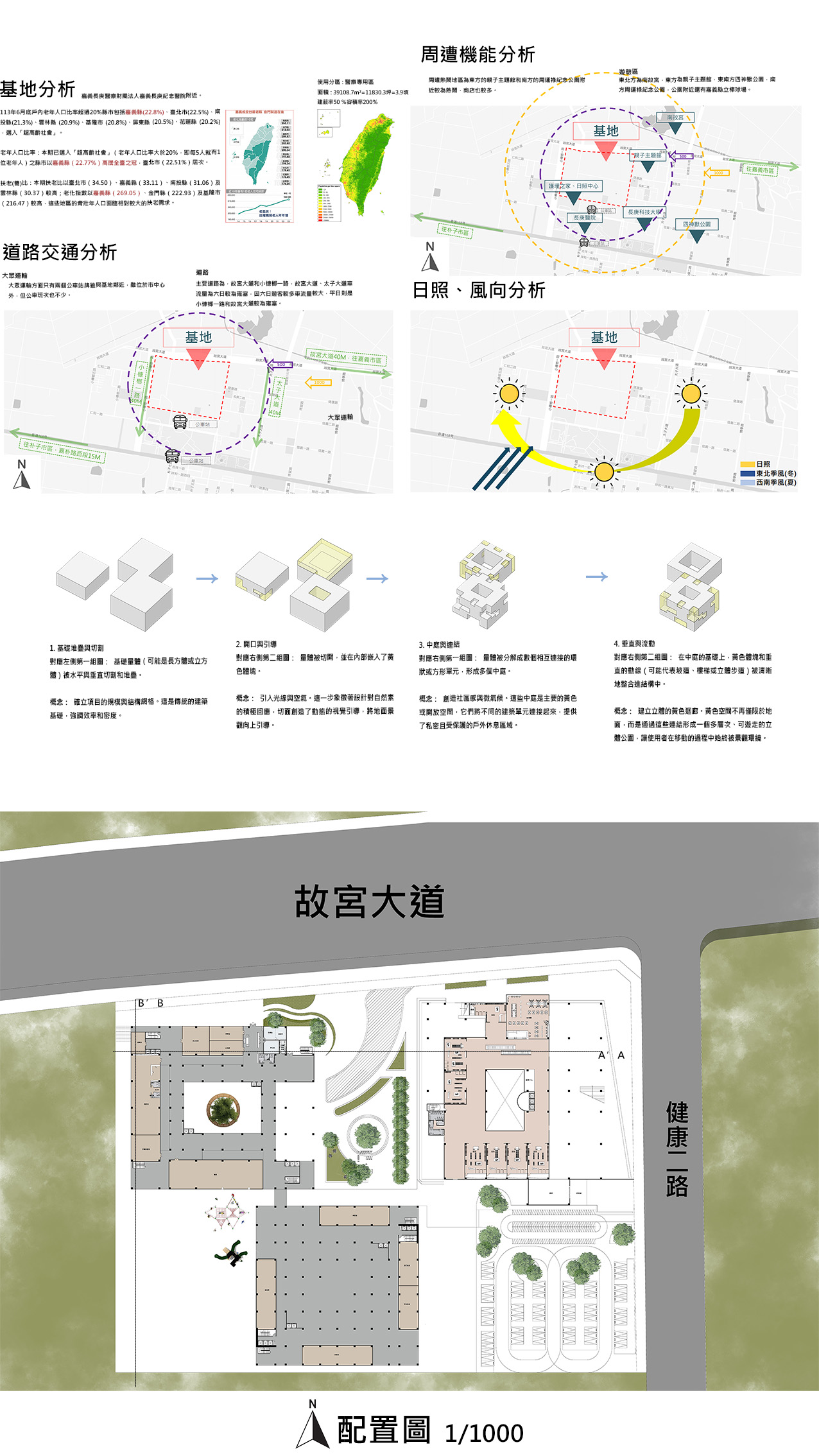
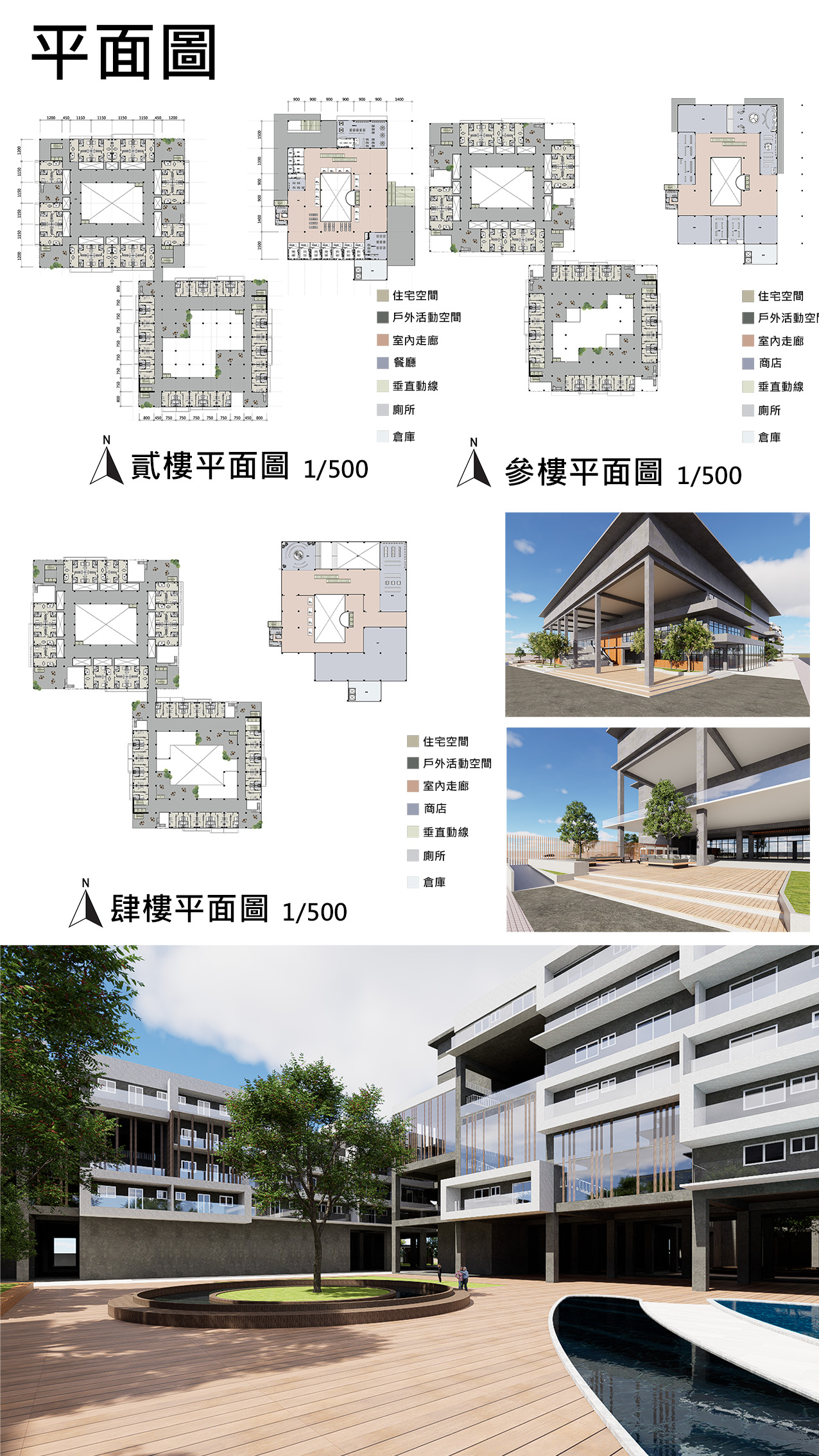
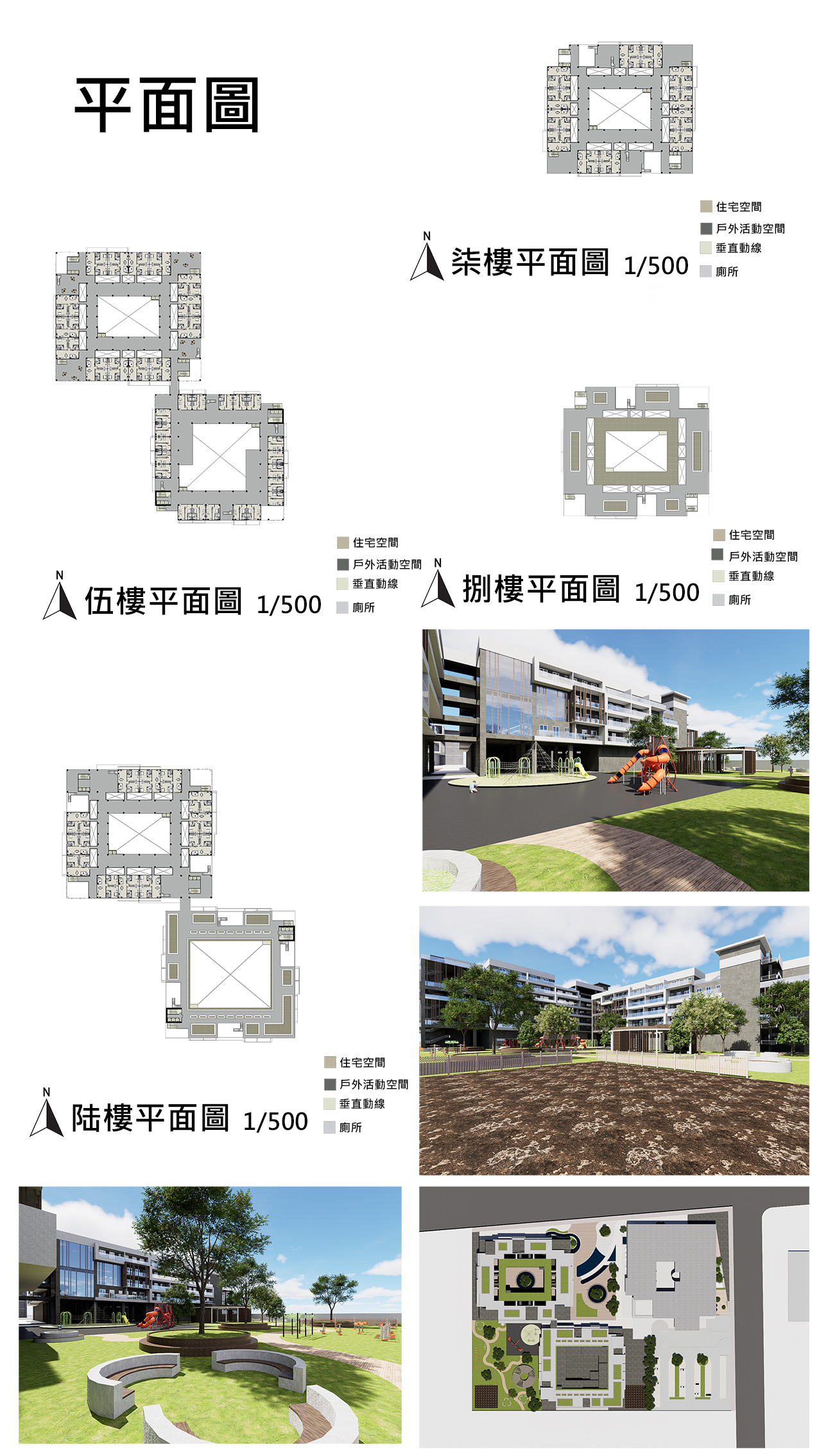
在嘉義長庚醫院旁的基地,設計融入都市的脈動,將醫療、商業與生活交織。咖啡館、書店、便利商店與共享廚房,讓長者的日常不再受限於單調的照護,而是充滿選擇與可能。中庭與垂直迴廊構築出立體的公園,光影在空間中流動,長者的步伐因此不再孤單,而是被自然與社群環繞。
這是一個去污名化的設計,一個拒絕「牢籠」的建築。它邀請長者走出房間,走進社區,走向彼此。它讓「居住」不只是安身之所,而是生活的延續、創造的起點、交流的橋樑。
Qing-Yin Empowerment HUB
This project takes the elderly as the central focus, responding to Taiwan’s transition into a super-aged society. The design is not merely about providing housing, but about redefining the role and dignity of seniors in urban life. Traditional long-term care and daycare facilities are often perceived as “placement” or “isolation,” separating seniors from the community. This proposal seeks to break such stereotypes, transforming care spaces into open, interactive, and socially engaging environments where seniors experience choice rather than confinement.
The design concept revolves around bridges, connecting platforms, and linking corridors. Bridges symbolize intergenerational dialogue, connecting different age groups; platforms provide diverse activity spaces for rest, exercise, and social interaction; corridors extend beyond circulation, becoming opportunities for encounters and exchanges.
正修科技大學 建築與室內設計系
(四年級)
黃O玲
正修科技大學 建築與室內設計系
(四年級) 指導老師 倪O成