鳳邑·棲心森邸—綠廊共生
Fong-Yi · Qixin Forest Sanctuary — Symbiosis of Green Corridors
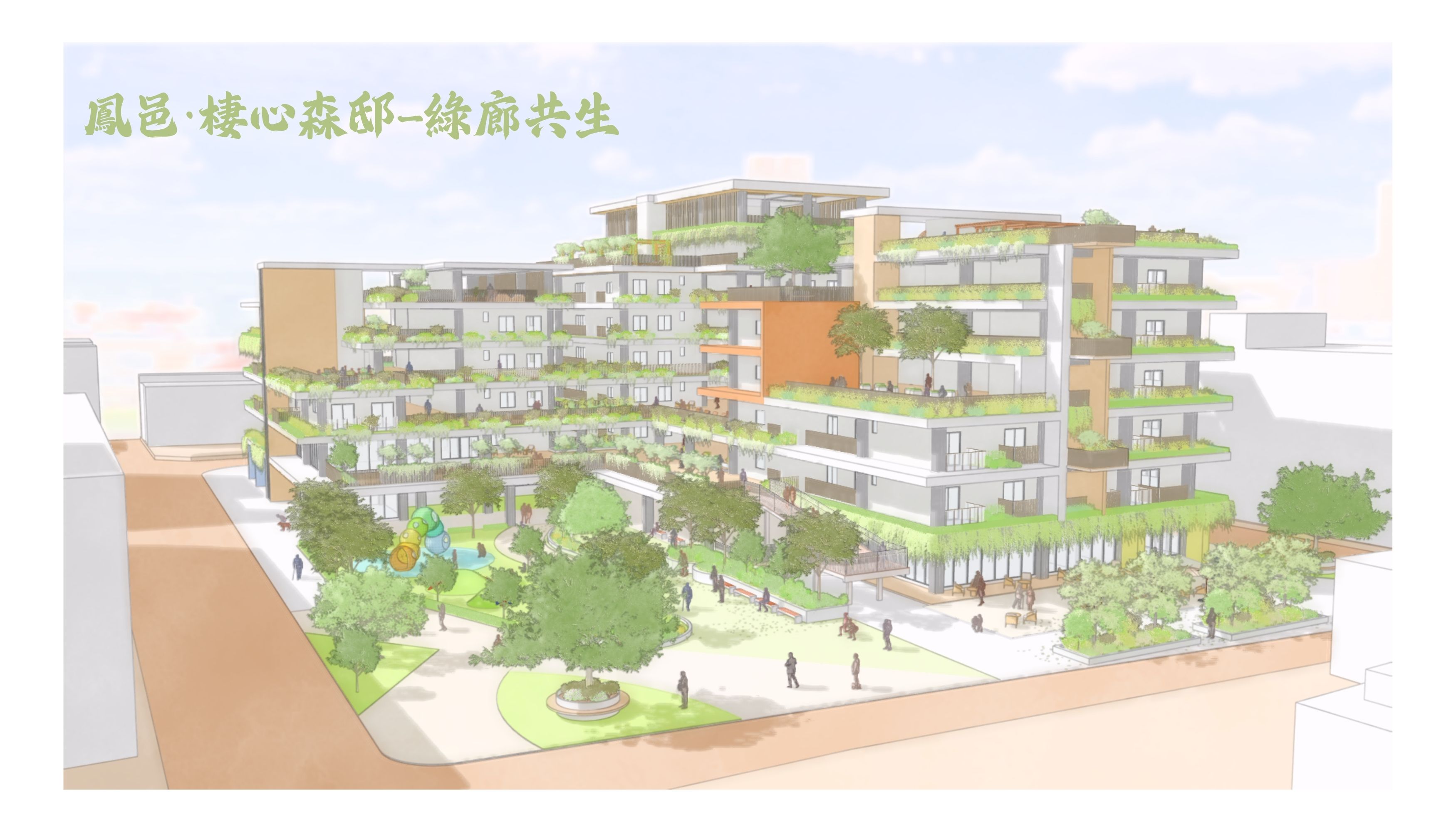
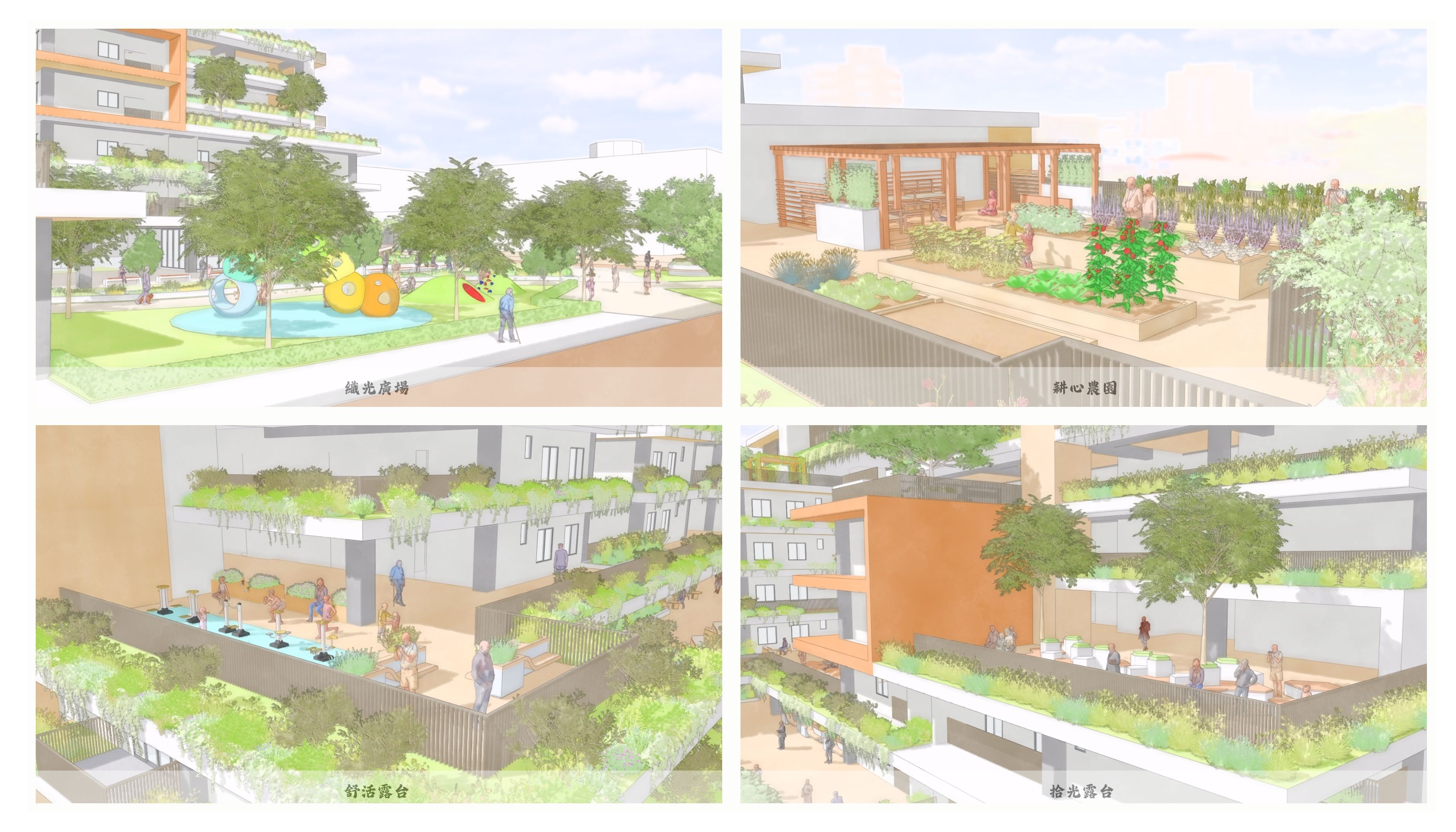
鳳邑·棲心森邸—綠廊共生
設計核心:從記憶中的「陪伴」出發
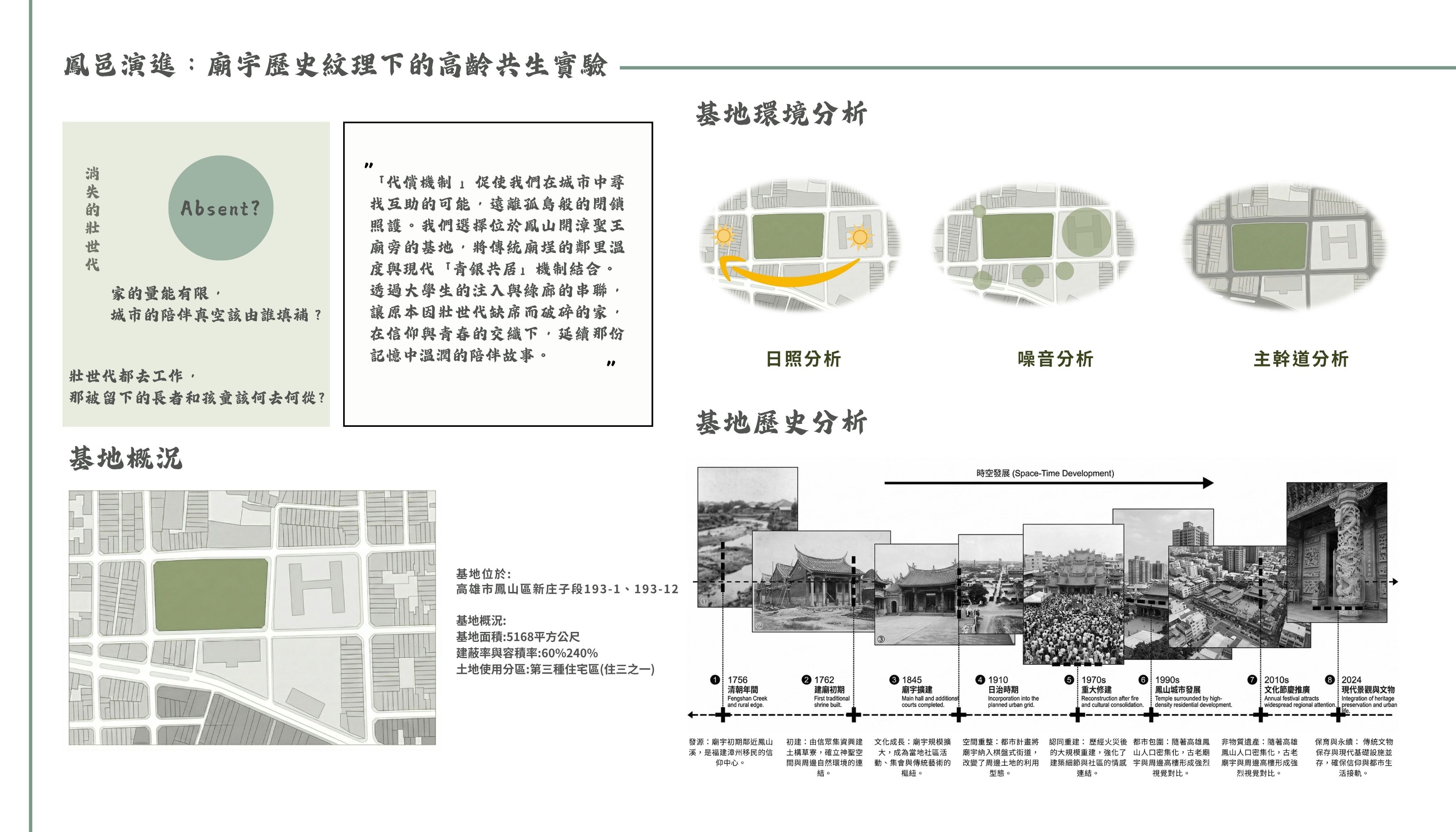
本計畫基地位於高雄鳳山開漳聖王廟旁,這片承載在地信仰與日常情感的場域,成為我們重新定義「家」的起點。設計初衷源於對現代孤獨感的反思:在少子化與高齡化的雙重擠壓下,家庭照護已達極限。我們轉化個人成長中「隔代陪伴」的溫潤記憶,試圖在城市中構築一個跨越血緣、全齡共融的「棲心」聚落。
空間策略:綠廊串聯與機能循環
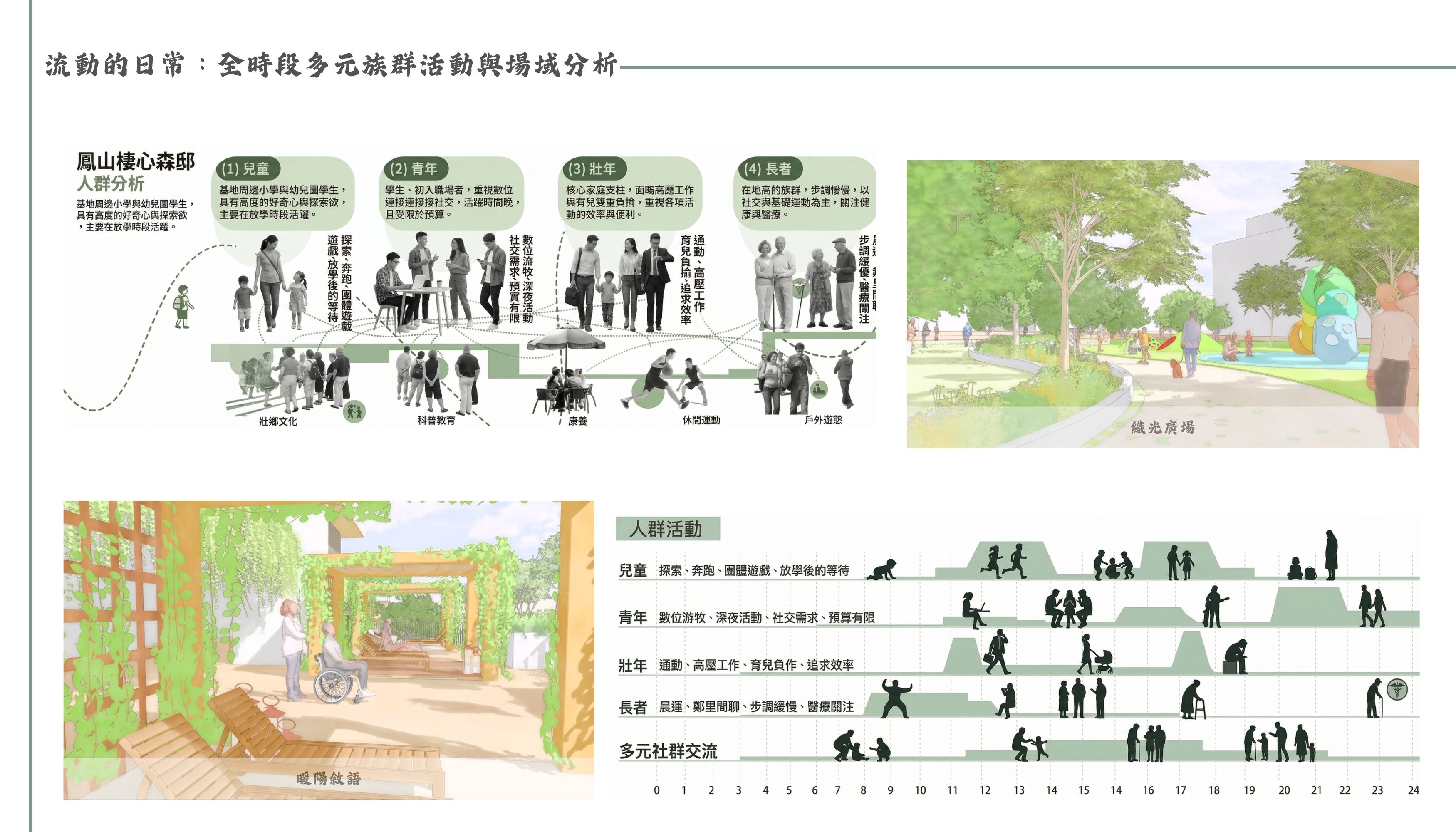
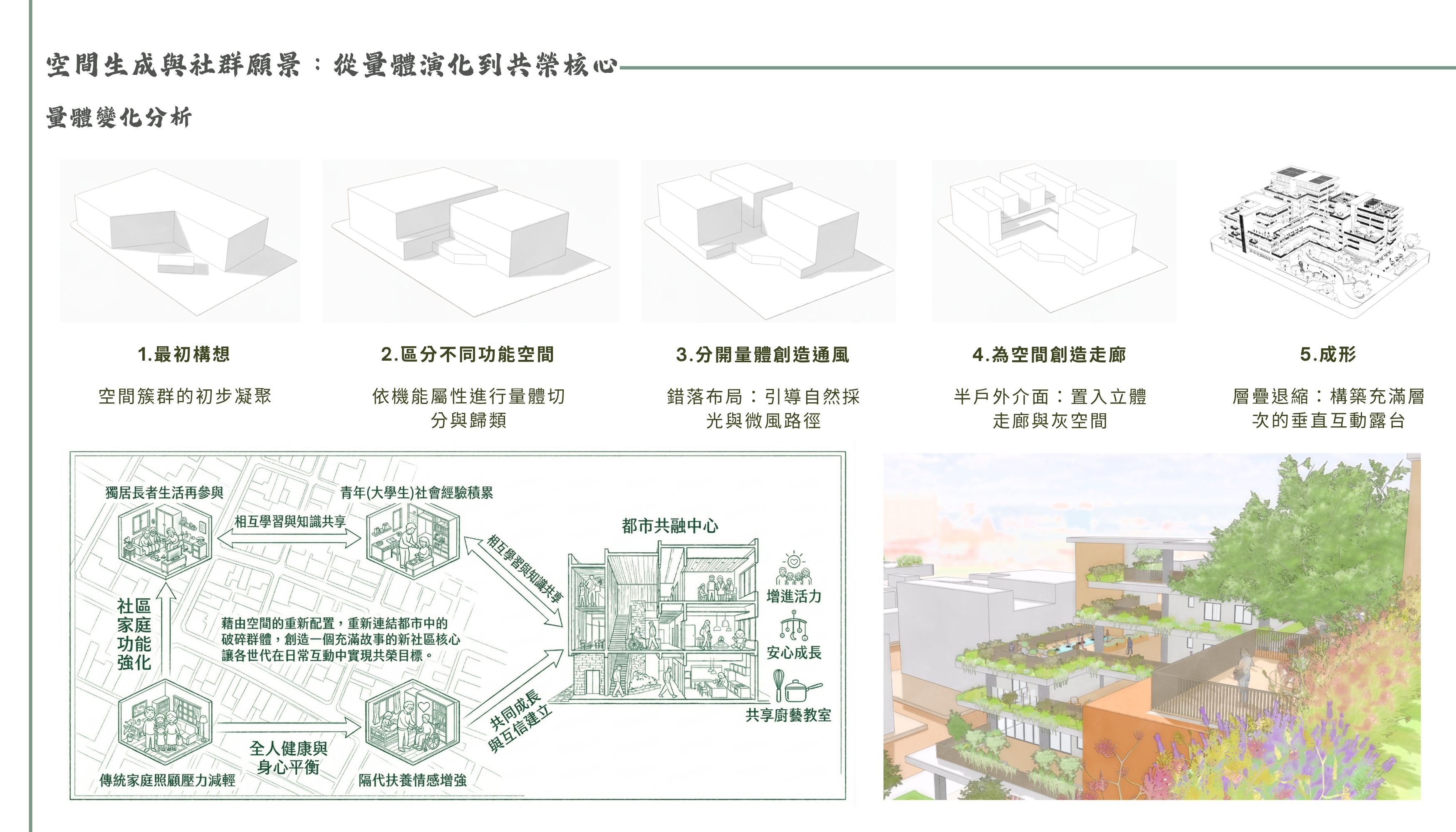
設計以「綠廊共生」為骨幹,打破傳統機構的封閉邊界。透過水平與垂直綠帶的有機介入,將托嬰中心、日間照顧中心與青年共居宿舍進行功能性嵌套。這不只是空間的鄰近,而是生活路徑的交織:當早晨幼兒抵達,正是長者晨練與大學生出行的時刻,綠廊成為了自然互動的發生器。
社會實驗:大學生注入的生命流動
我們特別引入大學生居住機制,以「服務換取租金」的互利模式,讓青年活力成為社區的催化劑。大學生的數位創意、長者的歲月智慧與孩童的純真在此匯聚,解決了長輩「怕病、怕孤單」的焦慮,更減輕了青壯年的照護負擔。
這是一場關於「共老」與「共生」的建築實驗。我們在古廟鄰里間,運用設計編織出一張厚實的社會支持網,讓「陪伴」不再停留在小家庭中,而是轉化為一種可持續的、溫暖的城市生活新提案。
Fong-Yi · Qixin Forest Sanctuary — Symbiosis of Green Corridors
Core Concept: Intergenerational Connection
Adjacent to Fengshan’s historic temple, this project reimagines care through the lens of "intergenerational companionship." It aims to build a sanctuary that transcends bloodlines, integrating all ages into a cohesive "Qixin" community.
Spatial Strategy: Weaving Green Paths
By integrating "Green Corridors," we blur the lines between care facilities. Horizontal and vertical greenery link childcare, elderly care, and youth housing, transforming daily circulation into spontaneous social encounters.
Social Impact: A Sustainable Support Network
By implementing a "Service-for-Rent" model, we empower students to act as community catalysts. This exchange of youth, wisdom, and innocence builds a resilient support system that alleviates the pressures of modern aging.
正修科技大學建築與室內設計系
(四年級)
王O翔
正修科技大學建築與室內設計系
(四年級) 指導老師 廖O萍