讓城市學會呼吸-嘉義時代的轉變
Breathing City|The Transformation of Chiayi
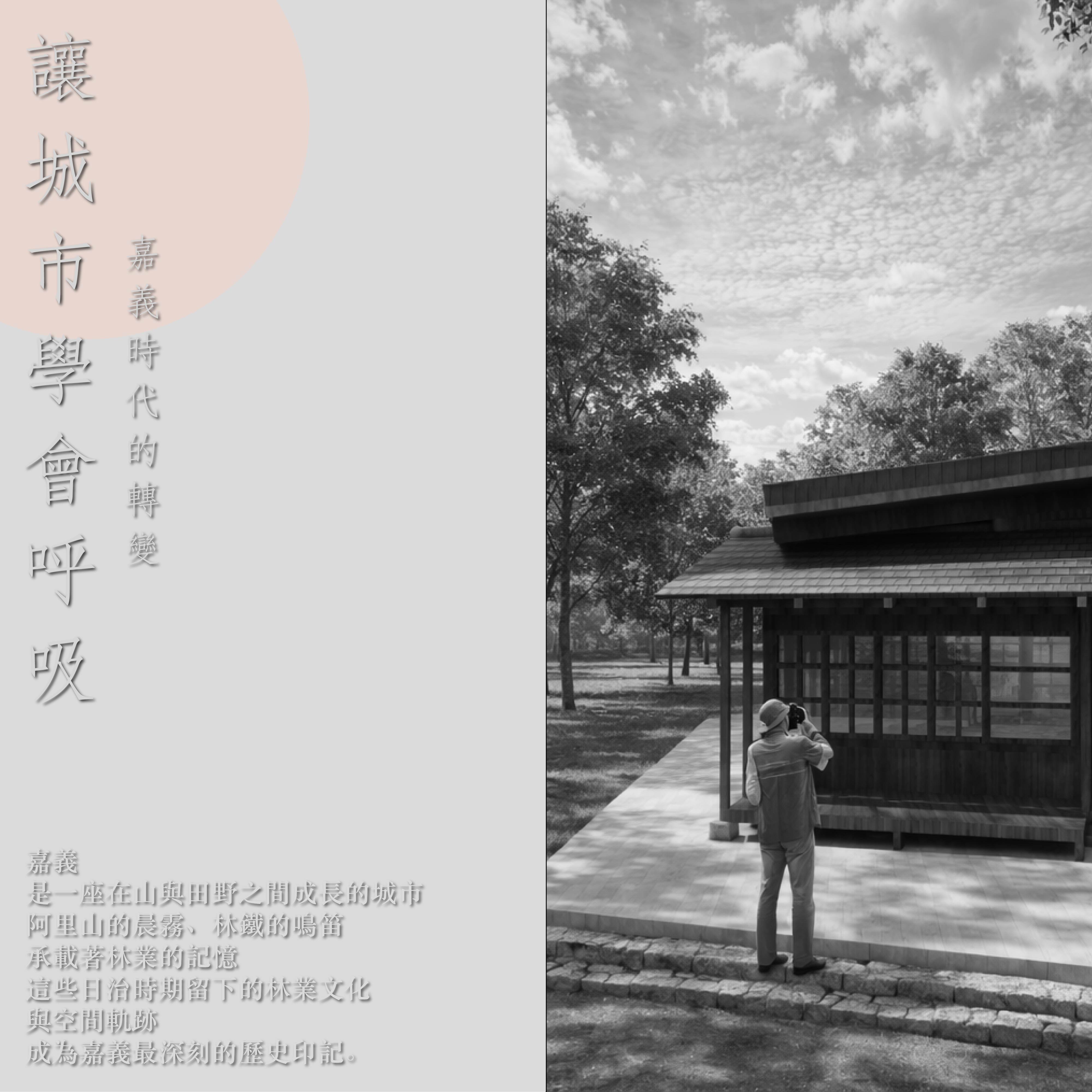
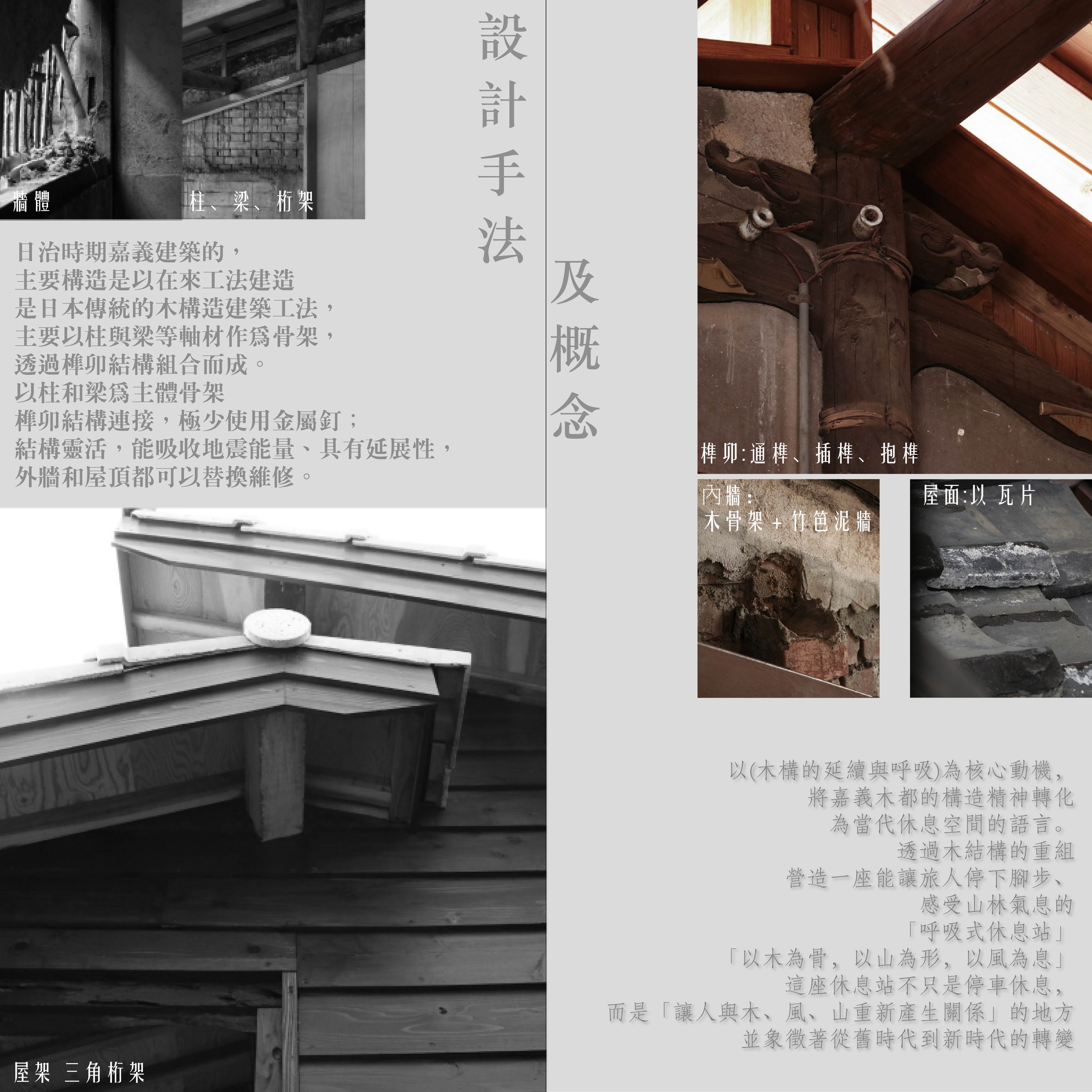
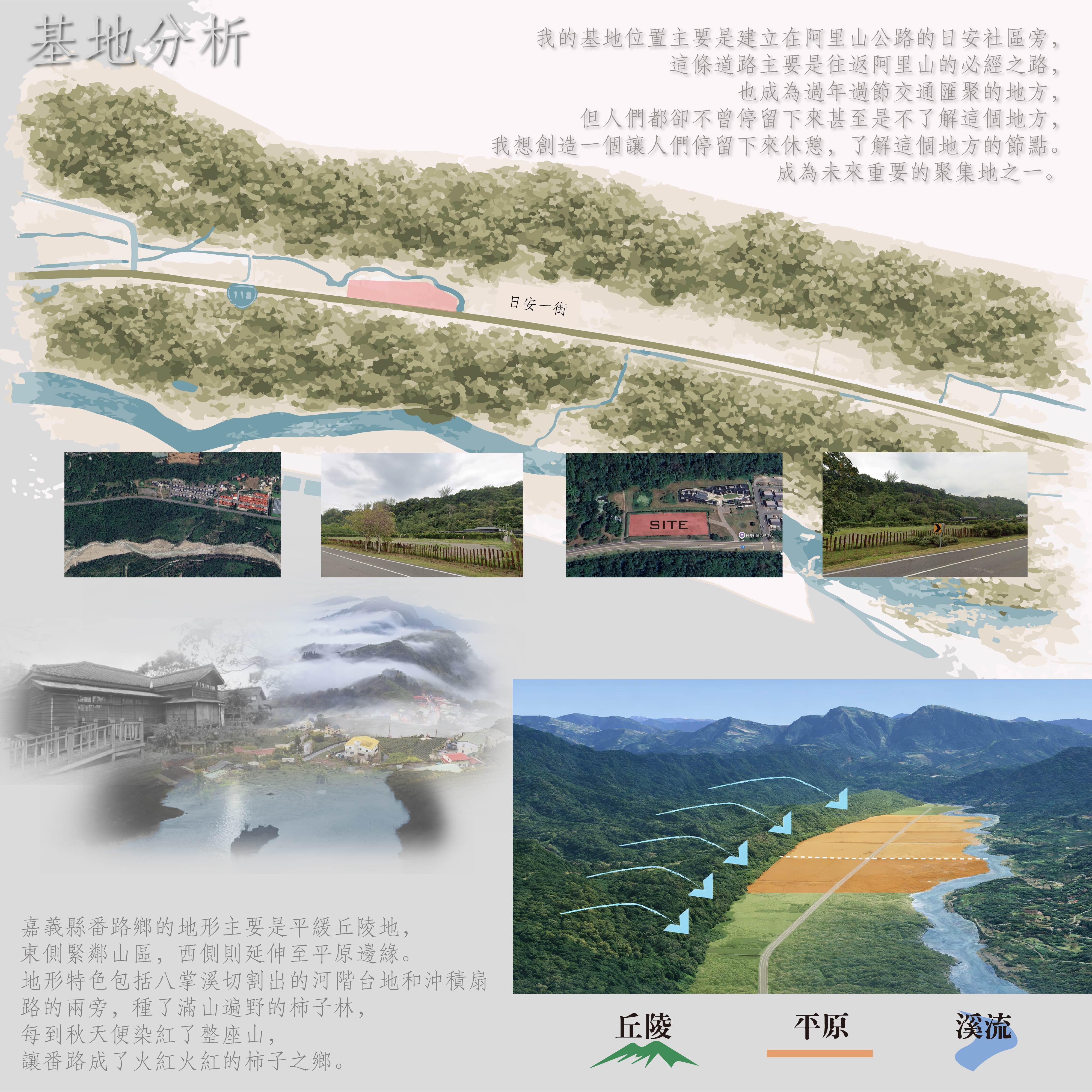
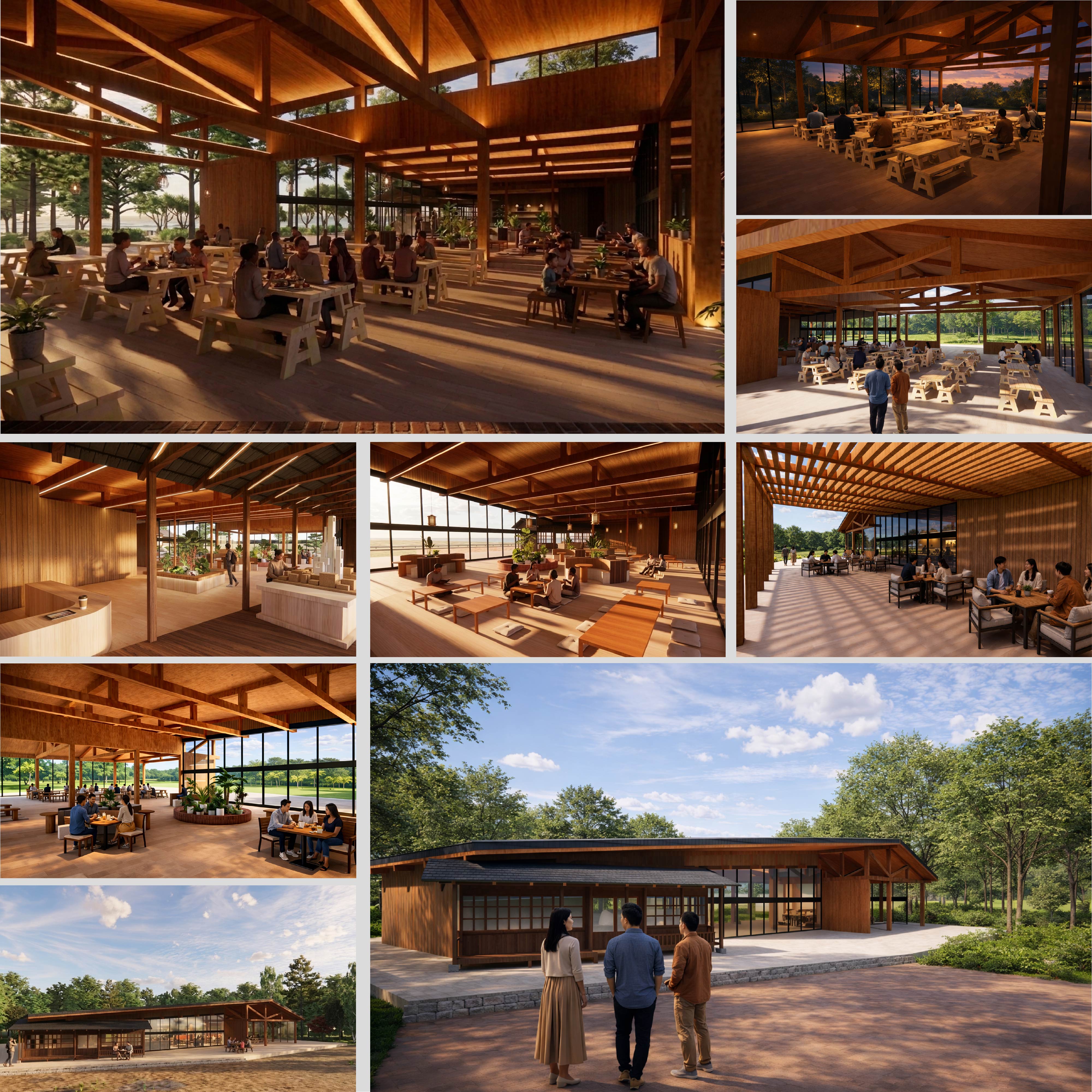
基地位於嘉義阿里山公路沿線,座落於平原與山林的交界之處,是農業地景與林業文化交織的過渡帶。嘉義作為「木都」,曾以木構建築承載城市發展與生活記憶,然而今日多數道路節點僅作為快速通過的空間,缺乏能讓人停留、感知與閱讀地方文化的場所。
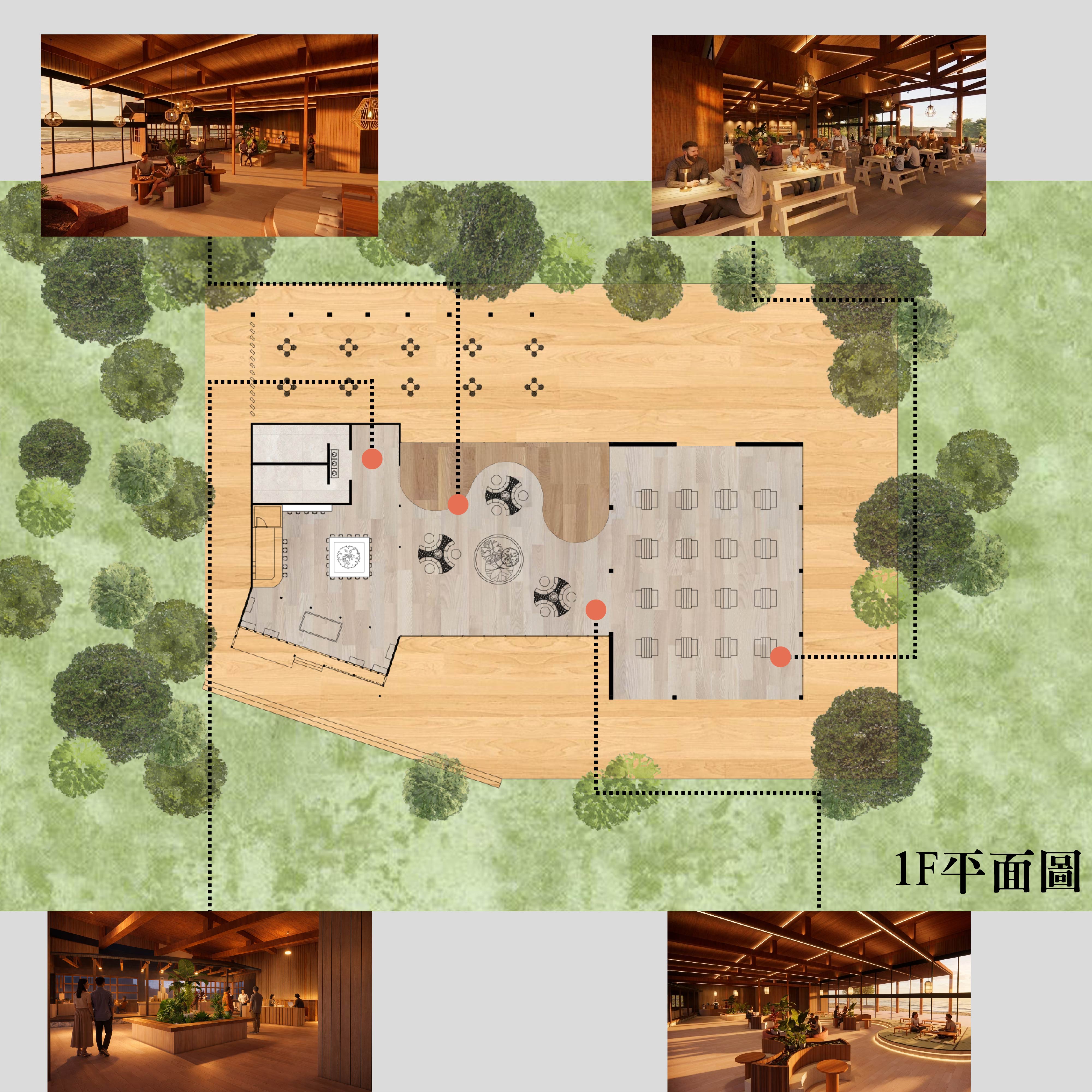
本設計以「時間」作為空間生成的核心,將建築轉化為一段可被行走與體驗的時間序列。空間由左至右展開:左側為傳統木構空間,以細柱與密集模矩構成內向而壓縮的場域,回應過去的構造邏輯與生活尺度;中段以玻璃作為界面,透過光與透明性消融結構的存在,使空間進入模糊與流動的狀態;右側則轉化為開放的現代木構空間,透過大尺度構造與放大的柱距,形成自由延展的公共場域,回應當代的使用需求與活動可能。
建築不僅是形式的轉變,更是一種從「構造」出發的時間敘事。空間由封閉走向滲透,最終邁向開放,使結構、光與人的活動交織為一段連續的經驗。透過木構語彙的重組與轉譯,本設計將原本單一通過性的公路節點,轉化為一處可停留、可感知、可閱讀的場所,使嘉義木都的文化不再停留於歷史,而是在當代被重新啟動。
Breathing City|The Transformation of Chiayi
Located along the Alishan Highway in Chiayi, the project sits at the threshold between plains and forest, where timber culture once defined the city. While Chiayi is known as a “Wood City,” many roadside spaces today function only as points of transit, lacking opportunities for pause and engagement.
This project uses time as a spatial framework, organizing the building into three zones. The left zone represents the past through traditional timber construction, with smaller columns and denser grids creating a more enclosed space. The middle zone acts as a transition, using glass to dissolve boundaries and introduce light and permeability. The right zone represents the present, forming an open and flexible timber space with larger spans and a continuous spatial flow.
The sequence from enclosed to permeable to open transforms structural logic into spatial experience. The project redefines the roadside as a place to pause, breathe, and reconnect with Chiayi’s cultural landscape.