山與院之間
Between Mountain and Courtyard
不是再見,而是再現。
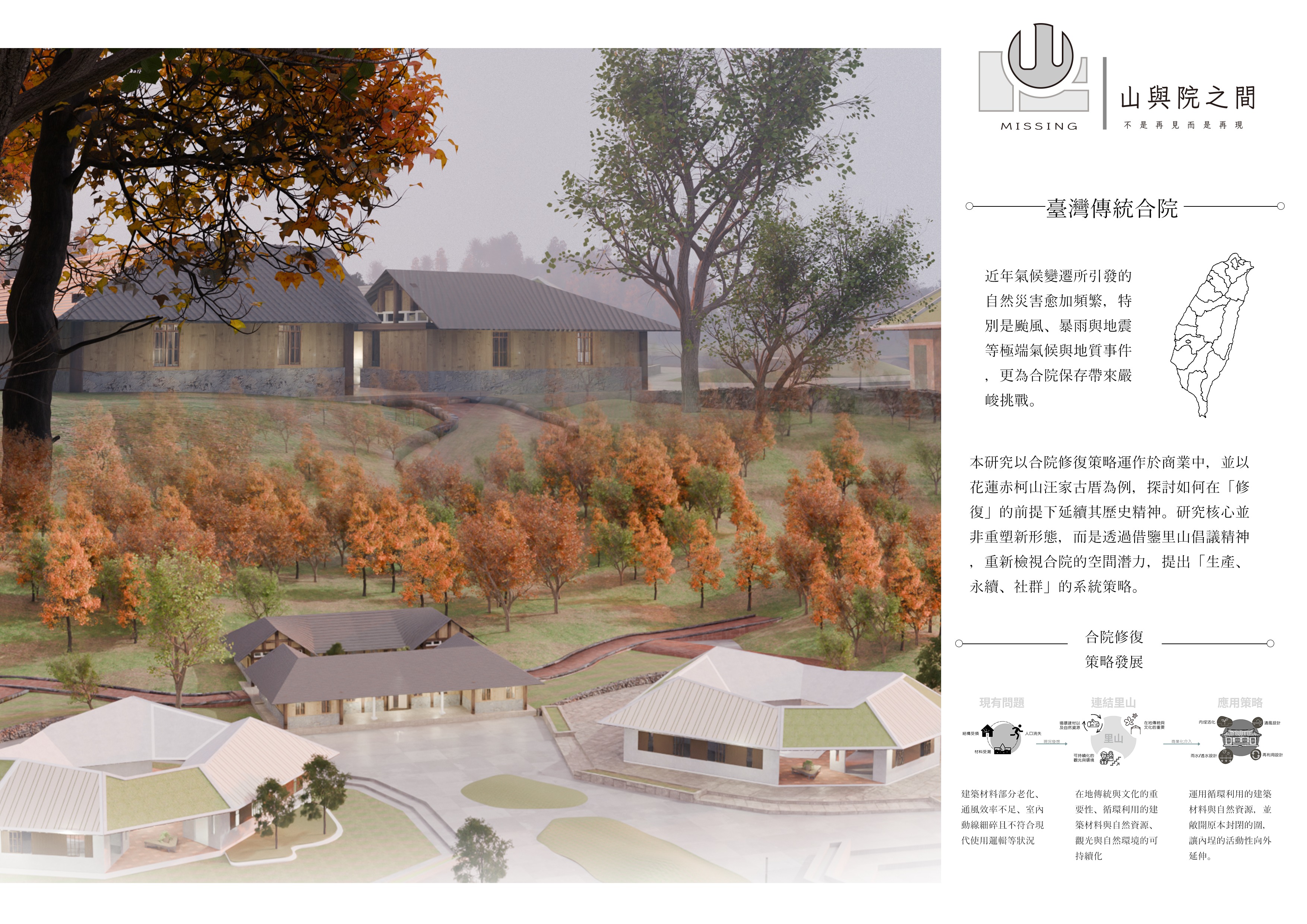
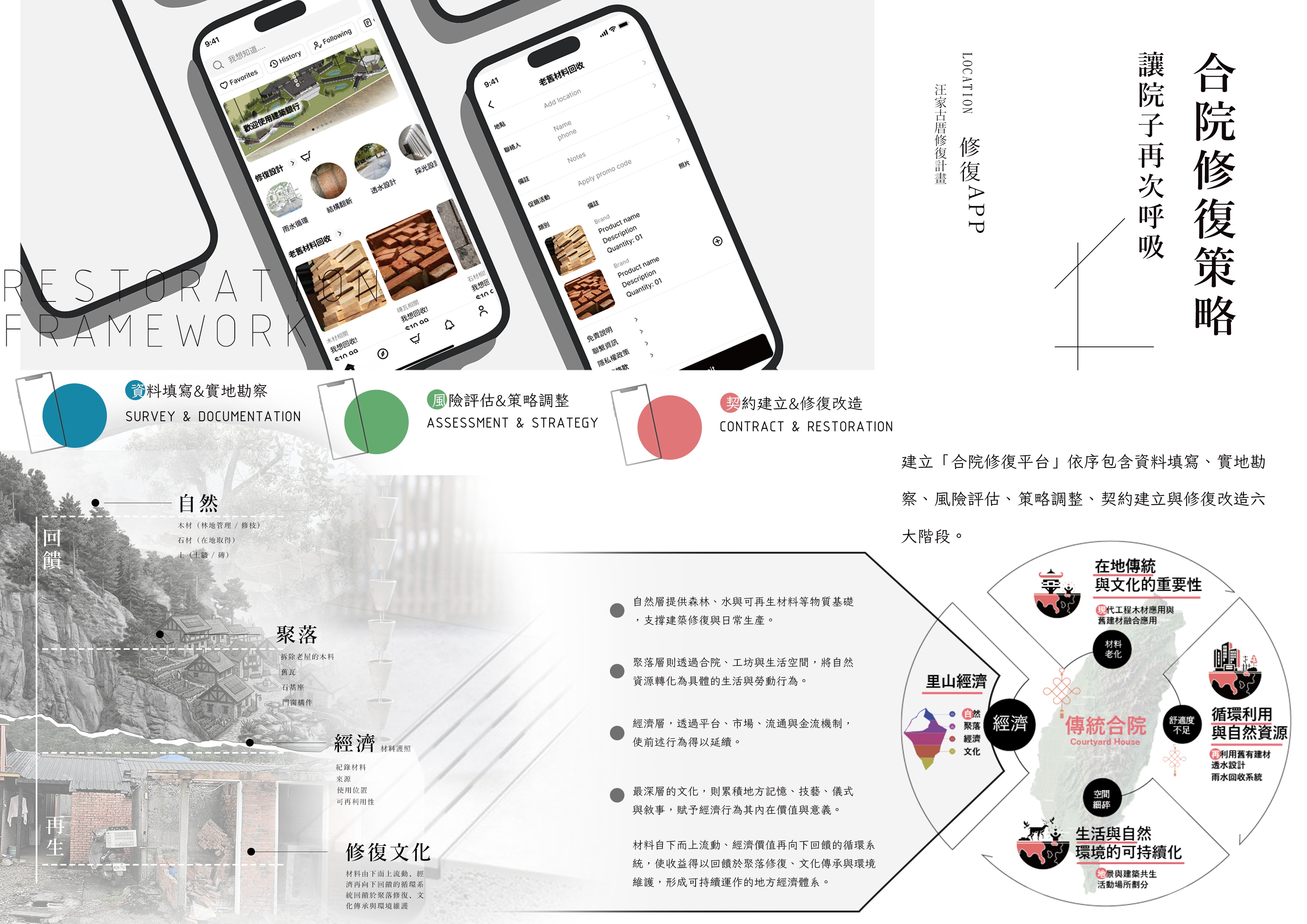
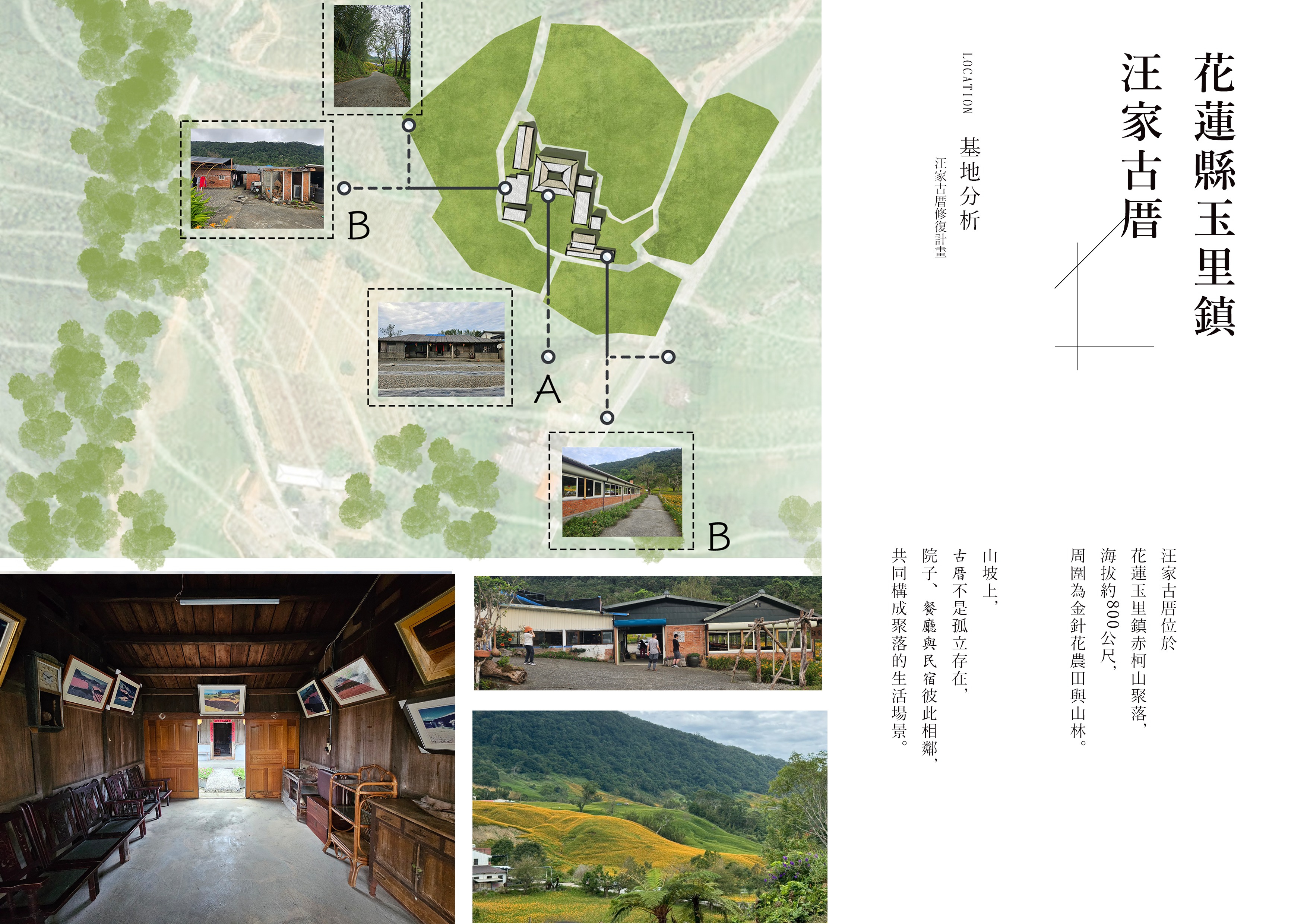
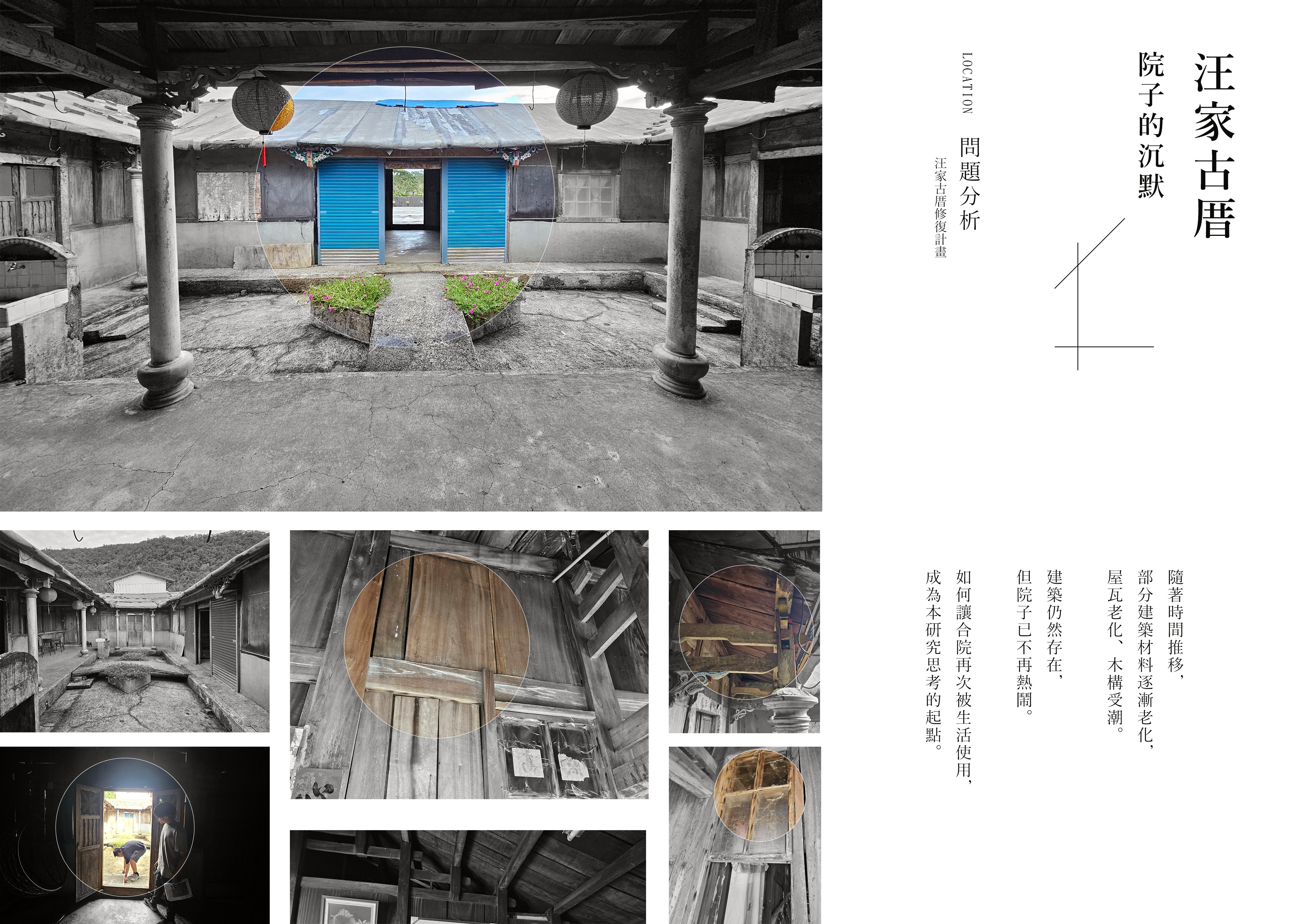
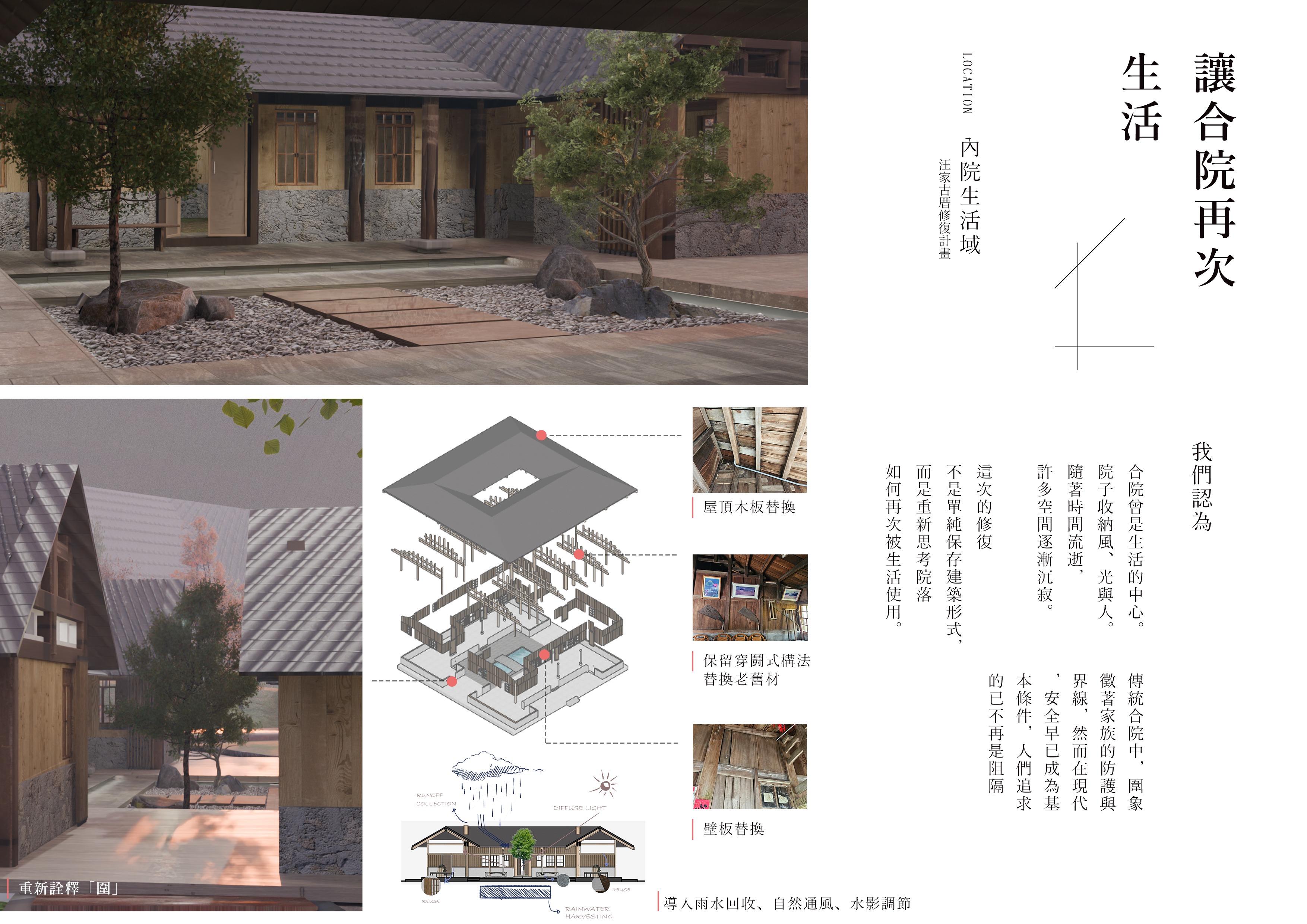
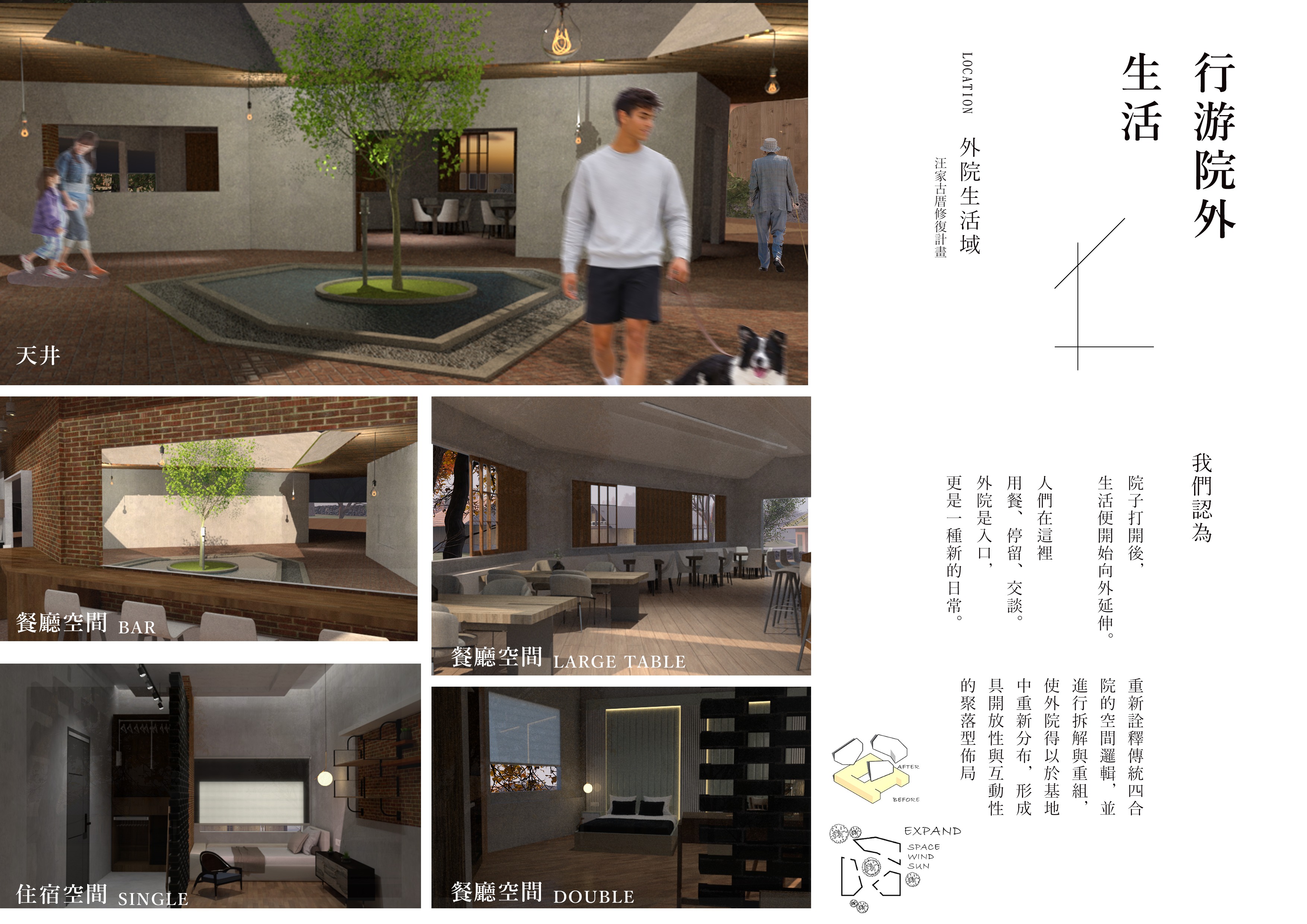
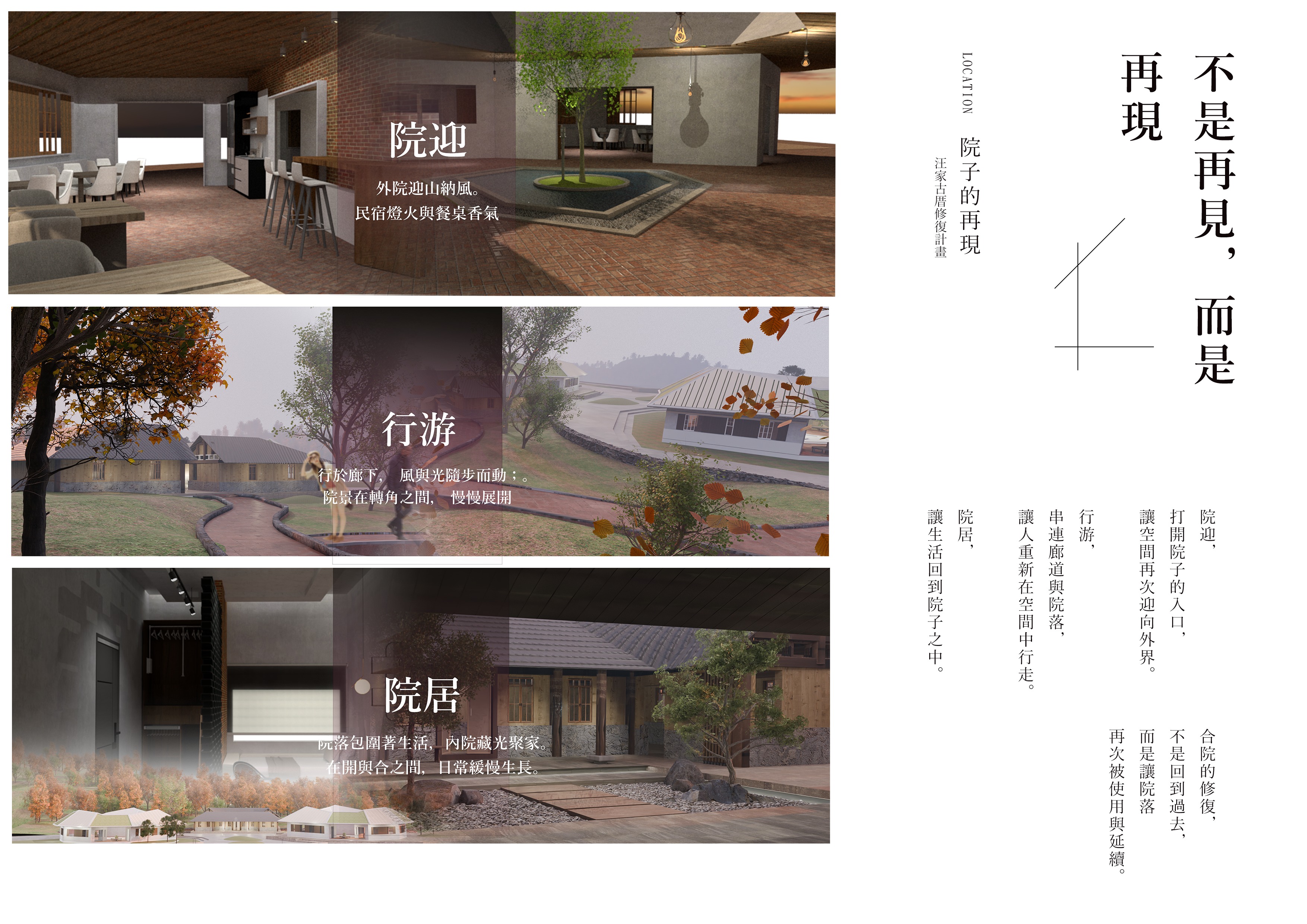
期望將逐漸被社會淘汰的臺灣特色建築—閩南式合院,重新視為一種能被再度理解與使用的生活空間,而非僅止於被保存的歷史遺構。設計以「院迎、行游、院居」作為核心空間策略:院迎,使院子重新打開,迎接山風、光線與來訪的人,恢復其與自然與人之間的流動關係;行游,透過廊道的串聯,建立院與院之間的行走節奏,讓移動成為一種被感知的空間體驗;院居,則讓生活重新回到院子之中,使日常活動在開放與圍合之間緩慢展開,重拾合院原有的生活溫度與人際關係。修復不只是對建築形式的保留與再現,更是一種對生活方式的回應與延續。透過適度的現代介入與空間轉化,使院落再次成為可被使用、被停留、被感受的場域,讓合院在時間的推移中,不是走向消逝,而是在新的脈絡下持續被使用與理解,進而轉化為承載記憶與未來生活的場所。
Between Mountain and Courtyard
Not Farewell, but Re-emergence.
This study aims to reconsider the Minnan-style courtyard house—an architectural typology distinctive to Taiwan that has gradually been marginalized by modern society—as a spatial heritage worthy of renewed attention.
The design therefore proposes three spatial strategies—“Yuan-Ying,” “Xing-You,” and “Yuan-Ju.” “Yuan-Ying” reopens the courtyard to welcome mountain breezes and visitors; “Xing-You” reconnects the corridors and courtyards to create a continuous spatial journey; and “Yuan-Ju” reintroduces daily life into the courtyard environment.
Restoration, in this sense, is not merely about preserving architectural form, but about reactivating the courtyard as a place for living—allowing the courtyard house to continue being used, experienced, and appreciated through time.
屏東科技大學 木材科學與設計系
(四年級)
鄭O洲
屏東科技大學 木材科學與設計系
(四年級)
胡O睿
屏東科技大學 木材科學與設計系
(四年級) 指導老師 鄧O鈞
馮O豪