巷陌行旅-修復咖啡館
Alley Repair Café: A Journey of Repair
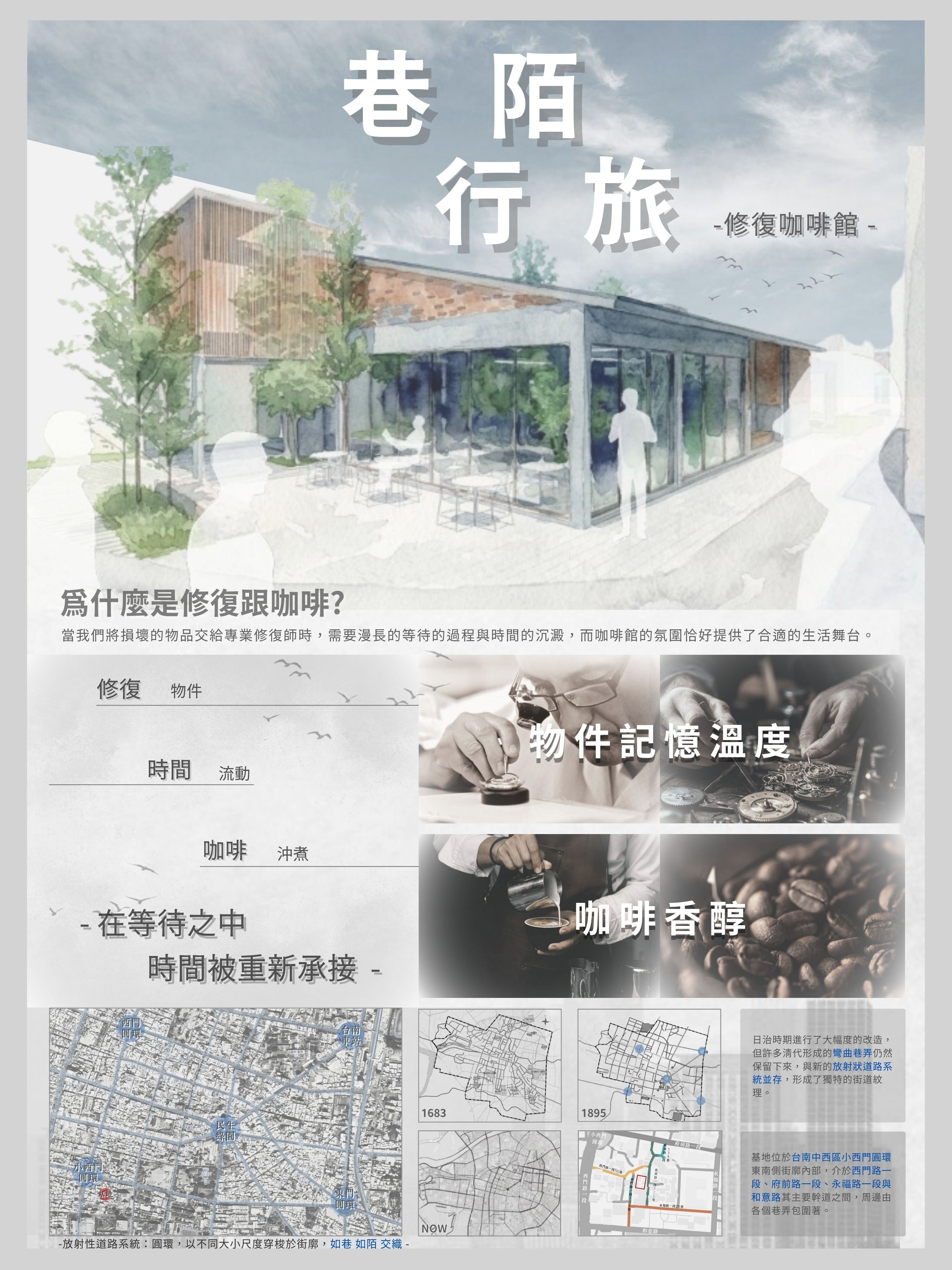
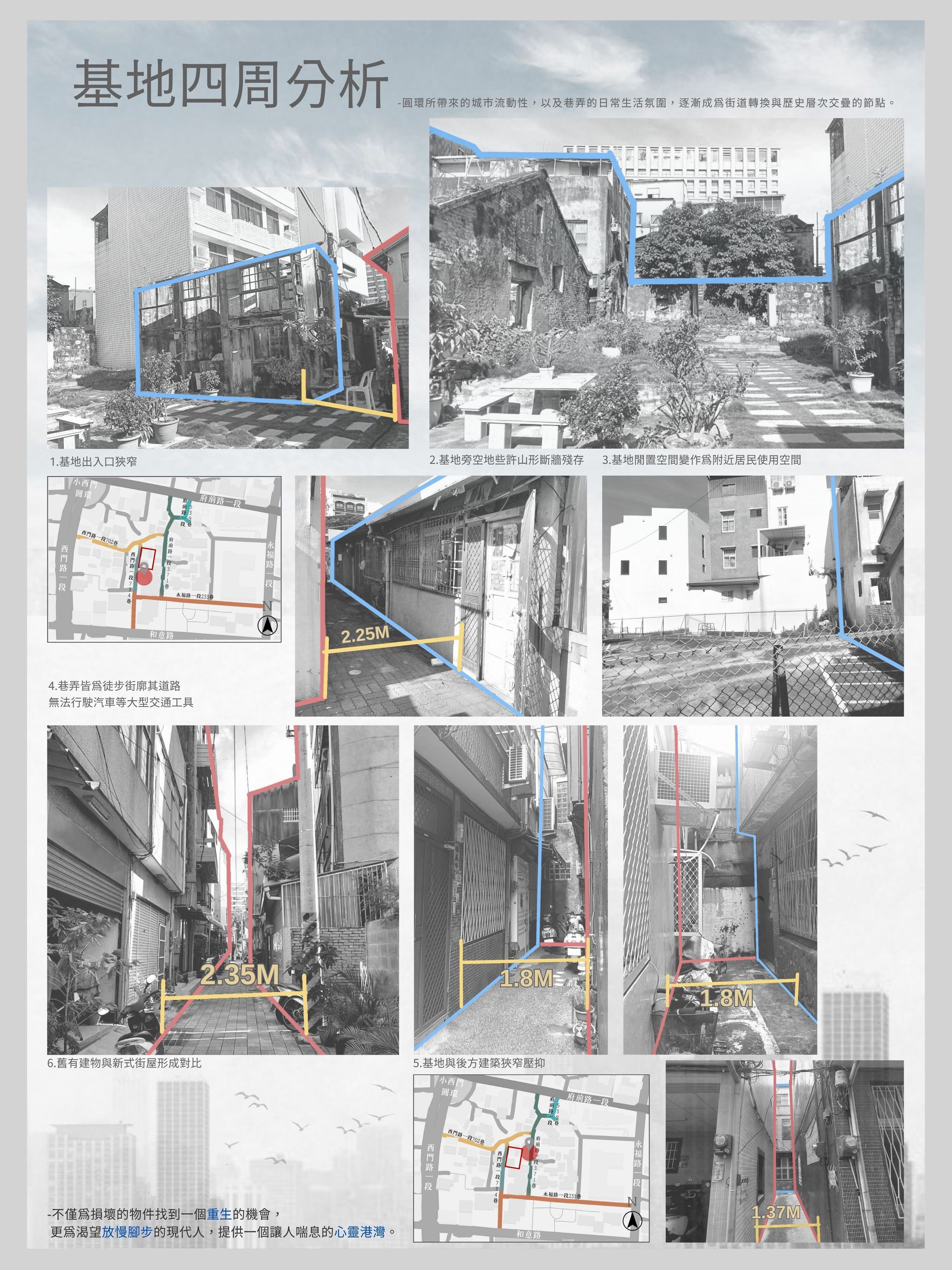
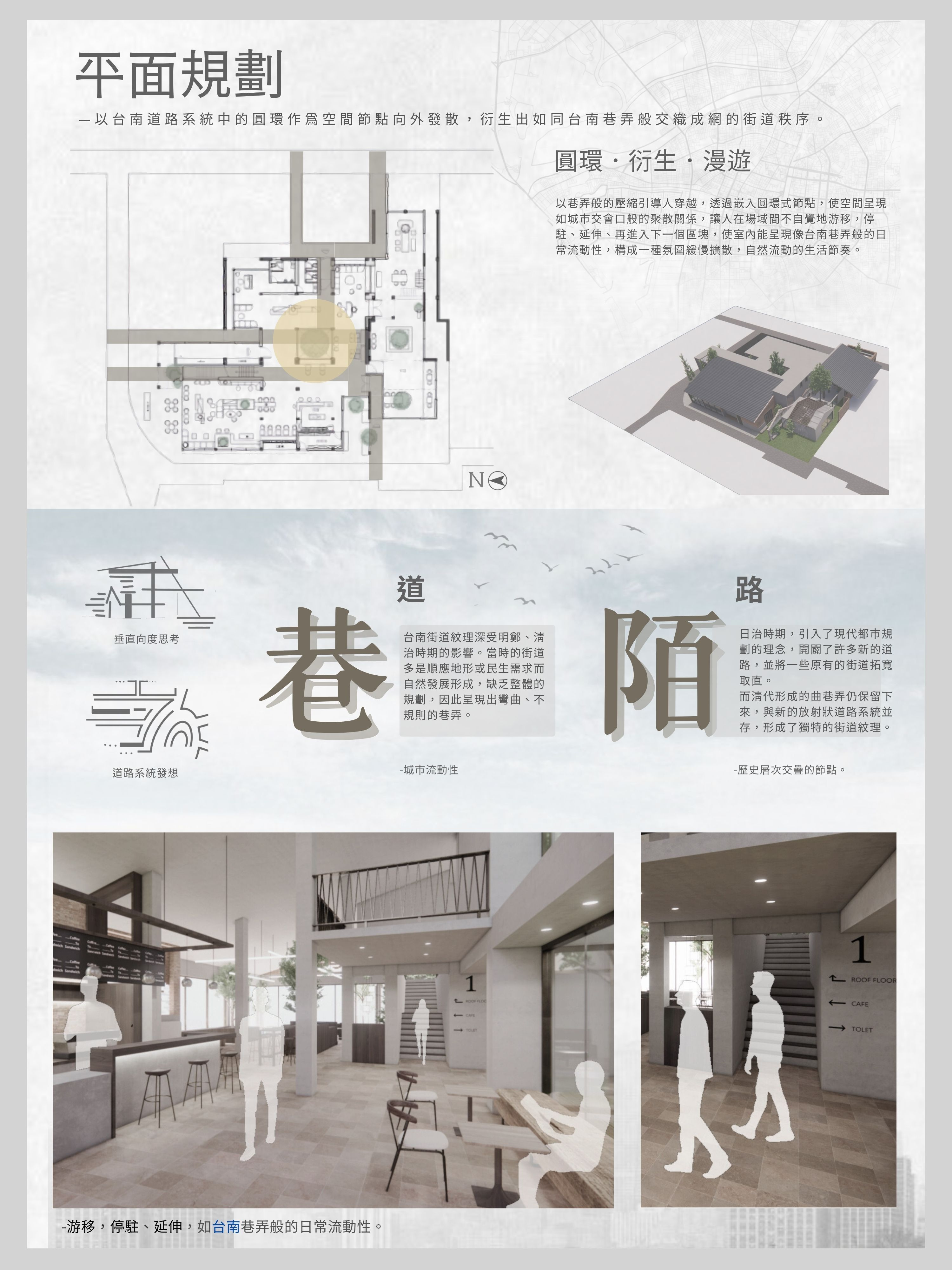
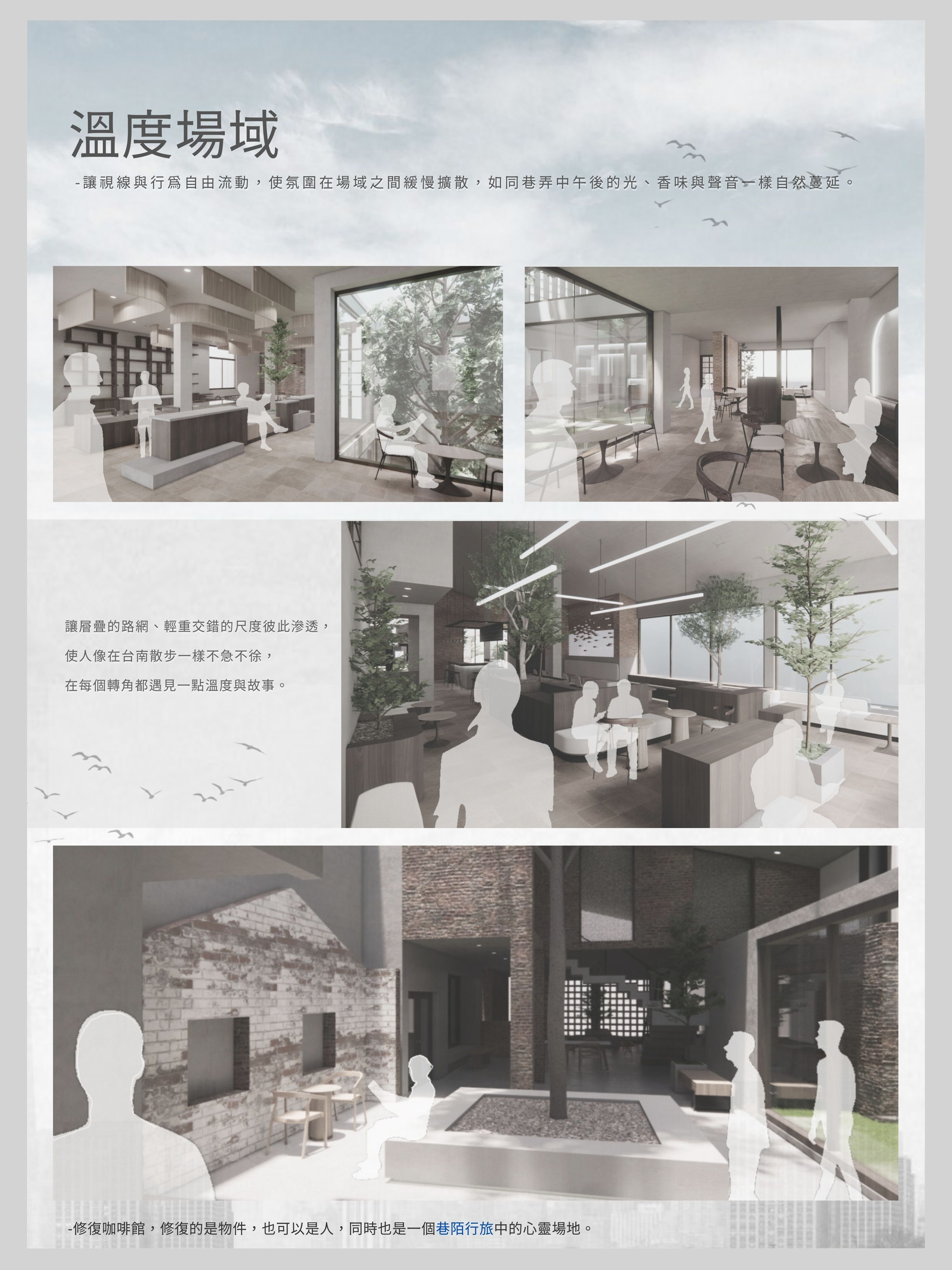
本案以「修復」為核心概念,回應當代城市中快速消費與遺忘的生活節奏,嘗試透過空間設計重新建立人與物之間的關係。基地位於台南巷弄之中,承載著歷史紋理與日常生活的交織,本設計引入咖啡館作為日常停留的媒介,結合物件修復機能,形塑一處介於消費與生產之間的中介空間。人在此不僅是消費者,同時也是觀看者與參與者,得以在等待修復的過程中,重新感知時間的流動。
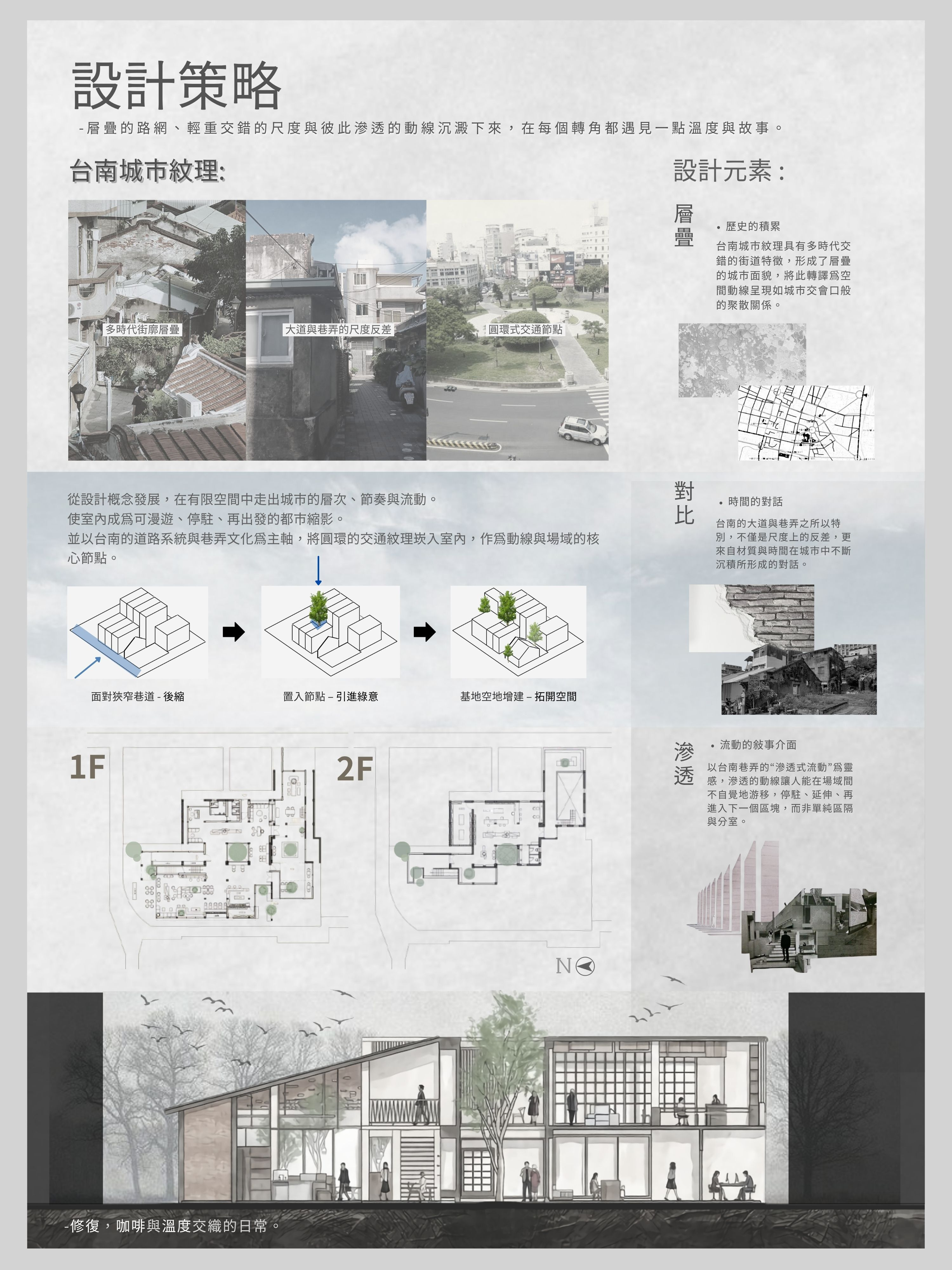
設計上以物件修復作為隱喻,象徵時間的延續與記憶的保存。空間透過開放與半開放的配置,使修復過程得以被看見,並與咖啡活動交織,形成多層次的空間經驗。巷弄尺度被延伸進入室內,模糊內外界線,使空間如同城市紋理的延續。材質運用上採取新舊並置的方式,透過保留、拼接與修補的設計語彙,呈現時間累積的痕跡。
本案試圖將「修復」從單一功能轉化為一種日常行為與空間經驗,使人在停留與等待之中,重新建立與物件、空間及記憶之間的連結,並在城市縫隙中形塑一處承載時間與情感的場所。
Alley Repair Café: A Journey of Repair
This project centers on "Repair" as its core philosophical intervention, serving as a critical response to the ephemeral nature of contemporary urban life and the culture of rapid consumption. Located within the intricate fabric of Tainan’s historic alleys, the site acts as a repository of collective memory and daily rituals. The design introduces a café as a medium for "everyday lingering," seamlessly integrating the functional act of repair to create a liminal space between consumption and production. Here, the visitor is no longer a mere consumer but becomes an observer and a participant, rediscovering the fluidity of time through the process of waiting and witnessing restoration.
樹德科技大學 室內設計系
(四年級)
楊O翎
樹德科技大學 室內設計系
(四年級) 指導老師 郭O紅