欁鱻禾食-食農校育場域
Lanxianhe Food - Food and Agriculture Education Field
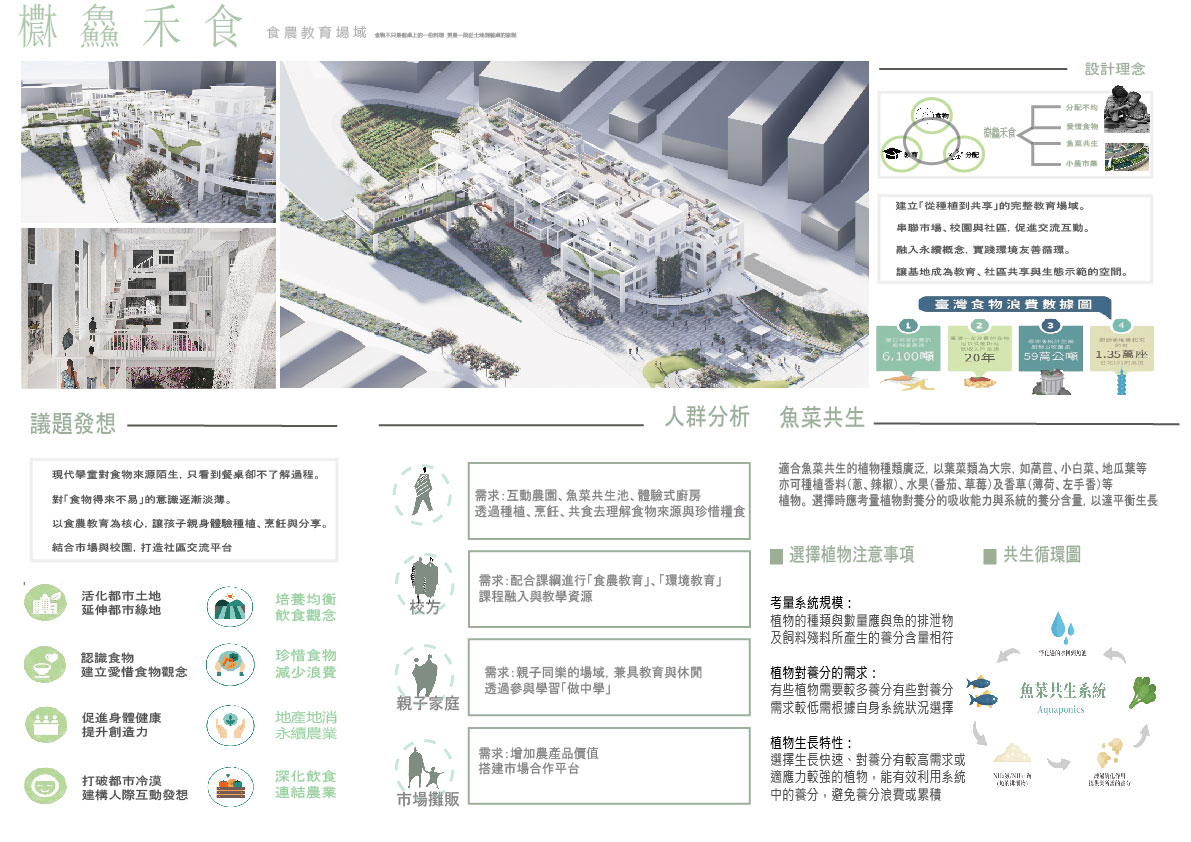
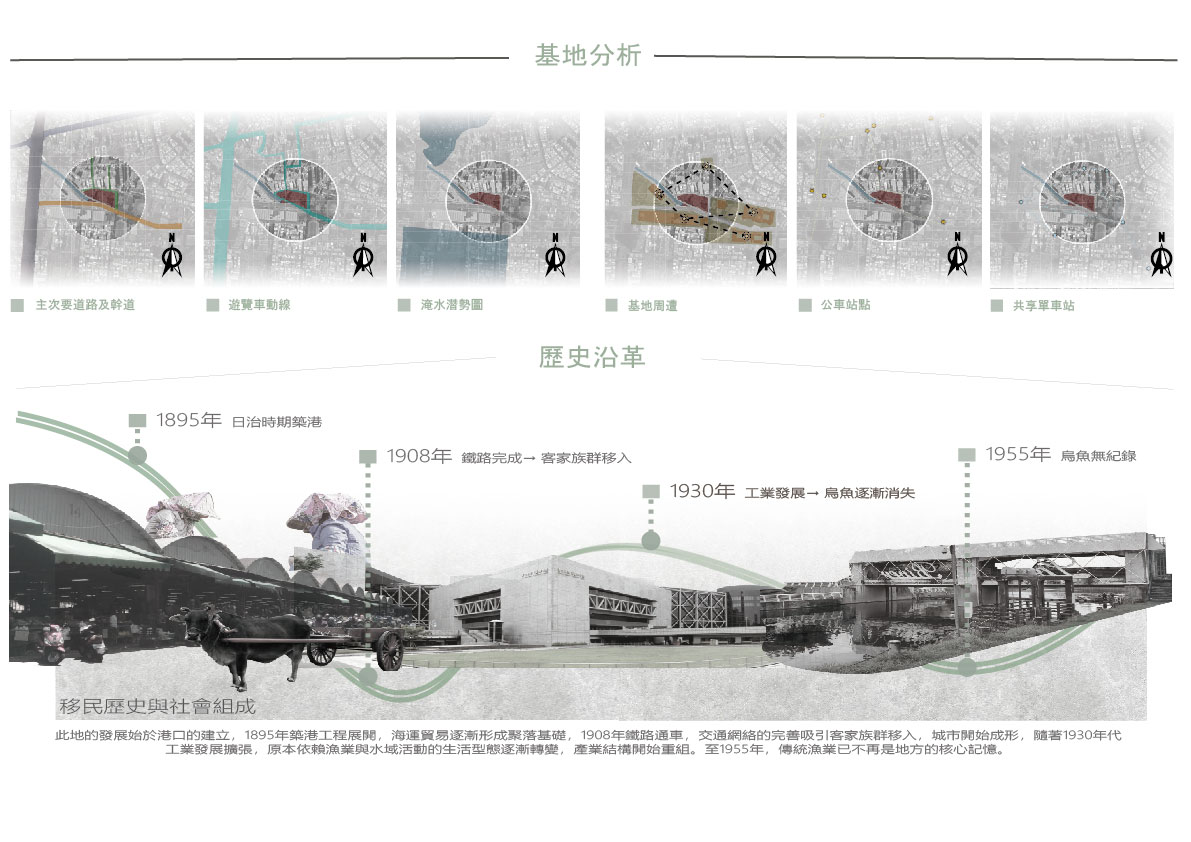
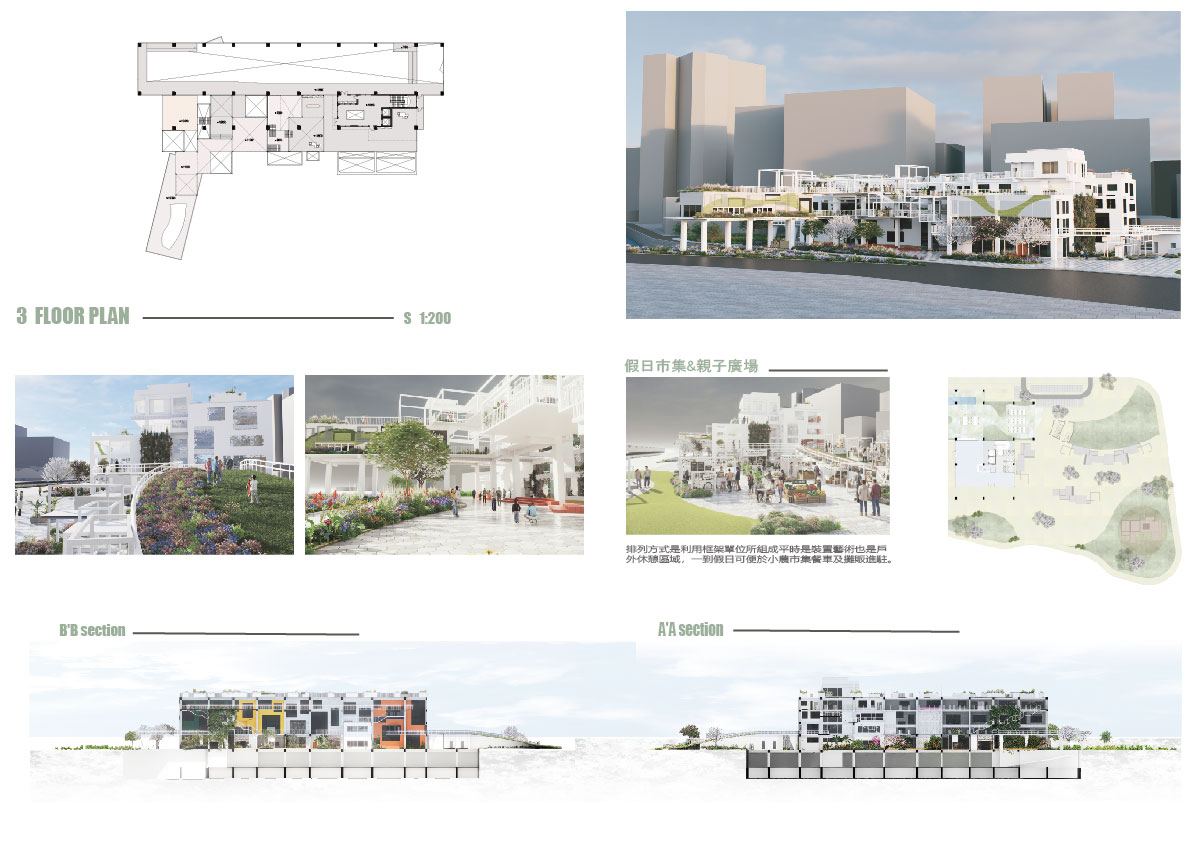
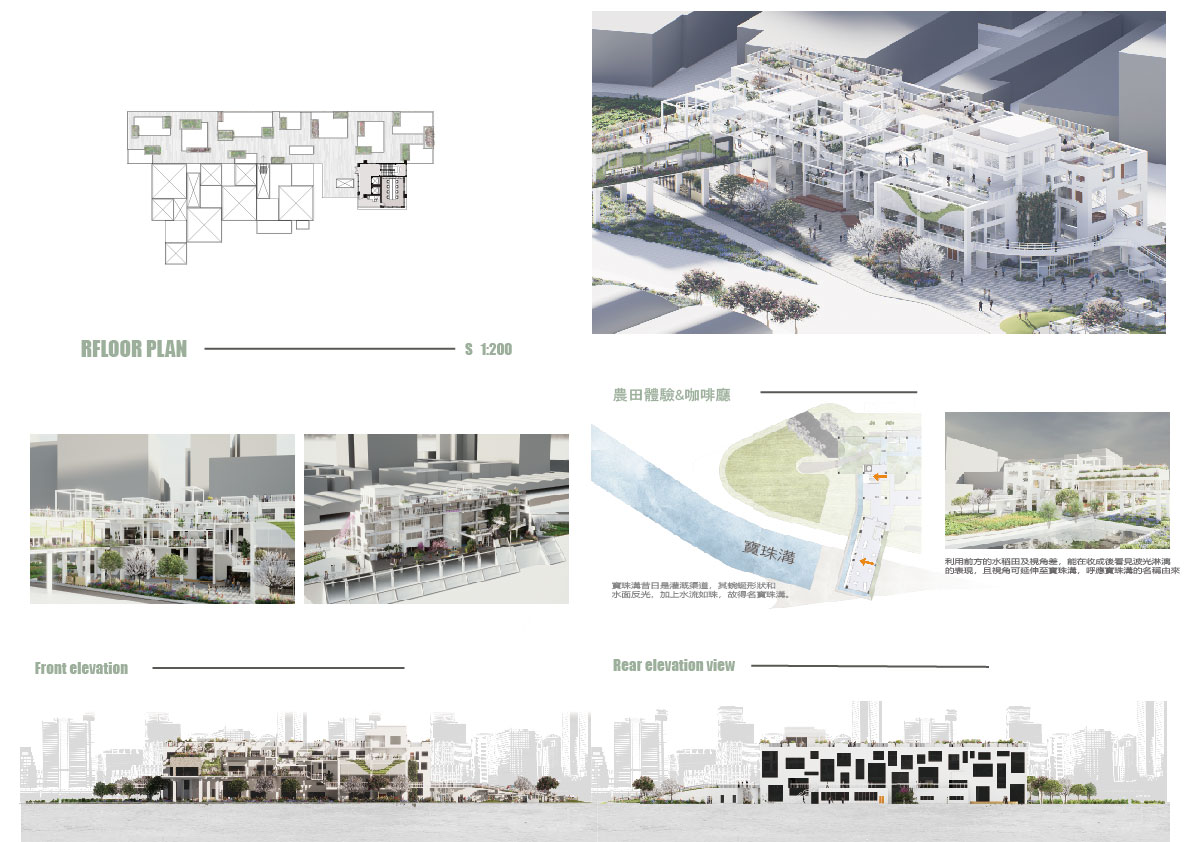
現代都市人逐漸與食物來源脫節,本案「欁鱻禾食」旨在都市紋理中植入一個揉合「食農教育」與「社區共享」的新型態空間。基地設計保留了當地歷史脈絡,並將其轉化為空間敘事的起點。
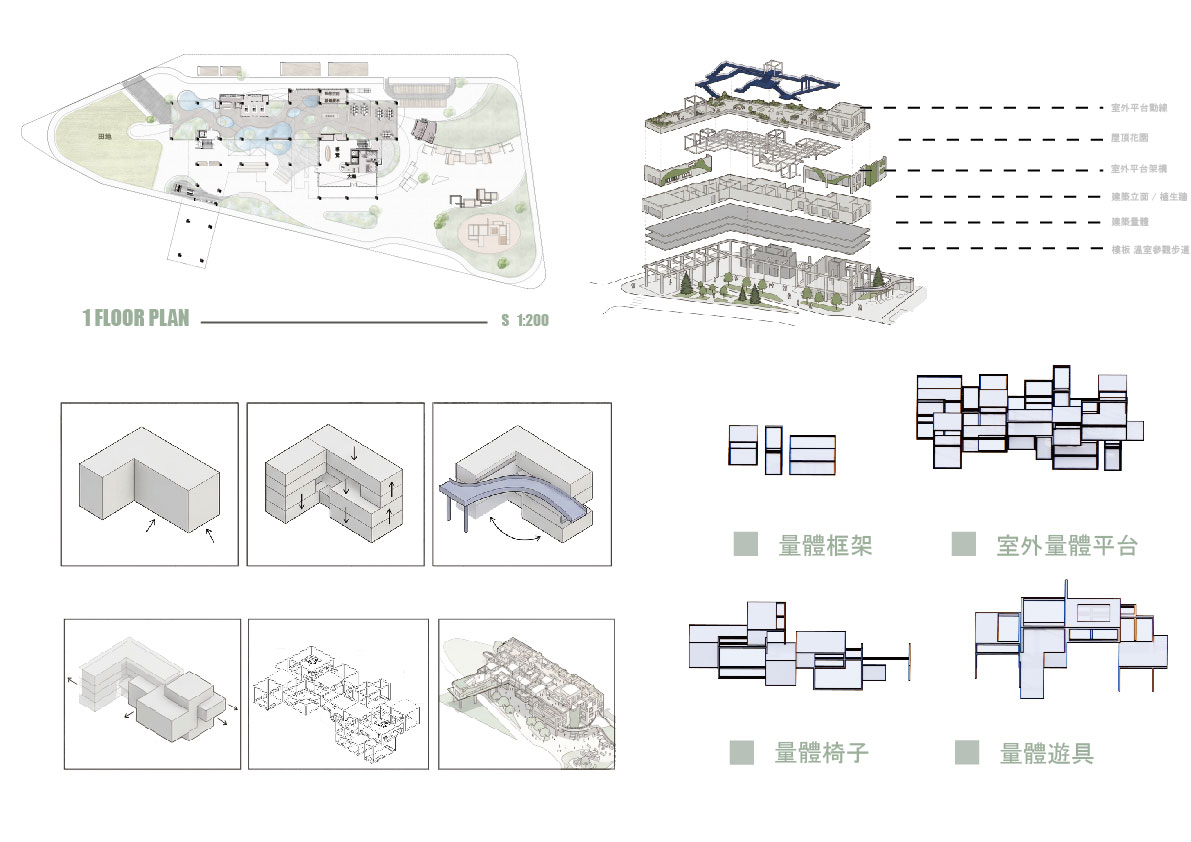
設計策略從「量體演變」出發:將完整的建築量體進行切割、錯落與退縮,創造出豐富的戶外露台與半戶外中庭。這些空間不僅打破了室內外的界線,更成為垂直農場與立體綠化的載體。我們將「魚菜共生」系統與植栽景觀無縫融入建築皮層與各樓層,讓整棟建築成為一個會呼吸的微型生態圈。
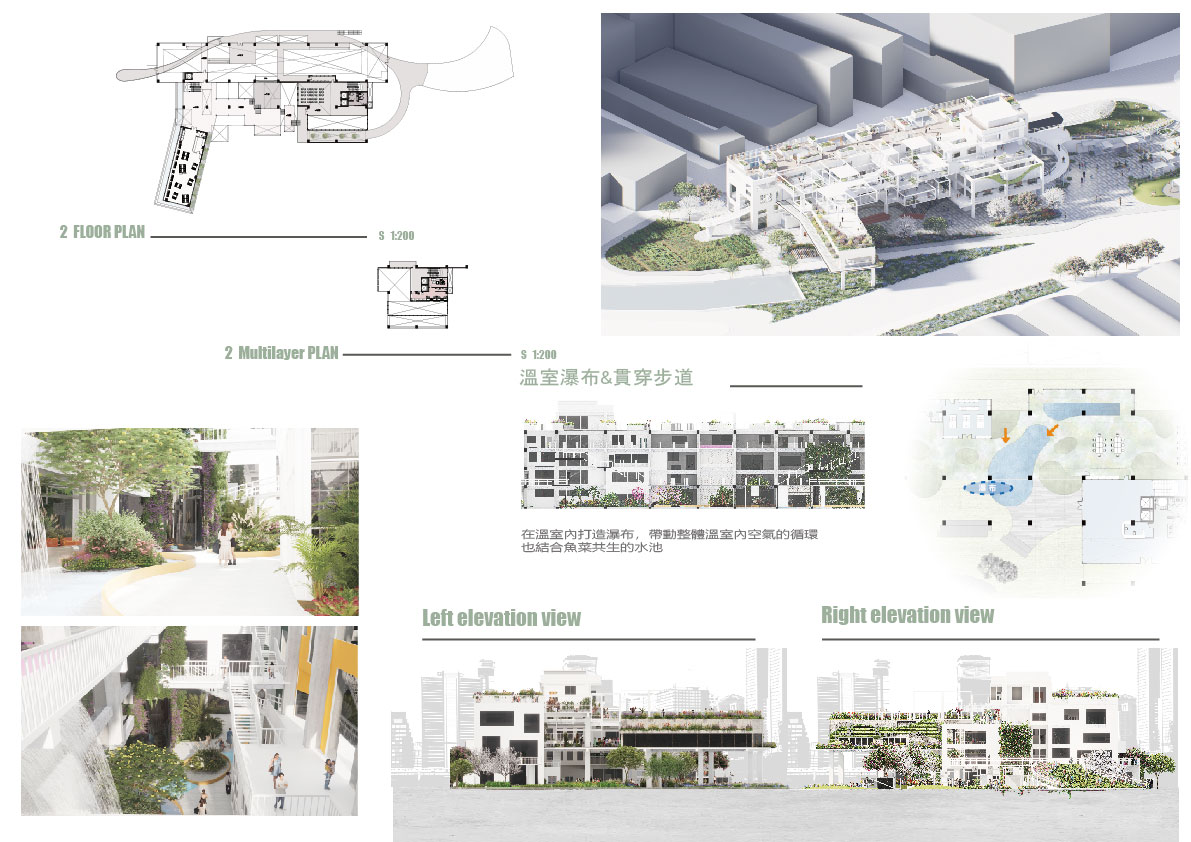
空間機能配置上,以「體驗與共享」為核心。一樓規劃為開放式的「假日市集」與「親子廣場」,作為串聯社區的都市客廳,鼓勵居民參與小農交流;拾階而上,二樓結合了「農田景觀」與「咖啡廳」,並以「溫室瀑布」作為視覺與微氣候調節的核心,讓訪客在綠意環繞中感受食物的原始樣貌;三樓及屋頂層則配置了專業的食農教育空間與觀景平台。
「樹癮 禾食」不僅是一棟建築,更是一個推廣珍惜食物、促進健康飲食觀念的立體聚落,期盼能在此重新連結人、食物與土地的關係。
Lanxianhe Food - Food and Agriculture Education Field
"Lanxianhe Food" addresses the urban disconnect from food sources by creating an innovative agriculture education field. The design strategy begins with volumetric evolution. A solid mass is fragmented and staggered to generate outdoor terraces and courtyards, blurring boundaries between interior and exterior spaces. This provides vital platforms for vertical farming. We seamlessly integrated aquaponics systems into the building skin, transforming it into a living micro-ecosystem.
Programmatically, the core focus is community sharing. The ground floor features an open weekend market and family plaza, serving as an active urban living room. The second floor combines a farm landscape with a cafe, anchored by a greenhouse waterfall that regulates the indoor microclimate. Upper levels offer dedicated spaces for agricultural education. Ultimately, this architectural project is designed to promote sustainable eating habits, reconnecting city residents with the land and their food.
正修科技大學 建築與室內設計系
(四年級)
黃
書胤
(四年級) 指導老師 廖O萍