山,在日常之中 — 九九峰與聚落的新文化
The Mountains, Within the Everyday ⸺ A New Culture of Jiujiu Peaks and Settlements
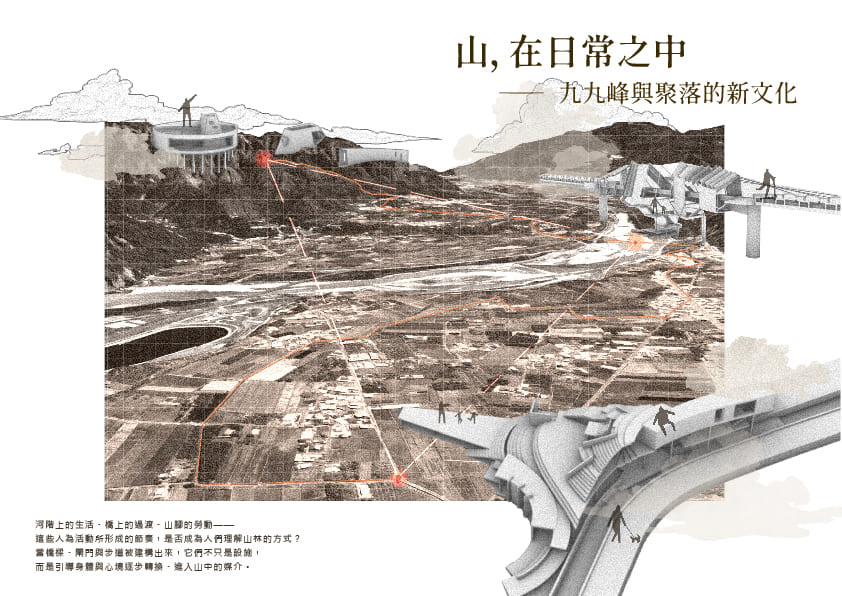
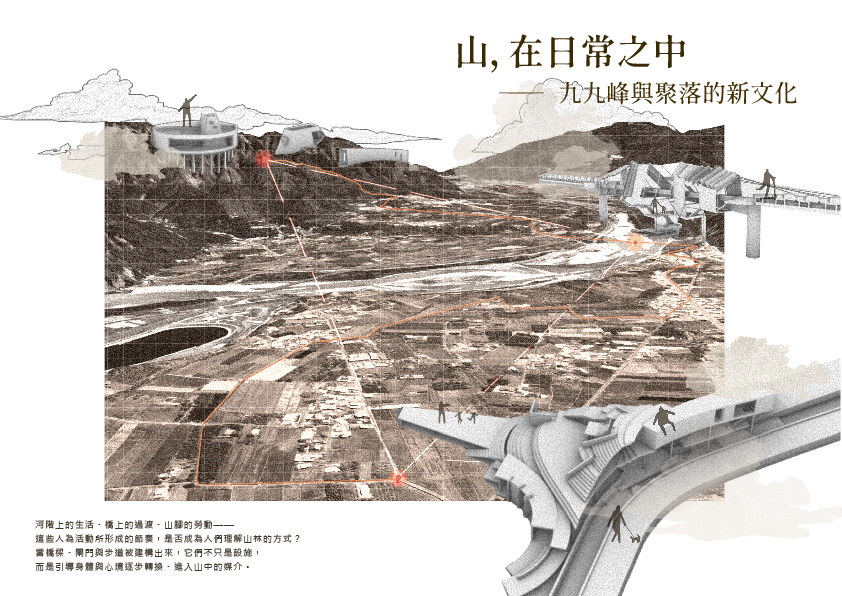
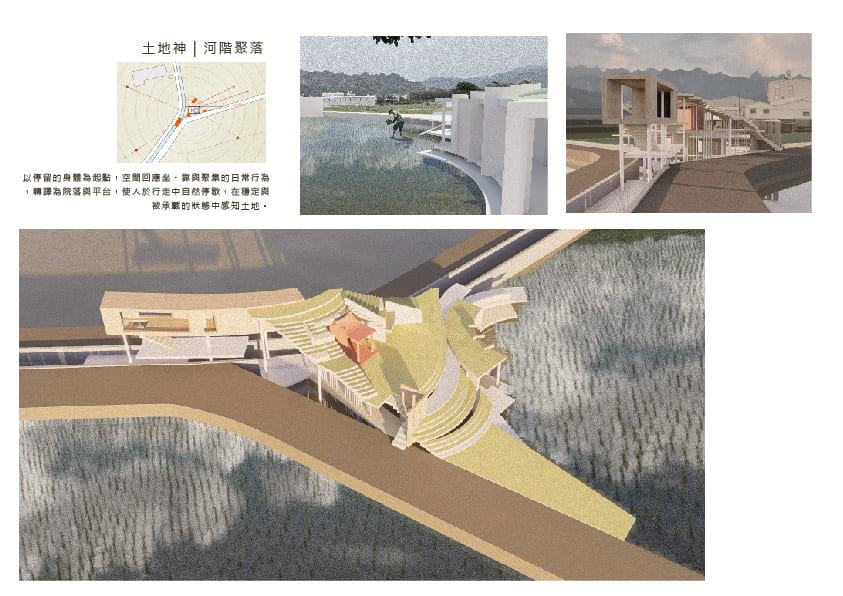
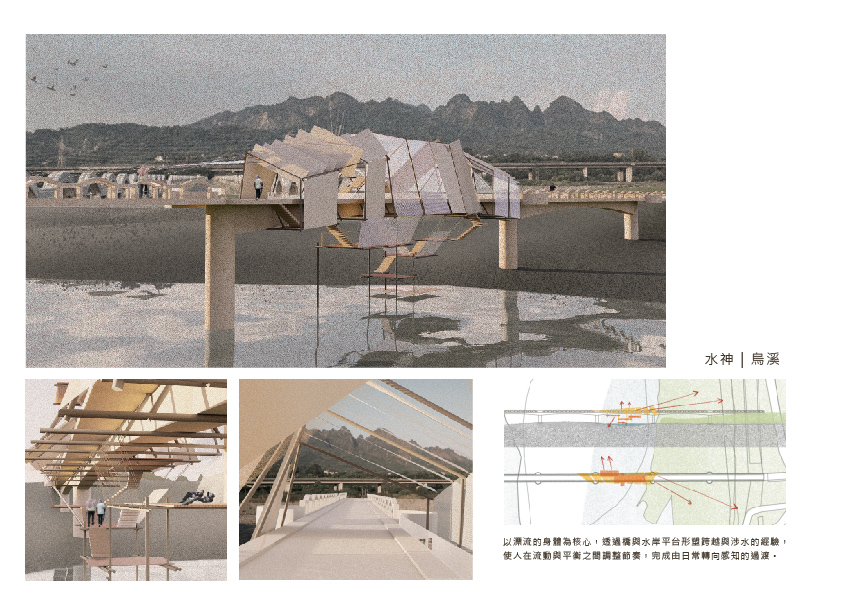
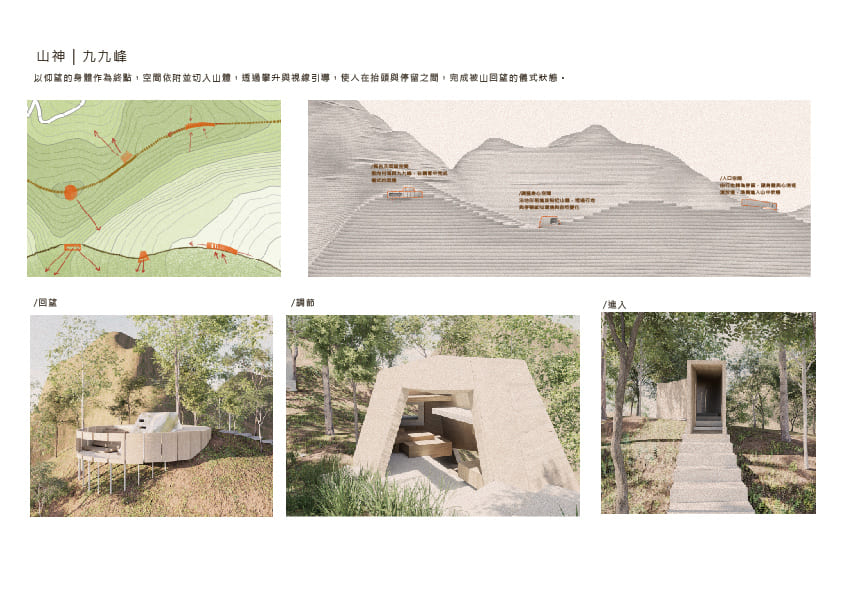
本設計以村落、烏溪與九九峰所構成的地景關係為基礎,重新思考人與自然神靈之間的連結方式。透過田野觀察發現,信仰並非僅存在於廟宇之中,而是隱含於日常行走、停留與環境互動之間,因此提出一條由「土地神、水神、山神」所構成的儀式路徑。
三個基地分別對應不同的身體狀態:在村落中,人以停留與聚集感知土地;在烏溪,人透過跨越與涉水經驗流動與轉換;進入山中後,身體轉為仰望與依附,最終在面向山體的過程中完成被自然回望的儀式。
設計上不強調單一建築物,而是以地景操作與空間節點介入,使行走成為一種連續的感知過程。透過路徑、平台與視線引導,讓日常移動逐漸轉化為儀式經驗,並使空間成為村落、河流與山林之間的媒介,重建人與自然之間細緻而持續的對話關係。
The Mountains, Within the Everyday ⸺ A New Culture of Jiujiu Peaks and Settlements
This project explores the landscape relationship between the village, the Wu River, and Jioujiou Peak, rethinking how humans connect with natural spirits. Faith is not confined to temples but is embedded in everyday actions—walking, pausing, and interacting with the environment. A ritual path is proposed, structured around the land, water, and mountain deities.
Each site evokes a distinct bodily experience. In the village, the body engages with the land through pausing and gathering. Along the river, movement arises as one crosses and interacts with water. In the mountains, the body extends upward, aligning with the terrain and completing a ritual of being witnessed by nature.
Focusing on landscape and spatial sequences rather than buildings, paths, platforms, and visual alignments transform ordinary journeys into continuous sensory rituals, reconnecting humans with the environment.
崑山科技大學 空間設計系
(四年級) 指導老師 曾O揚