共生的斷面
A Section of Coexisting Lives
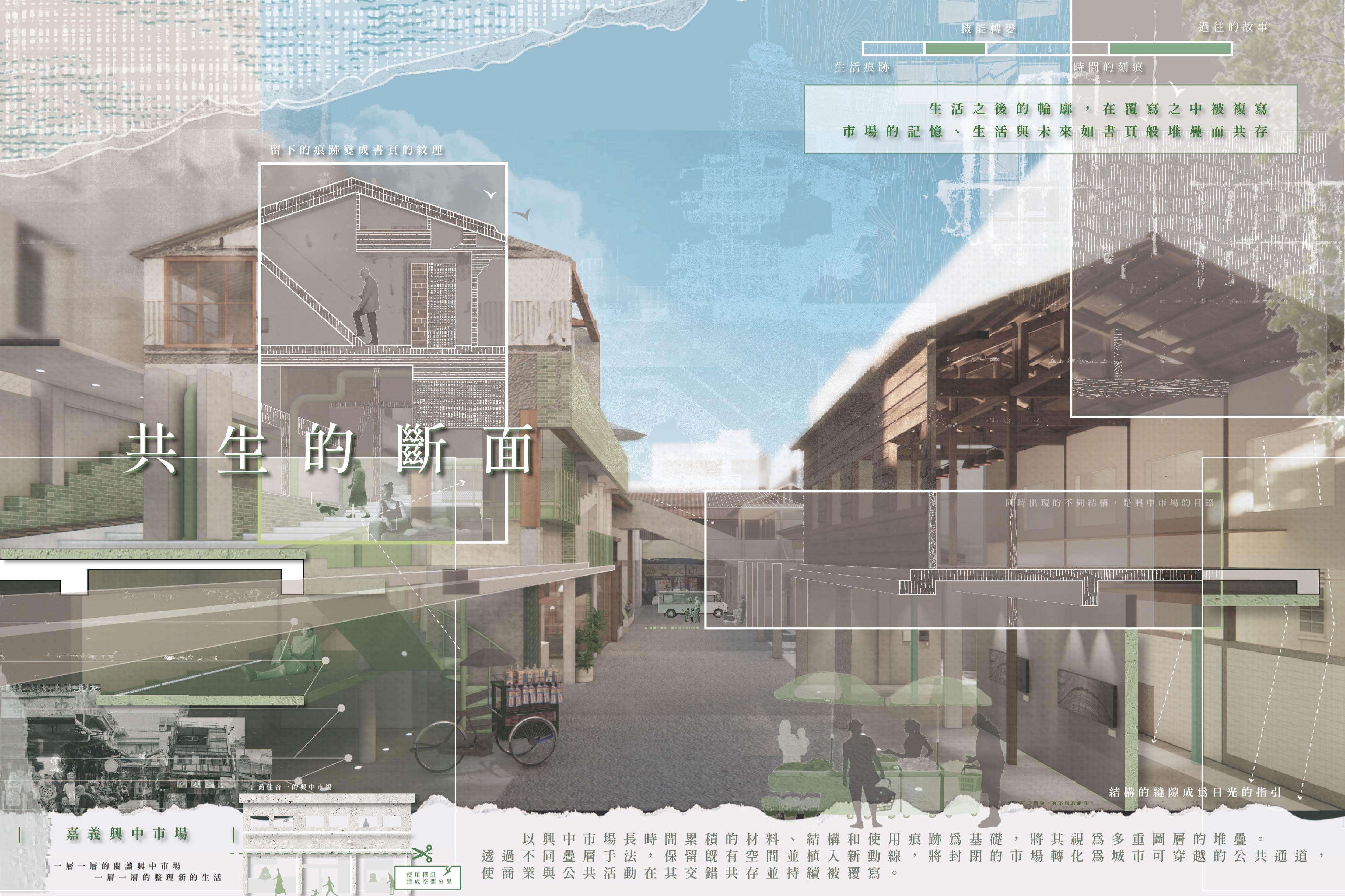
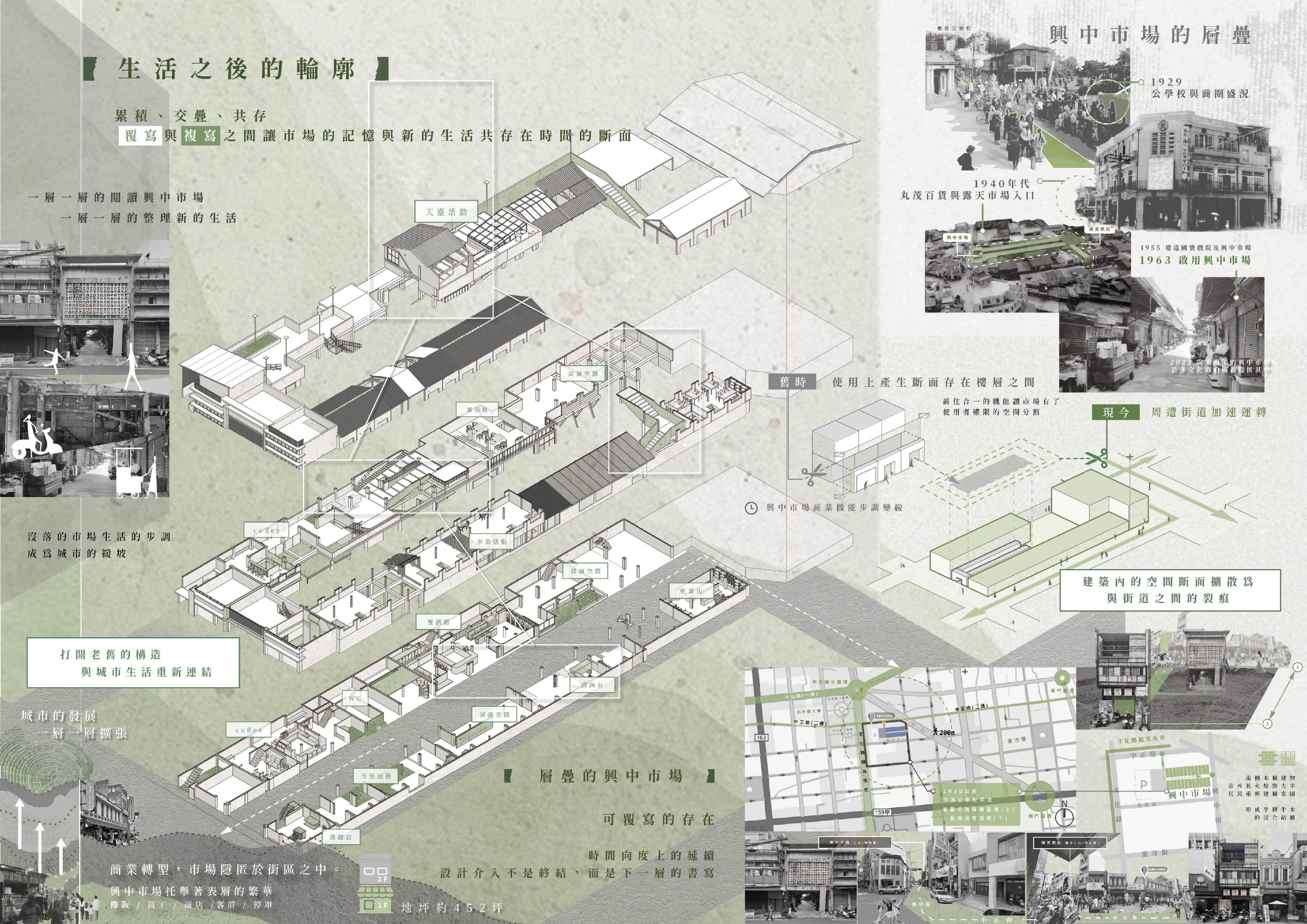
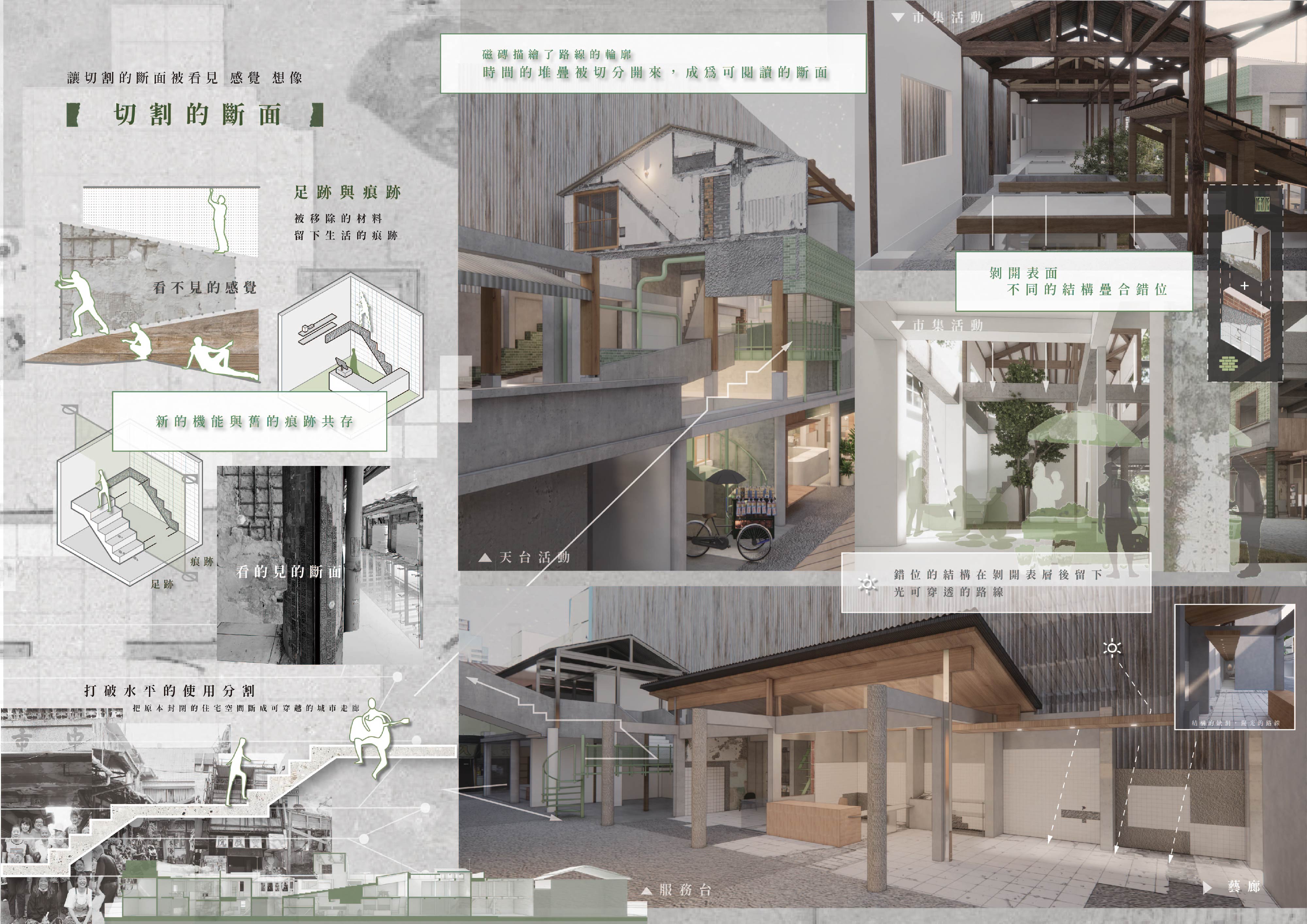
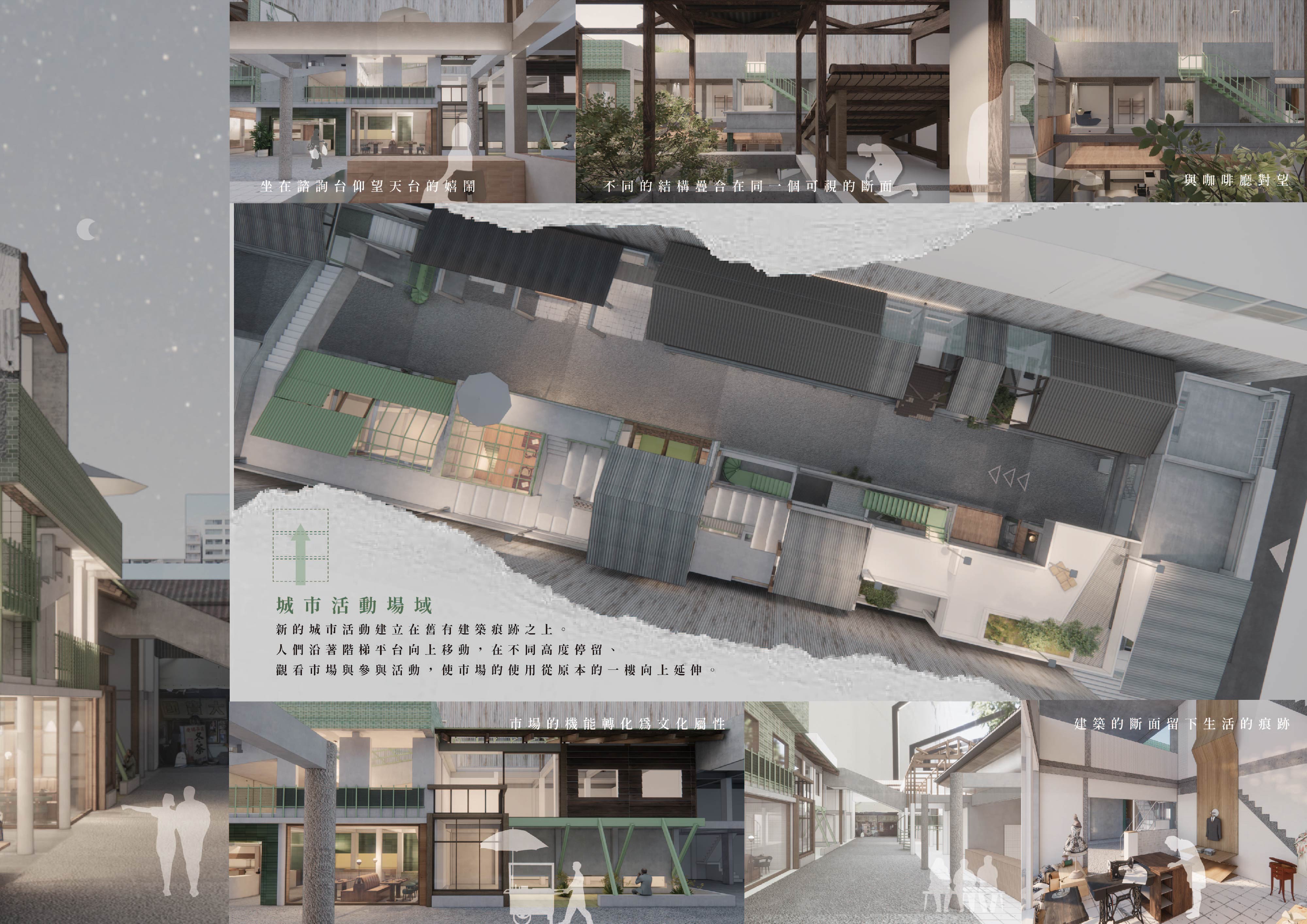
以興中市場長時間累積的材料、結構與使用痕跡為基礎,將建築視為由不同時間所堆疊而成的多重圖層,包含舊有鋪面、柱樑結構、牆體構造、樓板關係與歷史機能等元素。這些層在不同時期的修補與增建之下被反覆覆蓋,形成具有時間厚度的空間狀態。本設計透過重新解析並抽取這些層次,建立可被閱讀的空間系統,作為後續設計介入與組織的依據,使原本被隱藏的歷史痕跡重新被看見。
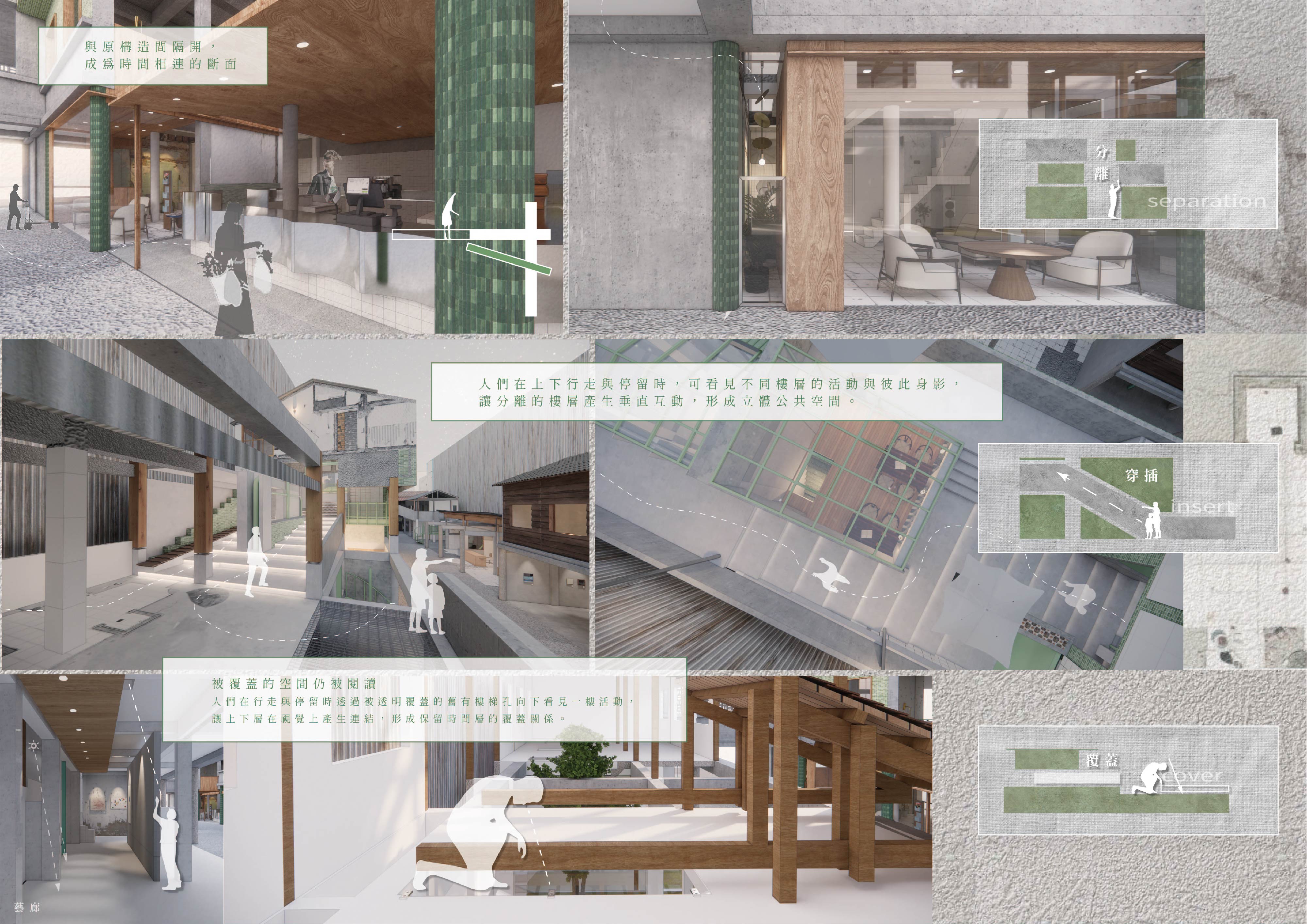
新的空間介入不以全面更新為目標,而是透過覆蓋、穿插與分離三種疊層手法進行操作。透過不同層之間的交錯與重疊,使市場空間由單一平面轉變為具有立體層次的空間斷面。
可穿越建築的公共動線將原本封閉且以商業為主的市場轉化為城市中的開放通道,串連周邊街區與人流。商業機能與公共活動因此在不同層之間交錯發生,人們可在行走、停留與穿越的過程中看見上下層的活動與歷史痕跡。建築不再只是單一完成的空間,而是成為可隨時間持續被使用與覆寫的載體,使過去、現在與未來在同一場域中共存,形成具有時間厚度與空間層次的「共生的斷面」。
A Section of Coexisting Lives
Based on accumulated materials, structures, and traces in Xingzhong Market, the building is seen as layers formed over time, including floors, frames, walls, slabs, and historical programs. Repeated repairs and additions create spatial depth. The design extracts and reorganizes these layers into a readable system, revealing hidden histories.
New interventions do not replace the existing structure but use overlay, insertion, and separation. Overlapping layers transform the market from a flat space into a three-dimensional section.
Public circulation opens the enclosed market into an urban passage linking streets. Commercial and public activities intersect across layers, letting users perceive space and history while moving through a continuously evolving symbiotic section.
國立臺中科技大學 室內設計系
(四)
蔡O玹
國立臺中科技大學 室內設計系
(四) 指導老師 蘇O立