非好
goØd/good
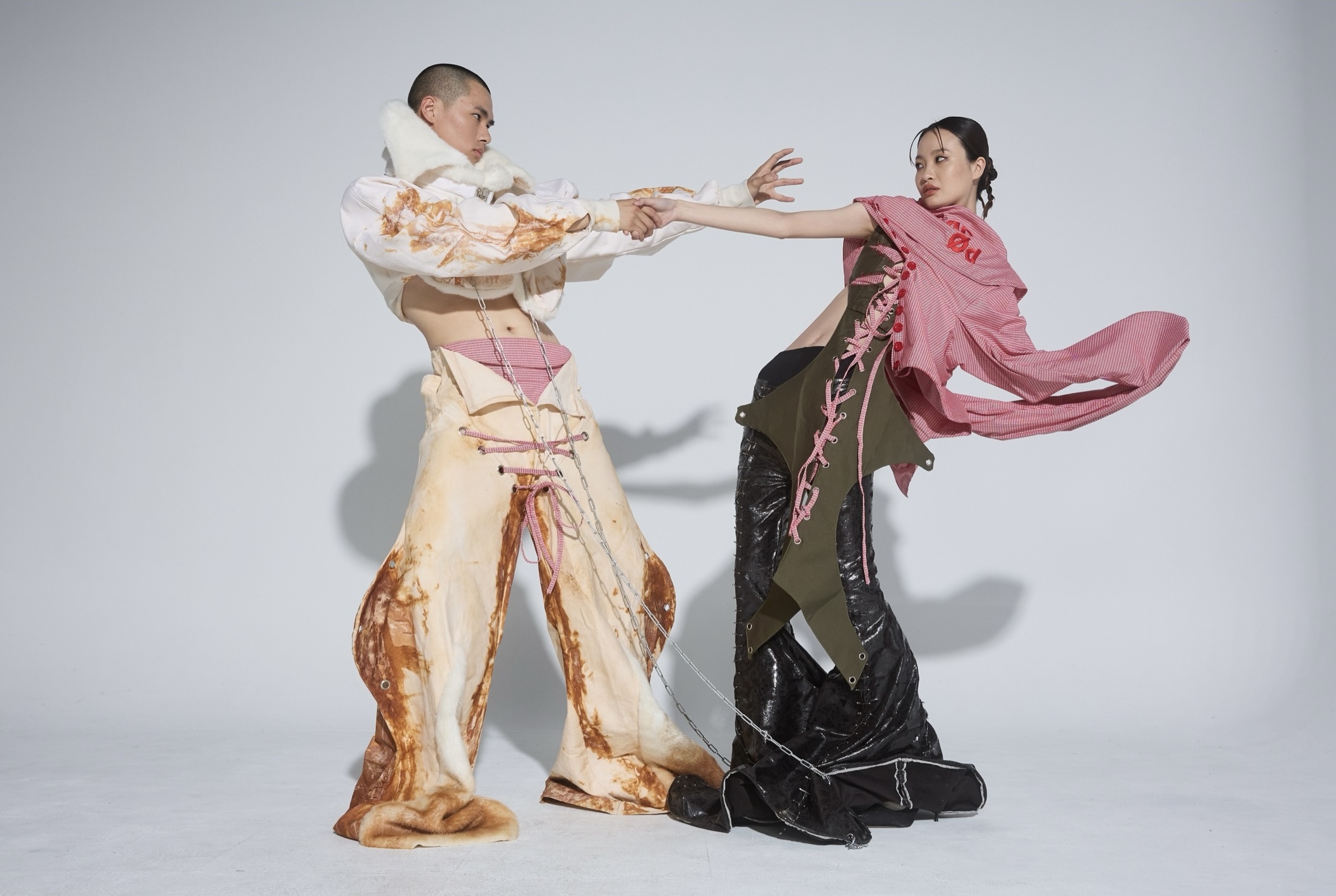
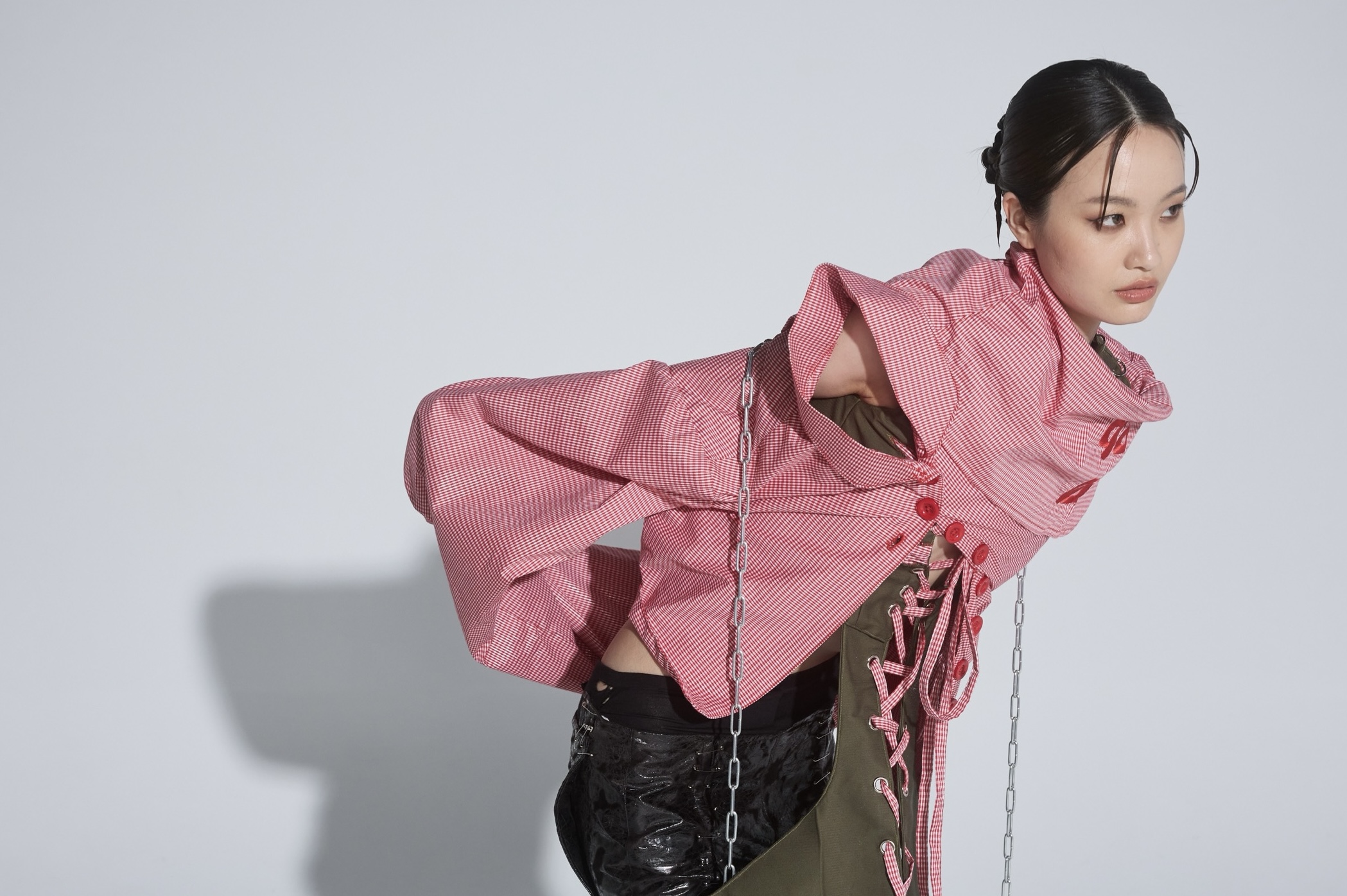
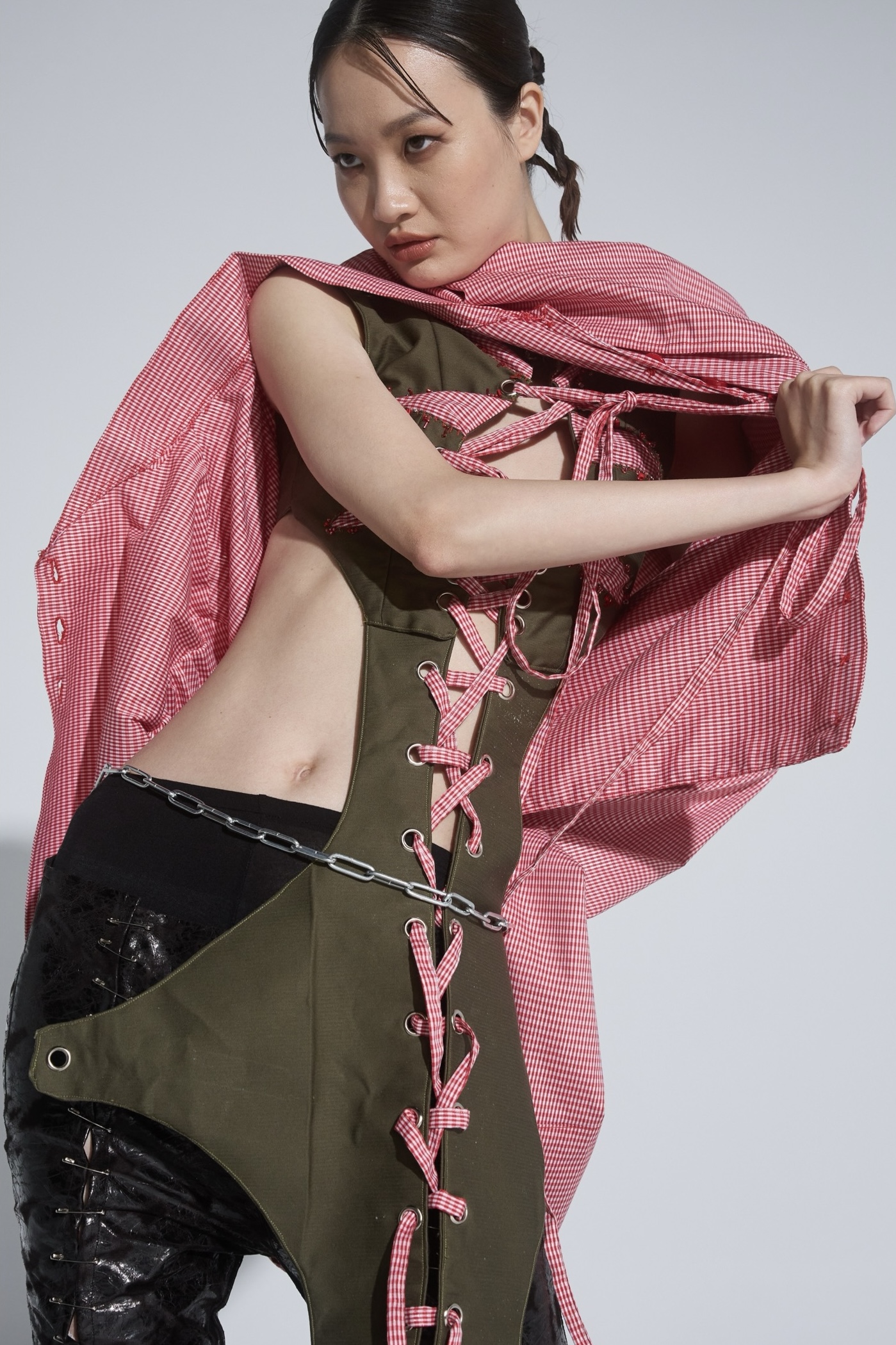
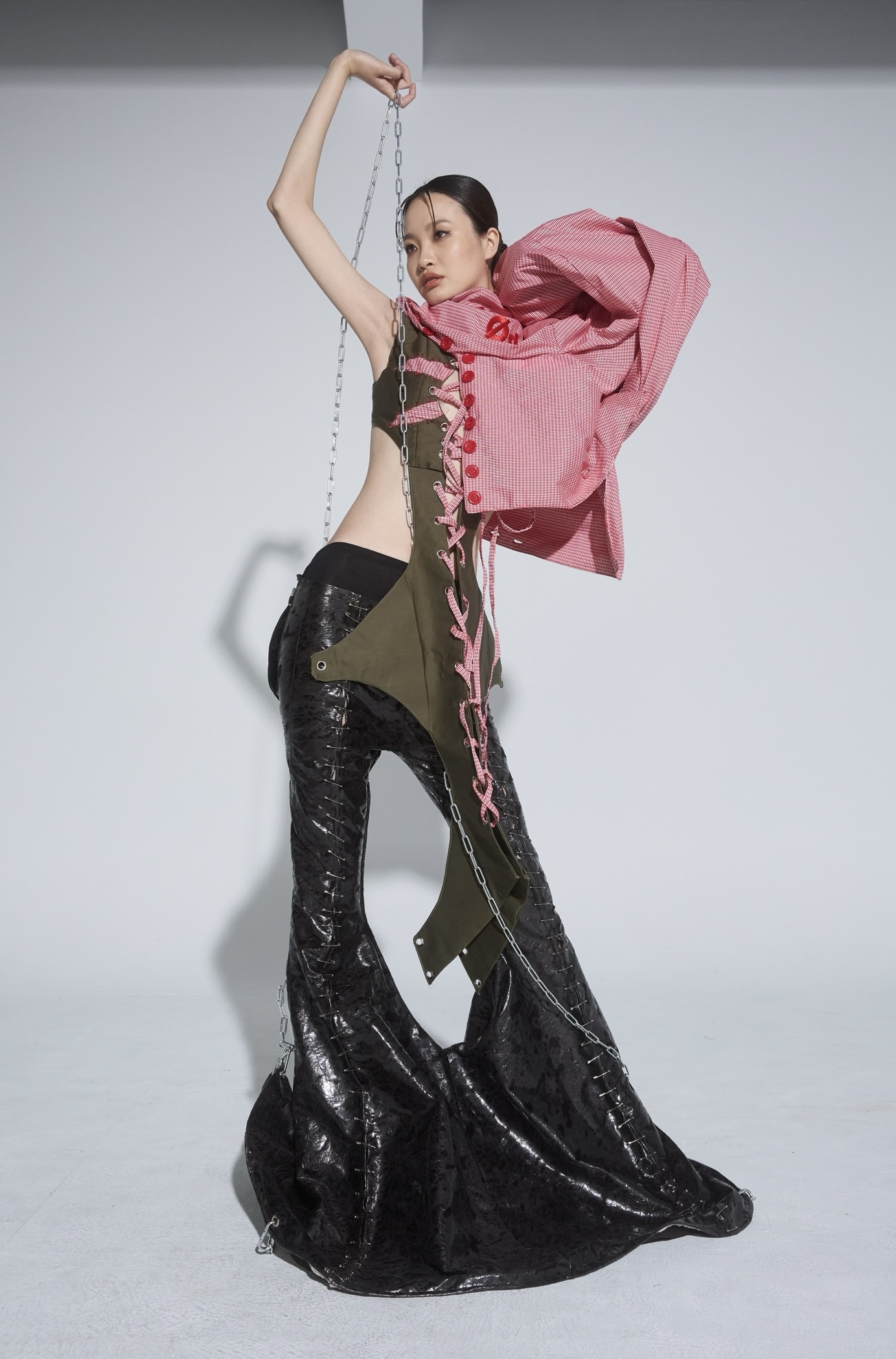
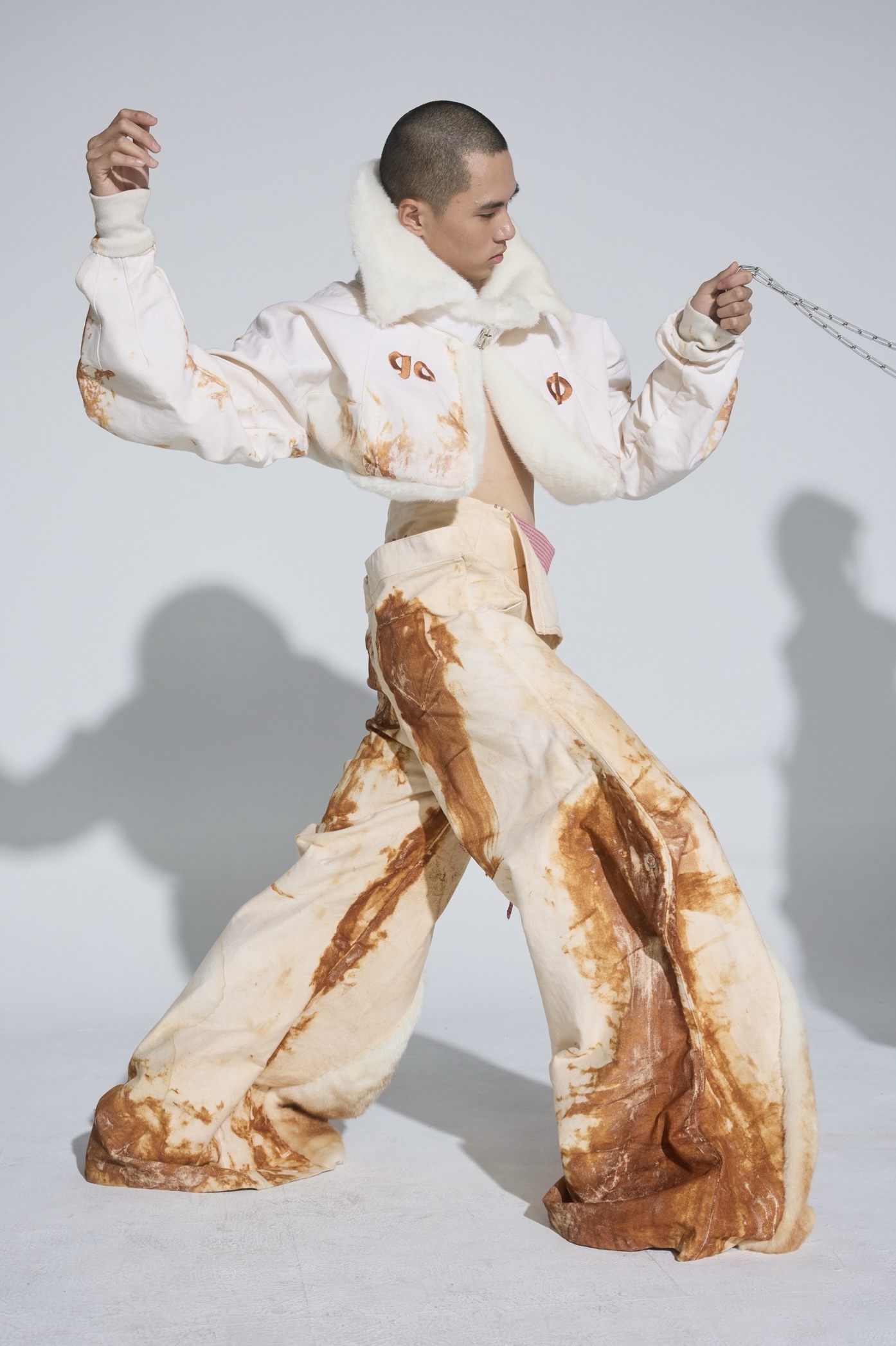
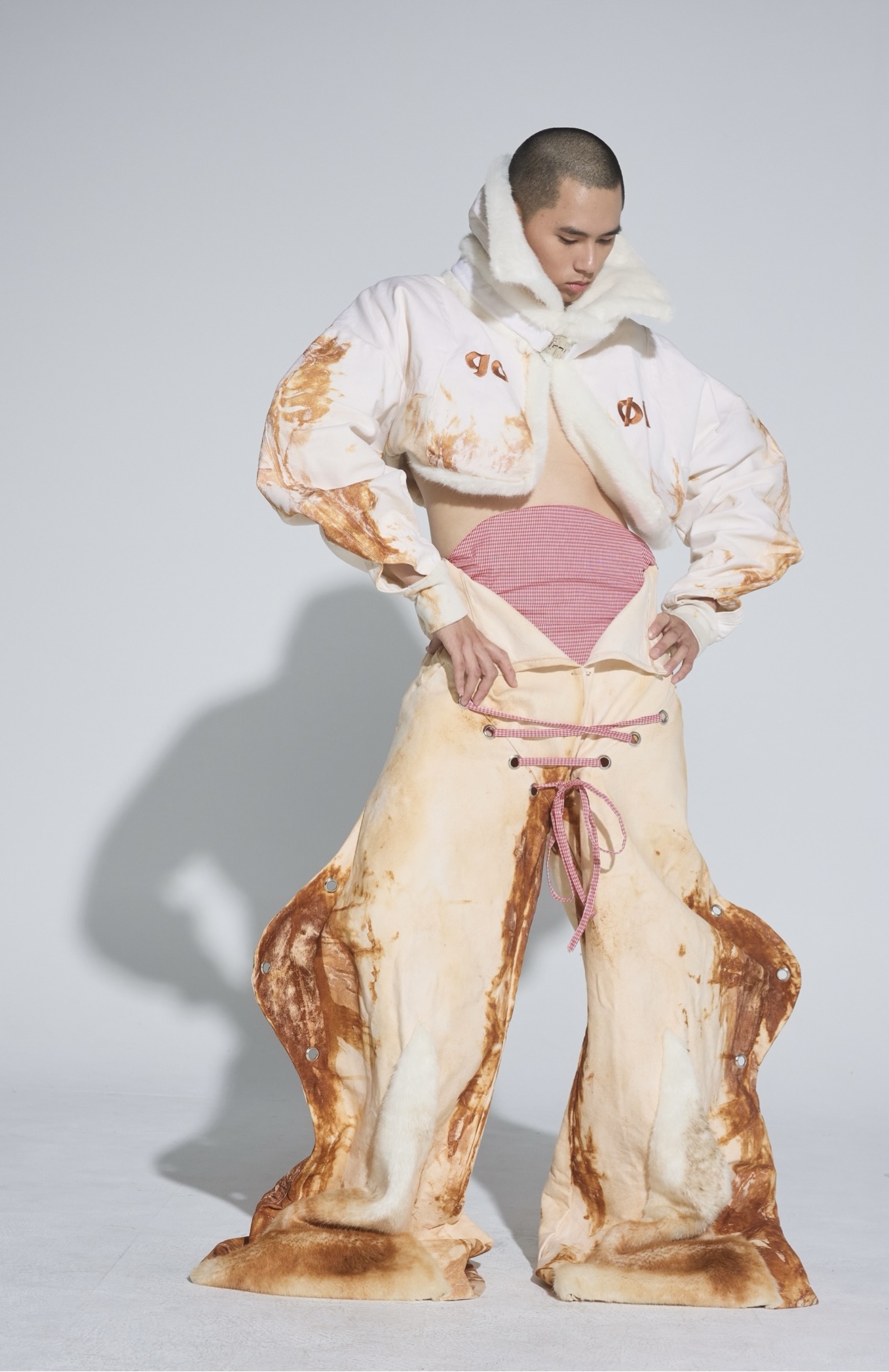
在設計的過程中,我反覆問自己:「我們真的了解自己嗎?」日常裡,我們習慣用一句“ I’m good! ”回應他人的問候,那是一種安全的、得體的、自動化的回答,看起來穩定卻逐漸讓內心的聲音變得模糊。於是我開始意識到,所謂的“good”,往往不是當下的真實,而是某種被期待、被要求、被訓練出的理想狀態。這樣的觀察成為我這次主題《goØd / good》的起點。“good”代表那個努力維持完美的自己,理性、正確、乖巧、能穩住一切;但同時,也因為過度壓抑而變得僵硬、麻痺、失去感受的能力。相對地,“goØd”象徵回到最原始、不必完美的自我。反而最能讓我感覺到 “我正在以自己的方式存在”。我以解構(襯衫倒置、褲子下擺交合、別針固定整件褲子)、束縛(鐵鍊的使用、貼身背心加上雞眼扣跟綁帶)和厚重結構、鐵鏽染為主軸呈現本能的自我與野性。
goØd/good
During the design process, I repeatedly asked myself, “Do we truly understand who we are?” In everyday life, we often respond with “I’m good”—a safe, polite, and automatic answer. While it appears stable, it gradually blurs our inner voice.
I realized that “good” is often not our true state, but an ideal shaped by expectations and social norms. This became the starting point of my concept, “goØd / good.” “Good” represents a controlled and perfected self—rational, correct, and composed—yet increasingly rigid and numb. In contrast, “goØd” returns to an instinctive, imperfect state, where one can truly feel their own existence.
Through deconstruction, restraint, heavy structures, and rust dyeing, the design reveals a raw identity and inner wildness beyond imposed ideals.