垔火
Yin Fire
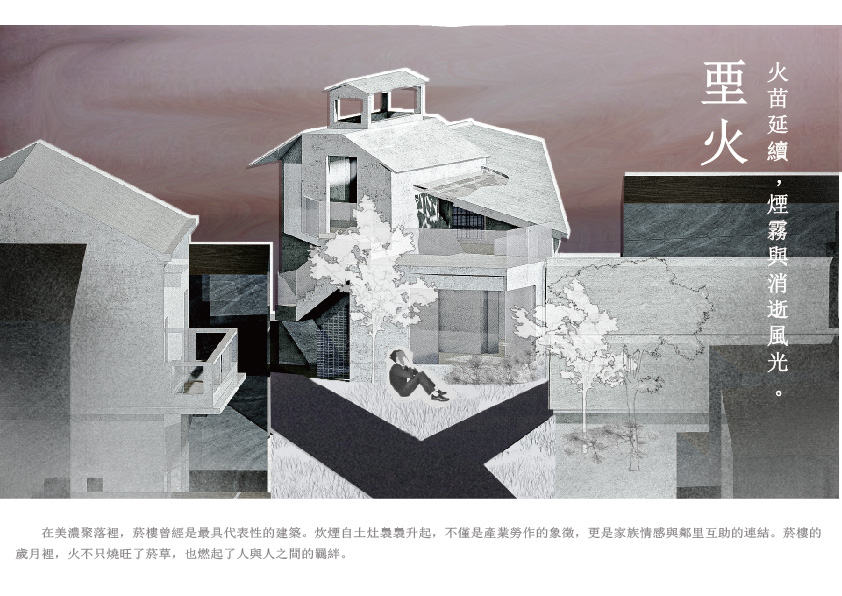
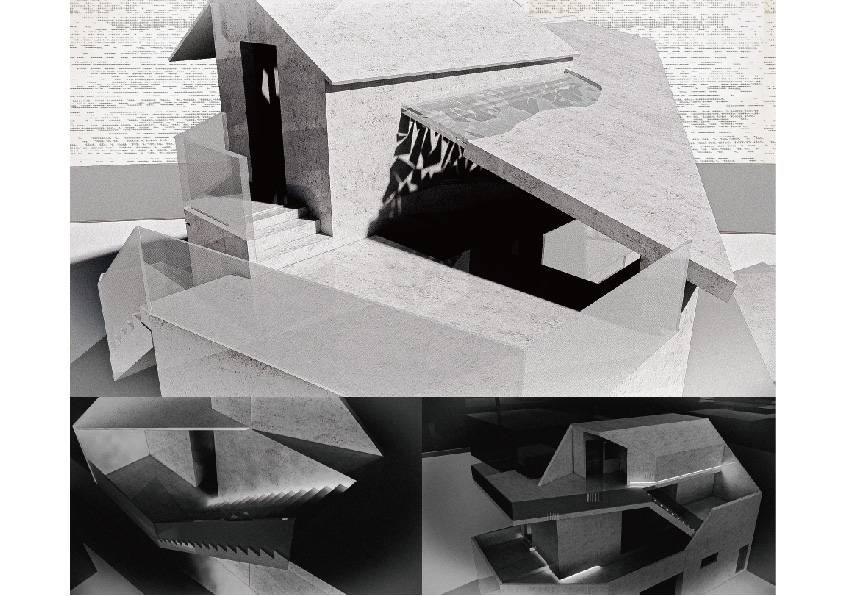
「垔」意指阻塞,「垔火」象徵被封存的火,寓意美濃菸樓昔日的風光。在美濃聚落中,菸樓曾是最具代表性的建築,炊煙自土灶緩緩升起,不僅象徵產業勞作,也承載著家族情感與鄰里互助的連結。火焰不只烘烤菸草,更凝聚人與人之間的羈絆。
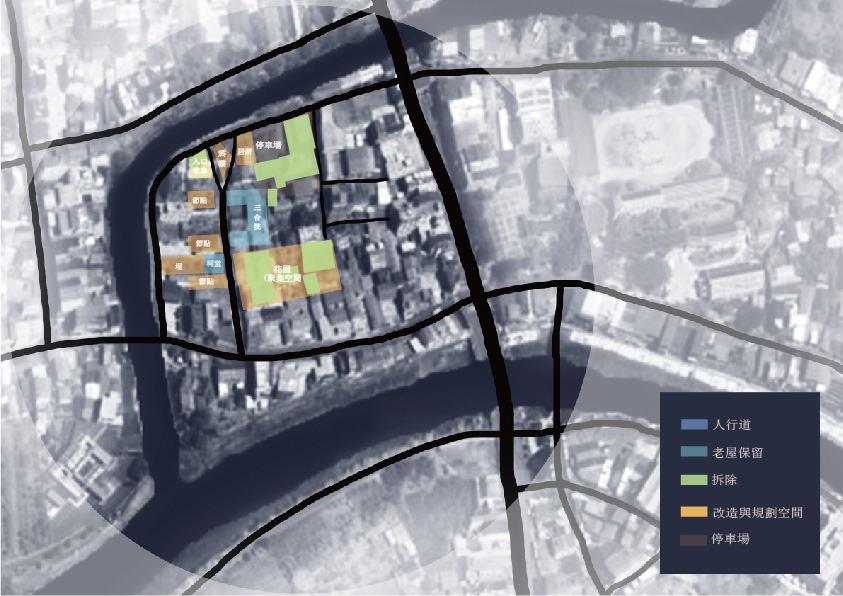
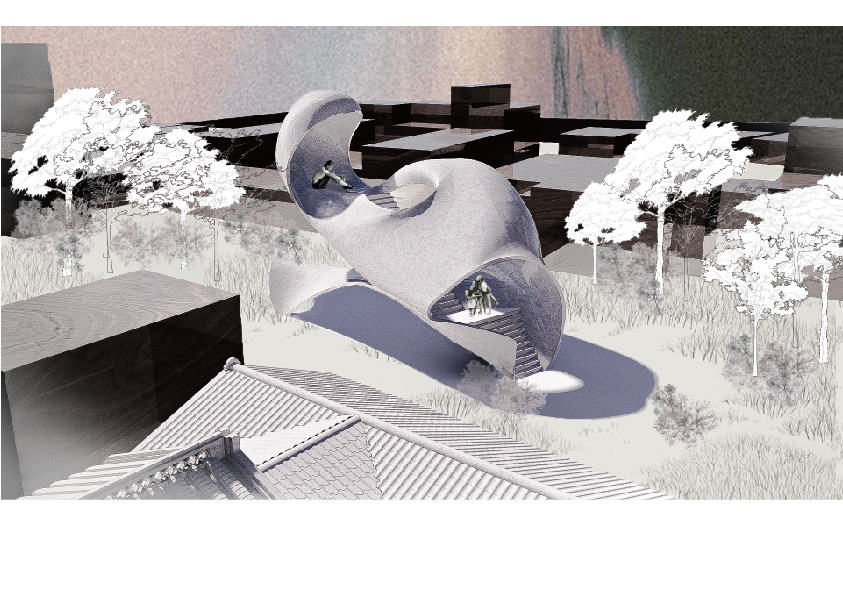
本設計以延續這段日常記憶為核心,透過轉化空間形式,重新詮釋菸樓與居住場域的關係。將廢棄的菸樓與周邊空間再利用,重啟曾經升起煙火的場所,並將其改造為香水與香氛調製工作室,結合歷史體驗空間,使人重新感受菸樓文化與生活記憶。透過空間轉譯,喚起家族情感,延續地方歷史,讓古家菸樓的故事得以流傳。
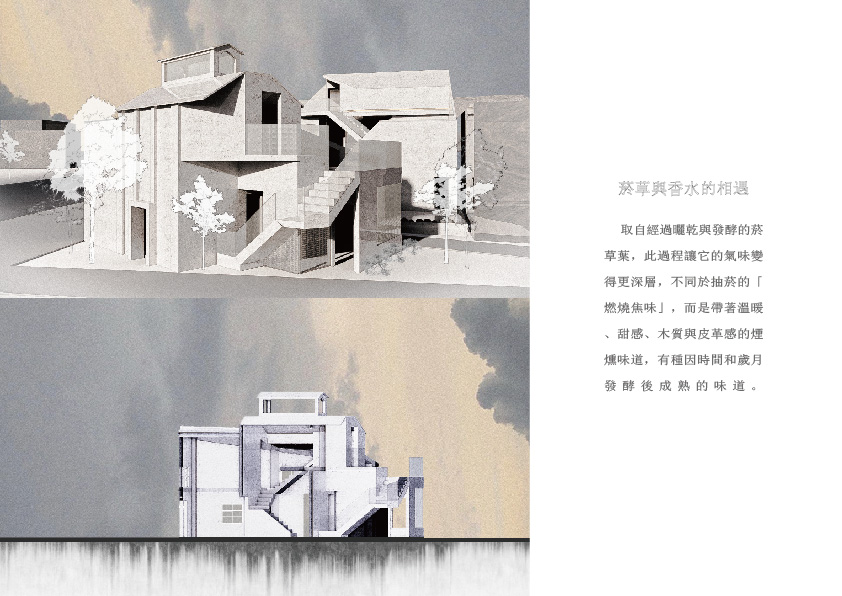
古家菸樓因基地範圍較小,建築形式有別於一般菸樓,具有高度獨特性。設計中也結合菸草與香水的概念,香氛取材自經曬乾與發酵的菸草葉,其氣味溫潤深層,帶有甜感、木質與皮革氣息,呈現出經時間醞釀後的成熟韻味,使空間不僅承載歷史,也展現全新的感官體驗。
Yin Fire
“Yin” means to seal or block, and “Yin Fire” symbolizes a contained flame, reflecting the former prosperity of Meinong’s tobacco towers. Once iconic in the settlement, these structures embodied both agricultural labor and the bonds between families and neighbors, with rising smoke symbolizing connection and shared life.
This design preserves such memories by transforming the abandoned tobacco tower into a perfume and fragrance workshop combined with a historical experience space. It reinterprets the relationship between architecture and daily life, reviving cultural memory and strengthening emotional ties.
The Gu family tobacco tower is uniquely shaped due to its small site. By integrating tobacco and perfume concepts, the design uses scents from fermented tobacco leaves, offering warm, woody, and mature notes that express both history and a renewed sensory experience.