弄瓦 廢棄老宅建材再生計畫
lāng hiā
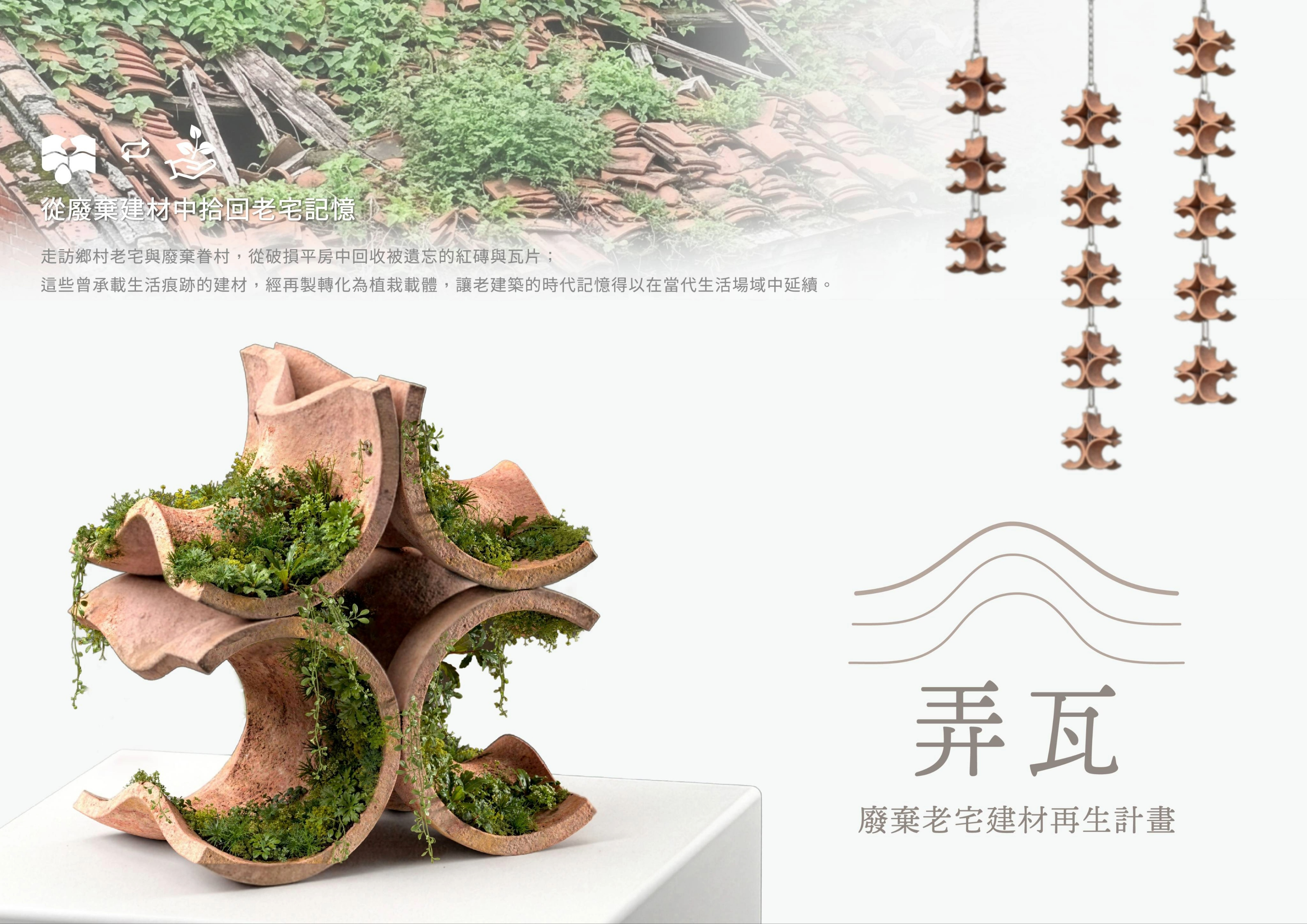
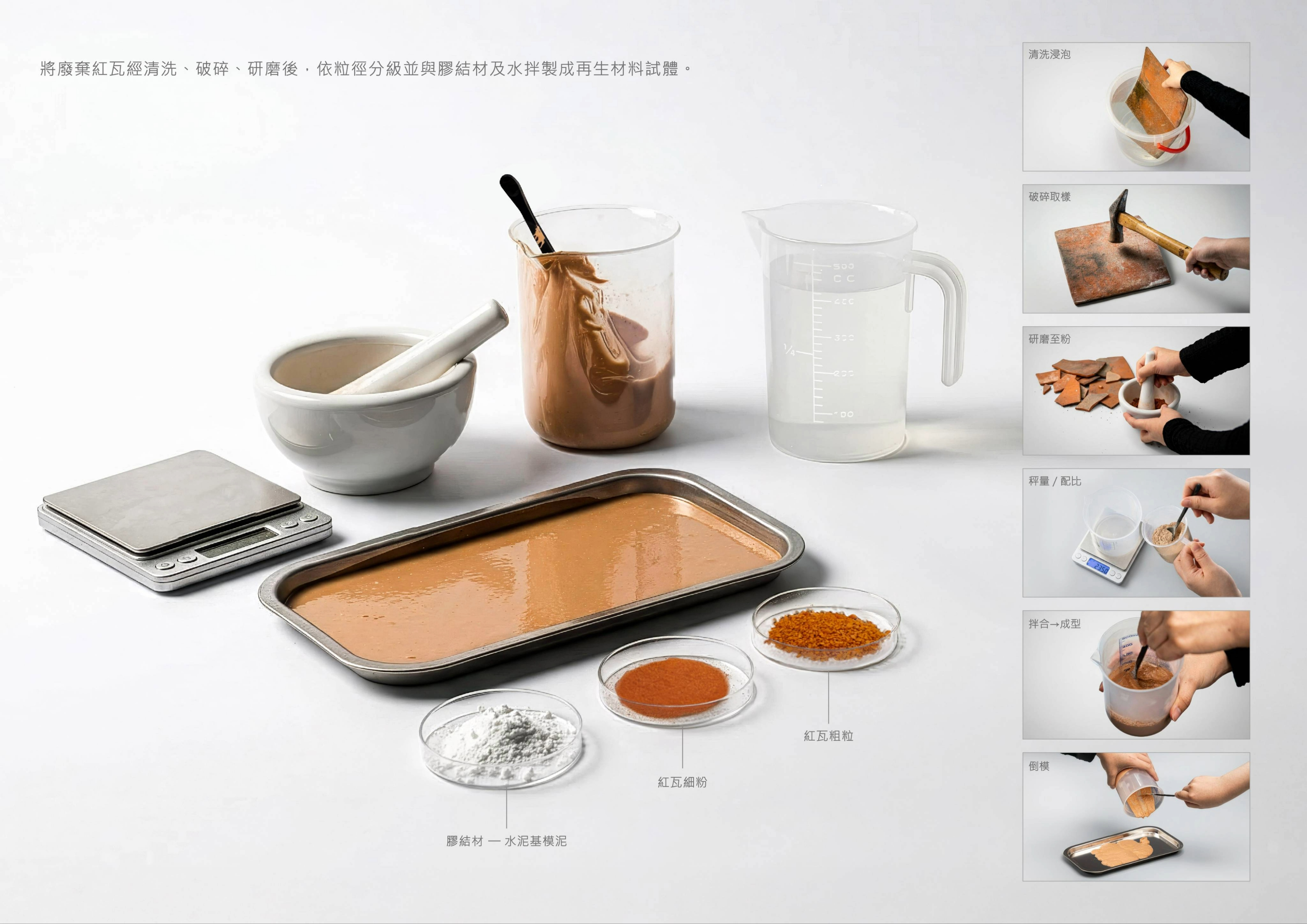
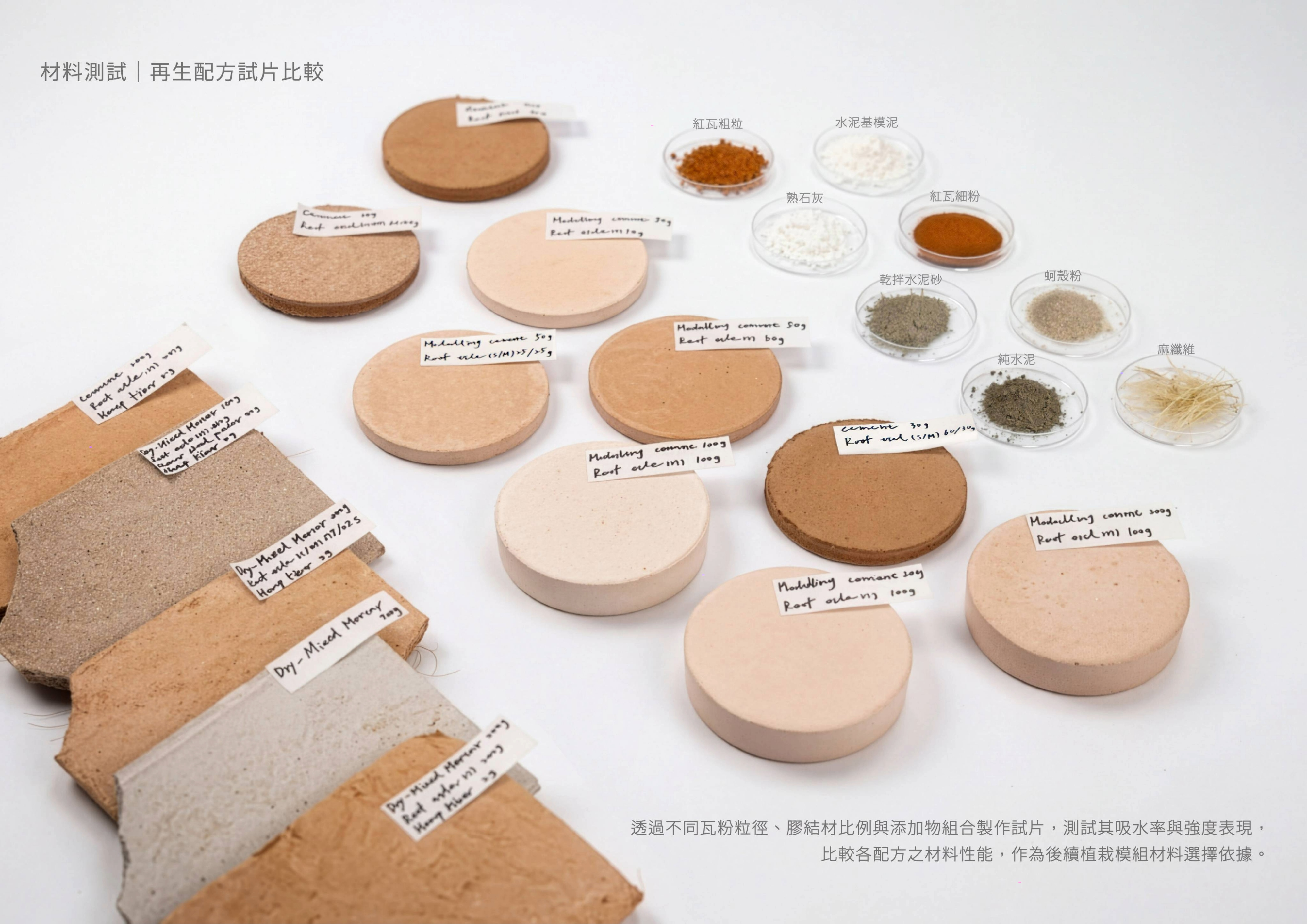
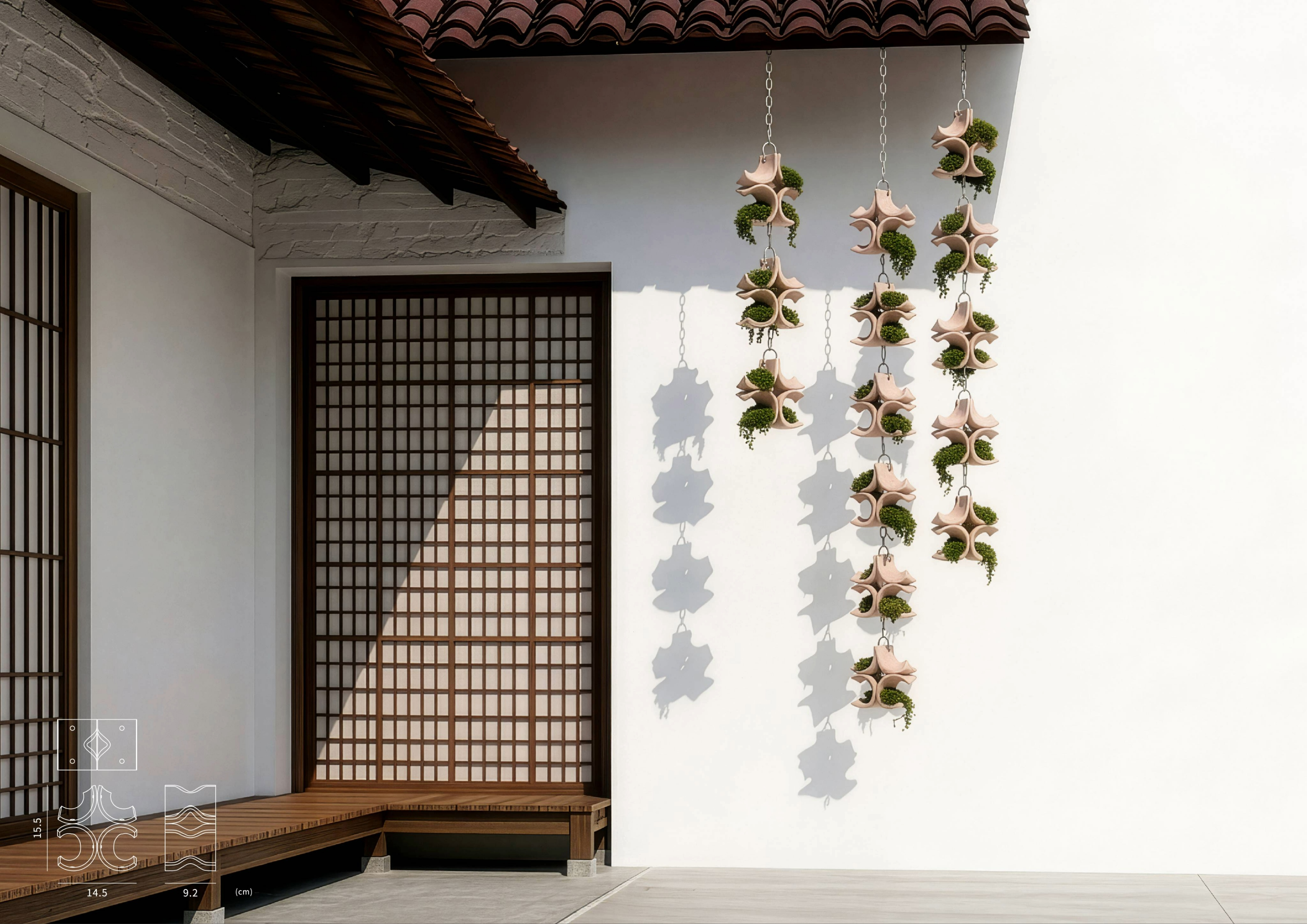
弄瓦-廢棄老宅建材再生計畫以廢棄老宅回收瓦片為材料基底,從鄉村老宅與廢棄眷村中回收紅磚與瓦片後,經清洗、破碎、研磨與粒徑分級,重新建立瓦材的再製方式。材料實驗階段透過不同膠結材比例與添加物組合進行配比試驗,觀察其吸水率、強度與成型表現,最終選定以不同粗徑的瓦粉與瓦粒,搭配水泥系膠結材進行灌製,作為植栽模組的主要材料基礎,並同步發展對應模具系統,完成再生材料由試片到產品的轉化流程。
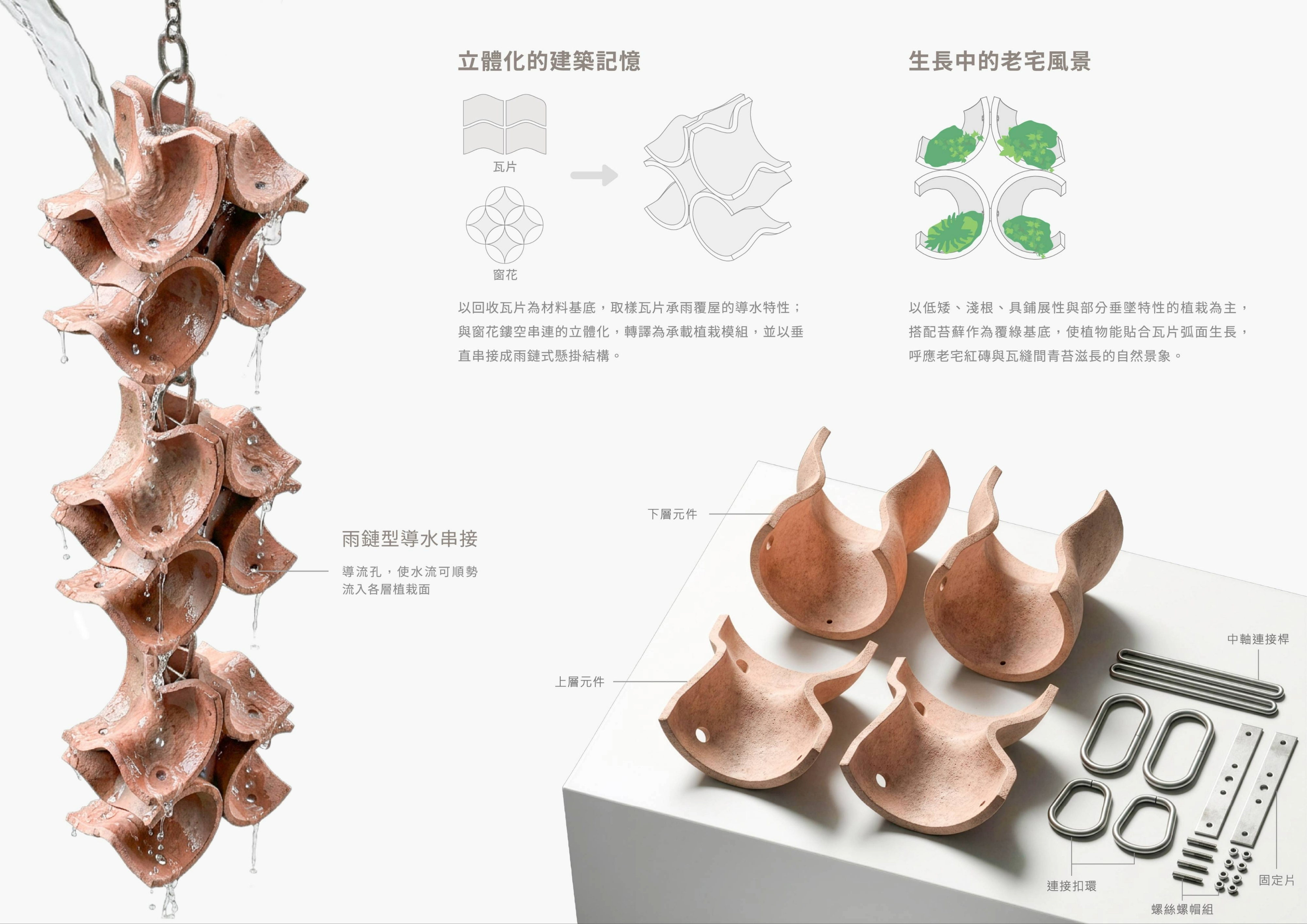
在造型轉譯上,本案擷取瓦片覆疊弧面的導水特性,並結合立體窗花鏤空連通的空間層次,發展出可串接懸掛的植栽模組。模組可依垂直串接邏輯形成雨鏈式結構,使水流沿弧面自然向下導引,兼具植栽承載、垂直景觀與導水功能。植物配置則以低矮、淺根、具鋪展性與部分垂墜特性的植栽為主,搭配苔蘚作為覆綠基底,讓綠意沿瓦面、邊角與縫隙逐步附著生長,呼應老宅紅磚牆面、瓦縫與屋頂上青苔蔓生的生命景象,讓建築記憶、材料再生與自然共生的文化意涵,在當代生活中重新延續。
lāng hiā
lāng hiā project uses reclaimed roof tiles from abandoned old houses as its main material. Collected bricks and tiles are cleaned, crushed, ground, and sorted by particle size, then tested with different binder ratios and additives to evaluate water absorption, strength, and casting performance. The final material uses tile powder and aggregates of different sizes with a cement-based binder, together with a custom mold system, transforming recycled tile waste into cast planter modules.
The design draws from the overlapping curved surfaces of roof tiles and the hollow spatial layering of traditional window grilles, developing a modular hanging planter system. Connected vertically as a rain chain, the modules guide water naturally downward along their curved surfaces. Low-growing, shallow-rooted, spreading and partially trailing plants, combined with moss as a green base, gradually cover the surfaces and edges, evoking moss growing on old brick walls, tile joints, and rooftops.
國立高雄師範大學 工業設計系
(四年級)
郭O伶
國立高雄師範大學 工業設計系
(四年級)
林O諠
國立高雄師範大學 工業設計系
(四年級) 指導老師 陳O廷