皮革皺褶沙發
F(O)La
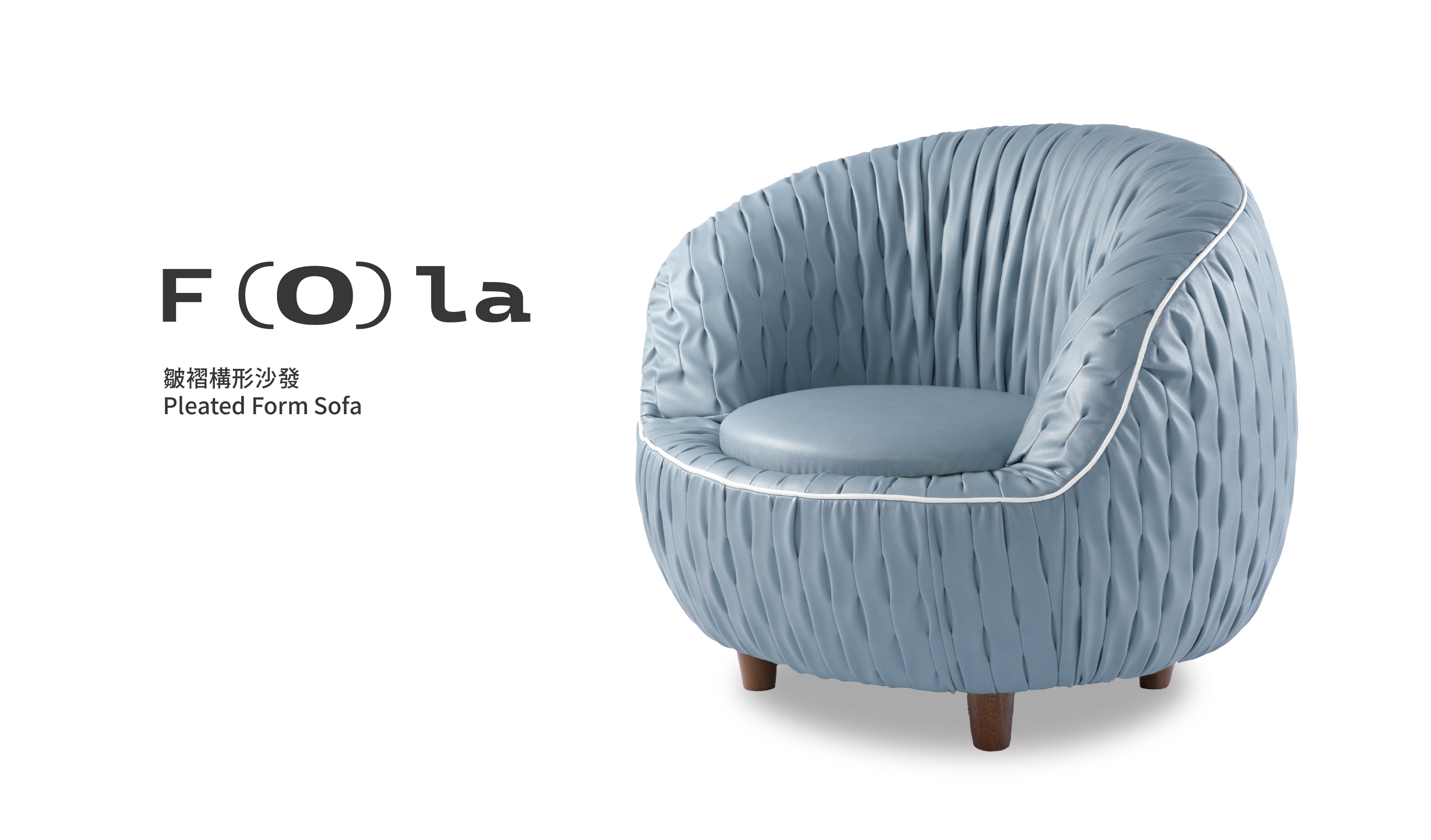
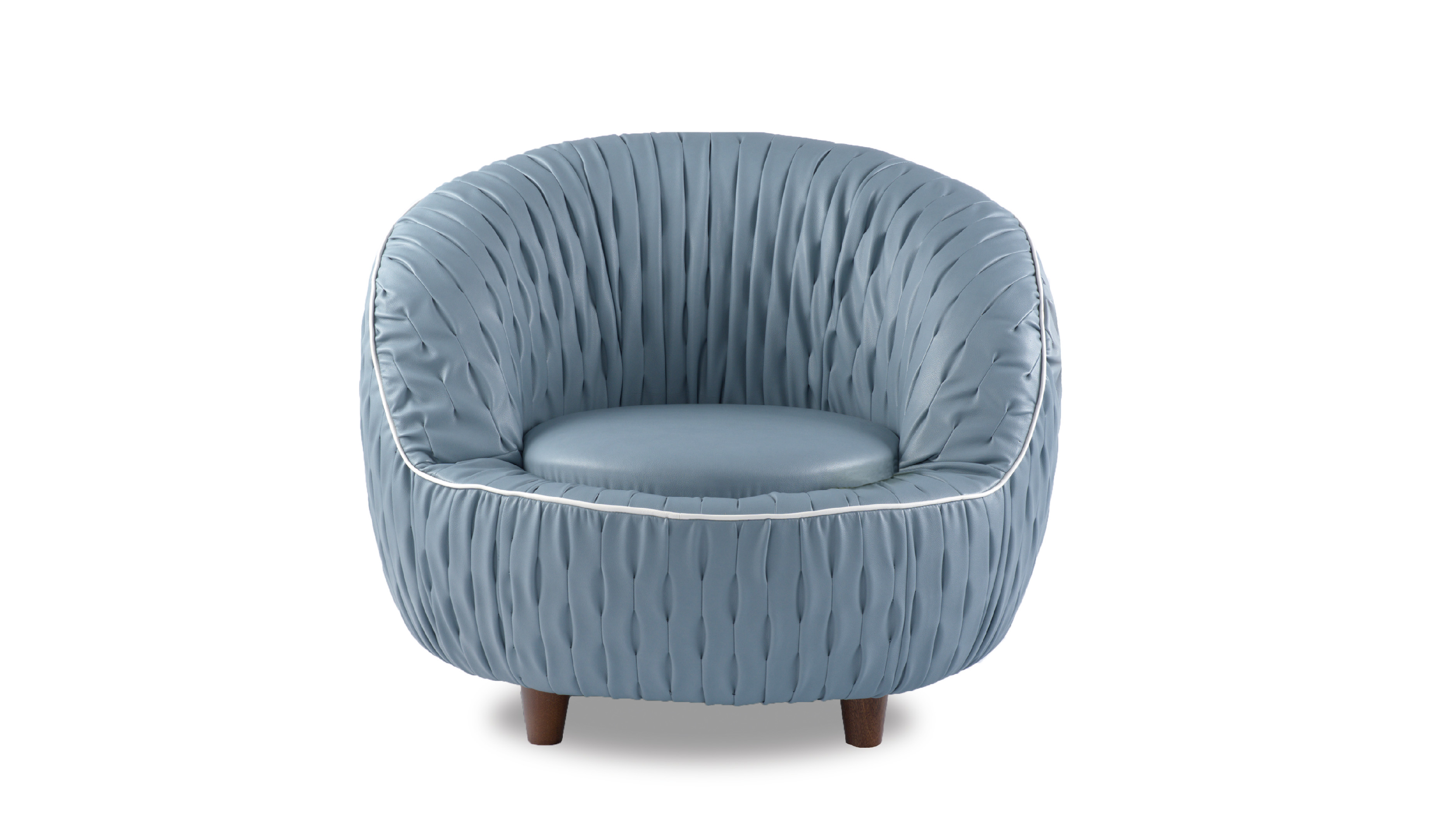
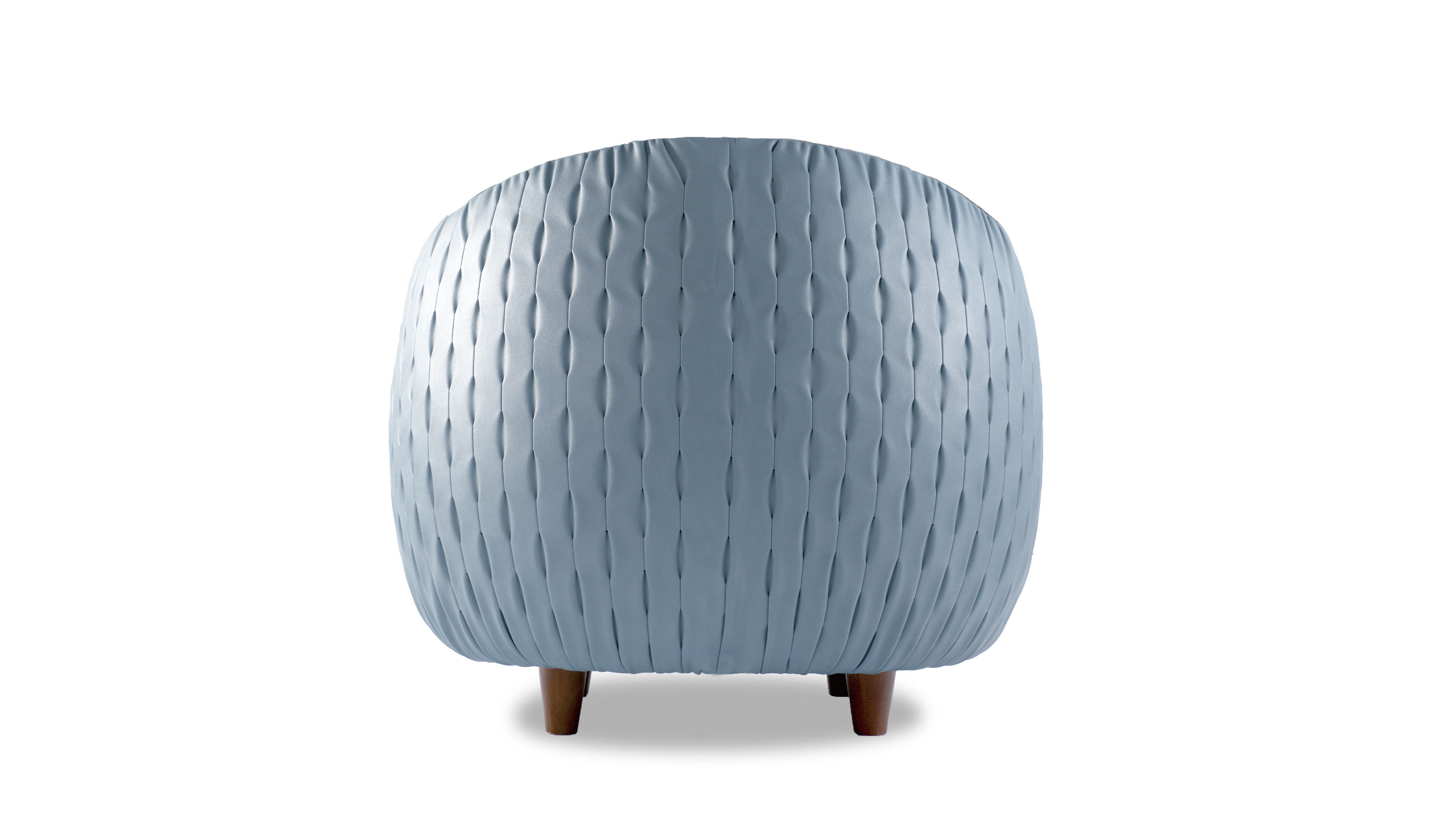
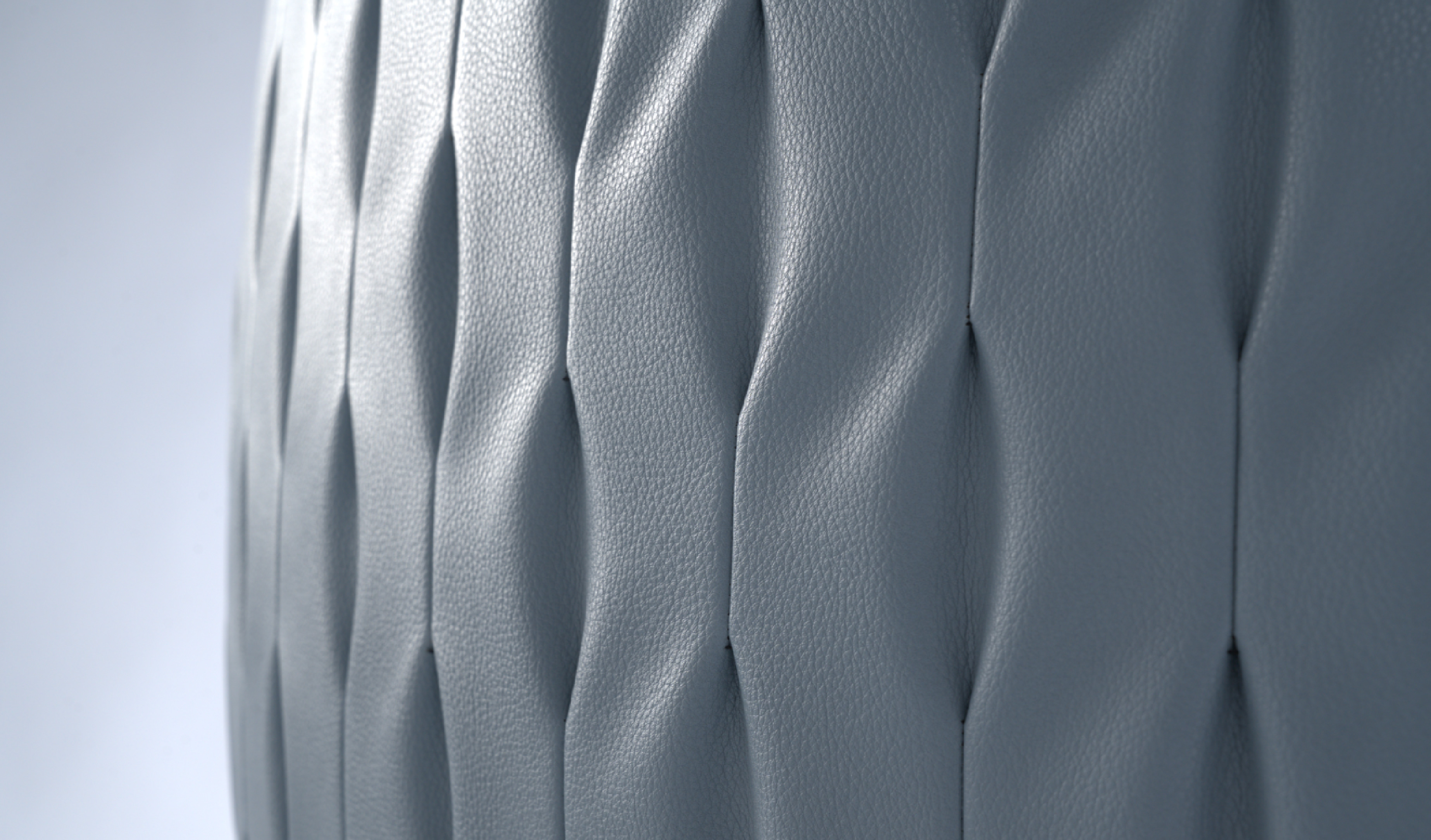
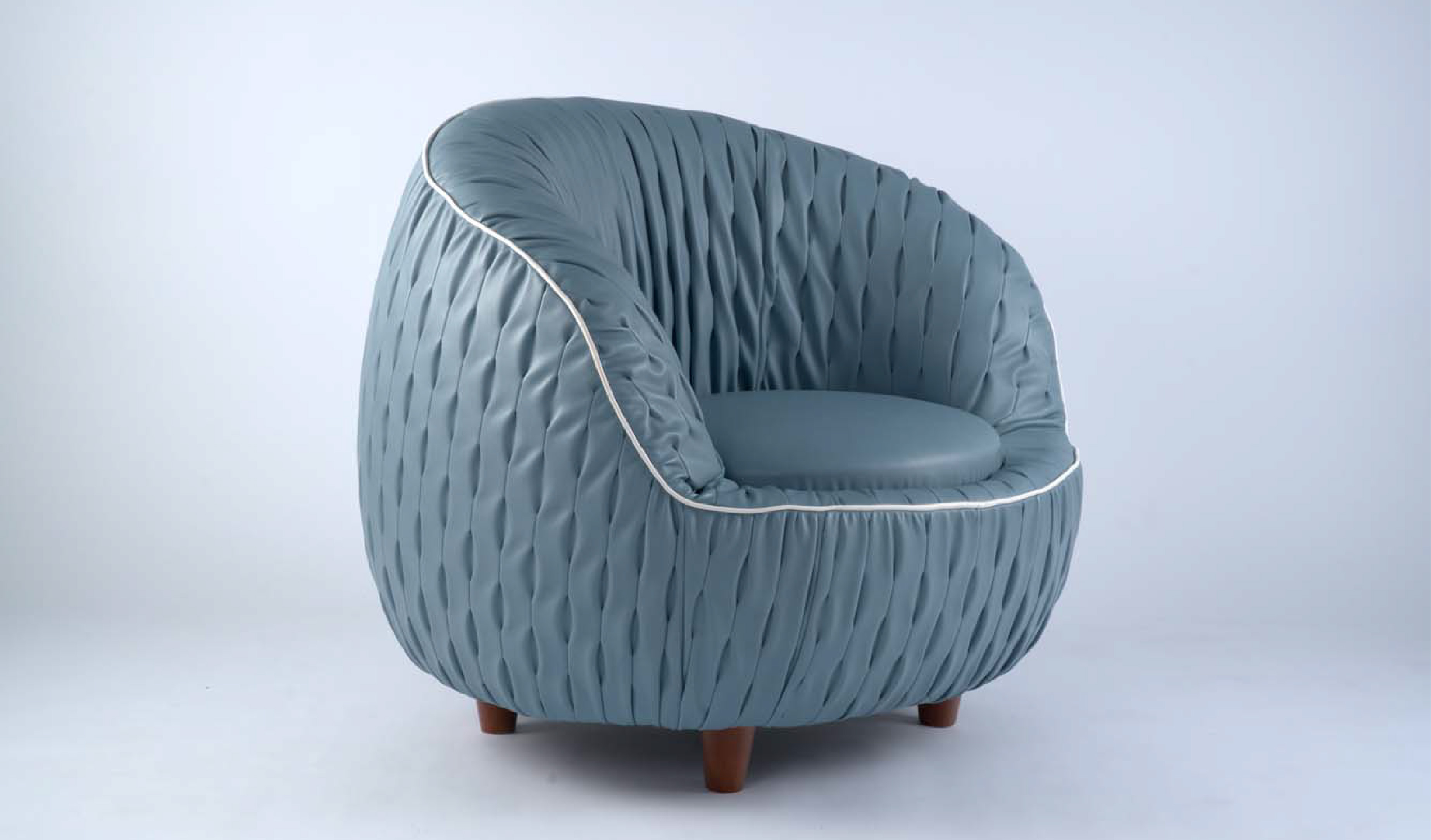
透過縫線的張力,以及布料的延展性與支撐性,使特定布面產生如摺紙般的立體摺痕。結合縫紉與摺紙的手法,使用合成皮表現軟性材質中具結構性的形態,以沙發圓潤的外型,凸顯皮革皺褶的層次與張力。
合成皮革作為一種柔軟且具有延展性的材料,通常被視為包覆的表層。保留其材料特性,引入摺紙中硬結構的造型邏輯,透過縫線張力與摺痕控制,使柔性材質在受力後形成具方向性與結構感的立體紋理。透過不同規則的縫線,在合成皮上縫製皺褶,並變換縫線的間距與規律,嘗試更多種皺褶立面的效果。
沙發主體為弧形框架,充分展現皮革皺褶的立體效果。滑順的表面與澎潤的量體感,塑造出柔軟有包覆感的椅面,與皺褶形成對比。用白色合成皮做環形滾邊,使沙發外形輪廓更加鮮明。
F(O)La
Stitching tension guides the fabric’s elasticity and support, creating origami-like three-dimensional folds. By combining sewing and origami techniques, synthetic leather reveals structural qualities within a soft material, while the sofa’s rounded form emphasizes the layered tension of the leather’s wrinkles.
Synthetic leather, as a soft and elastic material, is typically perceived as a surface for wrapping and decoration. While preserving its inherent material qualities, this project introduces the rigid structural logic of origami. Through the control of stitching tension and folds, the flexible material responds to applied forces by forming directional, structurally expressive three-dimensional textures.