潮間聲徑
Intertidal Soundscape Path
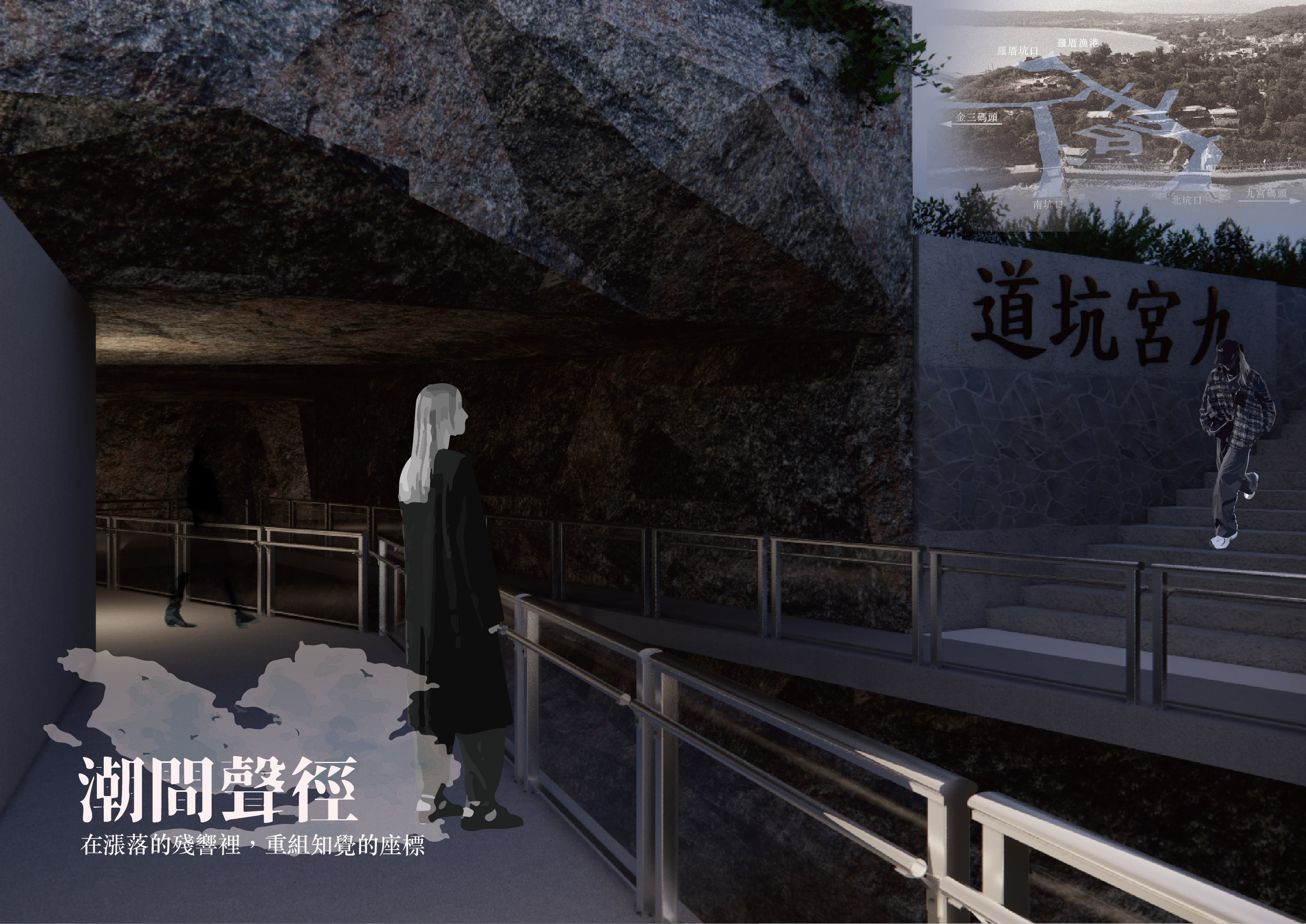
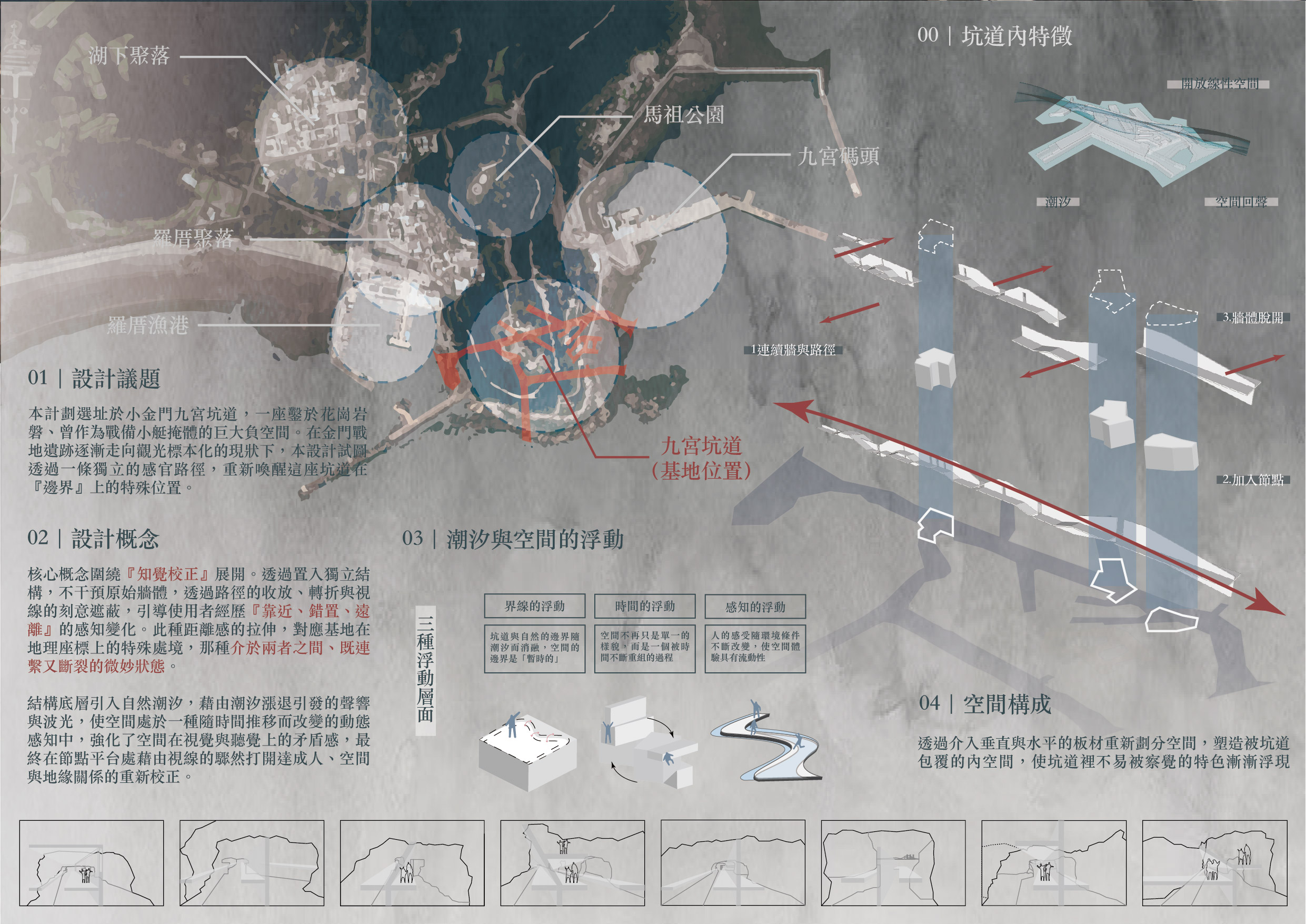
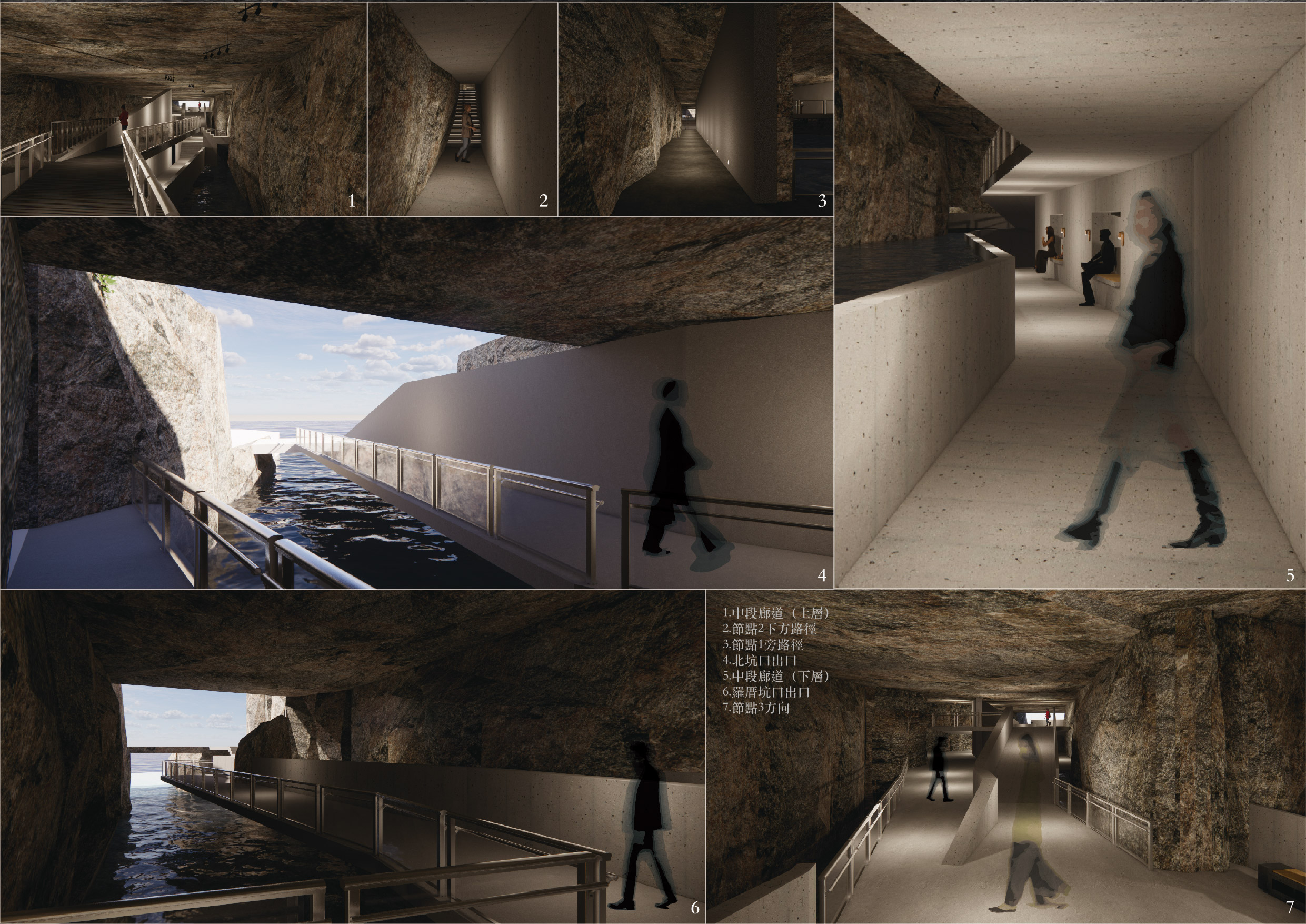
本計畫選址於小金門(烈嶼)九宮坑道,一座於 1960 年代開鑿於花崗岩磐、原作為戰備小艇掩體與運補使用的巨大負空間。隨著戰地政務解除,金門的軍事遺產正逐漸走向觀光標本化,原有空間中強烈的生存意志被靜態的參觀動線所取代。本設計試圖打破這種「標本化」的現狀,透過植入一條獨立的感官路徑,重新喚醒坑道作為「地緣邊界」的特殊位置。
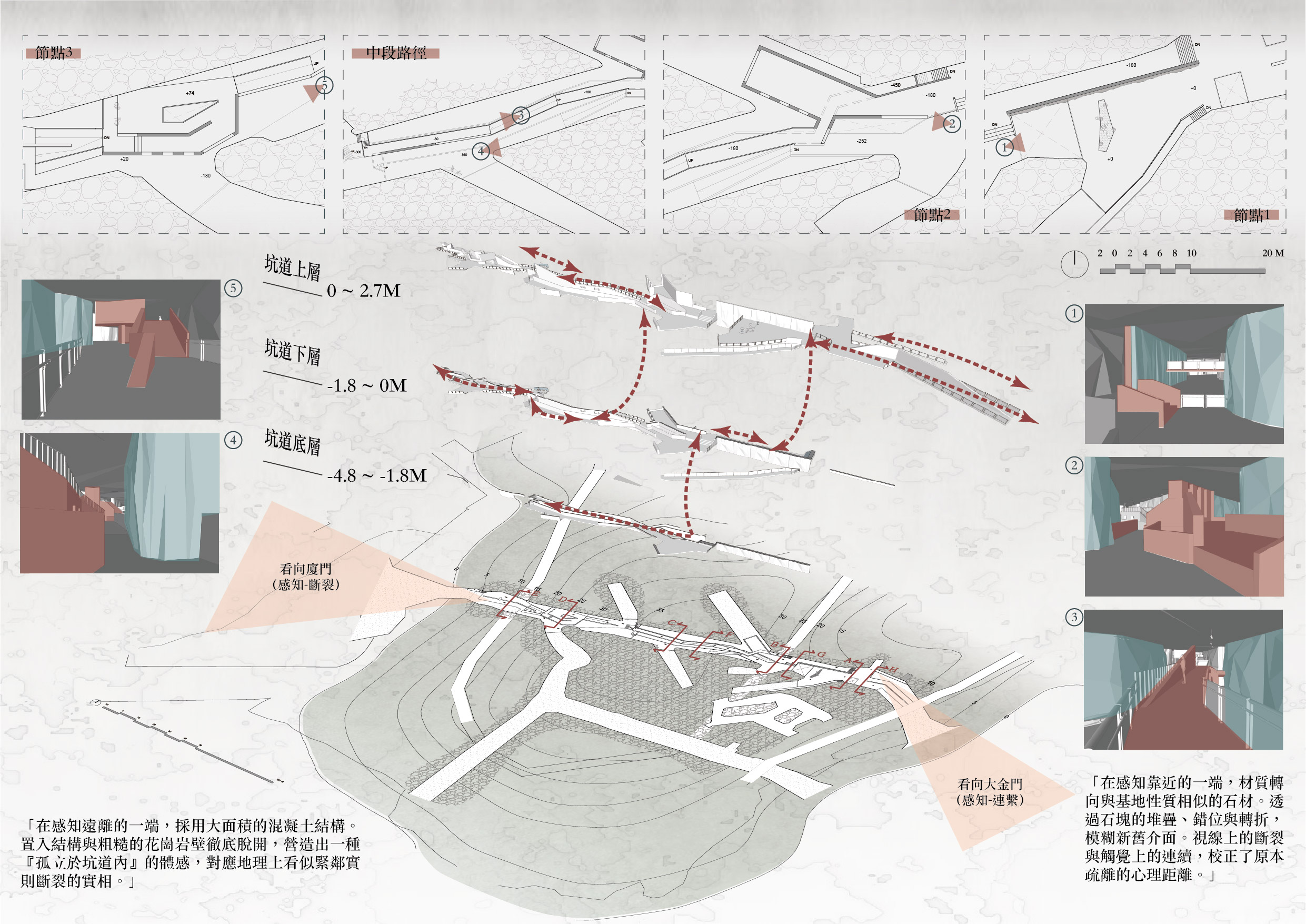
核心概念圍繞「知覺校正」展開。透過結構的收放、轉折與視線的遮蔽,引導使用者在行進中經歷「靠近、錯置、遠離」的體感推移。這種知覺上的距離拉伸,對應了小金門介於大金門與廈門之間,那種既連繫又斷裂、模糊且微妙的地理處境。
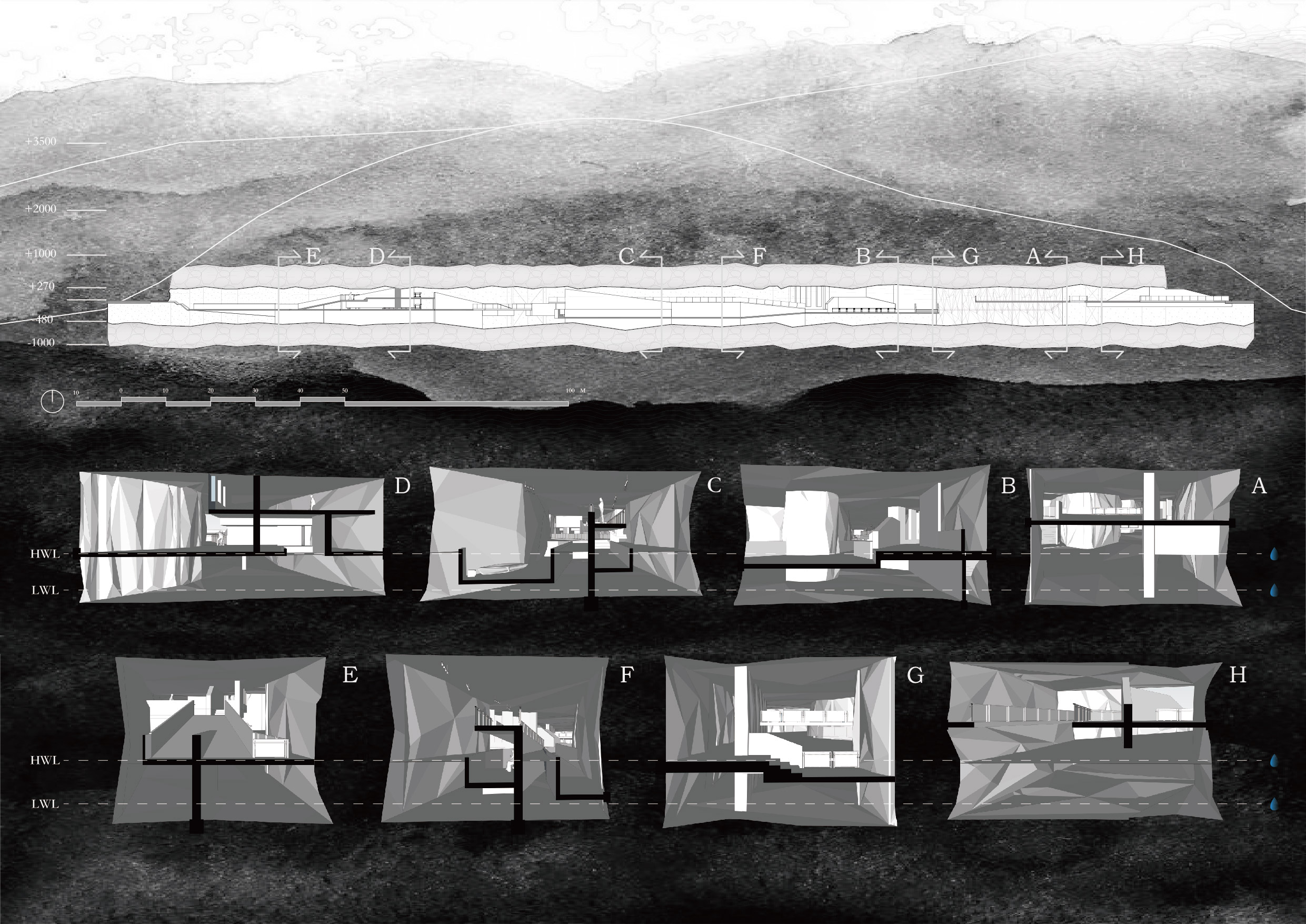
此外,本設計將潮汐視為空間轉換器。坑道底層引入自然潮汐,藉由漲退潮使空間處於一種隨時間改變的動態感知中,強化了視覺與聽覺間的感官矛盾。在節點平台處,藉由視線的驟然打開與景觀的水平延伸,達成人、空間與地緣關係的重新校正。在這裡,九宮坑道不再只是戰爭的遺留,而是一處持續感知的載體,將個人的知覺重新標定於兩岸海域的真實座標上。
Intertidal Soundscape Path
Located in the Jiugong Tunnel on Little Kinmen Island—aiming to redefine its identity as a "geopolitical boundary"—the project transforms the static, "specimenized" model of military heritage by constructing independent sensory frameworks.
The core concept, "perceptual correction," guides users through a sequence of "closeness, alienation, and separation" via spatial contraction and visual framing. This extension of psychological distance reflects Little Kinmen's delicate geographical location between Greater Kinmen and Xiamen—both connected and separate.
The project further amplifies the tension between sight and sound by using the ebb and flow of the tides to create a dynamic perception of the space. Recalibration on nodal platforms anchors individual perception to the real coordinates of the waters on both sides of the Taiwan Strait.